PEFreePrintable
Energy Systems Adaptations Worksheet
A free pe worksheet ready for your classroom. Open in Kuraplan to grab the print-ready PDF, customize it for your students, or generate a fresh version in seconds.
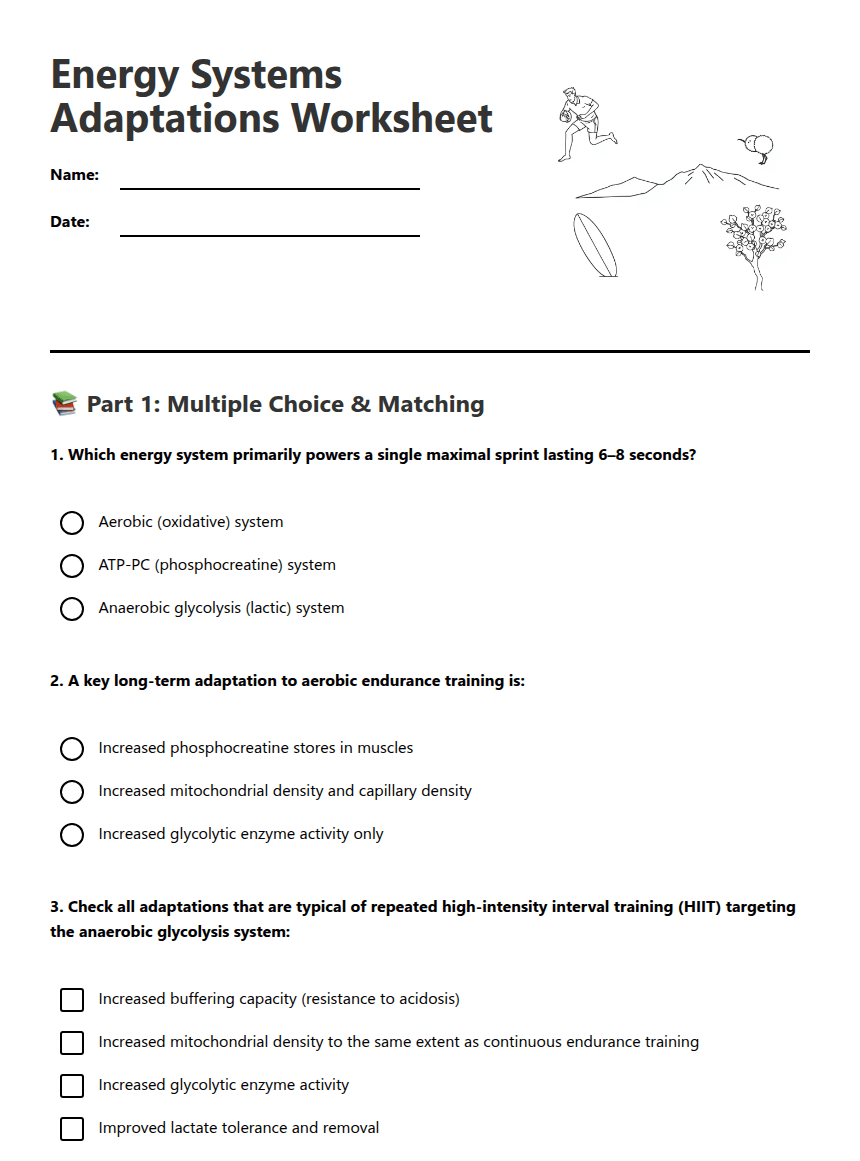
Energy Systems Adaptations Worksheet

📚 Part 1: Multiple Choice & Matching
1. Which energy system primarily powers a single maximal sprint lasting 6–8 seconds?
Aerobic (oxidative) system
ATP-PC (phosphocreatine) system
Anaerobic glycolysis (lactic) system
2. A key long-term adaptation to aerobic endurance training is:
Increased phosphocreatine stores in muscles
Increased mitochondrial density and capillary density
Increased glycolytic enzyme activity only
3. Check all adaptations that are typical of repeated high-intensity interval training (HIIT) targeting the anaerobic glycolysis system:
Increased buffering capacity (resistance to acidosis)
Increased mitochondrial density to the same extent as continuous endurance training
Increased glycolytic enzyme activity
Improved lactate tolerance and removal
4. Match each energy-system adaptation (left) with the correct description (right). Draw a line between the matching items.
A. Increased myoglobin
B. Increased creatine kinase activity
C. Increased lactate threshold
D. Increased capillary density
1. Supports faster ATP resynthesis from phosphocreatine
2. Improves oxygen delivery and exchange in muscles
3. Helps transport oxygen inside muscle fibres for aerobic metabolism
4. Allows higher intensity exercise before fatigue from lactic acid
✏️ Part 2: Short Answer & Applied Tasks
5. Briefly explain one cellular adaptation in muscle that improves aerobic energy production. Include the benefit to performance. (2–3 sentences)
6. Coaches want to develop a rugby forward's ATP-PC system. Suggest one specific training drill, state the work:rest ratio, and explain why this develops ATP-PC adaptations. ____
7. Calculate: A hockey player performs repeated 30-second high-intensity efforts relying largely on anaerobic glycolysis. If each 30 s effort produces 40 mmol·L−1 of blood lactate and recovery brings lactate down by 25% each 3 minutes, what approximate lactate level remains after one 3-minute recovery? Show your working.
8. Describe two cardiovascular adaptations from long-term aerobic training and give one measurable test or metric to assess each adaptation (e.g. VO2max, resting heart rate).
9. Practical planning: For an athlete aiming to increase aerobic capacity, list the recommended frequency (times per week), typical session duration, and intensity zone (use % of maximal heart rate or perceived exertion). Keep it concise.
10. Sketch (labelled) a simple diagram showing where the three energy systems dominate during an 800 m run (start, middle, finish). Indicate approximate time ranges and primary adaptations for each phase.
About This Worksheet
Free in Kuraplan
Sign up free, grab the PDF, and customize it for your class.
Print-Ready
Formatted for standard paper. Clean layout, easy to read.
AI-Generated
Created with Kuraplan's AI, designed for real classroom use.
For Teachers & Parents
Use in classrooms, for homework, tutoring, or homeschool.
Need a custom version of this worksheet?
Kuraplan's AI generates custom worksheets in seconds — differentiated for every learner, aligned to your curriculum.
Generate Custom Worksheets — Free No credit card Curriculum-aligned Under 60 seconds
More PE Worksheets
Year 11
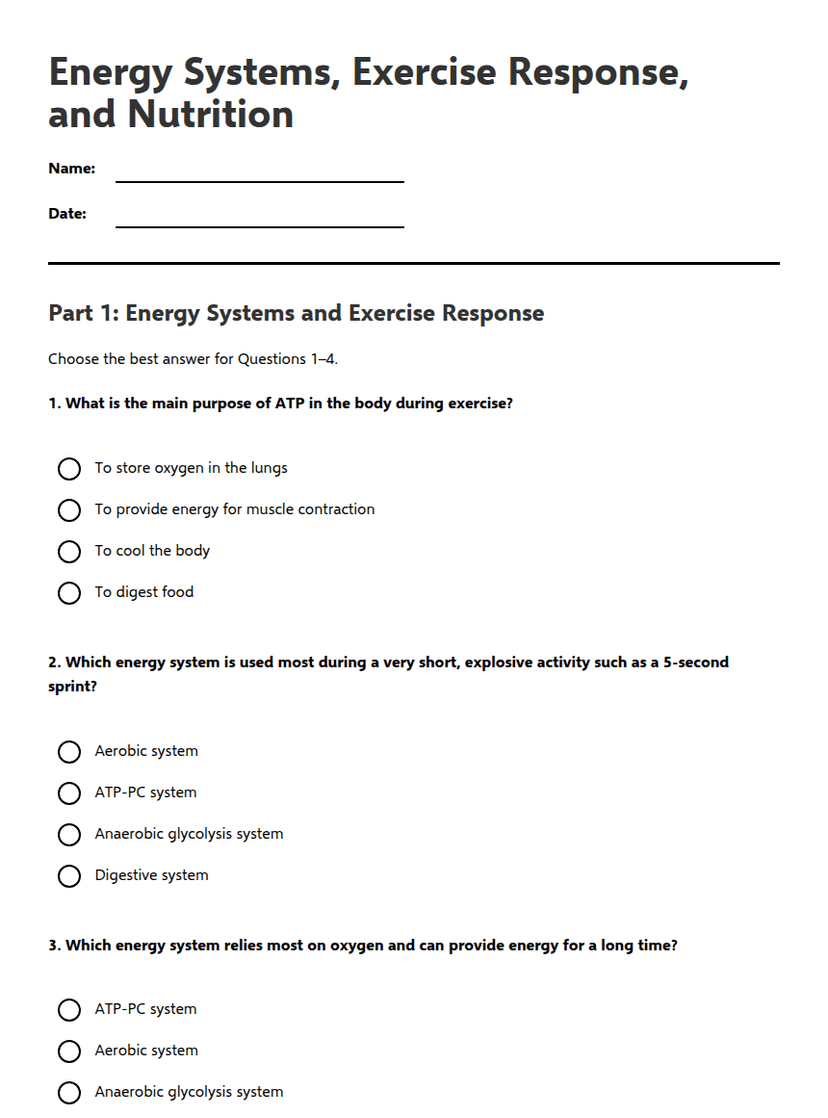
Energy Systems, Exercise Response, and Nutrition
Free
Year 5–6
Sound Energy Investigation
Free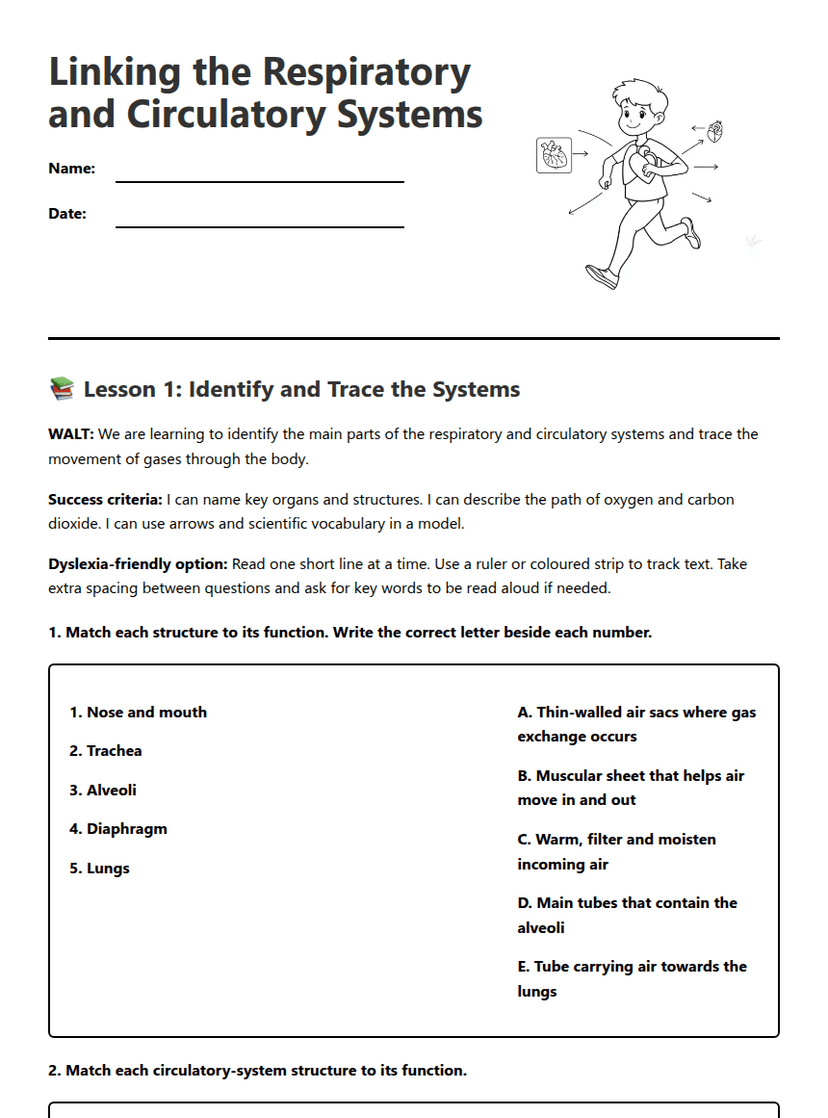
Year 8
Respiratory and Circulatory Systems
Free
Year 8
Space Systems Synthesis Worksheet
Free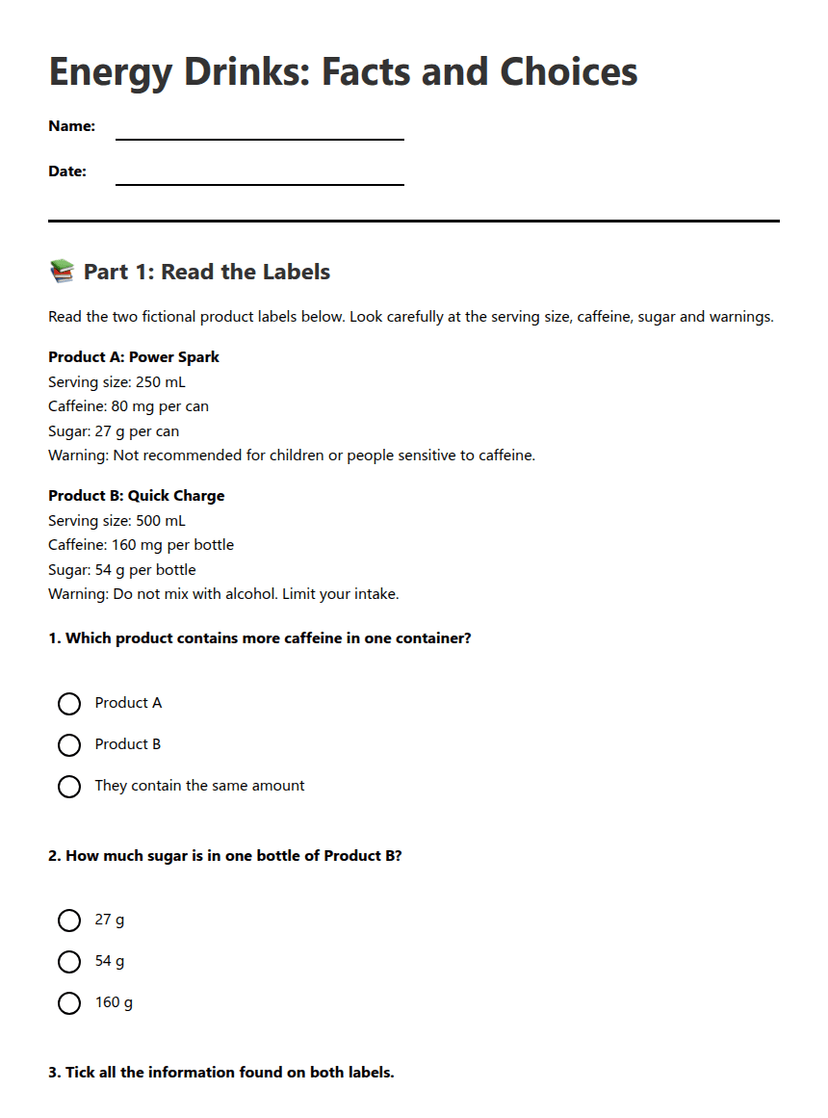
Year 9
Energy Drinks: Facts and Choices
Free
Year 9
Exploring Government Systems
Free
Year 9
Government Systems Overview
Free
Year 9