Exploring Our Ecosystem!
A free science worksheet ready for your classroom. Open in Kuraplan to grab the print-ready PDF, customize it for your students, or generate a fresh version in seconds.
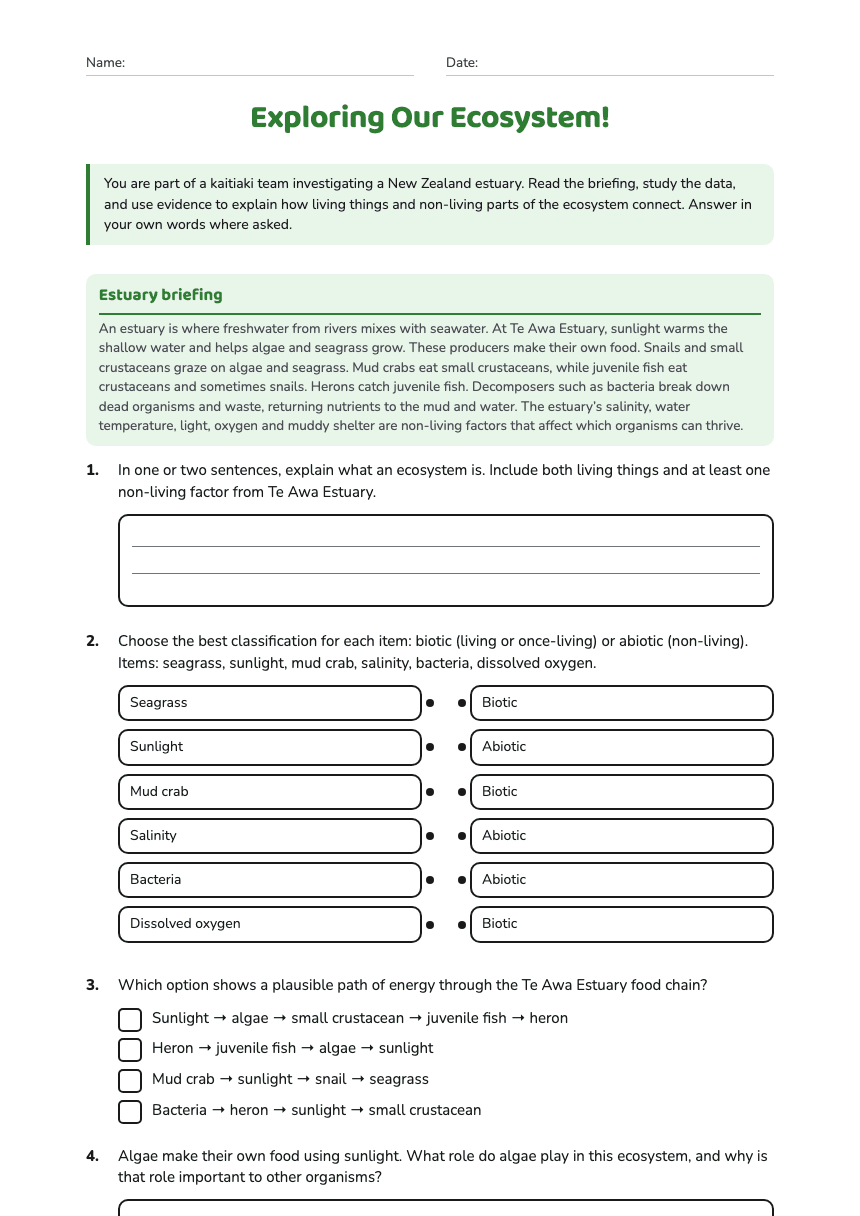
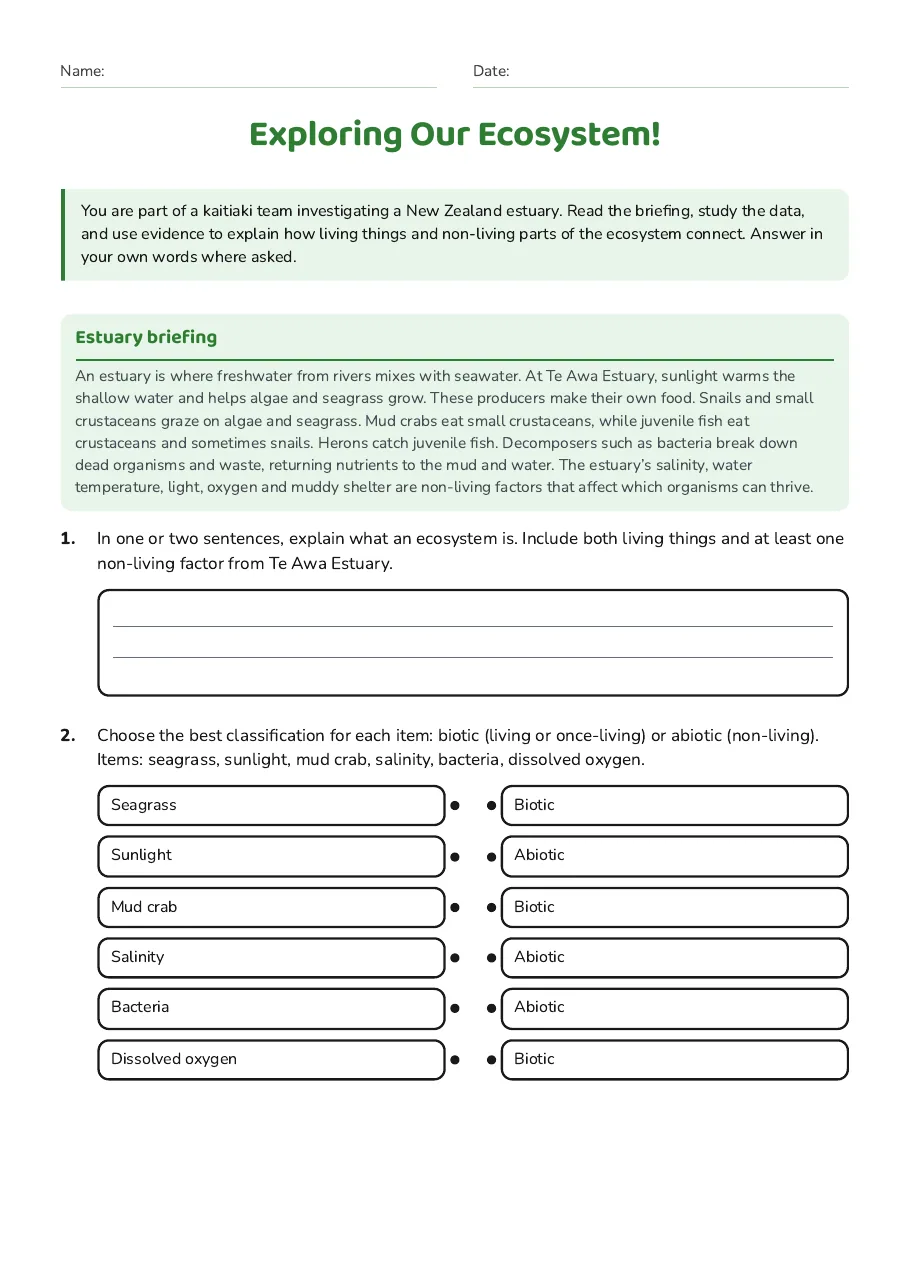
Exploring Our Ecosystem!
Estuary briefing
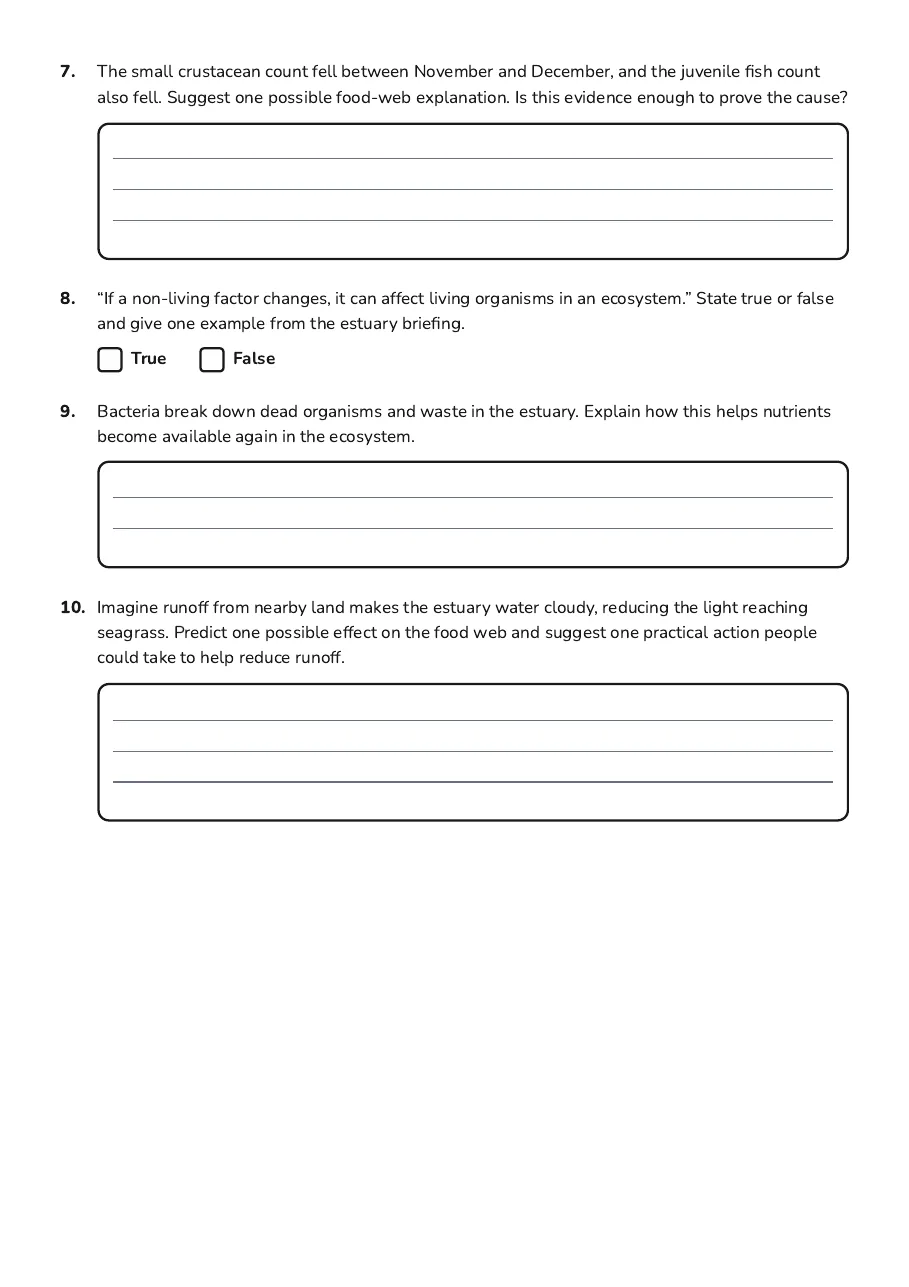
An estuary is where freshwater from rivers mixes with seawater. At Te Awa Estuary, sunlight warms the shallow water and helps algae and seagrass grow. These producers make their own food. Snails and small crustaceans graze on algae and seagrass. Mud crabs eat small crustaceans, while juvenile fish eat crustaceans and sometimes snails. Herons catch juvenile fish. Decomposers such as bacteria break down dead organisms and waste, returning nutrients to the mud and water. The estuary’s salinity, water temperature, light, oxygen and muddy shelter are non-living factors that affect which organisms can thrive.
- Seagrass
- Sunlight
- Mud crab
- Salinity
- Bacteria
- Dissolved oxygen
- Biotic
- Abiotic
- Biotic
- Abiotic
- Abiotic
- Biotic
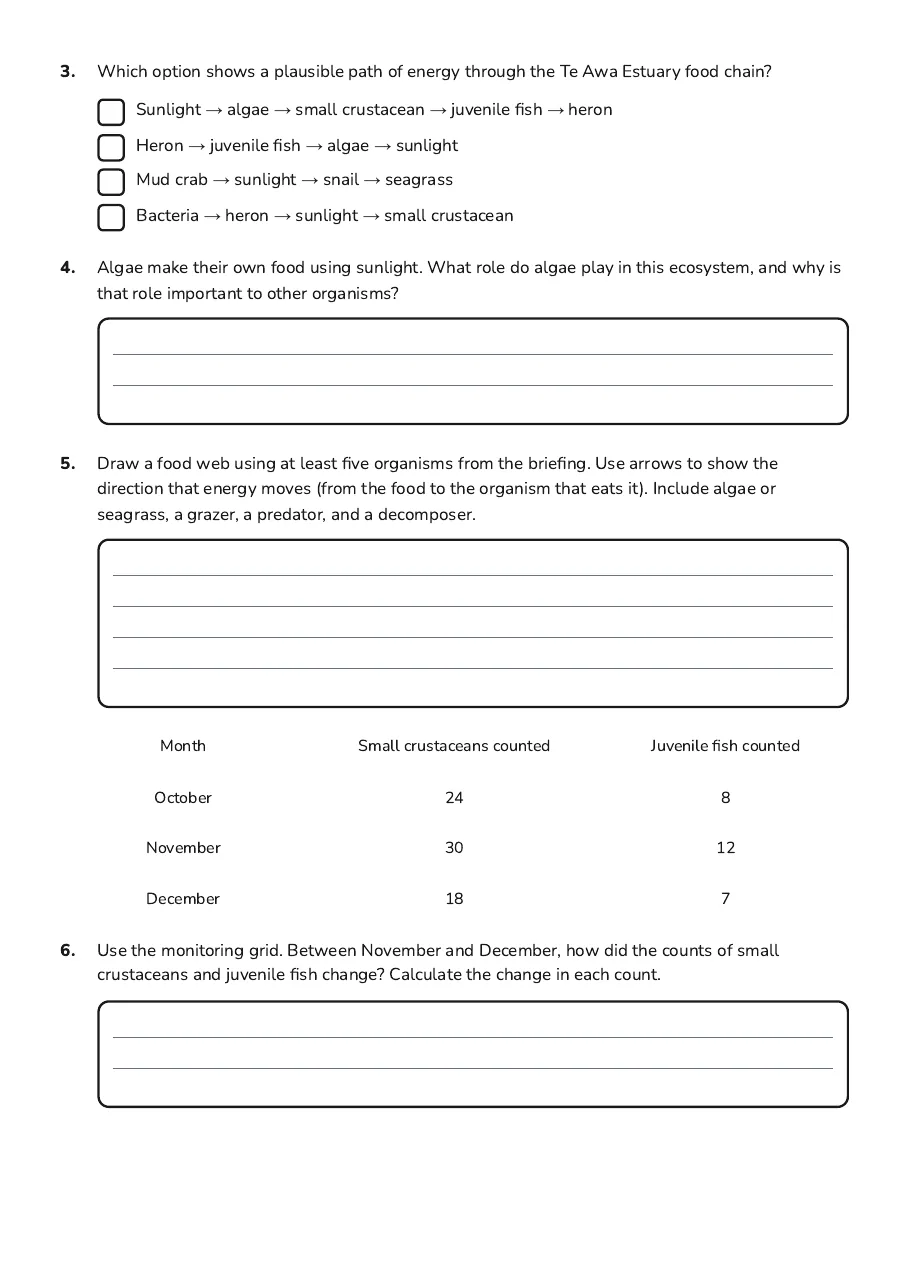
- Sunlight → algae → small crustacean → juvenile fish → heron
- Heron → juvenile fish → algae → sunlight
- Mud crab → sunlight → snail → seagrass
- Bacteria → heron → sunlight → small crustacean
Month
Small crustaceans counted
Juvenile fish counted
October
24
8
November
30
12
December
18
7
3 printable pages
Page 1
Page 2
Page 3
About This Worksheet
Free in Kuraplan
Sign up free, grab the PDF, and customize it for your class.
Print-Ready
Formatted for standard paper. Clean layout, easy to read.
AI-Generated
Created with Kuraplan's AI, designed for real classroom use.
For Teachers & Parents
Use in classrooms, for homework, tutoring, or homeschool.
Need a custom version of this worksheet?
Kuraplan's AI generates custom worksheets in seconds — differentiated for every learner, aligned to your curriculum.
Generate Custom Worksheets — FreeMore Science Worksheets
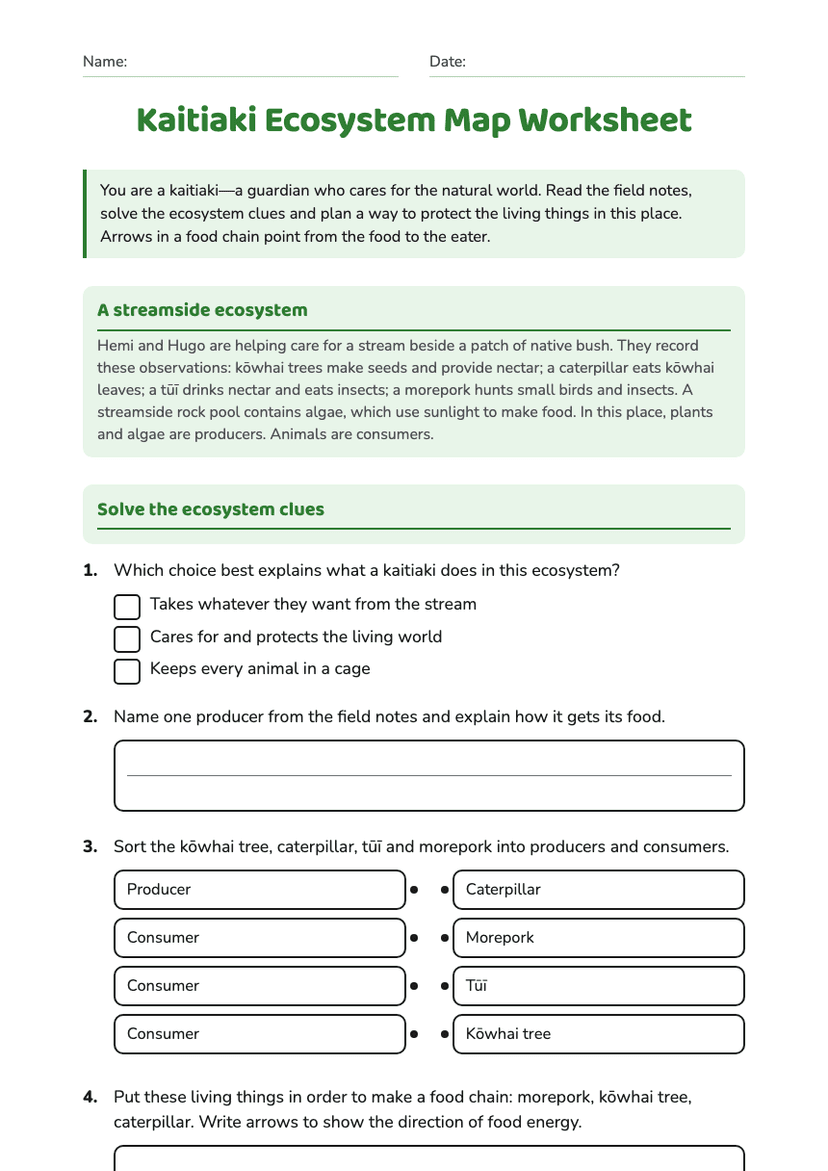
Kaitiaki Ecosystem Map Worksheet
Free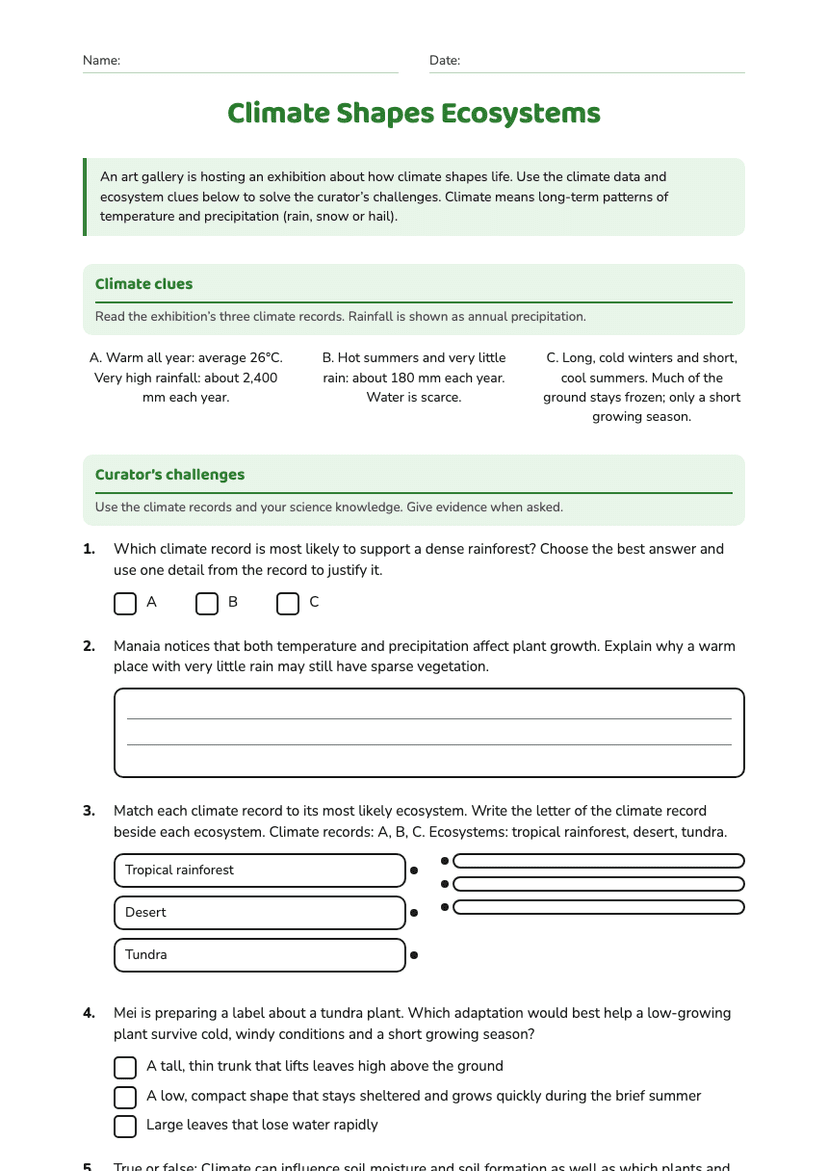
Climate Shapes Ecosystems
Free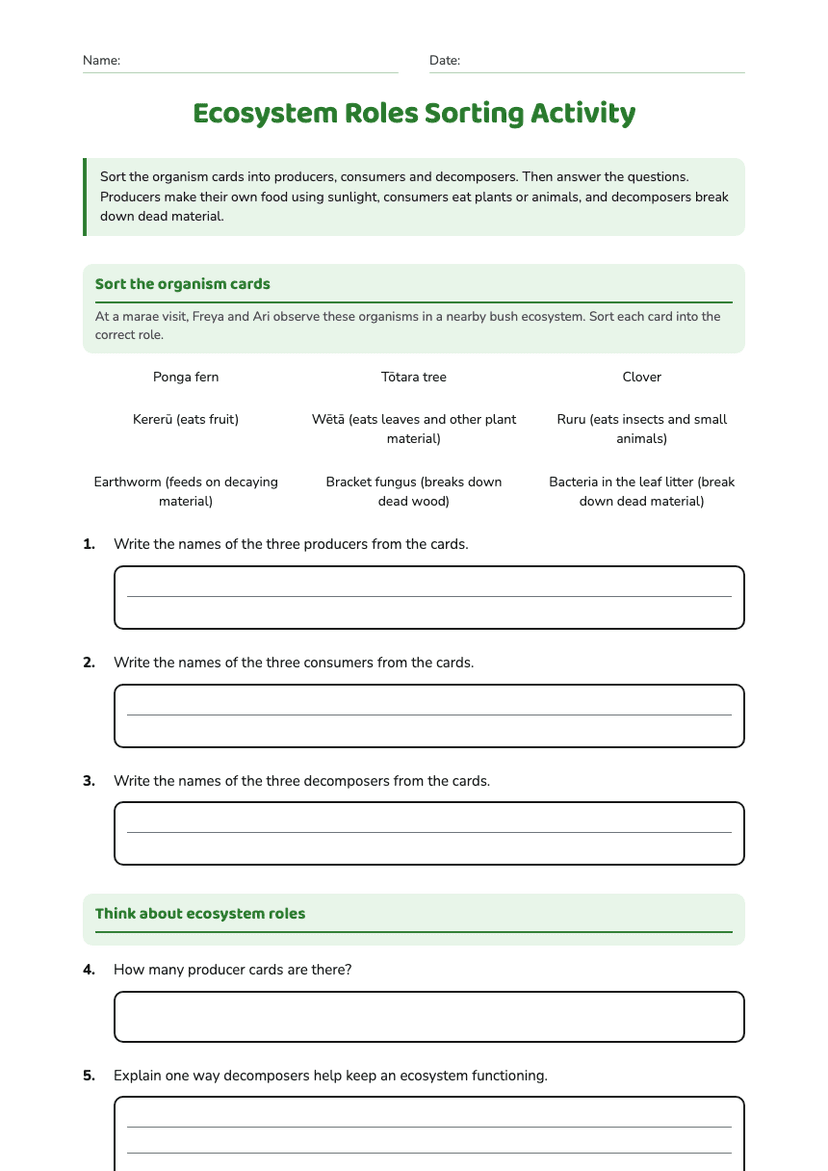
Ecosystem Roles Sorting Activity
Free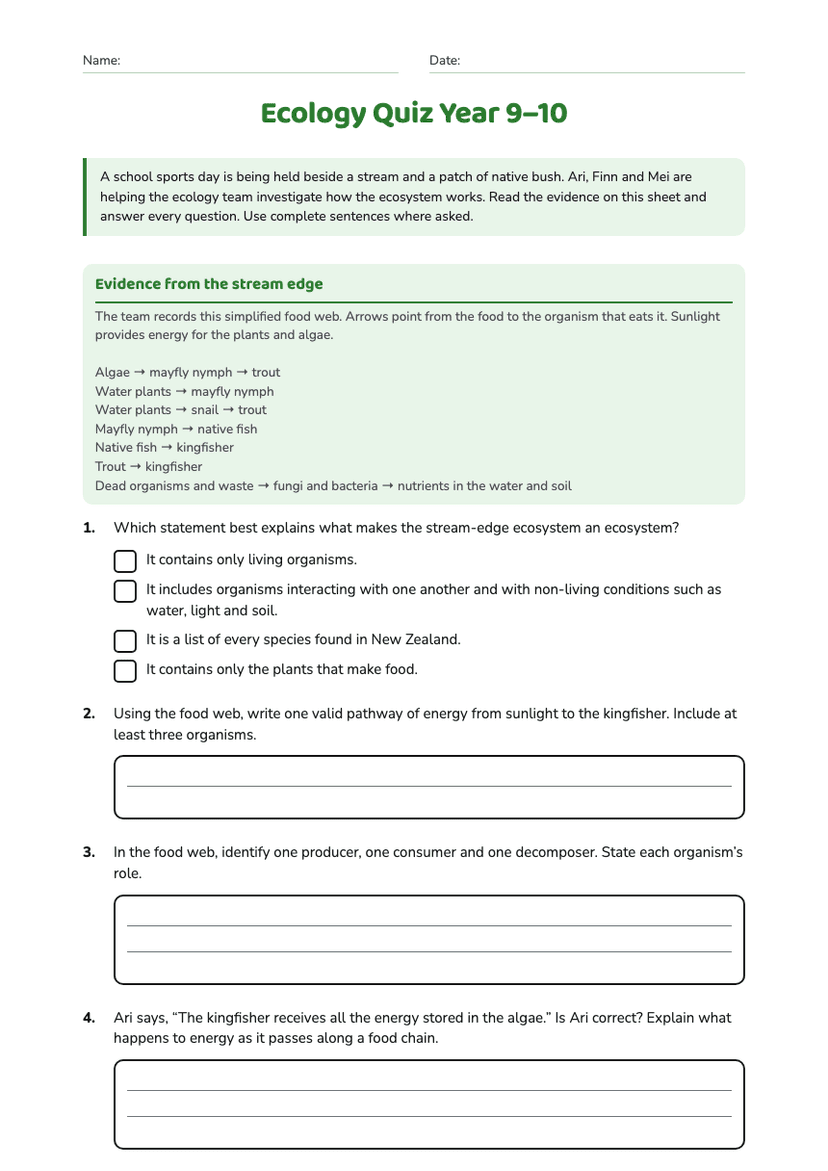
Ecology Quiz Year 9–10
Free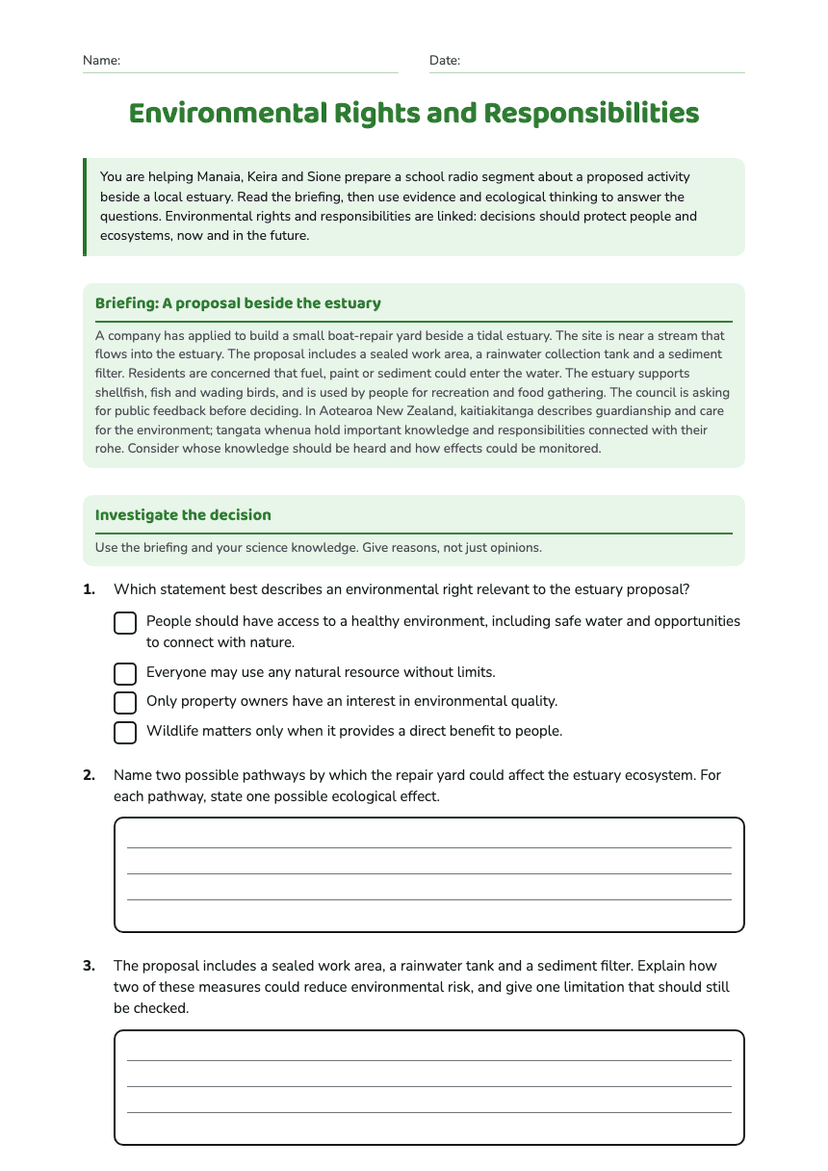
Environmental Rights and Responsibilities
Free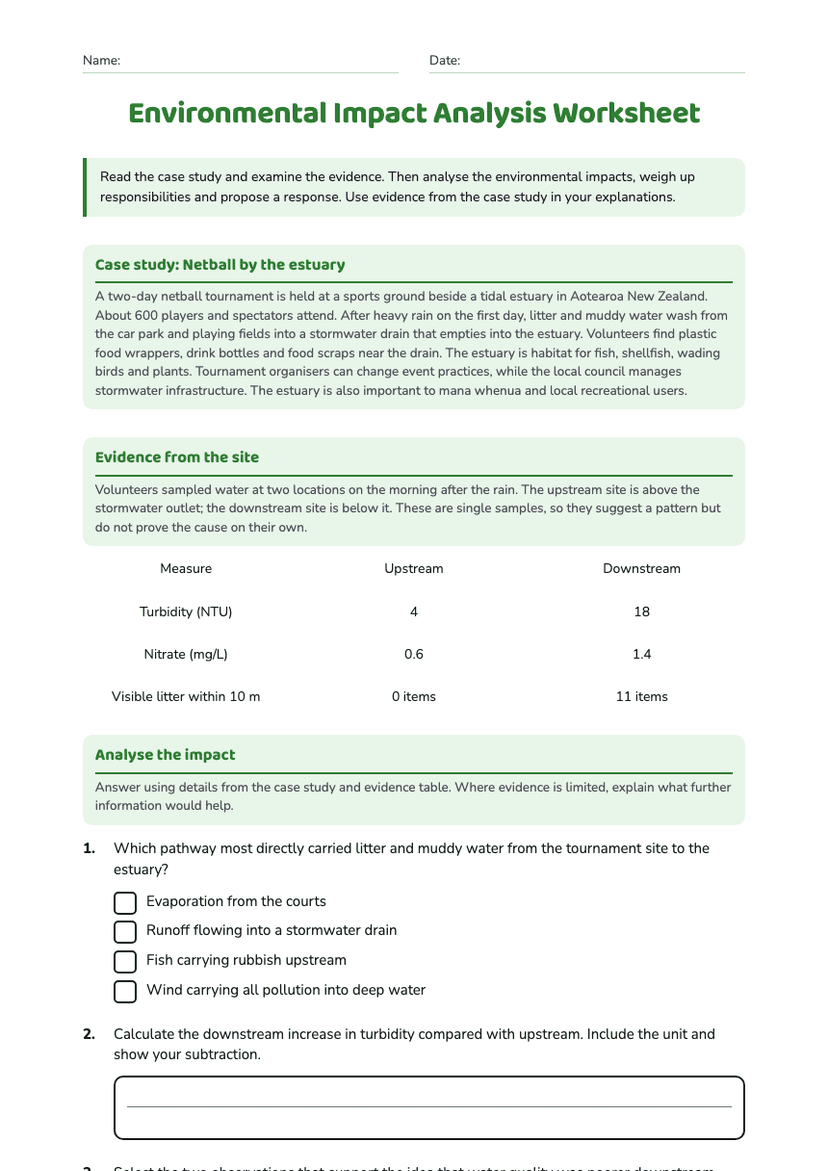
Environmental Impact Analysis Worksheet
Free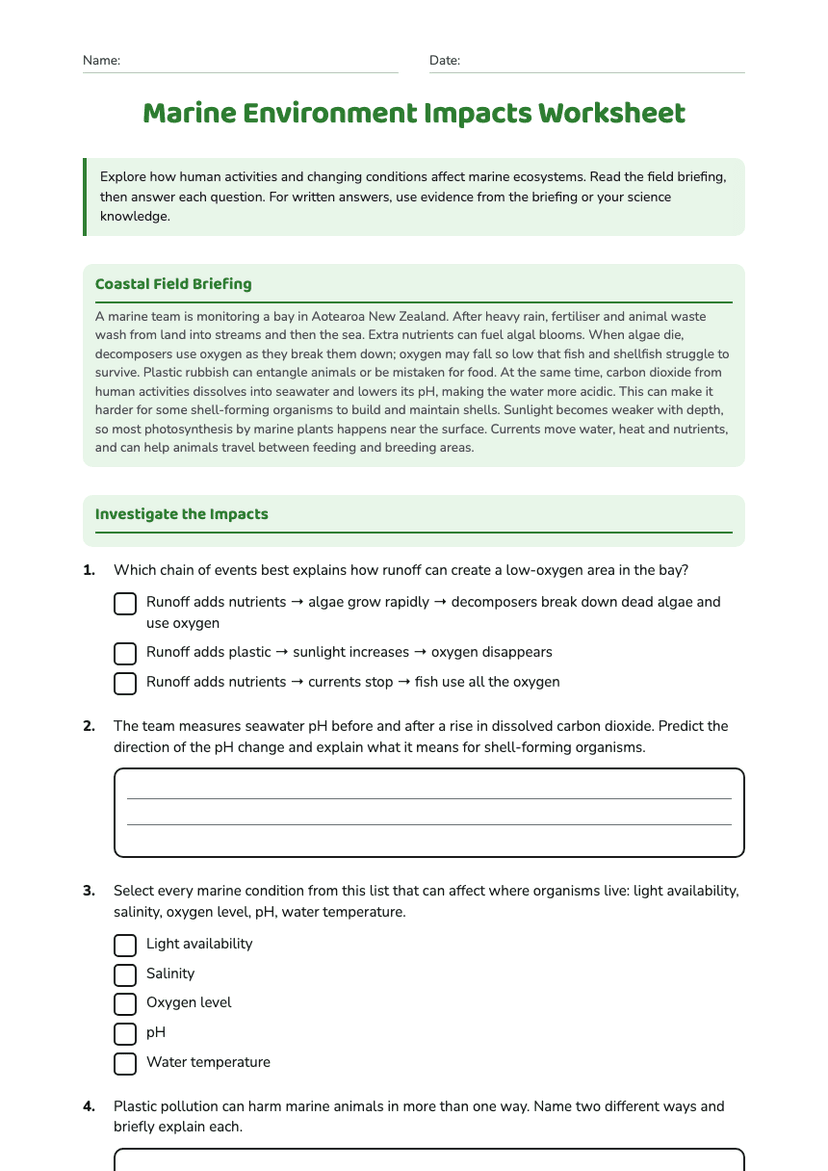
Marine Environment Impacts Worksheet
Free