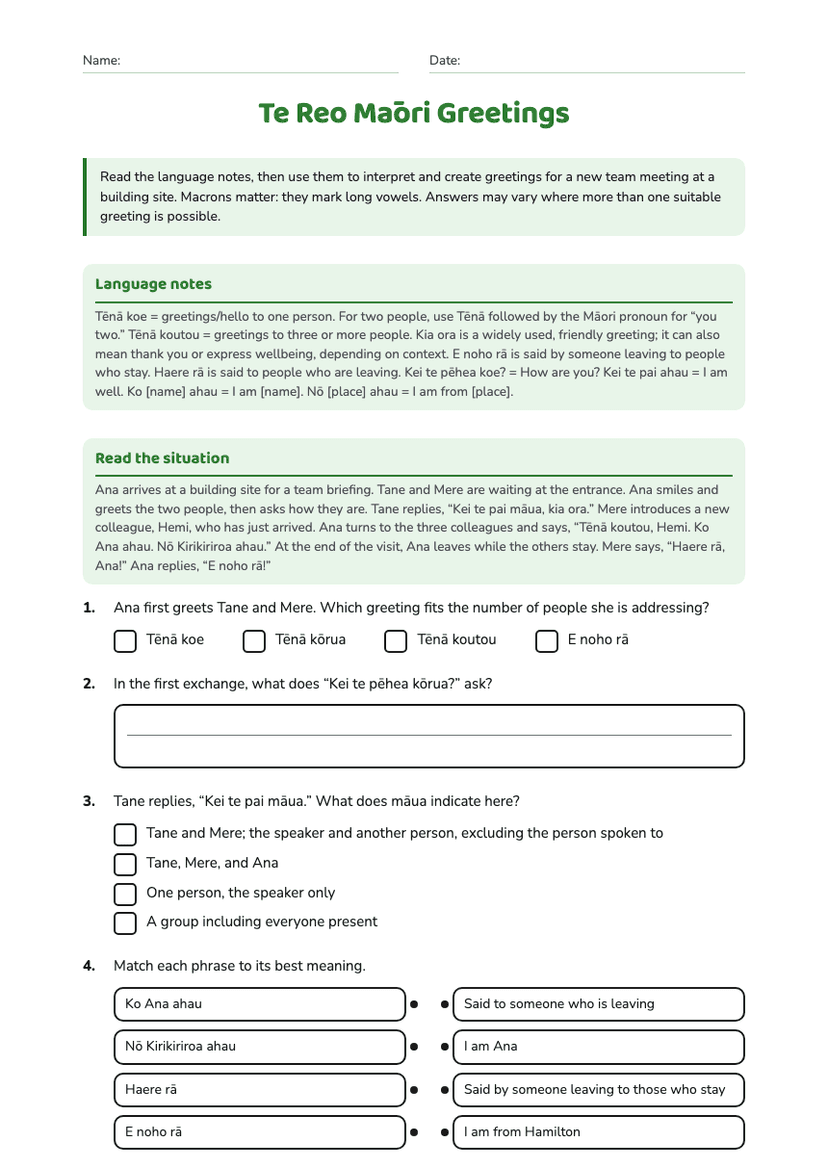
Introduction to Pōwhiri
A free te reo māori worksheet ready for your classroom. Open in Kuraplan to grab the print-ready PDF, customize it for your students, or generate a fresh version in seconds.
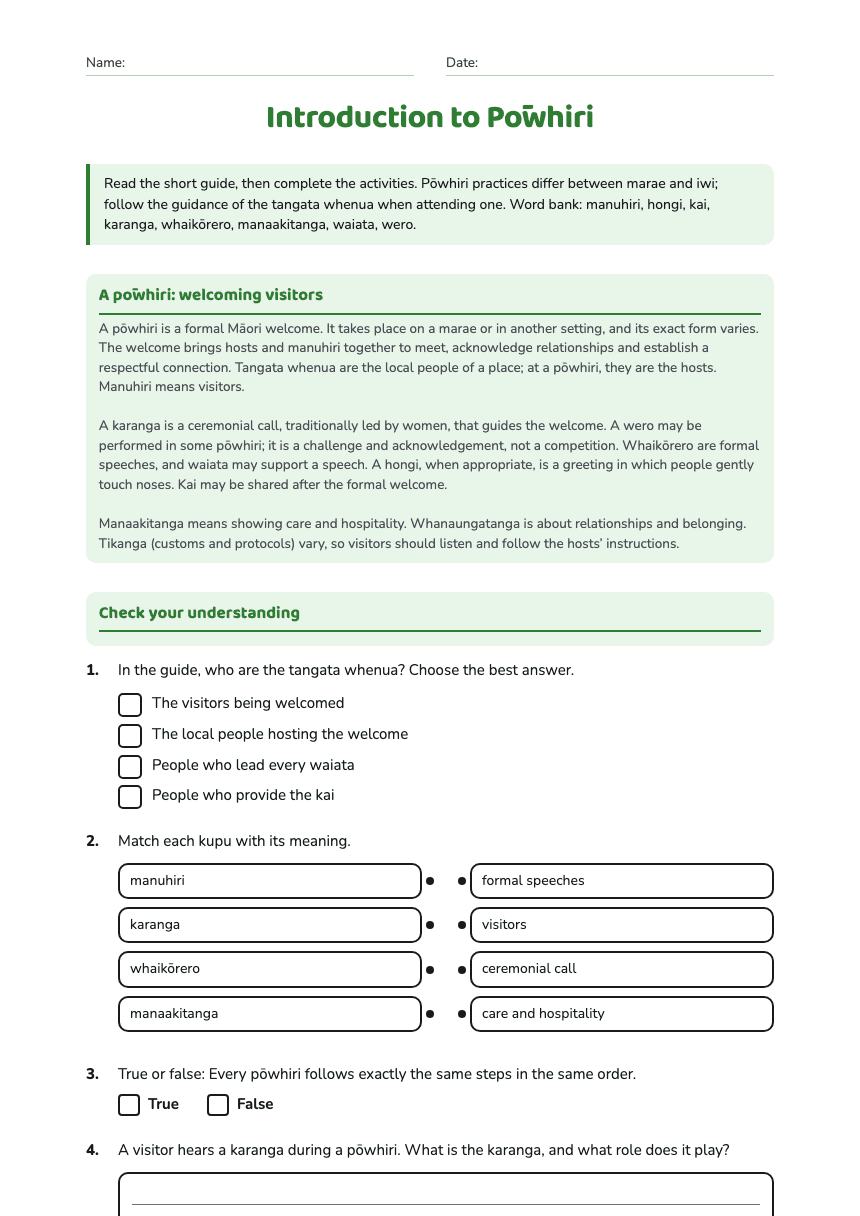
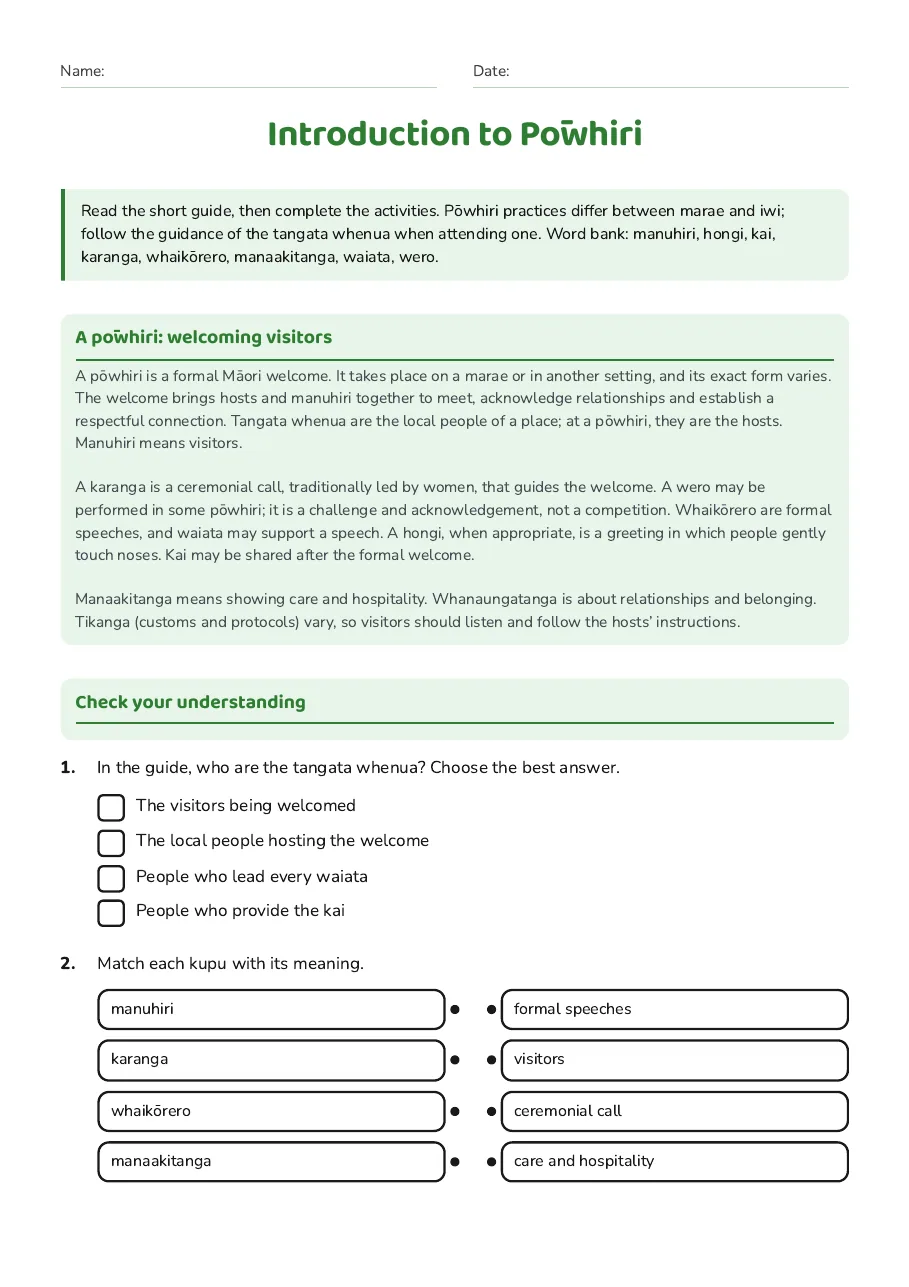
Introduction to Pōwhiri
A pōwhiri: welcoming visitors
A pōwhiri is a formal Māori welcome. It takes place on a marae or in another setting, and its exact form varies. The welcome brings hosts and manuhiri together to meet, acknowledge relationships and establish a respectful connection. Tangata whenua are the local people of a place; at a pōwhiri, they are the hosts. Manuhiri means visitors. A karanga is a ceremonial call, traditionally led by women, that guides the welcome. A wero may be performed in some pōwhiri; it is a challenge and acknowledgement, not a competition. Whaikōrero are formal speeches, and waiata may support a speech. A hongi, when appropriate, is a greeting in which people gently touch noses. Kai may be shared after the formal welcome. Manaakitanga means showing care and hospitality. Whanaungatanga is about relationships and belonging. Tikanga (customs and protocols) vary, so visitors should listen and follow the hosts’ instructions.
Check your understanding
- The visitors being welcomed
- The local people hosting the welcome
- People who lead every waiata
- People who provide the kai
- manuhiri
- karanga
- whaikōrero
- manaakitanga
- formal speeches
- visitors
- ceremonial call
- care and hospitality
3 printable pages
Page 1
Page 2
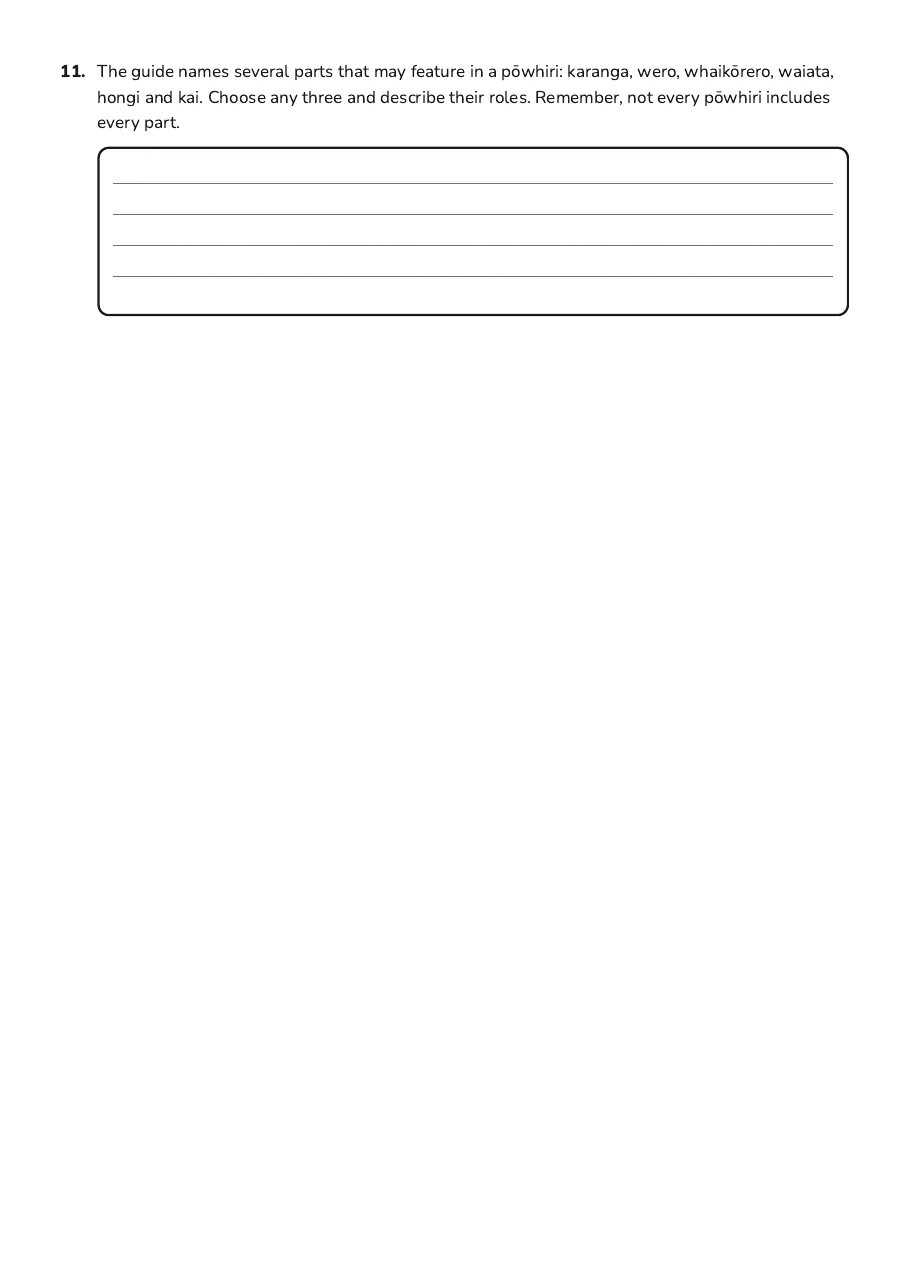
Page 3
About This Worksheet
Free in Kuraplan
Sign up free, grab the PDF, and customize it for your class.
Print-Ready
Formatted for standard paper. Clean layout, easy to read.
AI-Generated
Created with Kuraplan's AI, designed for real classroom use.
For Teachers & Parents
Use in classrooms, for homework, tutoring, or homeschool.
Need a custom version of this worksheet?
Kuraplan's AI generates custom worksheets in seconds — differentiated for every learner, aligned to your curriculum.
Generate Custom Worksheets — FreeMore Te Reo Māori Worksheets
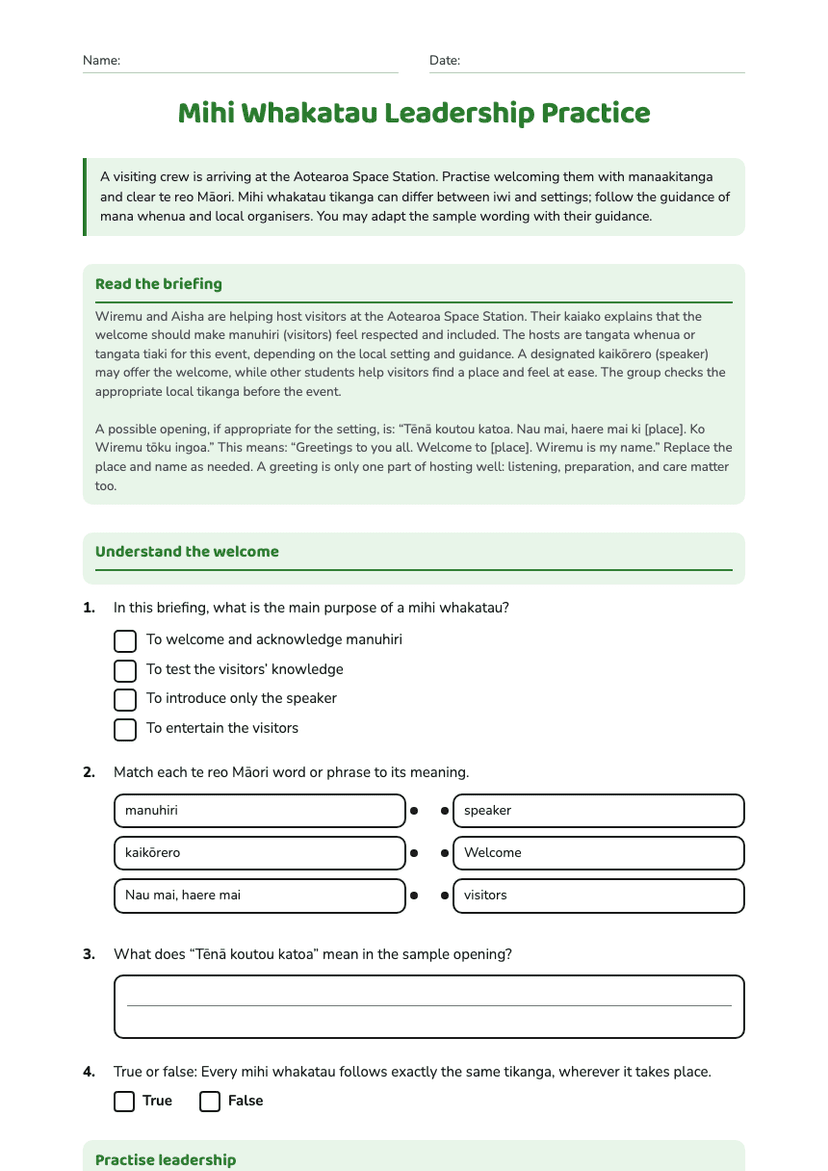
Mihi Whakatau Leadership Practice
Free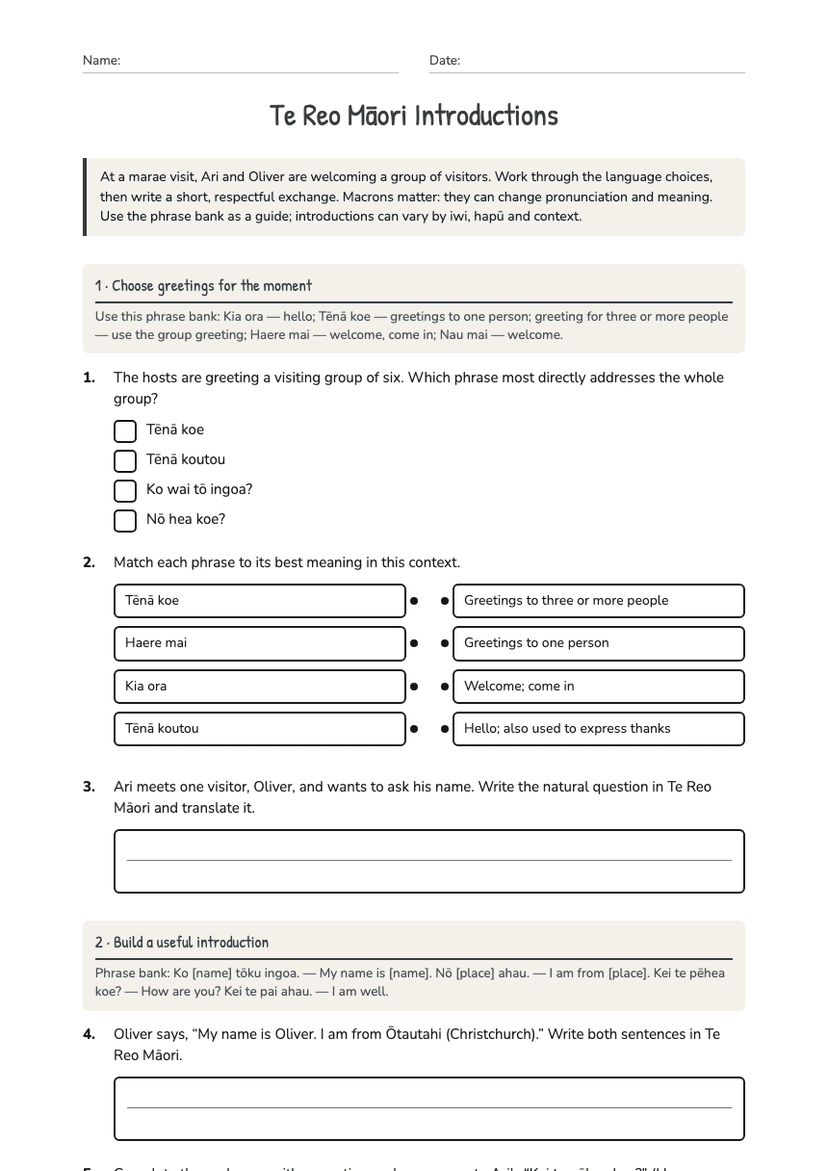
Te Reo Māori Introductions
Free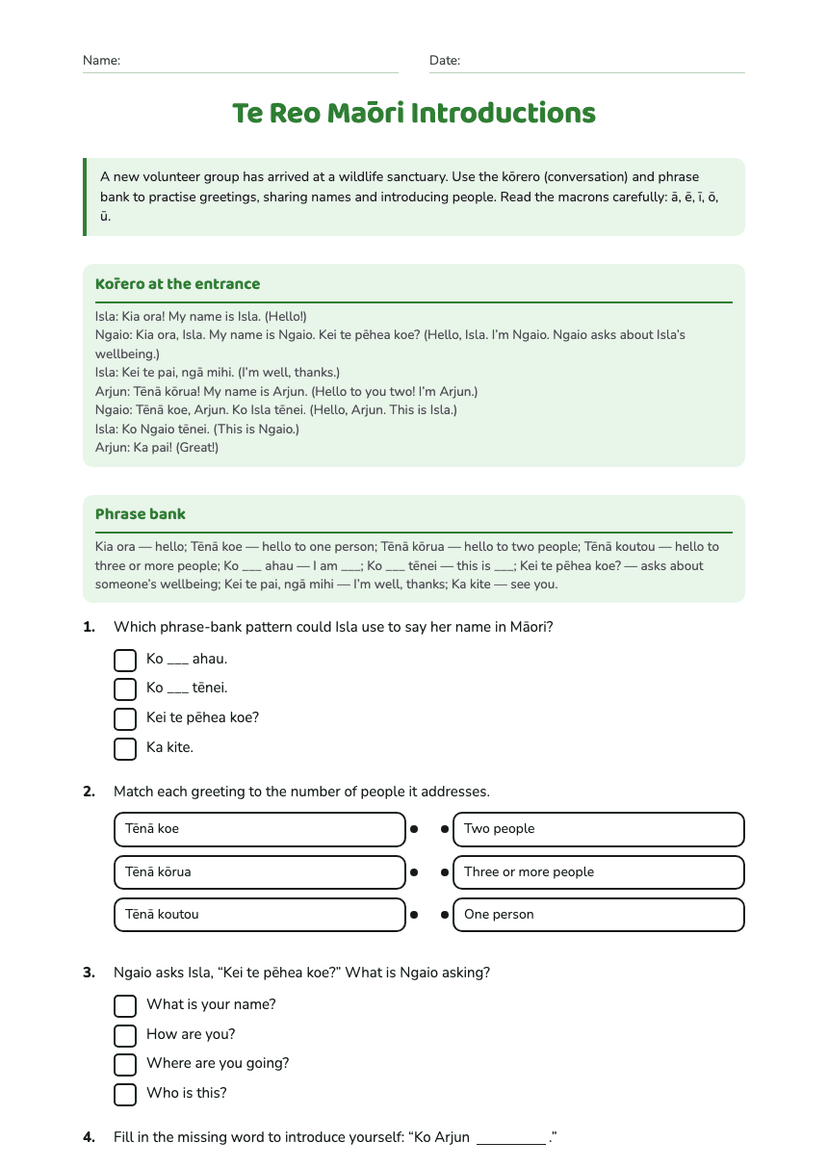
Te Reo Māori Introductions
Free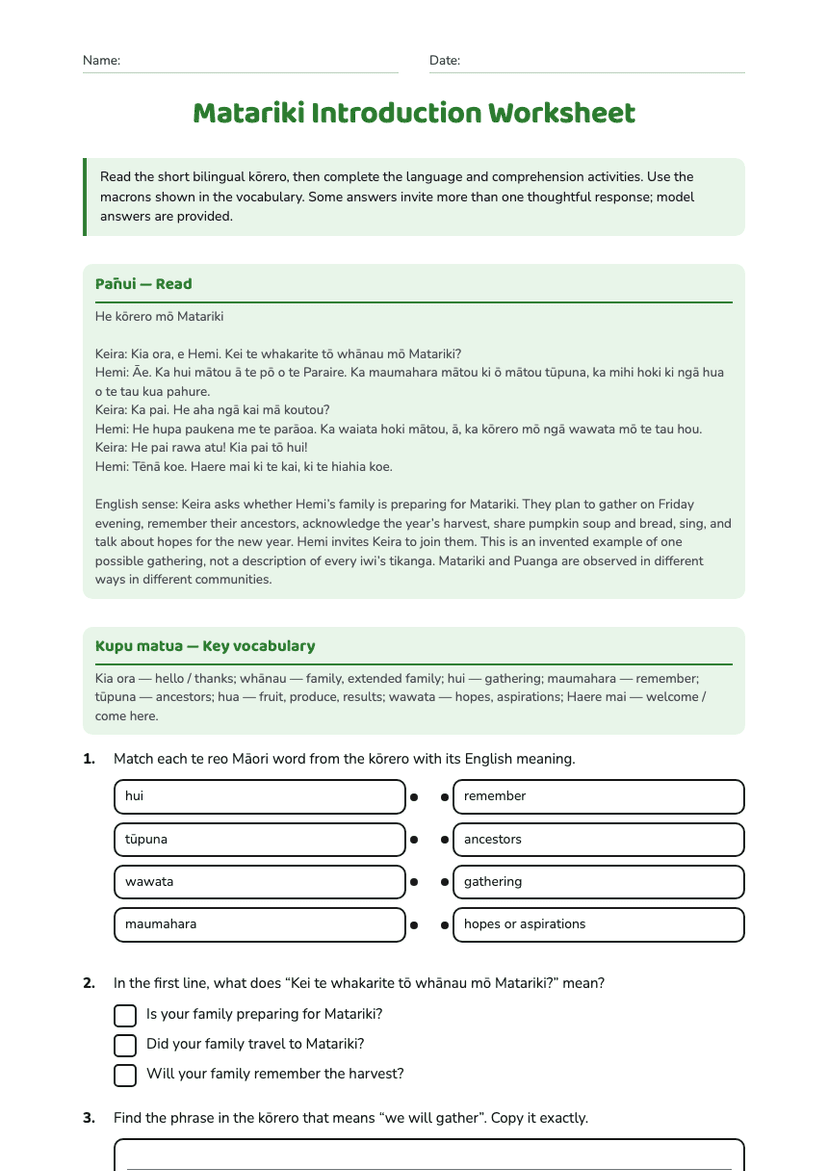
Matariki Introduction Worksheet
Free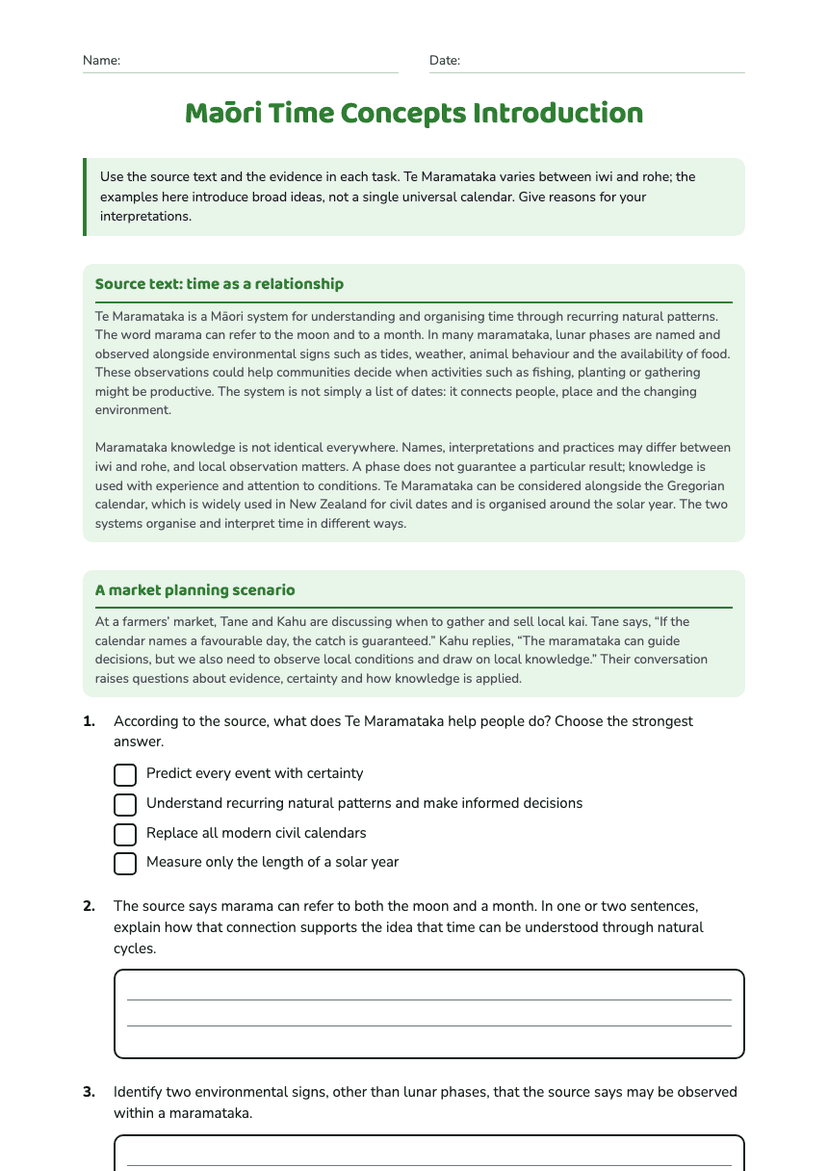
Māori Time Concepts Introduction
Free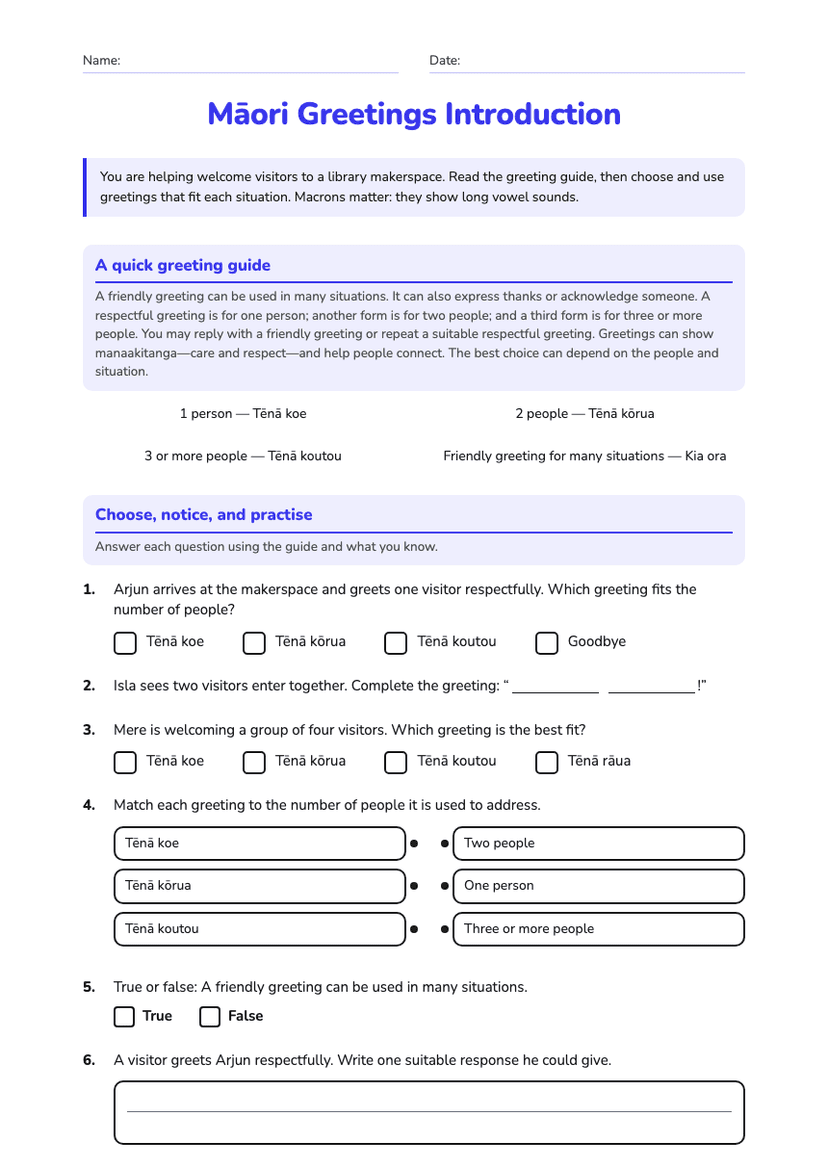
Māori Greetings Introduction
Free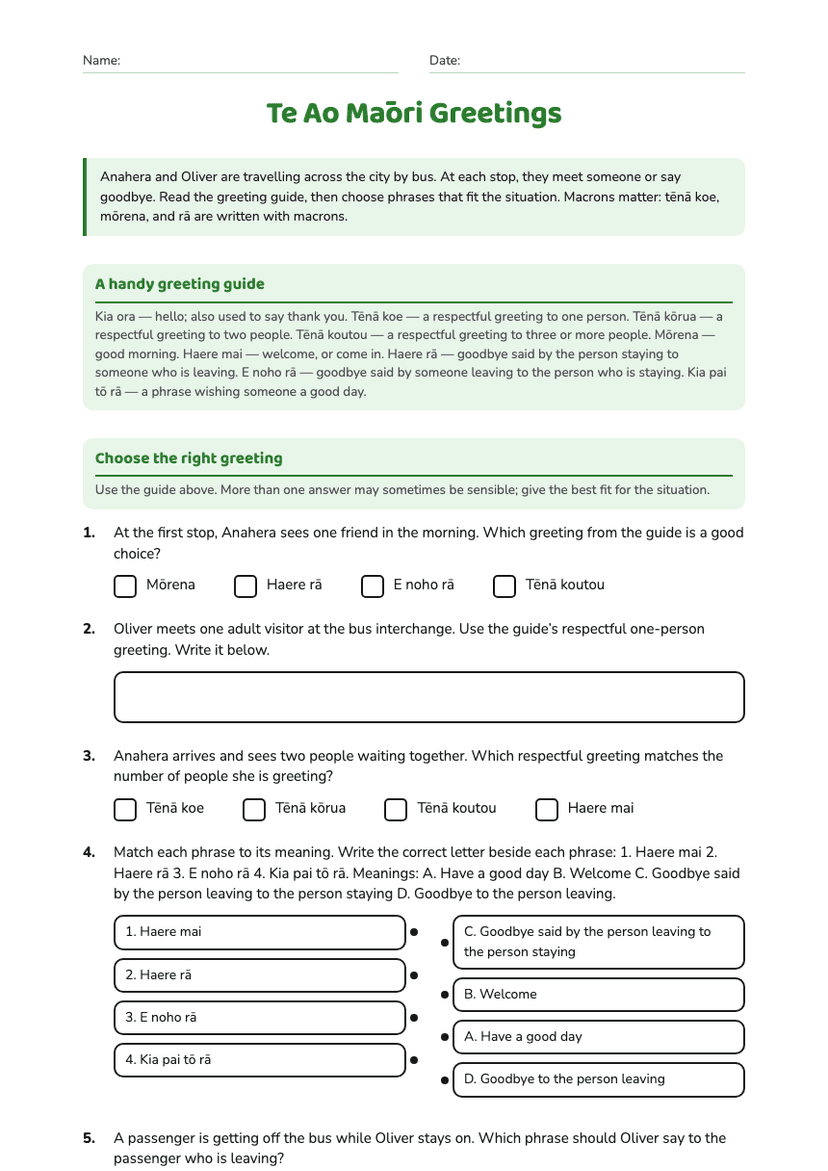
Te Ao Māori Greetings
Free