Irrational Numbers Worksheet
A free maths worksheet ready for your classroom. Open in Kuraplan to grab the print-ready PDF, customize it for your students, or generate a fresh version in seconds.
Irrational Numbers Worksheet
🎯 WALT: We Are Learning To identify and classify irrational numbers
Success Criteria:
✓ I can define what makes a number irrational
✓ I can distinguish between rational and irrational numbers
✓ I can approximate irrational numbers using decimals
Key Facts: Irrational numbers cannot be written as fractions and have decimal expansions that never end or repeat. Examples include √2, π, and √3.
Part 1: Multiple Choice
Part 2: Classification and Approximation
a) √25 ____ b) √15 ____ c) 0.333... ____ d) π ____ e) 7/8 ____ f) √50 ____
a) √3 ≈ __________ b) √10 ≈ __________ c) √20 ≈ __________
Sentence starter: √8 is irrational because...
Part 3: Extension Activities
Sentence starter: When we add a rational and irrational number, the result is irrational because...
Hint: Think about circles, architecture, or nature
Sentence starter: I can find √8 by recognising that √8 = √(4×2) = ...
Differentiation Support:
• Use larger font or coloured paper if needed
• Work with a partner for discussion questions
• Use a calculator for all decimal approximations
• Focus on questions 1-7 for core understanding
About This Worksheet
Free in Kuraplan
Sign up free, grab the PDF, and customize it for your class.
Print-Ready
Formatted for standard paper. Clean layout, easy to read.
AI-Generated
Created with Kuraplan's AI, designed for real classroom use.
For Teachers & Parents
Use in classrooms, for homework, tutoring, or homeschool.
Need a custom version of this worksheet?
Kuraplan's AI generates custom worksheets in seconds — differentiated for every learner, aligned to your curriculum.
Generate Custom Worksheets — FreeMore Maths Worksheets
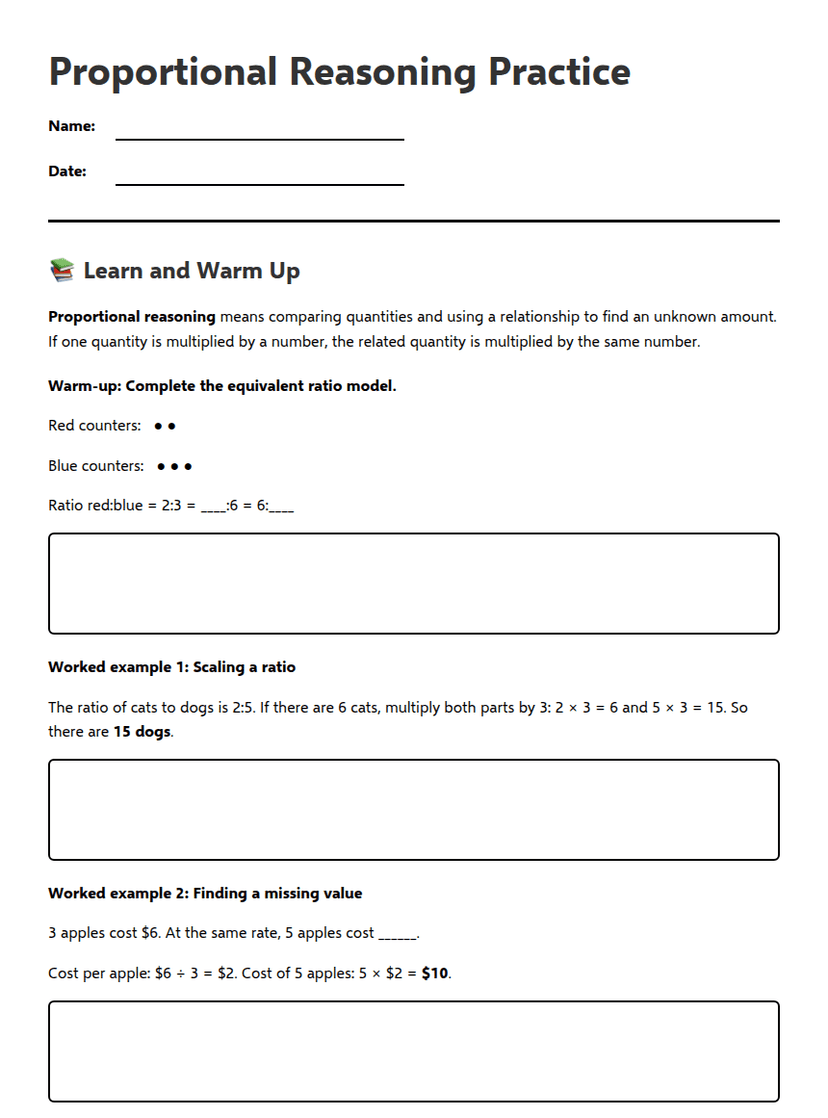
Proportional Reasoning Practice
Free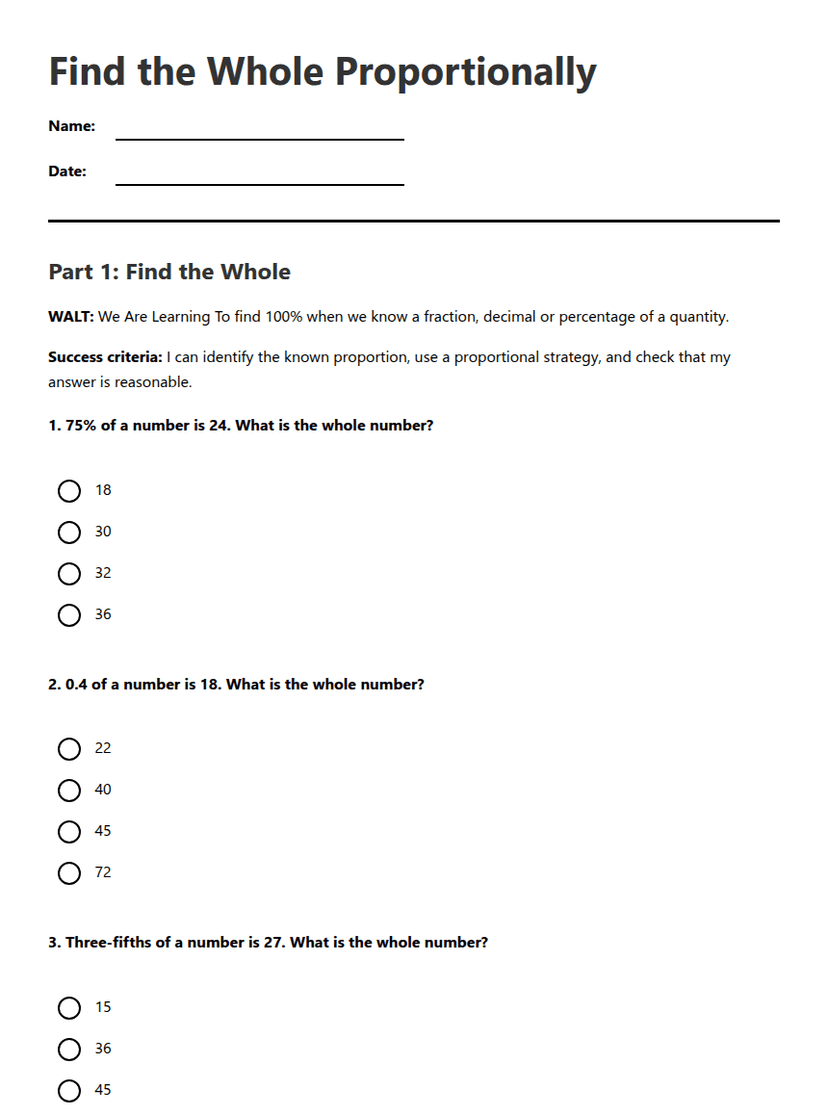
Find the Whole Proportionally
Free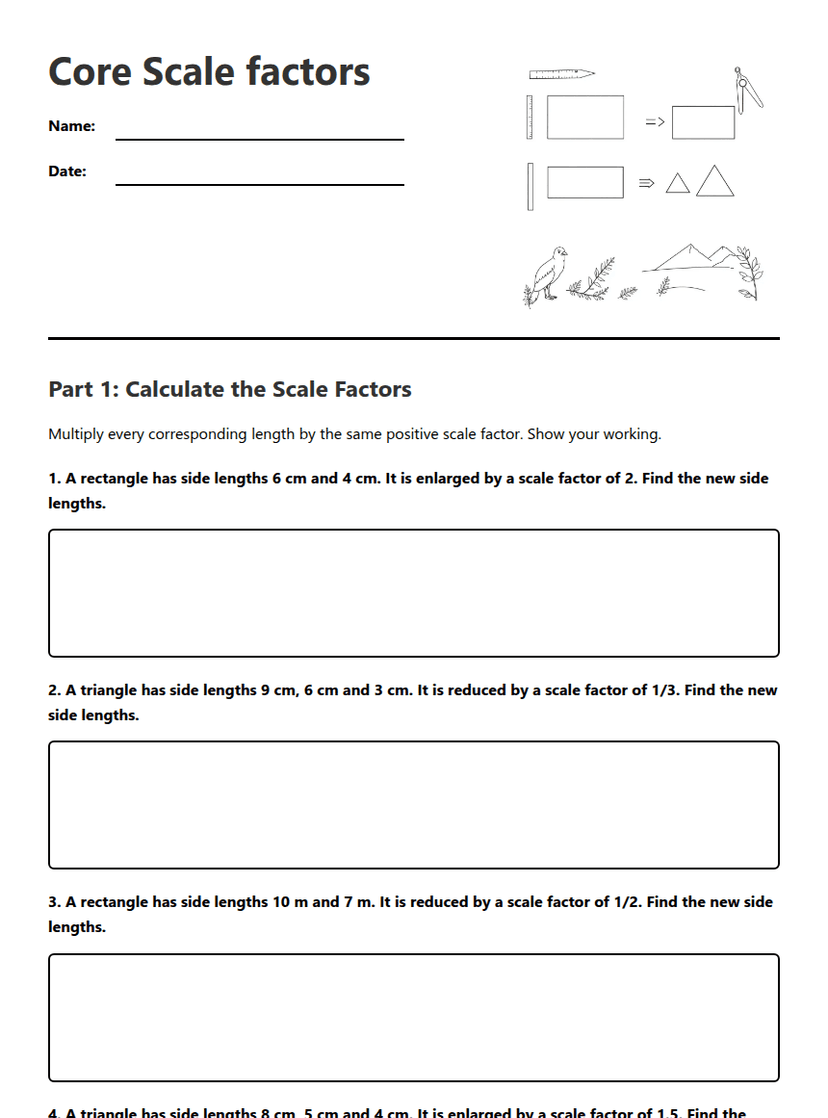
Core Scale Factors
Free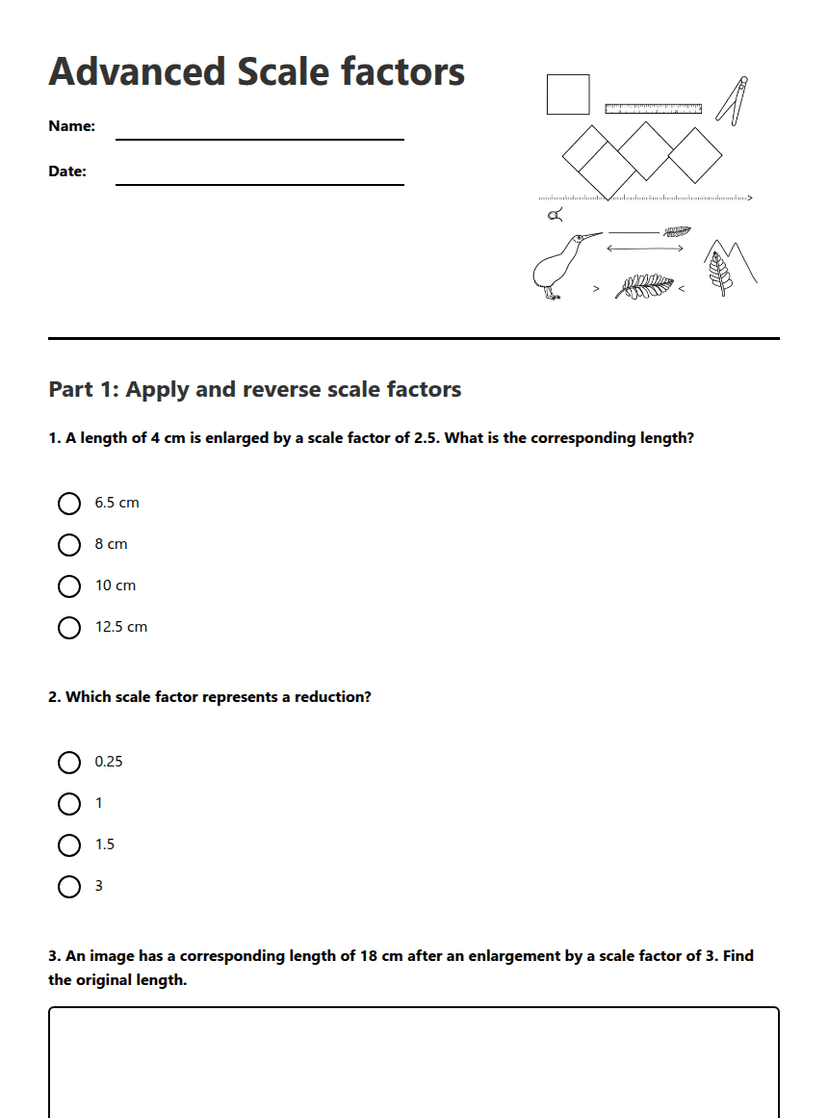
Advanced Scale factors
Free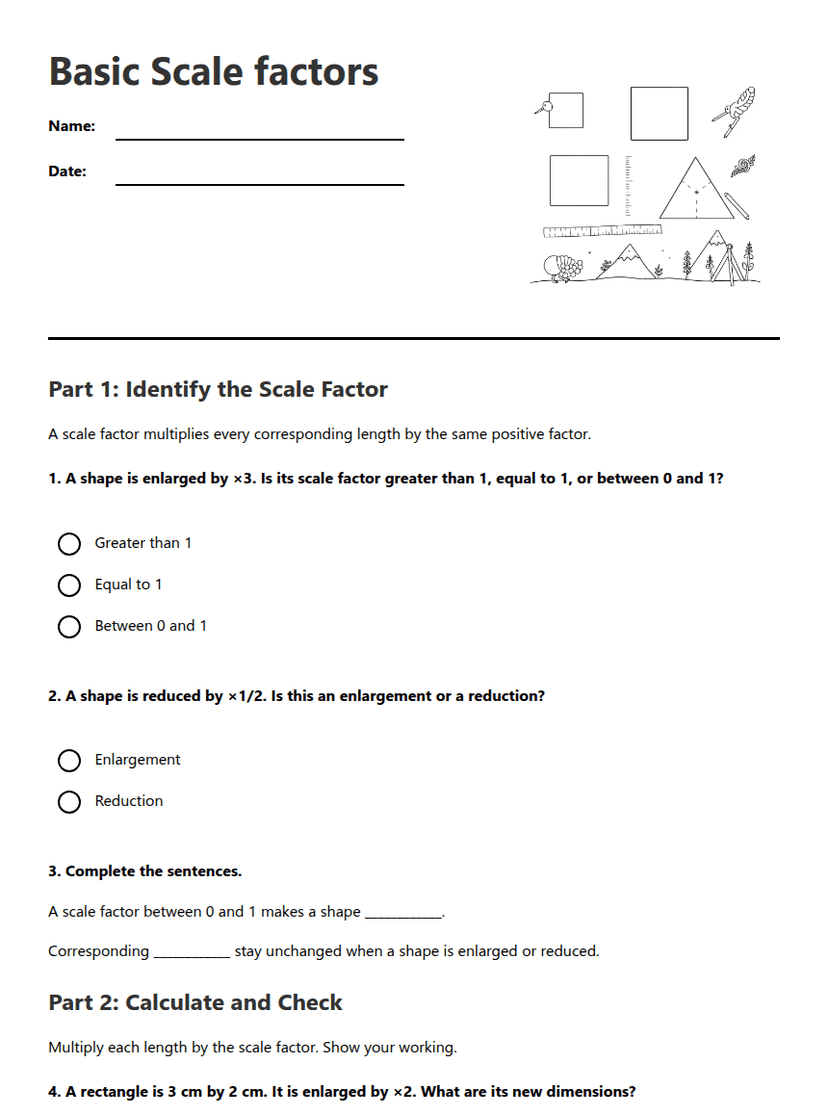
Basic Scale Factors Worksheet
Free
Proportion and Ratios Worksheet
Free
Proportional Reasoning Practice
Free