Island Resource Planning强奷
A free social sciences worksheet ready for your classroom. Open in Kuraplan to grab the print-ready PDF, customize it for your students, or generate a fresh version in seconds.
Island Resource Planning
Part 1: The Planning Challenge
You are part of the planning council for Motu Ora, a new island community. The first 600 residents need homes, food, clean water, transport, jobs, energy, health care and education. Resources are limited, so every decision involves trade-offs.
Success criteria:
I use evidence from the resource budget to make decisions. I explain who benefits and who may be disadvantaged. I consider environmental sustainability and fairness. I justify and revise at least one planning decision.Available resources for the first year
Fresh water: 1,200 kilolitres per day
Fertile land: 240 hectares
Building materials: 900 units
Energy: 600 megawatt-hours per month
Labour: 180 worker-months per month
Money: $1,200,000
Map planning
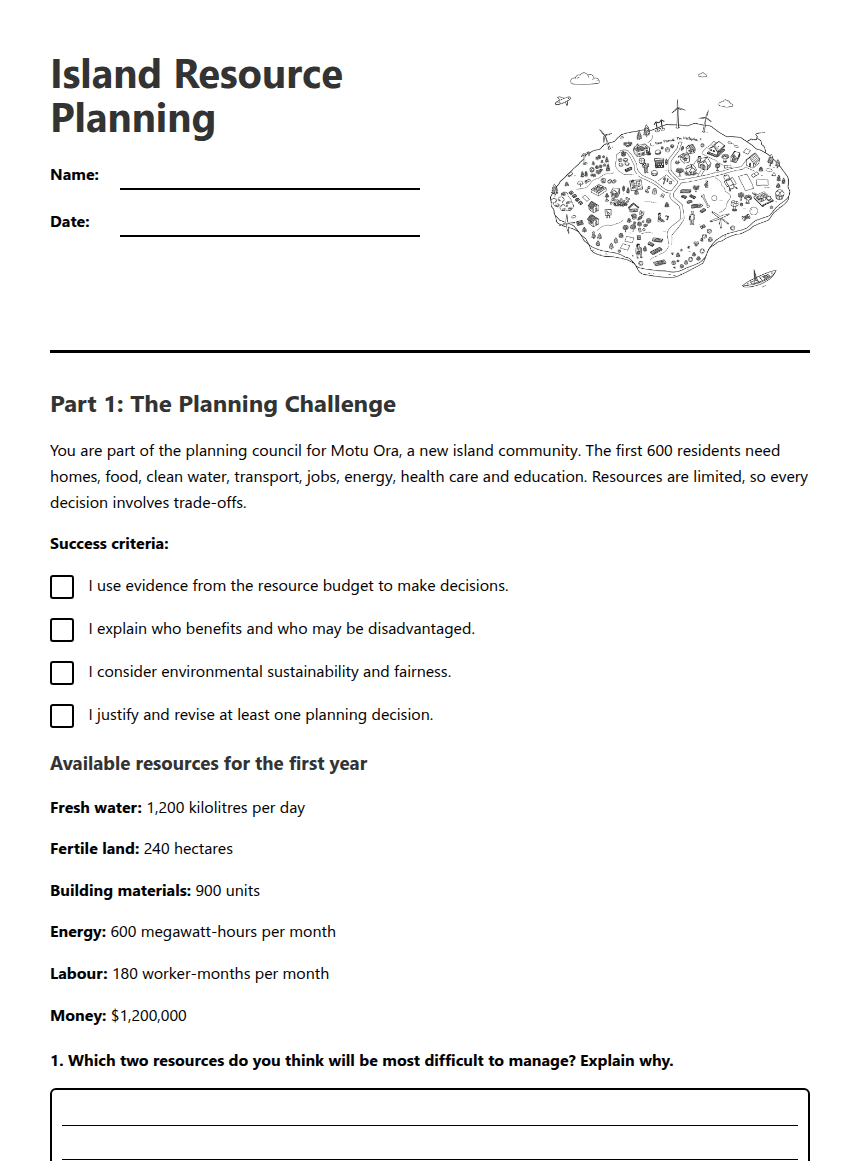
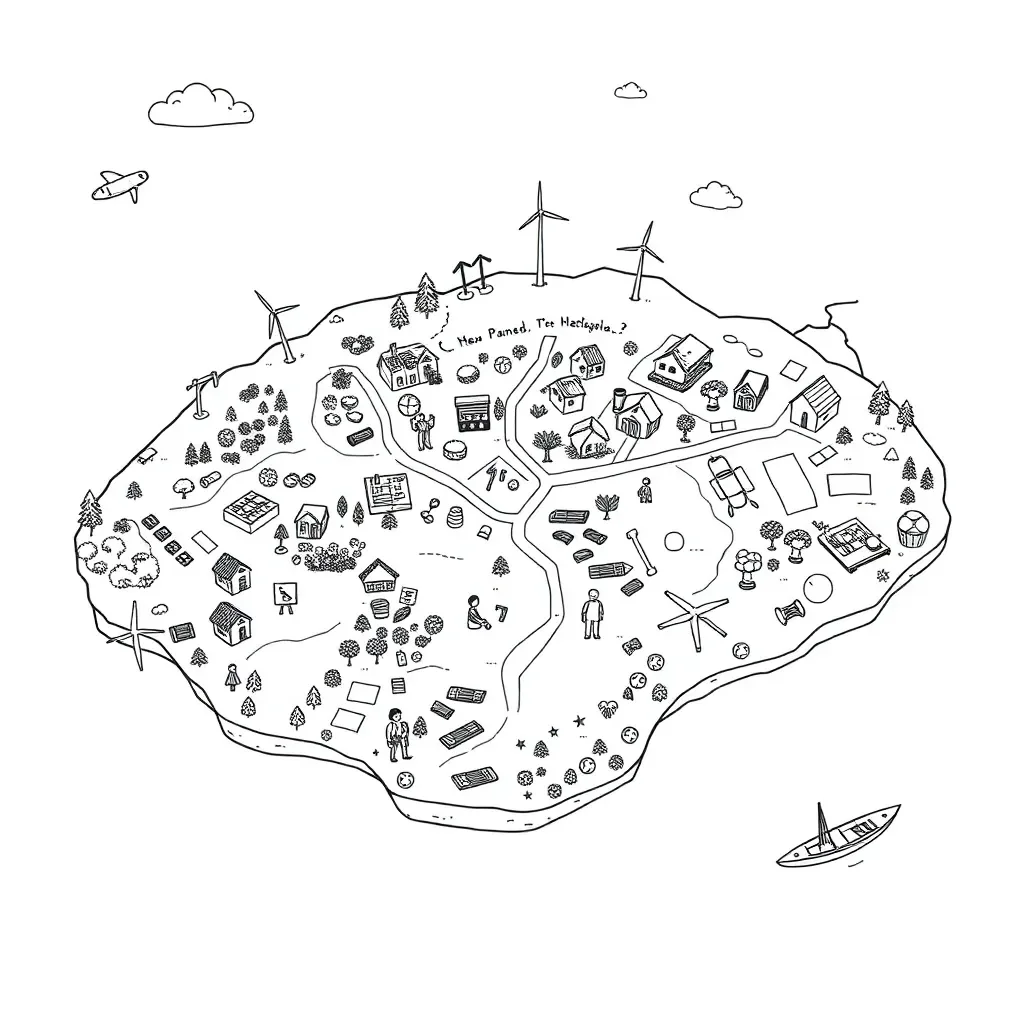
Draw a simple island map. Include a coast, hills or a water catchment, and a settlement. Place and label: housing, food production, water infrastructure, transport routes, industry, conservation, and public services. Add a key.
Part 2: Allocate Resources and Consider Perspectives
Complete the planning record below. The amounts must not exceed the available budget. You may divide a resource between several uses.
Housing: Building materials ______ units; money $__________; labour ______ worker-months; energy ______ MWh
Food production: Land ______ ha; water ______ kL/day; money $__________; labour ______ worker-months
Water infrastructure: Building materials ______ units; money $__________; labour ______ worker-months; energy ______ MWh
Transport: Building materials ______ units; money $__________; labour ______ worker-months; energy ______ MWh
Industry and businesses: Building materials ______ units; money $__________; labour ______ worker-months; energy ______ MWh
Conservation and public services: Land ______ ha; money $__________; labour ______ worker-months; energy ______ MWh
Stakeholder perspectives
Residents: Want affordable homes, safe drinking water, transport, schools and health services.
Farmers: Want reliable water, fertile land, farm access and protection from pollution.
Business owners: Want energy, workers, transport links and enough land to make a profit.
Environmental guardians: Want native habitats protected, low pollution and sustainable resource use.
Local government: Must balance the budget, provide essential services and plan for future population growth.
Part 3: Test, Reflect and Evaluate
Teacher answer guidance
Responses will vary because students are making justified planning choices. Indicative responses should show that fresh water, fertile land, energy, labour, materials and money cannot all be used for every purpose.
Strong map explanations may place food production on fertile, accessible land; water infrastructure near a reliable catchment but away from pollution; industry near transport routes and away from housing or sensitive habitats; and conservation in areas of high ecological value.
Suitable trade-offs may include building more housing but leaving less money for public services, expanding industry while increasing pollution risk, or protecting conservation land while reducing available farmland. Students should identify that some residents, farmers, businesses, environmental groups or future generations may benefit differently.
Sustainability may be shown through rainwater collection, renewable energy, efficient transport, waste reduction, soil protection, fishing limits or protected habitats. Equity may be shown through affordable housing, equal access to water and services, safe transport, or support for groups affected by development.
For the extension, a strong response reallocates resources, protects essential services and explains new impacts. After a cyclone, students may prioritise emergency water storage and resilient infrastructure. With population growth, they may increase housing, food production and services while explaining pressure on land, water and energy.
Curriculum connection: This activity broadly supports NZ Te Mātaiaho Social Sciences Phase 4, including Economic Activity, Geography, sustainability, decision-making and perspectives: https://newzealandcurriculum.tahurangi.education.govt.nz/new-zealand-curriculum-online/nzc---social-sciences-phase-4-years-9-10/5637290854.p
About This Worksheet
Free in Kuraplan
Sign up free, grab the PDF, and customize it for your class.
Print-Ready
Formatted for standard paper. Clean layout, easy to read.
AI-Generated
Created with Kuraplan's AI, designed for real classroom use.
For Teachers & Parents
Use in classrooms, for homework, tutoring, or homeschool.
Need a custom version of this worksheet?
Kuraplan's AI generates custom worksheets in seconds — differentiated for every learner, aligned to your curriculum.
Generate Custom Worksheets — Free