Linear Patterns Exploration
A free maths worksheet ready for your classroom. Open in Kuraplan to grab the print-ready PDF, customize it for your students, or generate a fresh version in seconds.
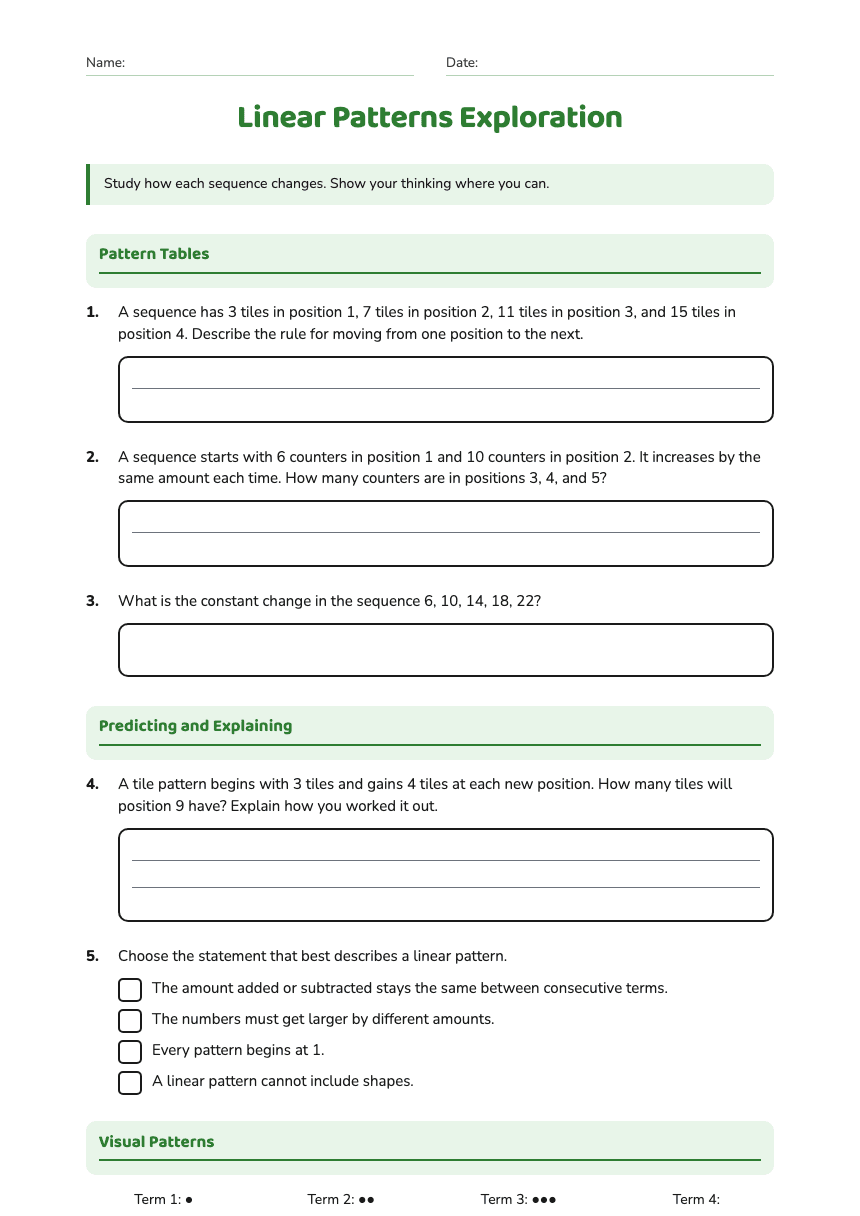
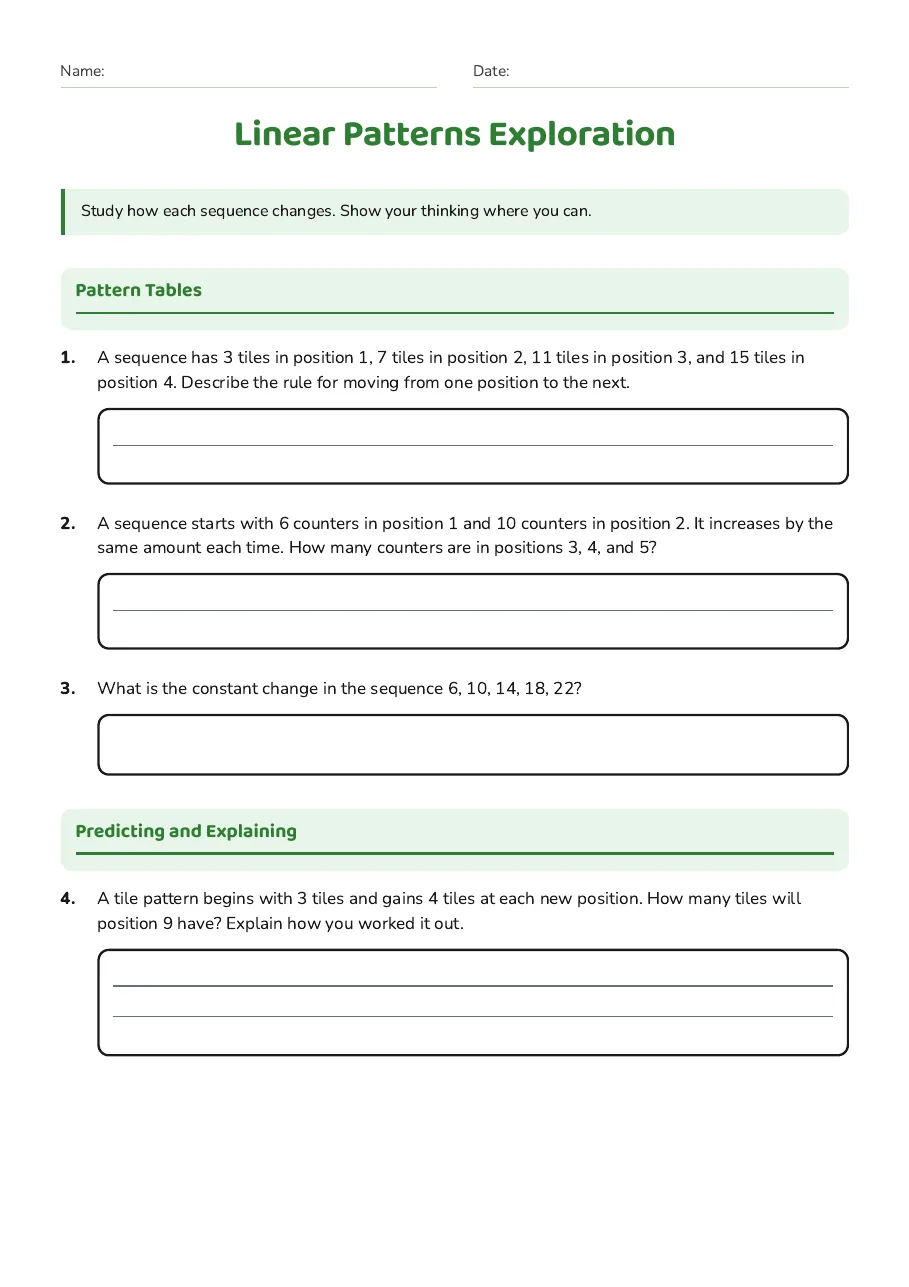
Linear Patterns Exploration
Pattern Tables
Predicting and Explaining
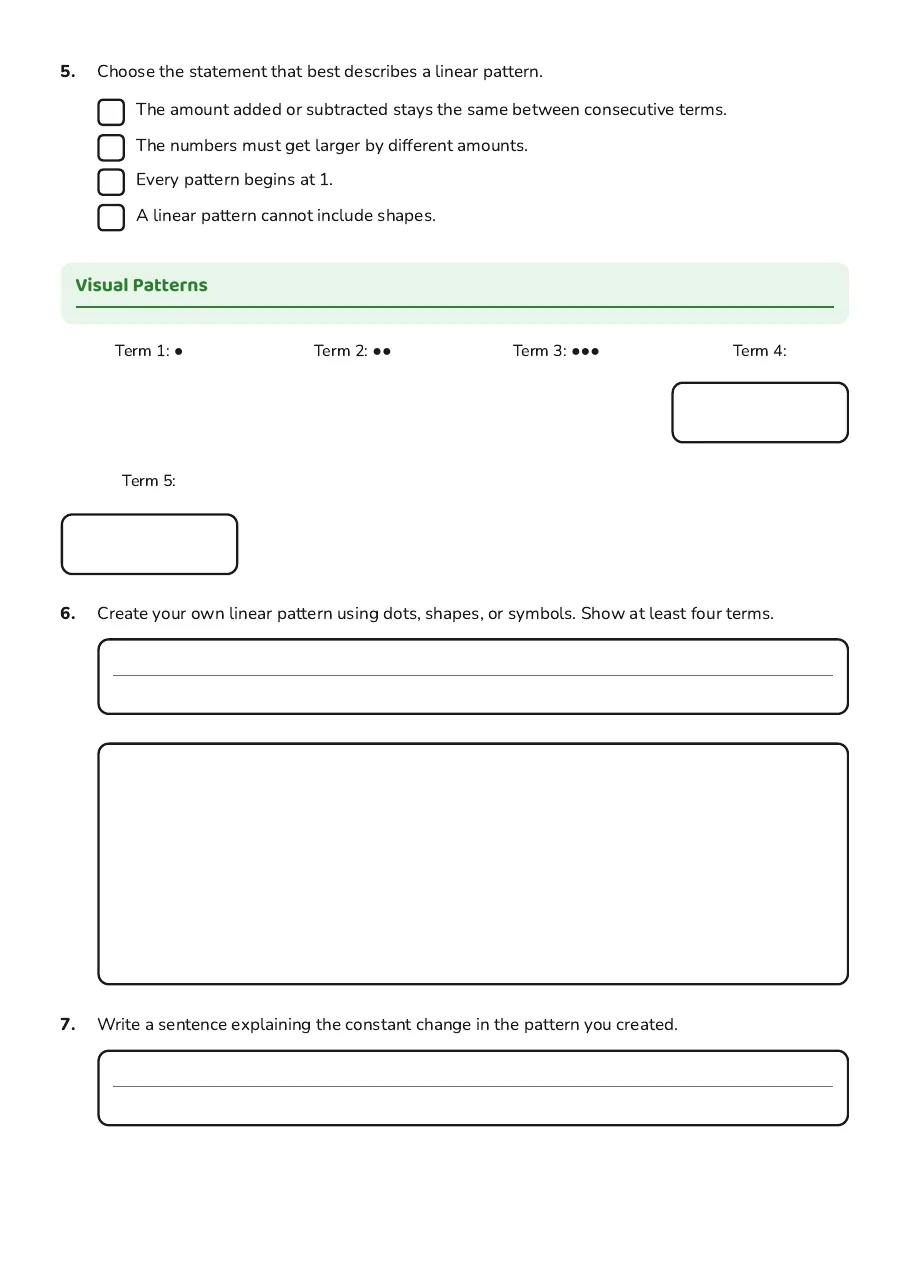
- The amount added or subtracted stays the same between consecutive terms.
- The numbers must get larger by different amounts.
- Every pattern begins at 1.
- A linear pattern cannot include shapes.
Visual Patterns
Term 1: ●
Term 2: ●●
Term 3: ●●●
Term 4:
Term 5:
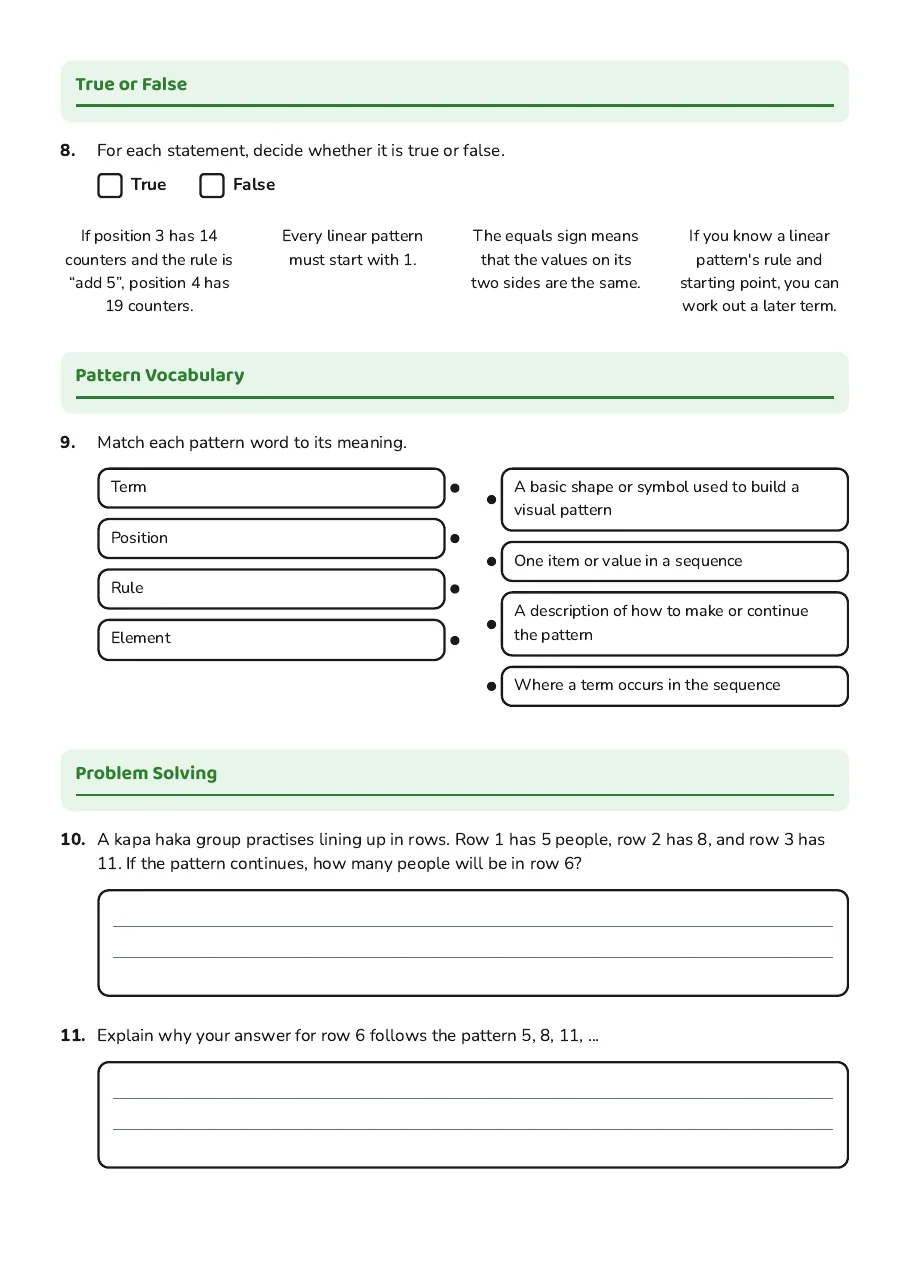
True or False
If position 3 has 14 counters and the rule is “add 5”, position 4 has 19 counters.
Every linear pattern must start with 1.
The equals sign means that the values on its two sides are the same.
If you know a linear pattern's rule and starting point, you can work out a later term.
Pattern Vocabulary
- Term
- Position
- Rule
- Element
- A basic shape or symbol used to build a visual pattern
- One item or value in a sequence
- A description of how to make or continue the pattern
- Where a term occurs in the sequence
Problem Solving
4 printable pages
Page 1
Page 2
Page 3

Page 4
About This Worksheet
Free in Kuraplan
Sign up free, grab the PDF, and customize it for your class.
Print-Ready
Formatted for standard paper. Clean layout, easy to read.
AI-Generated
Created with Kuraplan's AI, designed for real classroom use.
For Teachers & Parents
Use in classrooms, for homework, tutoring, or homeschool.
Need a custom version of this worksheet?
Kuraplan's AI generates custom worksheets in seconds — differentiated for every learner, aligned to your curriculum.
Generate Custom Worksheets — FreeMore Maths Worksheets
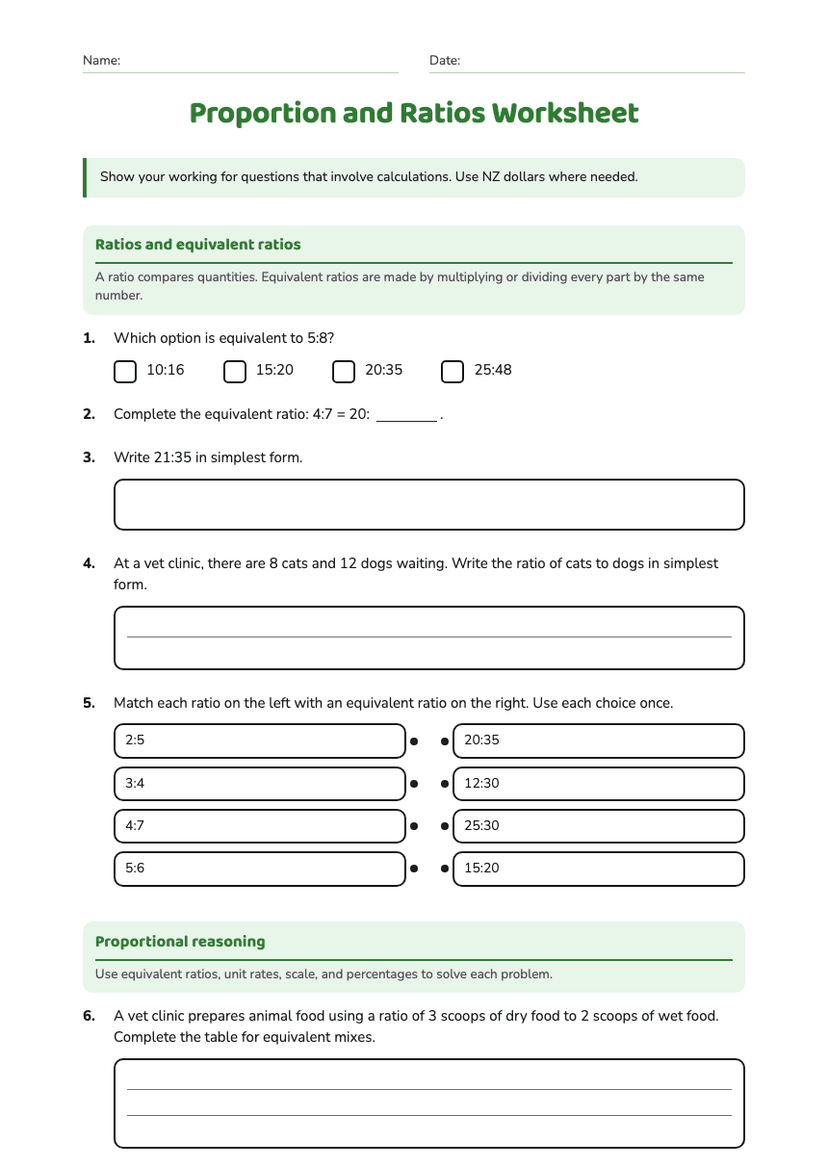
Proportion and Ratios Worksheet
Free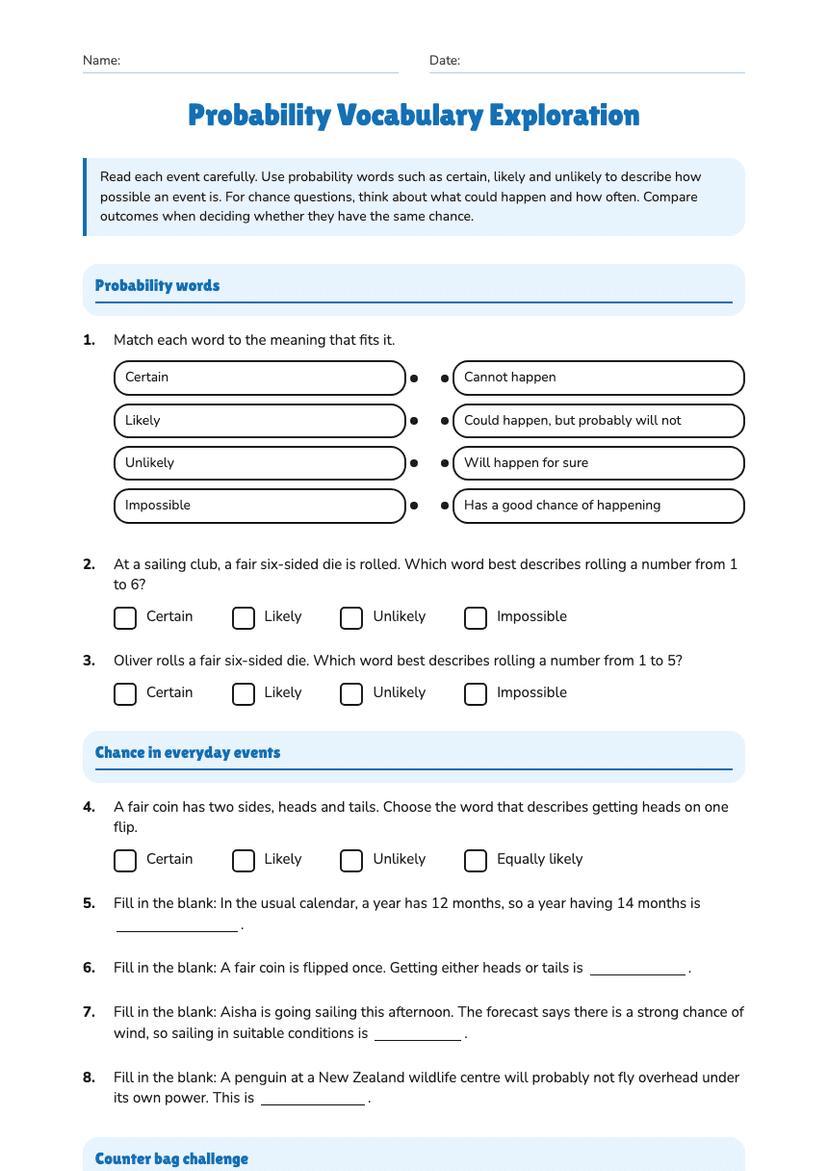
Probability Vocabulary Exploration
Free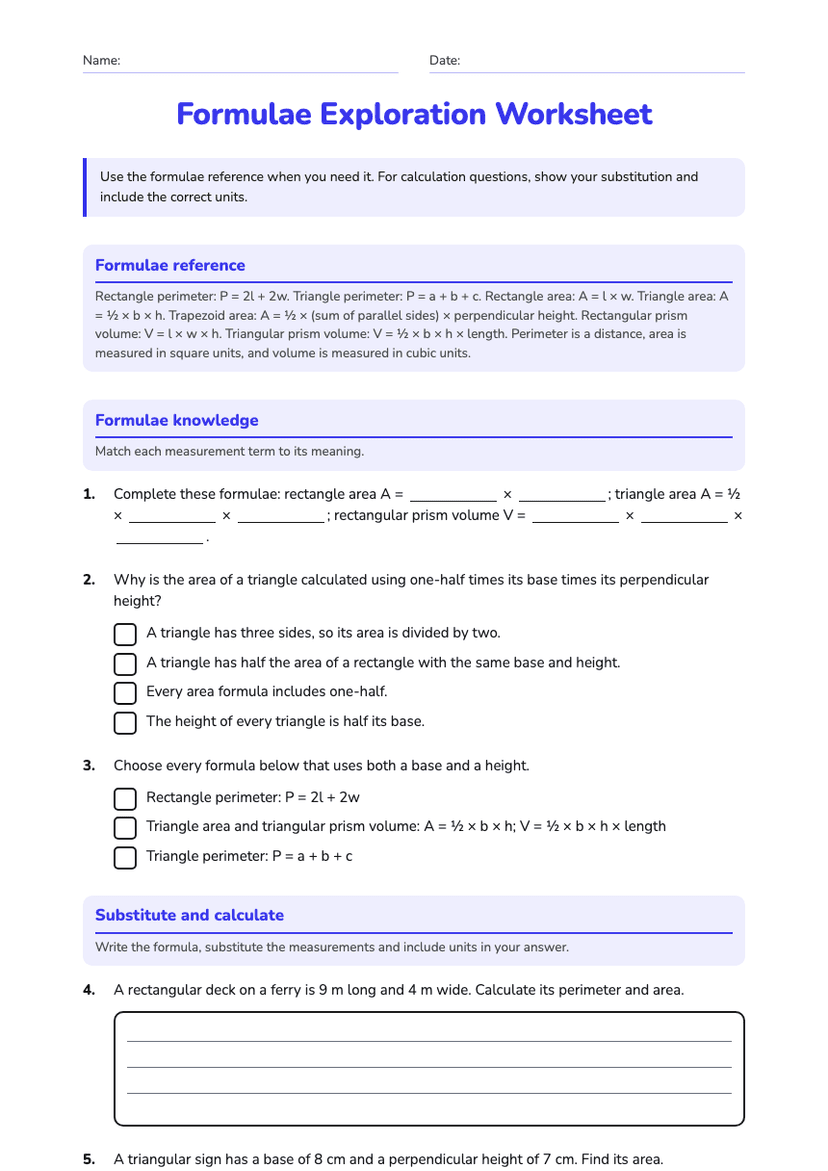
Formulae Exploration Worksheet
Free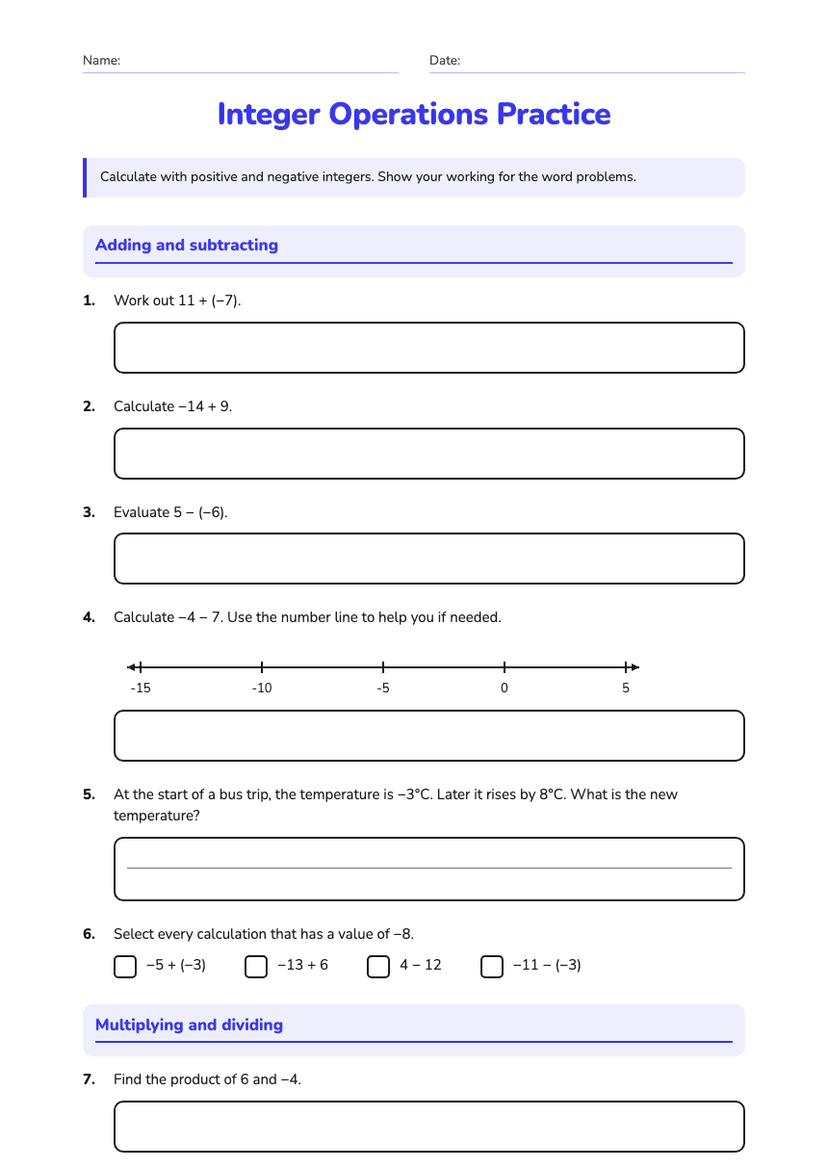
Integer Operations Practice
Free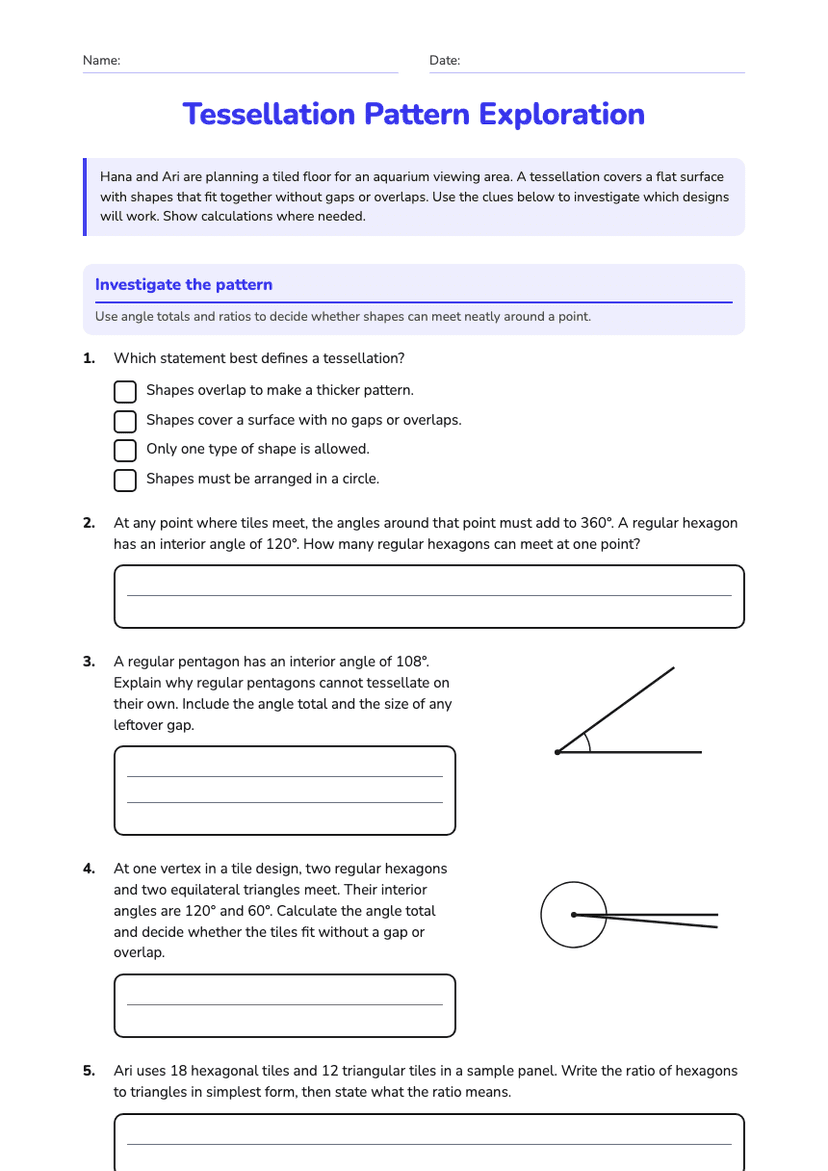
Tessellation Pattern Exploration
Free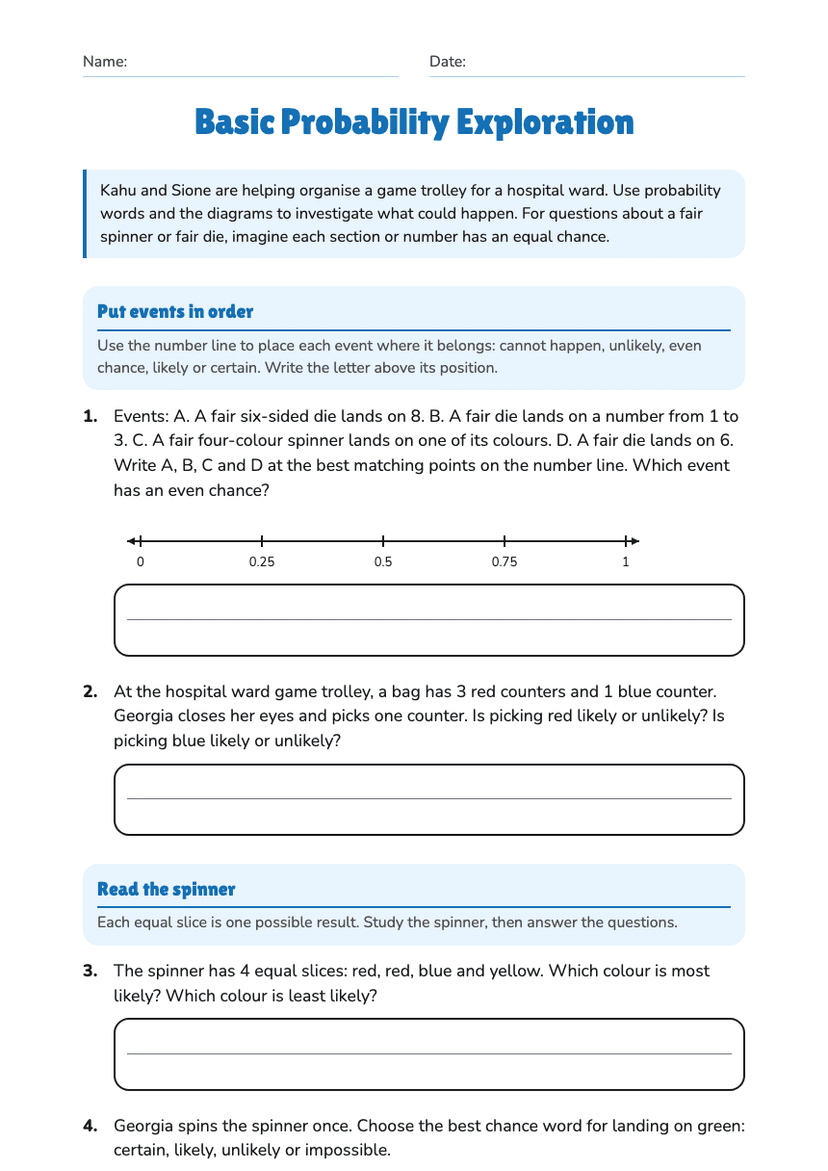
Basic Probability Exploration
Free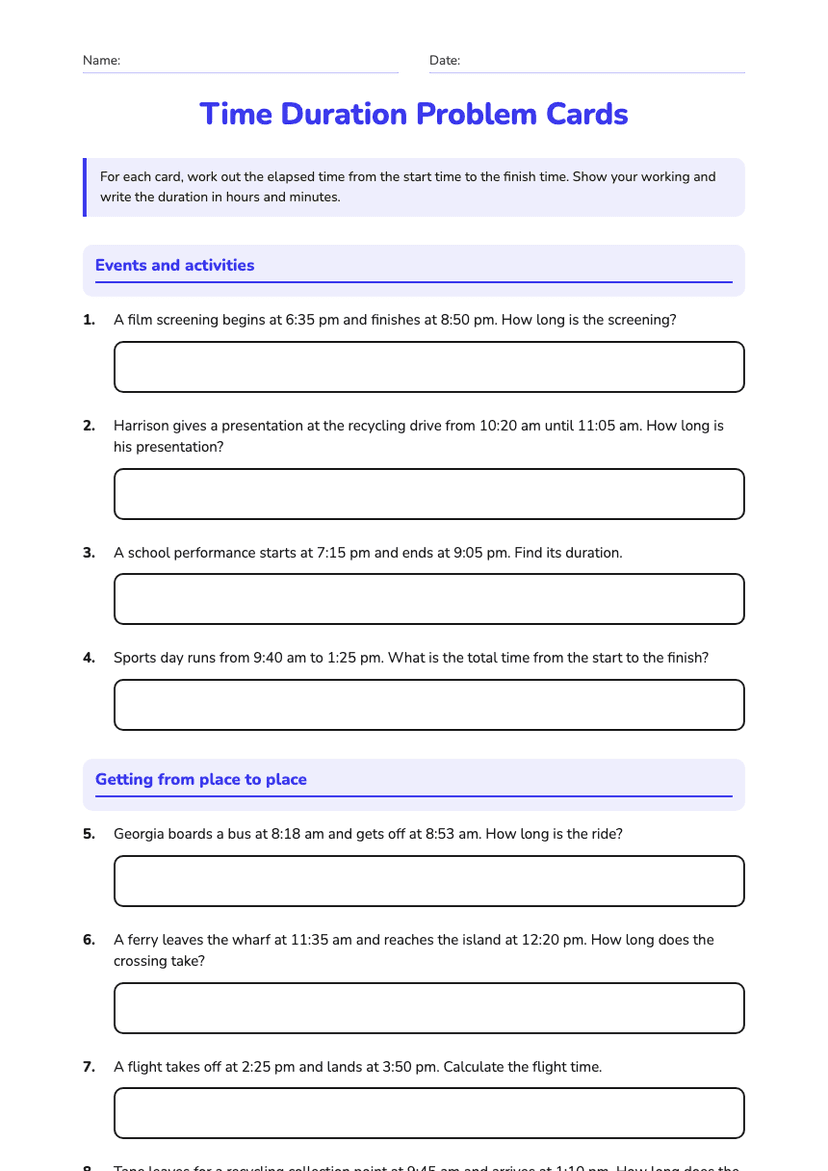
Time Duration Problem Cards
Free