Measure and Convert Mastery
A free maths worksheet ready for your classroom. Open in Kuraplan to grab the print-ready PDF, customize it for your students, or generate a fresh version in seconds.

Measure and Convert Mastery
Year 7–8 Maths | Metric Measurement
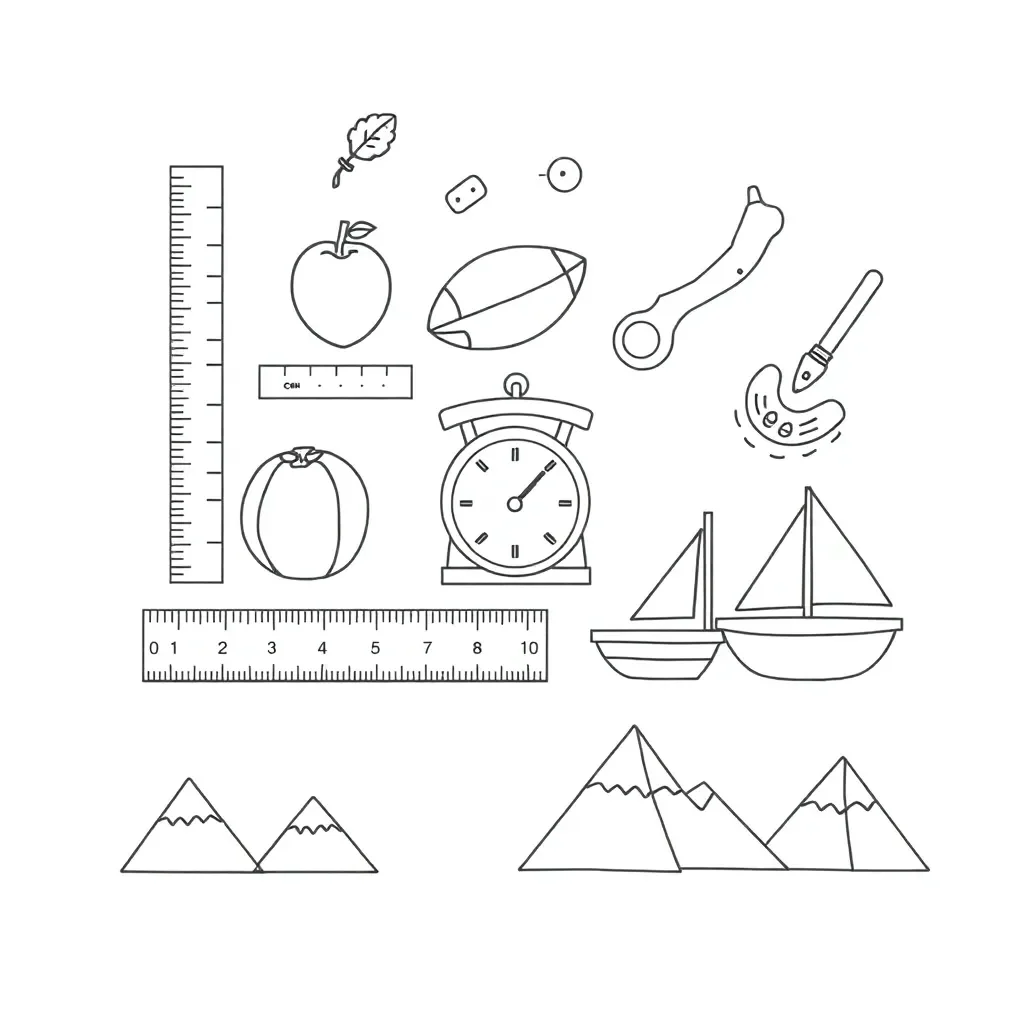
📏 Part 1: Choosing the Right Unit
For each object, circle the most appropriate unit of measurement.
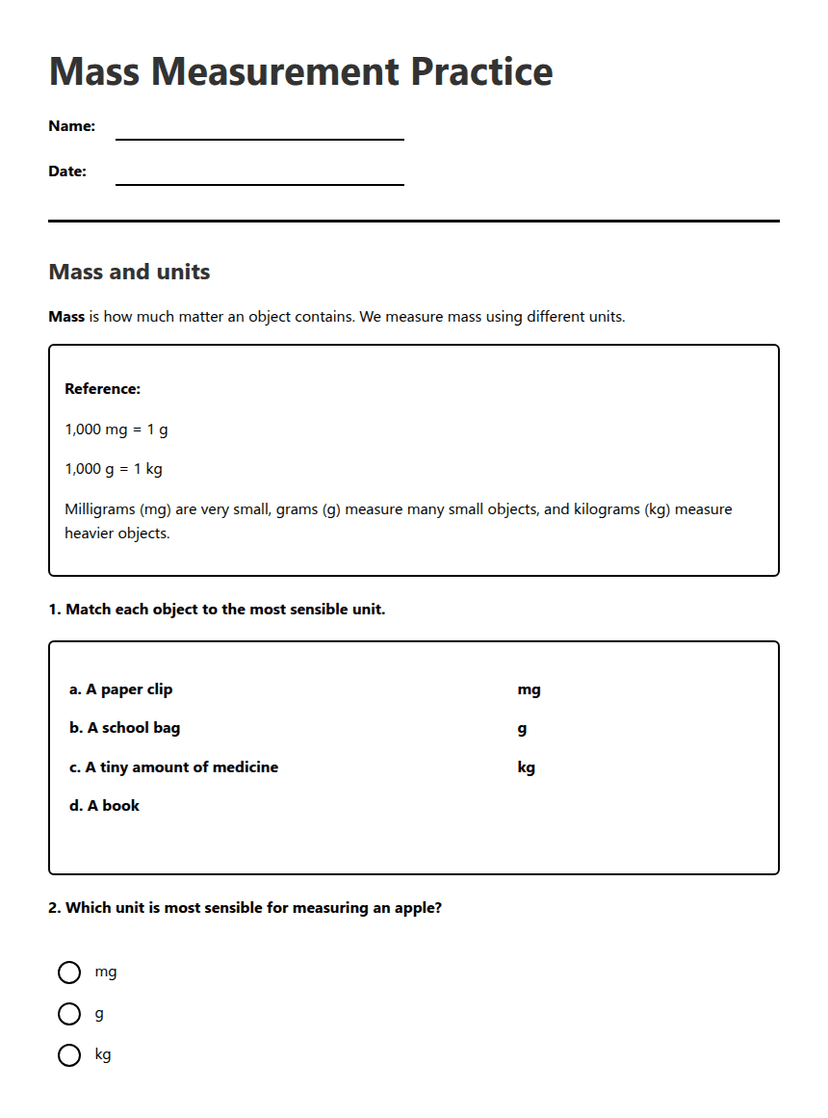
Prefixes: A. kilo- B. centi- C. milli-
A. kilo-: means 1000 times the base unit. Example: 1 kilogram (kg) = 1000 grams (g).
B. centi-: means 1/100 of the base unit. Example: 1 centimetre (cm) = 0.01 metres (m).
C. milli-: means 1/1000 of the base unit. Example: 1 millilitre (mL) = 0.001 litres (L).
Estimate: _____________ Actual measurement: _____________ Unit used: _____________
🔬 Part 2: Hands-On Measurement Recording
Use a ruler, scale, or measuring jug to measure each item. Record your estimate first, then the actual measurement with the correct unit.
Object: Width of your maths book
Estimate: _____________ Actual measurement: _____________ Unit used: _____________
Object: Mass of your pencil case
Estimate: _____________ Actual measurement: _____________ Unit used: _____________
Object: Water in a measuring jug
Estimate: _____________ Actual measurement: _____________ Unit used: _____________
🔄 Part 3: Converting Metric Units
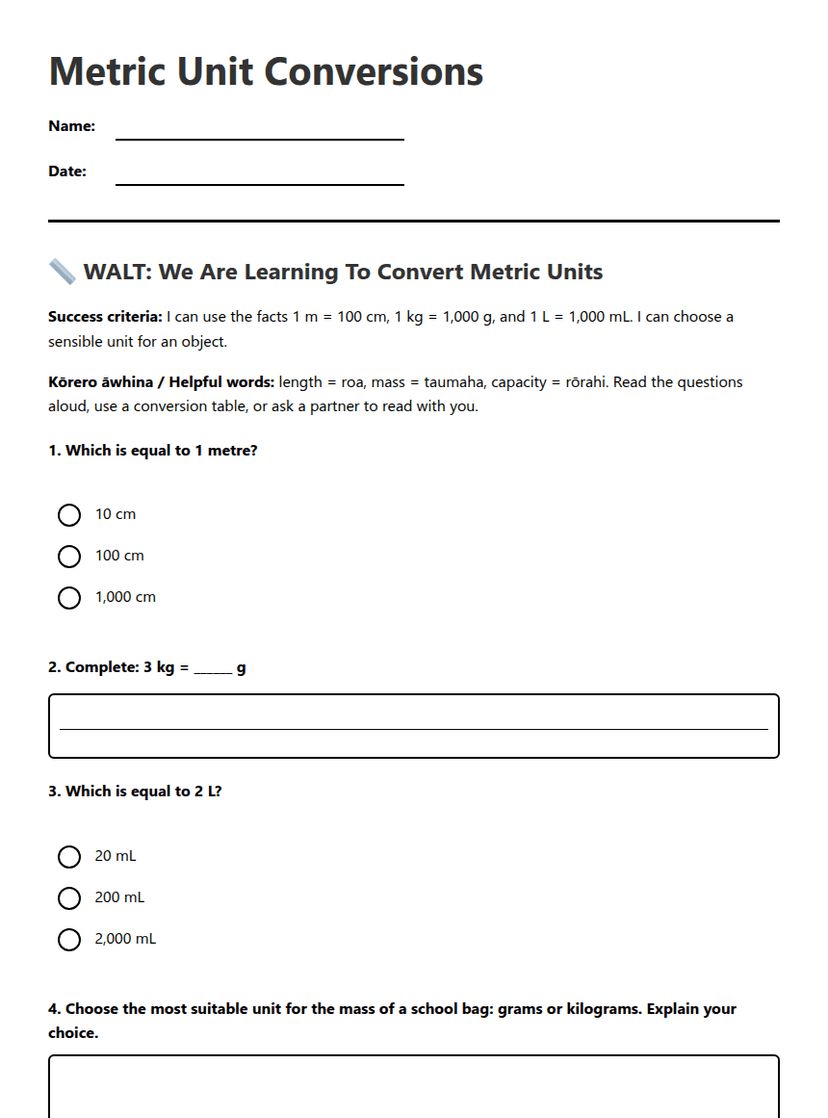
Use multiplication or division by powers of 10 to convert between units. Show your working.
Reminder: × 1000 to go from a larger unit to a smaller unit | ÷ 1000 to go from a smaller unit to a larger unit
a) 3.5 kg = _____________ g
b) 2500 mL = _____________ L
c) 450 cm = _____________ m
You have a jug containing 2 litres of juice. You want to know how many millilitres that is.
Step 1: Remember that 1 litre = 1000 millilitres.
Step 2: Calculate: 2 litres × 1000 = _____________ mL.
Step 3: Show your working here:
About This Worksheet
Free in Kuraplan
Sign up free, grab the PDF, and customize it for your class.
Print-Ready
Formatted for standard paper. Clean layout, easy to read.
AI-Generated
Created with Kuraplan's AI, designed for real classroom use.
For Teachers & Parents
Use in classrooms, for homework, tutoring, or homeschool.
Need a custom version of this worksheet?
Kuraplan's AI generates custom worksheets in seconds — differentiated for every learner, aligned to your curriculum.
Generate Custom Worksheets — Free