Measuring Height and Distance
A free maths worksheet ready for your classroom. Open in Kuraplan to grab the print-ready PDF, customize it for your students, or generate a fresh version in seconds.

Measuring Height and Distance
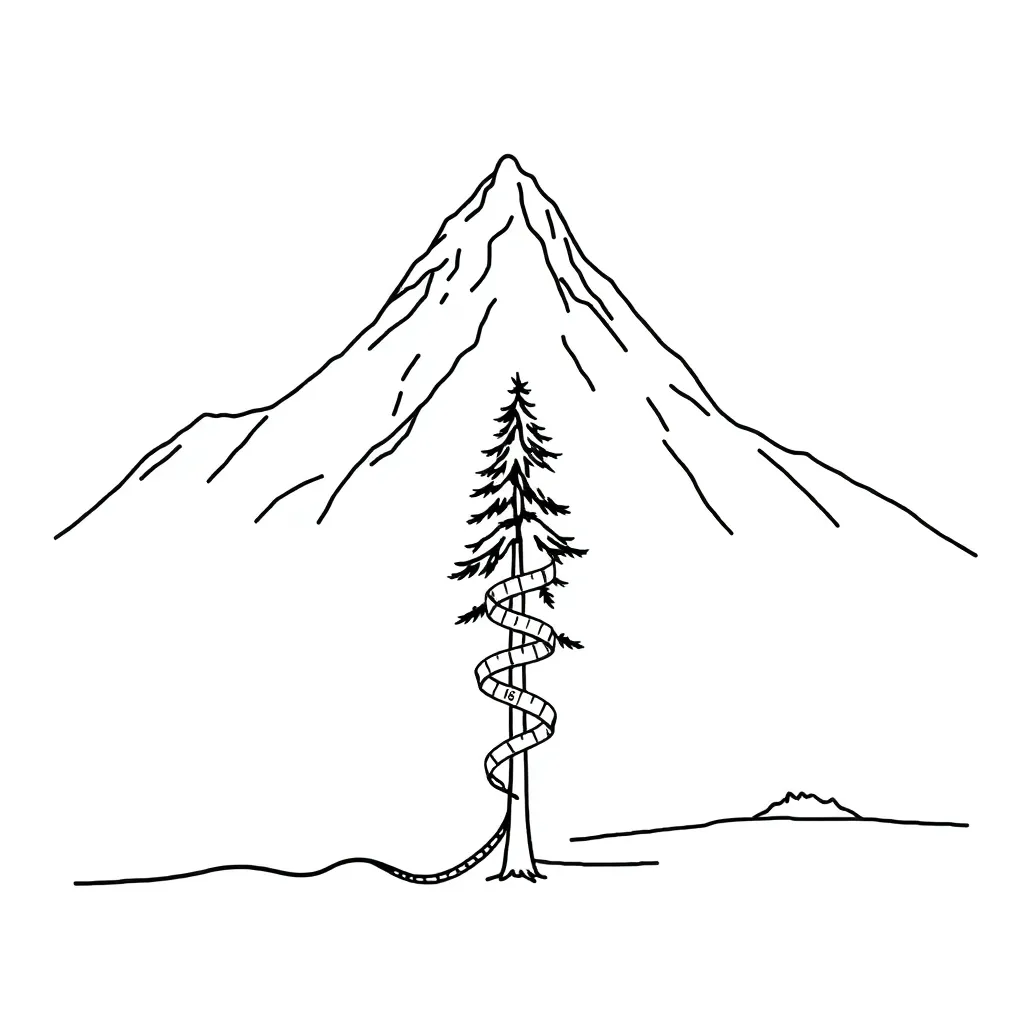
📏 Part 1: Estimation Practice
a) Classroom door height: My estimate: ____________
b) Teacher's desk height: My estimate: ____________
c) Whiteboard height: My estimate: ____________
a) From your desk to the whiteboard: My estimate: ____________
b) Width of the classroom: My estimate: ____________
c) Length of the classroom: My estimate: ____________
📐 Part 2: Actual Measurements
Heights:
a) Classroom door: Actual measurement: ____________
b) Teacher's desk: Actual measurement: ____________
c) Whiteboard: Actual measurement: ____________
Distances:
a) Desk to whiteboard: Actual measurement: ____________
b) Classroom width: Actual measurement: ____________
c) Classroom length: Actual measurement: ____________
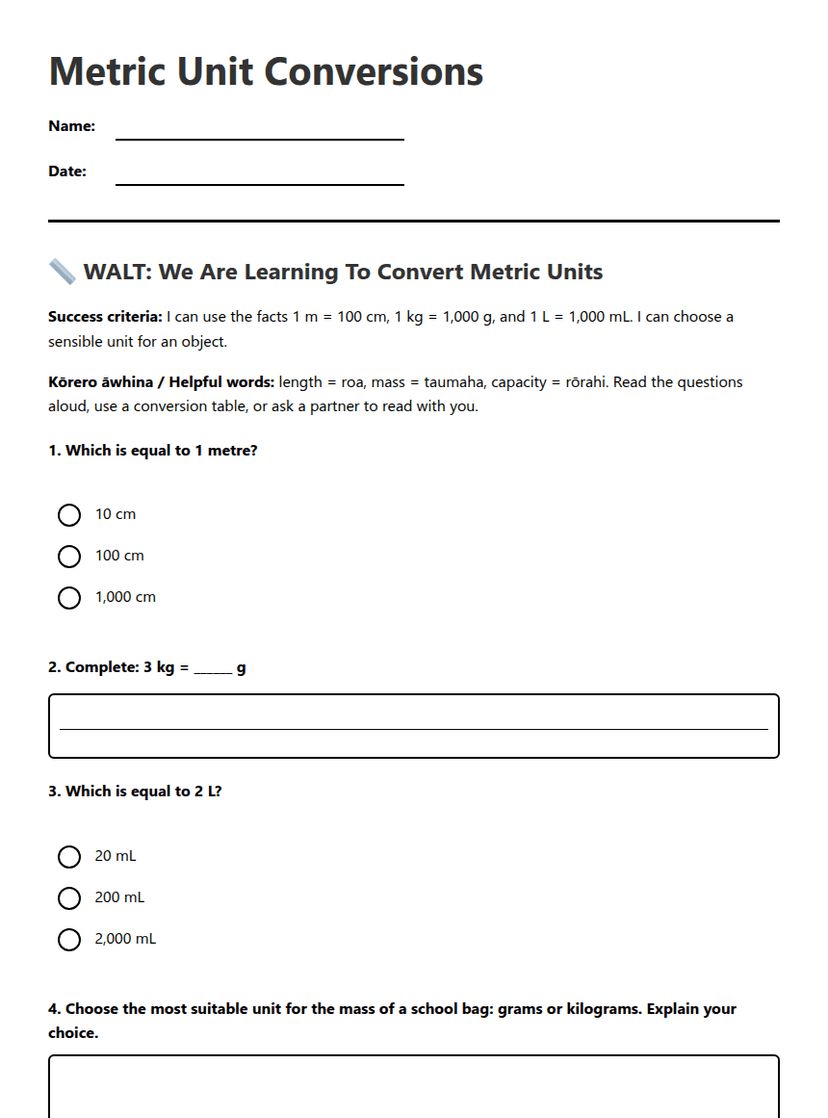
a) 150 cm = _______ m
b) 2.5 m = _______ cm
c) 85 cm = _______ m
d) 3.2 m = _______ cm
🎯 Part 3: Comparing Estimates and Measurements
🔧 Part 4: Choosing the Right Tools and Units
🏗️ Part 5: Real-World Applications
a) Building a house:
b) Making school uniforms:
c) Planning a sports field:
a) ________________
b) ________________
c) ________________
About This Worksheet
Free in Kuraplan
Sign up free, grab the PDF, and customize it for your class.
Print-Ready
Formatted for standard paper. Clean layout, easy to read.
AI-Generated
Created with Kuraplan's AI, designed for real classroom use.
For Teachers & Parents
Use in classrooms, for homework, tutoring, or homeschool.
Need a custom version of this worksheet?
Kuraplan's AI generates custom worksheets in seconds — differentiated for every learner, aligned to your curriculum.
Generate Custom Worksheets — Free