Mihi and Pepeha Introduction
A free te reo māori worksheet ready for your classroom. Open in Kuraplan to grab the print-ready PDF, customize it for your students, or generate a fresh version in seconds.
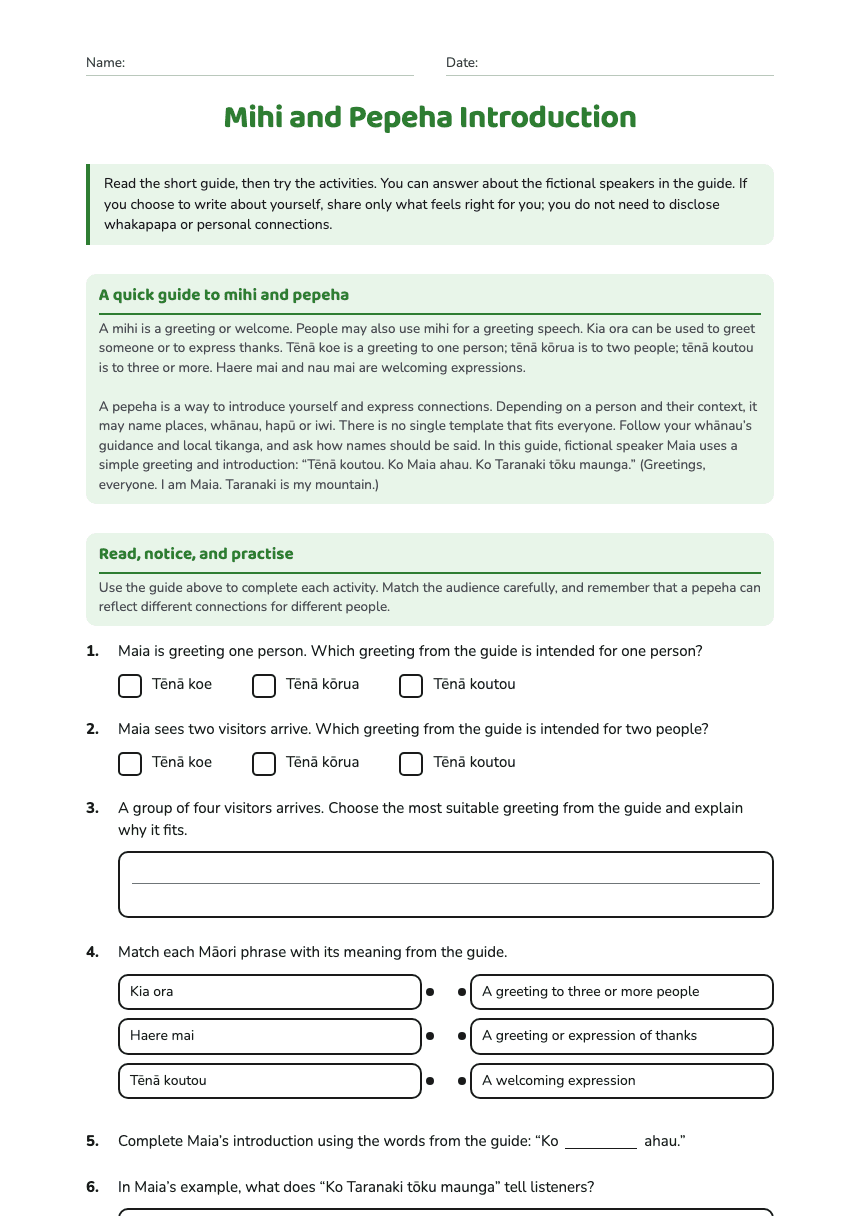
Mihi and Pepeha Introduction
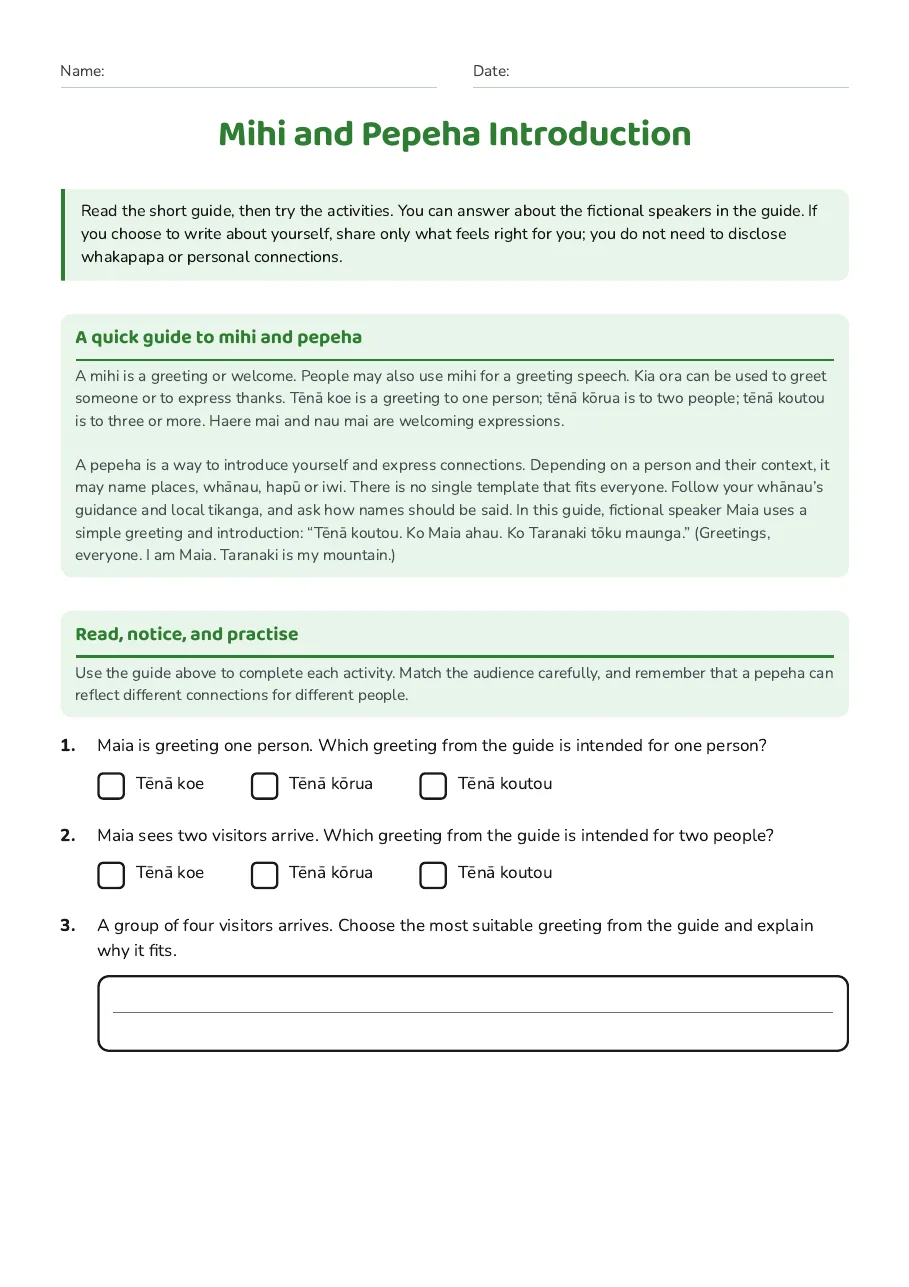
A quick guide to mihi and pepeha
A mihi is a greeting or welcome. People may also use mihi for a greeting speech. Kia ora can be used to greet someone or to express thanks. Tēnā koe is a greeting to one person; tēnā kōrua is to two people; tēnā koutou is to three or more. Haere mai and nau mai are welcoming expressions. A pepeha is a way to introduce yourself and express connections. Depending on a person and their context, it may name places, whānau, hapū or iwi. There is no single template that fits everyone. Follow your whānau’s guidance and local tikanga, and ask how names should be said. In this guide, fictional speaker Maia uses a simple greeting and introduction: “Tēnā koutou. Ko Maia ahau. Ko Taranaki tōku maunga.” (Greetings, everyone. I am Maia. Taranaki is my mountain.)
Read, notice, and practise
Use the guide above to complete each activity. Match the audience carefully, and remember that a pepeha can reflect different connections for different people.
- Tēnā koe
- Tēnā kōrua
- Tēnā koutou
- Tēnā koe
- Tēnā kōrua
- Tēnā koutou
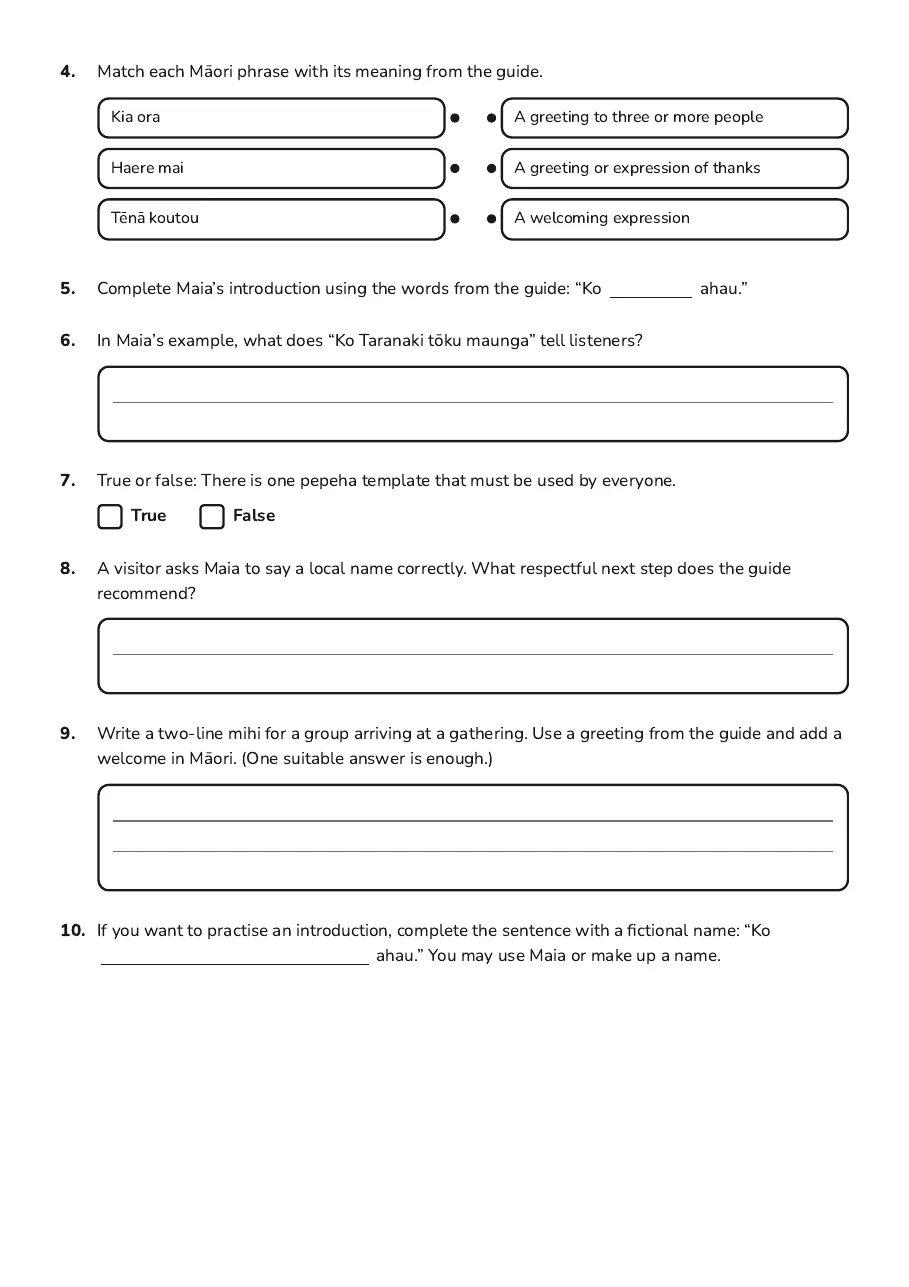
- Kia ora
- Haere mai
- Tēnā koutou
- A greeting to three or more people
- A greeting or expression of thanks
- A welcoming expression
2 printable pages
Page 1
Page 2
About This Worksheet
Free in Kuraplan
Sign up free, grab the PDF, and customize it for your class.
Print-Ready
Formatted for standard paper. Clean layout, easy to read.
AI-Generated
Created with Kuraplan's AI, designed for real classroom use.
For Teachers & Parents
Use in classrooms, for homework, tutoring, or homeschool.
Need a custom version of this worksheet?
Kuraplan's AI generates custom worksheets in seconds — differentiated for every learner, aligned to your curriculum.
Generate Custom Worksheets — FreeMore Te Reo Māori Worksheets
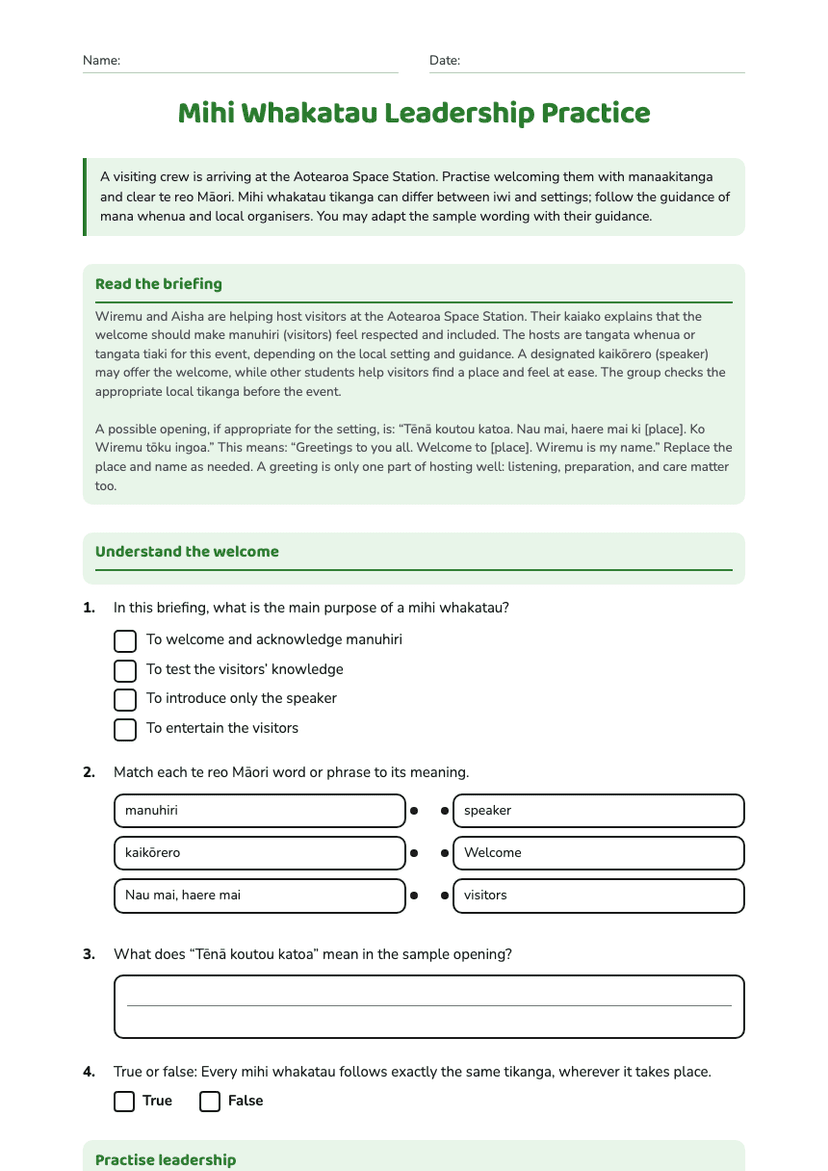
Mihi Whakatau Leadership Practice
Free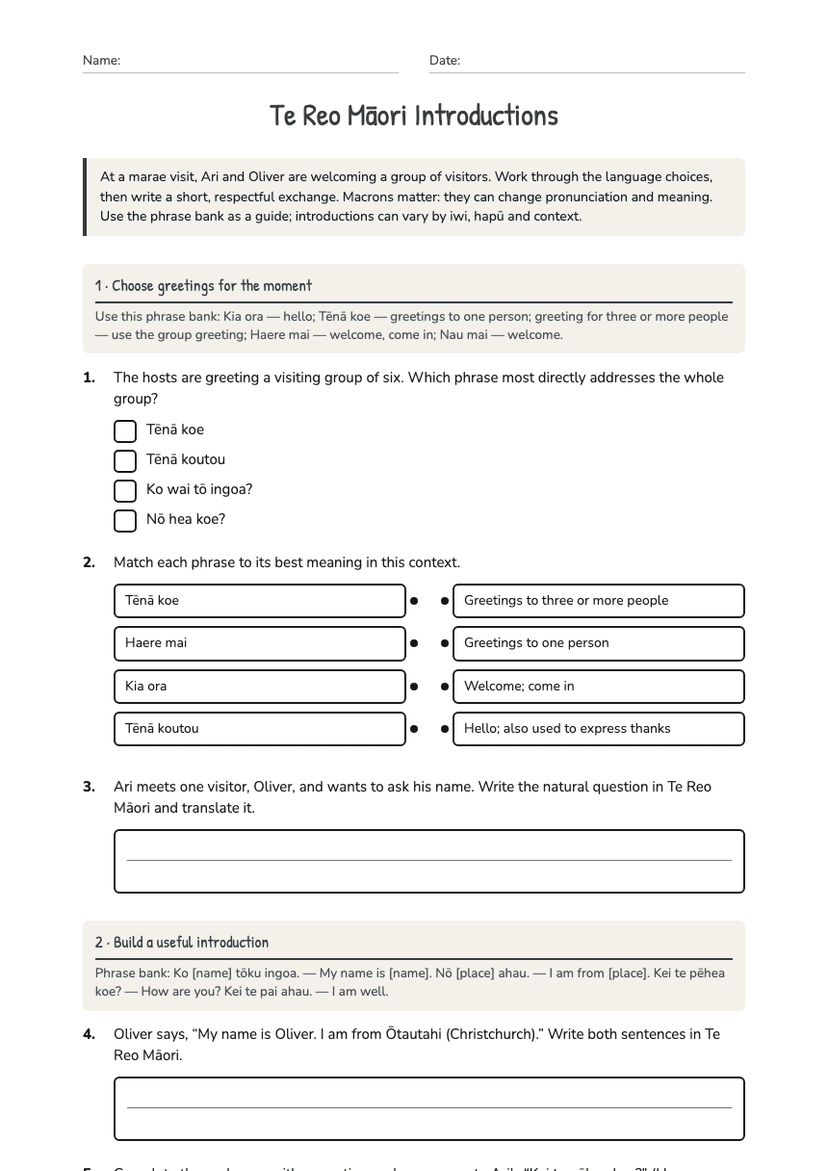
Te Reo Māori Introductions
Free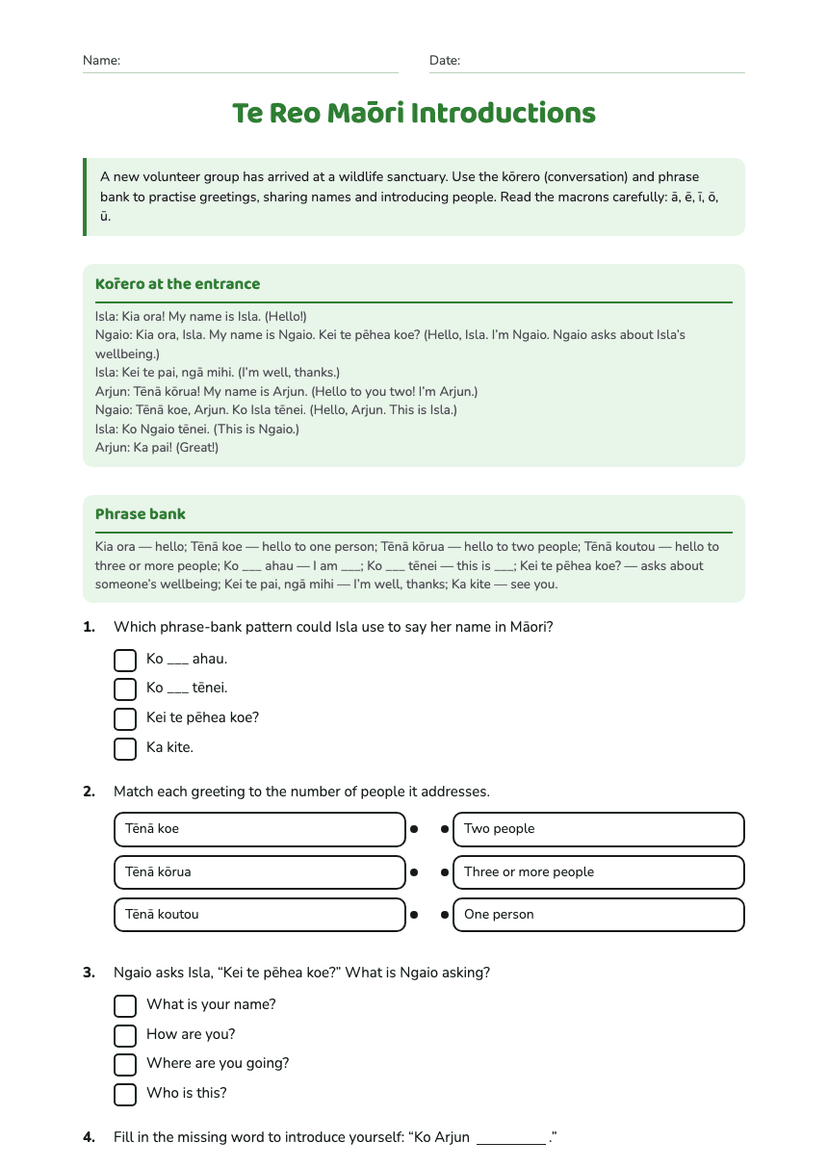
Te Reo Māori Introductions
Free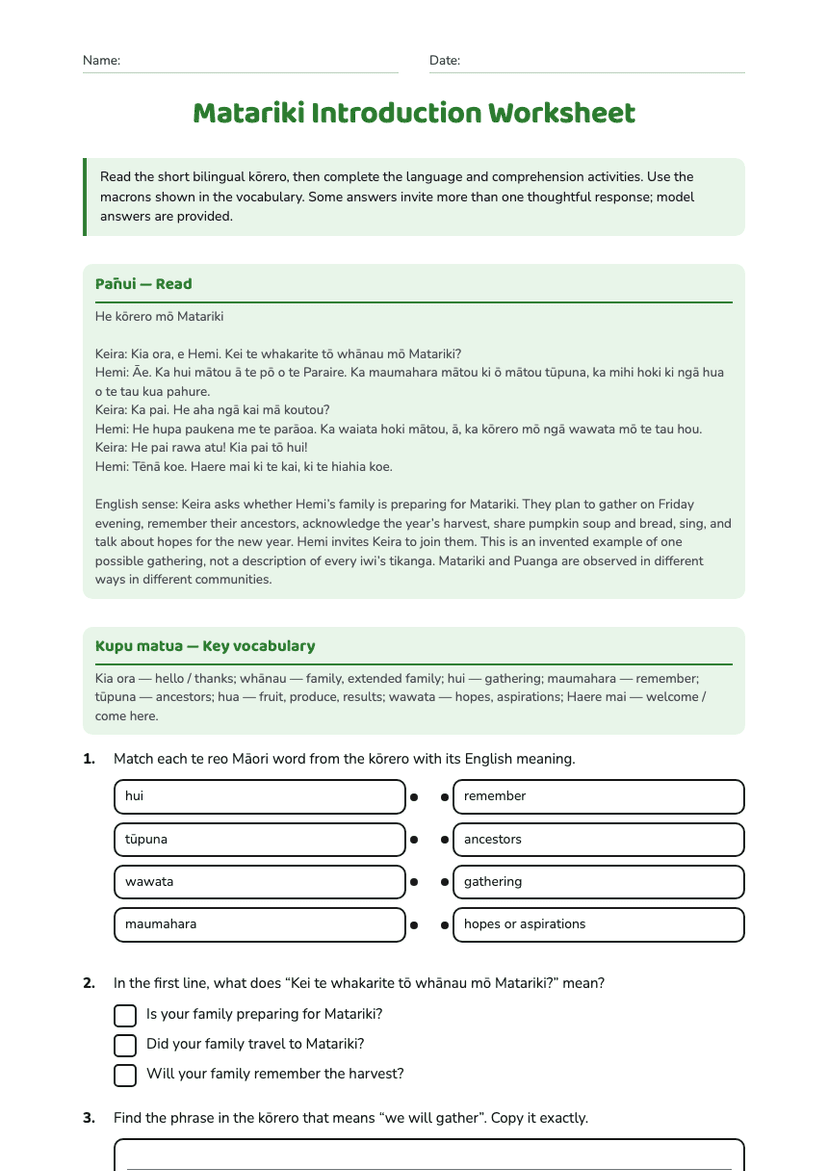
Matariki Introduction Worksheet
Free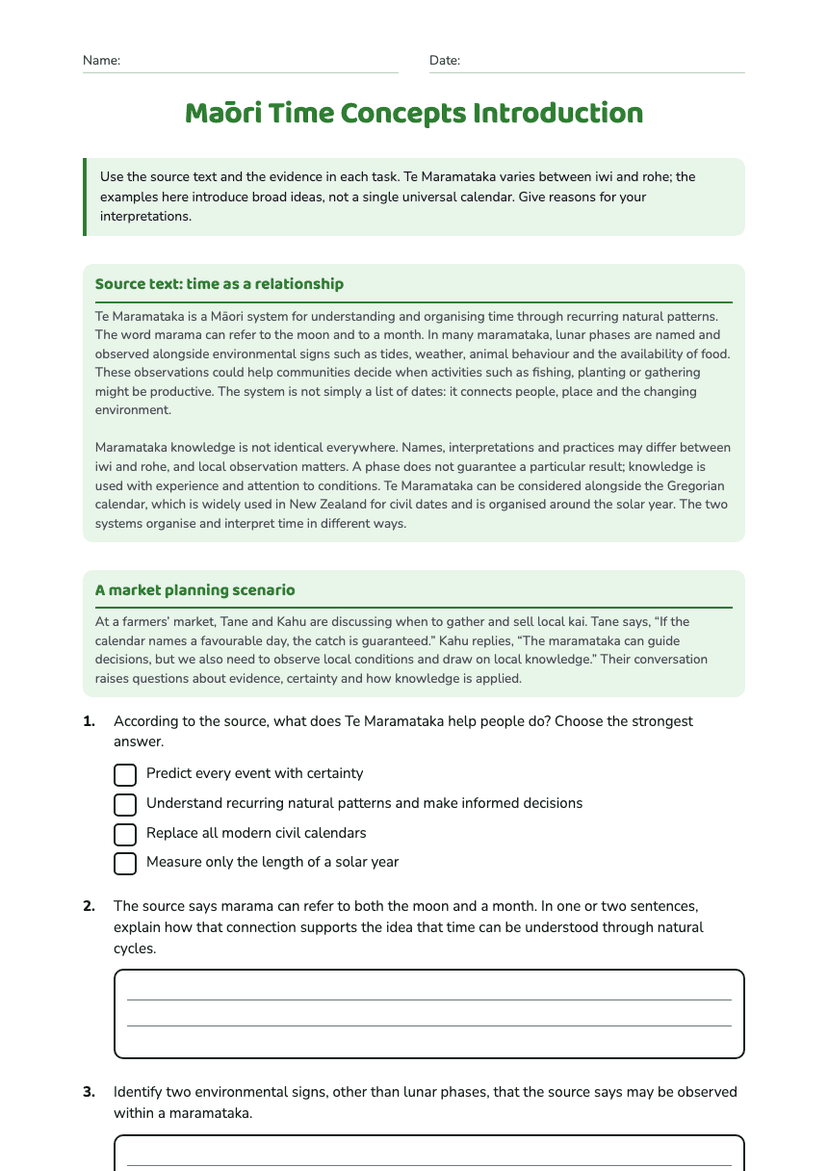
Māori Time Concepts Introduction
Free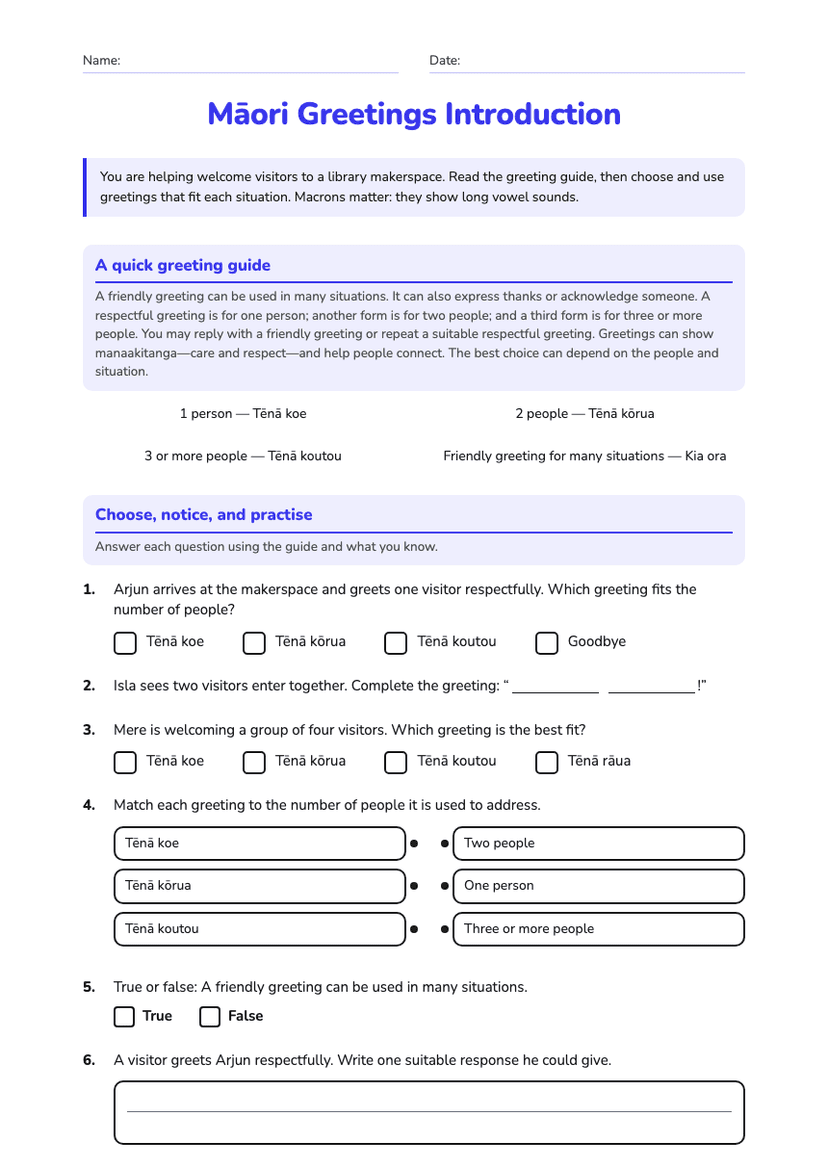
Māori Greetings Introduction
Free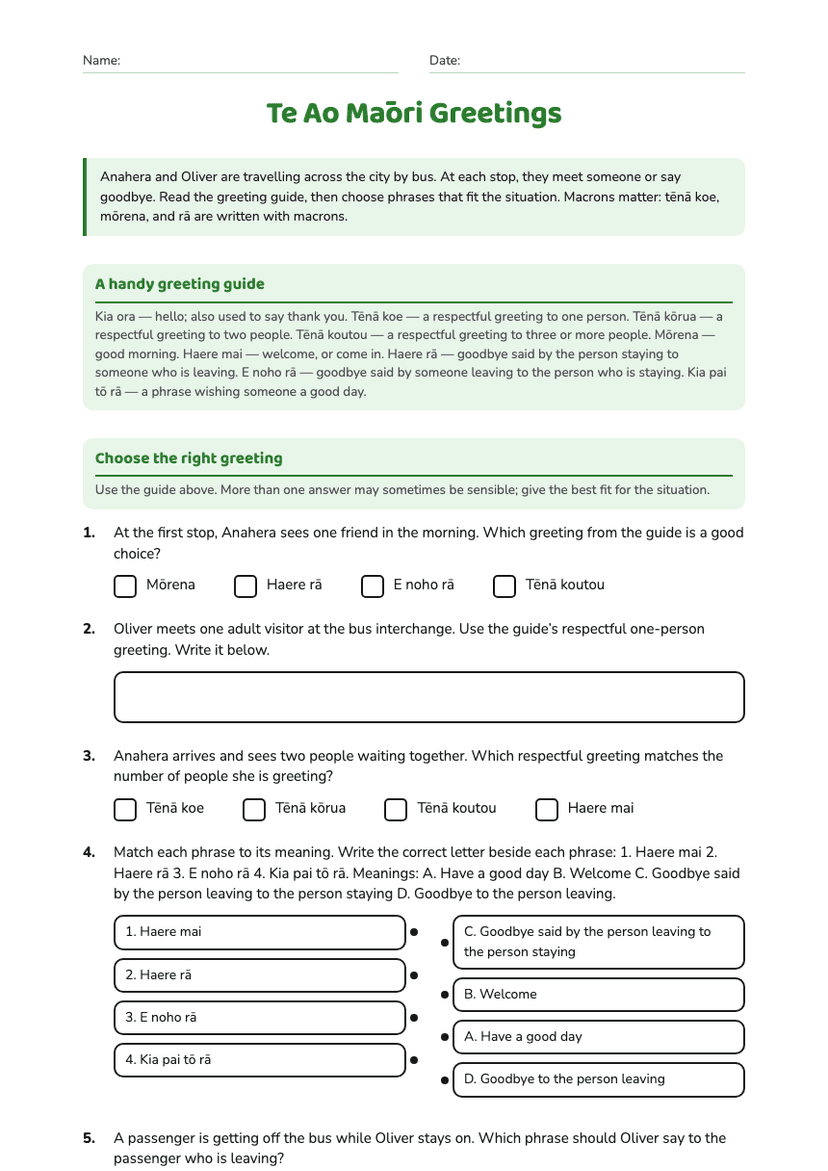
Te Ao Māori Greetings
Free