Māori Royalty Introduction
A free te reo māori worksheet ready for your classroom. Open in Kuraplan to grab the print-ready PDF, customize it for your students, or generate a fresh version in seconds.
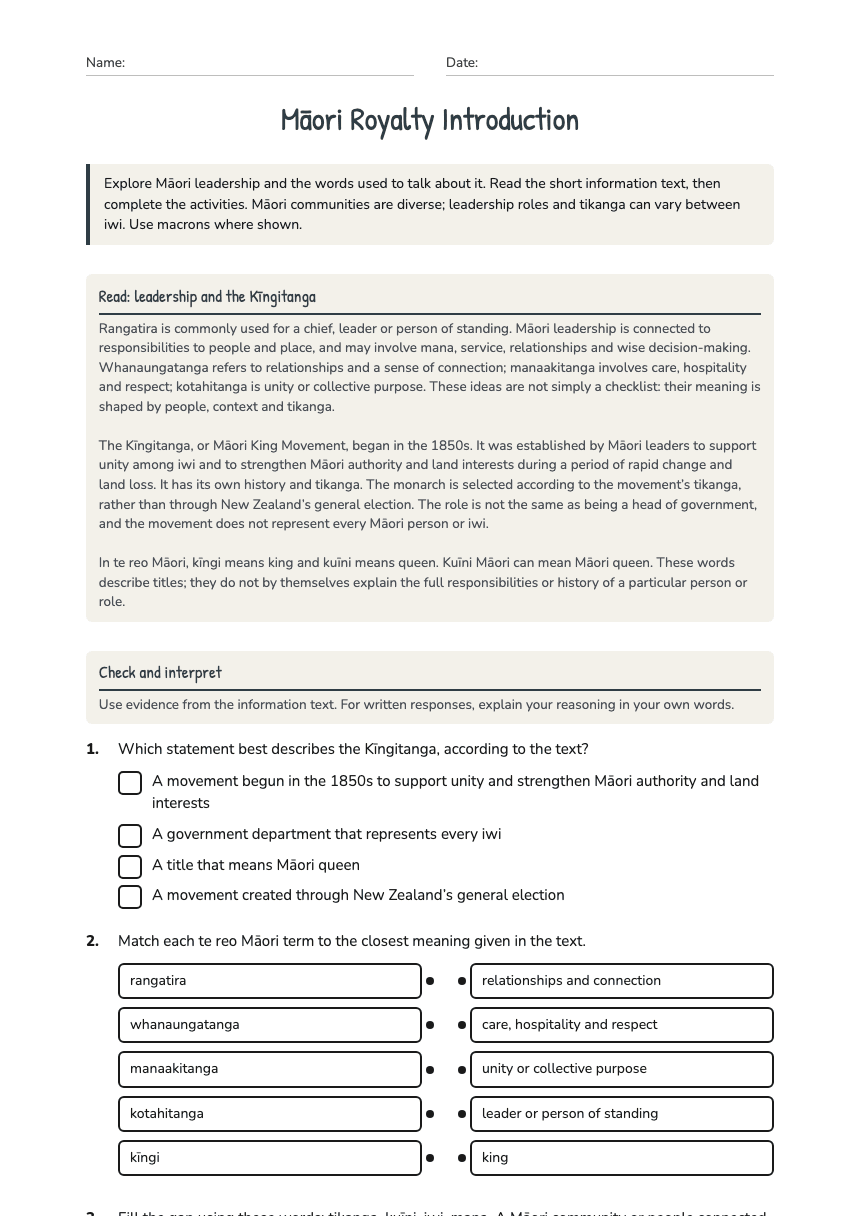
Māori Royalty Introduction
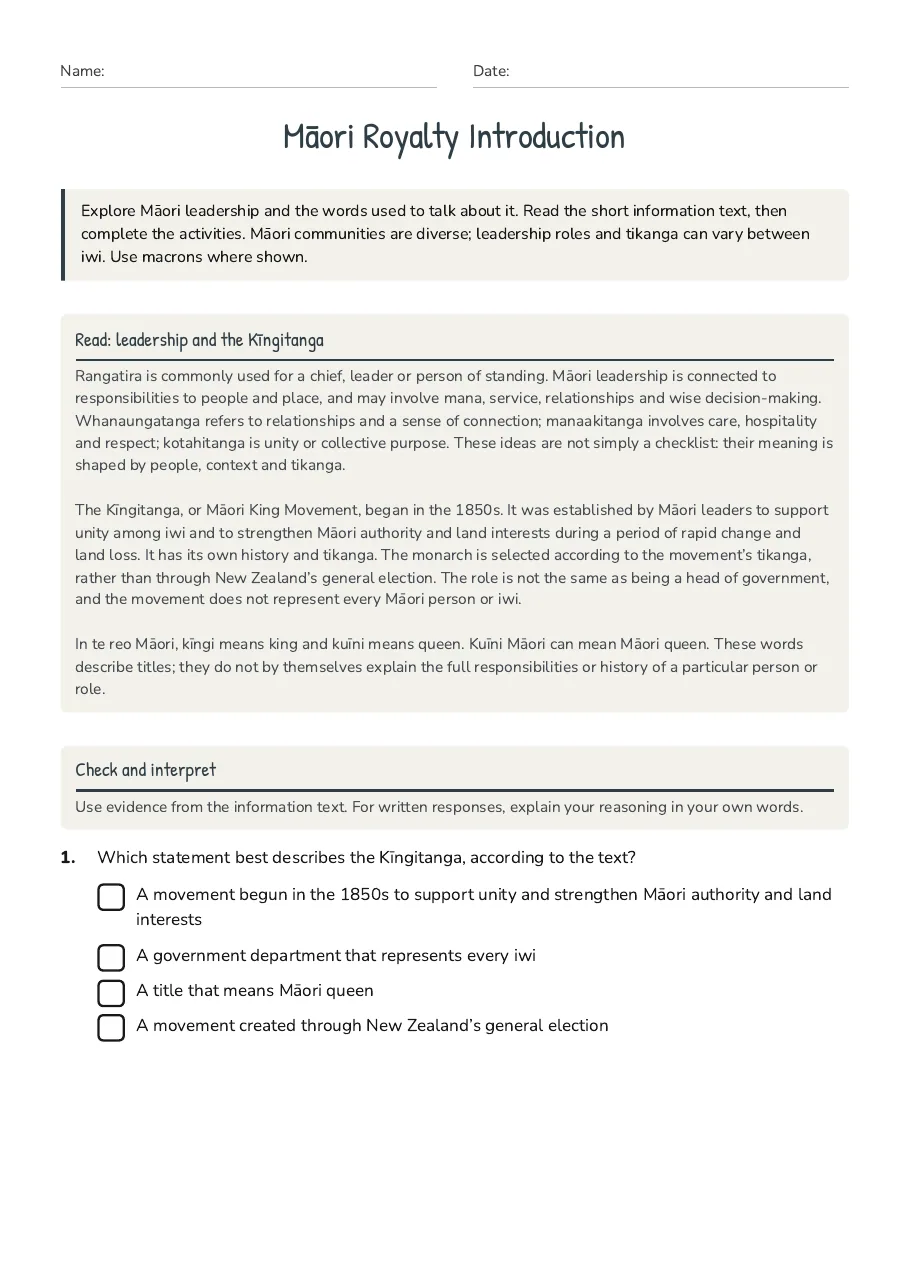
Read: leadership and the Kīngitanga
Rangatira is commonly used for a chief, leader or person of standing. Māori leadership is connected to responsibilities to people and place, and may involve mana, service, relationships and wise decision-making. Whanaungatanga refers to relationships and a sense of connection; manaakitanga involves care, hospitality and respect; kotahitanga is unity or collective purpose. These ideas are not simply a checklist: their meaning is shaped by people, context and tikanga. The Kīngitanga, or Māori King Movement, began in the 1850s. It was established by Māori leaders to support unity among iwi and to strengthen Māori authority and land interests during a period of rapid change and land loss. It has its own history and tikanga. The monarch is selected according to the movement’s tikanga, rather than through New Zealand’s general election. The role is not the same as being a head of government, and the movement does not represent every Māori person or iwi. In te reo Māori, kīngi means king and kuīni means queen. Kuīni Māori can mean Māori queen. These words describe titles; they do not by themselves explain the full responsibilities or history of a particular person or role.
Check and interpret
Use evidence from the information text. For written responses, explain your reasoning in your own words.
- A movement begun in the 1850s to support unity and strengthen Māori authority and land interests
- A government department that represents every iwi
- A title that means Māori queen
- A movement created through New Zealand’s general election
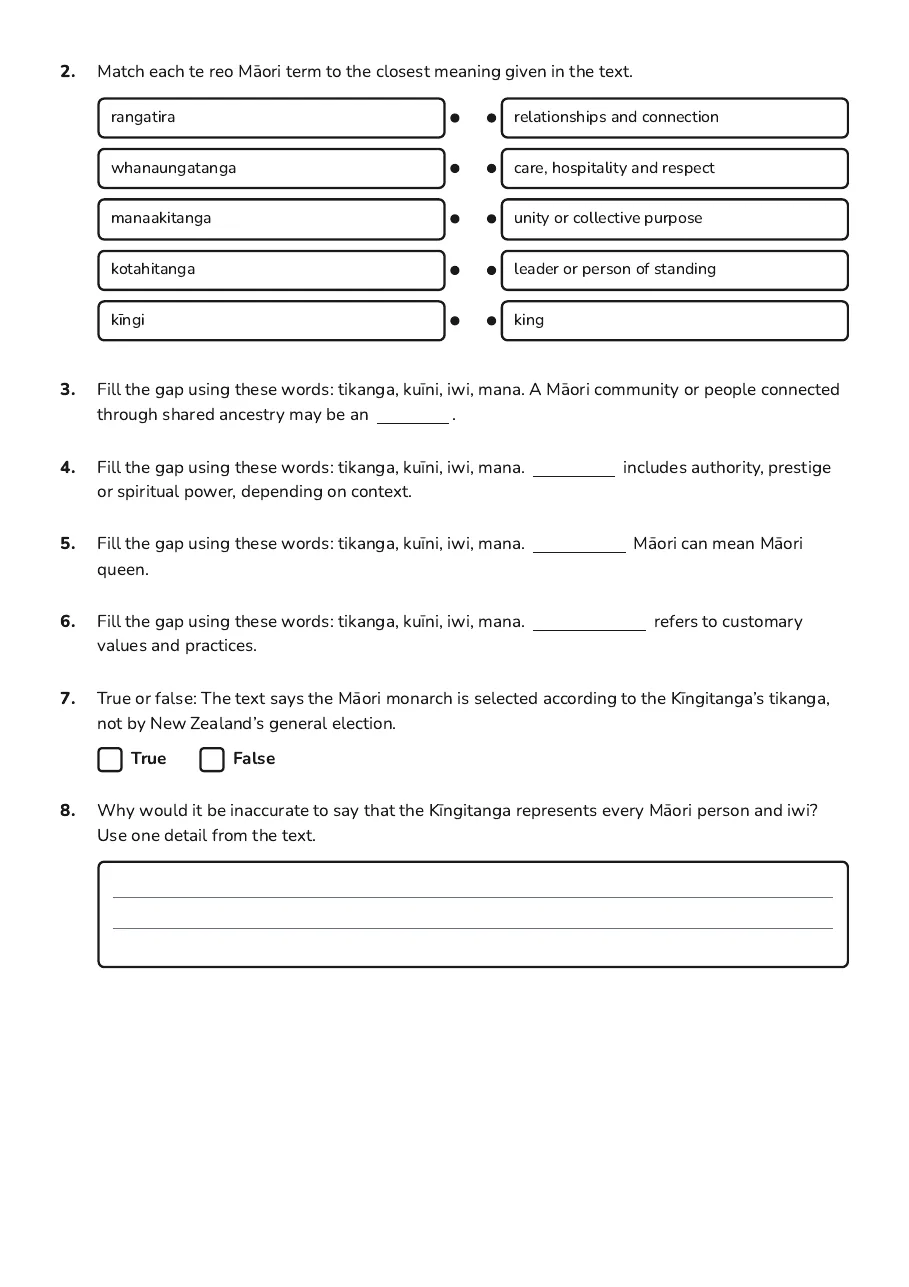
- rangatira
- whanaungatanga
- manaakitanga
- kotahitanga
- kīngi
- relationships and connection
- care, hospitality and respect
- unity or collective purpose
- leader or person of standing
- king
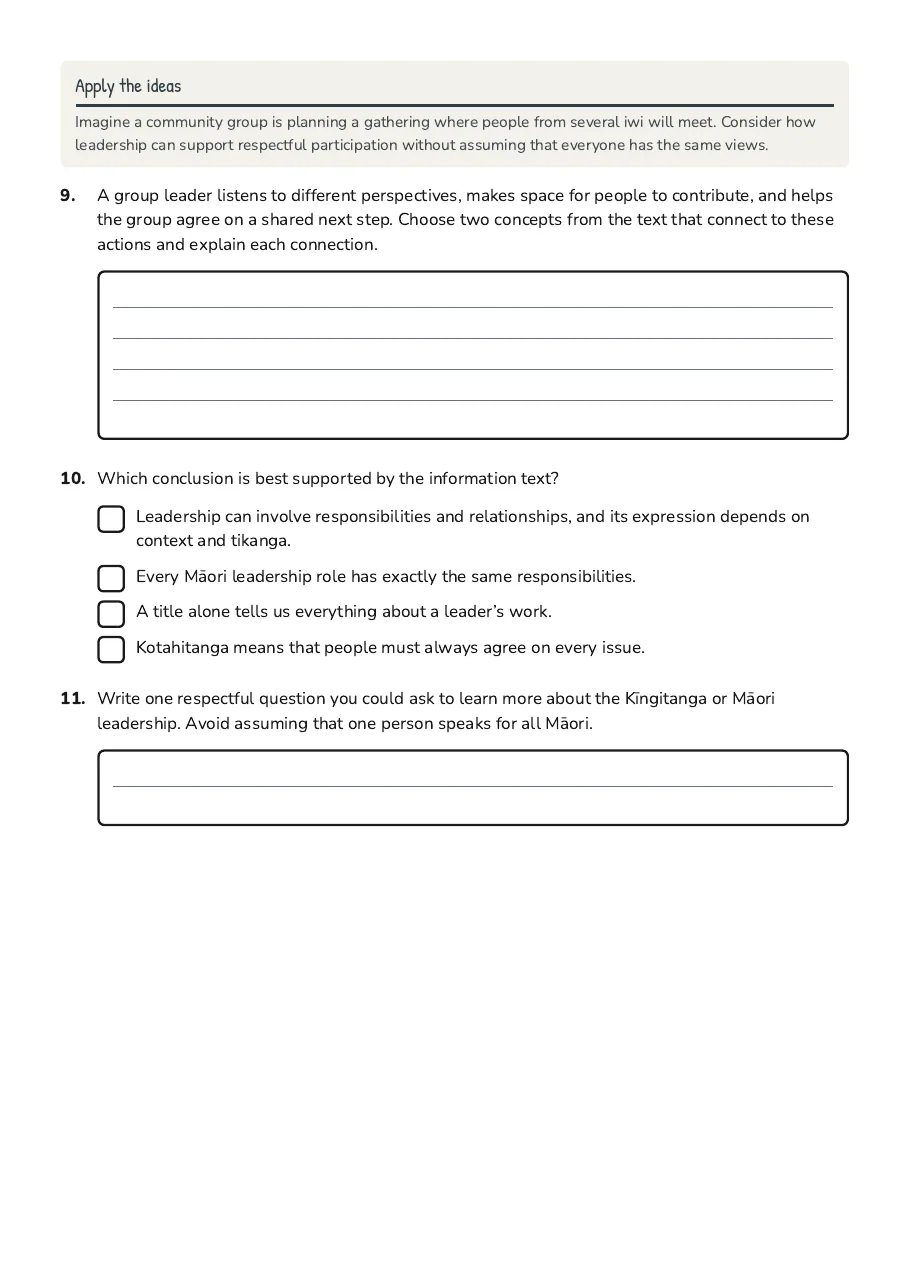
Apply the ideas
Imagine a community group is planning a gathering where people from several iwi will meet. Consider how leadership can support respectful participation without assuming that everyone has the same views.
- Leadership can involve responsibilities and relationships, and its expression depends on context and tikanga.
- Every Māori leadership role has exactly the same responsibilities.
- A title alone tells us everything about a leader’s work.
- Kotahitanga means that people must always agree on every issue.
3 printable pages
Page 1
Page 2
Page 3
About This Worksheet
Free in Kuraplan
Sign up free, grab the PDF, and customize it for your class.
Print-Ready
Formatted for standard paper. Clean layout, easy to read.
AI-Generated
Created with Kuraplan's AI, designed for real classroom use.
For Teachers & Parents
Use in classrooms, for homework, tutoring, or homeschool.
Need a custom version of this worksheet?
Kuraplan's AI generates custom worksheets in seconds — differentiated for every learner, aligned to your curriculum.
Generate Custom Worksheets — FreeMore Te Reo Māori Worksheets
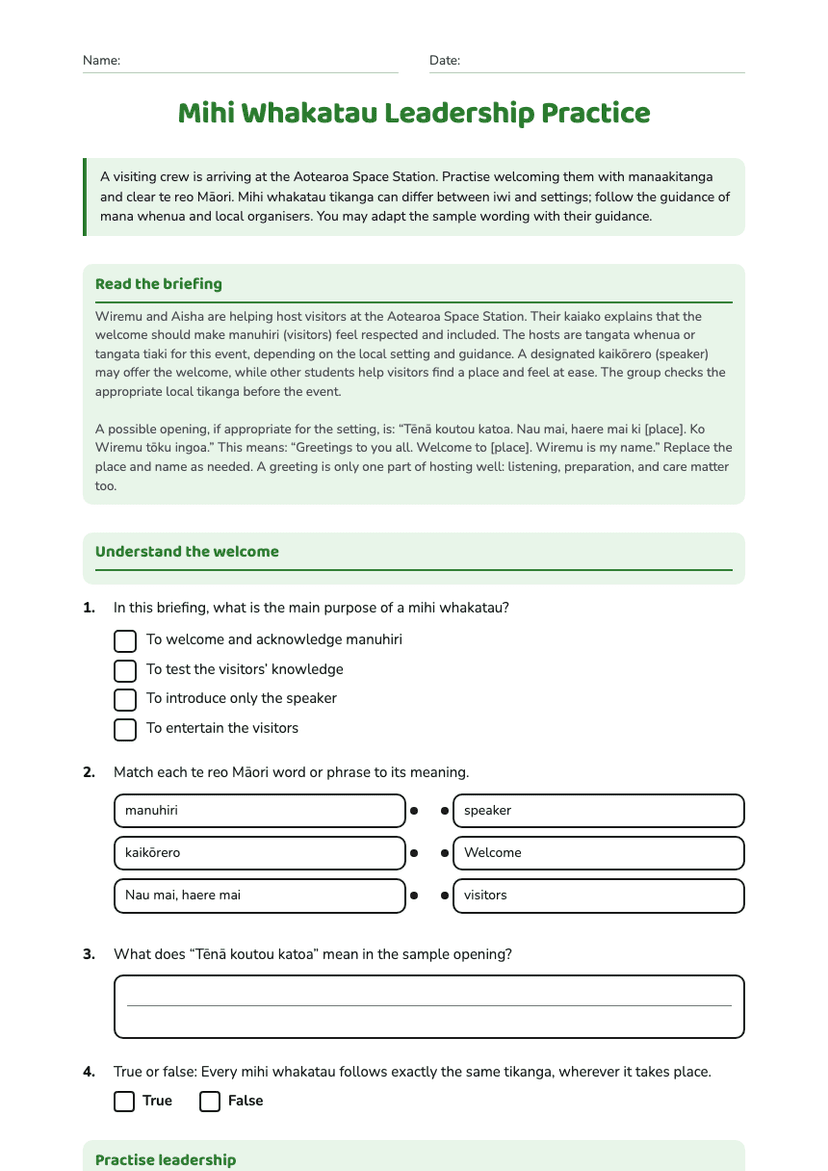
Mihi Whakatau Leadership Practice
Free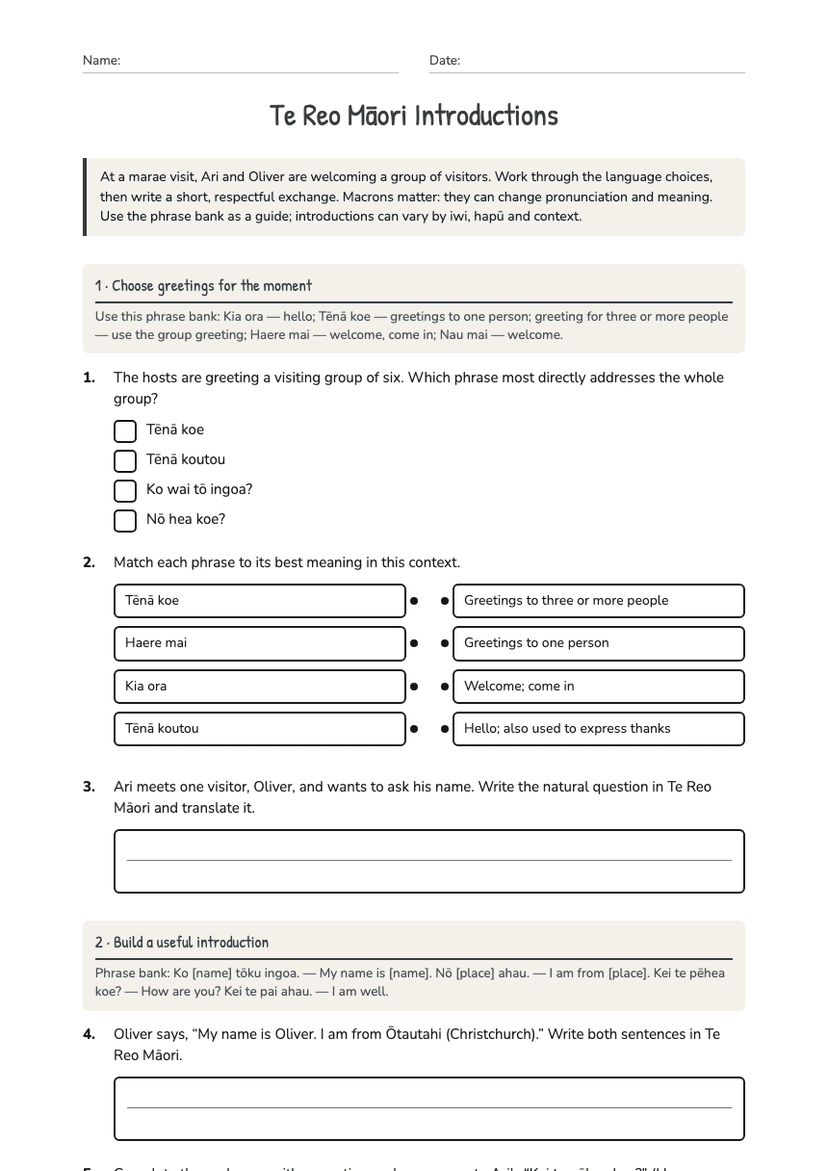
Te Reo Māori Introductions
Free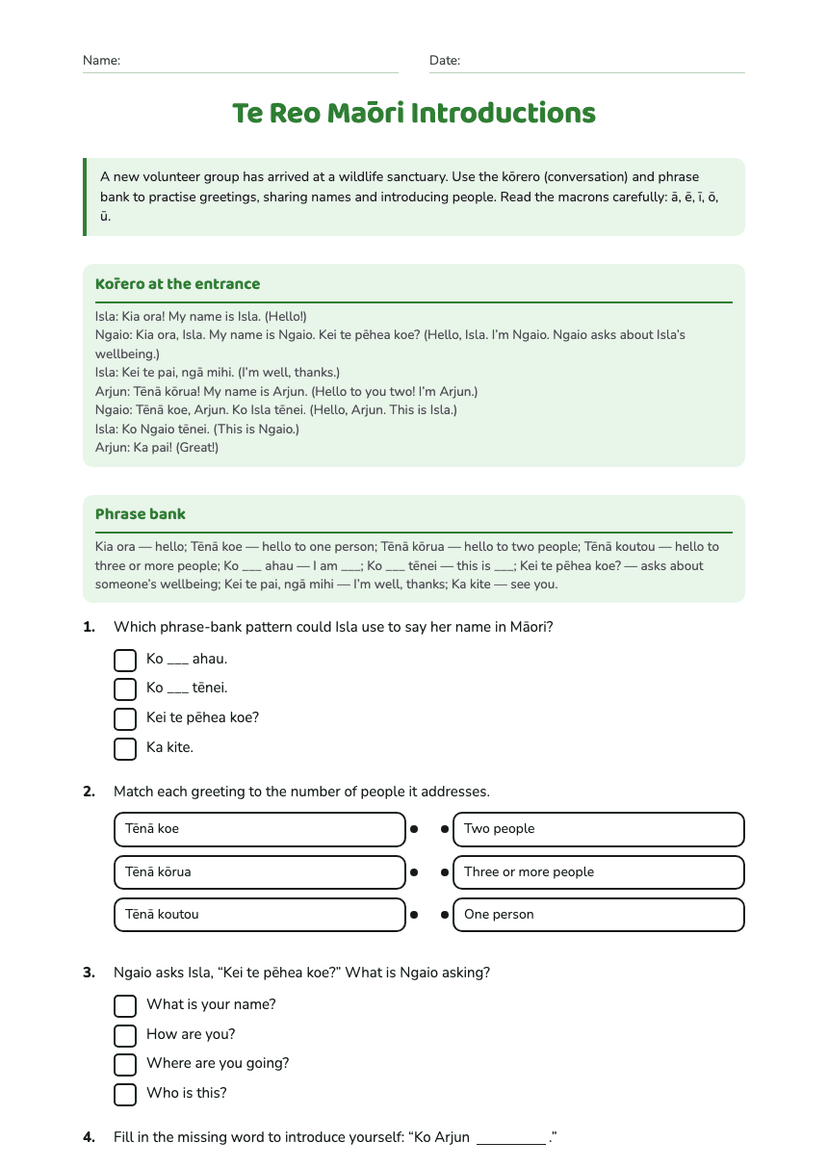
Te Reo Māori Introductions
Free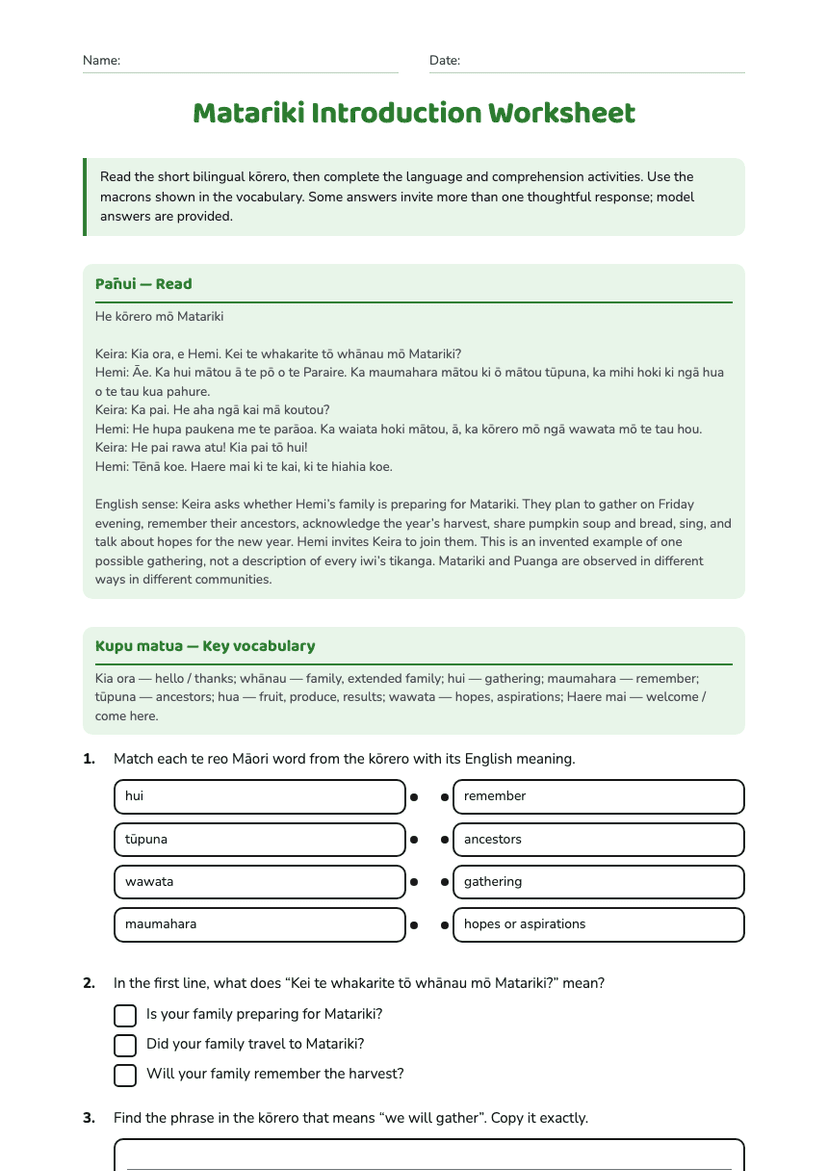
Matariki Introduction Worksheet
Free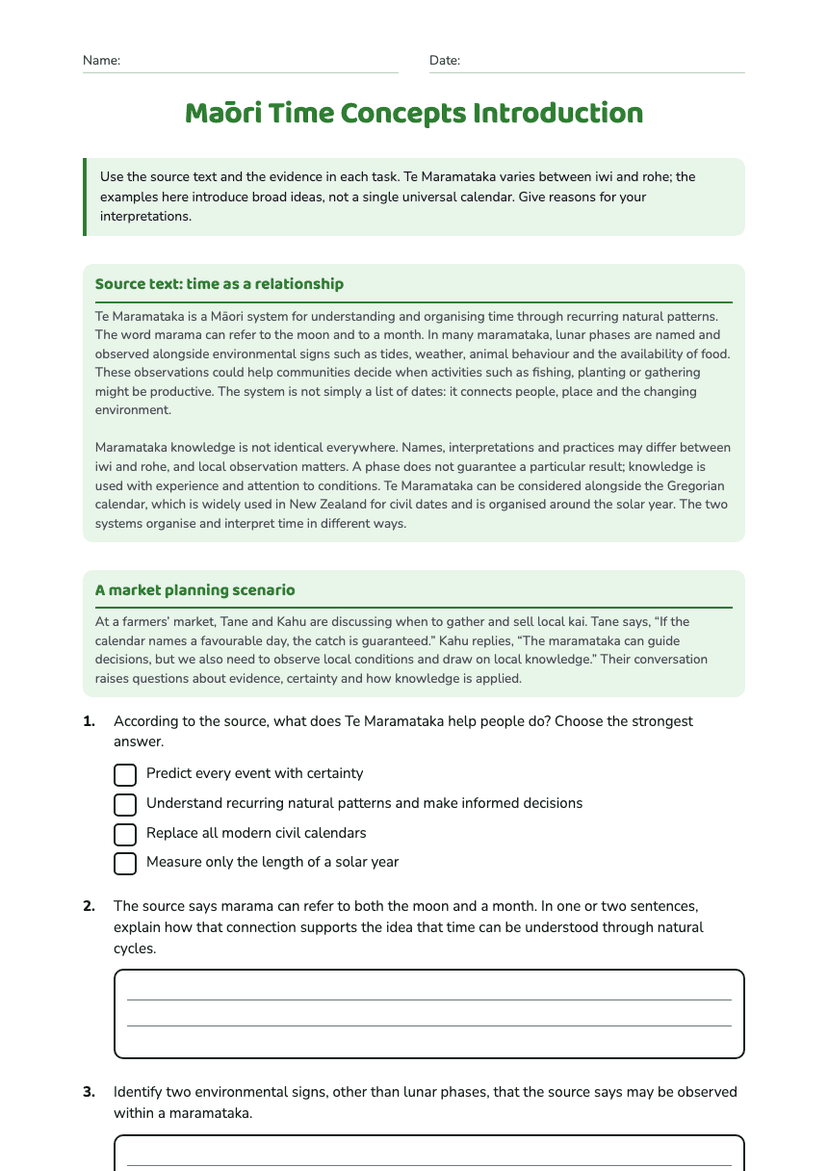
Māori Time Concepts Introduction
Free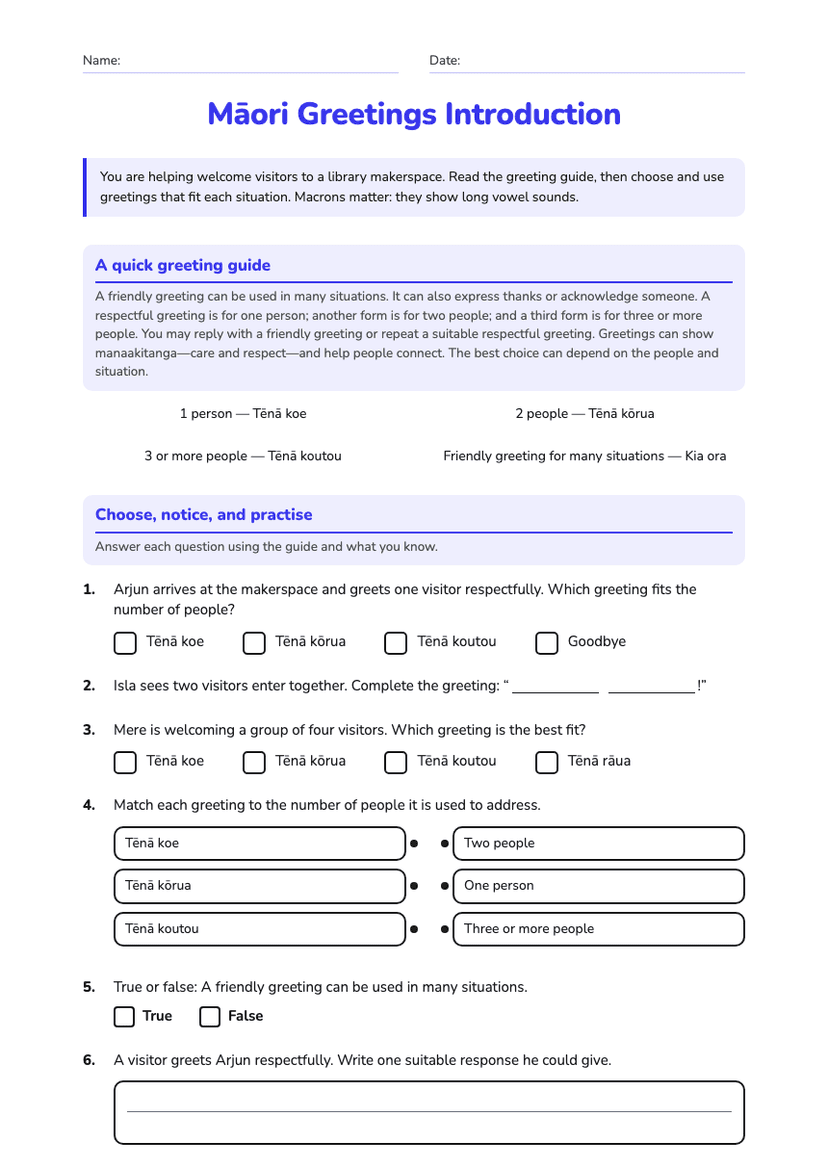
Māori Greetings Introduction
Free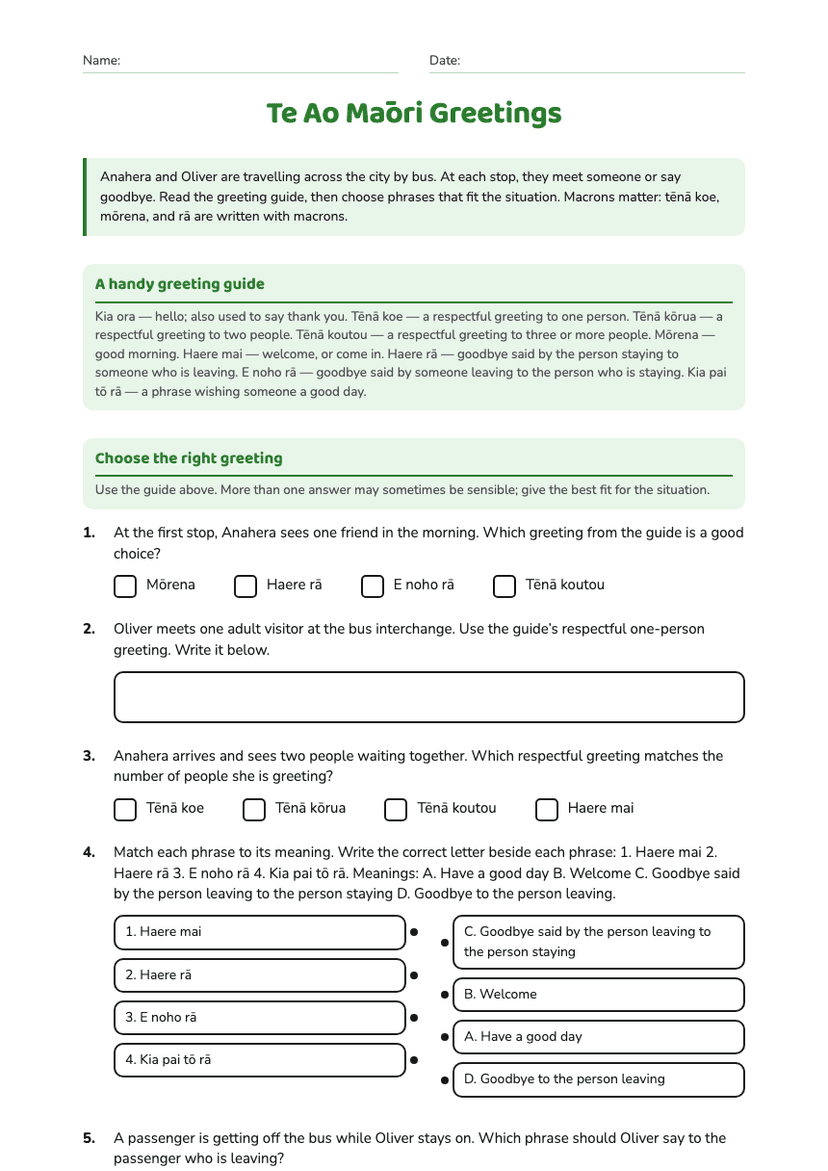
Te Ao Māori Greetings
Free