Protractor Angle Measurement Guide
A free maths worksheet ready for your classroom. Open in Kuraplan to grab the print-ready PDF, customize it for your students, or generate a fresh version in seconds.

Protractor Angle Measurement Guide
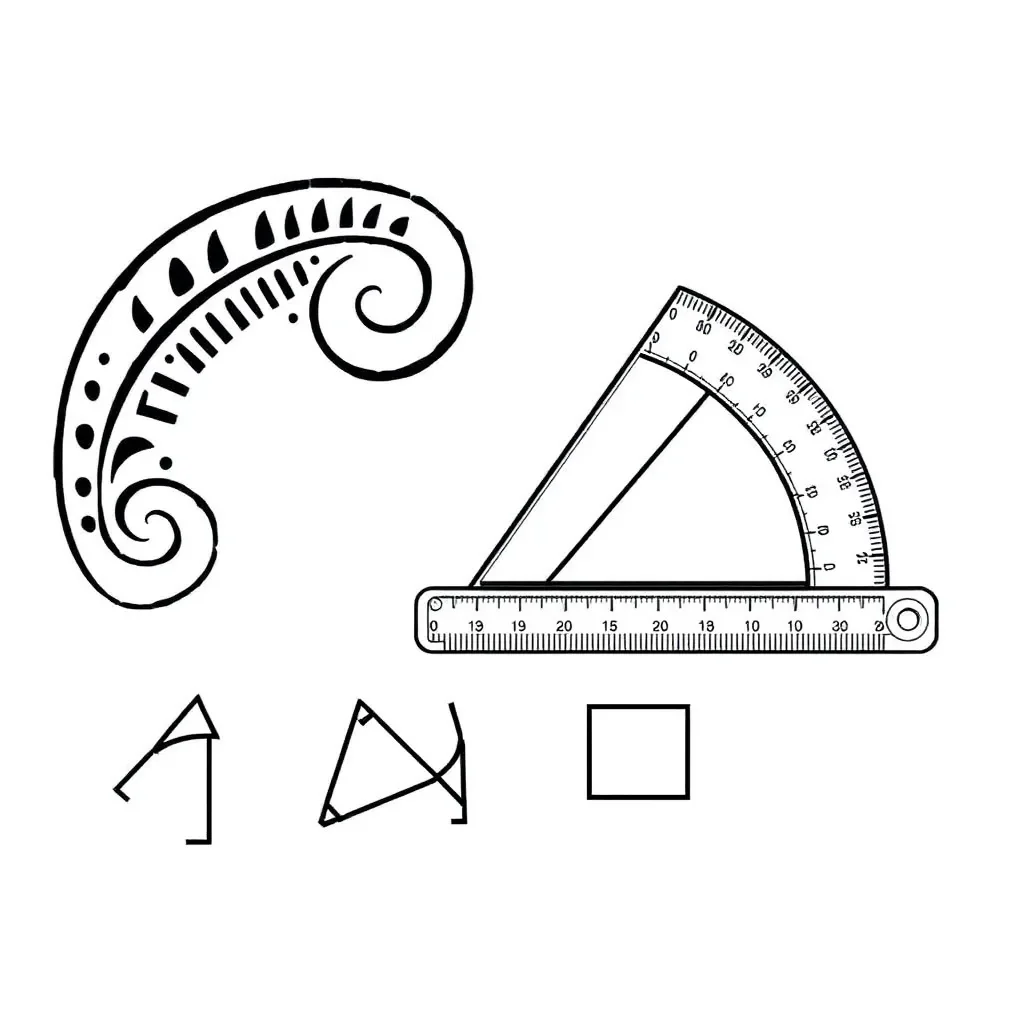
📐 Part 1: Protractor Steps & Vocabulary
Angle (tōrino): _______ degrees
Vertex: The _______ point where two lines meet
Degree: Unit of angle _______
45° is: acute / obtuse / right / reflex
90° is: acute / obtuse / right / reflex
135° is: acute / obtuse / right / reflex
270° is: acute / obtuse / right / reflex
🕐 Part 2: Real-World Angle Measurement
3 o'clock angle = _____ degrees (Type: _______)
2 o'clock angle = _____ degrees (Type: _______)
Corner of your desk = _____ degrees
Open door angle = _____ degrees
Folded paper corner = _____ degrees
Draw a 65° angle
Draw a 110° angle
Draw a 225° reflex angle
🏠 Part 3: Problem Solving with Angles
Answer: _____ degrees
Calculation: 360° - 85° = _____ degrees
Support Notes:
• ESOL learners: Use vocabulary cards with pictures
• ORS support: Work with a buddy, use larger protractors
• ASD support: Follow step-by-step visual guide
• Dyslexia support: Colour-coded angle types, oral instructions available
About This Worksheet
Free in Kuraplan
Sign up free, grab the PDF, and customize it for your class.
Print-Ready
Formatted for standard paper. Clean layout, easy to read.
AI-Generated
Created with Kuraplan's AI, designed for real classroom use.
For Teachers & Parents
Use in classrooms, for homework, tutoring, or homeschool.
Need a custom version of this worksheet?
Kuraplan's AI generates custom worksheets in seconds — differentiated for every learner, aligned to your curriculum.
Generate Custom Worksheets — Free