Pōwhiri Practices Introduction
A free te reo māori worksheet ready for your classroom. Open in Kuraplan to grab the print-ready PDF, customize it for your students, or generate a fresh version in seconds.
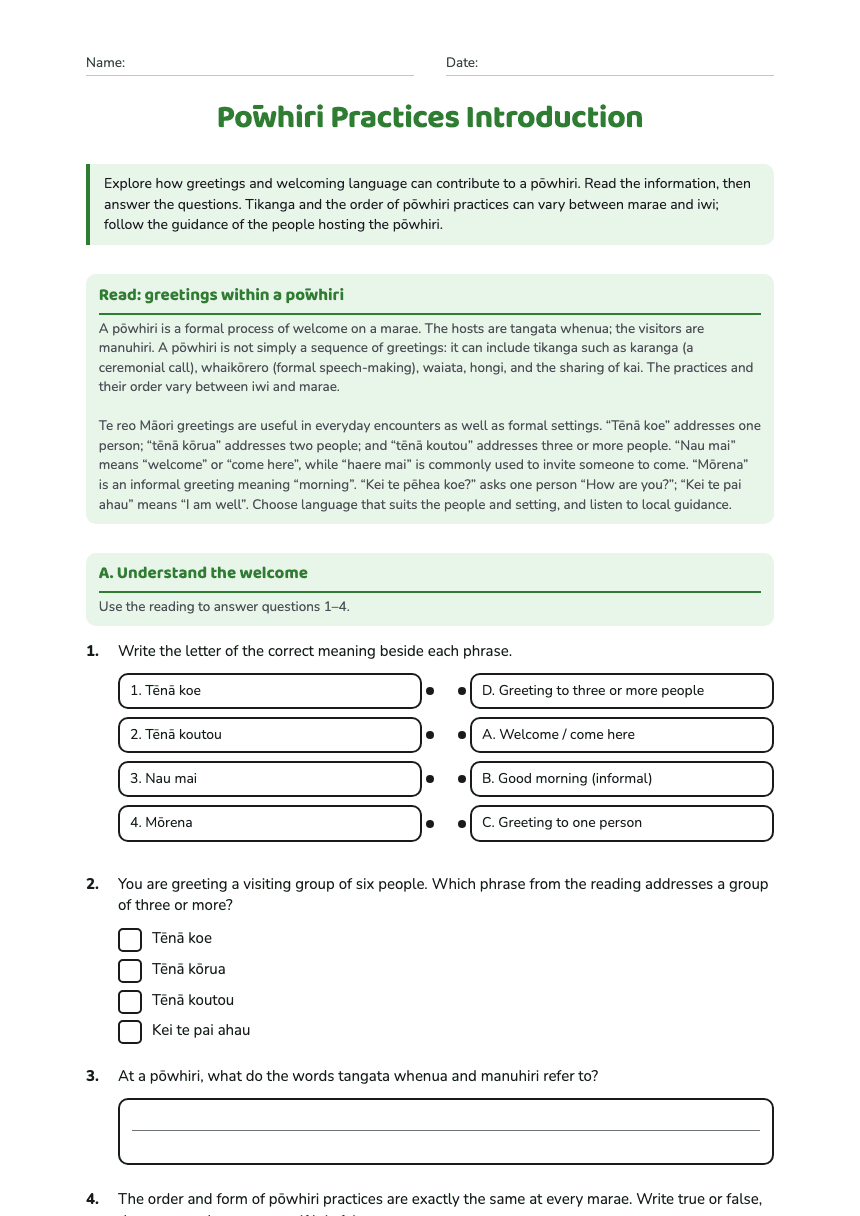
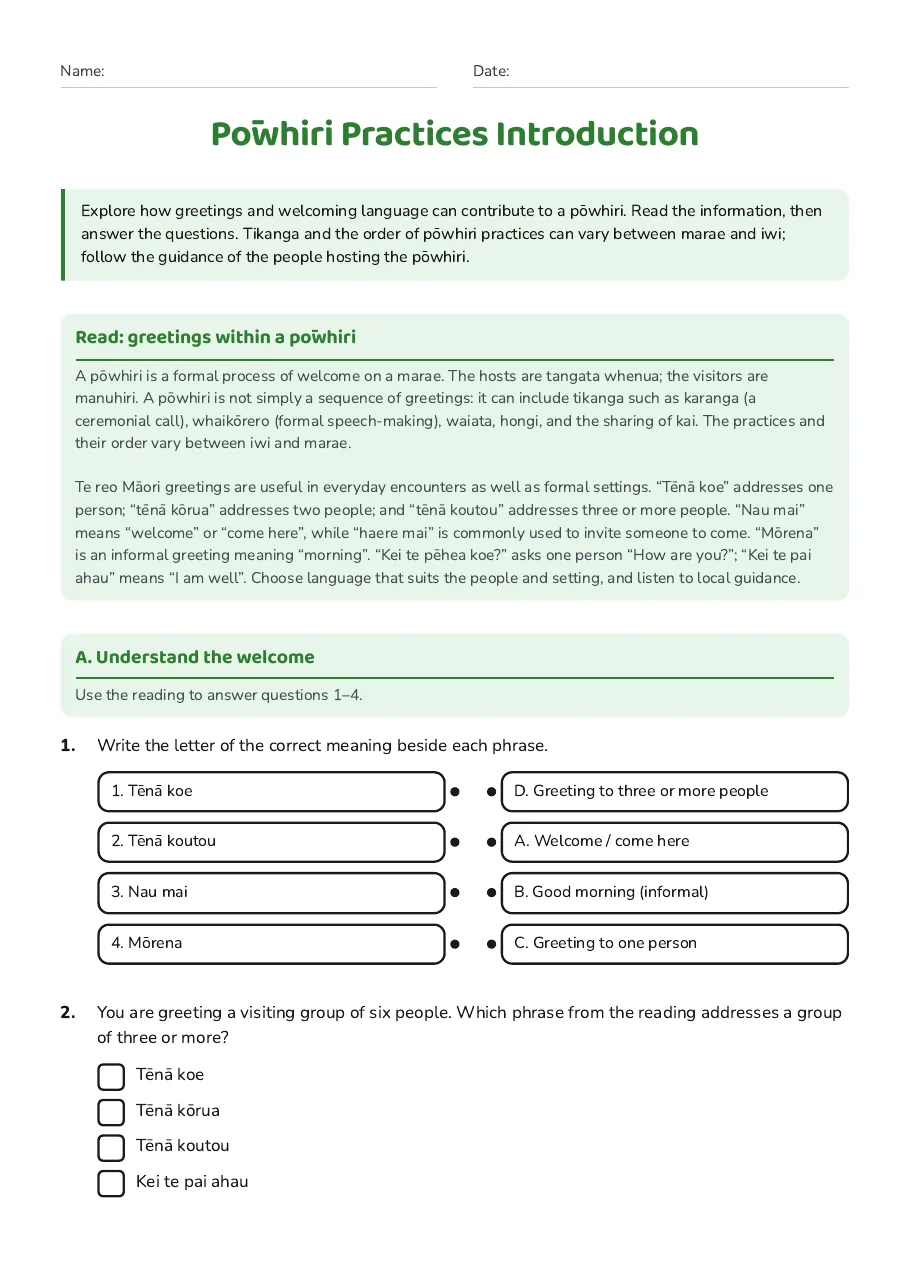
Pōwhiri Practices Introduction
Read: greetings within a pōwhiri
A pōwhiri is a formal process of welcome on a marae. The hosts are tangata whenua; the visitors are manuhiri. A pōwhiri is not simply a sequence of greetings: it can include tikanga such as karanga (a ceremonial call), whaikōrero (formal speech-making), waiata, hongi, and the sharing of kai. The practices and their order vary between iwi and marae. Te reo Māori greetings are useful in everyday encounters as well as formal settings. “Tēnā koe” addresses one person; “tēnā kōrua” addresses two people; and “tēnā koutou” addresses three or more people. “Nau mai” means “welcome” or “come here”, while “haere mai” is commonly used to invite someone to come. “Mōrena” is an informal greeting meaning “morning”. “Kei te pēhea koe?” asks one person “How are you?”; “Kei te pai ahau” means “I am well”. Choose language that suits the people and setting, and listen to local guidance.
A. Understand the welcome
Use the reading to answer questions 1–4.
- 1. Tēnā koe
- 2. Tēnā koutou
- 3. Nau mai
- 4. Mōrena
- D. Greeting to three or more people
- A. Welcome / come here
- B. Good morning (informal)
- C. Greeting to one person
- Tēnā koe
- Tēnā kōrua
- Tēnā koutou
- Kei te pai ahau
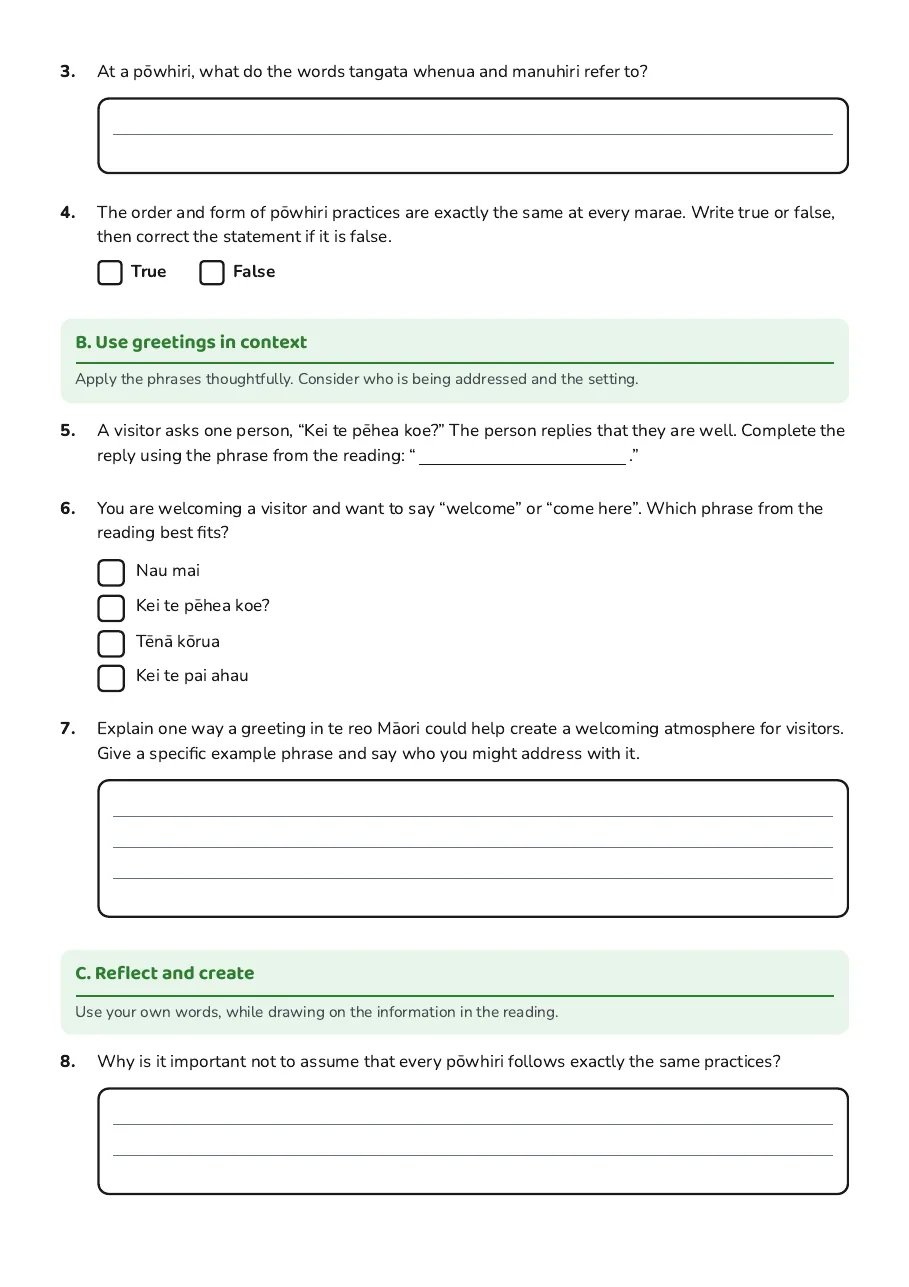
B. Use greetings in context
Apply the phrases thoughtfully. Consider who is being addressed and the setting.
- Nau mai
- Kei te pēhea koe?
- Tēnā kōrua
- Kei te pai ahau
C. Reflect and create
Use your own words, while drawing on the information in the reading.
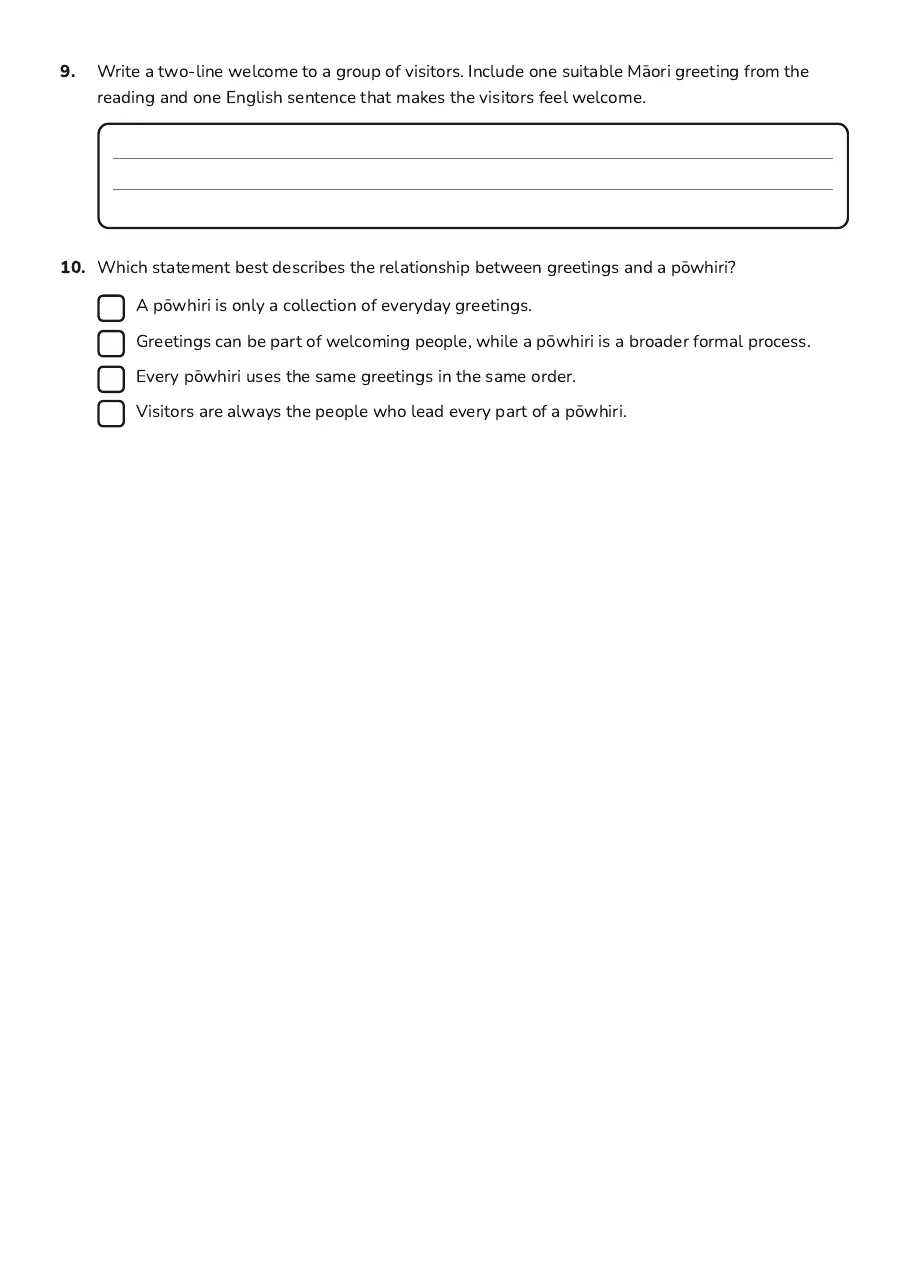
- A pōwhiri is only a collection of everyday greetings.
- Greetings can be part of welcoming people, while a pōwhiri is a broader formal process.
- Every pōwhiri uses the same greetings in the same order.
- Visitors are always the people who lead every part of a pōwhiri.
3 printable pages
Page 1
Page 2
Page 3
About This Worksheet
Free in Kuraplan
Sign up free, grab the PDF, and customize it for your class.
Print-Ready
Formatted for standard paper. Clean layout, easy to read.
AI-Generated
Created with Kuraplan's AI, designed for real classroom use.
For Teachers & Parents
Use in classrooms, for homework, tutoring, or homeschool.
Need a custom version of this worksheet?
Kuraplan's AI generates custom worksheets in seconds — differentiated for every learner, aligned to your curriculum.
Generate Custom Worksheets — FreeMore Te Reo Māori Worksheets
Mihi Whakatau Leadership Practice
Free
Te Reo Māori Introductions
Free
Te Reo Māori Introductions
Free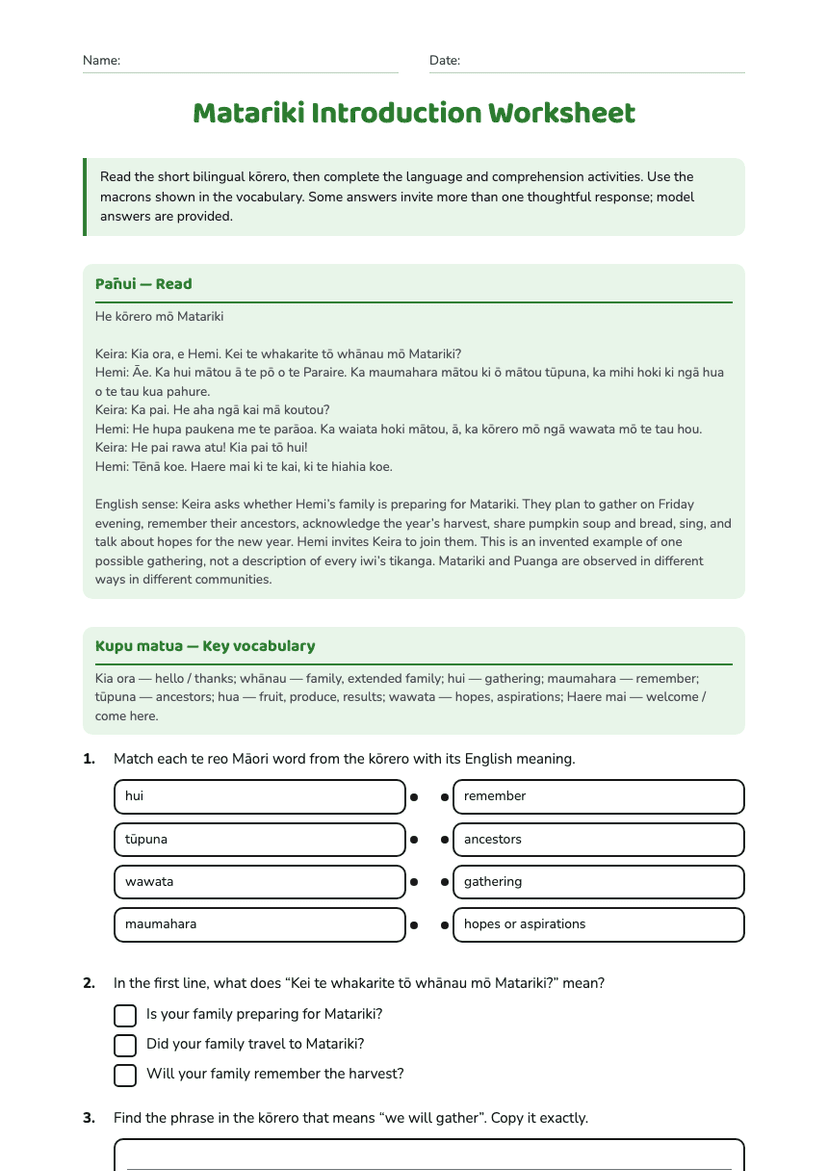
Matariki Introduction Worksheet
Free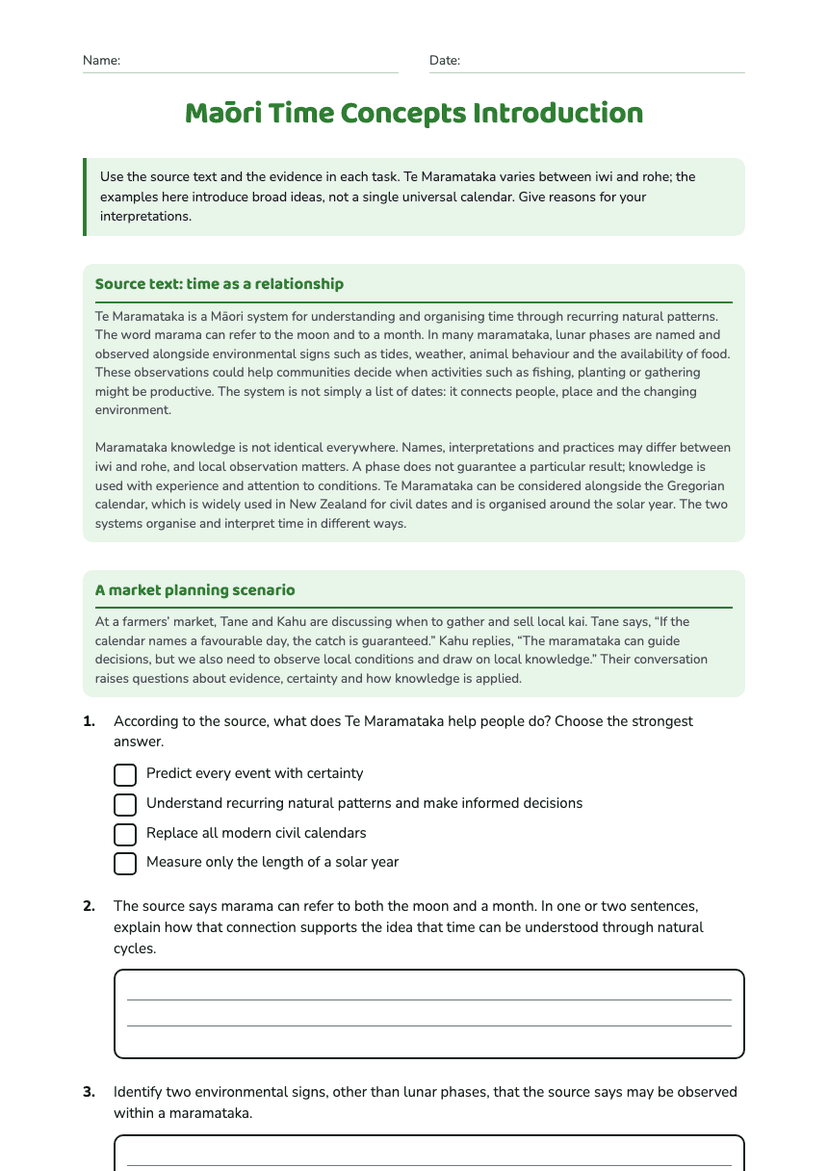
Māori Time Concepts Introduction
Free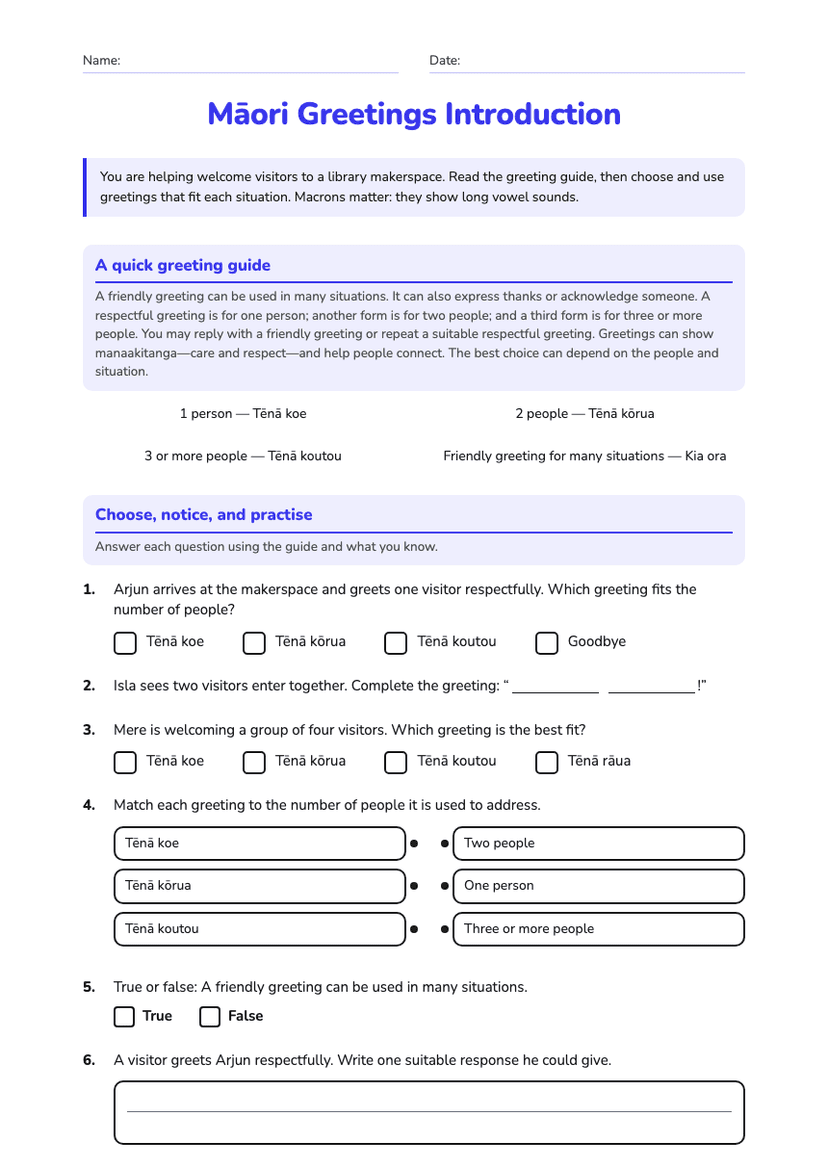
Māori Greetings Introduction
Free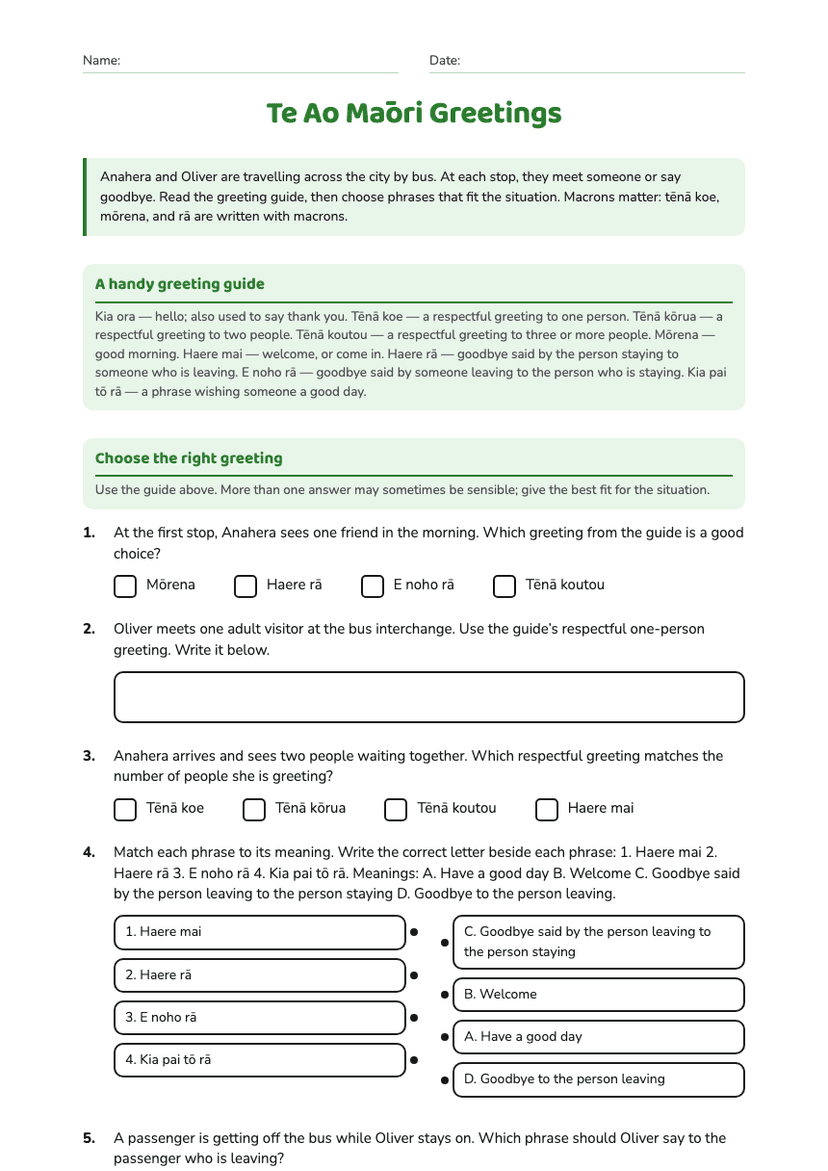
Te Ao Māori Greetings
Free