Rocky Shore Food Webs
A free science worksheet ready for your classroom. Open in Kuraplan to grab the print-ready PDF, customize it for your students, or generate a fresh version in seconds.
Rocky Shore Food Webs
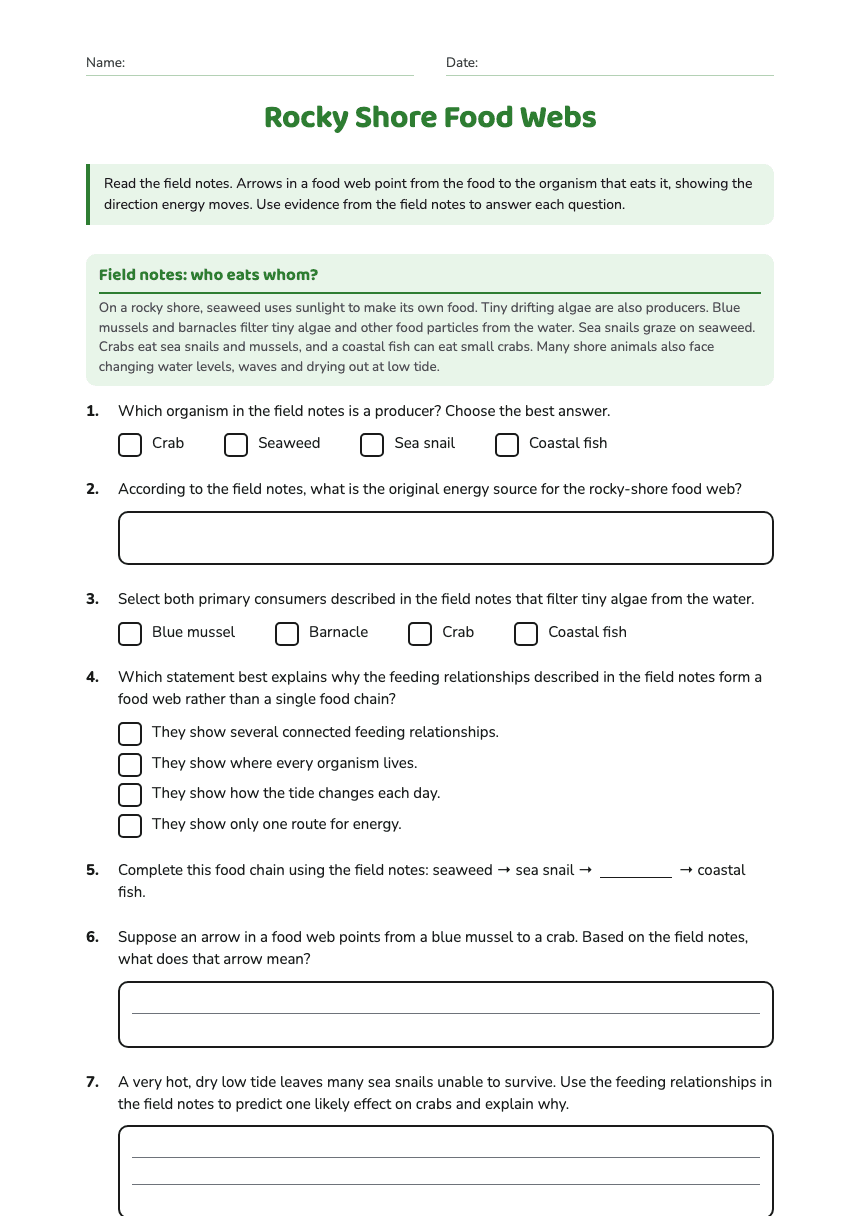
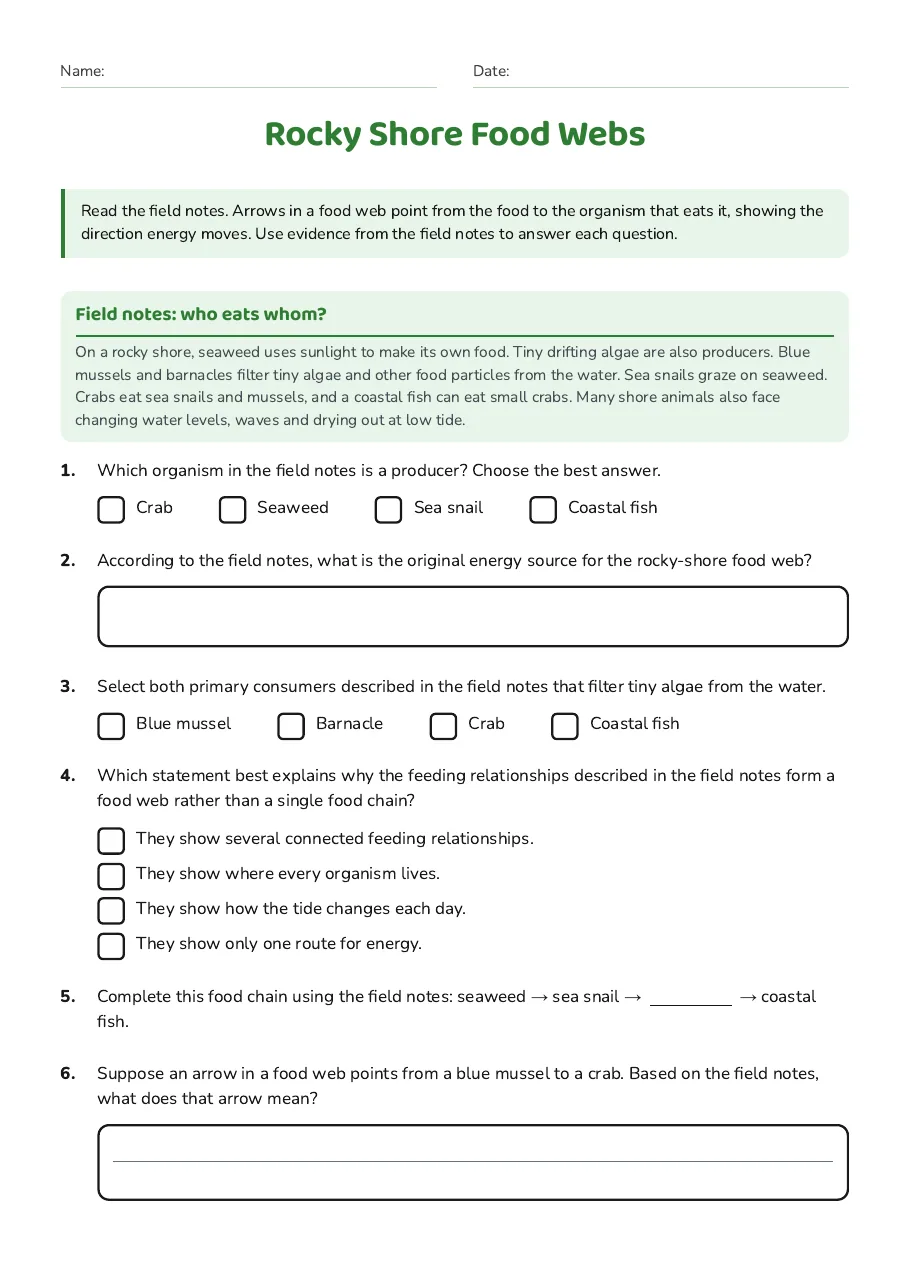
Field notes: who eats whom?
On a rocky shore, seaweed uses sunlight to make its own food. Tiny drifting algae are also producers. Blue mussels and barnacles filter tiny algae and other food particles from the water. Sea snails graze on seaweed. Crabs eat sea snails and mussels, and a coastal fish can eat small crabs. Many shore animals also face changing water levels, waves and drying out at low tide.
- Crab
- Seaweed
- Sea snail
- Coastal fish
- Blue mussel
- Barnacle
- Crab
- Coastal fish
- They show several connected feeding relationships.
- They show where every organism lives.
- They show how the tide changes each day.
- They show only one route for energy.
2 printable pages
Page 1
Page 2
About This Worksheet
Free in Kuraplan
Sign up free, grab the PDF, and customize it for your class.
Print-Ready
Formatted for standard paper. Clean layout, easy to read.
AI-Generated
Created with Kuraplan's AI, designed for real classroom use.
For Teachers & Parents
Use in classrooms, for homework, tutoring, or homeschool.
Need a custom version of this worksheet?
Kuraplan's AI generates custom worksheets in seconds — differentiated for every learner, aligned to your curriculum.
Generate Custom Worksheets — FreeMore Science Worksheets
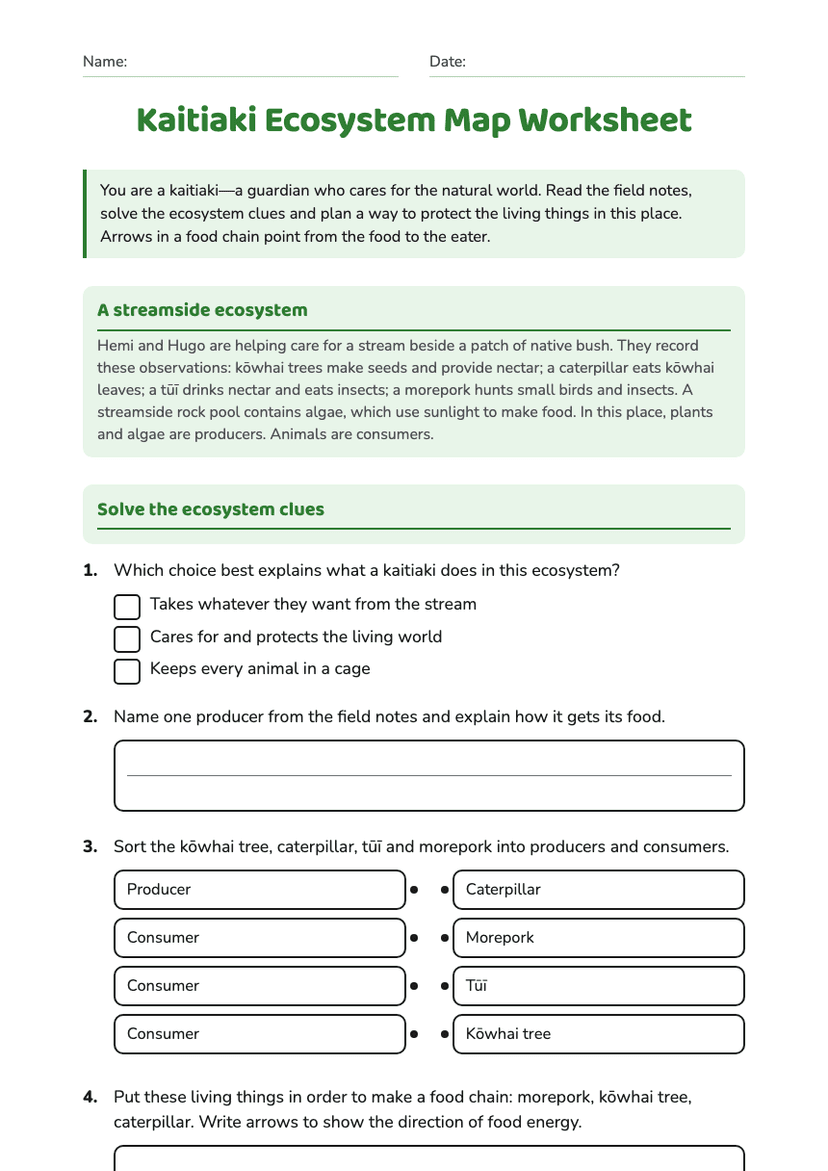
Kaitiaki Ecosystem Map Worksheet
Free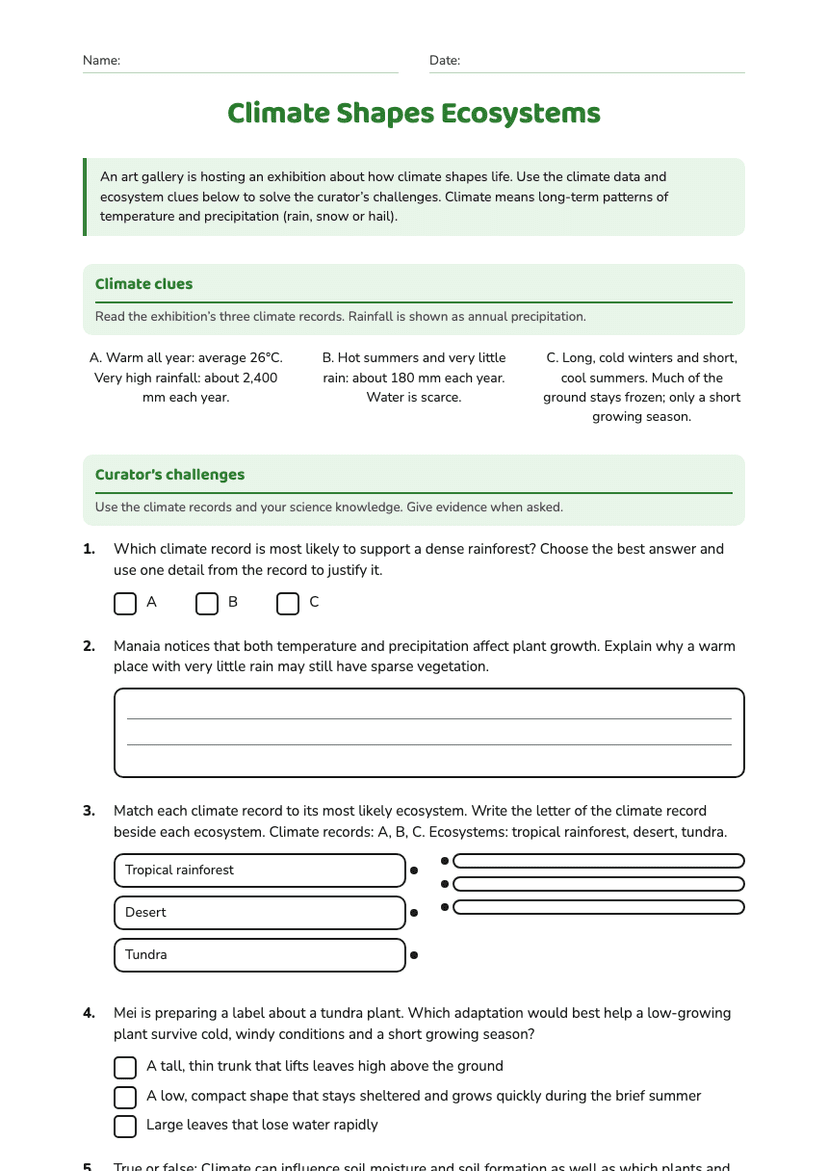
Climate Shapes Ecosystems
Free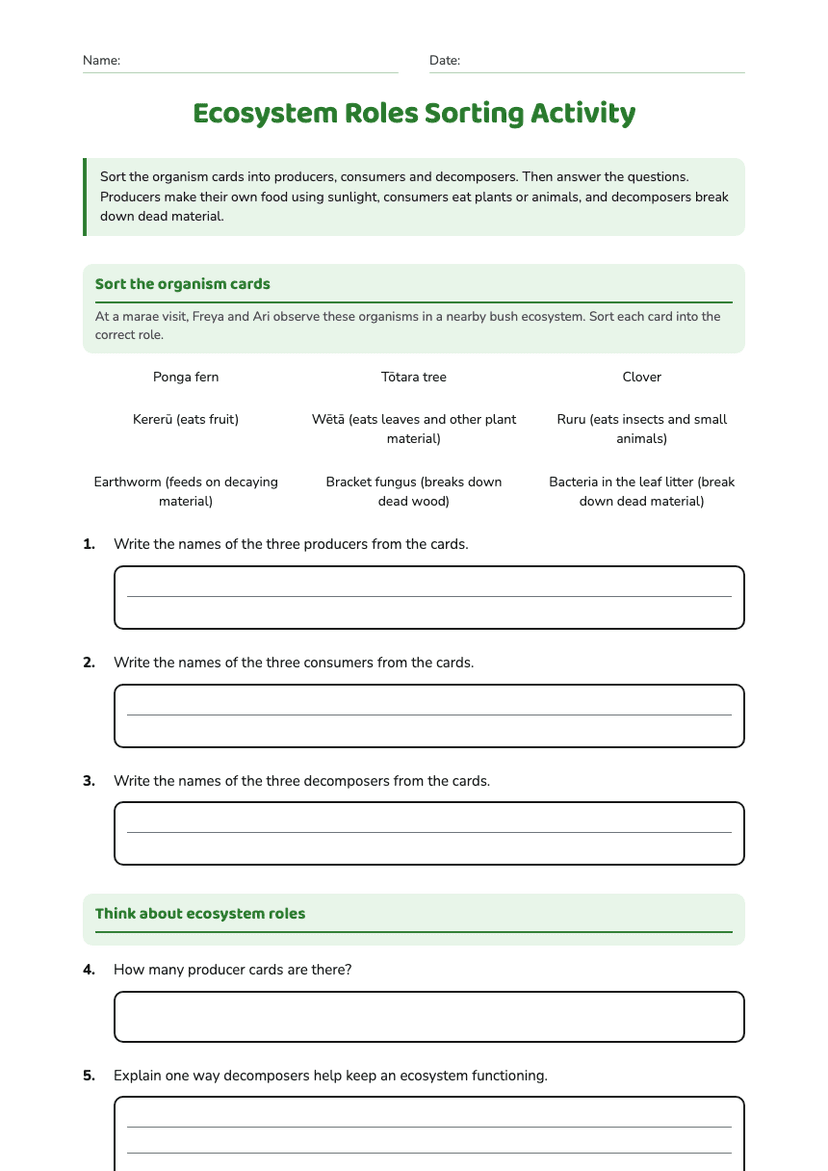
Ecosystem Roles Sorting Activity
Free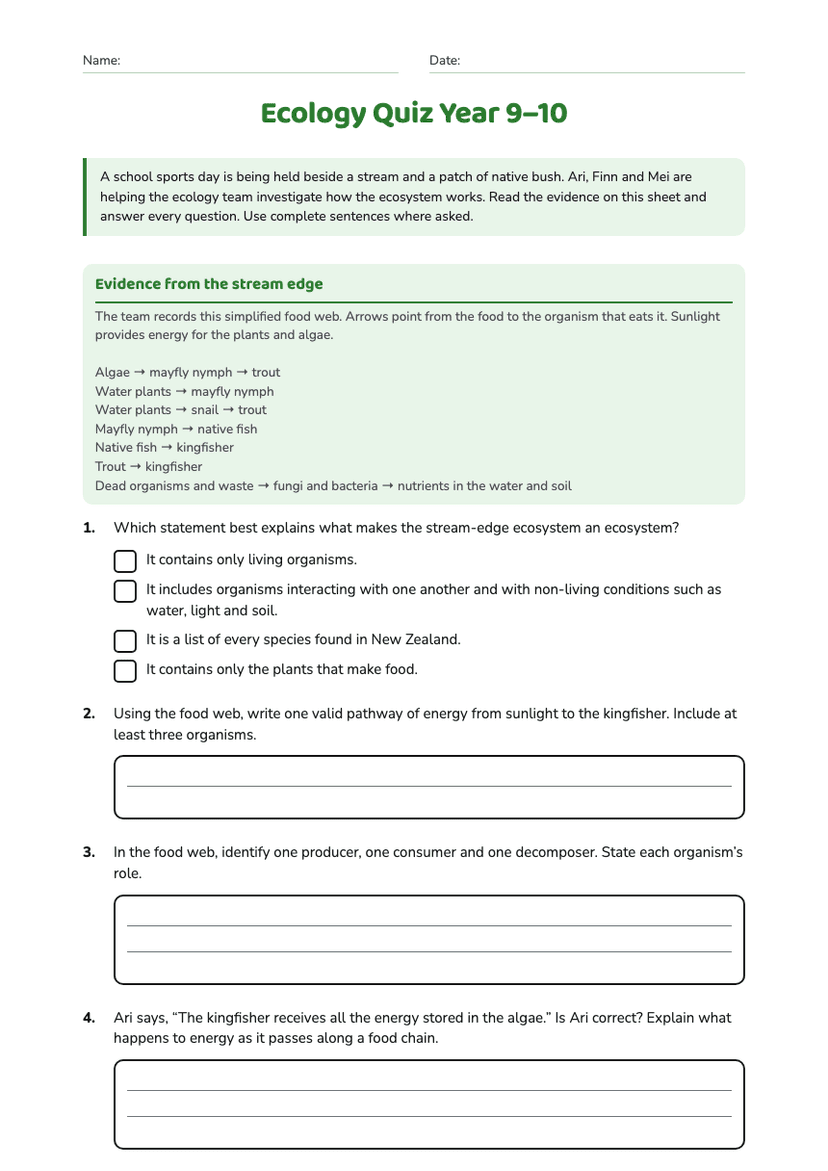
Ecology Quiz Year 9–10
Free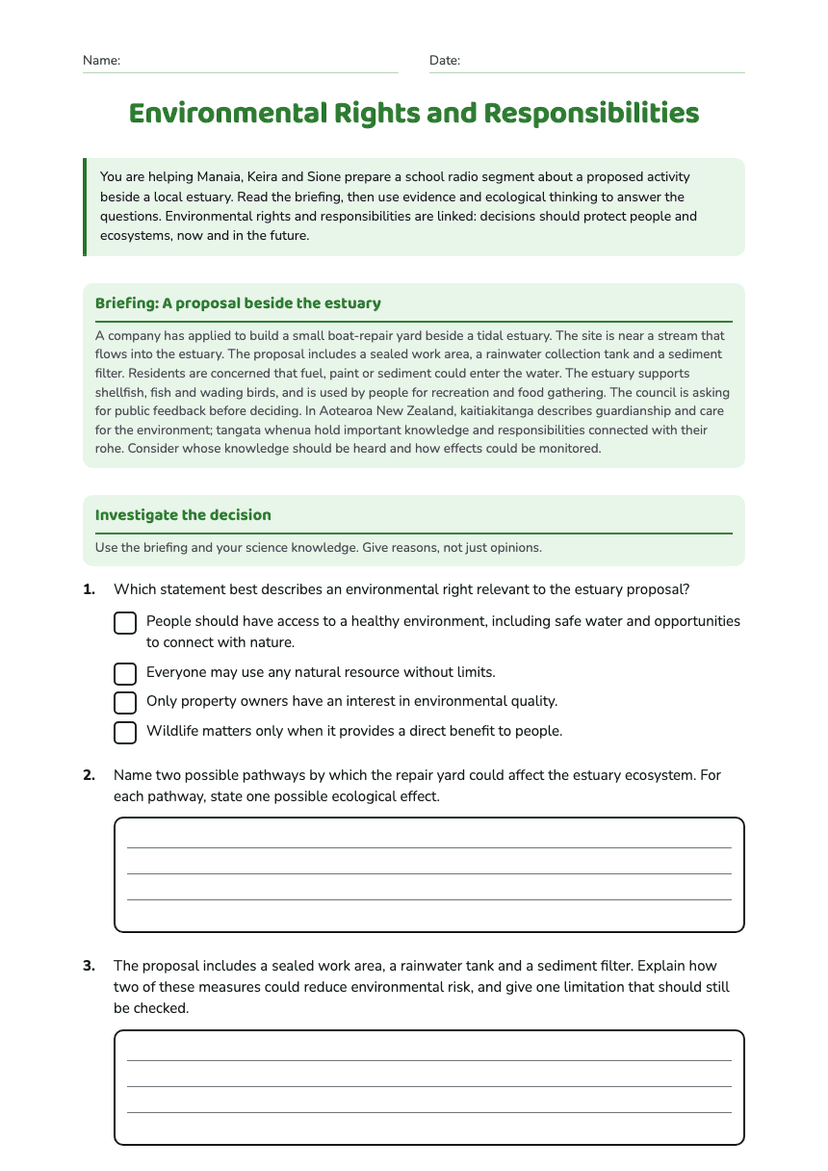
Environmental Rights and Responsibilities
Free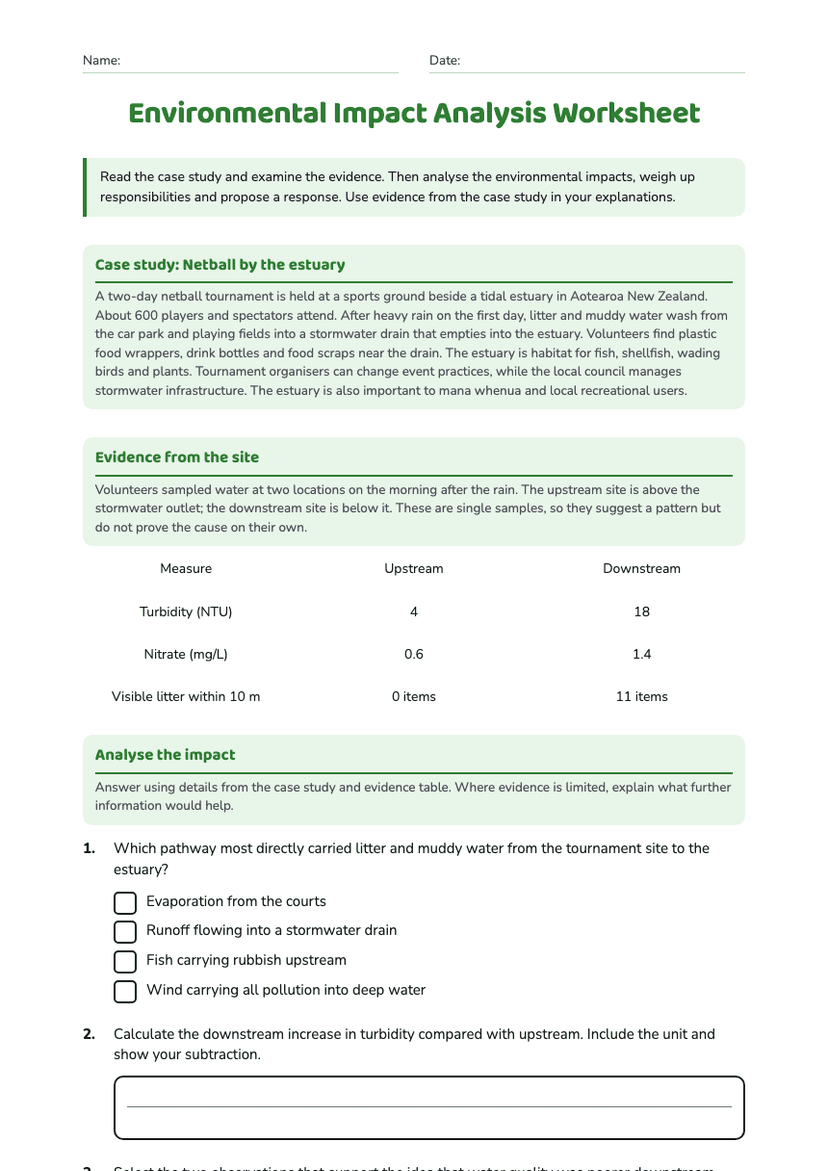
Environmental Impact Analysis Worksheet
Free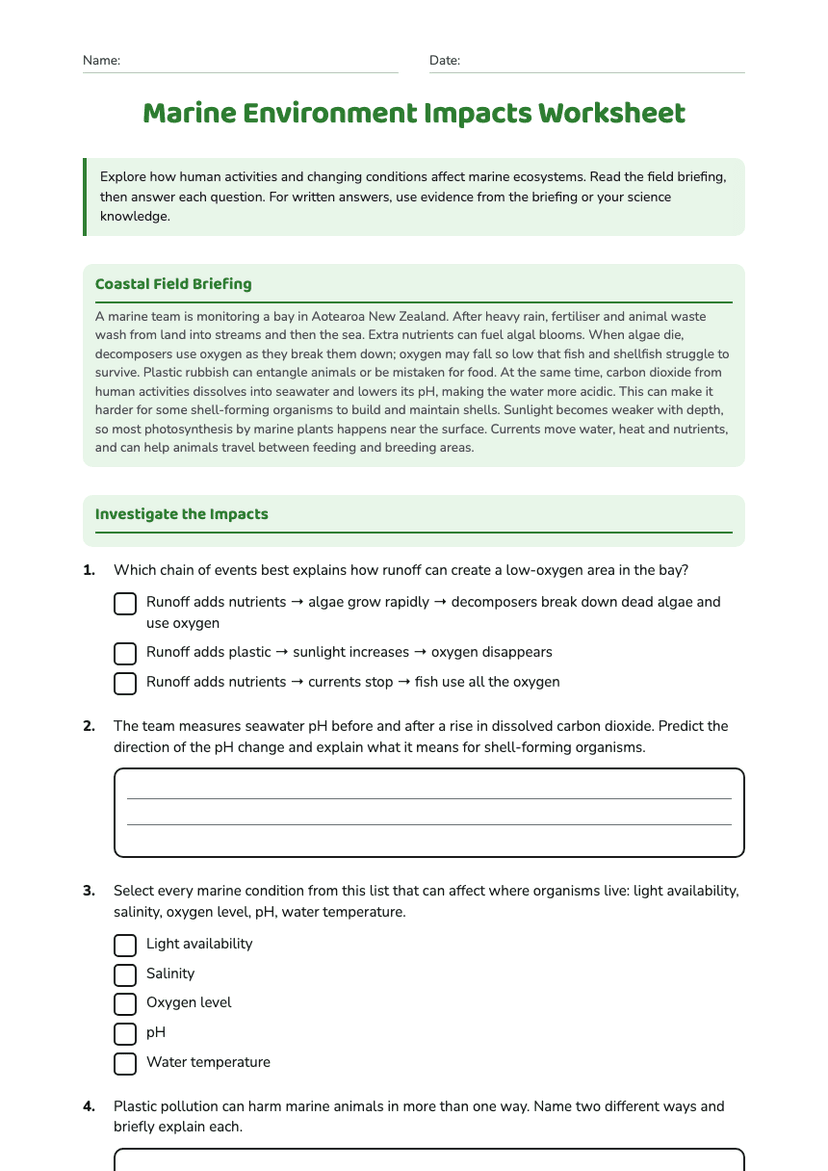
Marine Environment Impacts Worksheet
Free