ArtFreePrintable
Sculpting Nature's Connections
A free art worksheet ready for your classroom. Open in Kuraplan to grab the print-ready PDF, customize it for your students, or generate a fresh version in seconds.
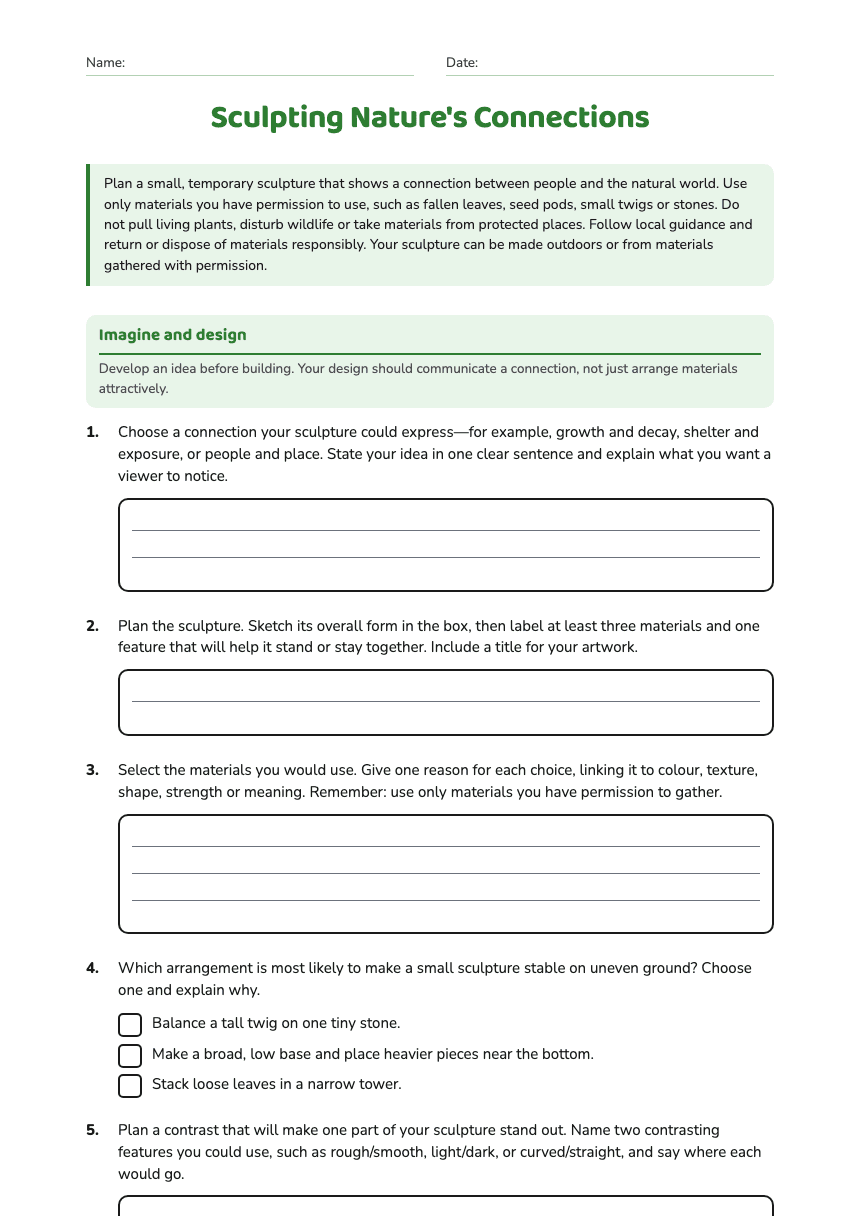
Name:Date:
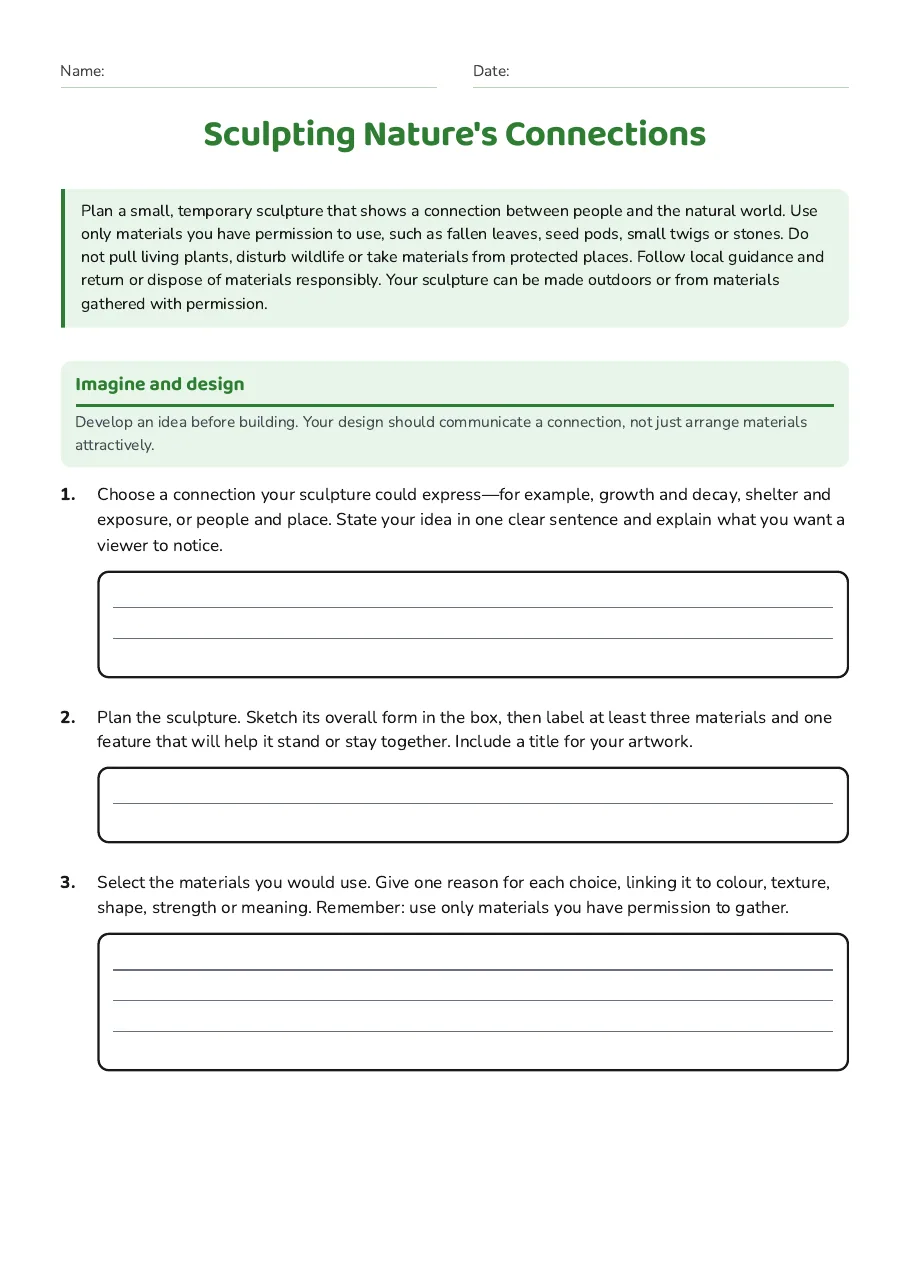
Sculpting Nature's Connections
Plan a small, temporary sculpture that shows a connection between people and the natural world. Use only materials you have permission to use, such as fallen leaves, seed pods, small twigs or stones. Do not pull living plants, disturb wildlife or take materials from protected places. Follow local guidance and return or dispose of materials responsibly. Your sculpture can be made outdoors or from materials gathered with permission.
Imagine and design
Develop an idea before building. Your design should communicate a connection, not just arrange materials attractively.
1.Choose a connection your sculpture could express—for example, growth and decay, shelter and exposure, or people and place. State your idea in one clear sentence and explain what you want a viewer to notice.
2.Plan the sculpture. Sketch its overall form in the box, then label at least three materials and one feature that will help it stand or stay together. Include a title for your artwork.
3.Select the materials you would use. Give one reason for each choice, linking it to colour, texture, shape, strength or meaning. Remember: use only materials you have permission to gather.
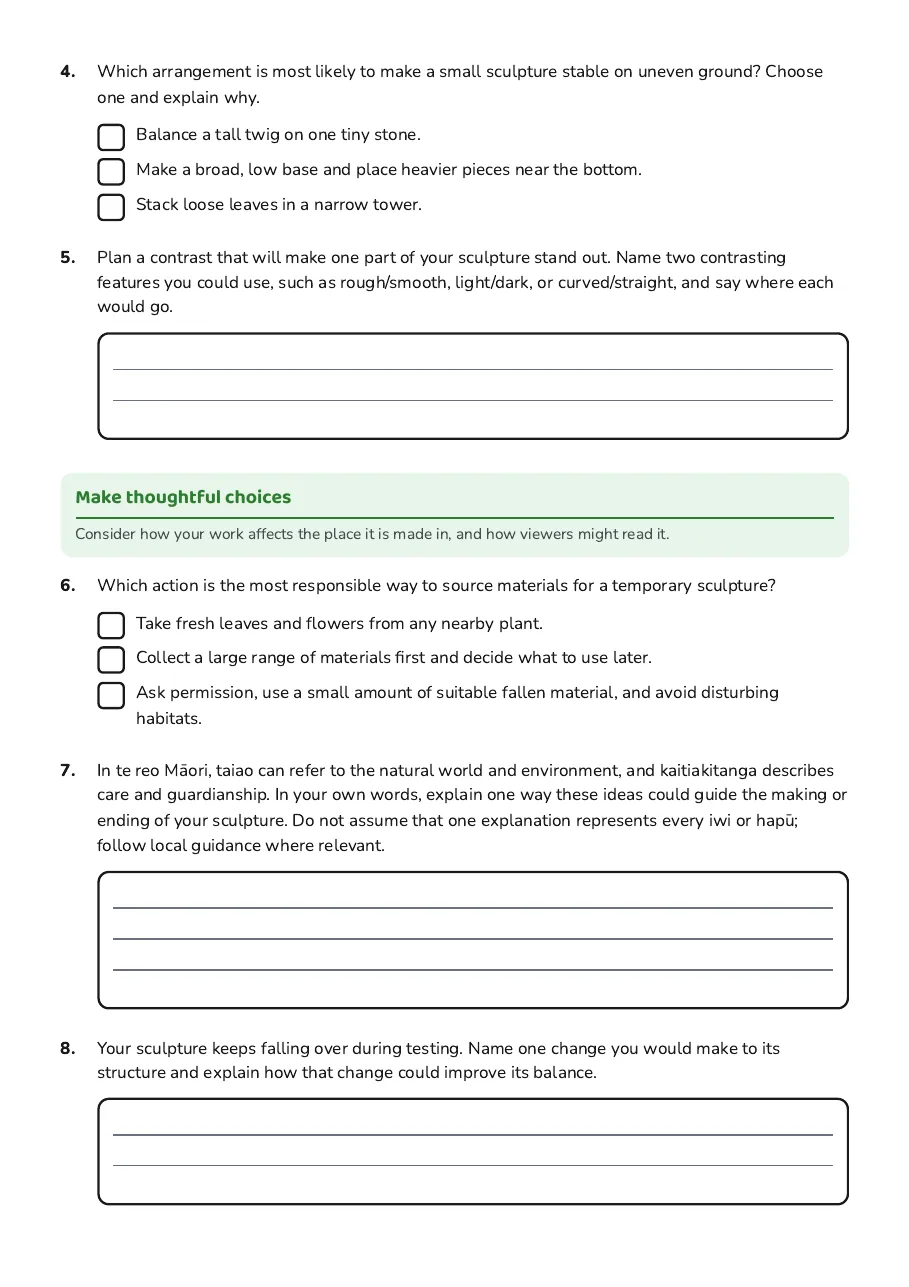
4.Which arrangement is most likely to make a small sculpture stable on uneven ground? Choose one and explain why.
- Balance a tall twig on one tiny stone.
- Make a broad, low base and place heavier pieces near the bottom.
- Stack loose leaves in a narrow tower.
5.Plan a contrast that will make one part of your sculpture stand out. Name two contrasting features you could use, such as rough/smooth, light/dark, or curved/straight, and say where each would go.
Make thoughtful choices
Consider how your work affects the place it is made in, and how viewers might read it.
6.Which action is the most responsible way to source materials for a temporary sculpture?
- Take fresh leaves and flowers from any nearby plant.
- Collect a large range of materials first and decide what to use later.
- Ask permission, use a small amount of suitable fallen material, and avoid disturbing habitats.
7.In te reo Māori, taiao can refer to the natural world and environment, and kaitiakitanga describes care and guardianship. In your own words, explain one way these ideas could guide the making or ending of your sculpture. Do not assume that one explanation represents every iwi or hapū; follow local guidance where relevant.
8.Your sculpture keeps falling over during testing. Name one change you would make to its structure and explain how that change could improve its balance.
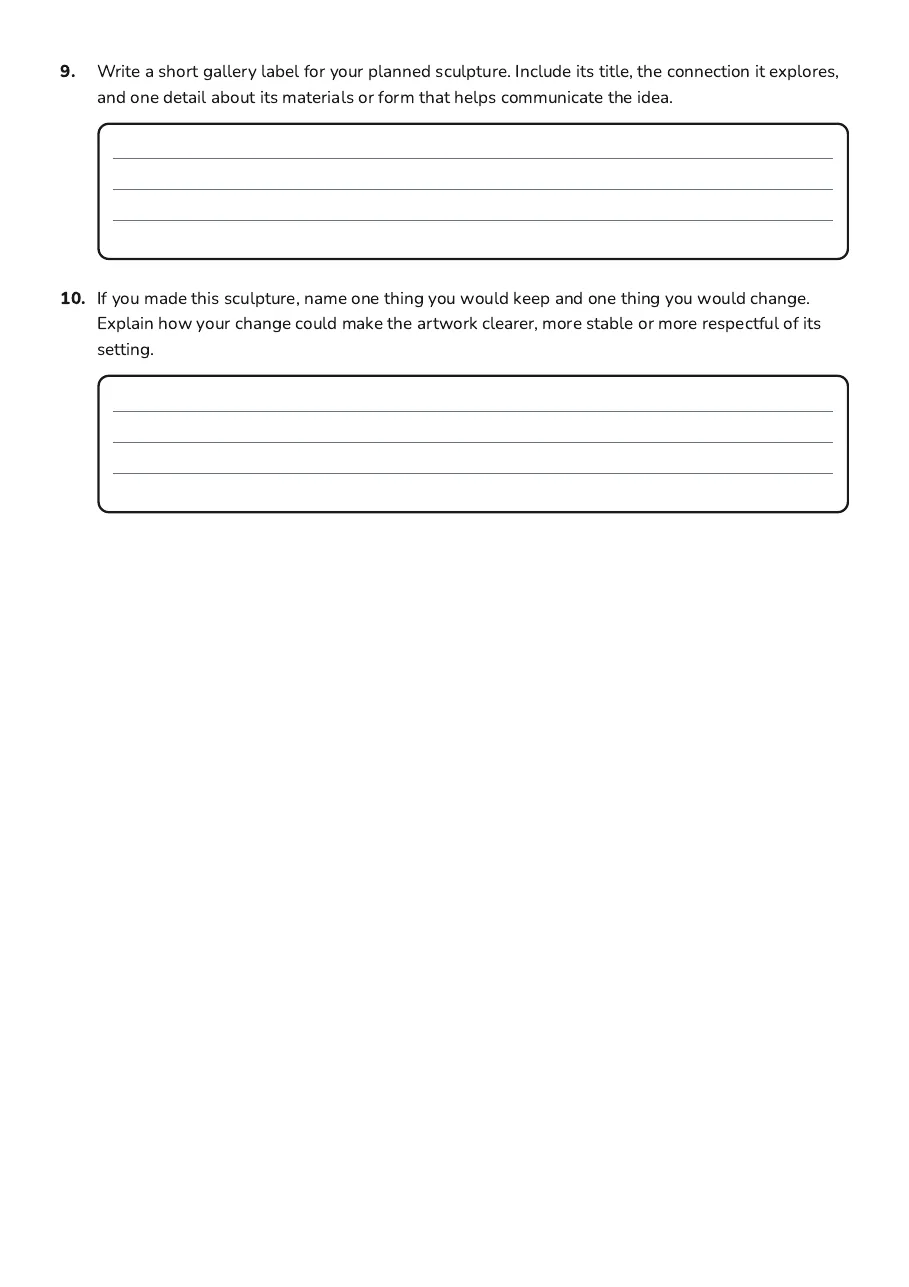
9.Write a short gallery label for your planned sculpture. Include its title, the connection it explores, and one detail about its materials or form that helps communicate the idea.
10.If you made this sculpture, name one thing you would keep and one thing you would change. Explain how your change could make the artwork clearer, more stable or more respectful of its setting.
3 printable pages
Page 1
Page 2
Page 3
About This Worksheet
Free in Kuraplan
Sign up free, grab the PDF, and customize it for your class.
Print-Ready
Formatted for standard paper. Clean layout, easy to read.
AI-Generated
Created with Kuraplan's AI, designed for real classroom use.
For Teachers & Parents
Use in classrooms, for homework, tutoring, or homeschool.
Need a custom version of this worksheet?
Kuraplan's AI generates custom worksheets in seconds — differentiated for every learner, aligned to your curriculum.
Generate Custom Worksheets — Free No credit card Curriculum-aligned Under 60 seconds