Te Kingitanga Movement Vocabulary
A free te reo māori worksheet ready for your classroom. Open in Kuraplan to grab the print-ready PDF, customize it for your students, or generate a fresh version in seconds.
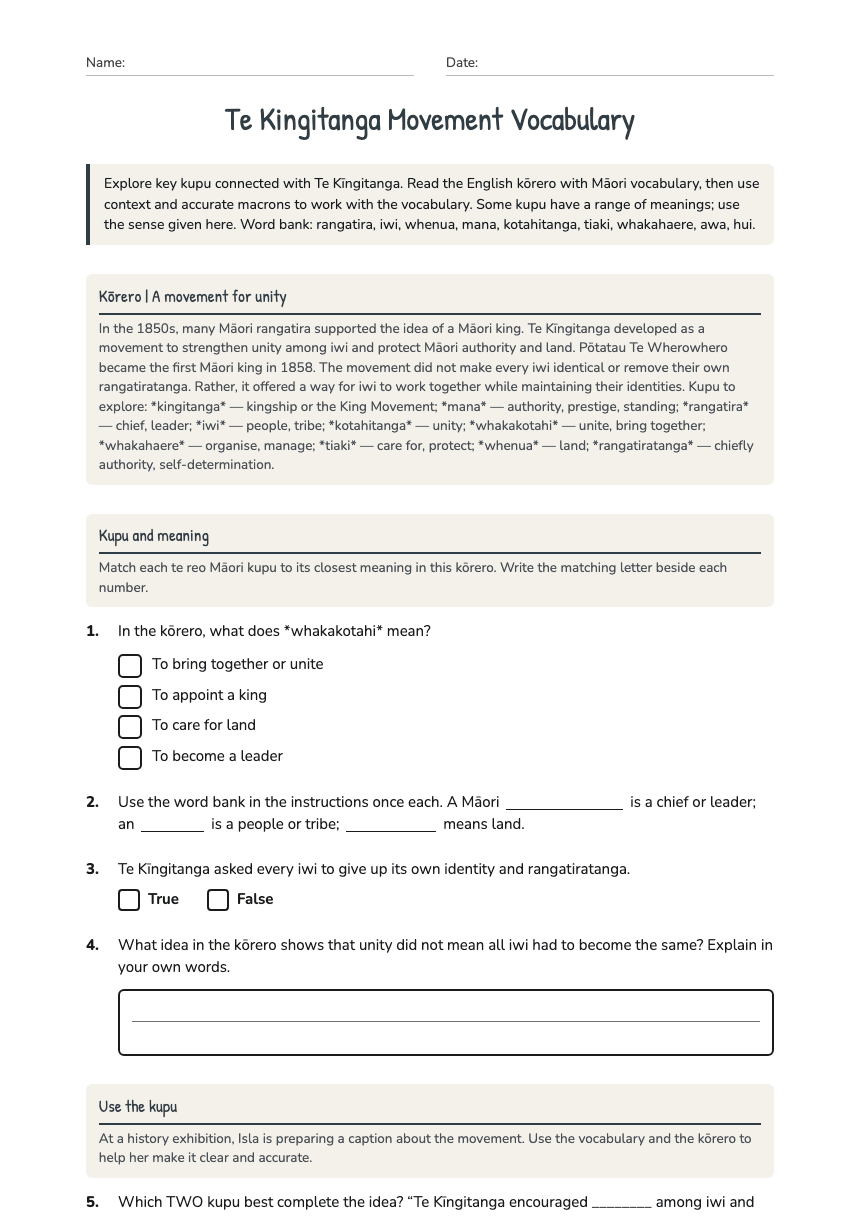
Te Kingitanga Movement Vocabulary
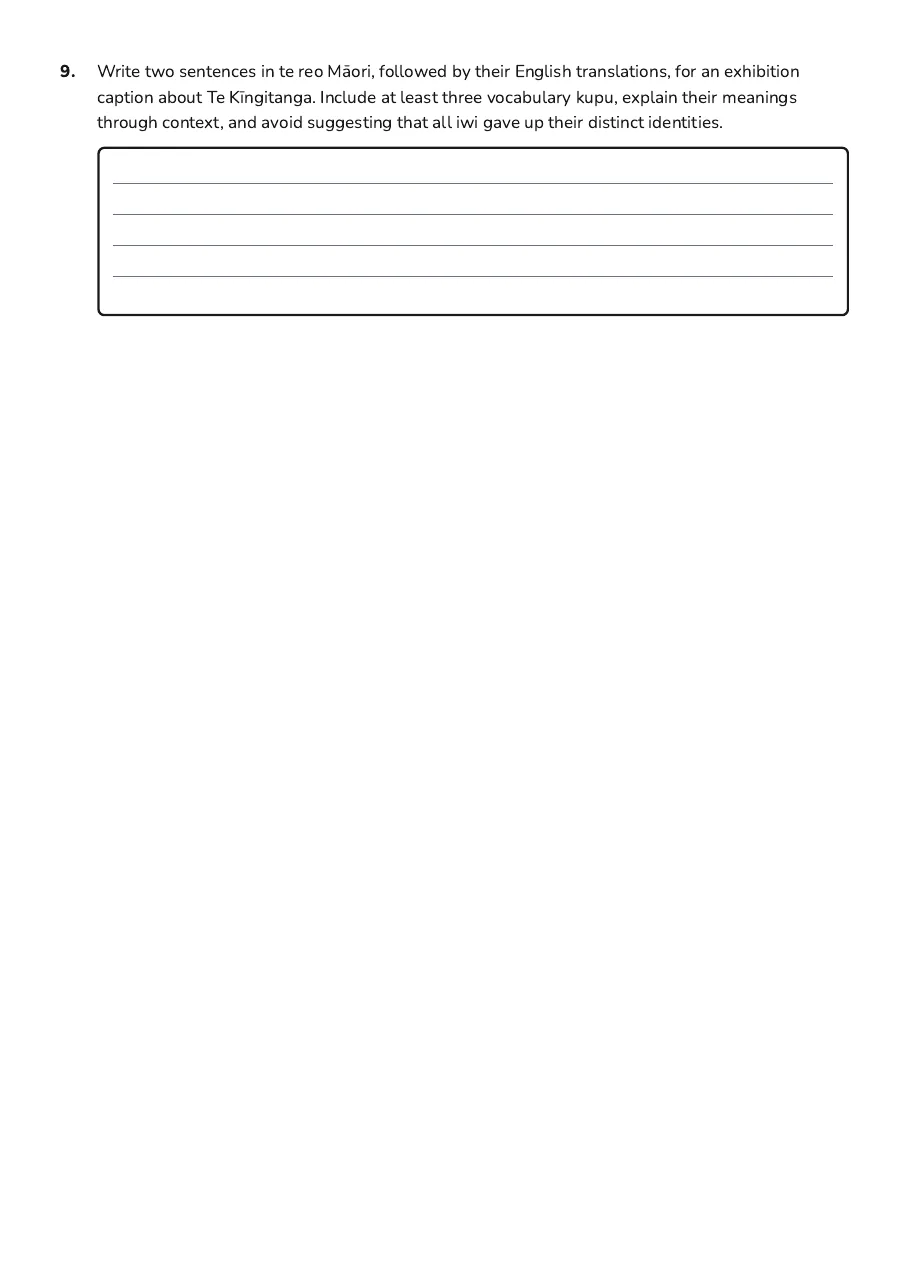
Kōrero | A movement for unity
In the 1850s, many Māori rangatira supported the idea of a Māori king. Te Kīngitanga developed as a movement to strengthen unity among iwi and protect Māori authority and land. Pōtatau Te Wherowhero became the first Māori king in 1858. The movement did not make every iwi identical or remove their own rangatiratanga. Rather, it offered a way for iwi to work together while maintaining their identities. Kupu to explore: *kingitanga* — kingship or the King Movement; *mana* — authority, prestige, standing; *rangatira* — chief, leader; *iwi* — people, tribe; *kotahitanga* — unity; *whakakotahi* — unite, bring together; *whakahaere* — organise, manage; *tiaki* — care for, protect; *whenua* — land; *rangatiratanga* — chiefly authority, self-determination.
Kupu and meaning
Match each te reo Māori kupu to its closest meaning in this kōrero. Write the matching letter beside each number.
- To bring together or unite
- To appoint a king
- To care for land
- To become a leader
Use the kupu
At a history exhibition, Isla is preparing a caption about the movement. Use the vocabulary and the kōrero to help her make it clear and accurate.
- kotahitanga; mana
- whenua; tiaki
- rangatira; whakahaere
- iwi; whenua
3 printable pages
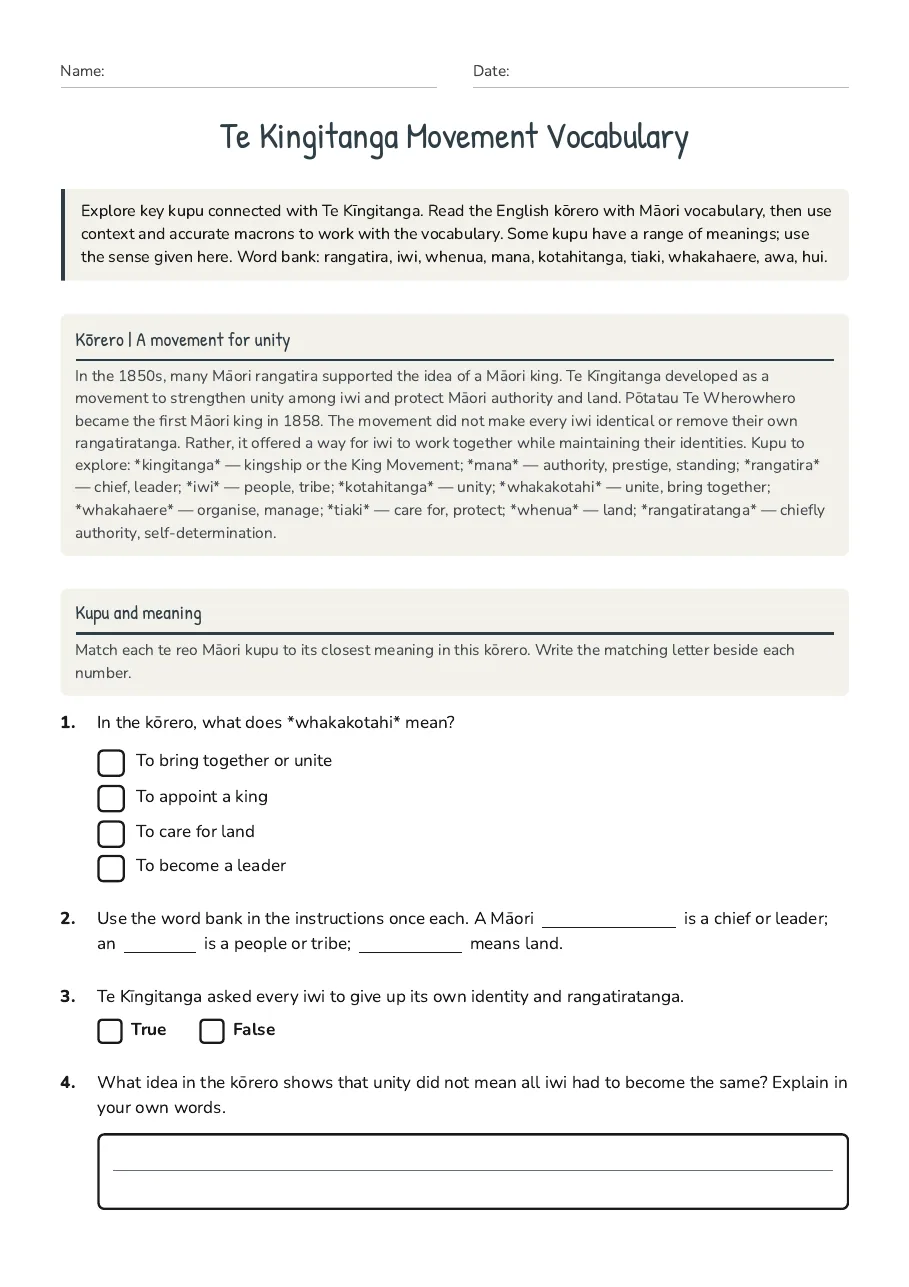
Page 1
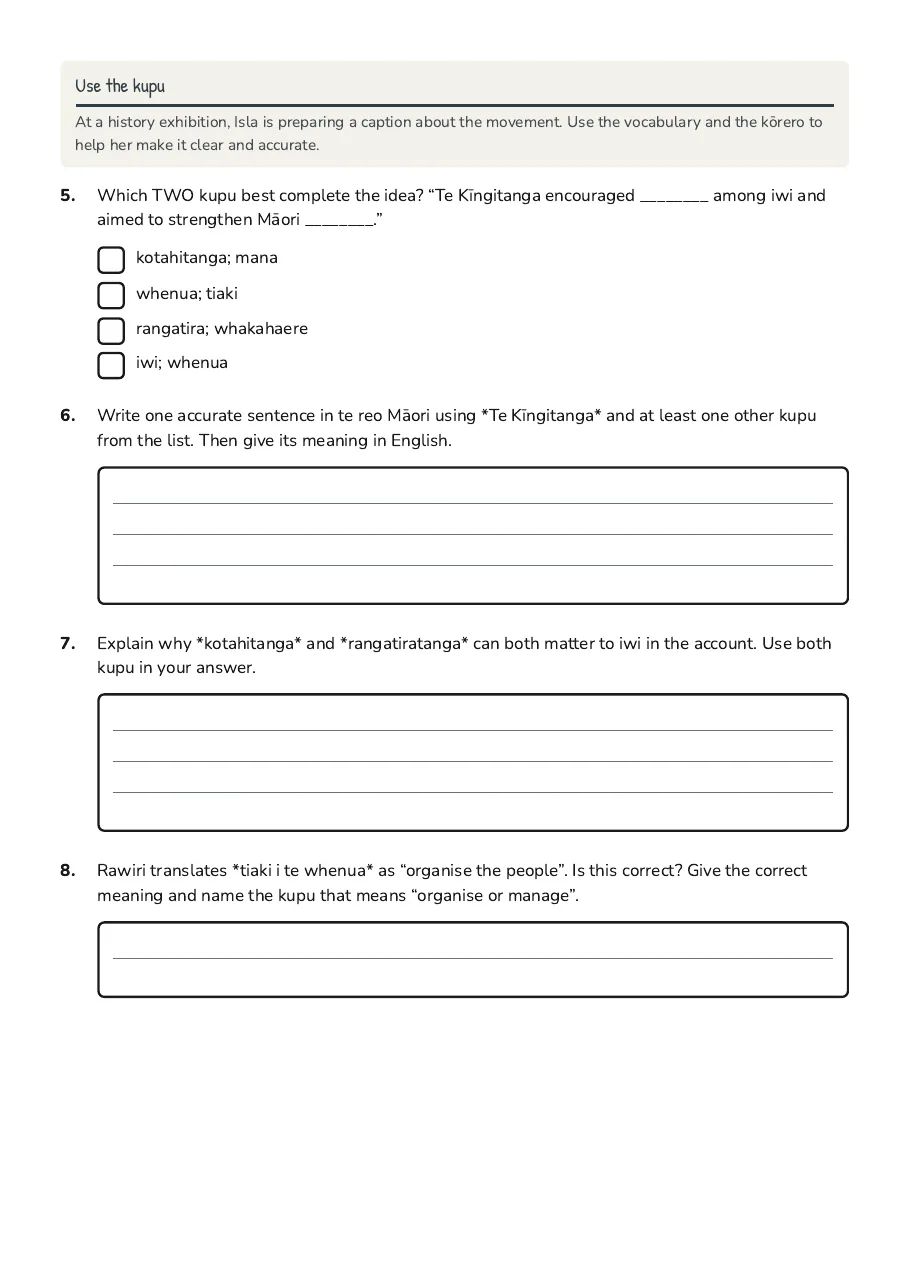
Page 2
Page 3
About This Worksheet
Free in Kuraplan
Sign up free, grab the PDF, and customize it for your class.
Print-Ready
Formatted for standard paper. Clean layout, easy to read.
AI-Generated
Created with Kuraplan's AI, designed for real classroom use.
For Teachers & Parents
Use in classrooms, for homework, tutoring, or homeschool.
Need a custom version of this worksheet?
Kuraplan's AI generates custom worksheets in seconds — differentiated for every learner, aligned to your curriculum.
Generate Custom Worksheets — FreeMore Te Reo Māori Worksheets
Te Reo Feelings Vocabulary
Free
Māori Vocabulary: Pōhutukawa & Matariki
Free
Kupu Hou Māori Worksheet
Free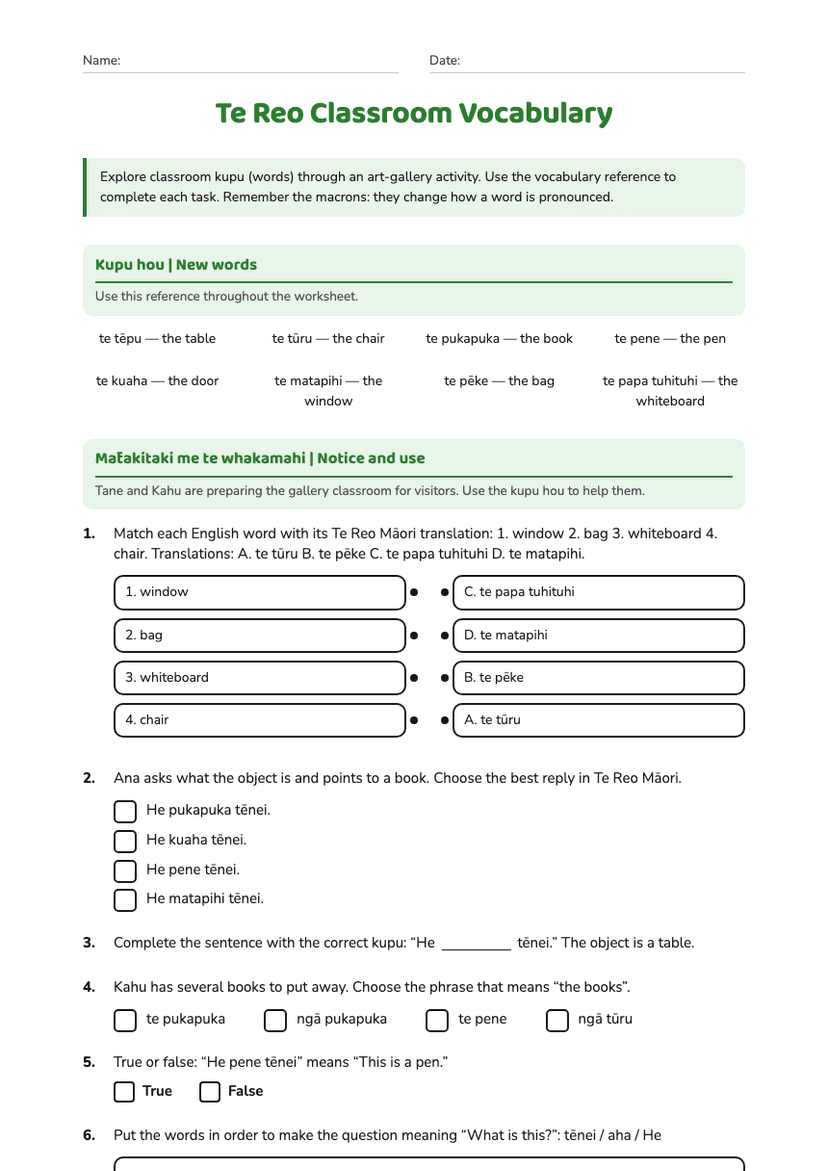
Te Reo Classroom Vocabulary
Free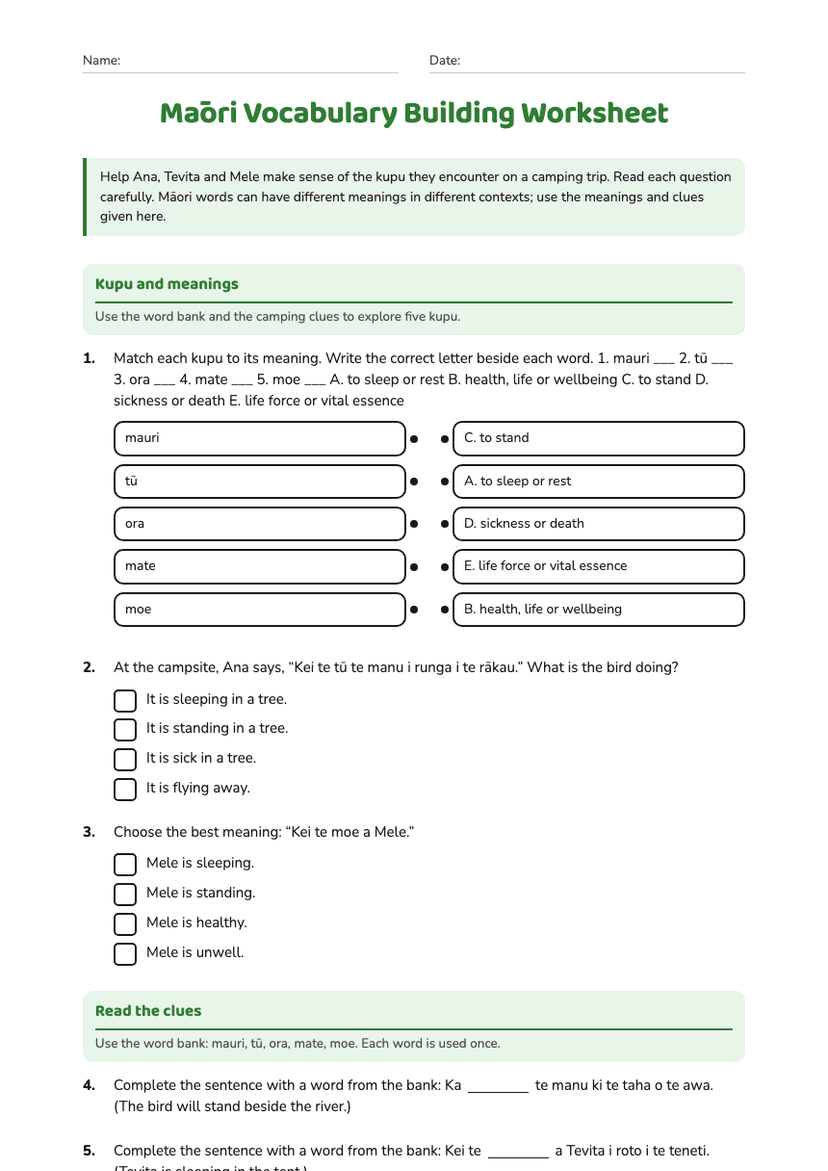
Māori Vocabulary Building Worksheet
Free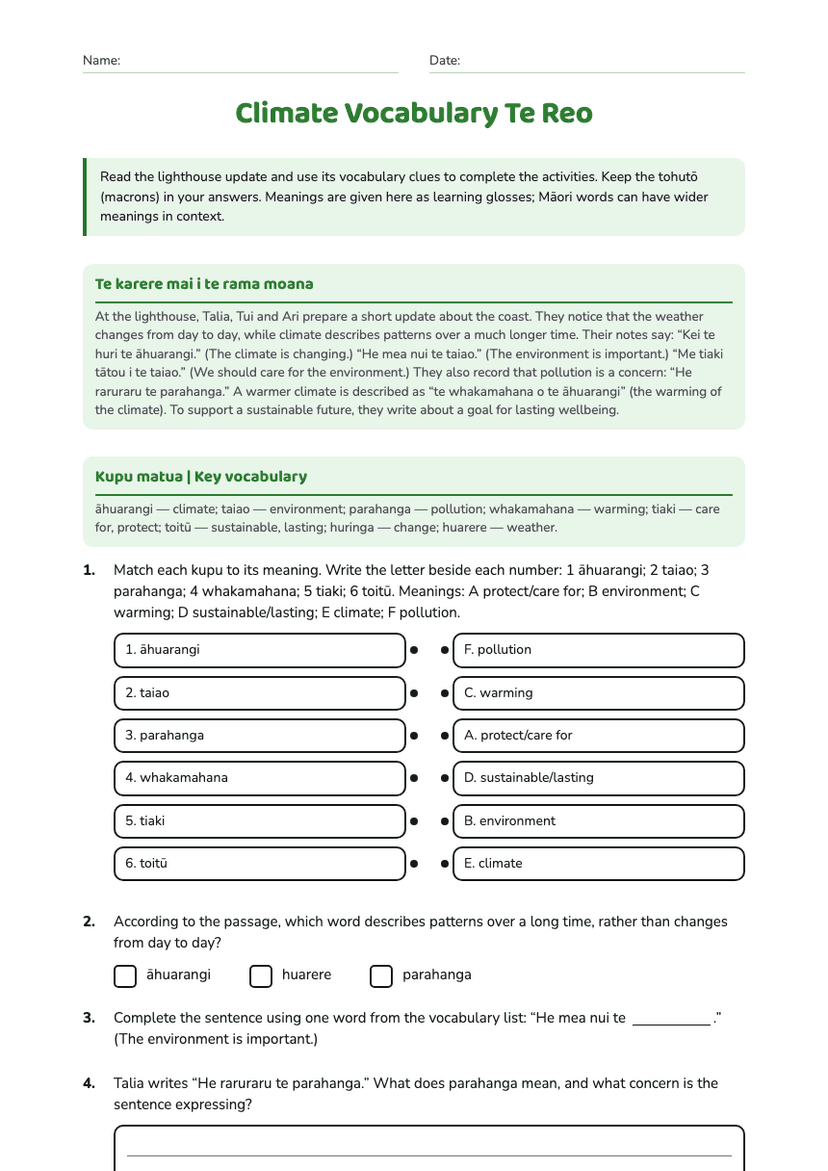
Climate Vocabulary Te Reo
Free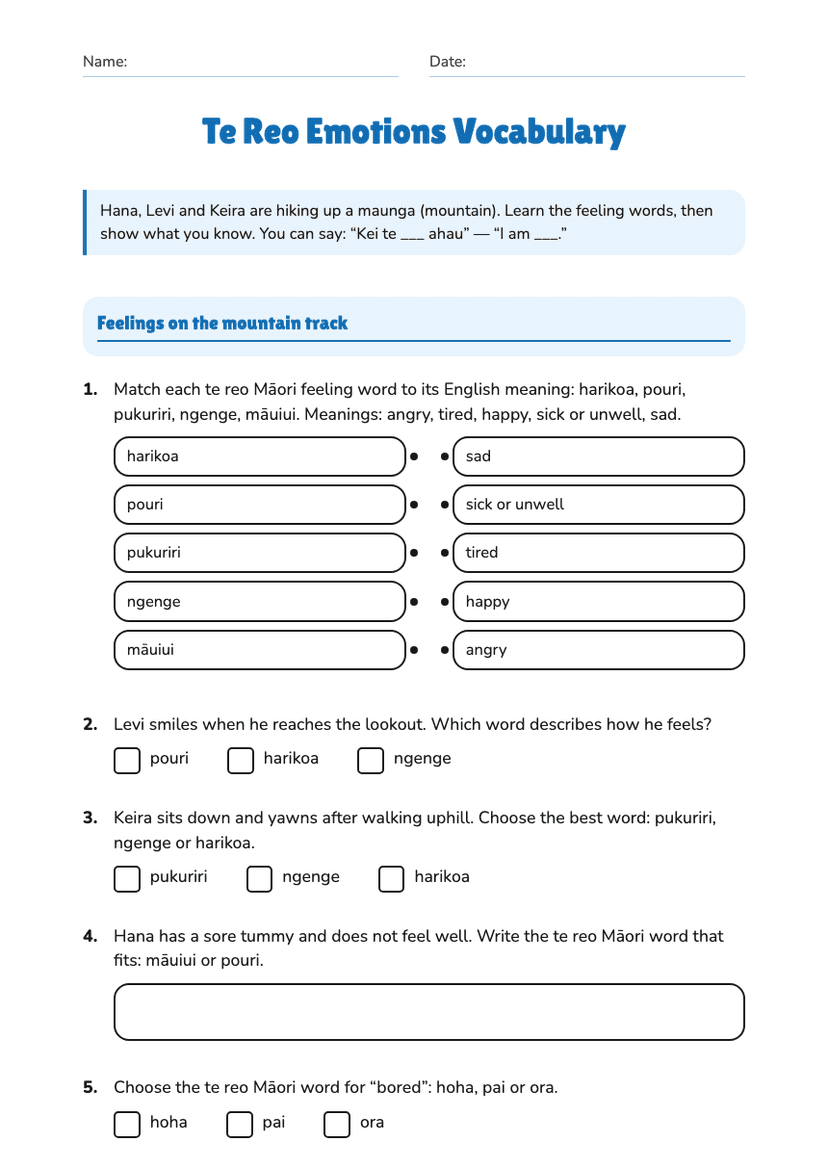
Te Reo Emotions Vocabulary
Free