Te Reo Māori Greetings
A free te reo māori worksheet ready for your classroom. Open in Kuraplan to grab the print-ready PDF, customize it for your students, or generate a fresh version in seconds.
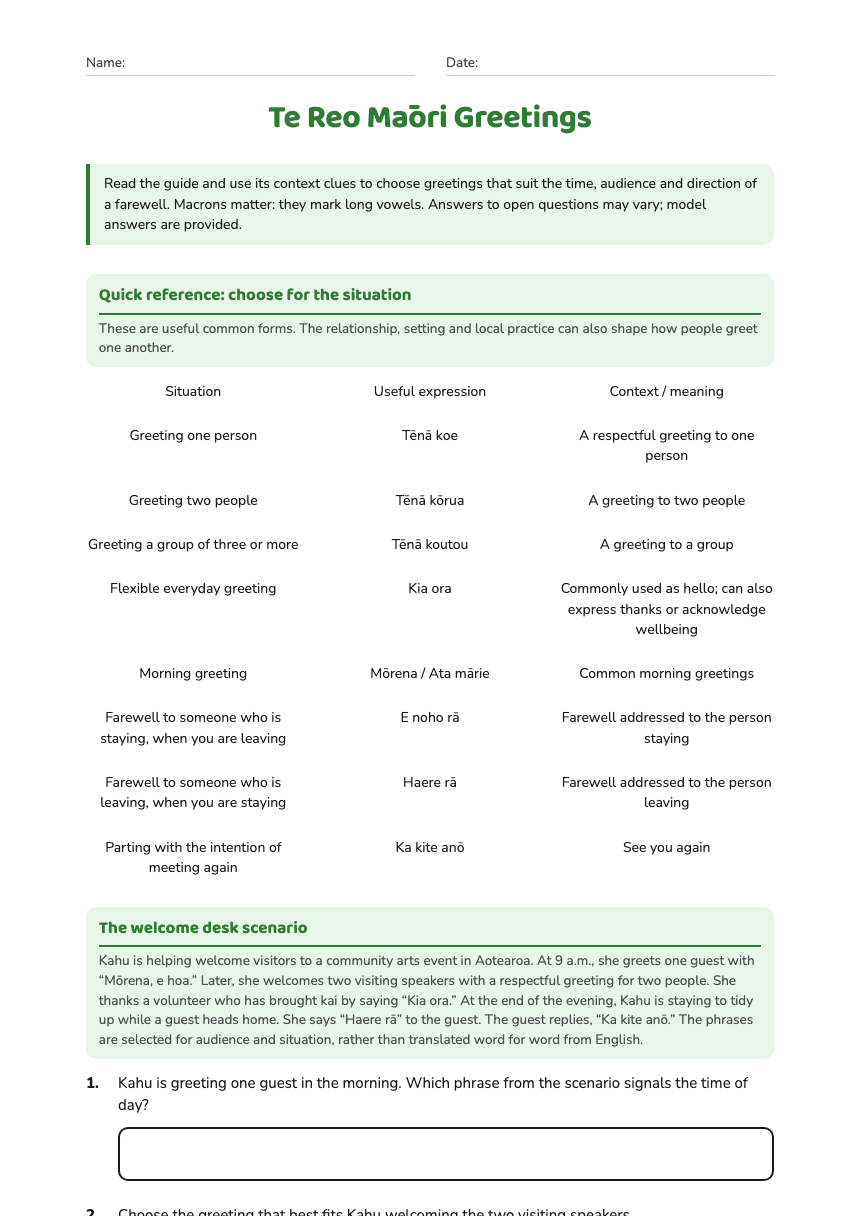
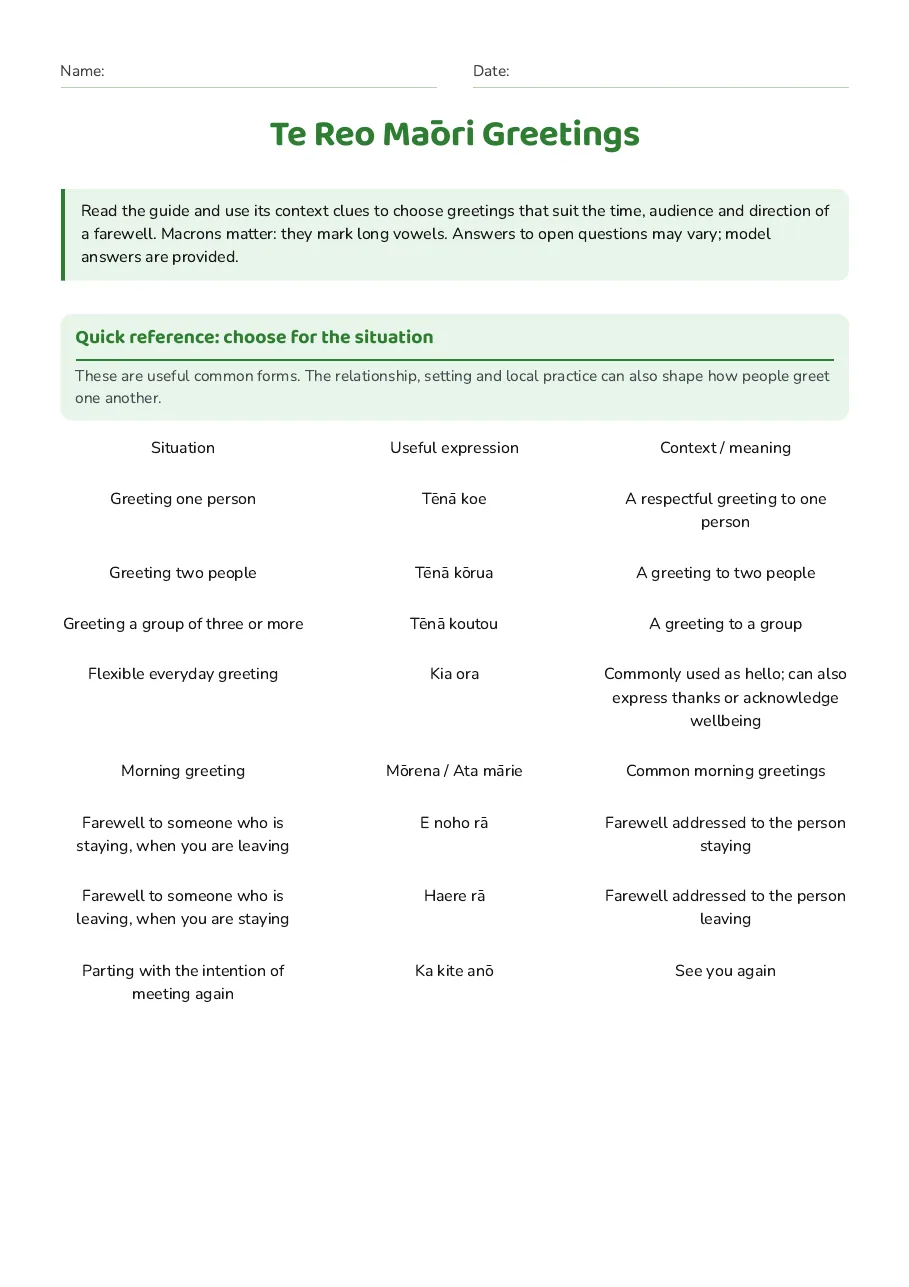
Te Reo Māori Greetings
Quick reference: choose for the situation
These are useful common forms. The relationship, setting and local practice can also shape how people greet one another.
Situation
Useful expression
Context / meaning
Greeting one person
Tēnā koe
A respectful greeting to one person
Greeting two people
Tēnā kōrua
A greeting to two people
Greeting a group of three or more
Tēnā koutou
A greeting to a group
Flexible everyday greeting
Kia ora
Commonly used as hello; can also express thanks or acknowledge wellbeing
Morning greeting
Mōrena / Ata mārie
Common morning greetings
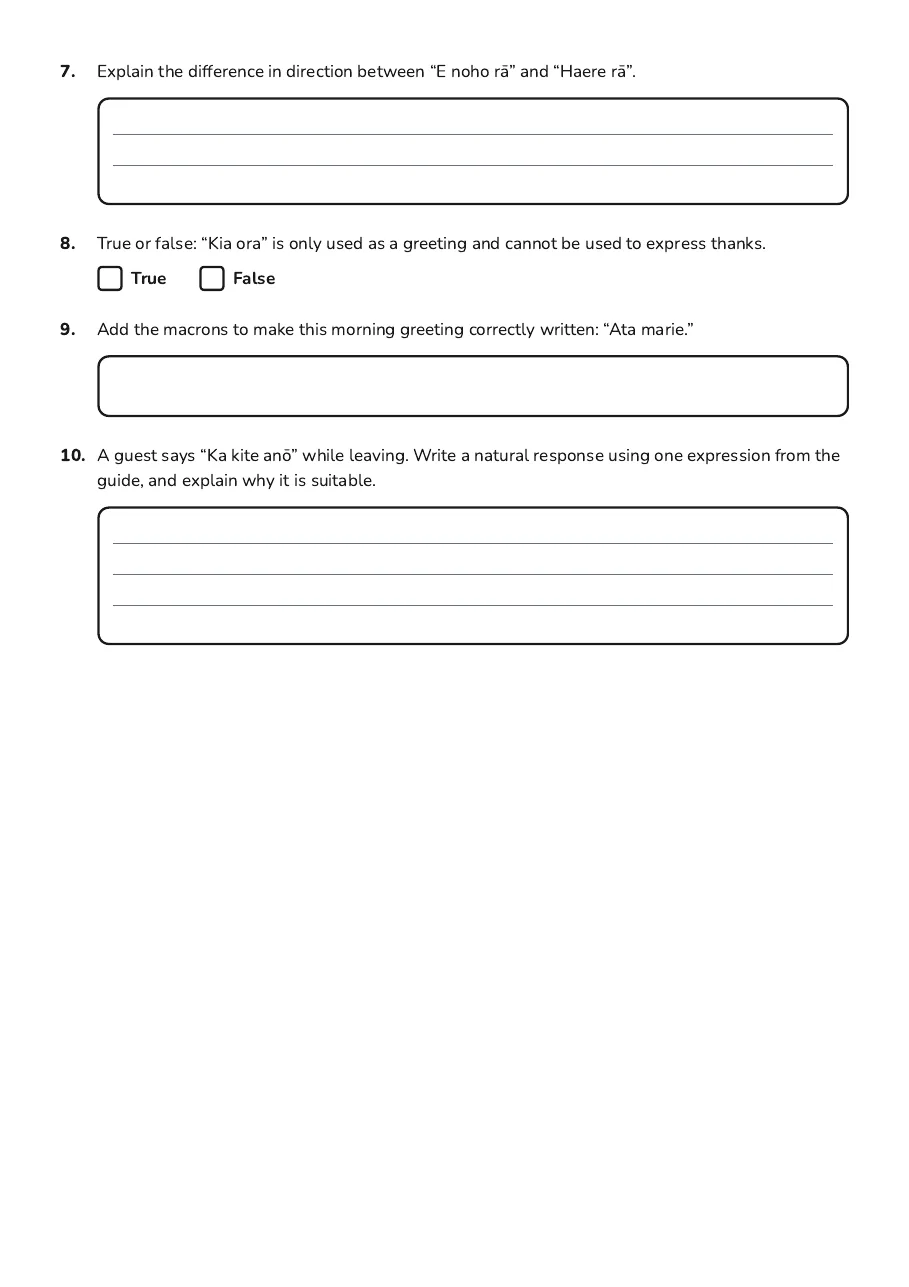
Farewell to someone who is staying, when you are leaving
E noho rā
Farewell addressed to the person staying
Farewell to someone who is leaving, when you are staying
Haere rā
Farewell addressed to the person leaving
Parting with the intention of meeting again
Ka kite anō
See you again
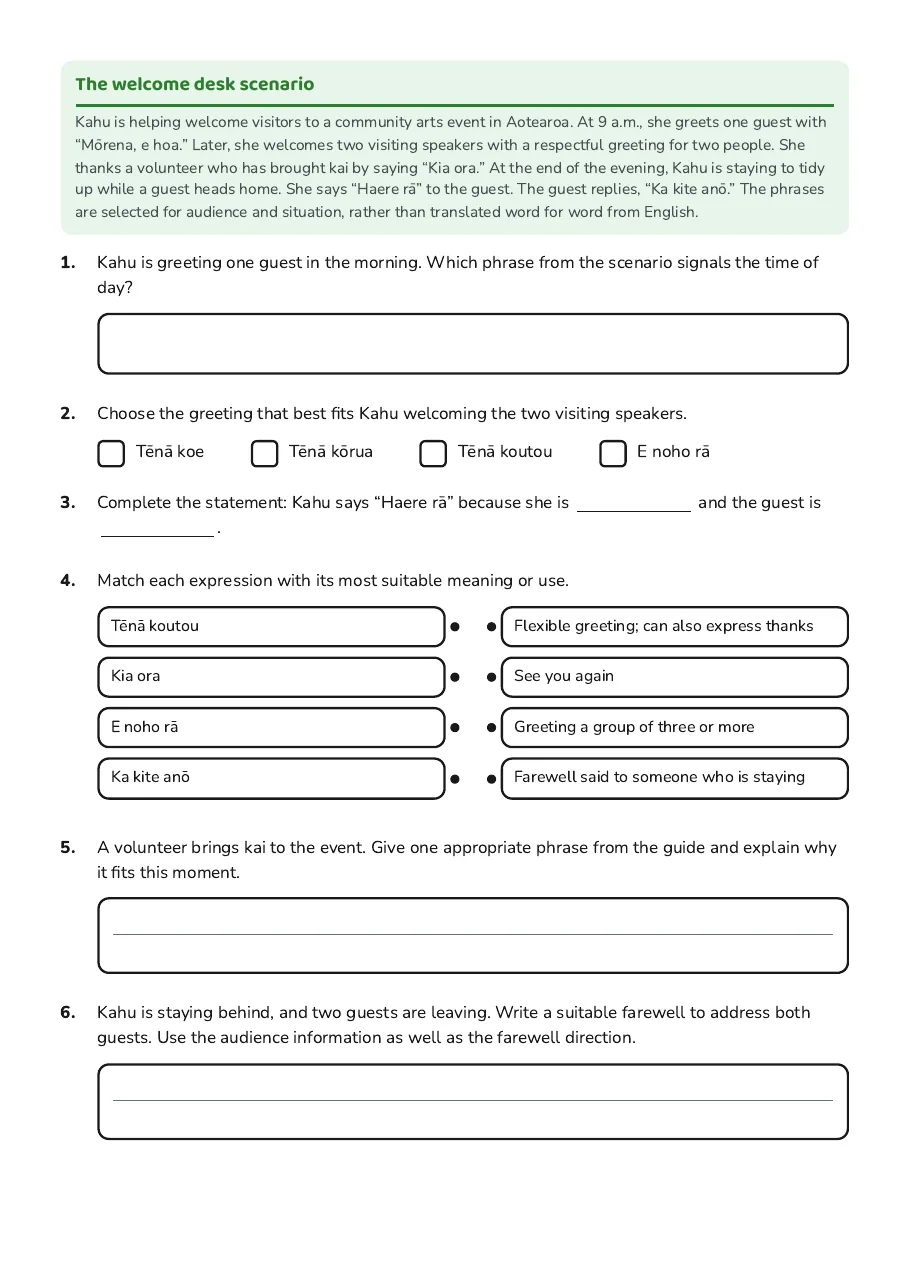
The welcome desk scenario
Kahu is helping welcome visitors to a community arts event in Aotearoa. At 9 a.m., she greets one guest with “Mōrena, e hoa.” Later, she welcomes two visiting speakers with a respectful greeting for two people. She thanks a volunteer who has brought kai by saying “Kia ora.” At the end of the evening, Kahu is staying to tidy up while a guest heads home. She says “Haere rā” to the guest. The guest replies, “Ka kite anō.” The phrases are selected for audience and situation, rather than translated word for word from English.
- Tēnā koe
- Tēnā kōrua
- Tēnā koutou
- E noho rā
- Tēnā koutou
- Kia ora
- E noho rā
- Ka kite anō
- Flexible greeting; can also express thanks
- See you again
- Greeting a group of three or more
- Farewell said to someone who is staying
3 printable pages
Page 1
Page 2
Page 3
About This Worksheet
Free in Kuraplan
Sign up free, grab the PDF, and customize it for your class.
Print-Ready
Formatted for standard paper. Clean layout, easy to read.
AI-Generated
Created with Kuraplan's AI, designed for real classroom use.
For Teachers & Parents
Use in classrooms, for homework, tutoring, or homeschool.
Need a custom version of this worksheet?
Kuraplan's AI generates custom worksheets in seconds — differentiated for every learner, aligned to your curriculum.
Generate Custom Worksheets — FreeMore Te Reo Māori Worksheets
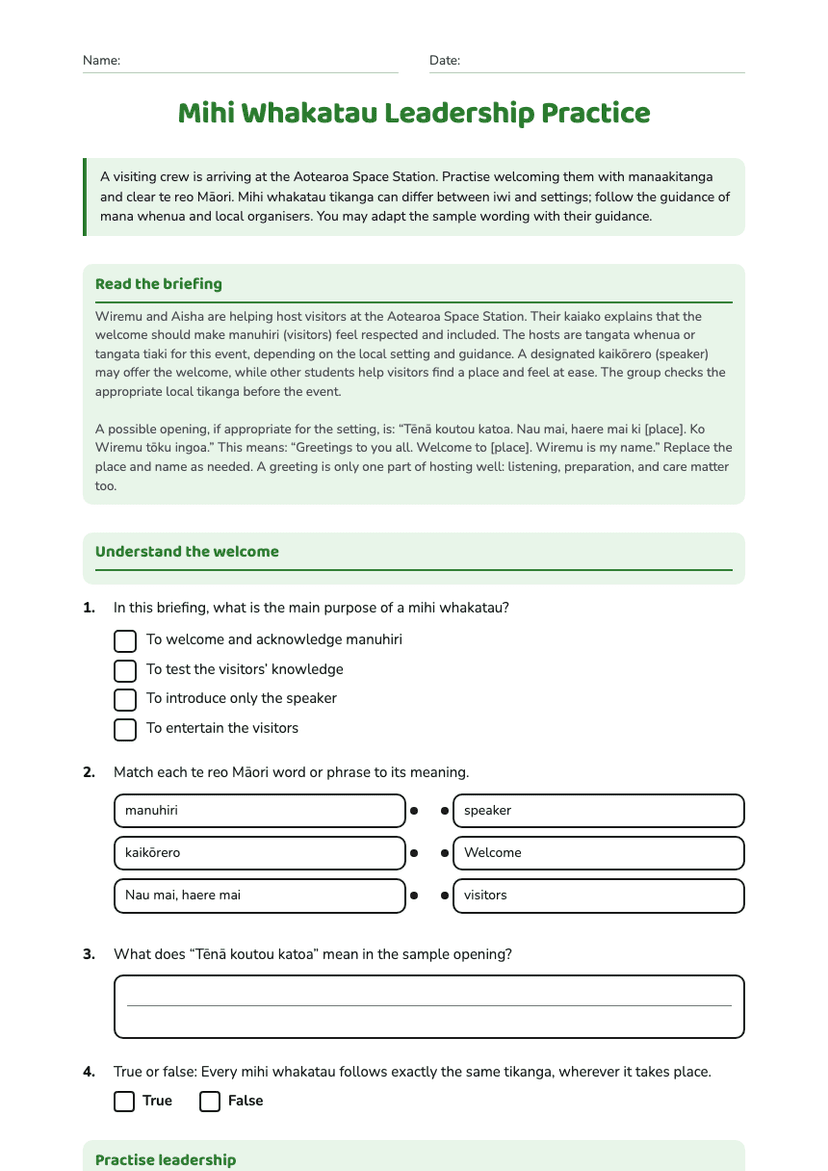
Mihi Whakatau Leadership Practice
Free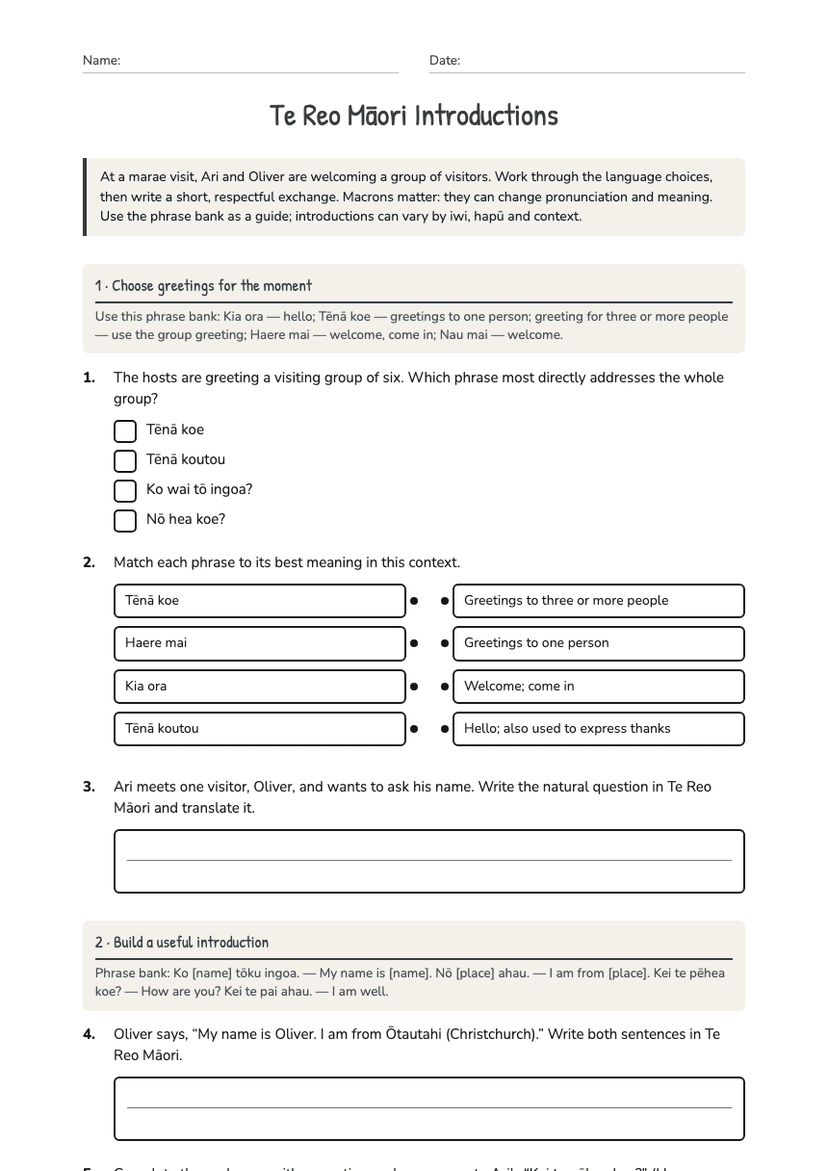
Te Reo Māori Introductions
Free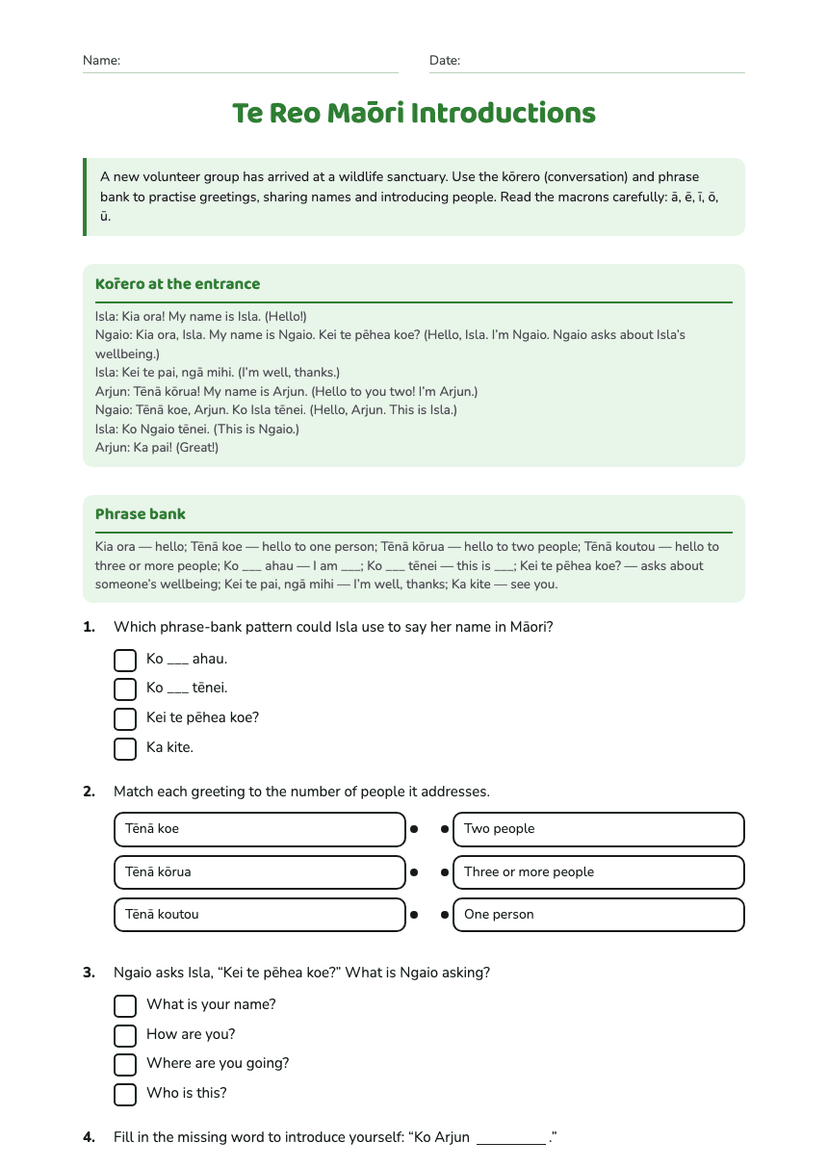
Te Reo Māori Introductions
Free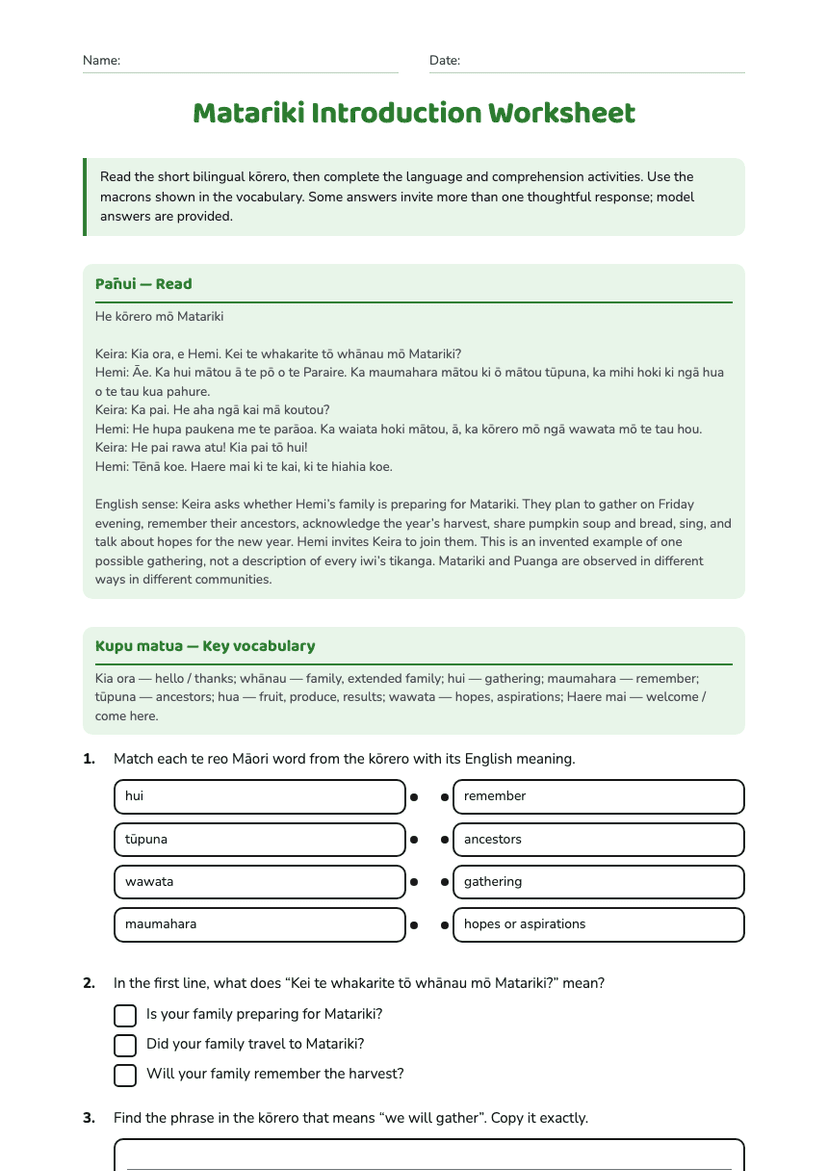
Matariki Introduction Worksheet
Free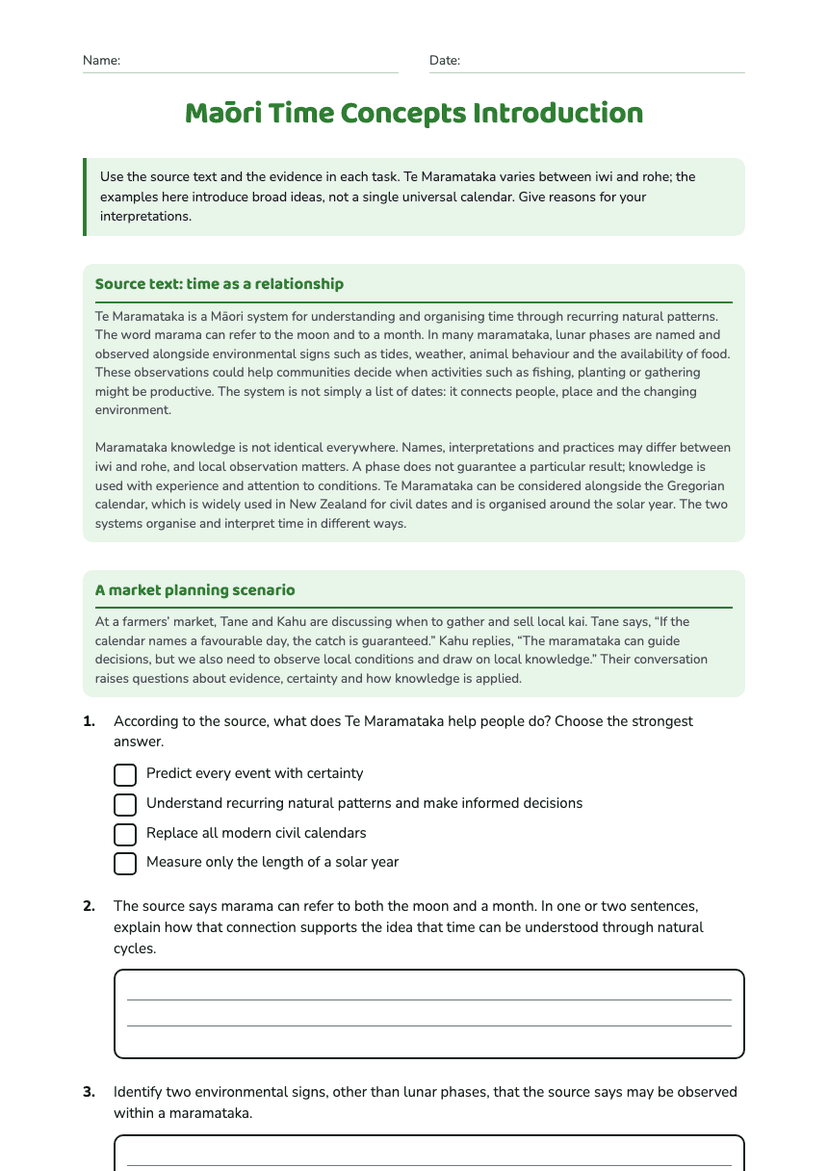
Māori Time Concepts Introduction
Free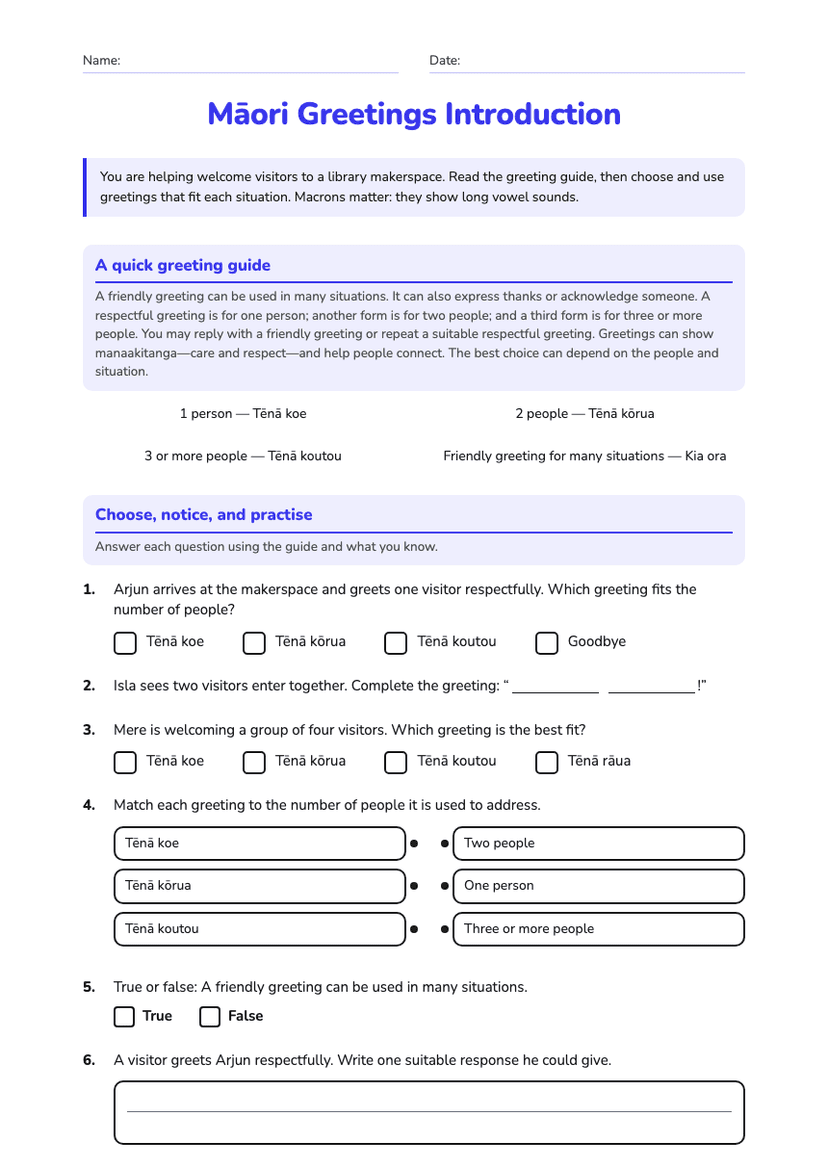
Māori Greetings Introduction
Free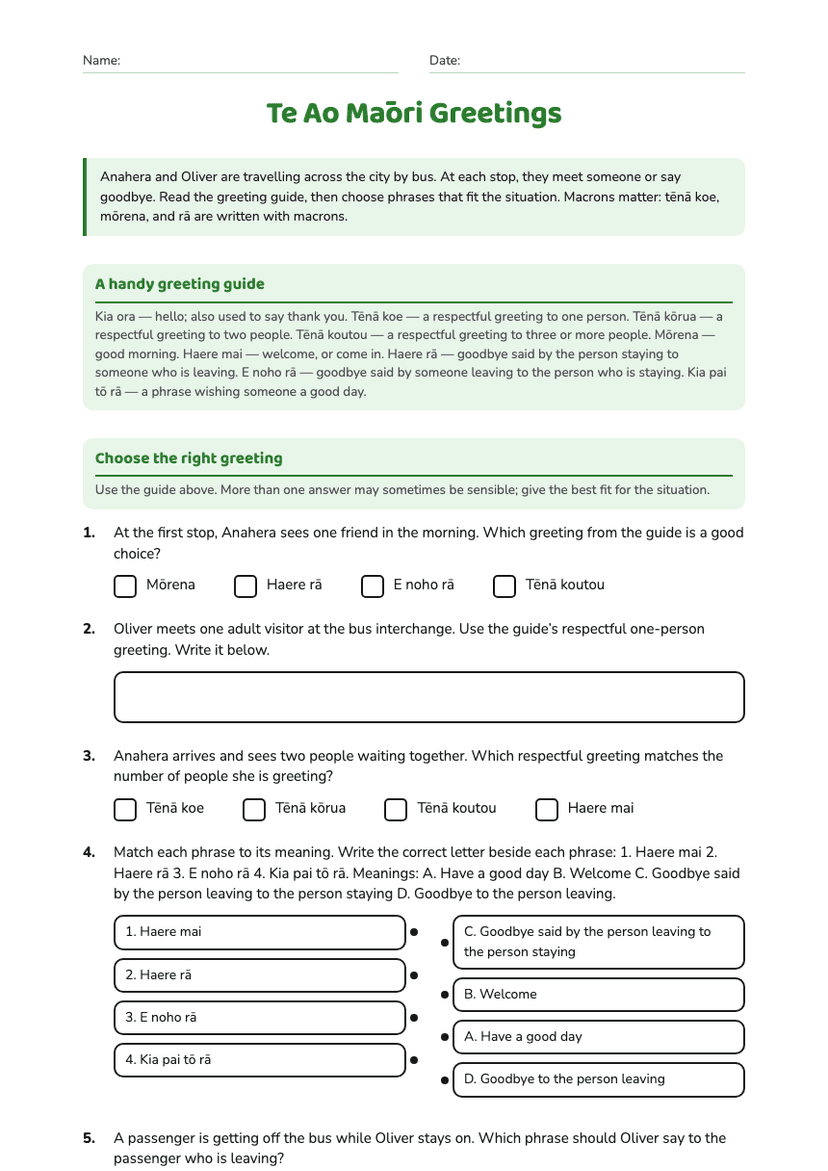
Te Ao Māori Greetings
Free