Te Reo Negation Introduction
A free te reo māori worksheet ready for your classroom. Open in Kuraplan to grab the print-ready PDF, customize it for your students, or generate a fresh version in seconds.
Te Reo Negation Introduction
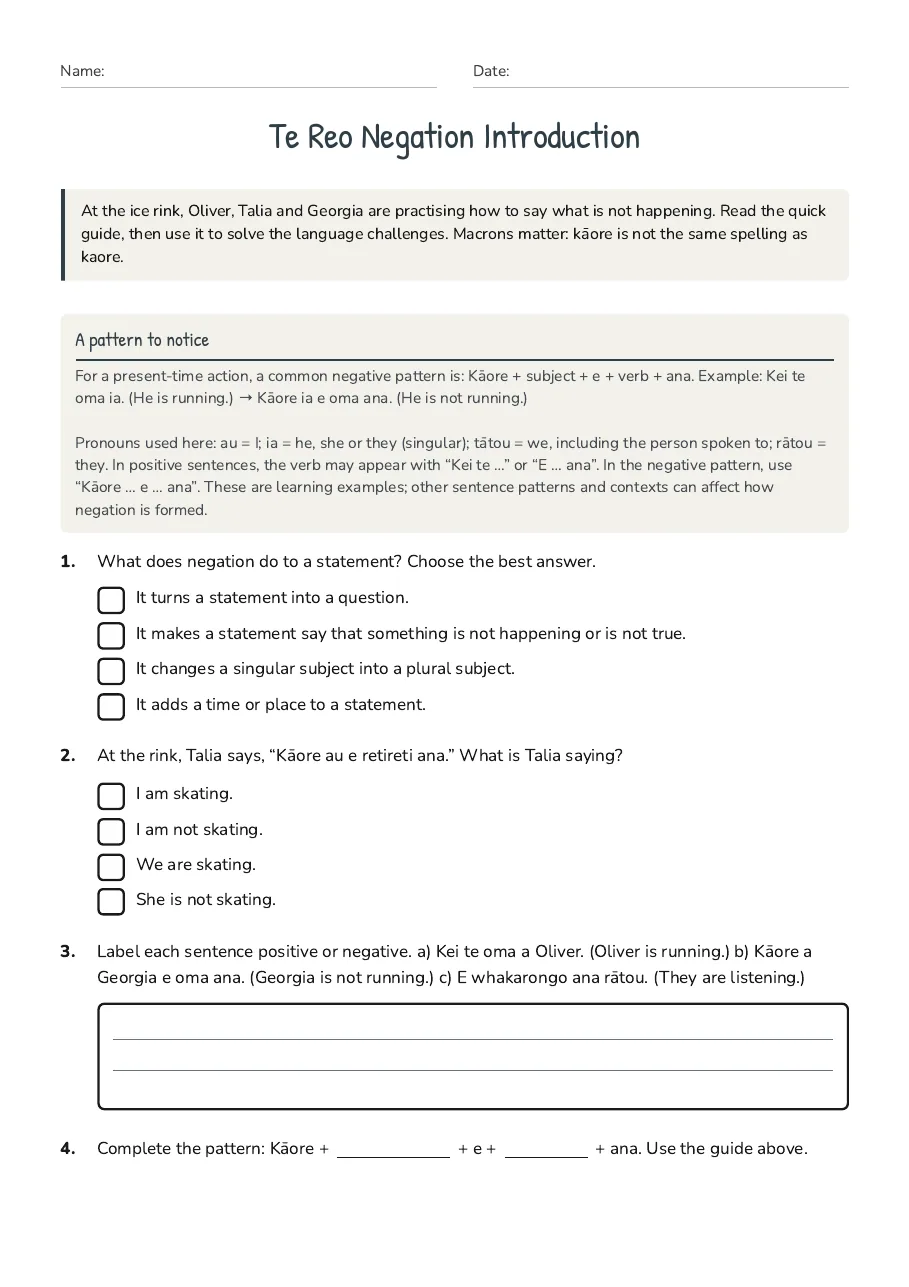
A pattern to notice
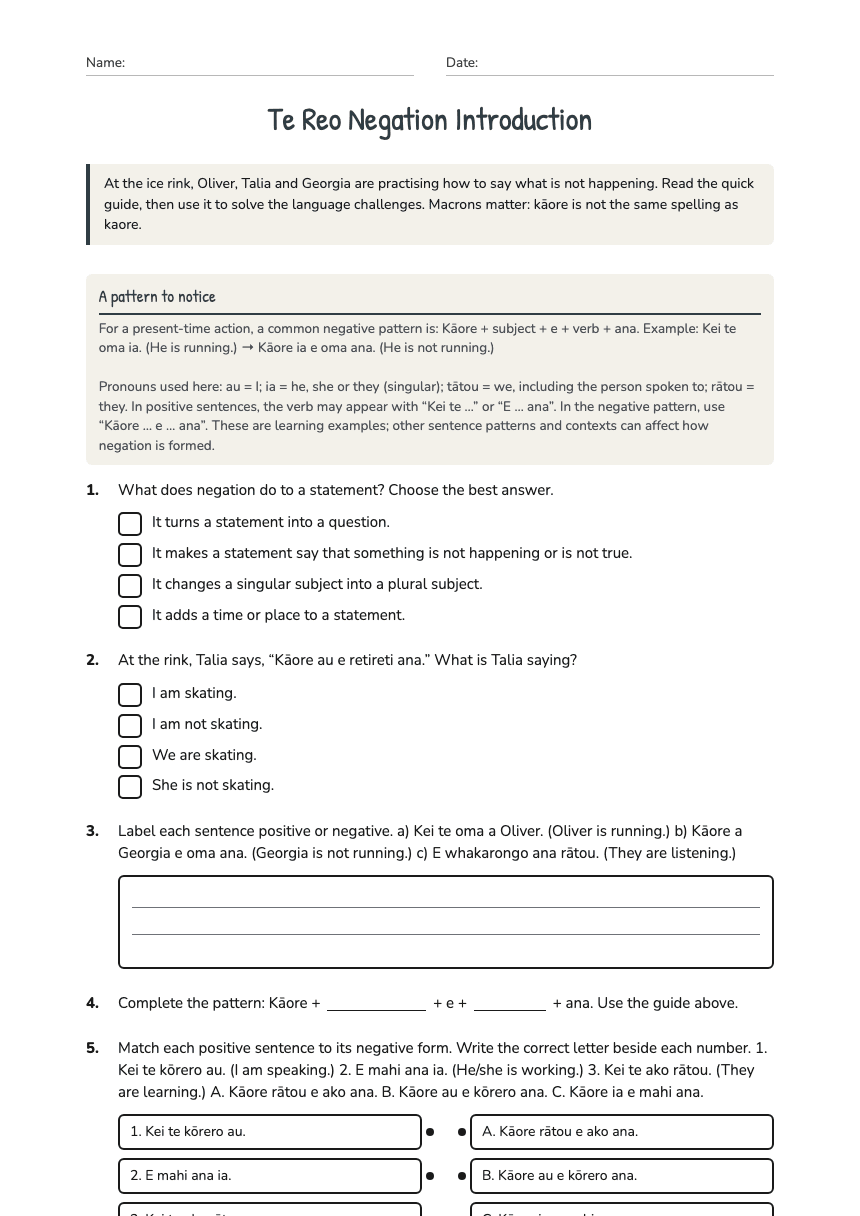
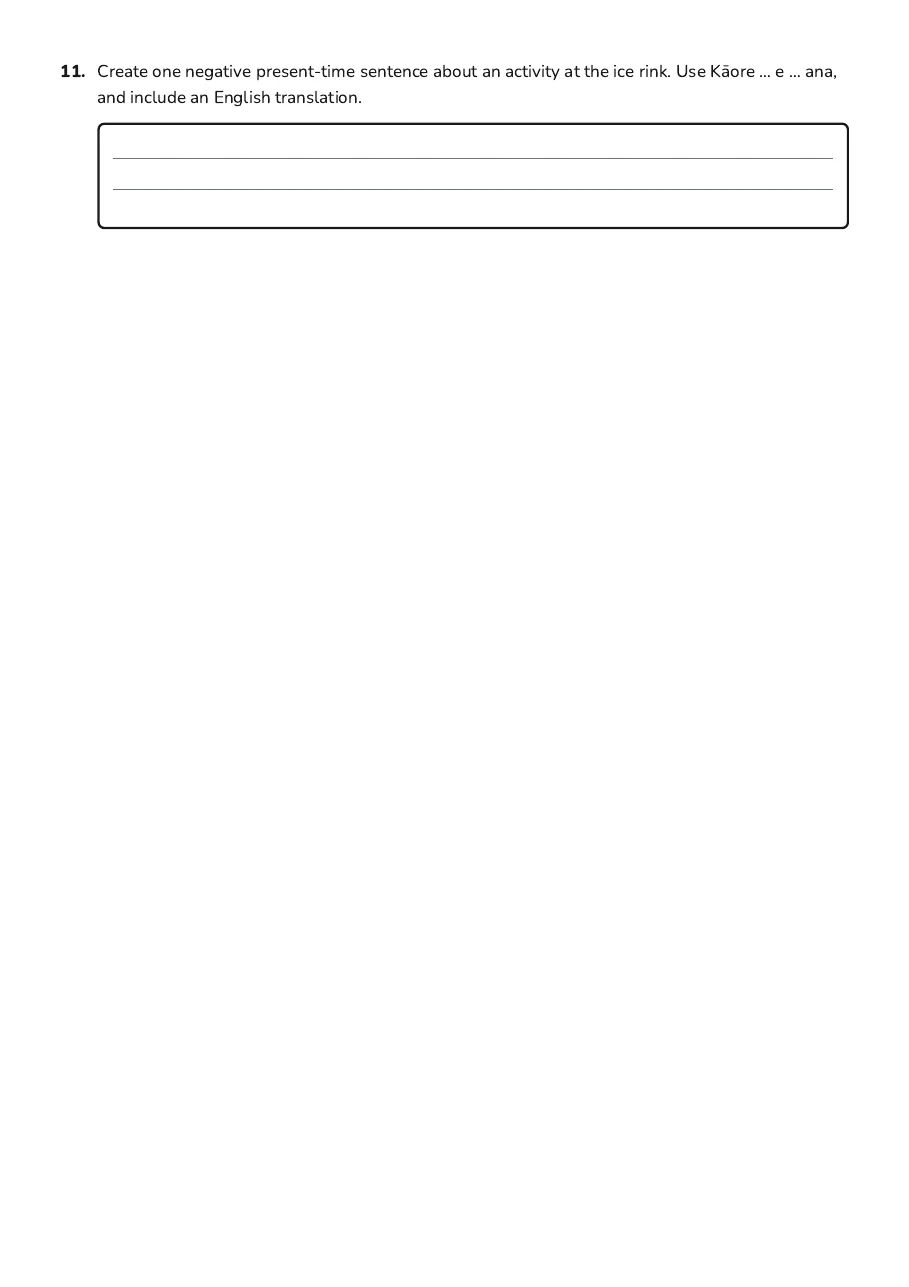
For a present-time action, a common negative pattern is: Kāore + subject + e + verb + ana. Example: Kei te oma ia. (He is running.) → Kāore ia e oma ana. (He is not running.) Pronouns used here: au = I; ia = he, she or they (singular); tātou = we, including the person spoken to; rātou = they. In positive sentences, the verb may appear with “Kei te …” or “E … ana”. In the negative pattern, use “Kāore … e … ana”. These are learning examples; other sentence patterns and contexts can affect how negation is formed.
- It turns a statement into a question.
- It makes a statement say that something is not happening or is not true.
- It changes a singular subject into a plural subject.
- It adds a time or place to a statement.
- I am skating.
- I am not skating.
- We are skating.
- She is not skating.
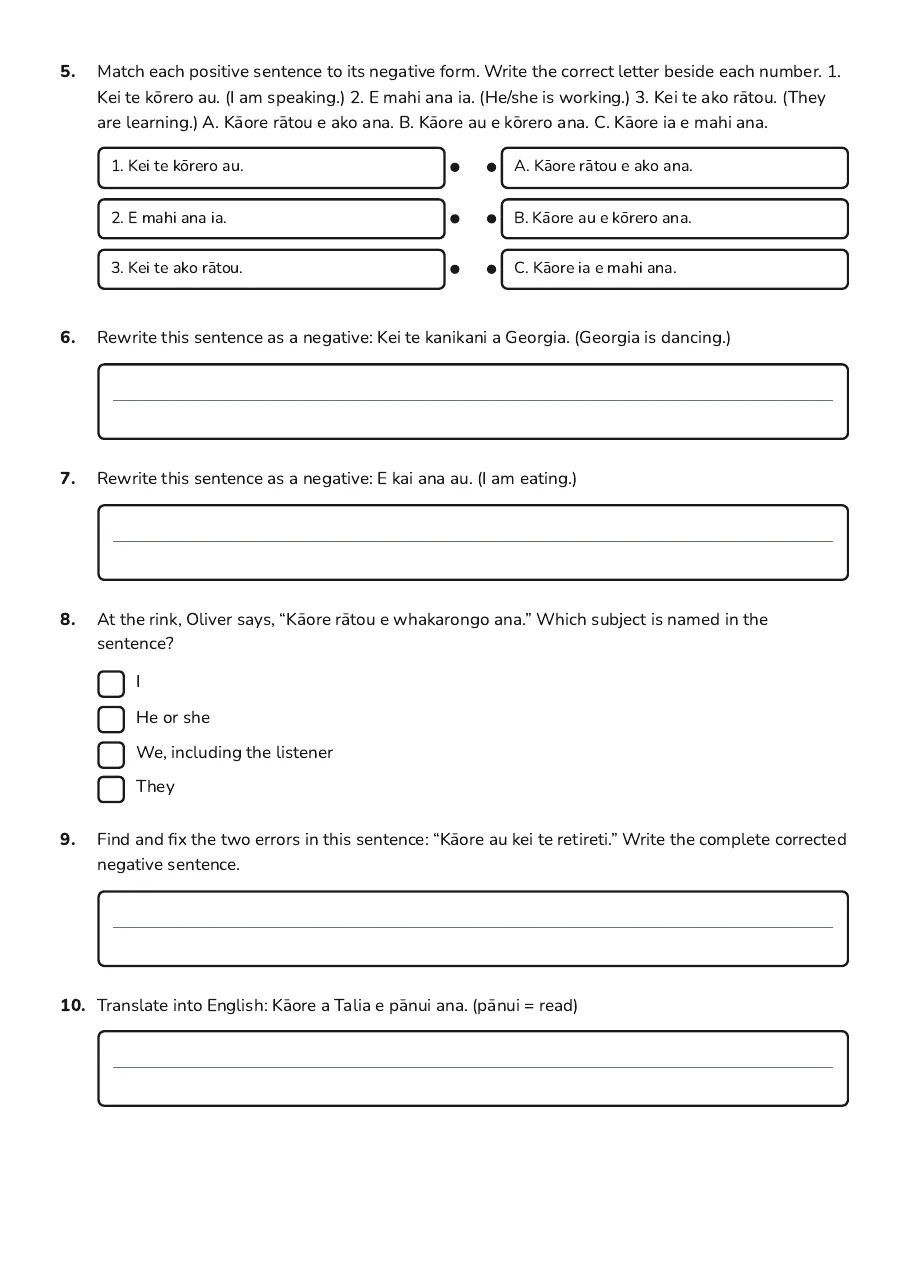
- 1. Kei te kōrero au.
- 2. E mahi ana ia.
- 3. Kei te ako rātou.
- A. Kāore rātou e ako ana.
- B. Kāore au e kōrero ana.
- C. Kāore ia e mahi ana.
- I
- He or she
- We, including the listener
- They
3 printable pages
Page 1
Page 2
Page 3
About This Worksheet
Free in Kuraplan
Sign up free, grab the PDF, and customize it for your class.
Print-Ready
Formatted for standard paper. Clean layout, easy to read.
AI-Generated
Created with Kuraplan's AI, designed for real classroom use.
For Teachers & Parents
Use in classrooms, for homework, tutoring, or homeschool.
Need a custom version of this worksheet?
Kuraplan's AI generates custom worksheets in seconds — differentiated for every learner, aligned to your curriculum.
Generate Custom Worksheets — FreeMore Te Reo Māori Worksheets
Mihi Whakatau Leadership Practice
Free
Te Reo Māori Introductions
Free
Te Reo Māori Introductions
Free
Matariki Introduction Worksheet
Free
Māori Time Concepts Introduction
Free
Māori Greetings Introduction
Free
Te Ao Māori Greetings
Free