Te Reo Rangatira Introduction
A free te reo māori worksheet ready for your classroom. Open in Kuraplan to grab the print-ready PDF, customize it for your students, or generate a fresh version in seconds.
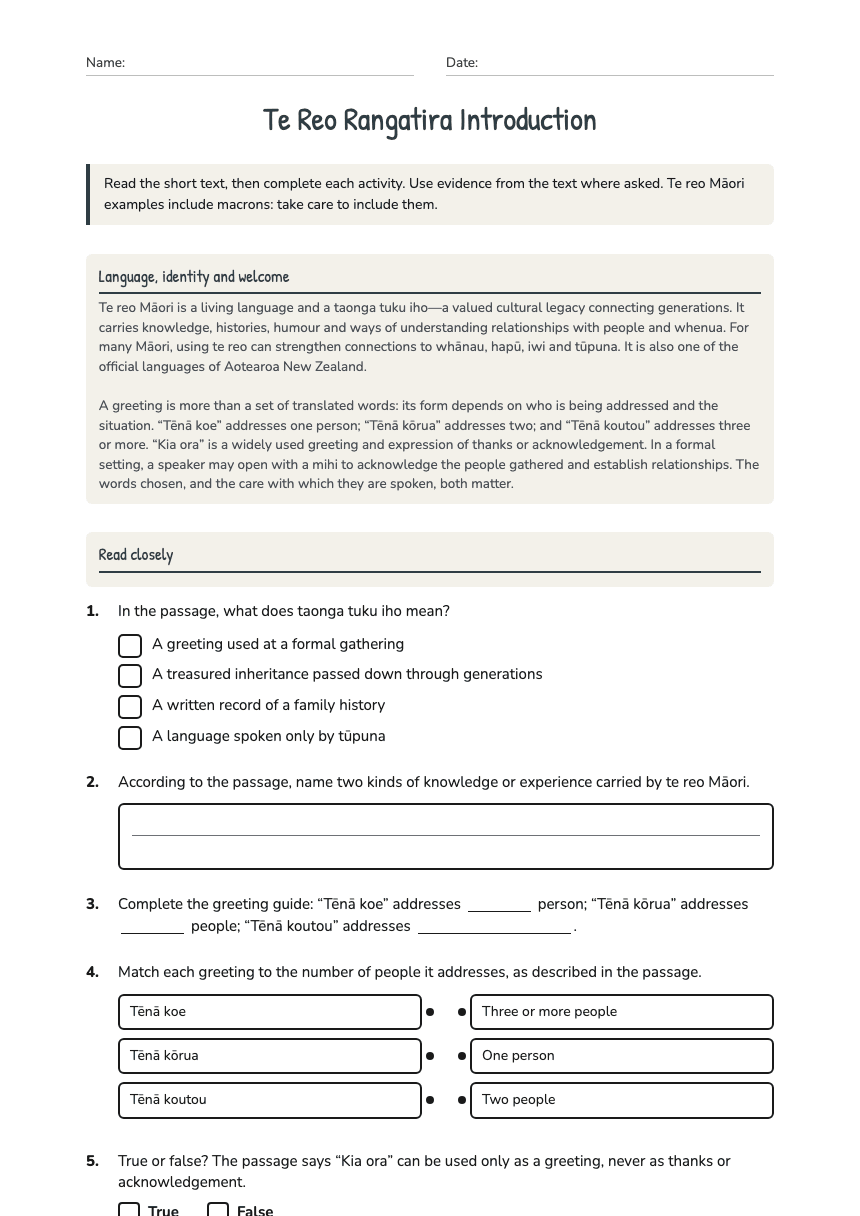
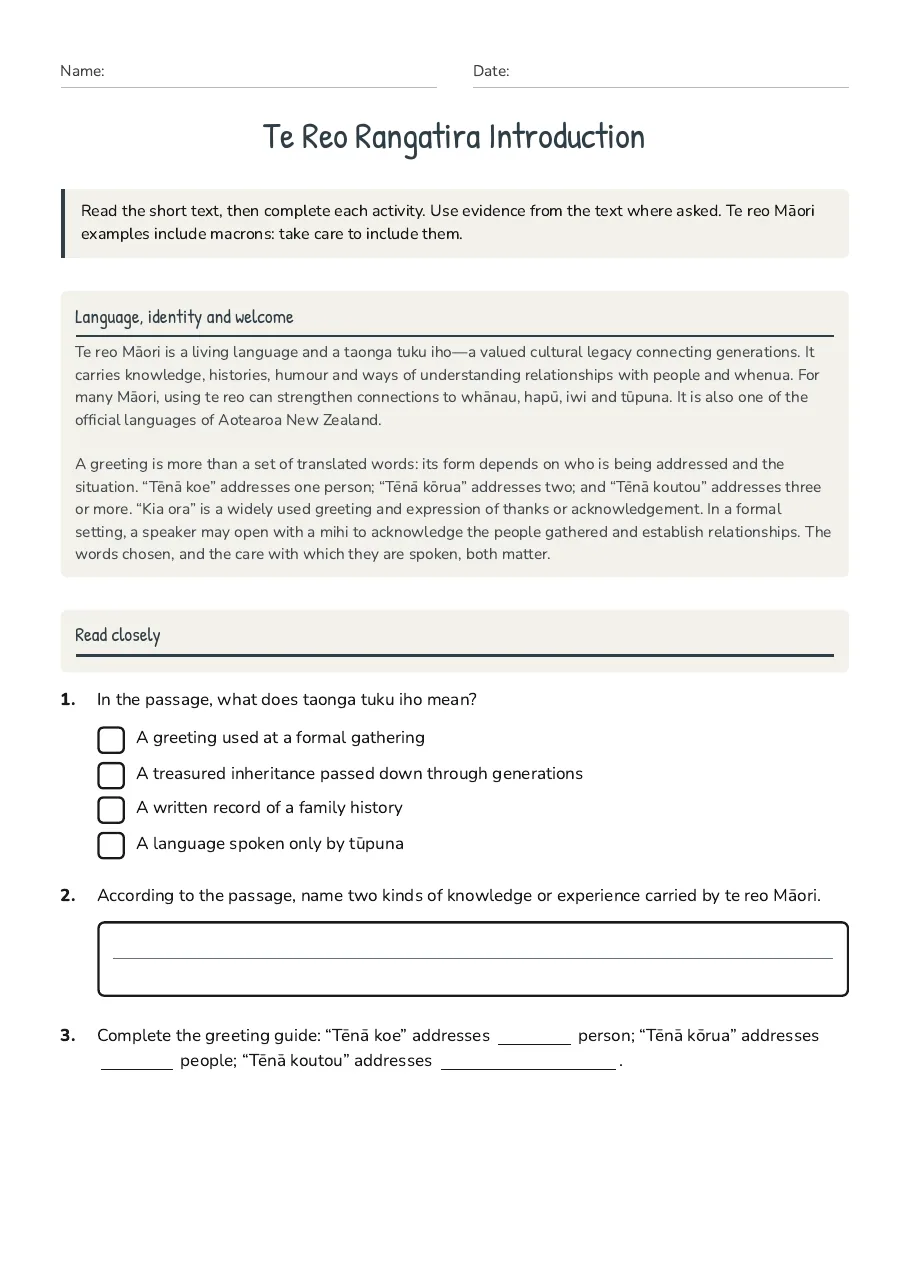
Te Reo Rangatira Introduction
Language, identity and welcome
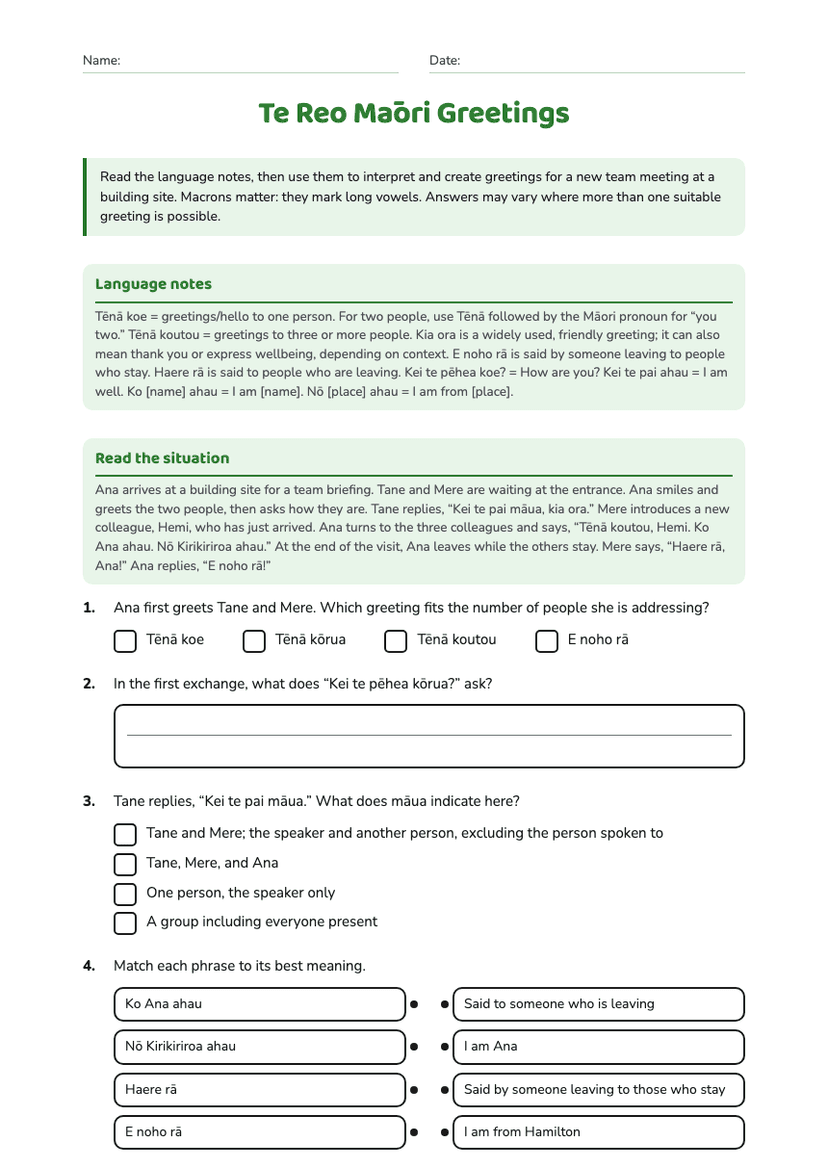
Te reo Māori is a living language and a taonga tuku iho—a valued cultural legacy connecting generations. It carries knowledge, histories, humour and ways of understanding relationships with people and whenua. For many Māori, using te reo can strengthen connections to whānau, hapū, iwi and tūpuna. It is also one of the official languages of Aotearoa New Zealand. A greeting is more than a set of translated words: its form depends on who is being addressed and the situation. “Tēnā koe” addresses one person; “Tēnā kōrua” addresses two; and “Tēnā koutou” addresses three or more. “Kia ora” is a widely used greeting and expression of thanks or acknowledgement. In a formal setting, a speaker may open with a mihi to acknowledge the people gathered and establish relationships. The words chosen, and the care with which they are spoken, both matter.
Read closely
- A greeting used at a formal gathering
- A treasured inheritance passed down through generations
- A written record of a family history
- A language spoken only by tūpuna
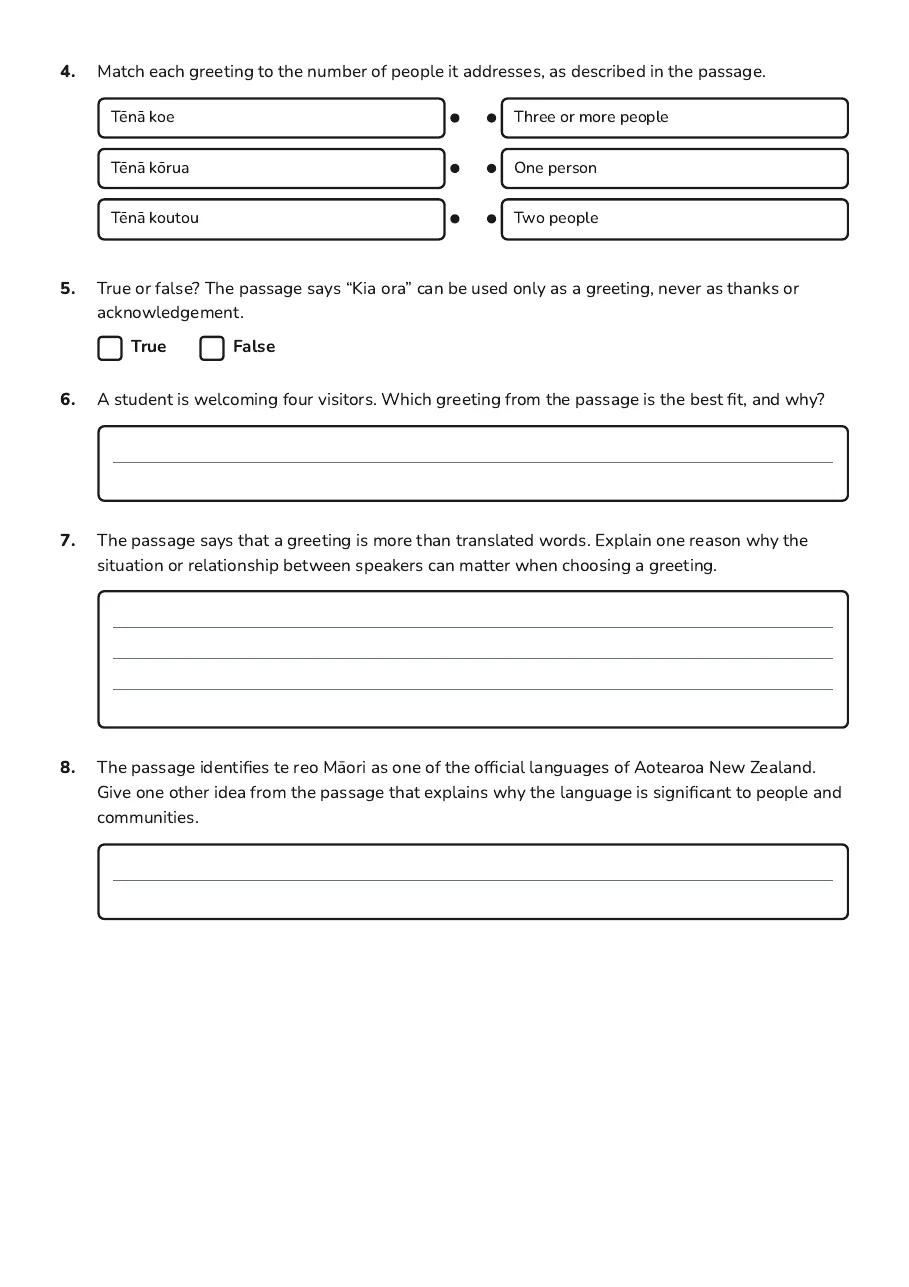
- Tēnā koe
- Tēnā kōrua
- Tēnā koutou
- Three or more people
- One person
- Two people
Use the ideas
3 printable pages
Page 1
Page 2
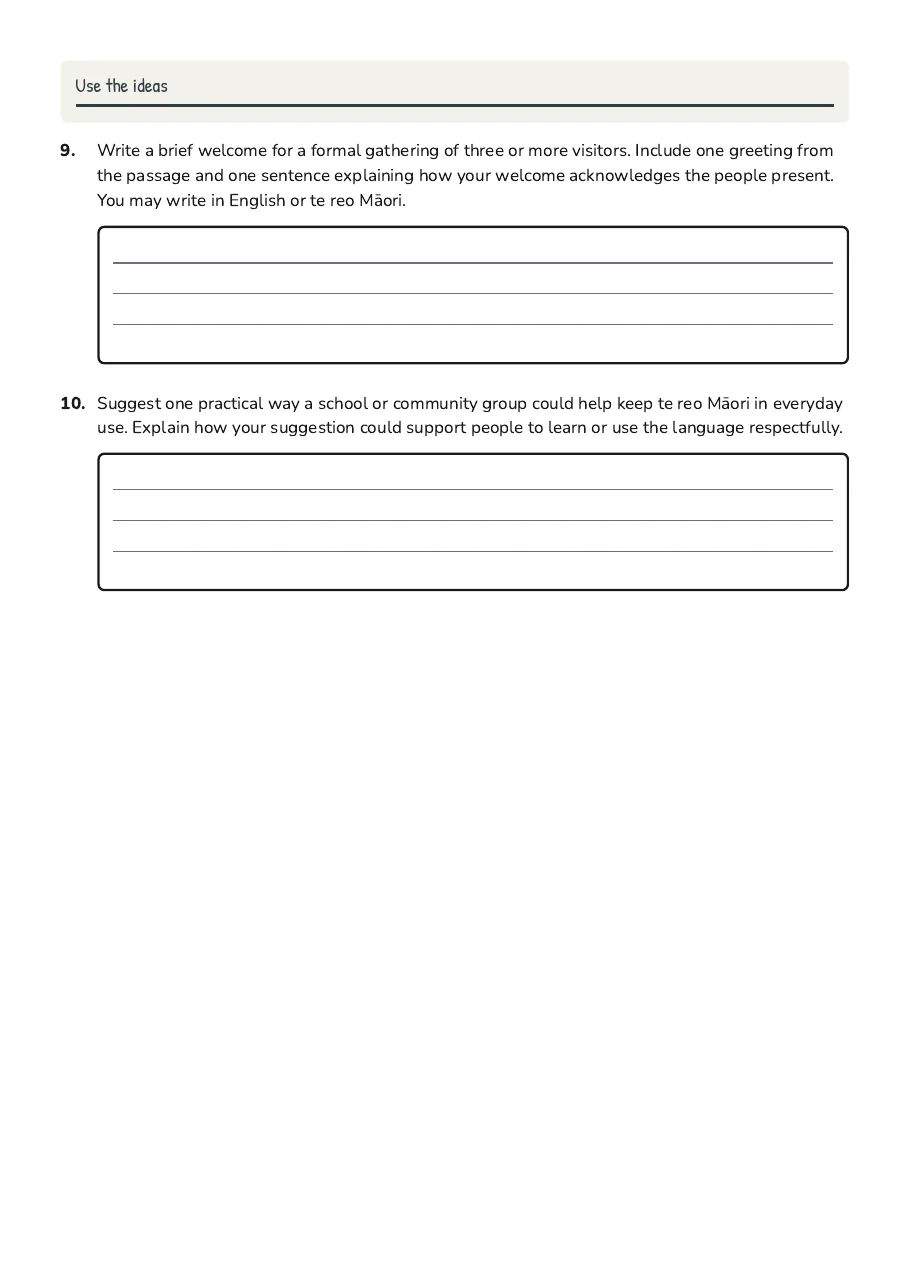
Page 3
About This Worksheet
Free in Kuraplan
Sign up free, grab the PDF, and customize it for your class.
Print-Ready
Formatted for standard paper. Clean layout, easy to read.
AI-Generated
Created with Kuraplan's AI, designed for real classroom use.
For Teachers & Parents
Use in classrooms, for homework, tutoring, or homeschool.
Need a custom version of this worksheet?
Kuraplan's AI generates custom worksheets in seconds — differentiated for every learner, aligned to your curriculum.
Generate Custom Worksheets — FreeMore Te Reo Māori Worksheets
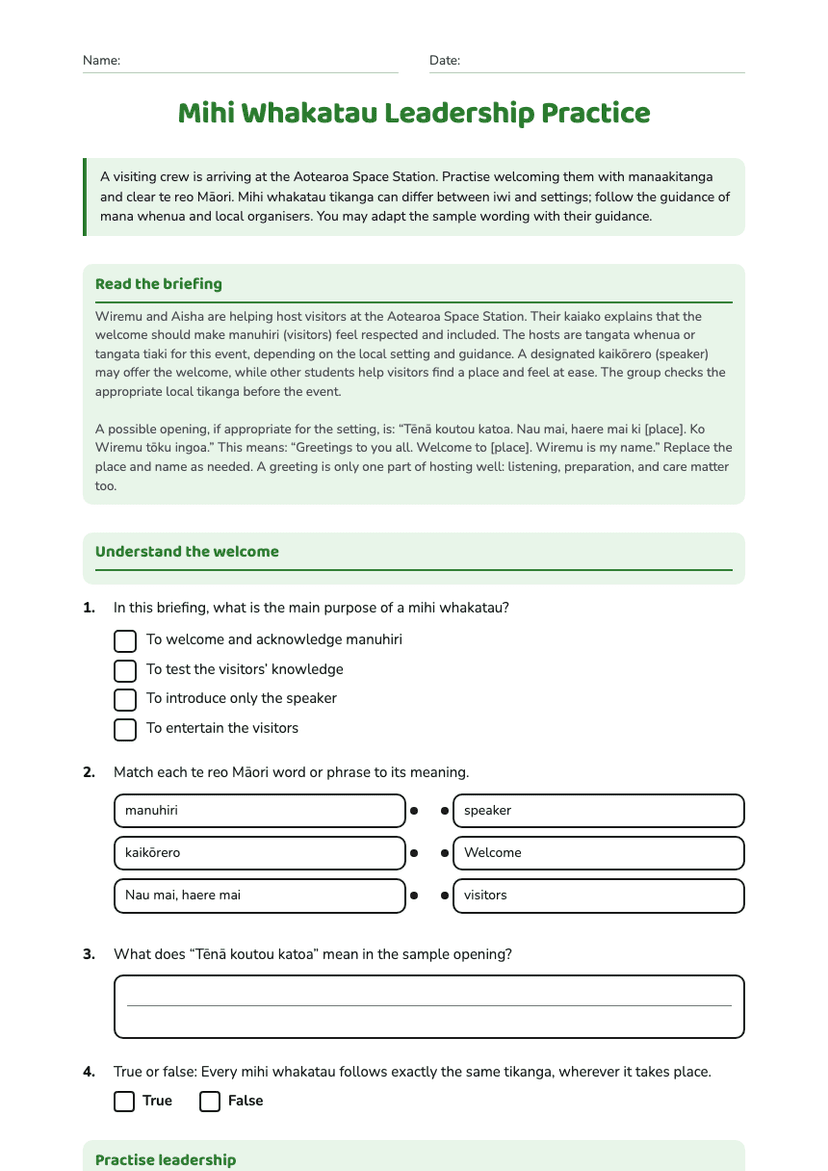
Mihi Whakatau Leadership Practice
Free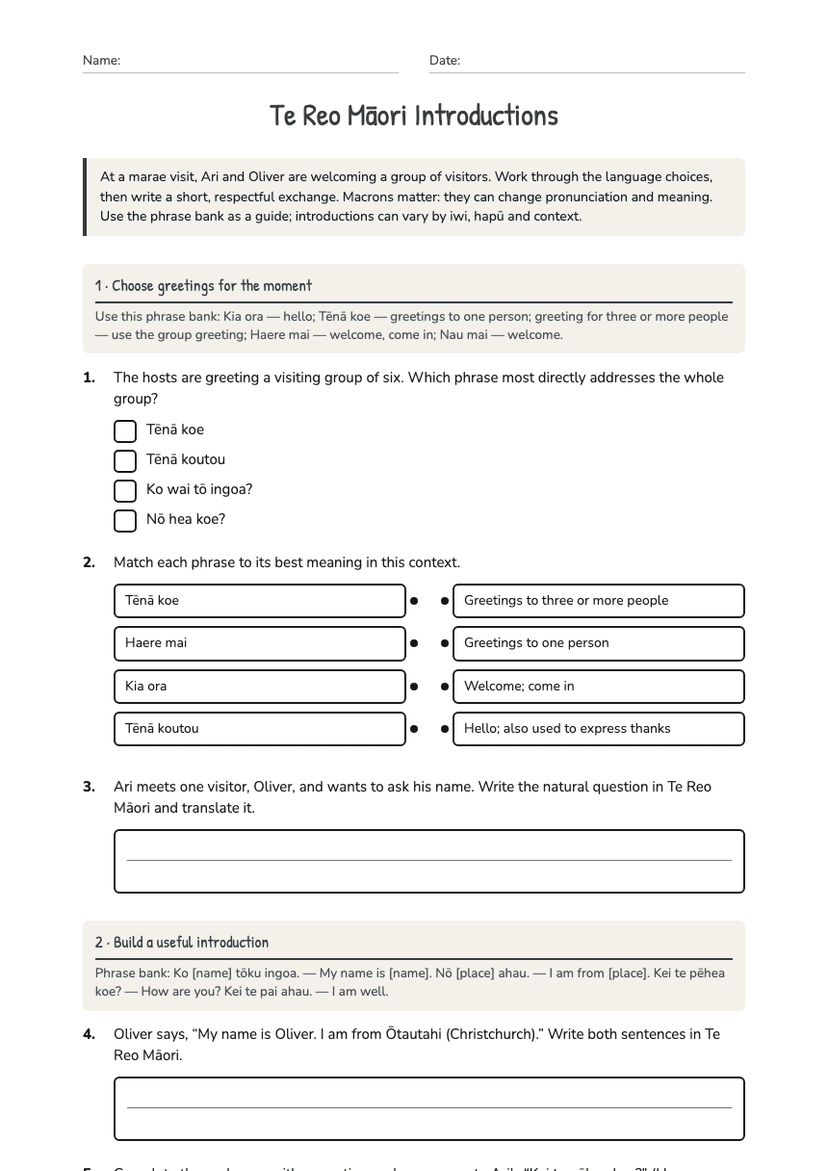
Te Reo Māori Introductions
Free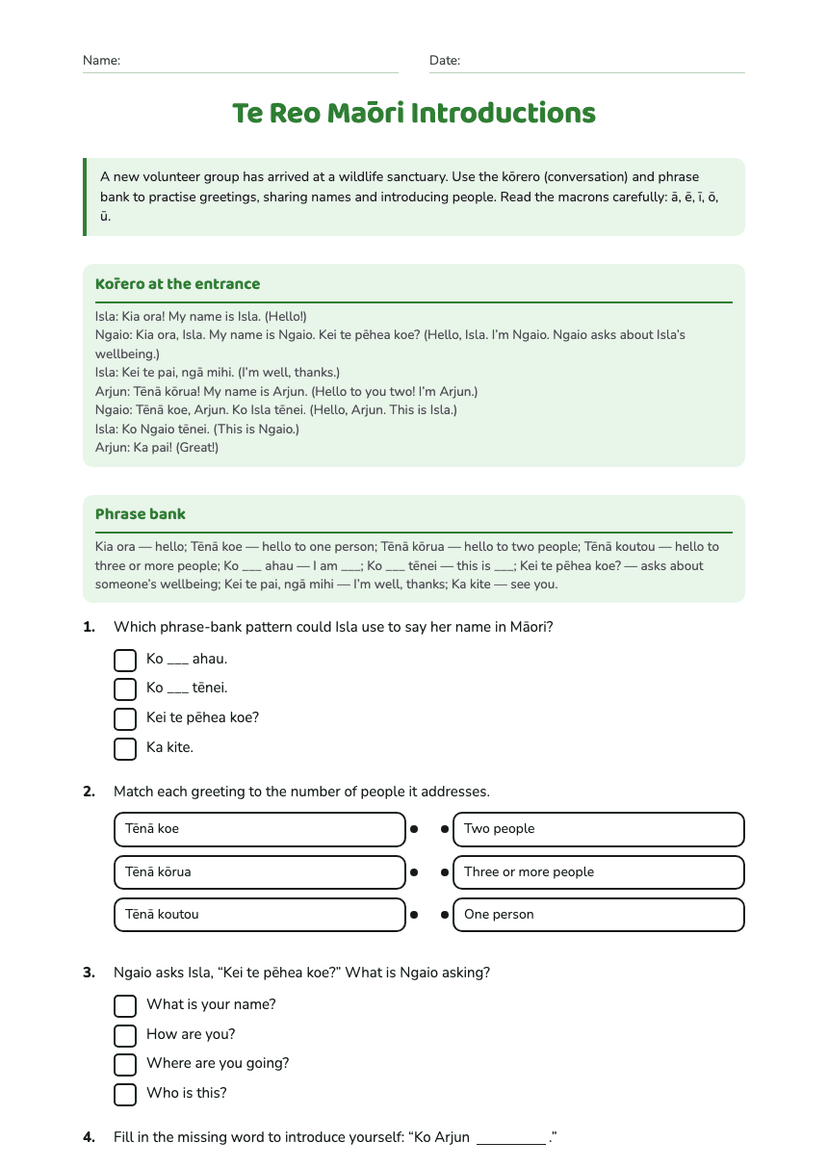
Te Reo Māori Introductions
Free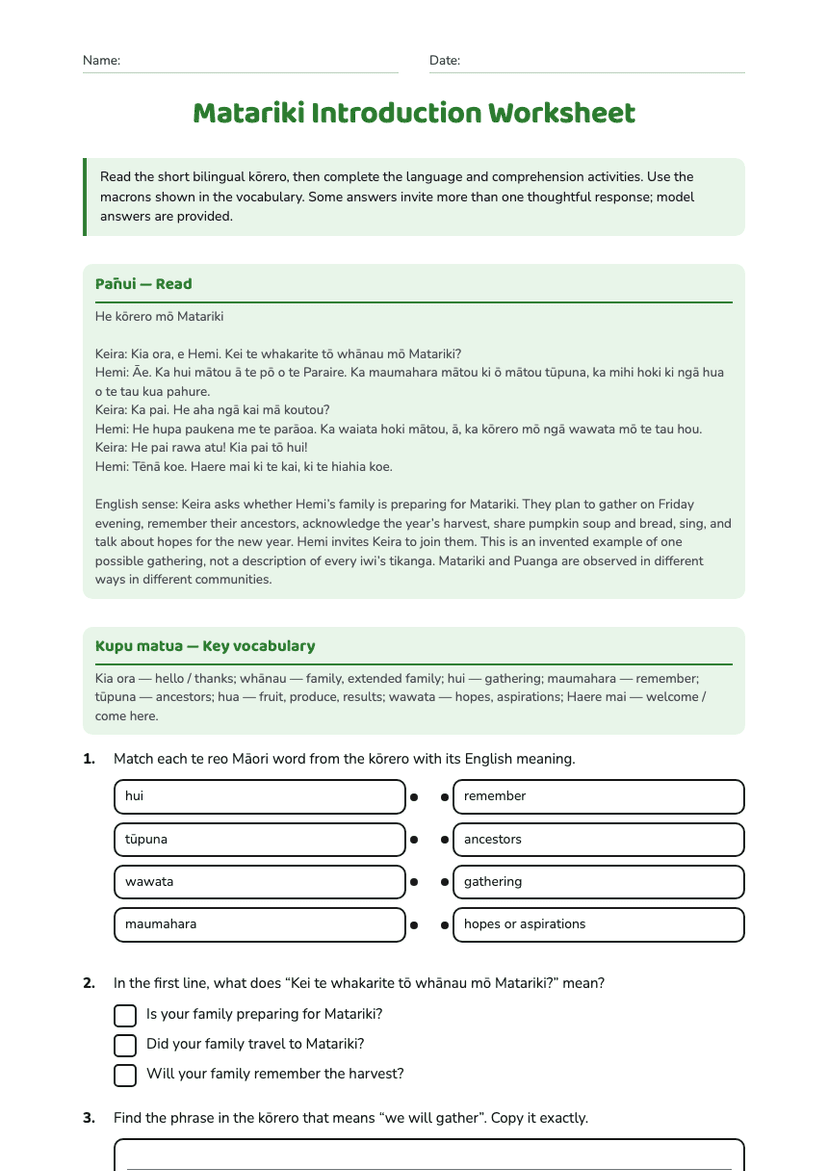
Matariki Introduction Worksheet
Free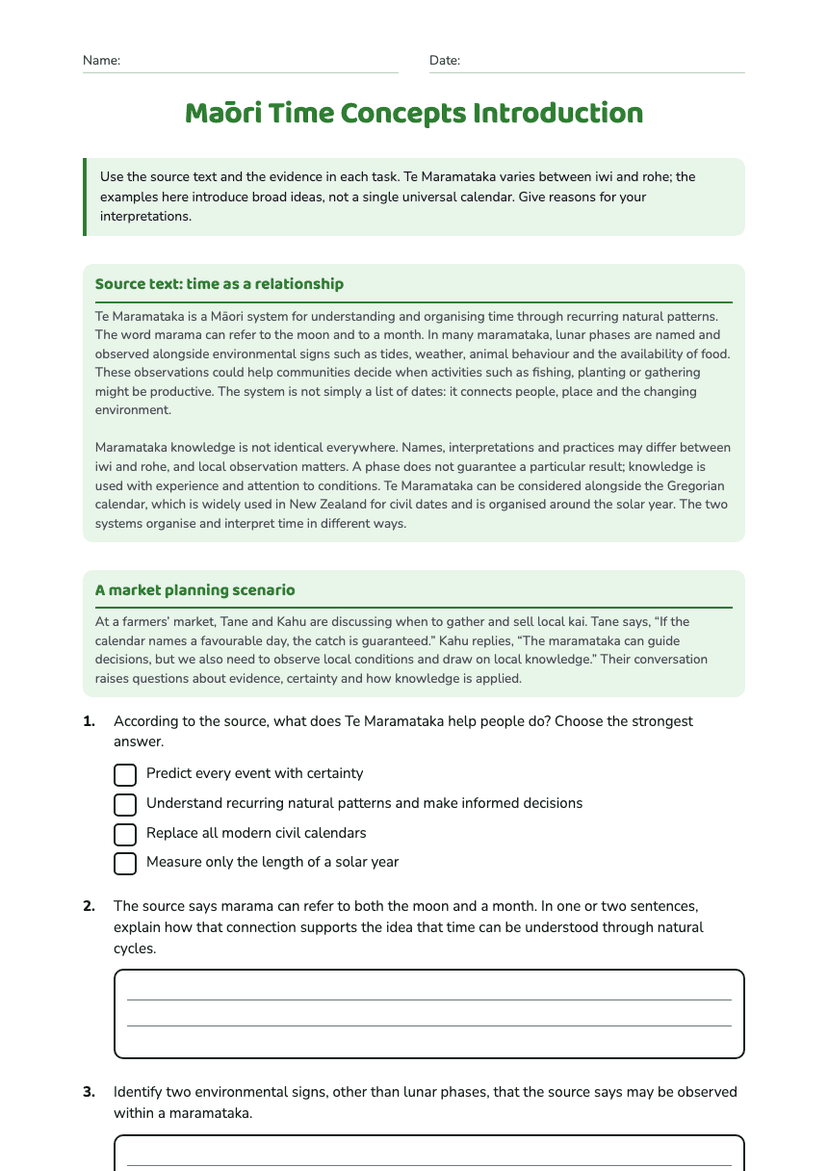
Māori Time Concepts Introduction
Free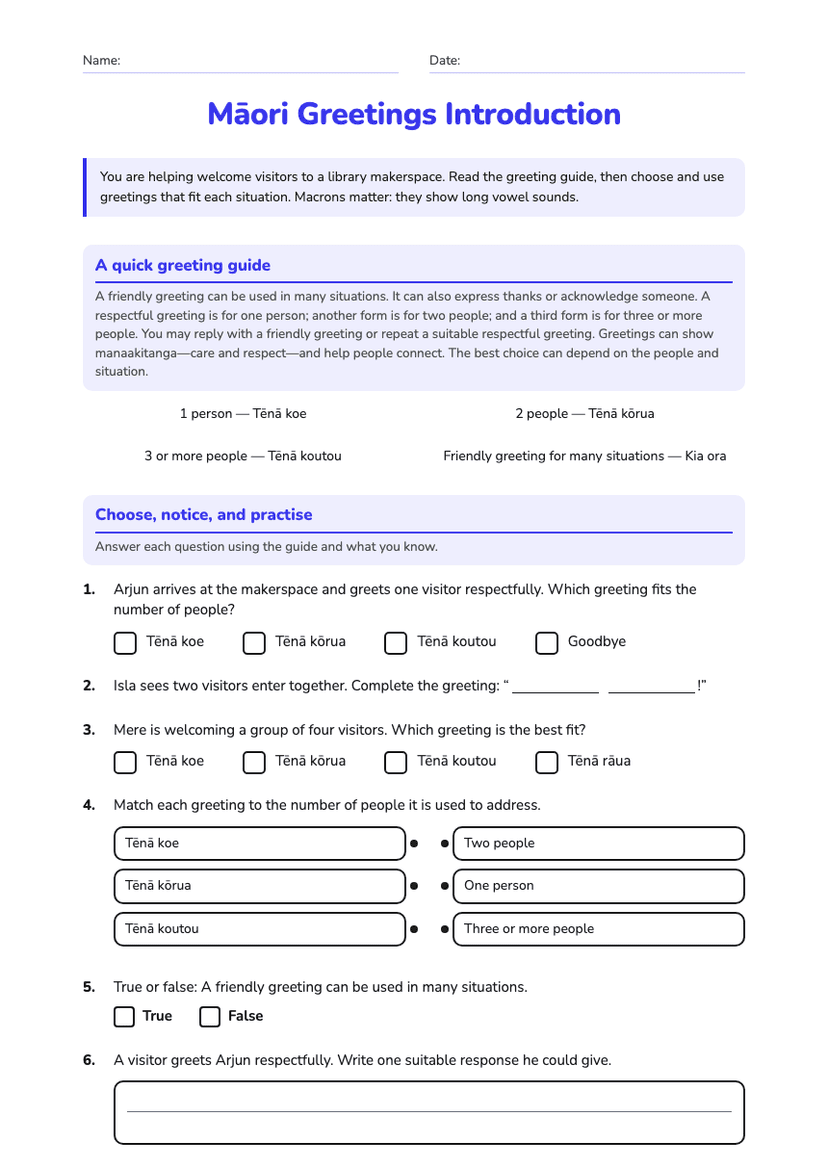
Māori Greetings Introduction
Free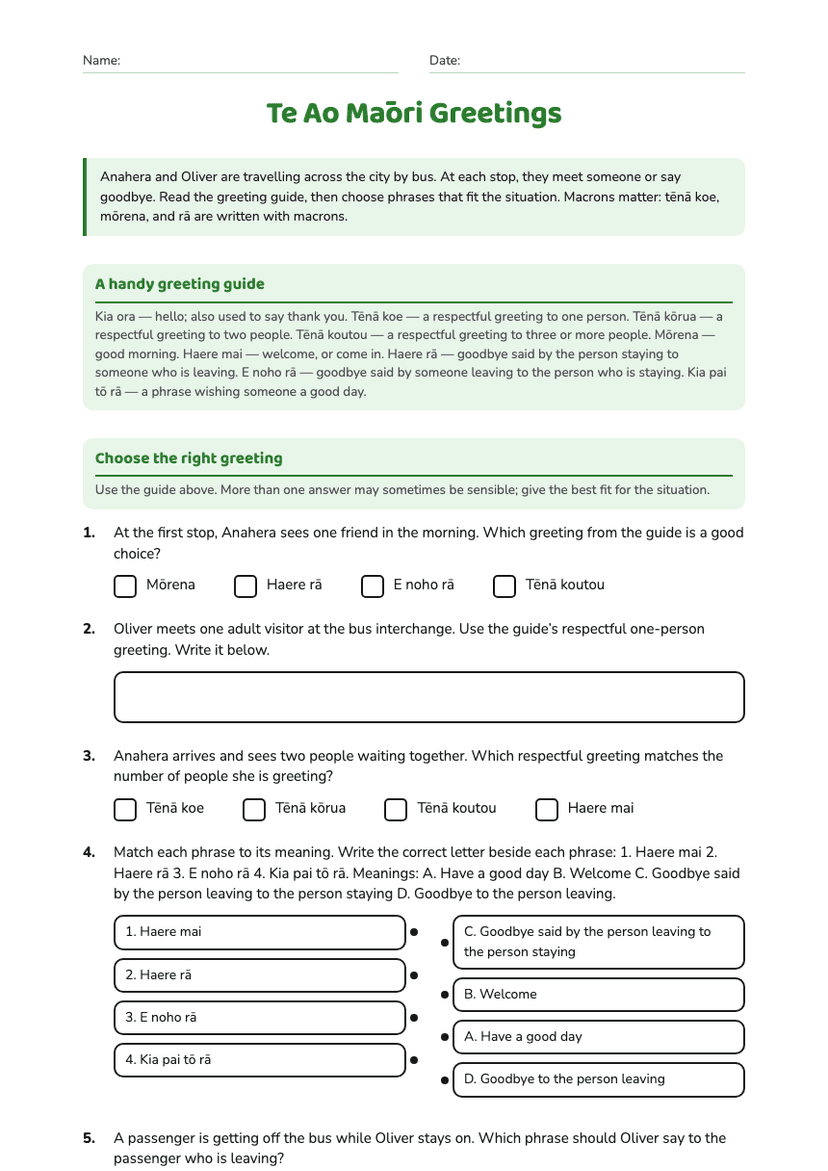
Te Ao Māori Greetings
Free