Understanding Government Systems
A free social sciences worksheet ready for your classroom. Open in Kuraplan to grab the print-ready PDF, customize it for your students, or generate a fresh version in seconds.

Understanding Government Systems
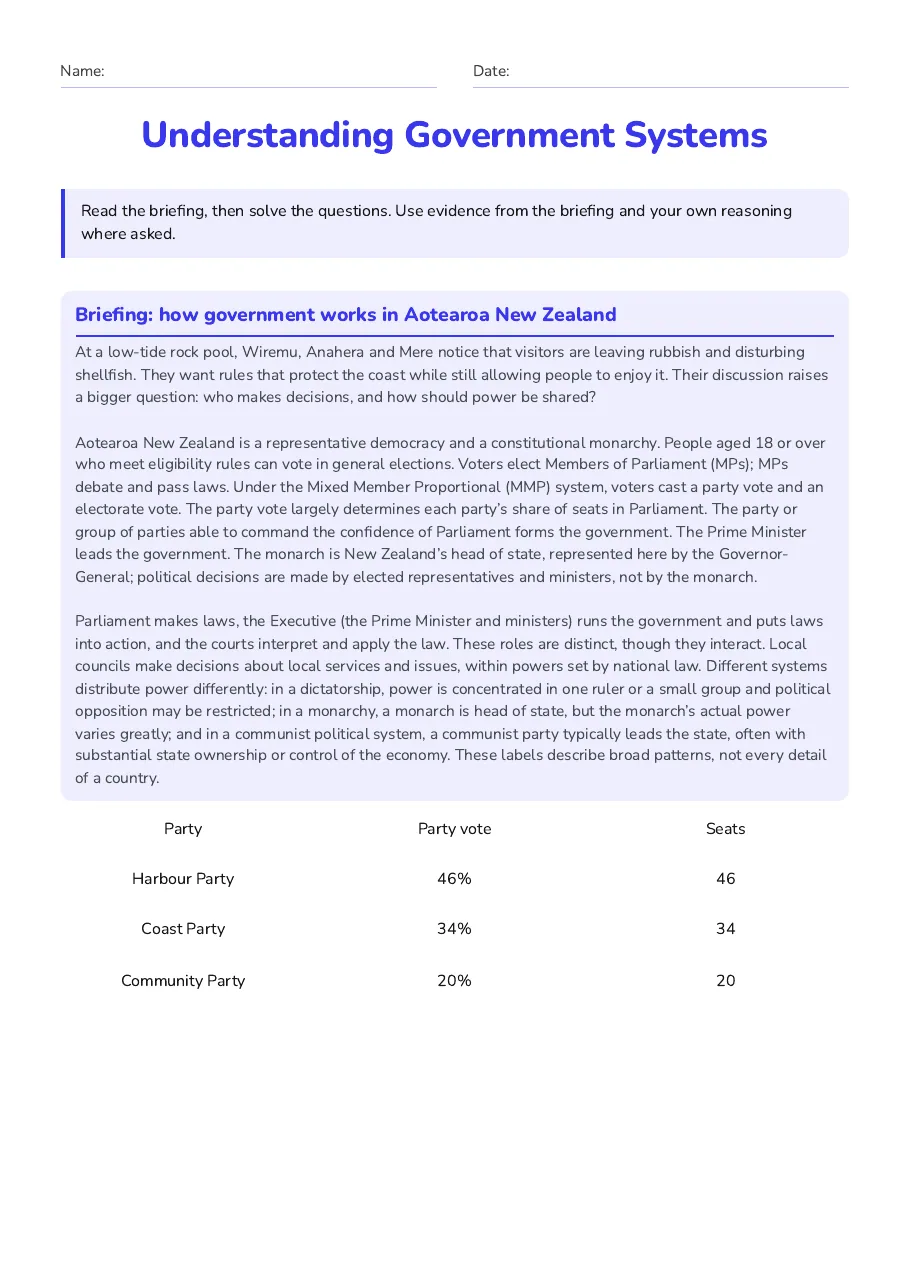
Briefing: how government works in Aotearoa New Zealand
At a low-tide rock pool, Wiremu, Anahera and Mere notice that visitors are leaving rubbish and disturbing shellfish. They want rules that protect the coast while still allowing people to enjoy it. Their discussion raises a bigger question: who makes decisions, and how should power be shared? Aotearoa New Zealand is a representative democracy and a constitutional monarchy. People aged 18 or over who meet eligibility rules can vote in general elections. Voters elect Members of Parliament (MPs); MPs debate and pass laws. Under the Mixed Member Proportional (MMP) system, voters cast a party vote and an electorate vote. The party vote largely determines each party’s share of seats in Parliament. The party or group of parties able to command the confidence of Parliament forms the government. The Prime Minister leads the government. The monarch is New Zealand’s head of state, represented here by the Governor-General; political decisions are made by elected representatives and ministers, not by the monarch. Parliament makes laws, the Executive (the Prime Minister and ministers) runs the government and puts laws into action, and the courts interpret and apply the law. These roles are distinct, though they interact. Local councils make decisions about local services and issues, within powers set by national law. Different systems distribute power differently: in a dictatorship, power is concentrated in one ruler or a small group and political opposition may be restricted; in a monarchy, a monarch is head of state, but the monarch’s actual power varies greatly; and in a communist political system, a communist party typically leads the state, often with substantial state ownership or control of the economy. These labels describe broad patterns, not every detail of a country.
Party
Party vote
Seats
Harbour Party
46%
46
Coast Party
34%
34
Community Party
20%
20
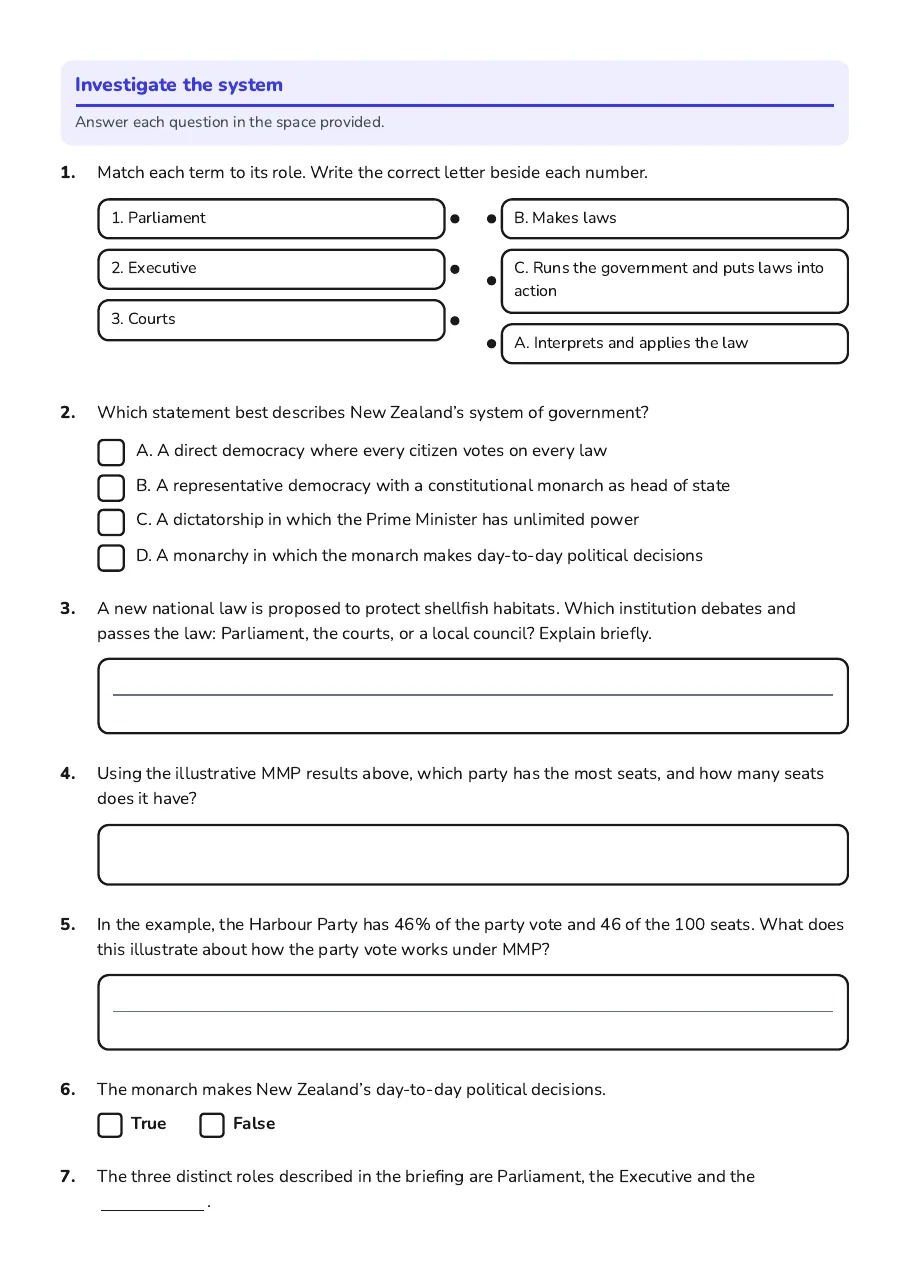
Investigate the system
Answer each question in the space provided.
- 1. Parliament
- 2. Executive
- 3. Courts
- B. Makes laws
- C. Runs the government and puts laws into action
- A. Interprets and applies the law
- A. A direct democracy where every citizen votes on every law
- B. A representative democracy with a constitutional monarch as head of state
- C. A dictatorship in which the Prime Minister has unlimited power
- D. A monarchy in which the monarch makes day-to-day political decisions
3 printable pages
Page 1
Page 2
Page 3
About This Worksheet
Free in Kuraplan
Sign up free, grab the PDF, and customize it for your class.
Print-Ready
Formatted for standard paper. Clean layout, easy to read.
AI-Generated
Created with Kuraplan's AI, designed for real classroom use.
For Teachers & Parents
Use in classrooms, for homework, tutoring, or homeschool.
Need a custom version of this worksheet?
Kuraplan's AI generates custom worksheets in seconds — differentiated for every learner, aligned to your curriculum.
Generate Custom Worksheets — FreeMore Social Sciences Worksheets
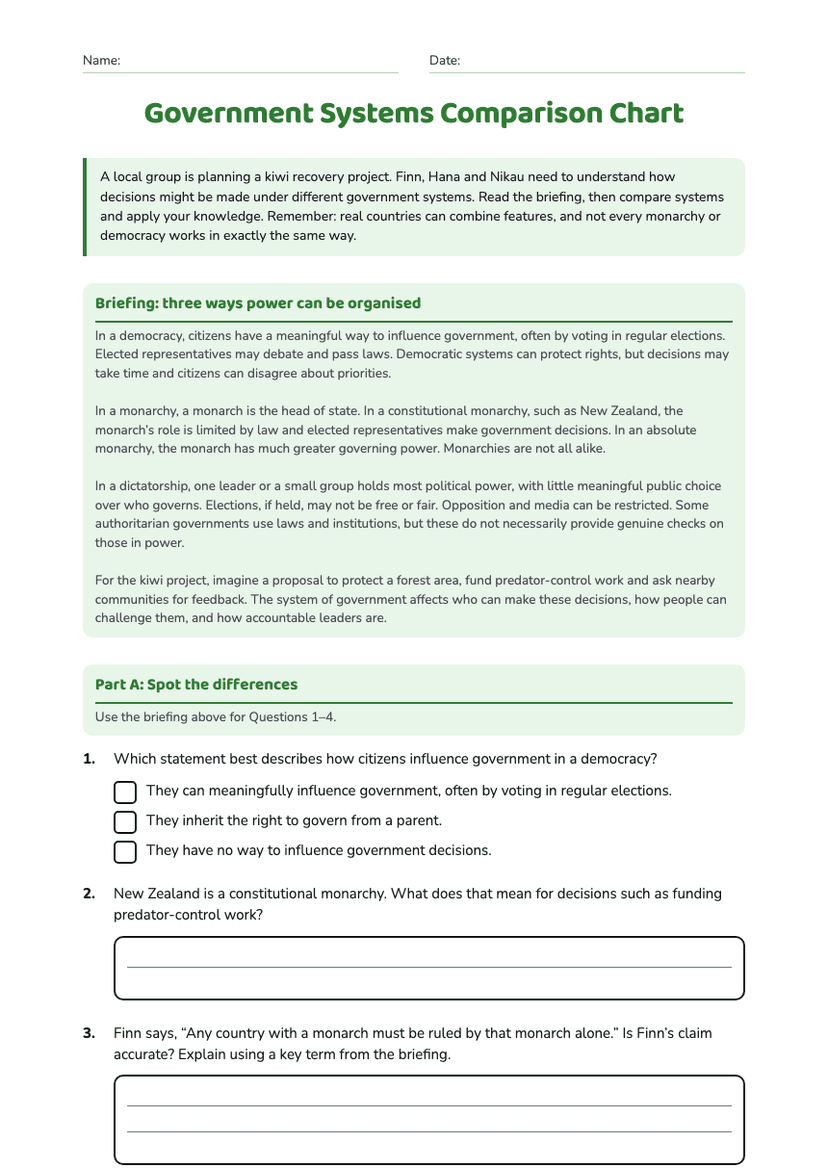
Government Systems Comparison Chart
Free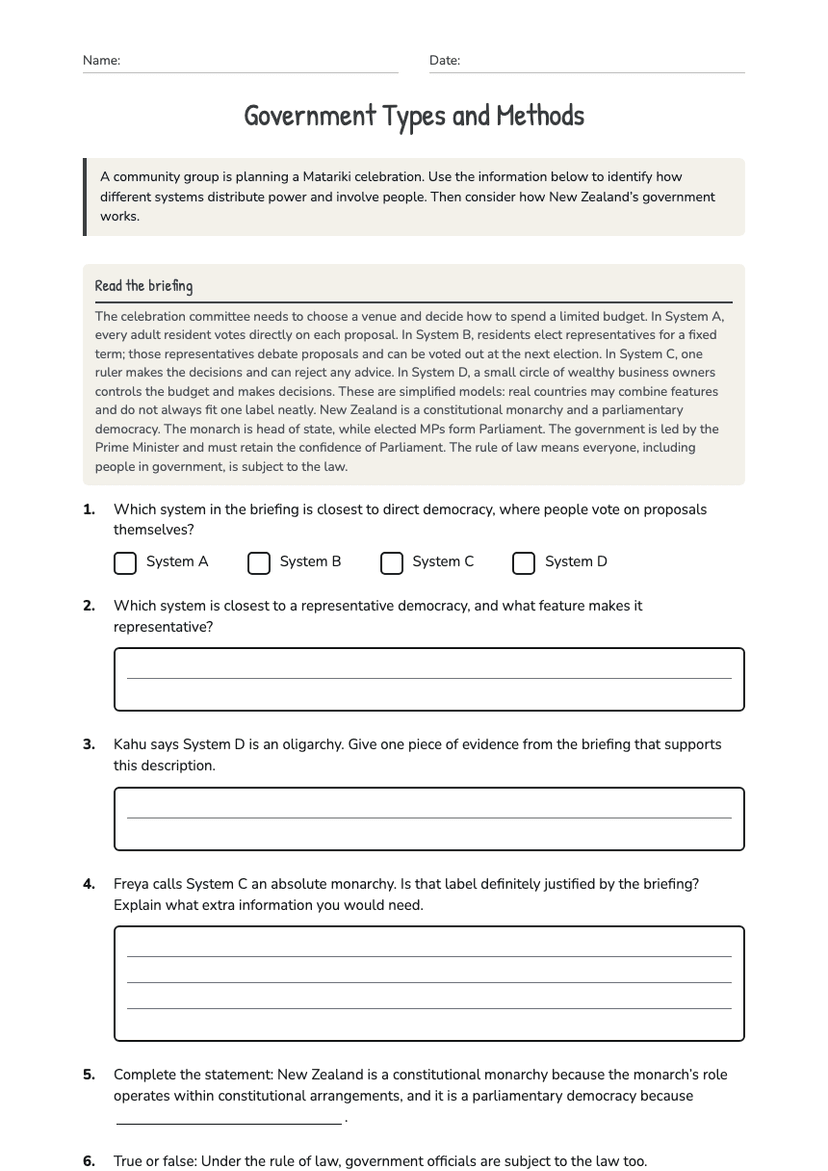
Government Types and Methods
Free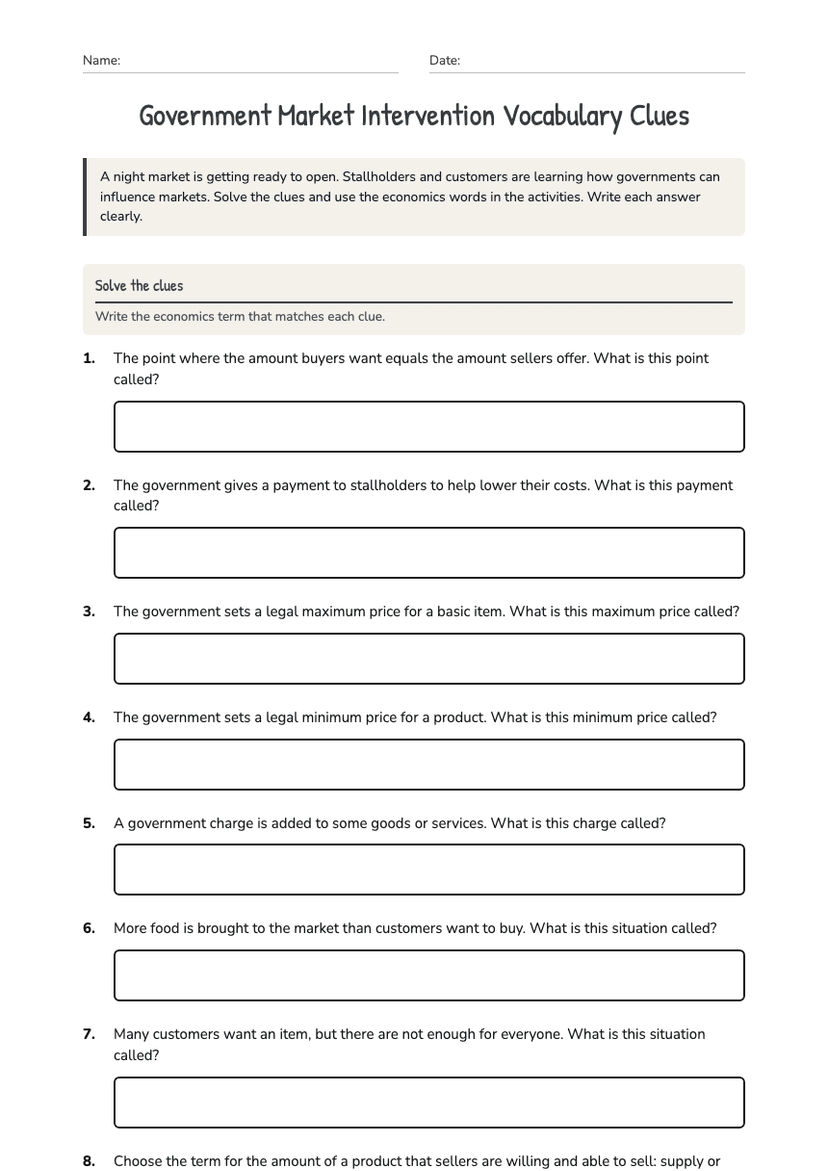
Government Market Intervention Vocabulary Clues
Free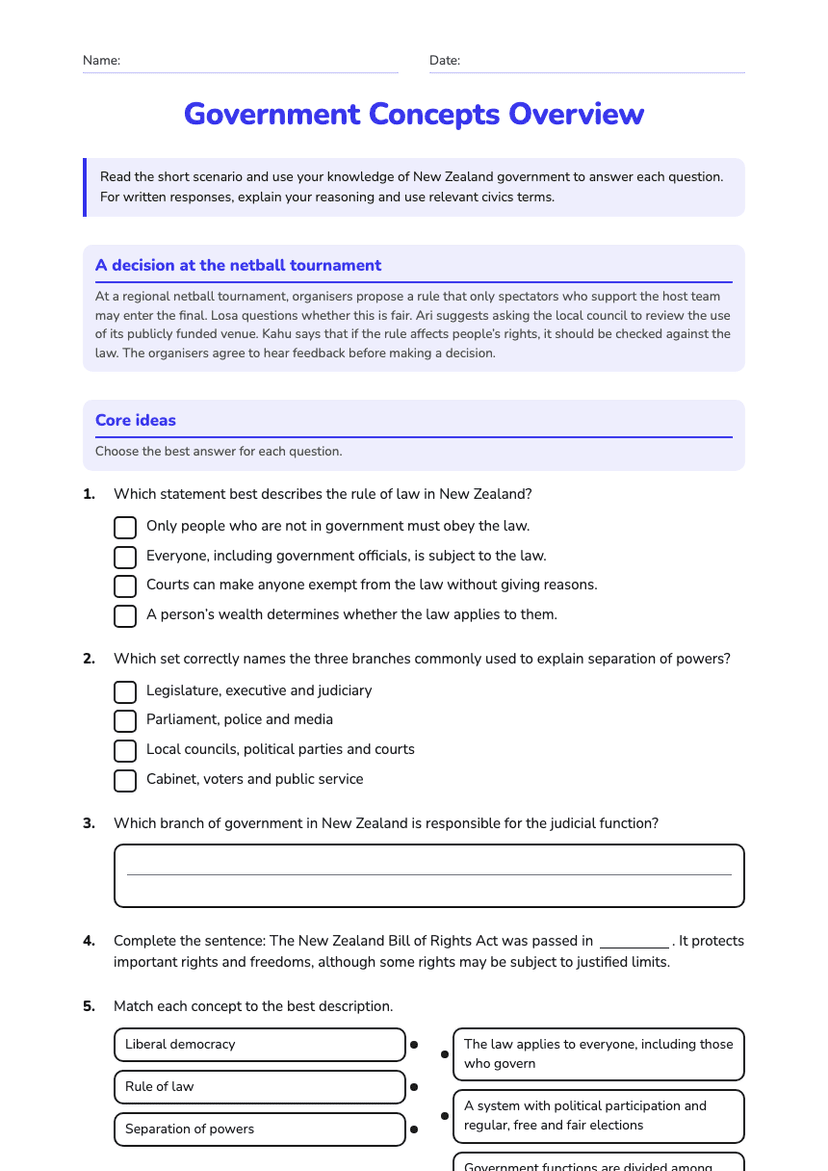
Government Concepts Overview
Free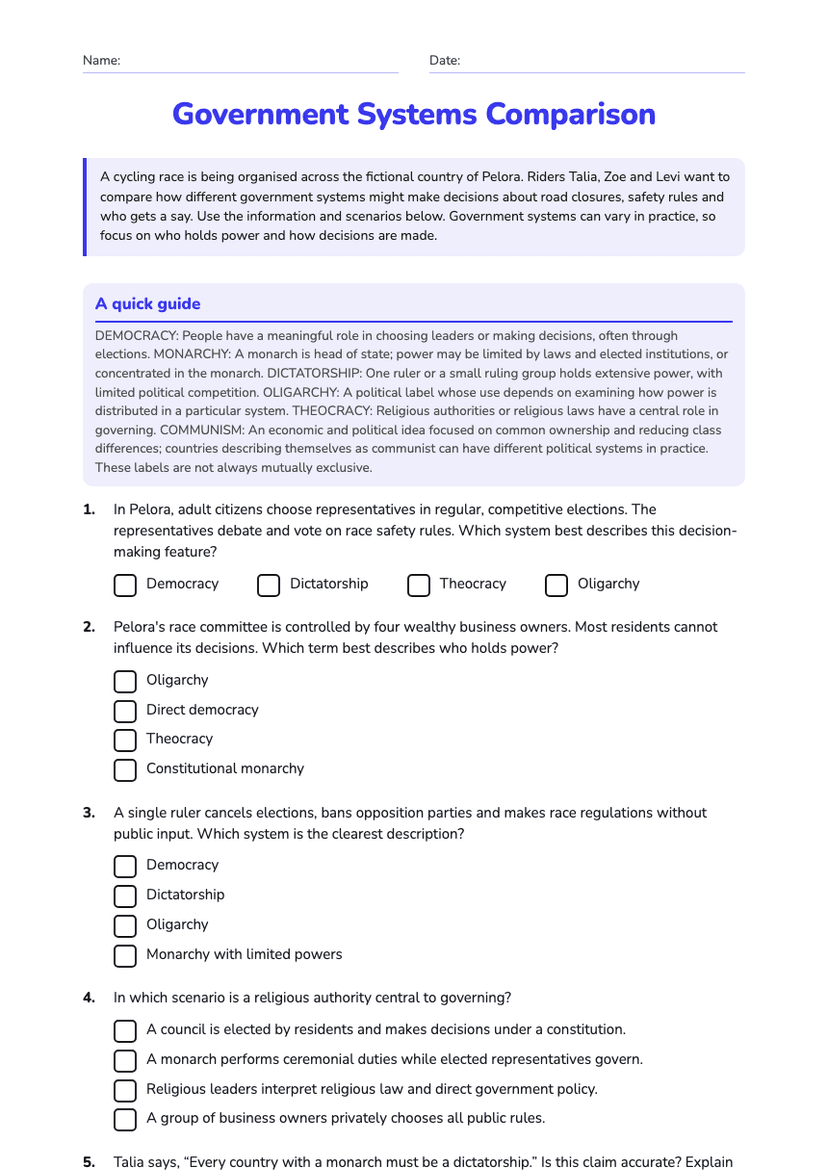
Government Systems Comparison
Free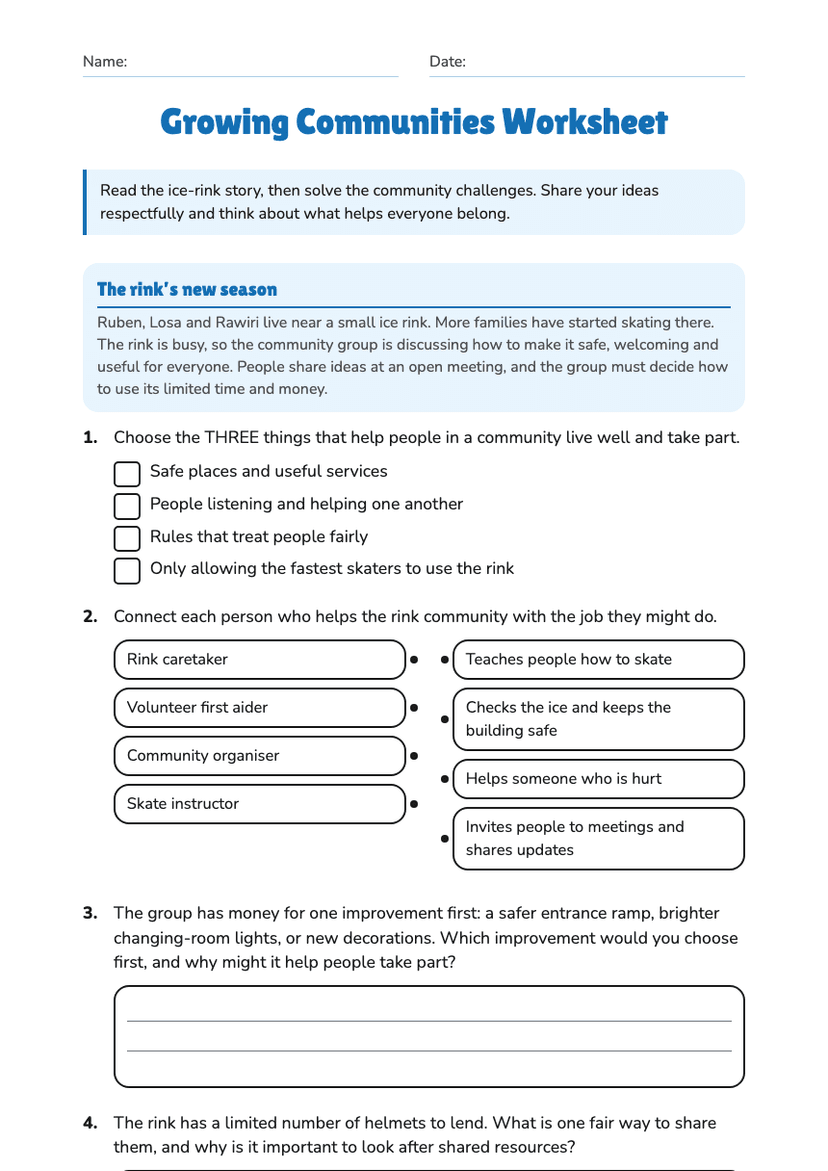
Growing Communities Worksheet
Free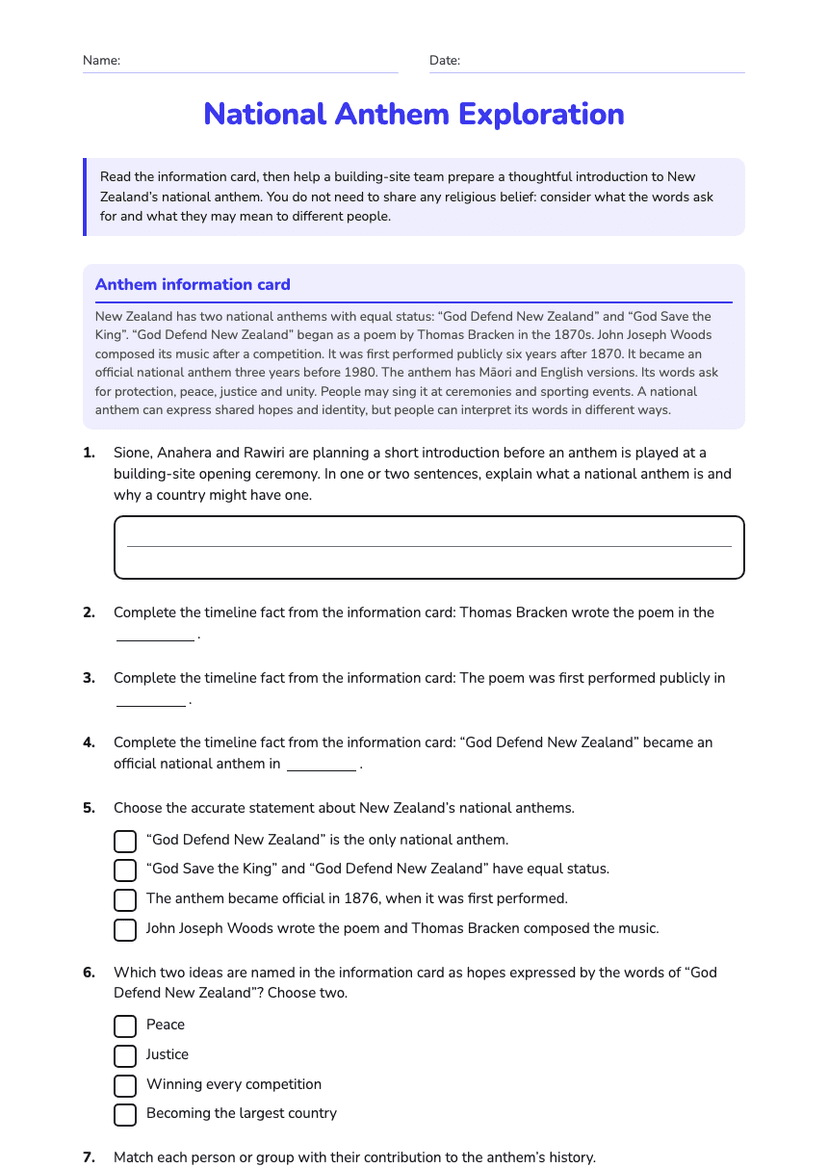
National Anthem Exploration
Free