Wai Māori: A Taonga
A free science worksheet ready for your classroom. Open in Kuraplan to grab the print-ready PDF, customize it for your students, or generate a fresh version in seconds.
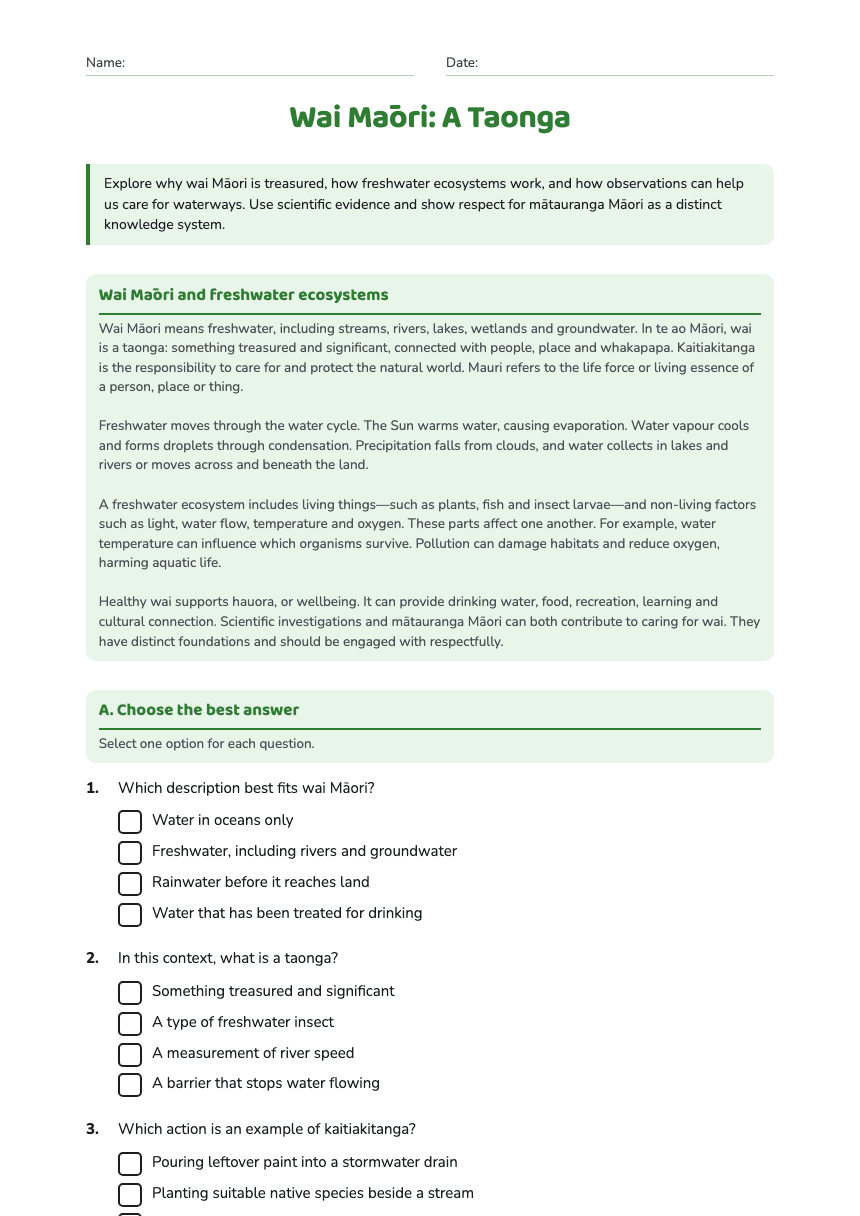
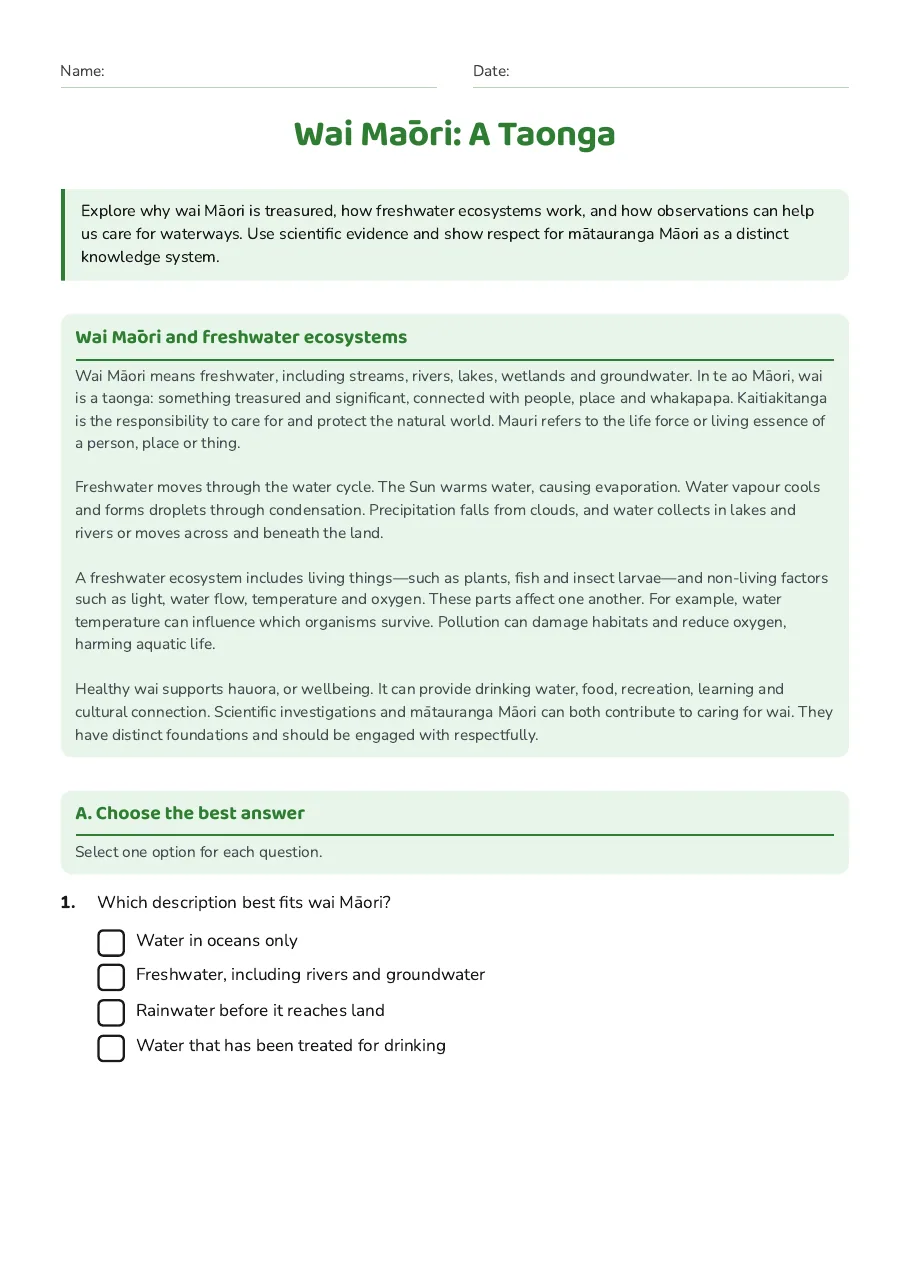
Wai Māori: A Taonga
Wai Māori and freshwater ecosystems
Wai Māori means freshwater, including streams, rivers, lakes, wetlands and groundwater. In te ao Māori, wai is a taonga: something treasured and significant, connected with people, place and whakapapa. Kaitiakitanga is the responsibility to care for and protect the natural world. Mauri refers to the life force or living essence of a person, place or thing. Freshwater moves through the water cycle. The Sun warms water, causing evaporation. Water vapour cools and forms droplets through condensation. Precipitation falls from clouds, and water collects in lakes and rivers or moves across and beneath the land. A freshwater ecosystem includes living things—such as plants, fish and insect larvae—and non-living factors such as light, water flow, temperature and oxygen. These parts affect one another. For example, water temperature can influence which organisms survive. Pollution can damage habitats and reduce oxygen, harming aquatic life. Healthy wai supports hauora, or wellbeing. It can provide drinking water, food, recreation, learning and cultural connection. Scientific investigations and mātauranga Māori can both contribute to caring for wai. They have distinct foundations and should be engaged with respectfully.
A. Choose the best answer
Select one option for each question.
- Water in oceans only
- Freshwater, including rivers and groundwater
- Rainwater before it reaches land
- Water that has been treated for drinking
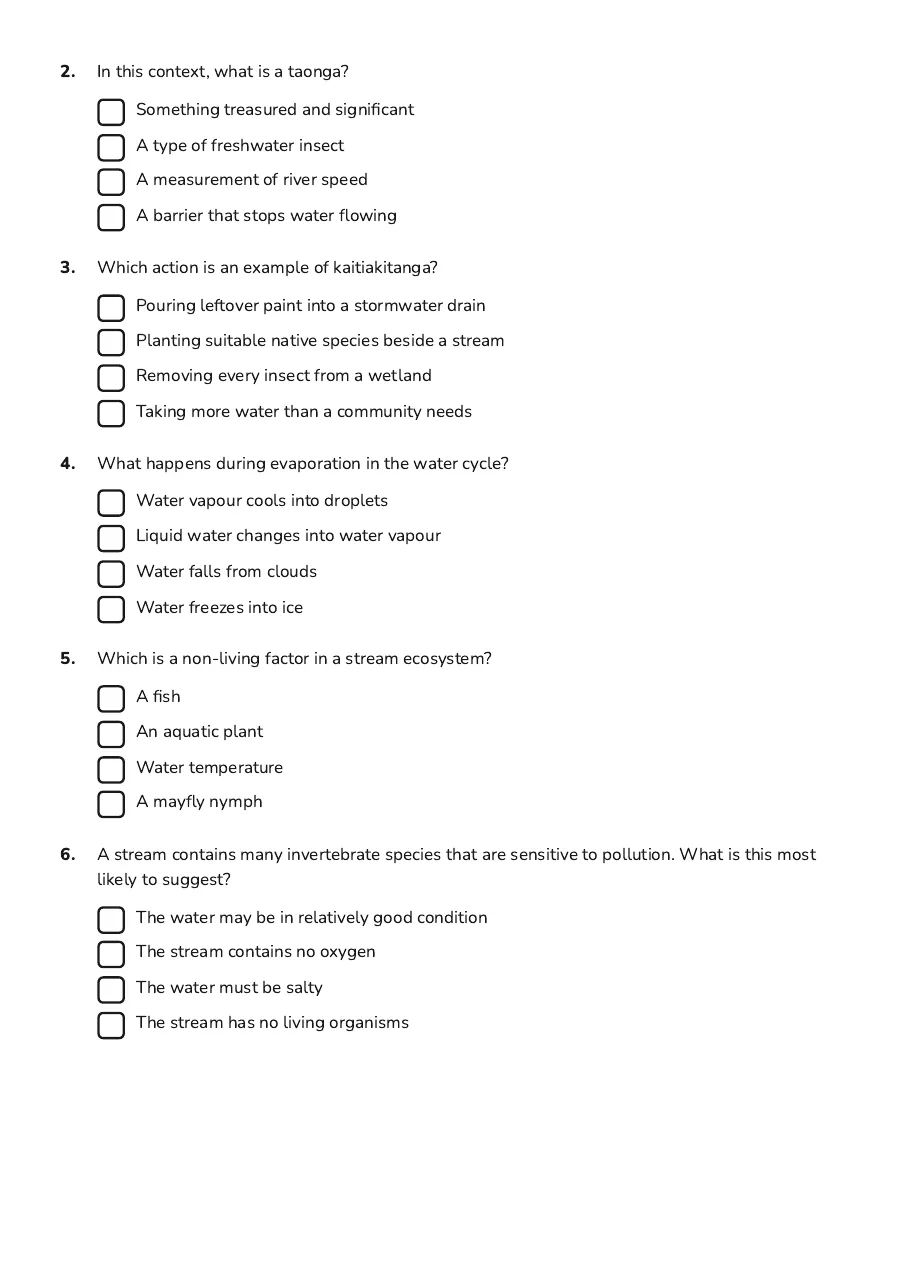
- Something treasured and significant
- A type of freshwater insect
- A measurement of river speed
- A barrier that stops water flowing
- Pouring leftover paint into a stormwater drain
- Planting suitable native species beside a stream
- Removing every insect from a wetland
- Taking more water than a community needs
- Water vapour cools into droplets
- Liquid water changes into water vapour
- Water falls from clouds
- Water freezes into ice
- A fish
- An aquatic plant
- Water temperature
- A mayfly nymph
- The water may be in relatively good condition
- The stream contains no oxygen
- The water must be salty
- The stream has no living organisms
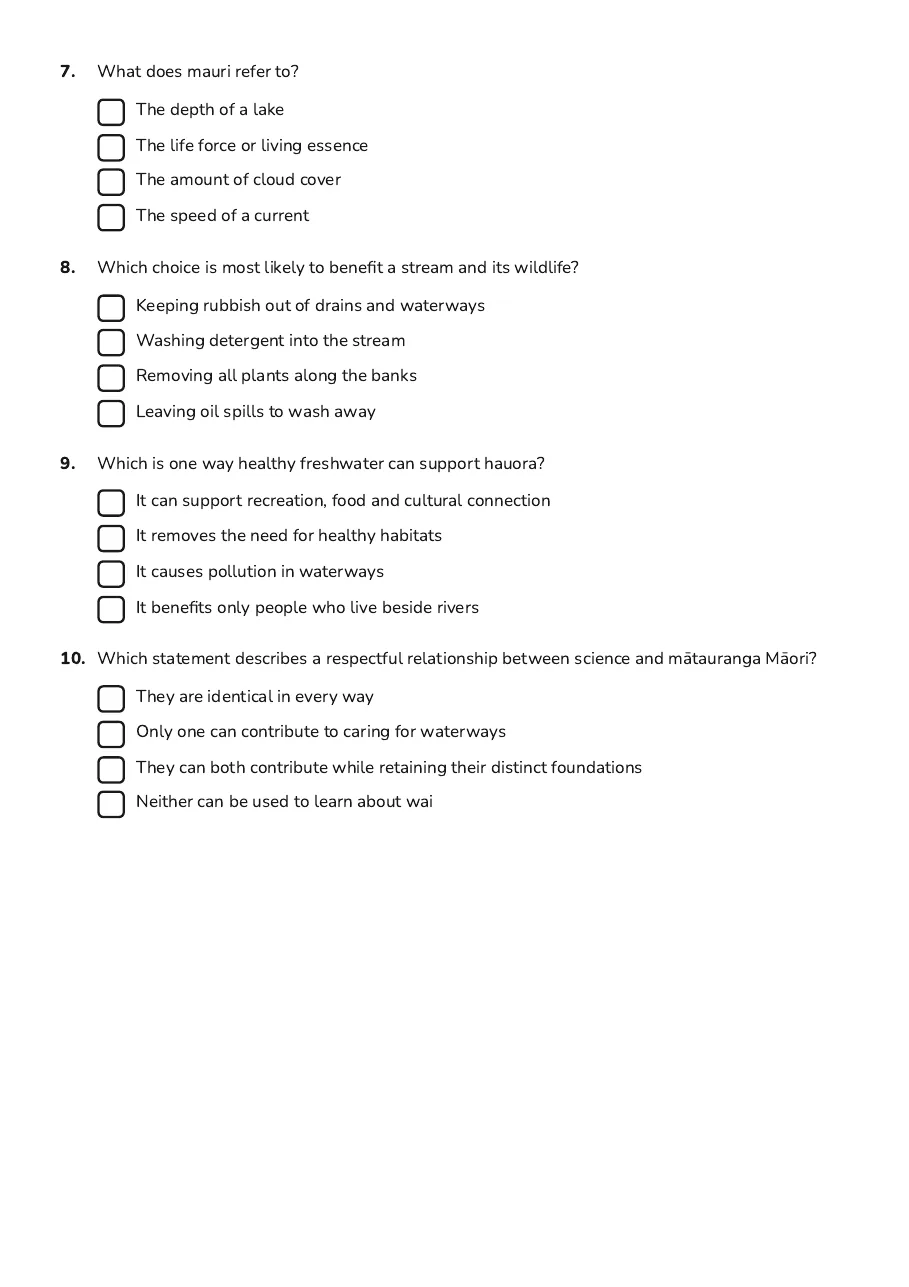
- The depth of a lake
- The life force or living essence
- The amount of cloud cover
- The speed of a current
- Keeping rubbish out of drains and waterways
- Washing detergent into the stream
- Removing all plants along the banks
- Leaving oil spills to wash away
- It can support recreation, food and cultural connection
- It removes the need for healthy habitats
- It causes pollution in waterways
- It benefits only people who live beside rivers
- They are identical in every way
- Only one can contribute to caring for waterways
- They can both contribute while retaining their distinct foundations
- Neither can be used to learn about wai
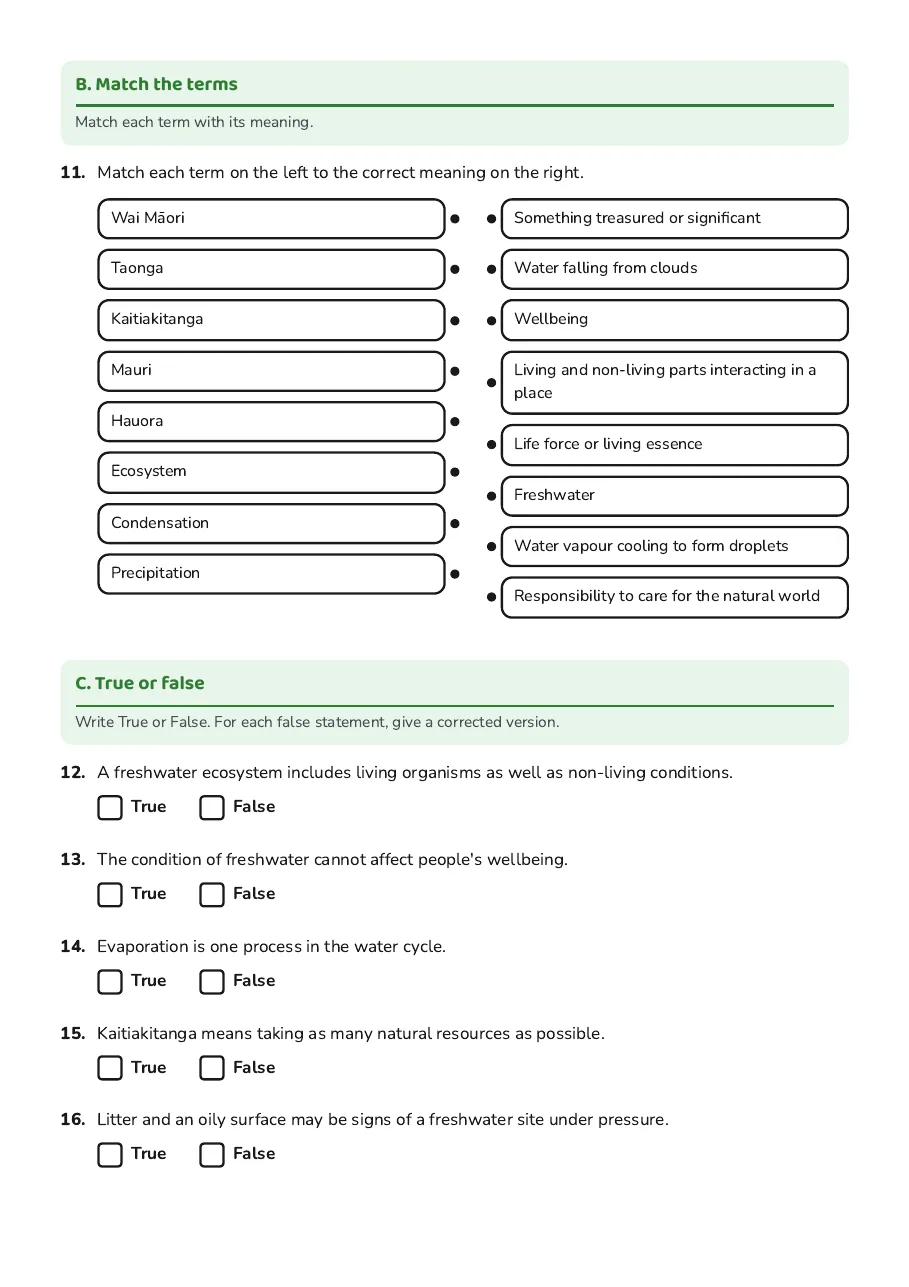
B. Match the terms
Match each term with its meaning.
- Wai Māori
- Taonga
- Kaitiakitanga
- Mauri
- Hauora
- Ecosystem
- Condensation
- Precipitation
- Something treasured or significant
- Water falling from clouds
- Wellbeing
- Living and non-living parts interacting in a place
- Life force or living essence
- Freshwater
- Water vapour cooling to form droplets
- Responsibility to care for the natural world
C. True or false
Write True or False. For each false statement, give a corrected version.
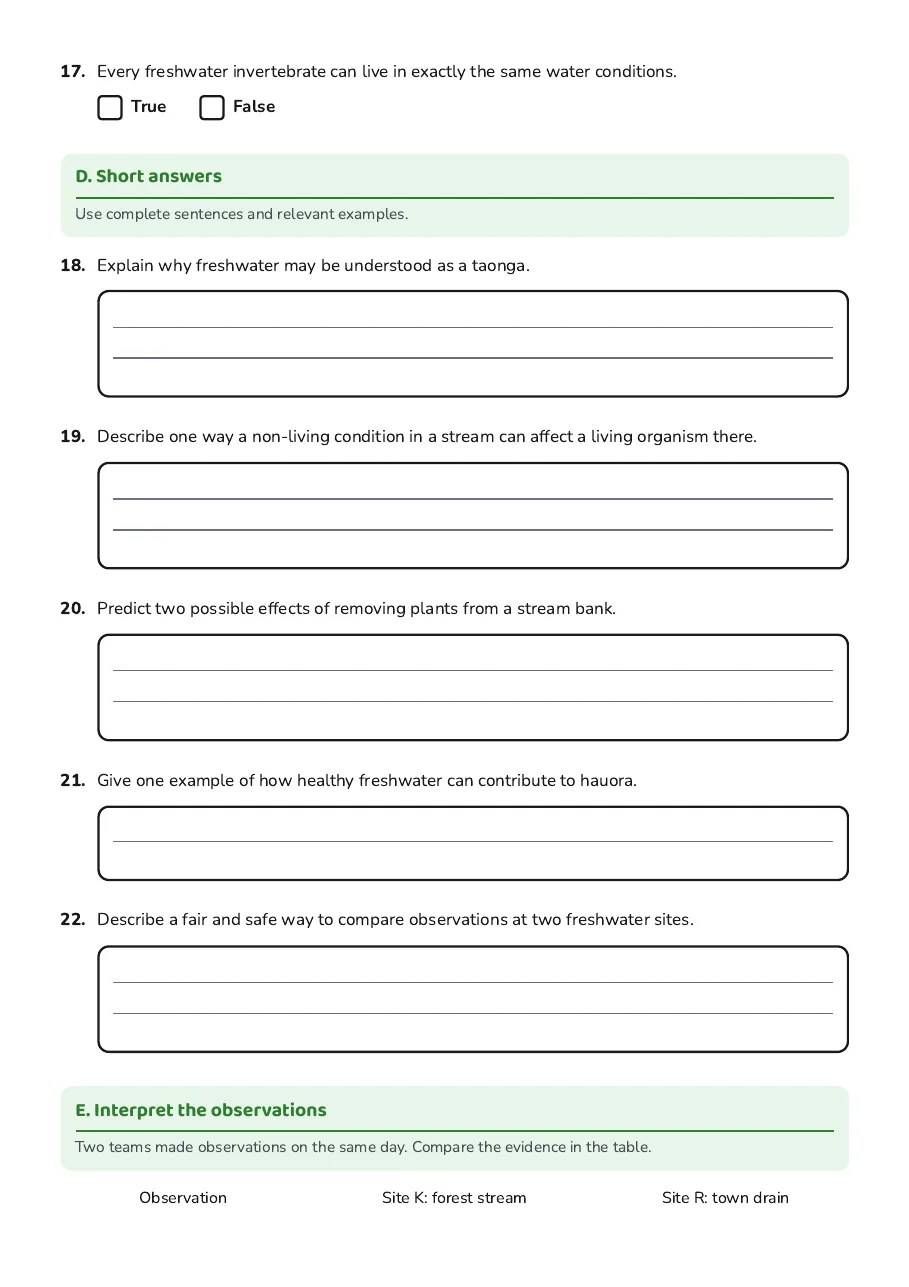
D. Short answers
Use complete sentences and relevant examples.
E. Interpret the observations
Two teams made observations on the same day. Compare the evidence in the table.
Observation
Site K: forest stream
Site R: town drain
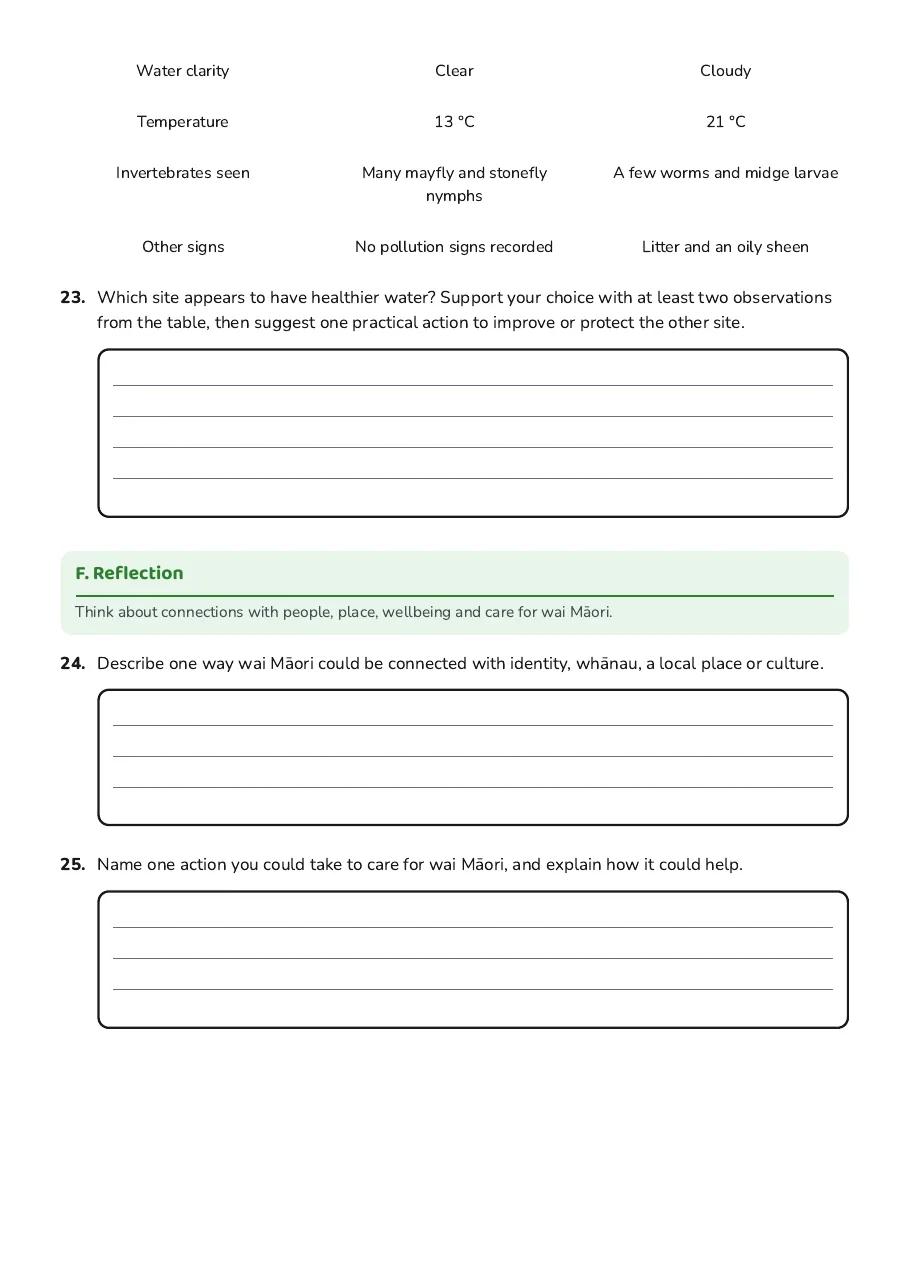
Water clarity
Clear
Cloudy
Temperature
13 °C
21 °C
Invertebrates seen
Many mayfly and stonefly nymphs
A few worms and midge larvae
Other signs
No pollution signs recorded
Litter and an oily sheen
F. Reflection
Think about connections with people, place, wellbeing and care for wai Māori.
6 printable pages
Page 1
Page 2
Page 3
Page 4
Page 5
Page 6
About This Worksheet
Free in Kuraplan
Sign up free, grab the PDF, and customize it for your class.
Print-Ready
Formatted for standard paper. Clean layout, easy to read.
AI-Generated
Created with Kuraplan's AI, designed for real classroom use.
For Teachers & Parents
Use in classrooms, for homework, tutoring, or homeschool.
Need a custom version of this worksheet?
Kuraplan's AI generates custom worksheets in seconds — differentiated for every learner, aligned to your curriculum.
Generate Custom Worksheets — FreeMore Science Worksheets
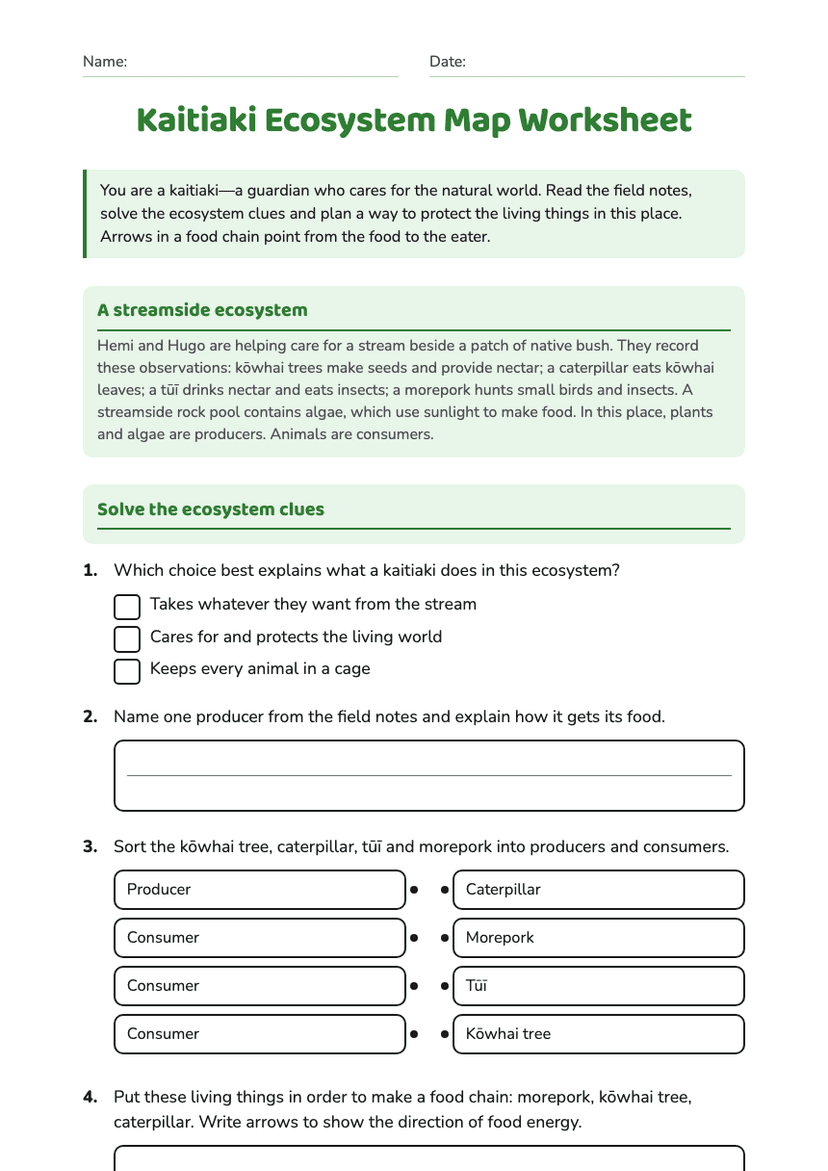
Kaitiaki Ecosystem Map Worksheet
Free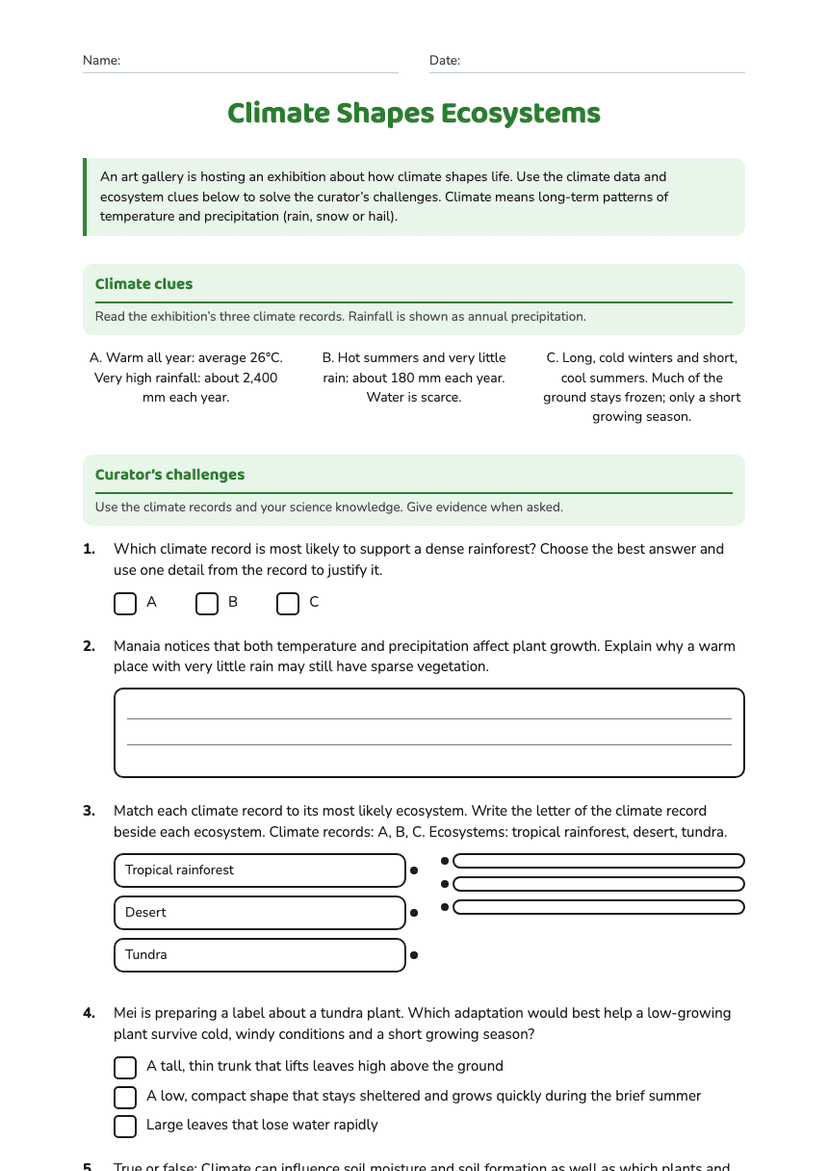
Climate Shapes Ecosystems
Free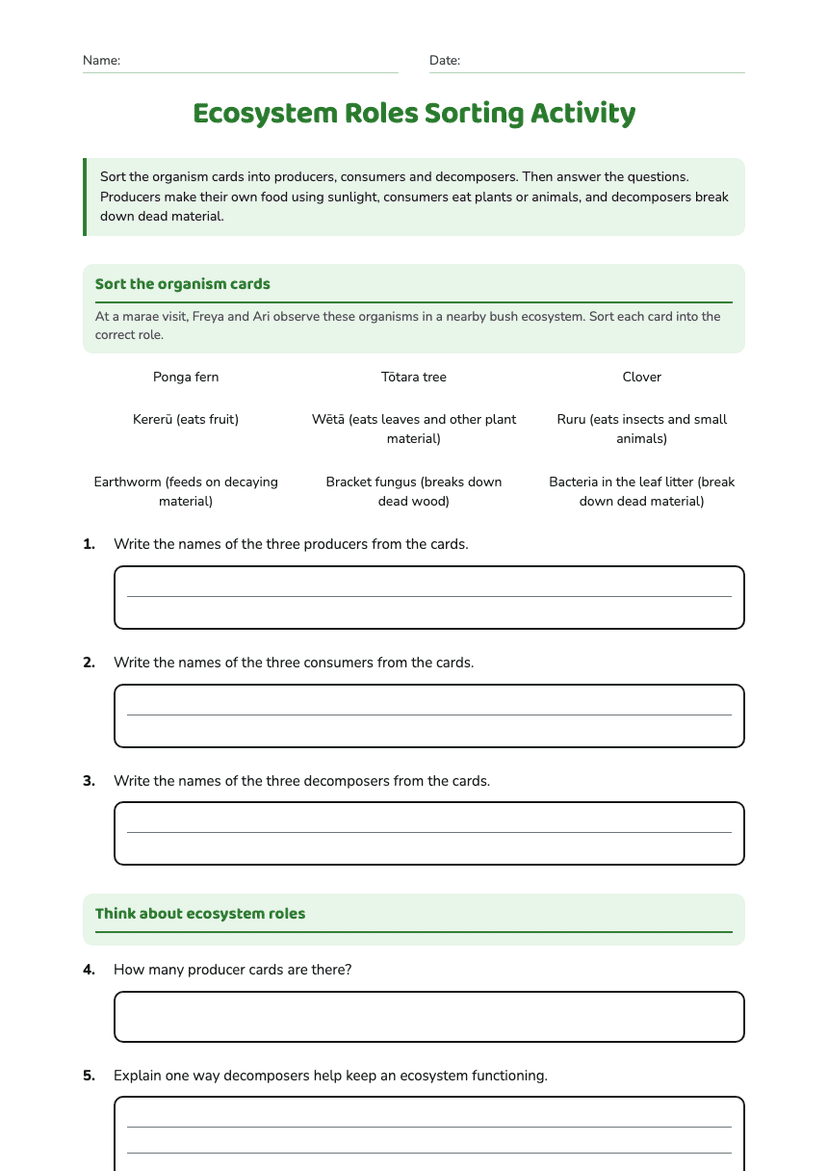
Ecosystem Roles Sorting Activity
Free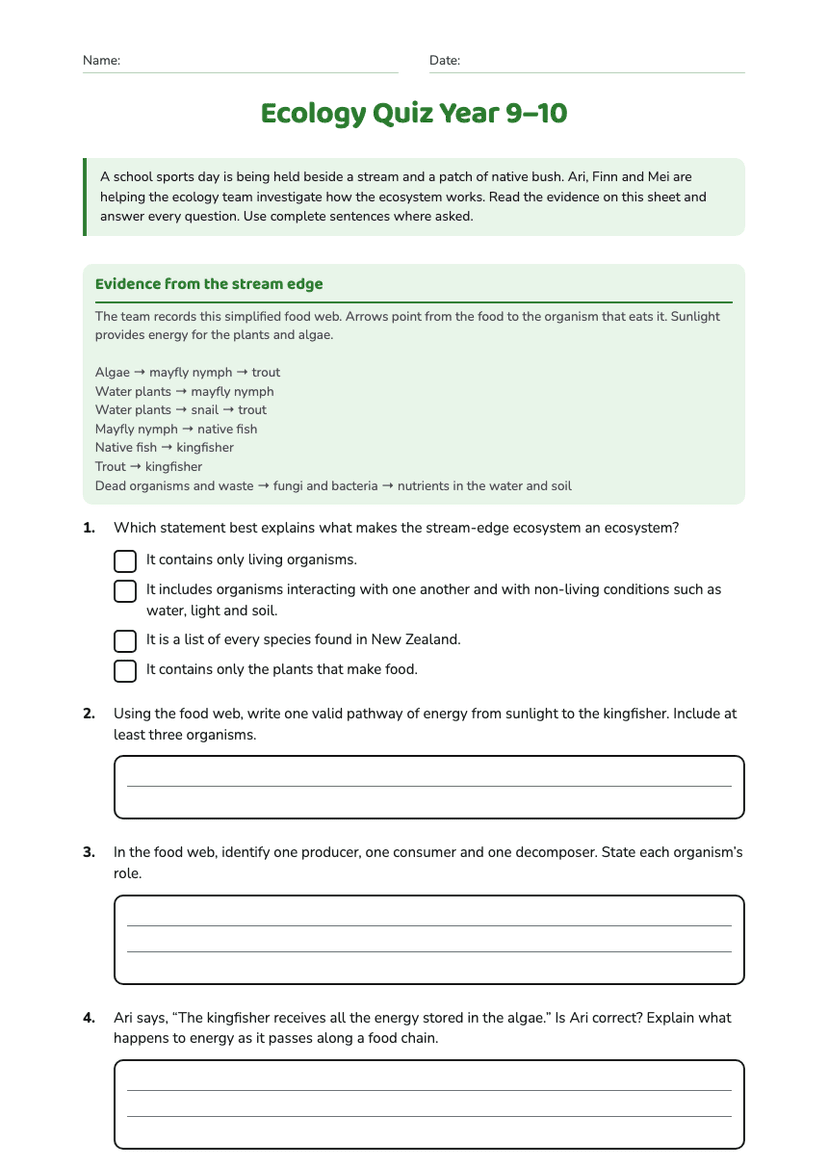
Ecology Quiz Year 9–10
Free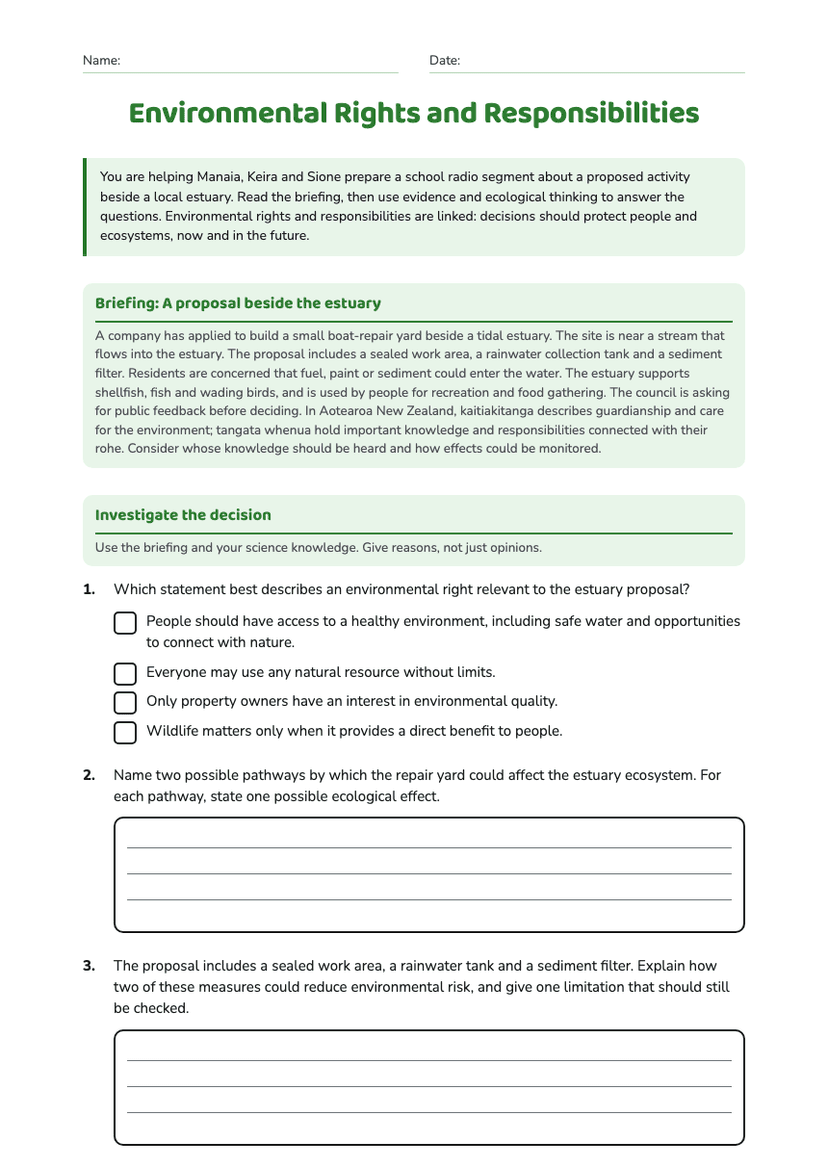
Environmental Rights and Responsibilities
Free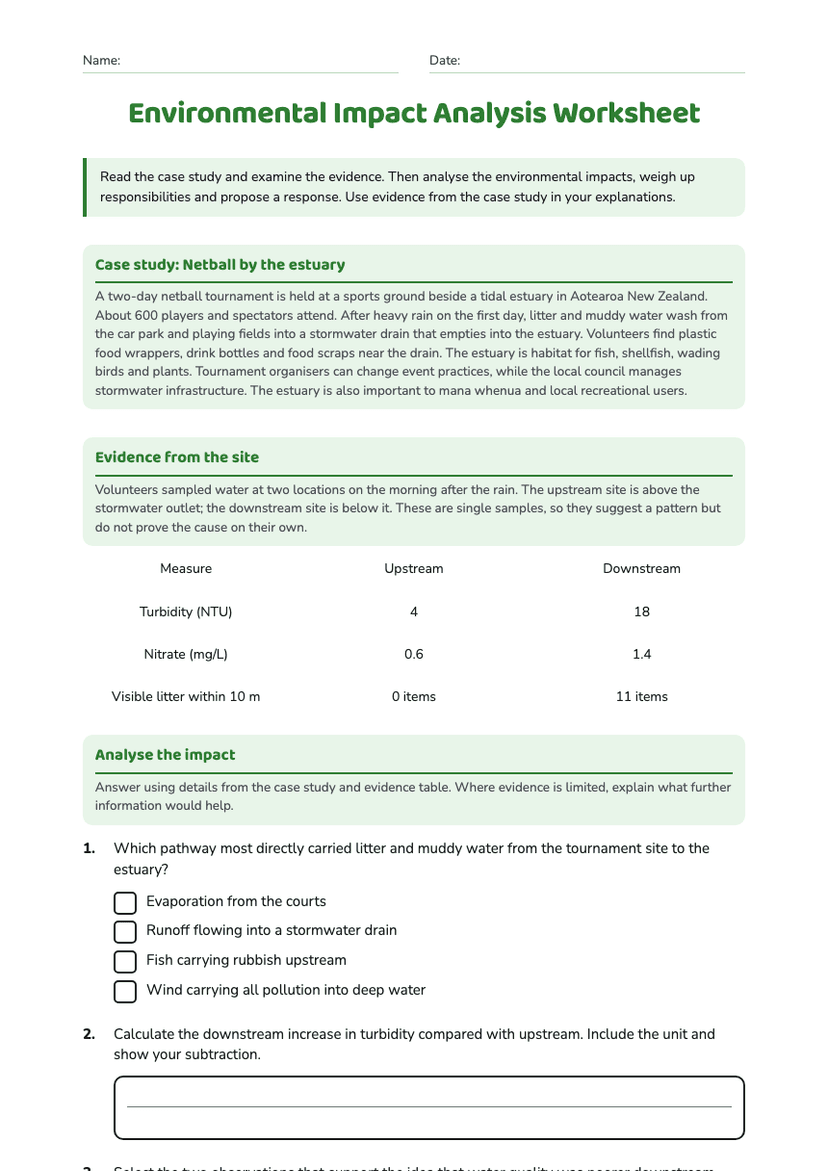
Environmental Impact Analysis Worksheet
Free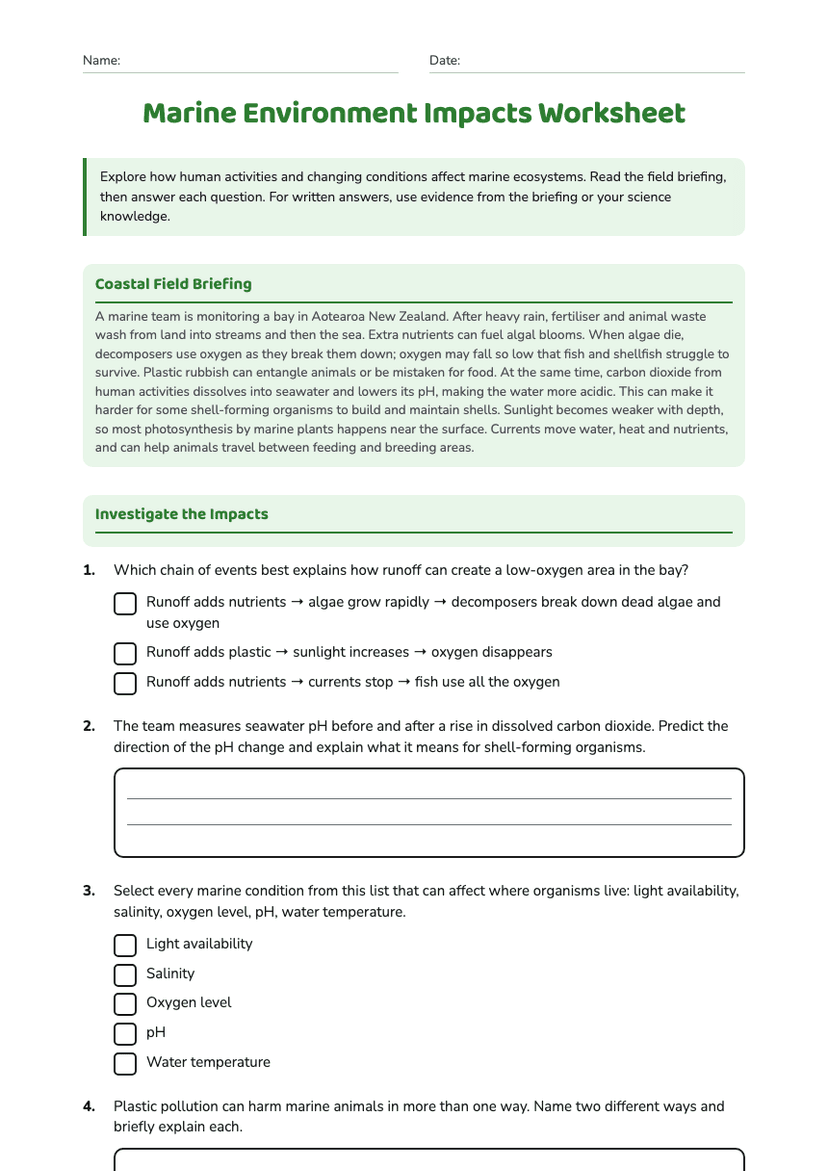
Marine Environment Impacts Worksheet
Free