Memory Techniques for Better Revision
Year 10 Study Skills Effective Learning Strategies Transform Your Study Habits
Why Memory Techniques Matter
Your brain processes information more effectively with structure Memory techniques reduce study time while improving retention These methods have been used for thousands of years They work by connecting new information to what you already know
Quick Memory Test
Look at this list for 30 seconds: Apple, Bicycle, Thunder, Pencil, Ocean, Guitar, Mountain, Clock, Rainbow, Sandwich
The Method of Loci (Memory Palace)
Choose a familiar place (your home, school route, etc.) Create a mental journey through this space Place information at specific locations along your route Walk through your palace to recall information in order
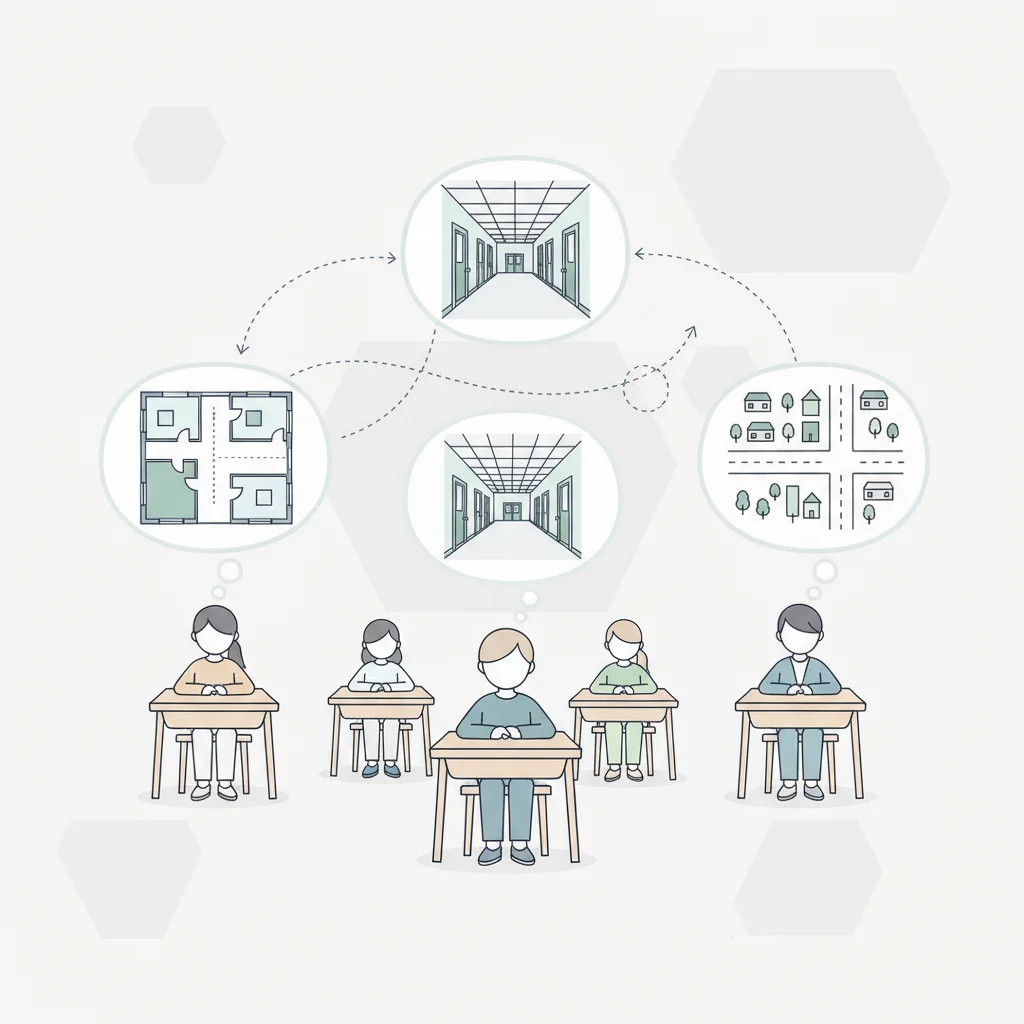
Build Your Memory Palace
Step 1: Choose your familiar location Step 2: Plan your route (5-6 stops) Step 3: Practice the route mentally Step 4: Place today's lesson topics at each stop
Mnemonics: Memory Shortcuts
Acronyms: ROY G. BIV (colours of the rainbow) Acrostics: My Very Educated Mother Just Served Us Nachos (planets) Rhymes: 'I before E except after C' Word associations: Link new words to familiar ones
Creating Effective Mnemonics
{"left":"Make it personal and meaningful\nUse humor or silly images\nConnect to existing knowledge\nKeep it simple and memorable","right":"Use vivid, colorful imagery\nInclude action or movement\nMake unusual connections\nPractice regularly"}
The Link System
Create a story connecting items in sequence Use vivid, exaggerated imagery Include action and emotion Make connections between each item and the next
Practice Session: Subject Application
Choose a topic you're currently studying Select 5-7 key facts or concepts Apply one memory technique we've learned Share your creation with a partner

Putting It All Together: Your Revision Toolkit
Use memory palaces for sequential information Create mnemonics for lists and categories Build stories to link related concepts Practice regularly - little and often Combine techniques for complex topics Test yourself frequently