Problem Solving: Work and Life
Building Confidence in Decision Making Practical Solutions for Real Situations
What Problems Have You Solved Today?
Think about your morning routine How did you get to class? What choices did you make? Share one example with a partner

Why Problem Solving Matters at Work
Employers value problem solvers Shows you can work independently Helps you adapt to new situations Makes you more confident and valuable
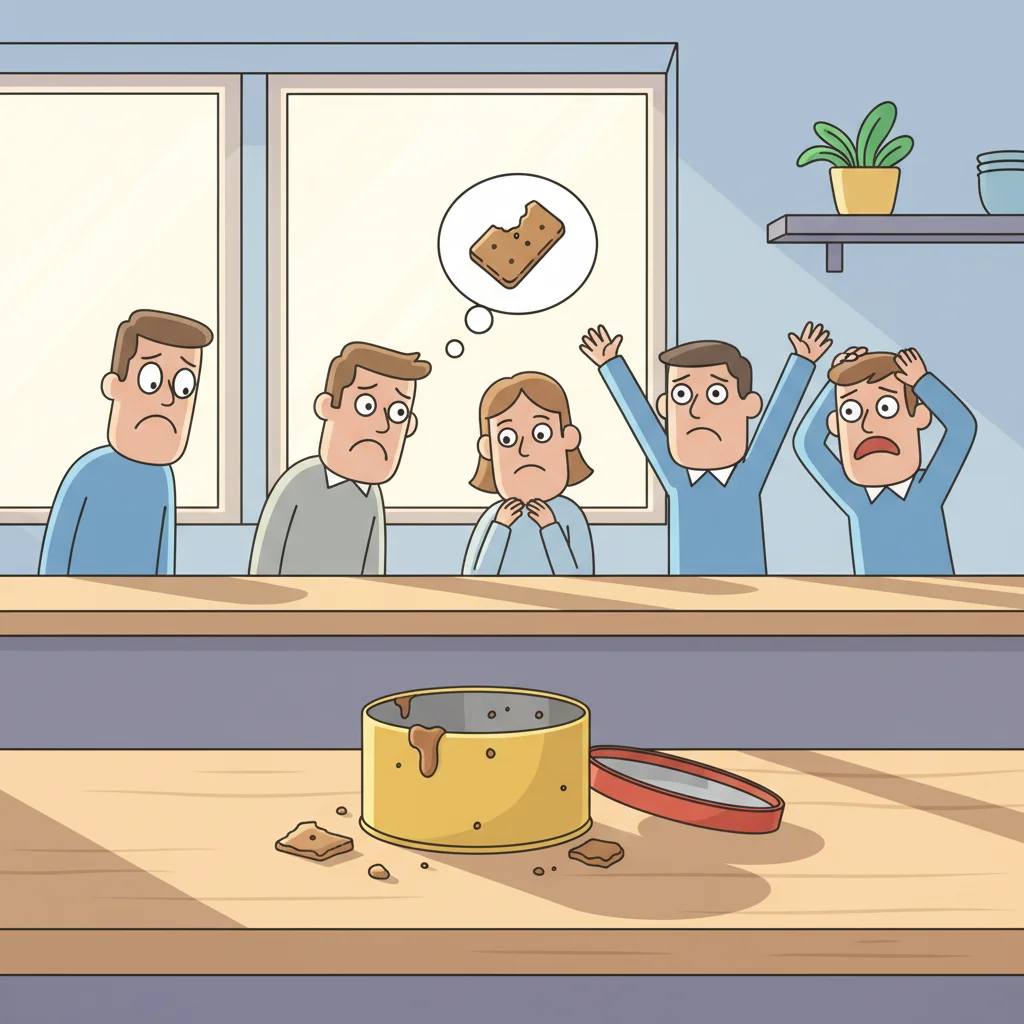
The Great Biscuit Crisis!
SCENARIO: You're on your work placement The office biscuit tin is empty Your supervisor asks you to sort it out You have £5 and 30 minutes What's your plan?
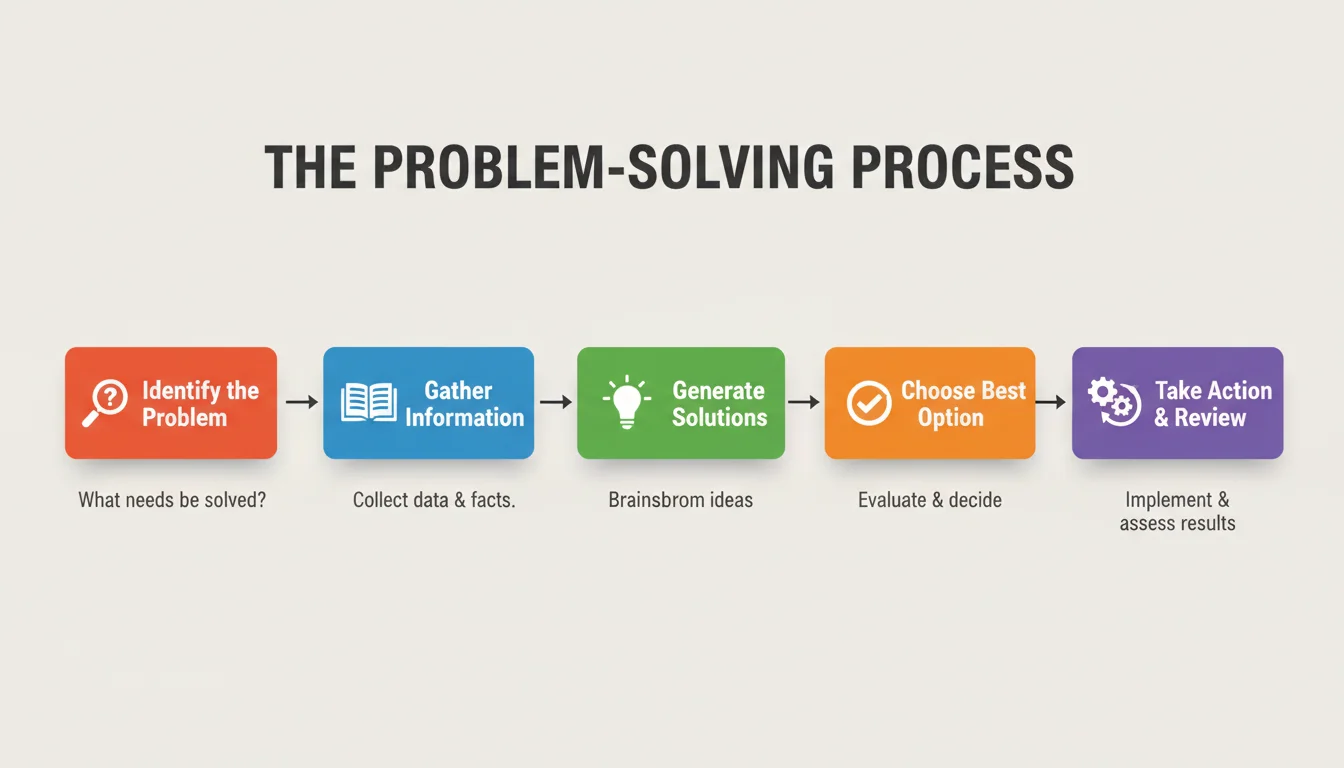
The Problem-Solving Process

Step 1: Identify the Problem
What exactly is wrong? Who is affected? When does it need to be solved? Is it really a problem or just an inconvenience?

Step 2: Gather Information
What resources do you have? Who can help you? What are the constraints (time, money, rules)? Has this happened before?

Brainstorm Challenge: The Late Bus
Your bus to work is always 10 minutes late You've been told off twice for being late Work starts at 9am sharp Generate as many solutions as possible! No idea is too silly - aim for 10 solutions

Step 3: Generate Solutions
Brainstorm without judging ideas Think of at least 3 different approaches Consider creative and conventional options Ask others for their ideas
Pros and Cons: Evaluating Solutions
{"left":"LEFT SIDE - Solution A: Get earlier bus\nPros: Reliable, simple, guaranteed to work\nCons: Earlier wake-up, might be too early\n","right":"RIGHT SIDE - Solution B: Ask for flexible start time\nPros: Keeps current routine, shows initiative\nCons: Might be refused, looks like making excuses"}

Step 4: Choose the Best Option
Consider the consequences of each option What fits your situation best? Which option can you actually do? What would happen if it goes wrong?
Remember This!
"A problem well-defined is half solved." - Take time to understand before acting - Good planning prevents poor performance - Every expert was once a beginner
8 more slides available after you open the deck.
Download all 20 slides