Talking Your Way Through Trouble
The Art of Communicating When Things Go Wrong Year 7 Communication Skills

The Great Misunderstanding Game
Partner up and whisper a message through 5 people See how hilariously wrong it gets! Compare the original message to the final result Discuss what went wrong and why
Trouble Talk: Do's and Don'ts
{"left":"P - Faire une pause et respirer avant de réagir\n\nA - Faire preuve d'empathie en écoutant la perspective de l'autre personne","right":"I - Identifier les sentiments et trouver un terrain d'entente\n\nX - Explorer ensemble des solutions qui fonctionnent pour tous\n\nX - Examiner à quel point la solution a bien fonctionné par la suite"}

Part 2: Mastering the Art of Clear Communication
P - Pausieren und durchatmen, bevor man reagiert A - Empathie zeigen, indem man die Perspektive der anderen Person anhört I - Gefühle identifizieren und eine gemeinsame Basis finden X - Zusammen Lösungen untersuchen, die für alle funktionieren X - Untersuchen, wie gut die Lösung im Nachhinein funktioniert hat

Key Takeaways: Communication Success
Listen actively and ask clarifying questions when confused Think before you speak - choose your words carefully Body language and tone matter as much as your words When misunderstandings happen, stay calm and explain clearly Practice makes perfect - the more you communicate, the better you get
Your Turn: Escape the Communication Chaos!
Scenario: You're scrolling through messages when you accidentally screenshot your friend's private, embarrassing text and send it to your entire class group chat. Within minutes, people start responding with laughing emojis. 1. What's your immediate response to fix this situation? 2. How do you repair the damage with your friend? 3. What steps will you take to avoid future mishaps?
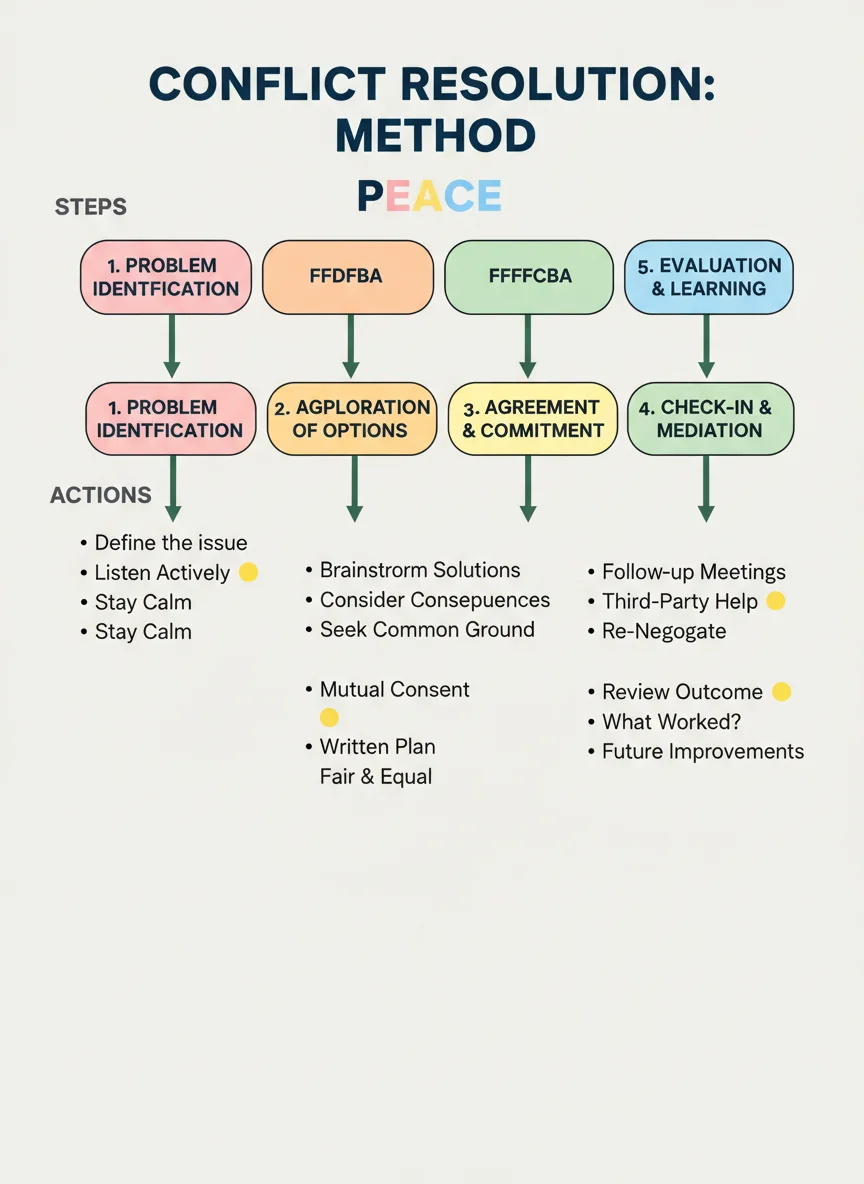
Conflict Resolution: The PEACE Method
P - Faire une pause et respirer avant de réagir E - Montrer de l'empathie en écoutant la perspective de l'autre personne A - Identifier les sentiments et trouver des points communs C - Examiner ensemble des solutions qui fonctionnent pour tous E - Évaluer l'efficacité de la solution par la suite

Your Communication Toolkit
Active Listening: Give your full attention, ask questions, and repeat back what you heard Clear Messaging: Use simple words, be specific, and check if your message was understood Managing Misunderstandings: Stay calm, ask for clarification, and be willing to explain differently Body Language Matters: Make eye contact, use open postures, and match your expressions to your words Practice Makes Perfect: The more you communicate mindfully, the easier it becomes