Your Heart in Motion
Understanding the Cardiovascular System GCSE Physical Education Year 10
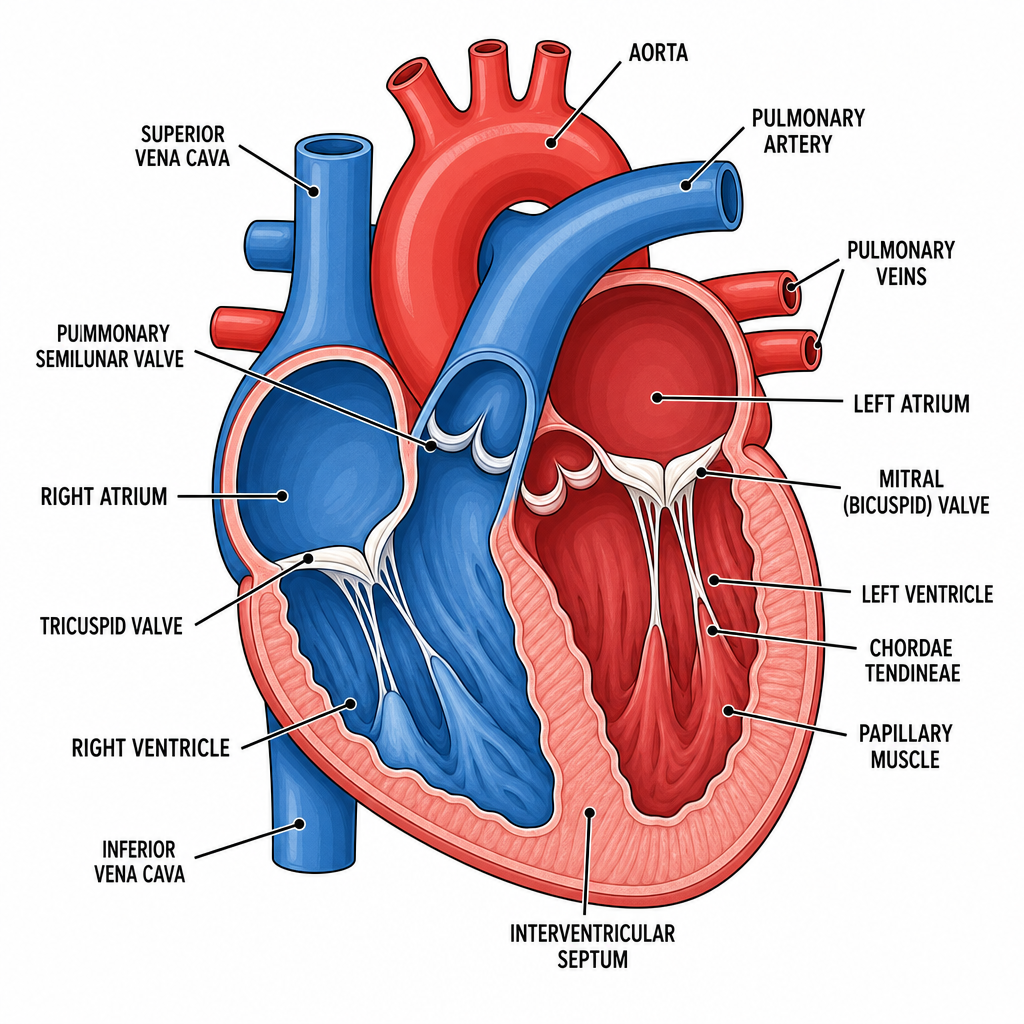
The Heart: Your Body's Engine
Four-chambered muscular pump Size of your clenched fist Beats approximately 100,000 times per day Pumps 5 litres of blood every minute
Heart Structure: Chambers and Valves
{"left":"Right atrium receives deoxygenated blood from body\nRight ventricle pumps blood to lungs\nLeft atrium receives oxygenated blood from lungs\nLeft ventricle pumps blood to body","right":"Tricuspid valve between right atrium and ventricle\nPulmonary valve controls flow to lungs\nBicuspid (mitral) valve between left chambers\nAortic valve controls flow to body"}

The Cardiac Cycle
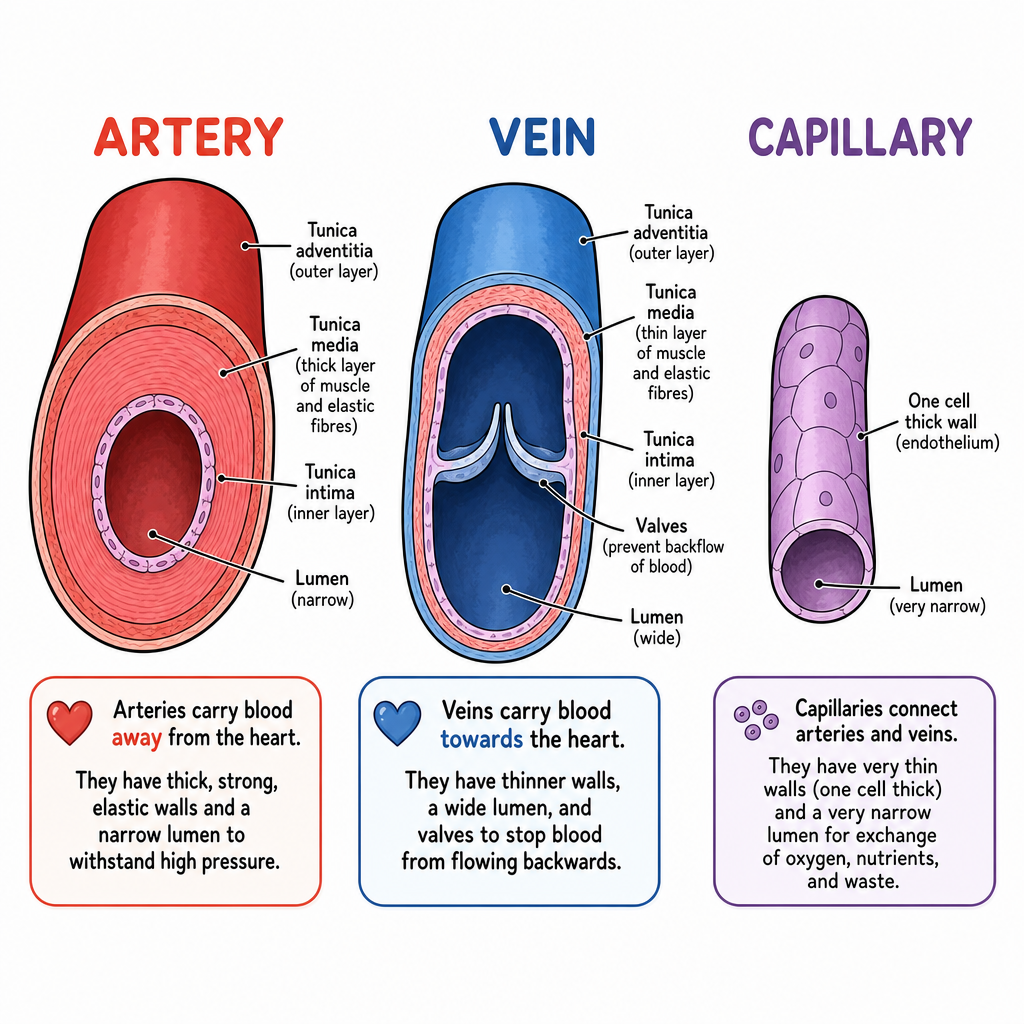
Blood Vessels: The Highway System
Arteries carry blood away from heart Veins return blood to heart Capillaries connect arteries to veins Arteries have thick, elastic walls Veins have valves to prevent backflow Capillaries are one cell thick for gas exchange
Pulse Rate Investigation
Find your pulse at wrist or neck Count beats for 15 seconds Multiply by 4 for beats per minute Record resting heart rate Do 20 jumping jacks Immediately retake pulse Record heart rate every minute for 5 minutes
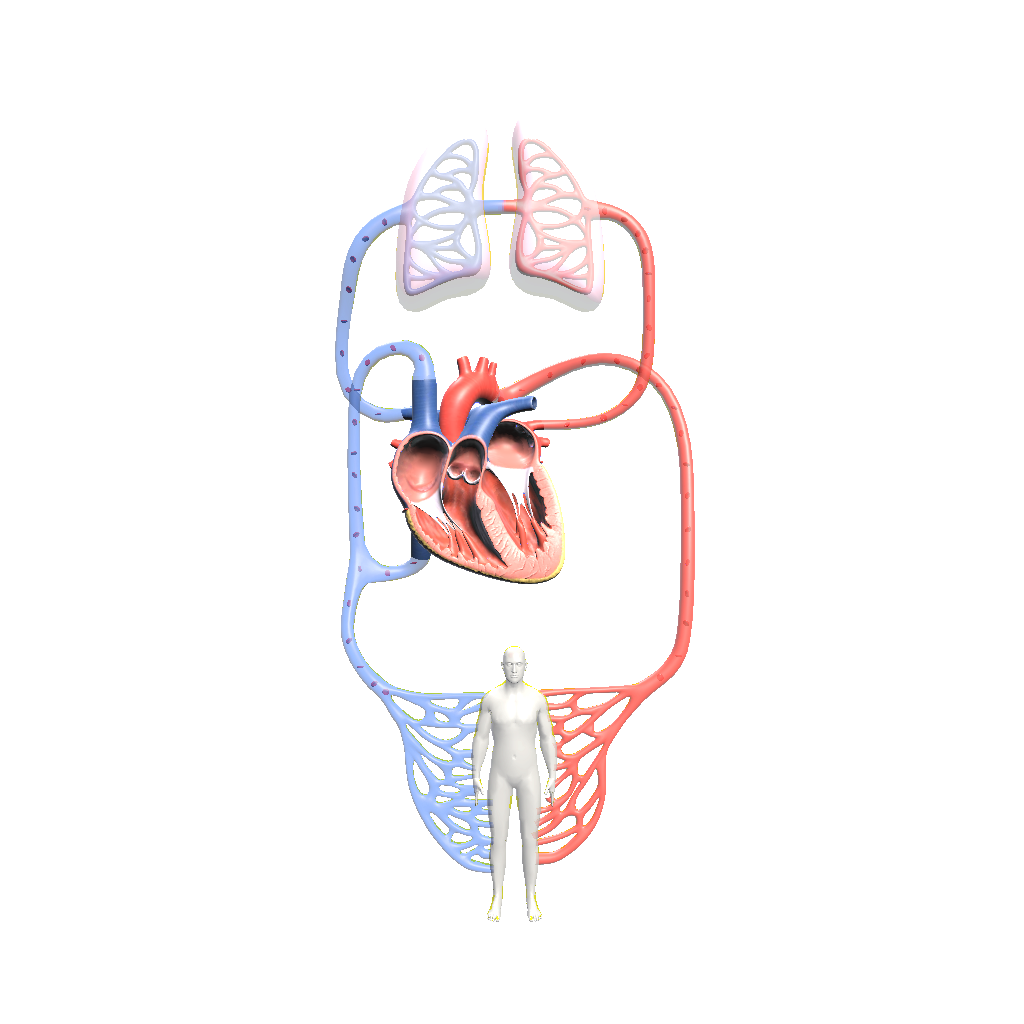
Double Circulation System
Pulmonary circulation: heart to lungs Systemic circulation: heart to body Right side pumps to lungs for oxygen Left side pumps oxygenated blood to body More efficient than single circulation Maintains high pressure to body organs
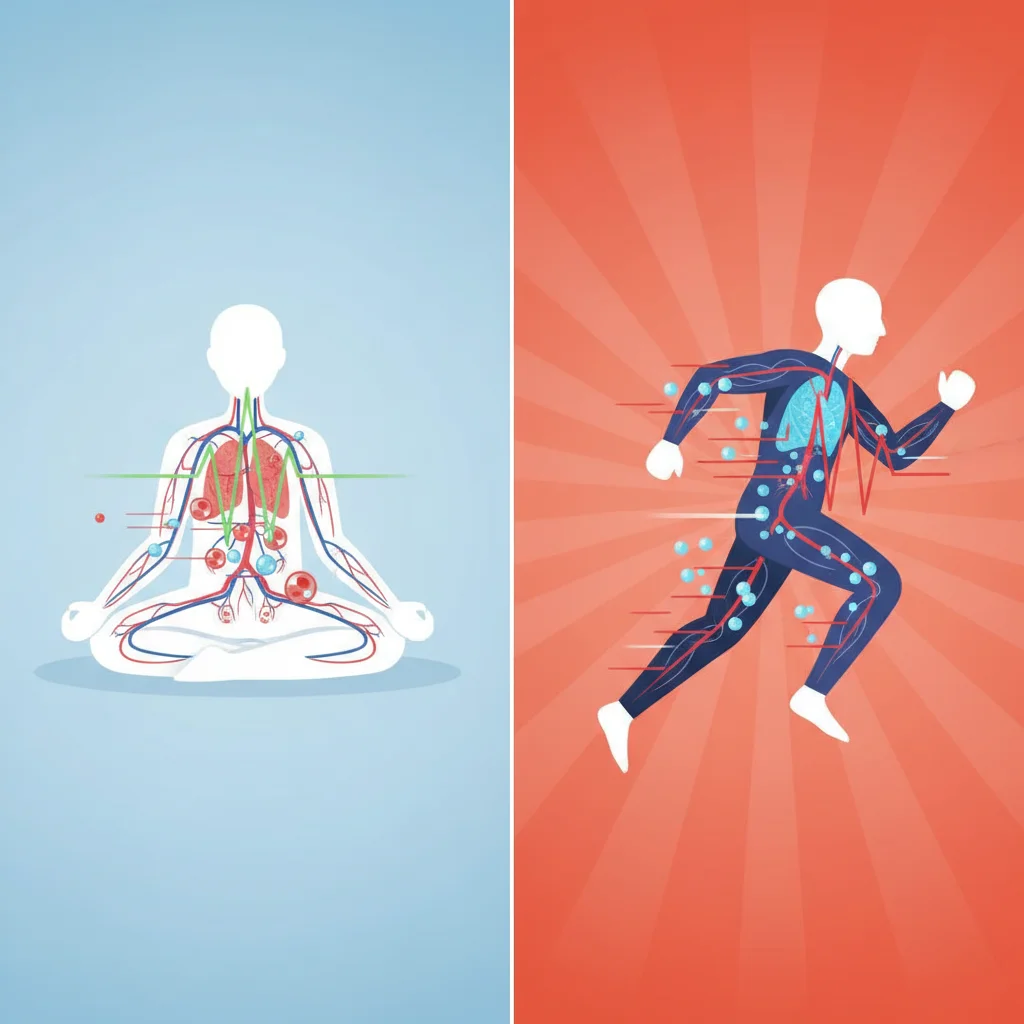
Why Does Heart Rate Increase During Exercise?
Think about what muscles need during exercise Consider oxygen and nutrient delivery What waste products need removing? How does the heart respond to these demands?
Cardiovascular Adaptations to Training
Increased stroke volume (blood per beat) Lower resting heart rate Faster recovery after exercise Increased cardiac output Improved oxygen delivery Stronger heart muscle (cardiac hypertrophy)

Key Learning Summary
The cardiovascular system is a double circulation pump that delivers oxygen and nutrients while removing waste products. Regular exercise strengthens this system, improving both performance and health.