Coastal Erosion Features Worksheet
A free geography worksheet ready for your classroom. Open in Kuraplan to grab the print-ready PDF, customize it for your students, or generate a fresh version in seconds.

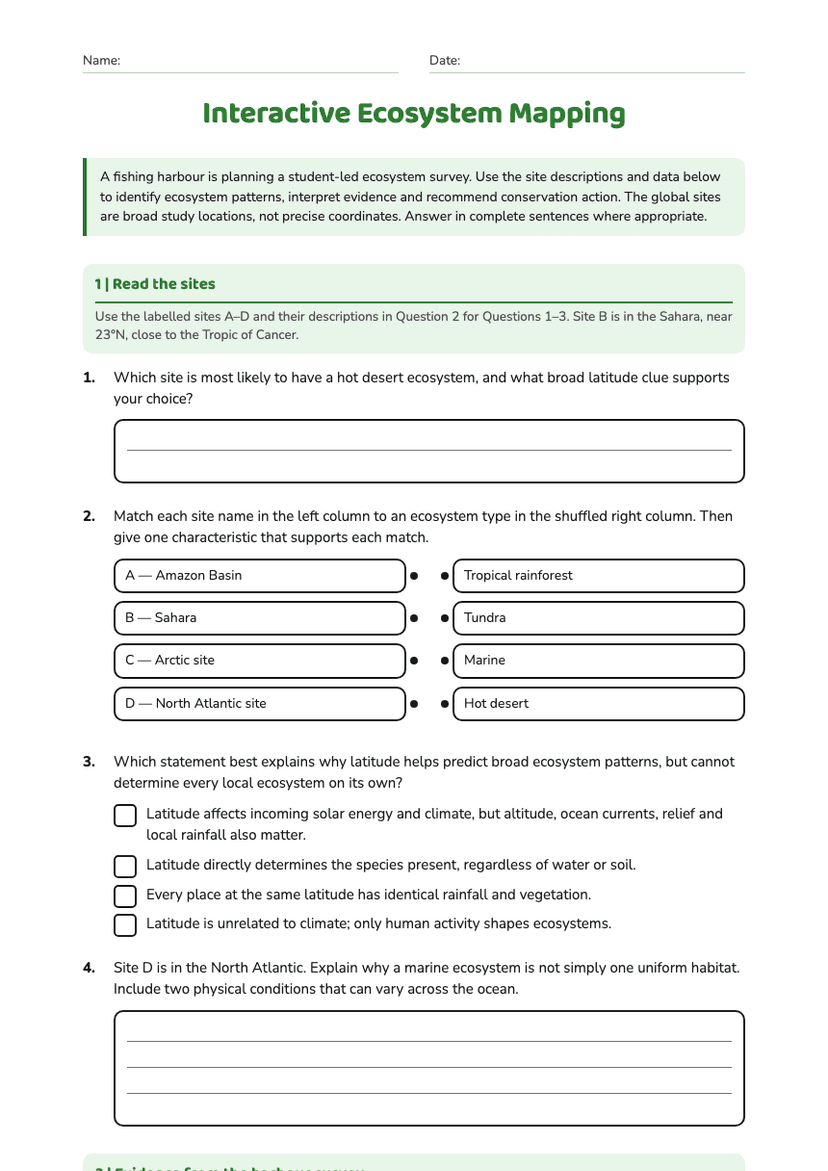
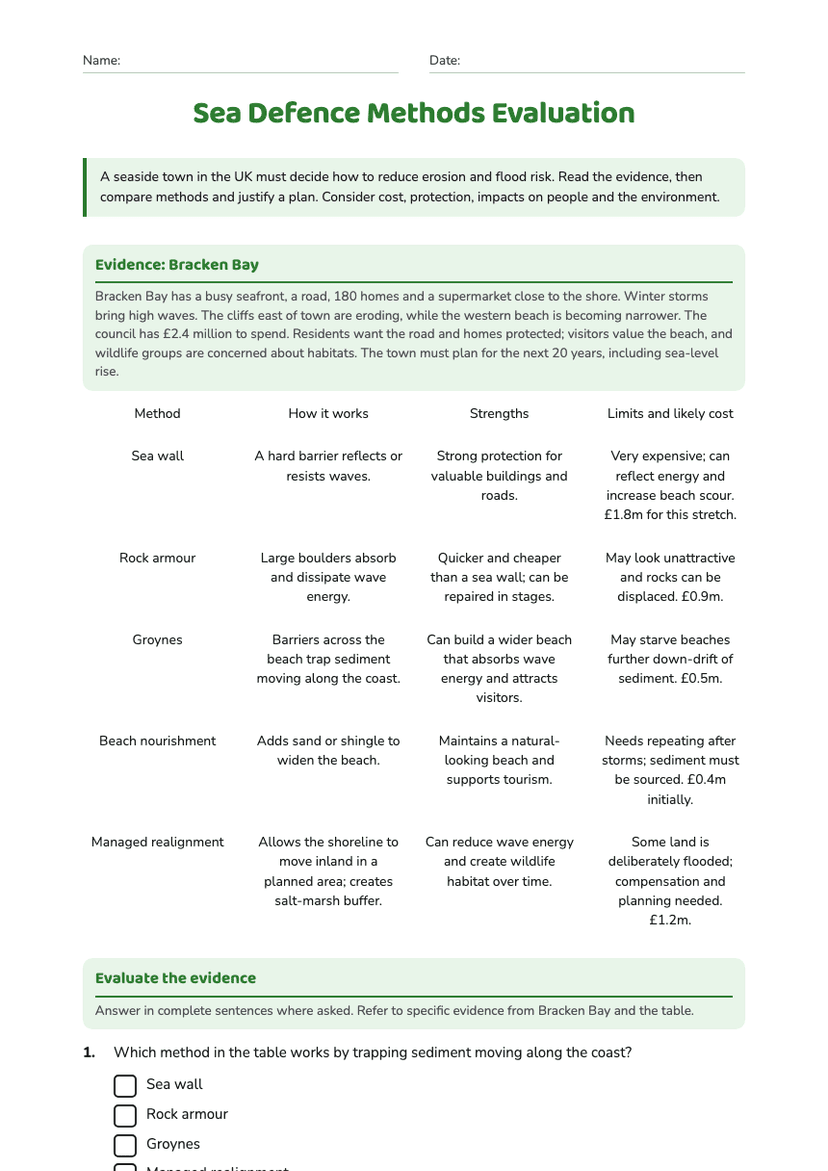
Coastal Erosion Features Worksheet
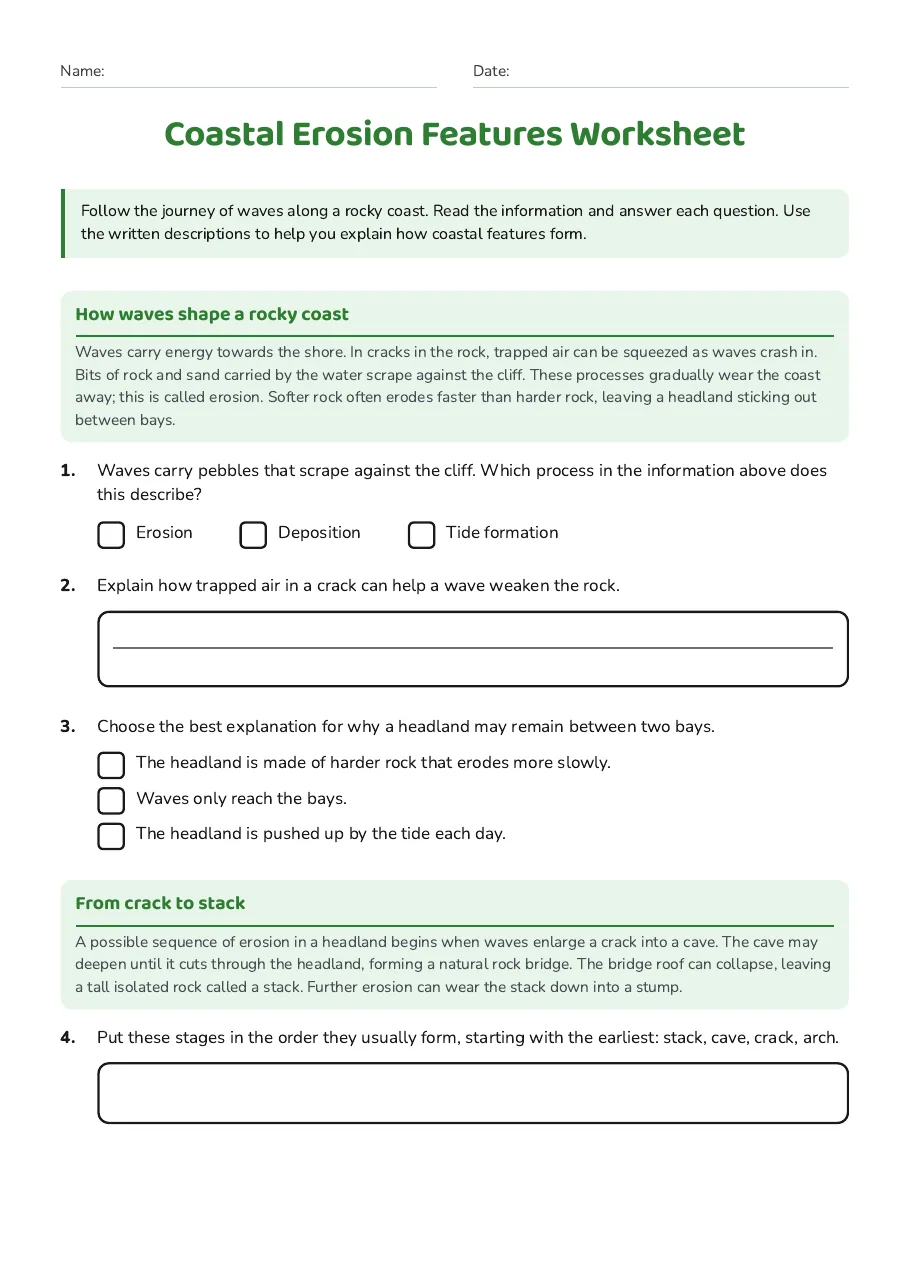
How waves shape a rocky coast
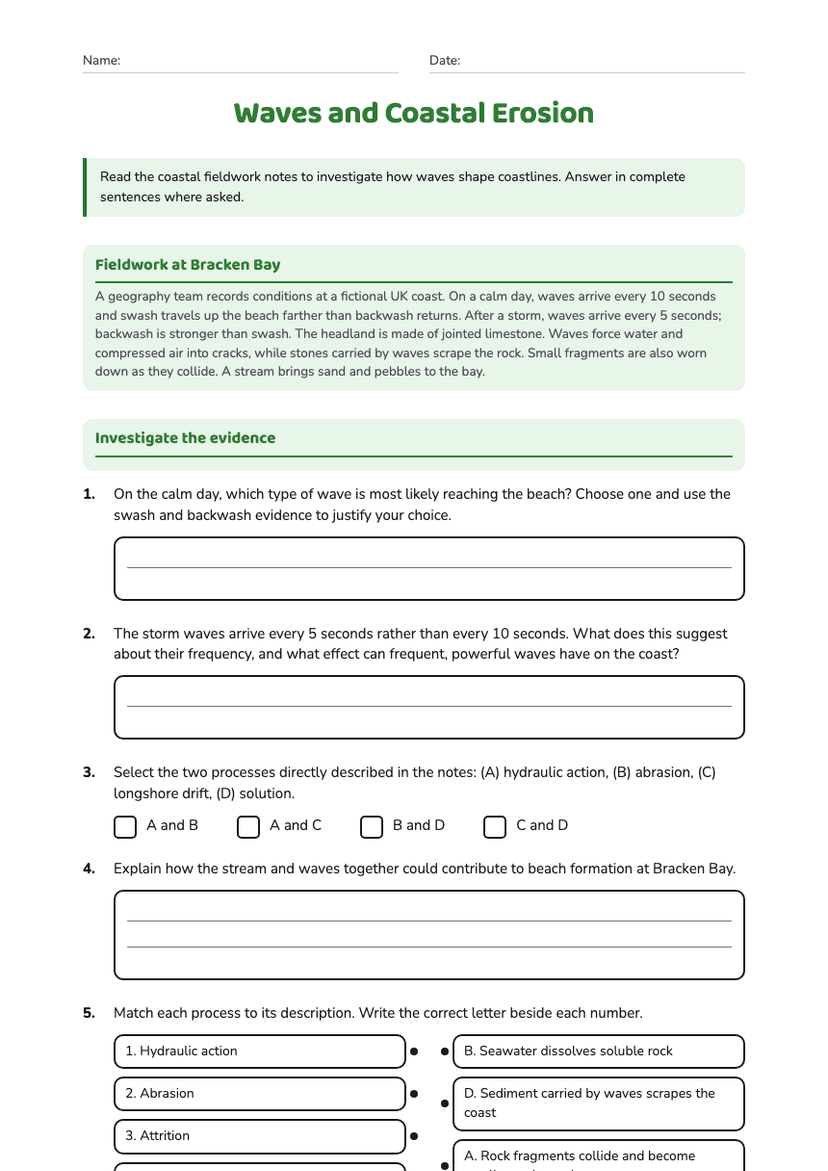
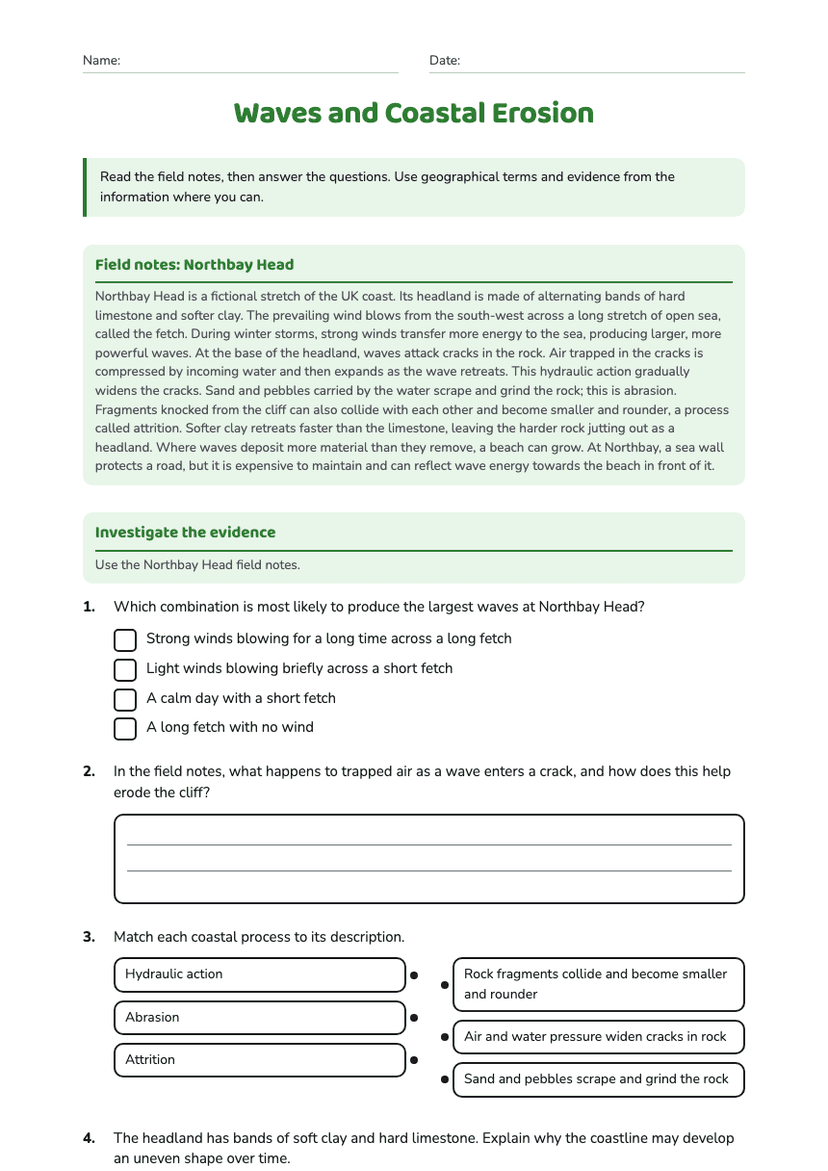
Waves carry energy towards the shore. In cracks in the rock, trapped air can be squeezed as waves crash in. Bits of rock and sand carried by the water scrape against the cliff. These processes gradually wear the coast away; this is called erosion. Softer rock often erodes faster than harder rock, leaving a headland sticking out between bays.
- Erosion
- Deposition
- Tide formation
- The headland is made of harder rock that erodes more slowly.
- Waves only reach the bays.
- The headland is pushed up by the tide each day.
From crack to stack
A possible sequence of erosion in a headland begins when waves enlarge a crack into a cave. The cave may deepen until it cuts through the headland, forming a natural rock bridge. The bridge roof can collapse, leaving a tall isolated rock called a stack. Further erosion can wear the stack down into a stump.
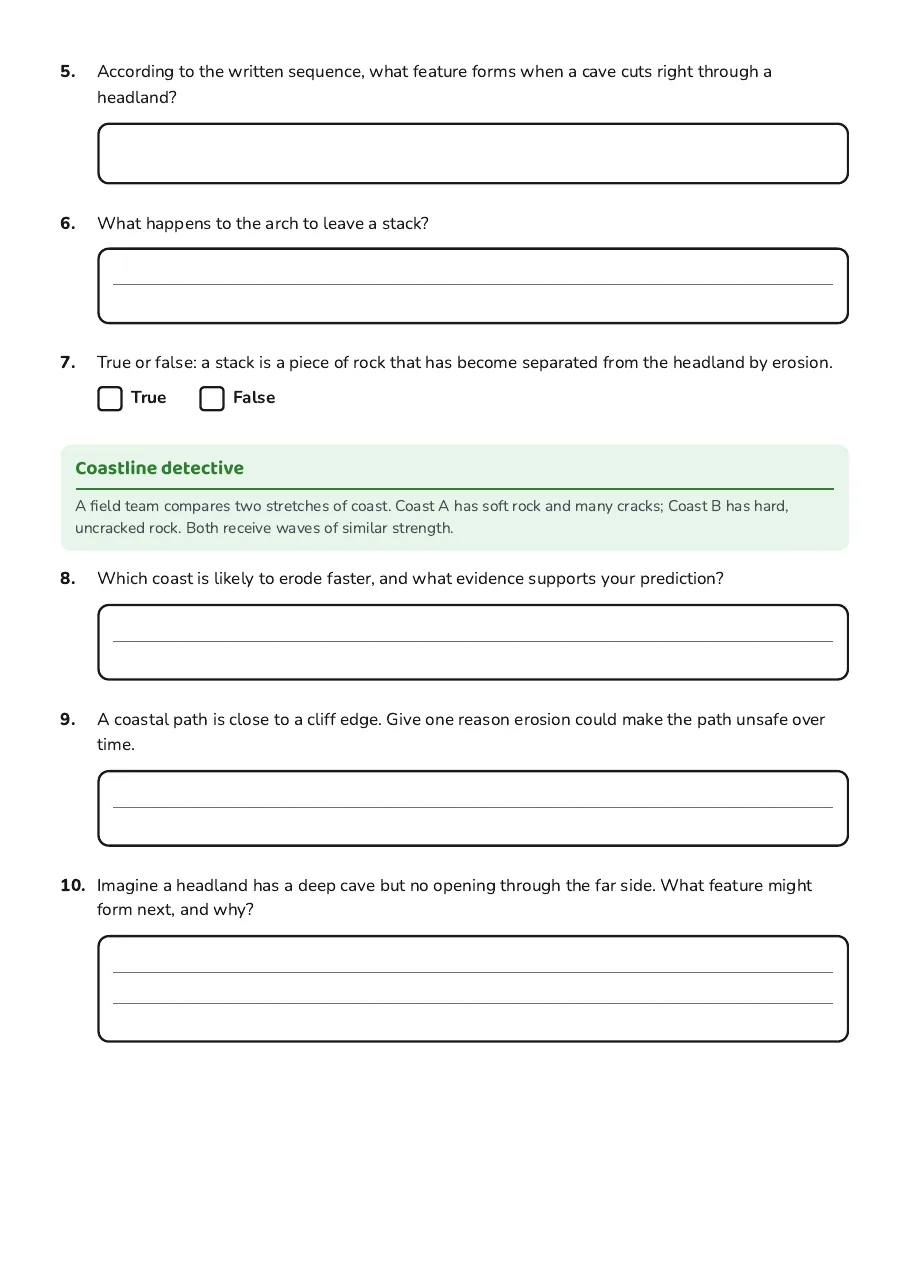
Coastline detective
A field team compares two stretches of coast. Coast A has soft rock and many cracks; Coast B has hard, uncracked rock. Both receive waves of similar strength.
2 printable pages
Page 1
Page 2
About This Worksheet
Free in Kuraplan
Sign up free, grab the PDF, and customize it for your class.
Print-Ready
Formatted for standard paper. Clean layout, easy to read.
AI-Generated
Created with Kuraplan's AI, designed for real classroom use.
For Teachers & Parents
Use in classrooms, for homework, tutoring, or homeschool.
Need a custom version of this worksheet?
Kuraplan's AI generates custom worksheets in seconds — differentiated for every learner, aligned to your curriculum.
Generate Custom Worksheets — Free