Egypt Food Security Timeline
A free geography worksheet ready for your classroom. Open in Kuraplan to grab the print-ready PDF, customize it for your students, or generate a fresh version in seconds.
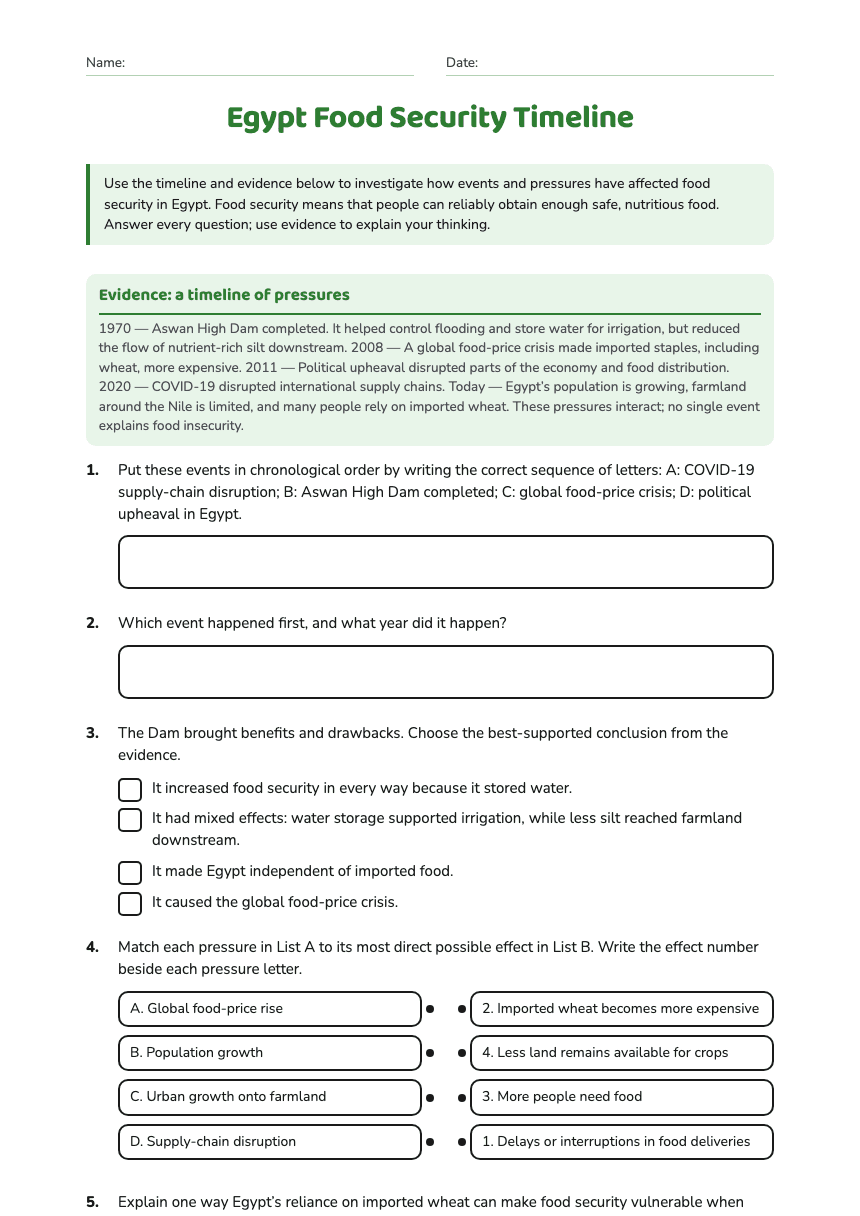
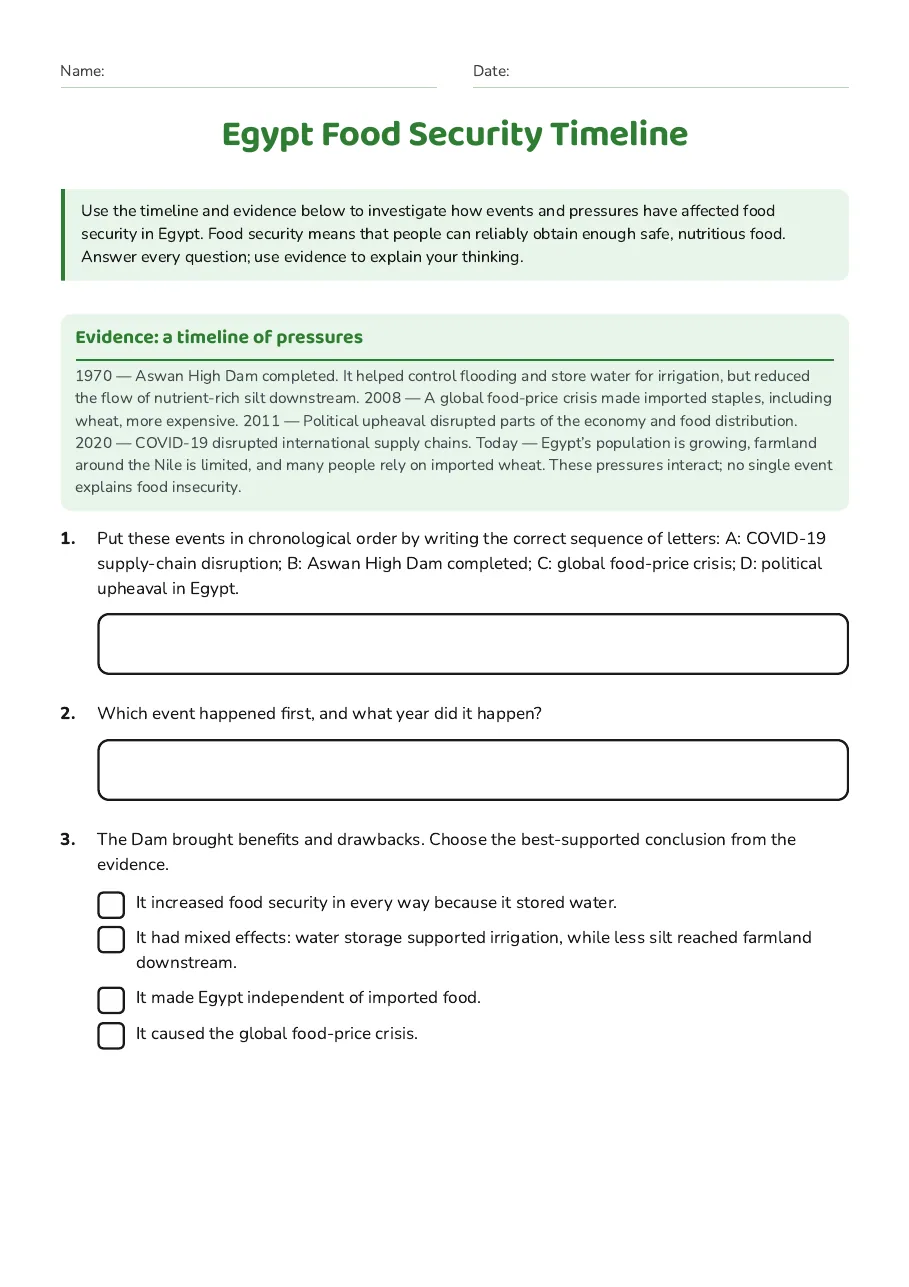
Egypt Food Security Timeline
Evidence: a timeline of pressures
1970 — Aswan High Dam completed. It helped control flooding and store water for irrigation, but reduced the flow of nutrient-rich silt downstream. 2008 — A global food-price crisis made imported staples, including wheat, more expensive. 2011 — Political upheaval disrupted parts of the economy and food distribution. 2020 — COVID-19 disrupted international supply chains. Today — Egypt’s population is growing, farmland around the Nile is limited, and many people rely on imported wheat. These pressures interact; no single event explains food insecurity.
- It increased food security in every way because it stored water.
- It had mixed effects: water storage supported irrigation, while less silt reached farmland downstream.
- It made Egypt independent of imported food.
- It caused the global food-price crisis.
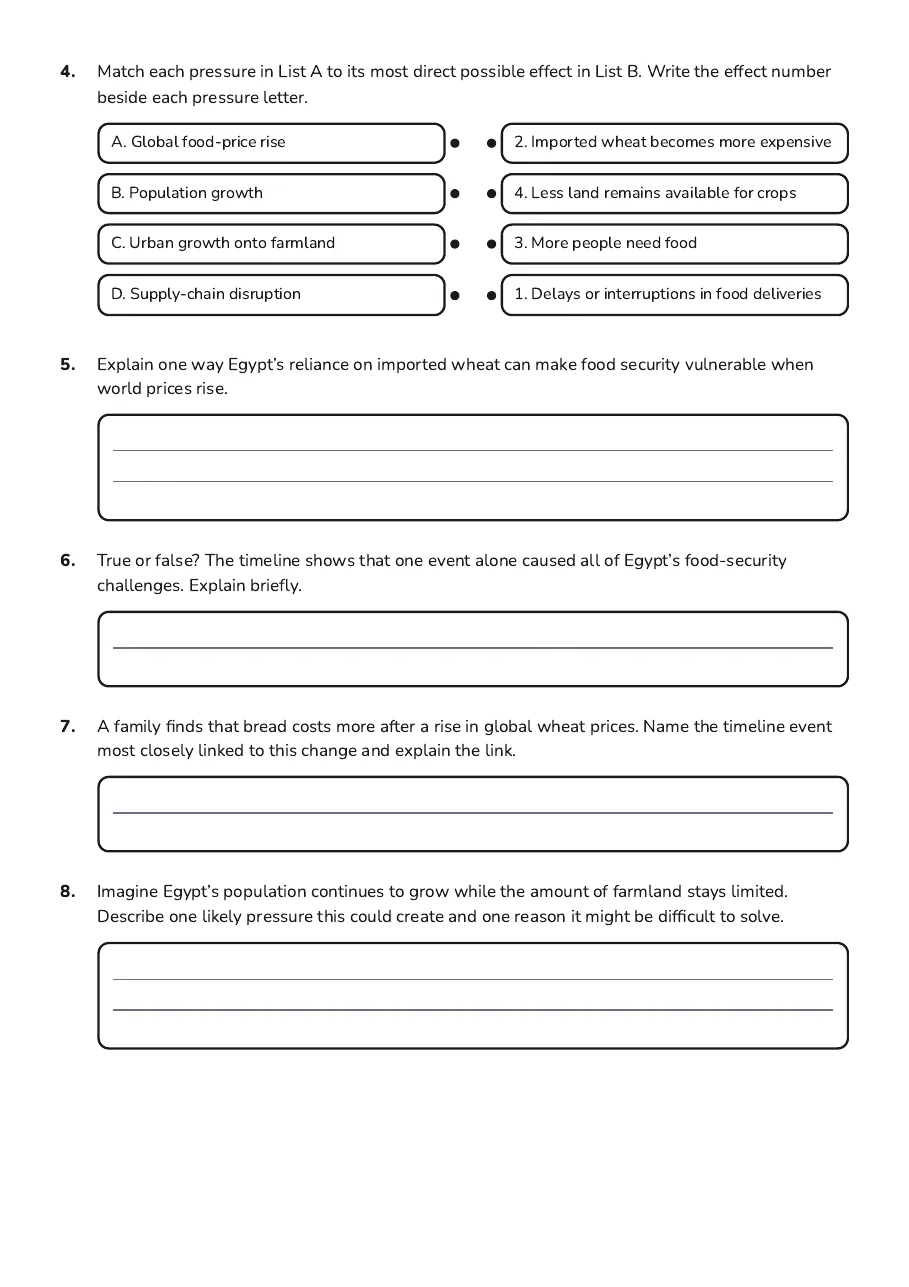
- A. Global food-price rise
- B. Population growth
- C. Urban growth onto farmland
- D. Supply-chain disruption
- 2. Imported wheat becomes more expensive
- 4. Less land remains available for crops
- 3. More people need food
- 1. Delays or interruptions in food deliveries
3 printable pages
Page 1
Page 2

Page 3
About This Worksheet
Free in Kuraplan
Sign up free, grab the PDF, and customize it for your class.
Print-Ready
Formatted for standard paper. Clean layout, easy to read.
AI-Generated
Created with Kuraplan's AI, designed for real classroom use.
For Teachers & Parents
Use in classrooms, for homework, tutoring, or homeschool.
Need a custom version of this worksheet?
Kuraplan's AI generates custom worksheets in seconds — differentiated for every learner, aligned to your curriculum.
Generate Custom Worksheets — Free