Henry VIII and Religion
A free history worksheet ready for your classroom. Open in Kuraplan to grab the print-ready PDF, customize it for your students, or generate a fresh version in seconds.
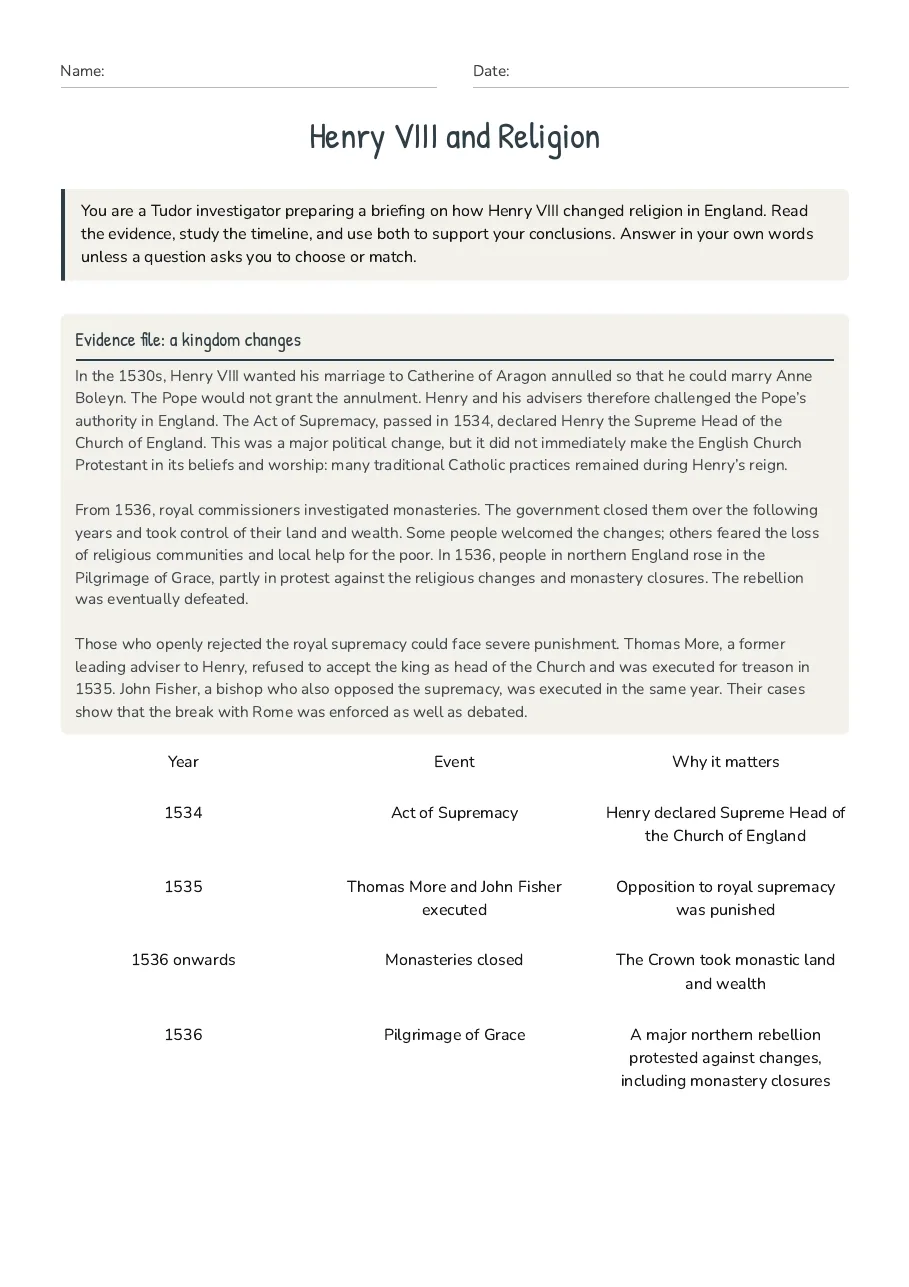
Henry VIII and Religion
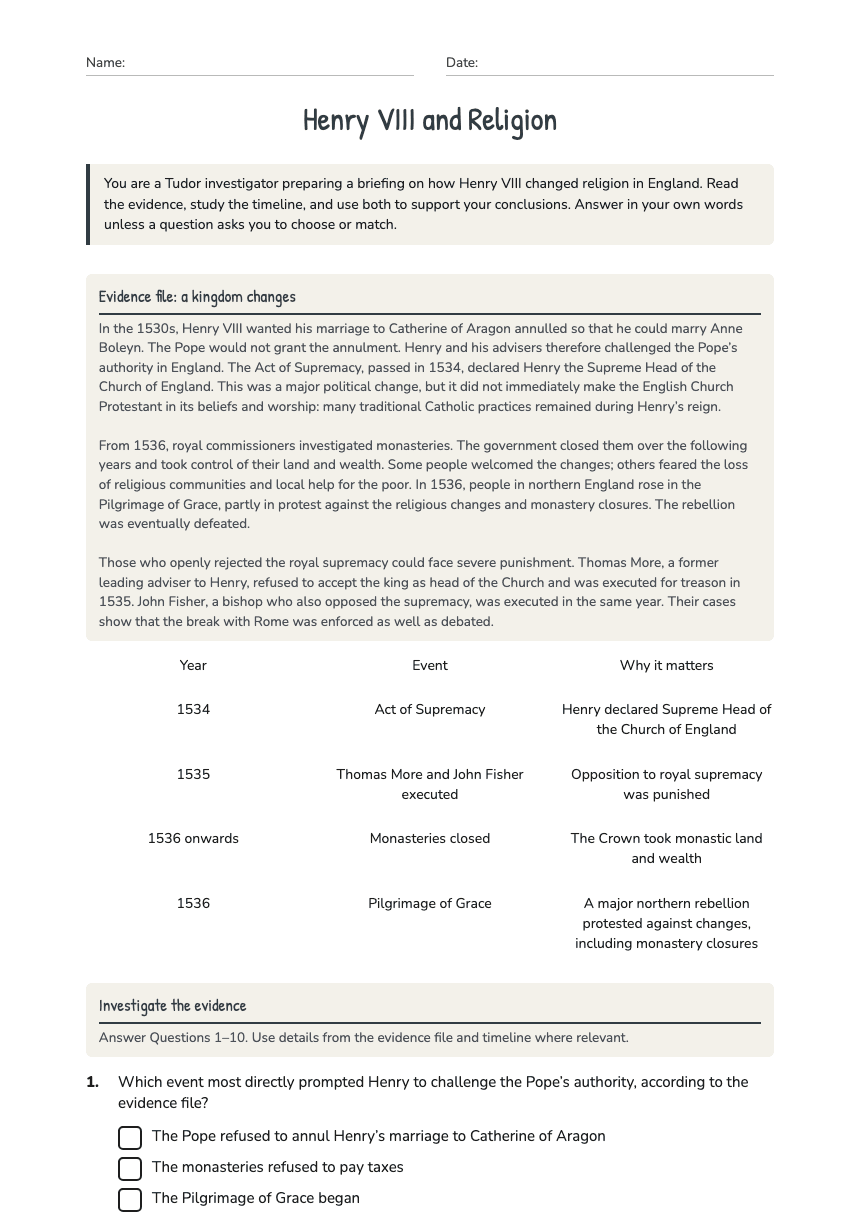
Evidence file: a kingdom changes
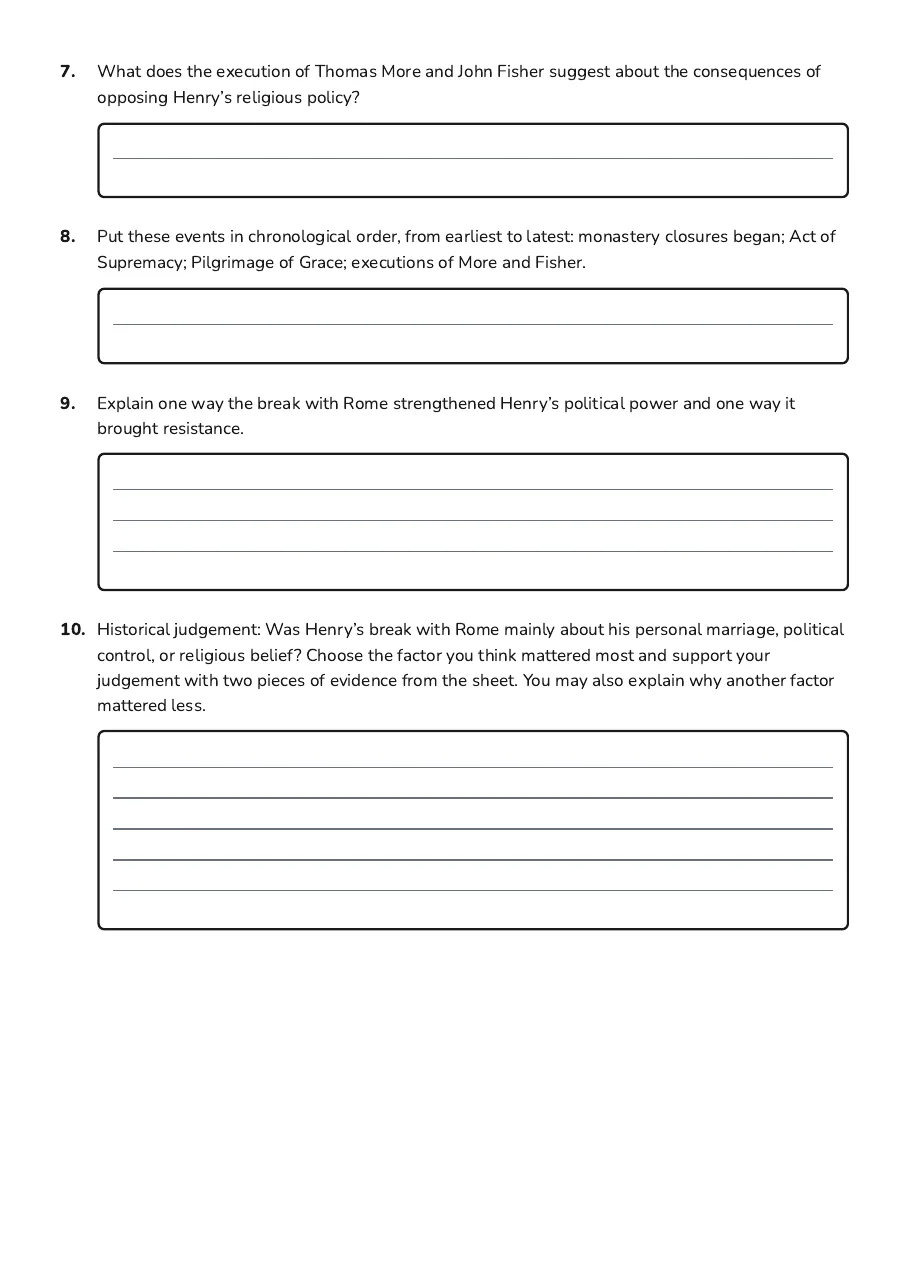
In the 1530s, Henry VIII wanted his marriage to Catherine of Aragon annulled so that he could marry Anne Boleyn. The Pope would not grant the annulment. Henry and his advisers therefore challenged the Pope’s authority in England. The Act of Supremacy, passed in 1534, declared Henry the Supreme Head of the Church of England. This was a major political change, but it did not immediately make the English Church Protestant in its beliefs and worship: many traditional Catholic practices remained during Henry’s reign. From 1536, royal commissioners investigated monasteries. The government closed them over the following years and took control of their land and wealth. Some people welcomed the changes; others feared the loss of religious communities and local help for the poor. In 1536, people in northern England rose in the Pilgrimage of Grace, partly in protest against the religious changes and monastery closures. The rebellion was eventually defeated. Those who openly rejected the royal supremacy could face severe punishment. Thomas More, a former leading adviser to Henry, refused to accept the king as head of the Church and was executed for treason in 1535. John Fisher, a bishop who also opposed the supremacy, was executed in the same year. Their cases show that the break with Rome was enforced as well as debated.
Year
Event
Why it matters
1534
Act of Supremacy
Henry declared Supreme Head of the Church of England
1535
Thomas More and John Fisher executed
Opposition to royal supremacy was punished
1536 onwards
Monasteries closed
The Crown took monastic land and wealth
1536
Pilgrimage of Grace
A major northern rebellion protested against changes, including monastery closures
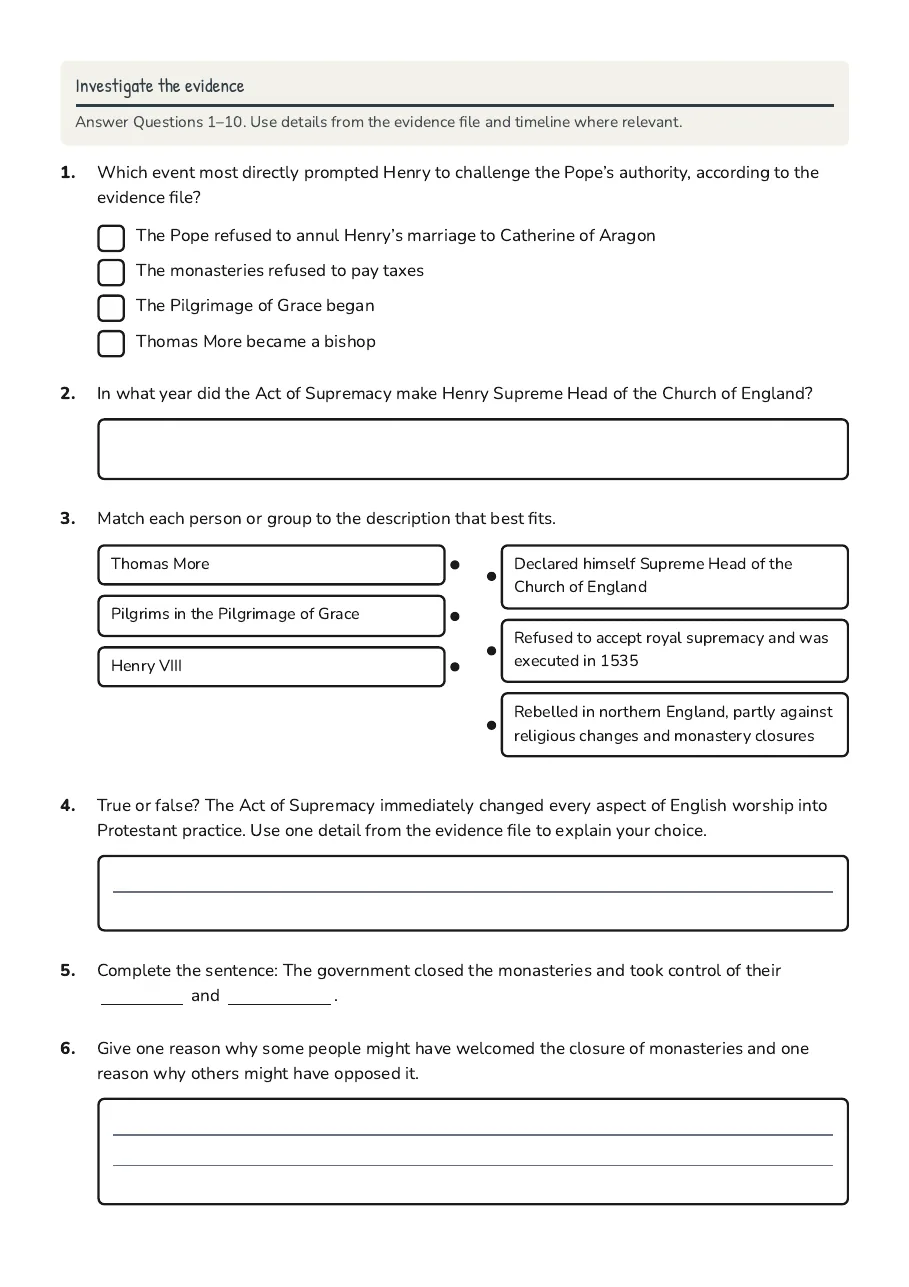
Investigate the evidence
Answer Questions 1–10. Use details from the evidence file and timeline where relevant.
- The Pope refused to annul Henry’s marriage to Catherine of Aragon
- The monasteries refused to pay taxes
- The Pilgrimage of Grace began
- Thomas More became a bishop
- Thomas More
- Pilgrims in the Pilgrimage of Grace
- Henry VIII
- Declared himself Supreme Head of the Church of England
- Refused to accept royal supremacy and was executed in 1535
- Rebelled in northern England, partly against religious changes and monastery closures
3 printable pages
Page 1
Page 2
Page 3
About This Worksheet
Free in Kuraplan
Sign up free, grab the PDF, and customize it for your class.
Print-Ready
Formatted for standard paper. Clean layout, easy to read.
AI-Generated
Created with Kuraplan's AI, designed for real classroom use.
For Teachers & Parents
Use in classrooms, for homework, tutoring, or homeschool.
Need a custom version of this worksheet?
Kuraplan's AI generates custom worksheets in seconds — differentiated for every learner, aligned to your curriculum.
Generate Custom Worksheets — FreeMore History Worksheets
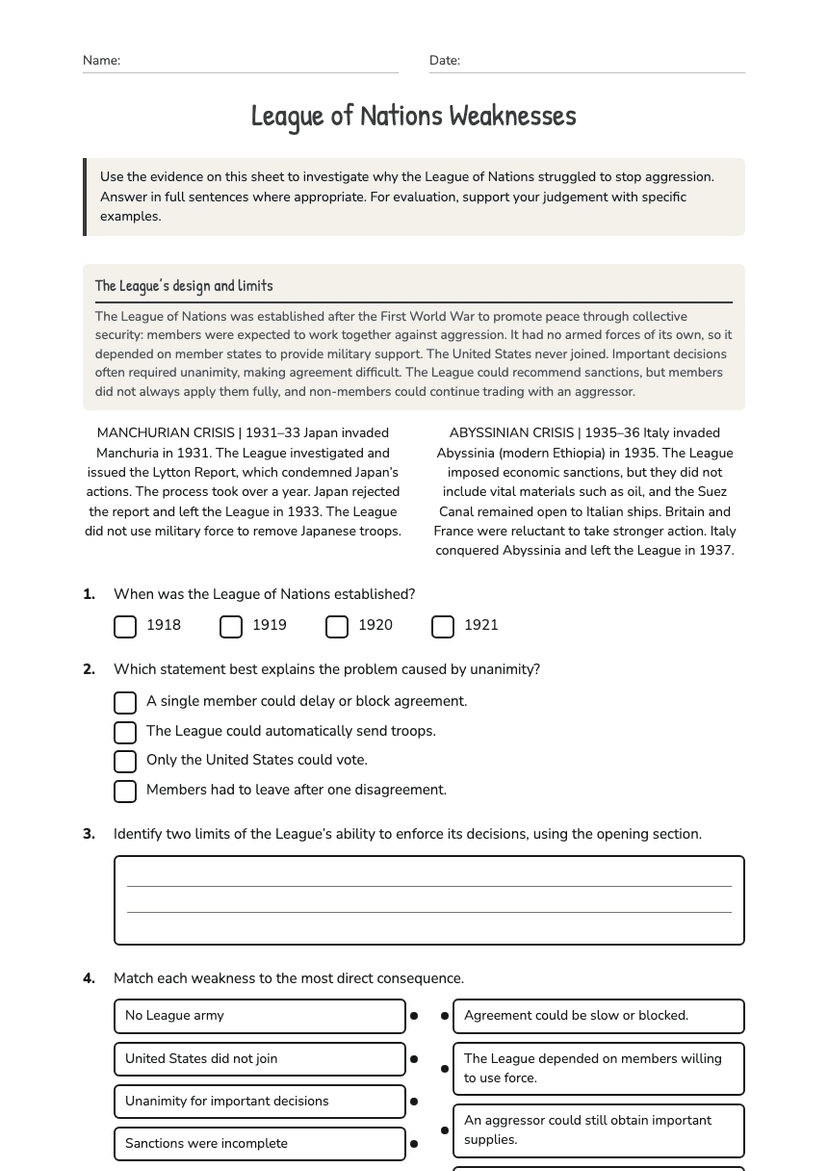
League of Nations Weaknesses
Free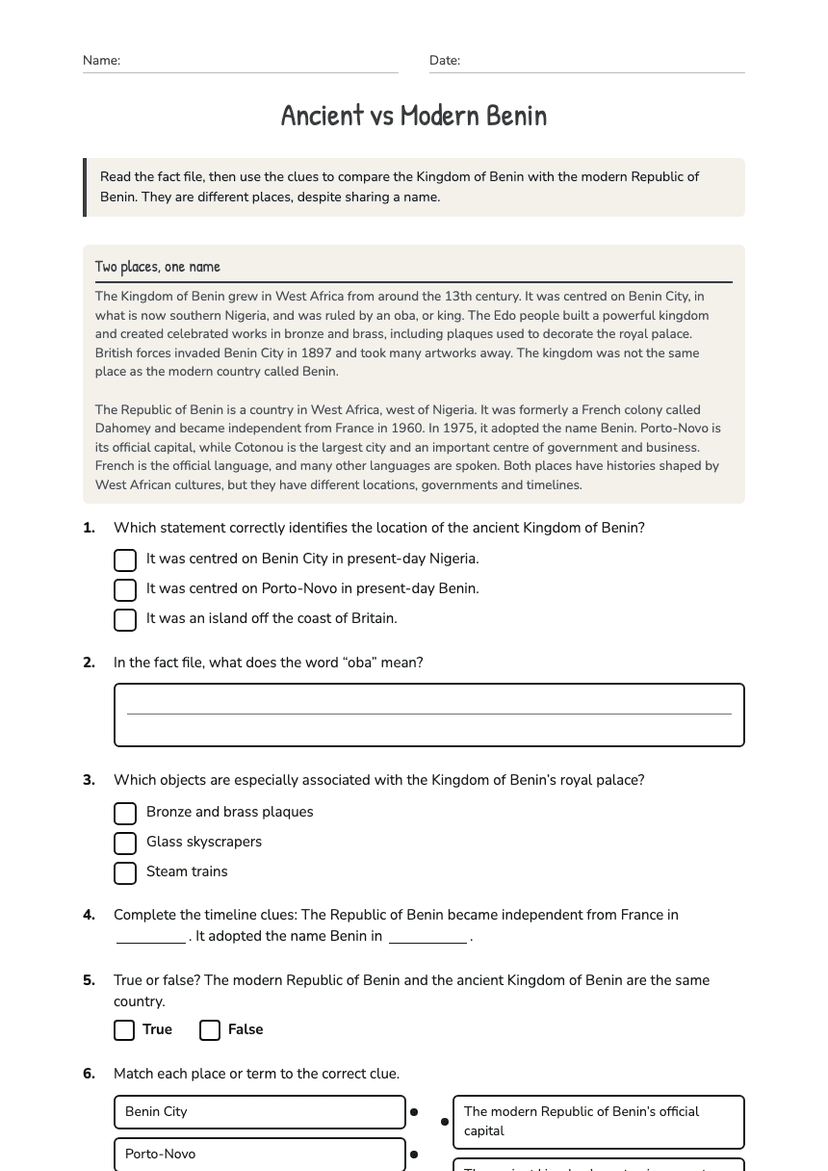
Ancient vs Modern Benin
Free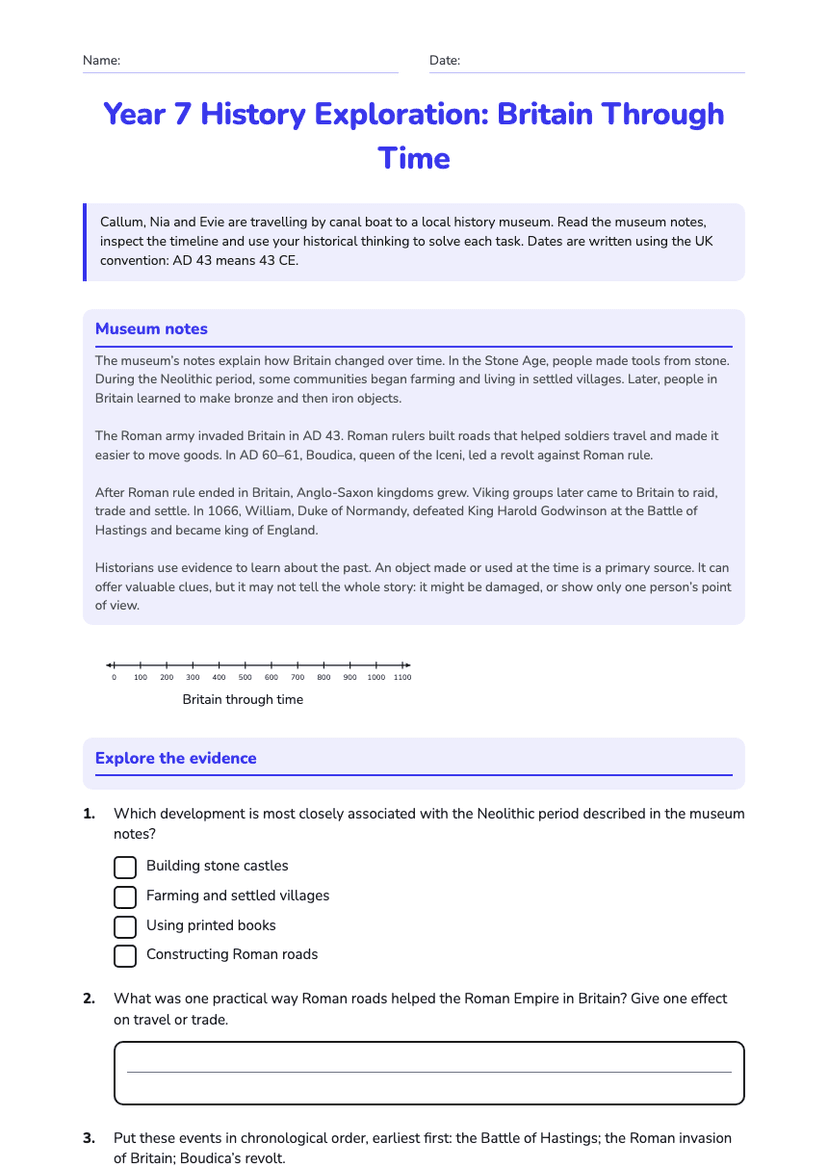
Year 7 History Exploration: Britain Through Time
Free
Norman Origins and Timeline
Free
Christmas Truce 1914
Free
League of Nations Effectiveness
Free
Loyalty in Freedom's Fight
Free