Hoxton's Historical Development Worksheet
A free history worksheet ready for your classroom. Open in Kuraplan to grab the print-ready PDF, customize it for your students, or generate a fresh version in seconds.
Hoxton's Historical Development Worksheet
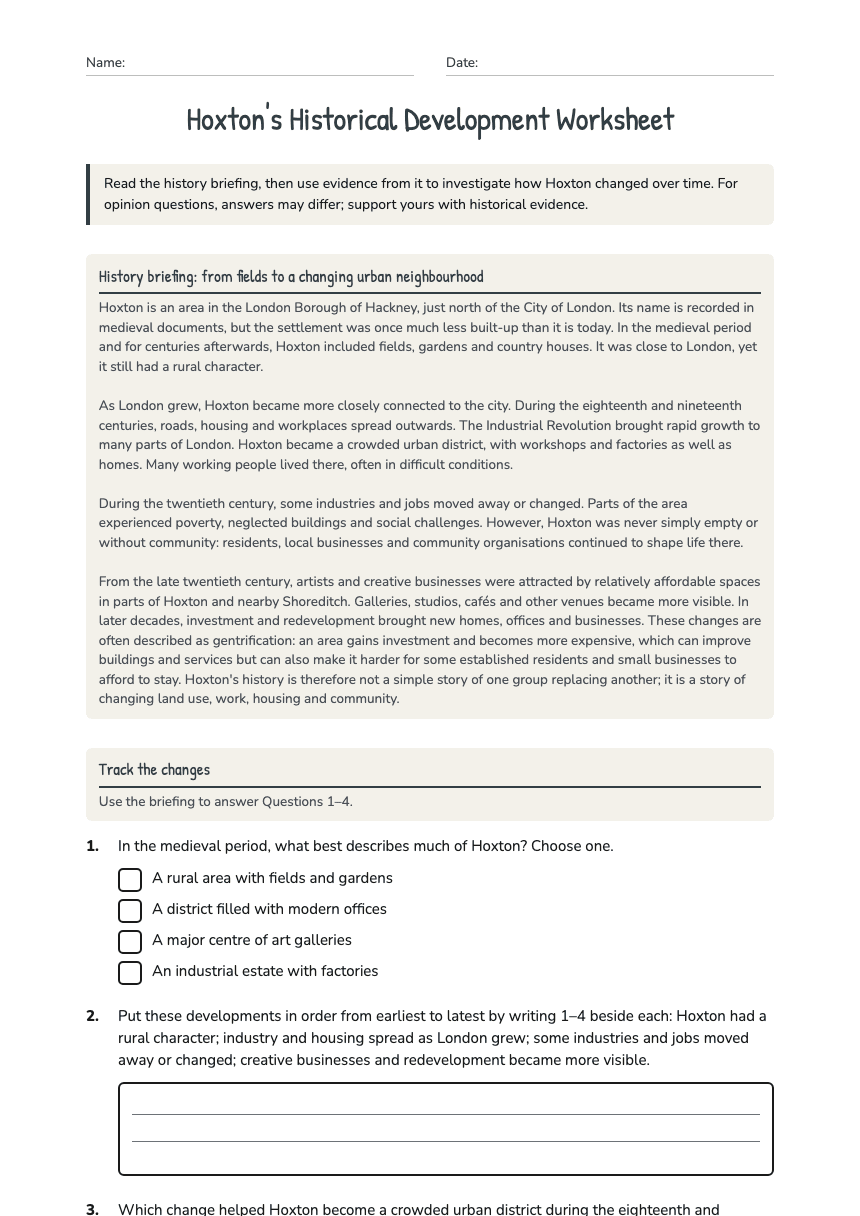
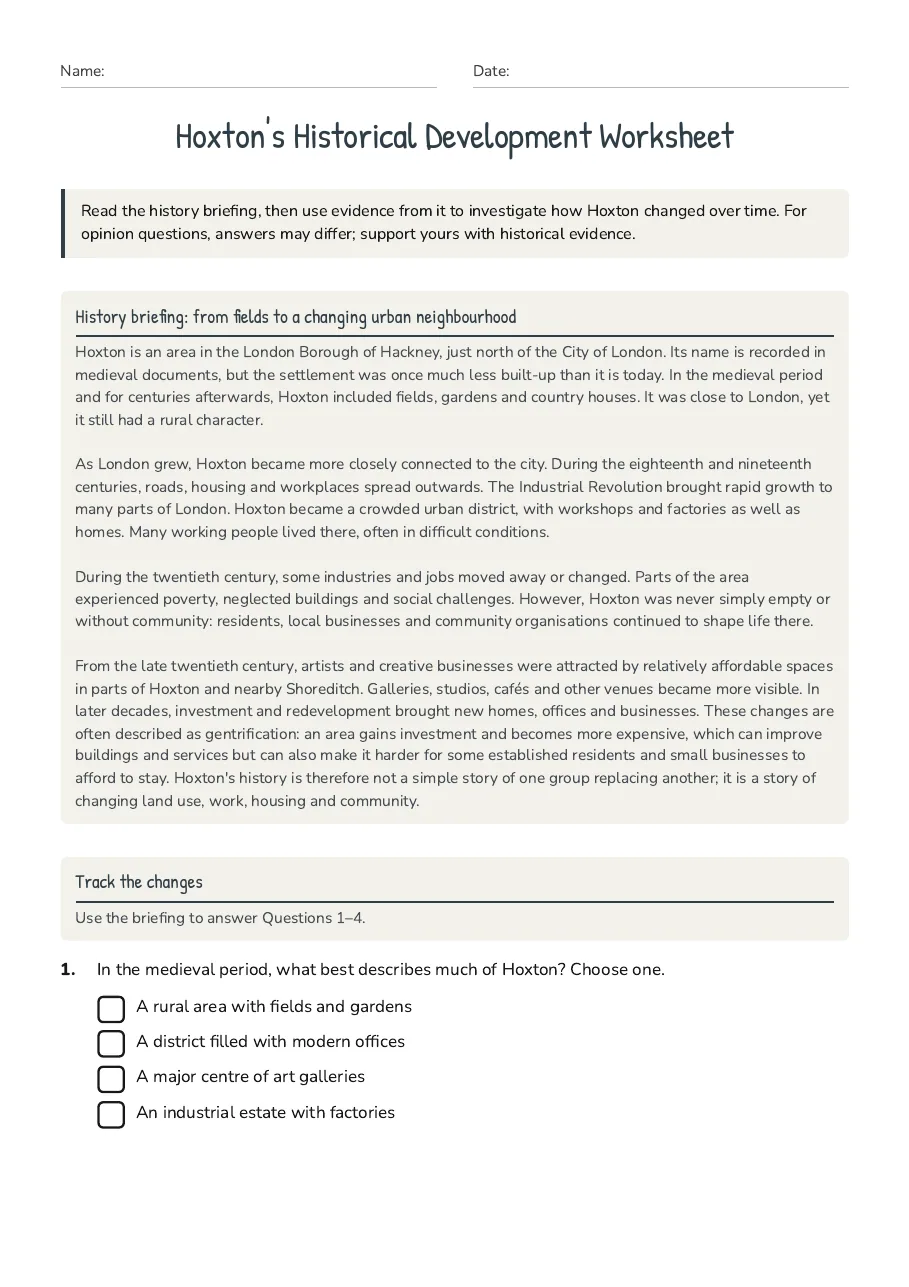
History briefing: from fields to a changing urban neighbourhood
Hoxton is an area in the London Borough of Hackney, just north of the City of London. Its name is recorded in medieval documents, but the settlement was once much less built-up than it is today. In the medieval period and for centuries afterwards, Hoxton included fields, gardens and country houses. It was close to London, yet it still had a rural character. As London grew, Hoxton became more closely connected to the city. During the eighteenth and nineteenth centuries, roads, housing and workplaces spread outwards. The Industrial Revolution brought rapid growth to many parts of London. Hoxton became a crowded urban district, with workshops and factories as well as homes. Many working people lived there, often in difficult conditions. During the twentieth century, some industries and jobs moved away or changed. Parts of the area experienced poverty, neglected buildings and social challenges. However, Hoxton was never simply empty or without community: residents, local businesses and community organisations continued to shape life there. From the late twentieth century, artists and creative businesses were attracted by relatively affordable spaces in parts of Hoxton and nearby Shoreditch. Galleries, studios, cafés and other venues became more visible. In later decades, investment and redevelopment brought new homes, offices and businesses. These changes are often described as gentrification: an area gains investment and becomes more expensive, which can improve buildings and services but can also make it harder for some established residents and small businesses to afford to stay. Hoxton's history is therefore not a simple story of one group replacing another; it is a story of changing land use, work, housing and community.
Track the changes
Use the briefing to answer Questions 1–4.
- A rural area with fields and gardens
- A district filled with modern offices
- A major centre of art galleries
- An industrial estate with factories
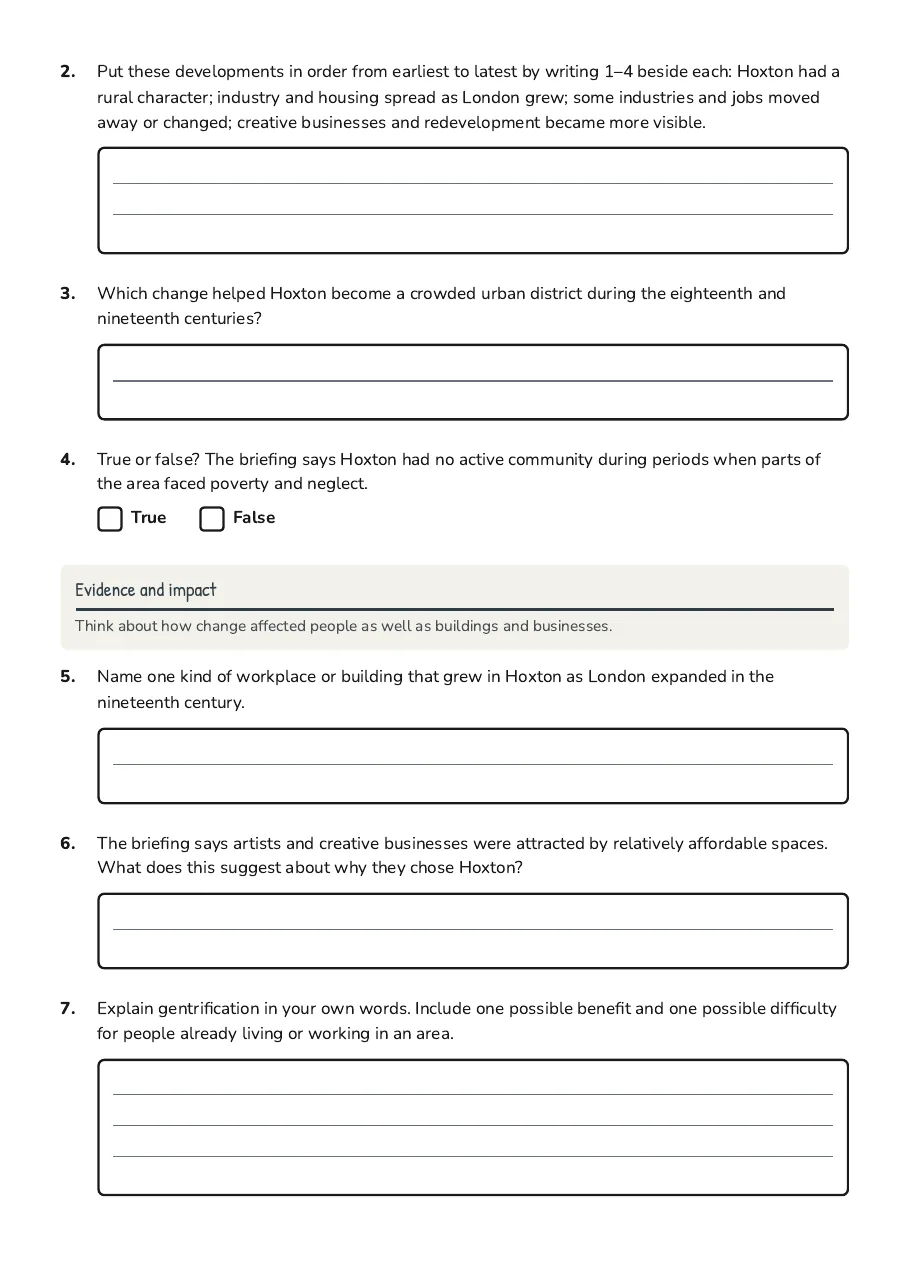
Evidence and impact
Think about how change affected people as well as buildings and businesses.
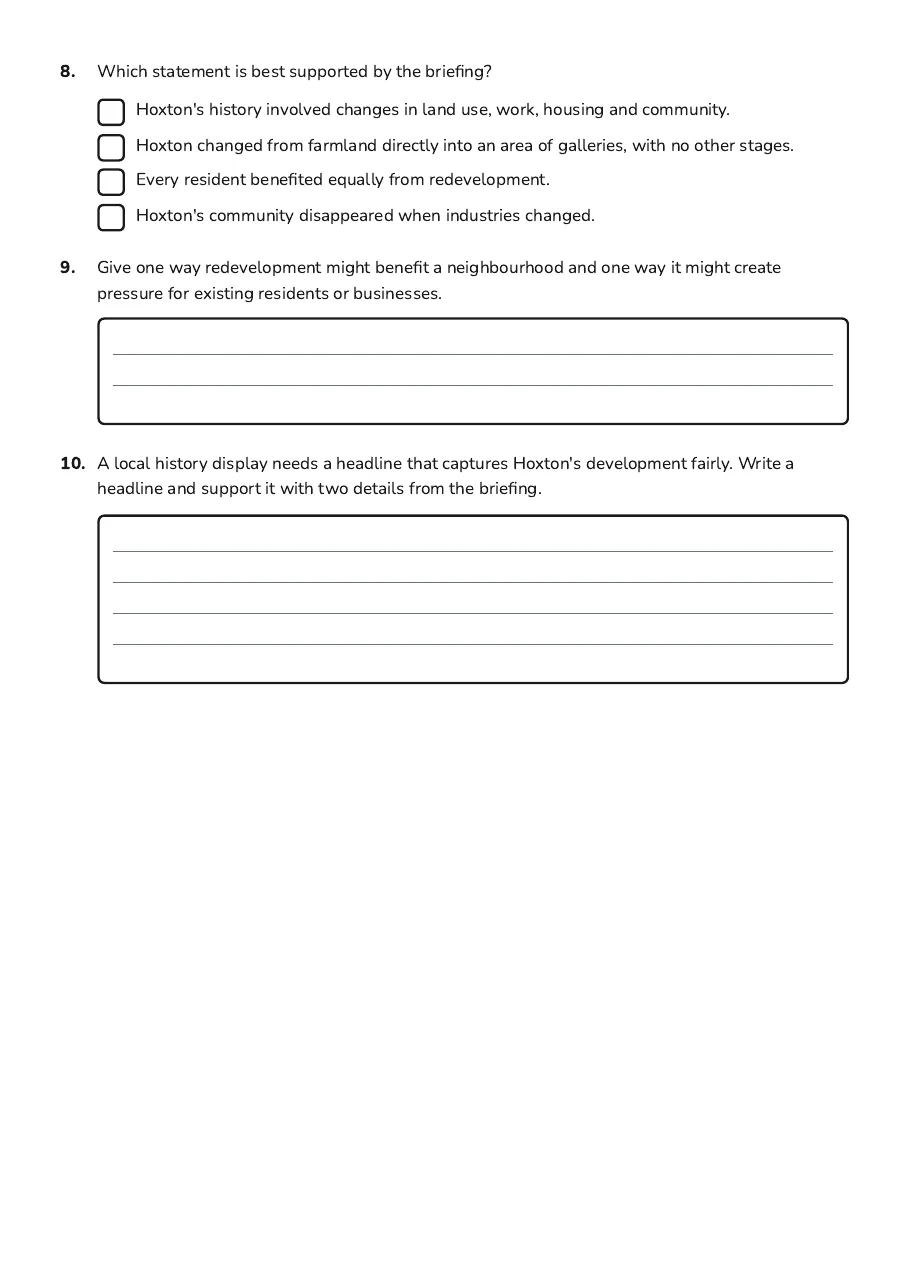
- Hoxton's history involved changes in land use, work, housing and community.
- Hoxton changed from farmland directly into an area of galleries, with no other stages.
- Every resident benefited equally from redevelopment.
- Hoxton's community disappeared when industries changed.
3 printable pages
Page 1
Page 2
Page 3
About This Worksheet
Free in Kuraplan
Sign up free, grab the PDF, and customize it for your class.
Print-Ready
Formatted for standard paper. Clean layout, easy to read.
AI-Generated
Created with Kuraplan's AI, designed for real classroom use.
For Teachers & Parents
Use in classrooms, for homework, tutoring, or homeschool.
Need a custom version of this worksheet?
Kuraplan's AI generates custom worksheets in seconds — differentiated for every learner, aligned to your curriculum.
Generate Custom Worksheets — FreeMore History Worksheets
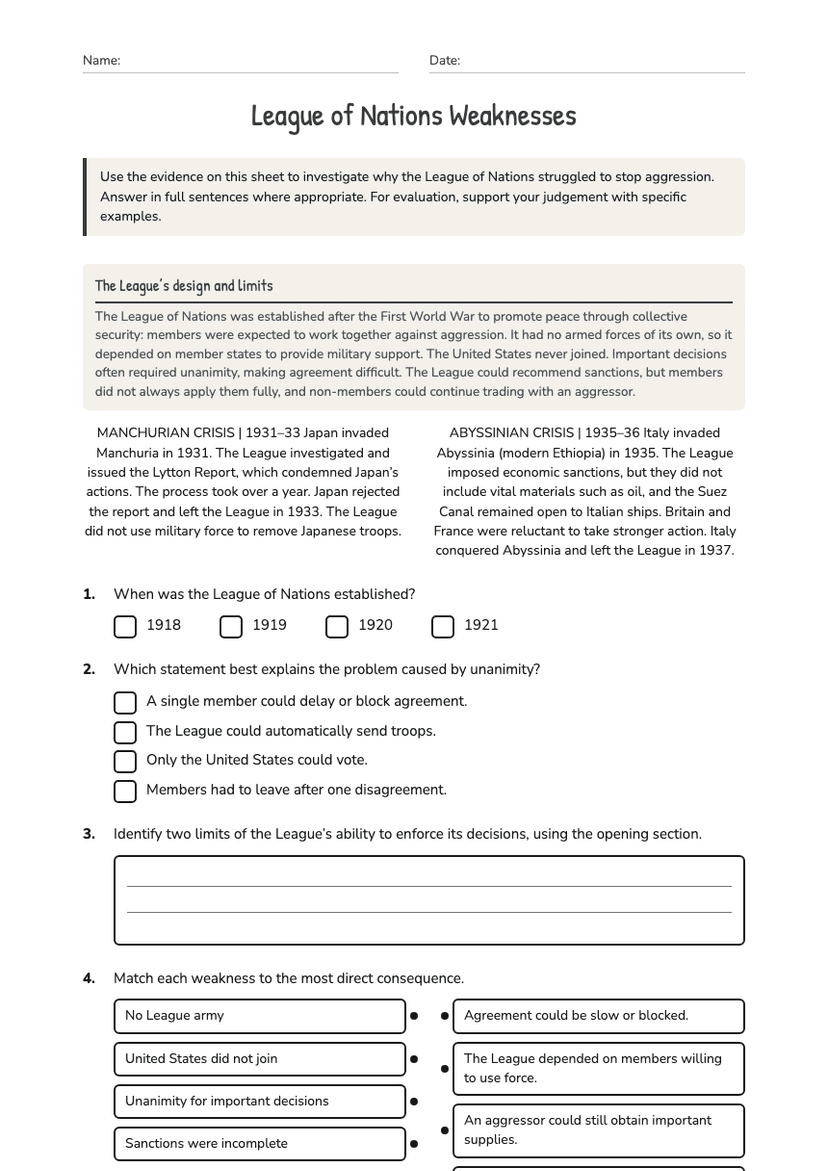
League of Nations Weaknesses
Free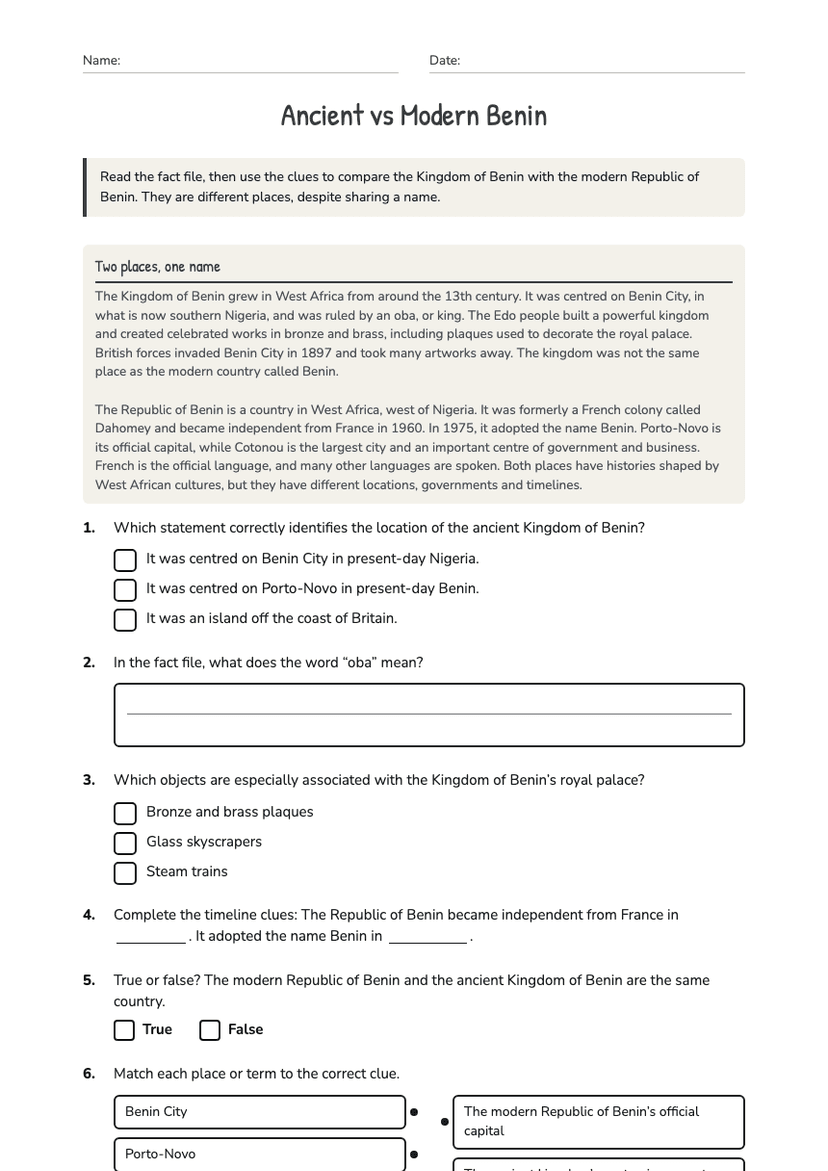
Ancient vs Modern Benin
Free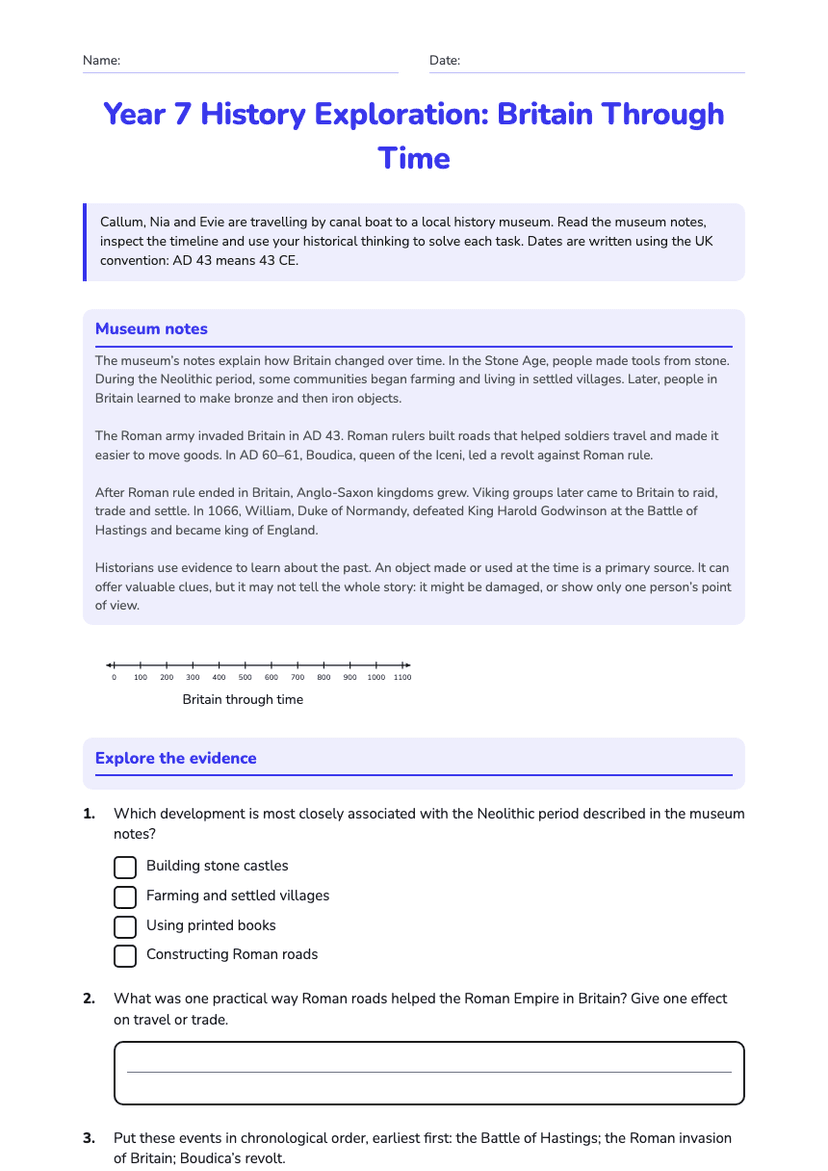
Year 7 History Exploration: Britain Through Time
Free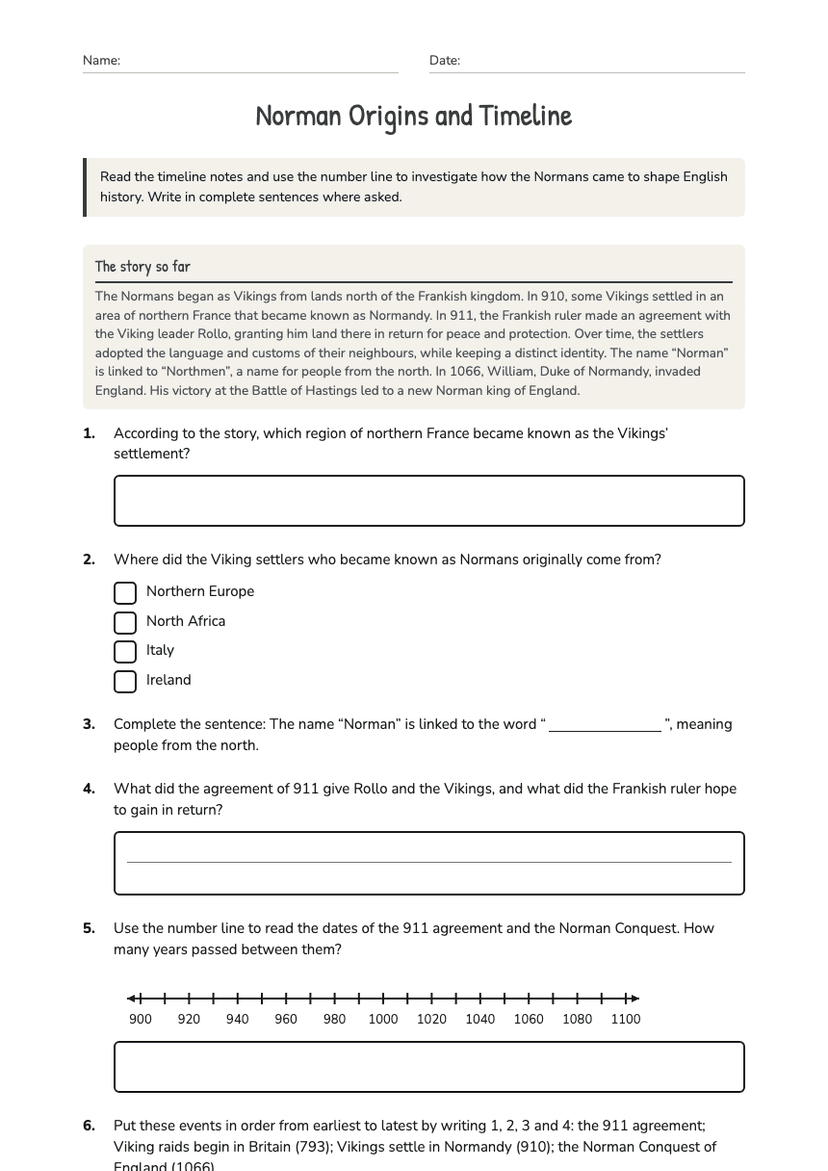
Norman Origins and Timeline
Free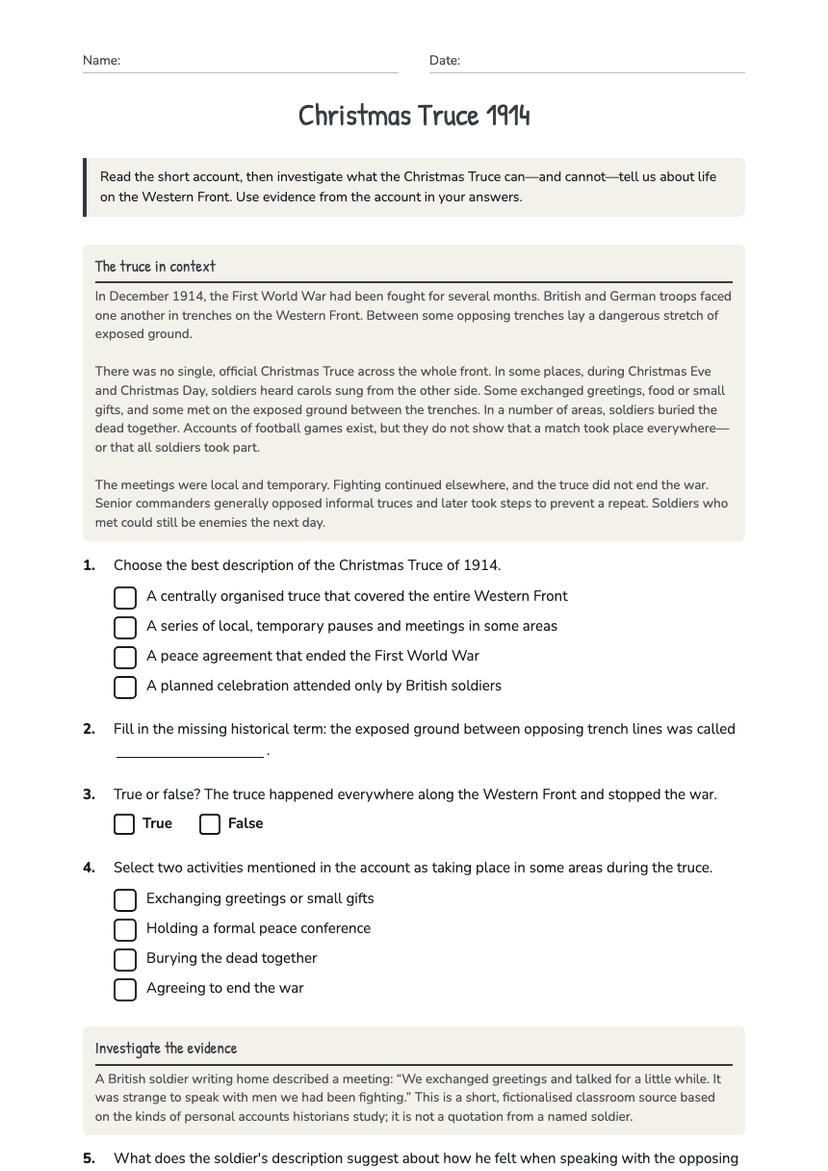
Christmas Truce 1914
Free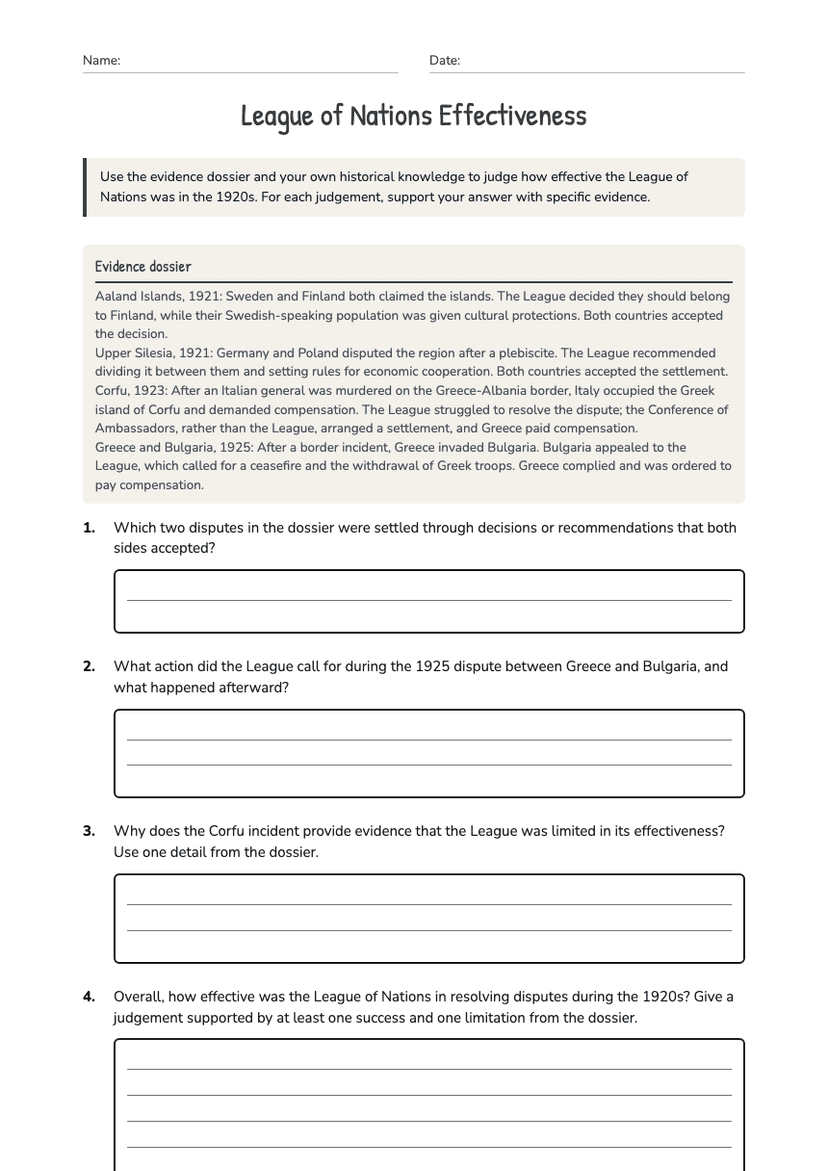
League of Nations Effectiveness
Free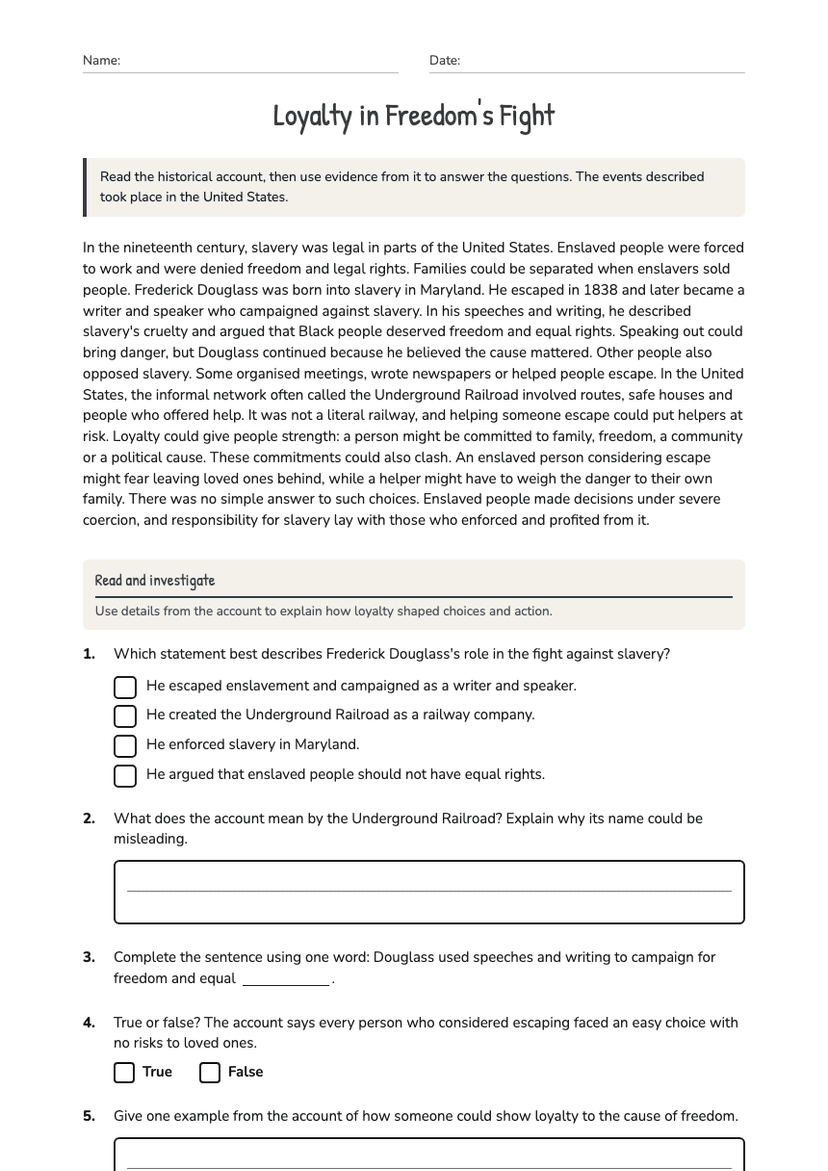
Loyalty in Freedom's Fight
Free