League of Nations Analysis
A free history worksheet ready for your classroom. Open in Kuraplan to grab the print-ready PDF, customize it for your students, or generate a fresh version in seconds.
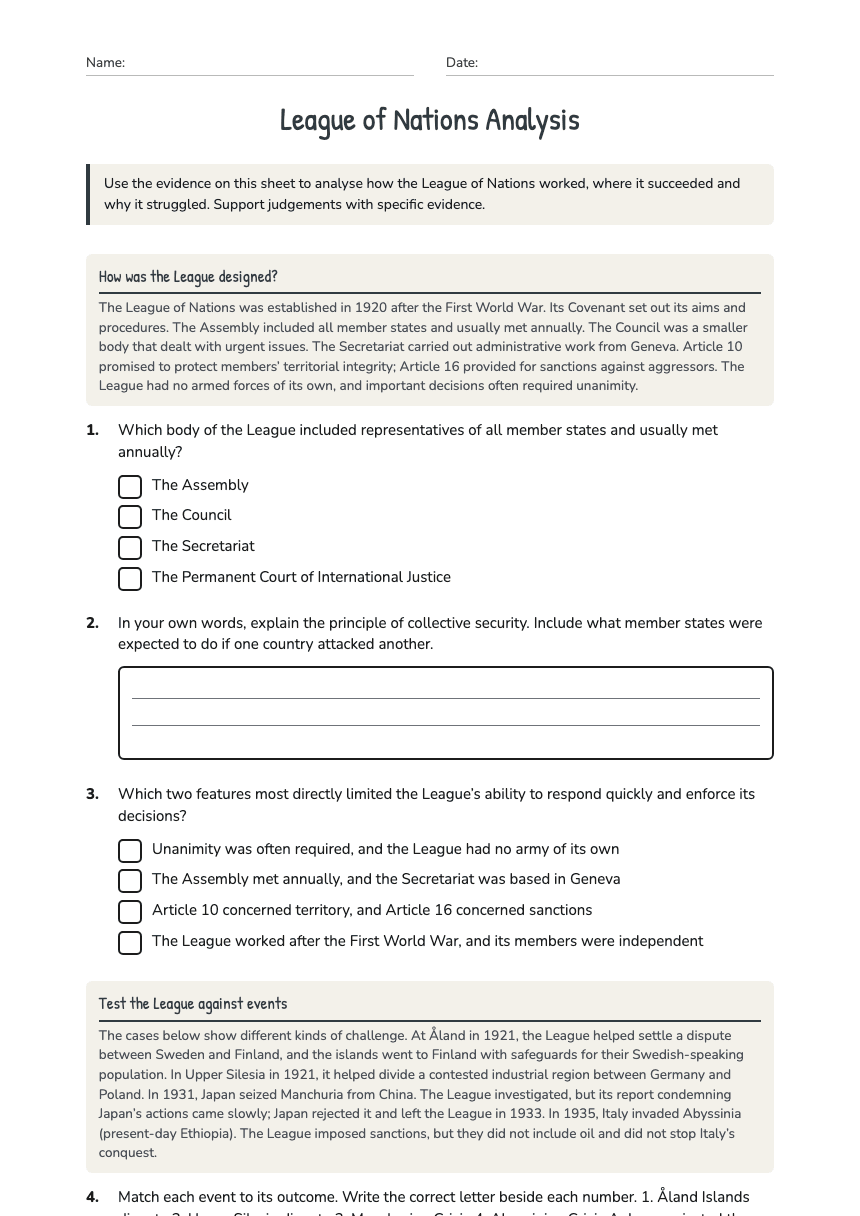
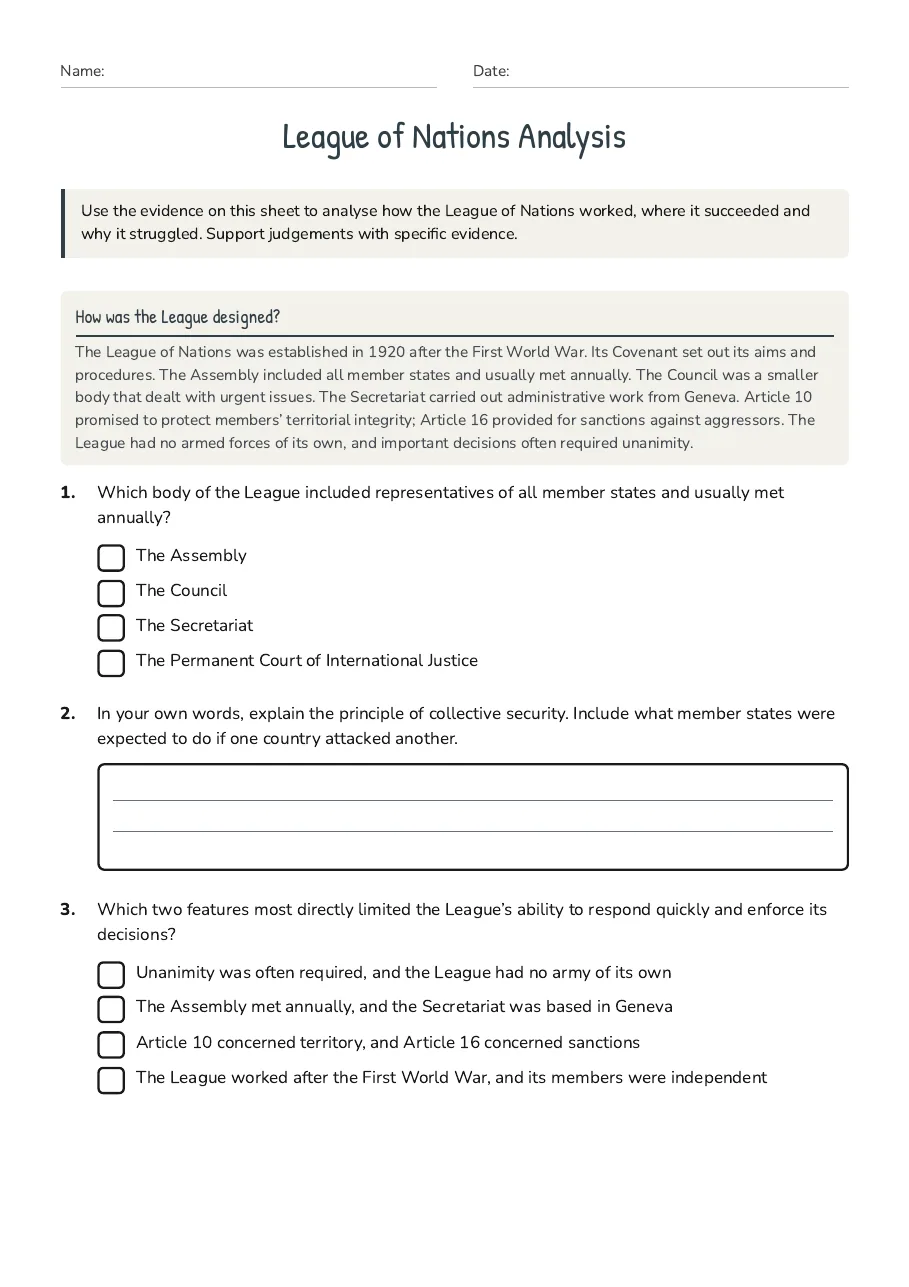
League of Nations Analysis
How was the League designed?
The League of Nations was established in 1920 after the First World War. Its Covenant set out its aims and procedures. The Assembly included all member states and usually met annually. The Council was a smaller body that dealt with urgent issues. The Secretariat carried out administrative work from Geneva. Article 10 promised to protect members’ territorial integrity; Article 16 provided for sanctions against aggressors. The League had no armed forces of its own, and important decisions often required unanimity.
- The Assembly
- The Council
- The Secretariat
- The Permanent Court of International Justice
- Unanimity was often required, and the League had no army of its own
- The Assembly met annually, and the Secretariat was based in Geneva
- Article 10 concerned territory, and Article 16 concerned sanctions
- The League worked after the First World War, and its members were independent
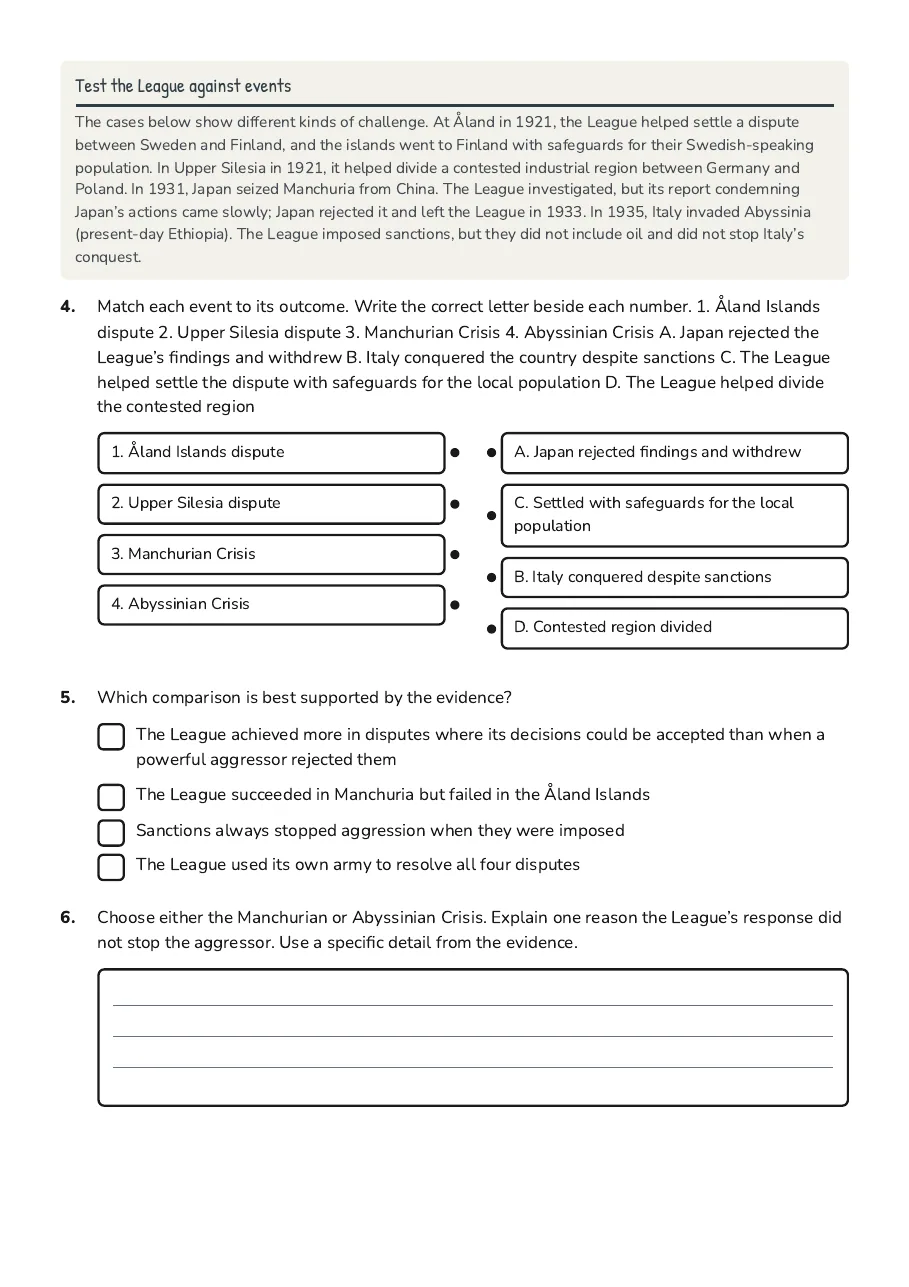
Test the League against events
The cases below show different kinds of challenge. At Åland in 1921, the League helped settle a dispute between Sweden and Finland, and the islands went to Finland with safeguards for their Swedish-speaking population. In Upper Silesia in 1921, it helped divide a contested industrial region between Germany and Poland. In 1931, Japan seized Manchuria from China. The League investigated, but its report condemning Japan’s actions came slowly; Japan rejected it and left the League in 1933. In 1935, Italy invaded Abyssinia (present-day Ethiopia). The League imposed sanctions, but they did not include oil and did not stop Italy’s conquest.
- 1. Åland Islands dispute
- 2. Upper Silesia dispute
- 3. Manchurian Crisis
- 4. Abyssinian Crisis
- A. Japan rejected findings and withdrew
- C. Settled with safeguards for the local population
- B. Italy conquered despite sanctions
- D. Contested region divided
- The League achieved more in disputes where its decisions could be accepted than when a powerful aggressor rejected them
- The League succeeded in Manchuria but failed in the Åland Islands
- Sanctions always stopped aggression when they were imposed
- The League used its own army to resolve all four disputes
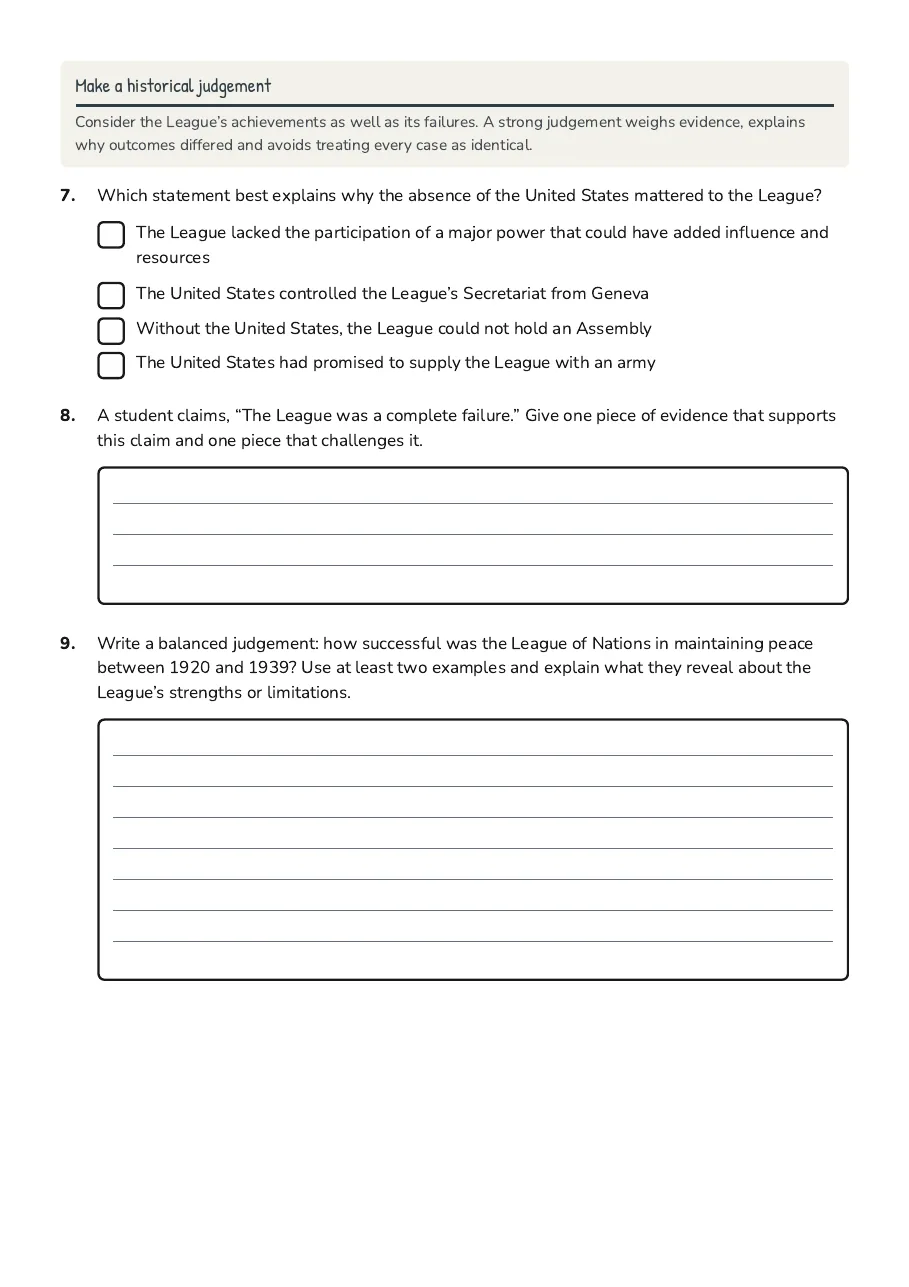
Make a historical judgement
Consider the League’s achievements as well as its failures. A strong judgement weighs evidence, explains why outcomes differed and avoids treating every case as identical.
- The League lacked the participation of a major power that could have added influence and resources
- The United States controlled the League’s Secretariat from Geneva
- Without the United States, the League could not hold an Assembly
- The United States had promised to supply the League with an army
3 printable pages
Page 1
Page 2
Page 3
About This Worksheet
Free in Kuraplan
Sign up free, grab the PDF, and customize it for your class.
Print-Ready
Formatted for standard paper. Clean layout, easy to read.
AI-Generated
Created with Kuraplan's AI, designed for real classroom use.
For Teachers & Parents
Use in classrooms, for homework, tutoring, or homeschool.
Need a custom version of this worksheet?
Kuraplan's AI generates custom worksheets in seconds — differentiated for every learner, aligned to your curriculum.
Generate Custom Worksheets — FreeMore History Worksheets
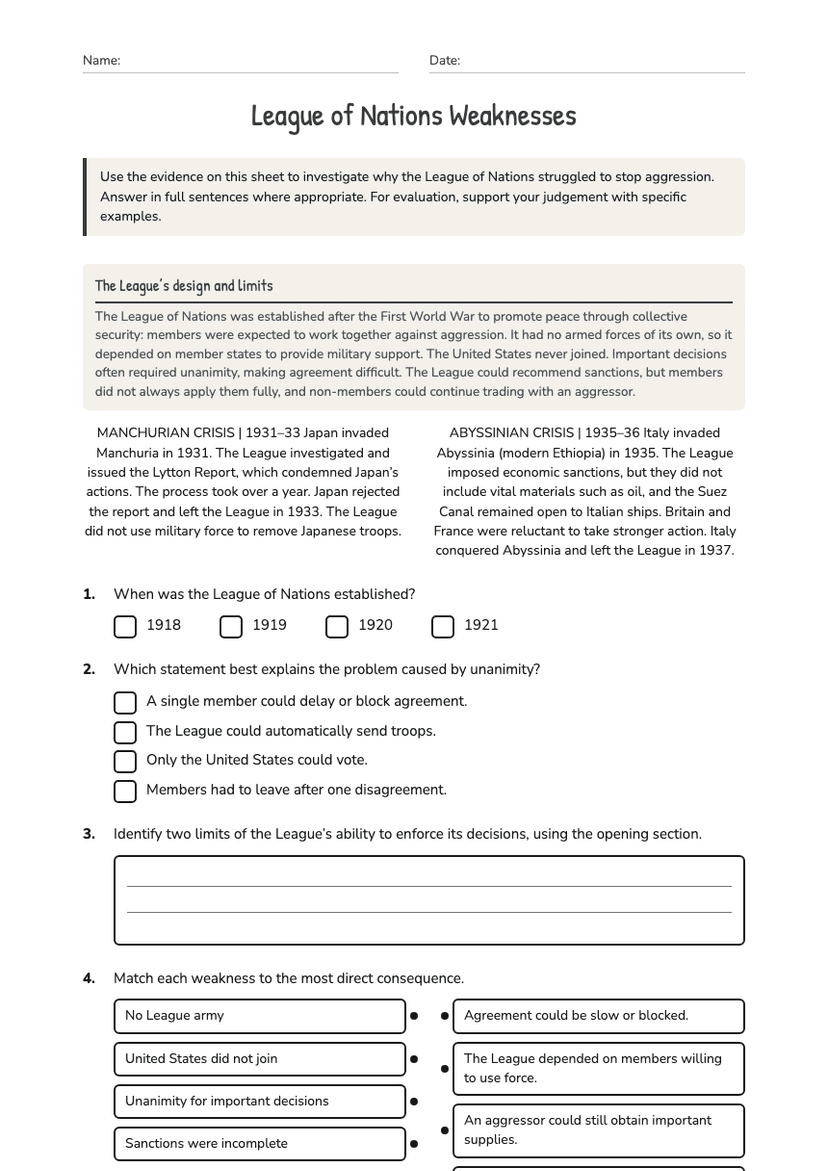
League of Nations Weaknesses
Free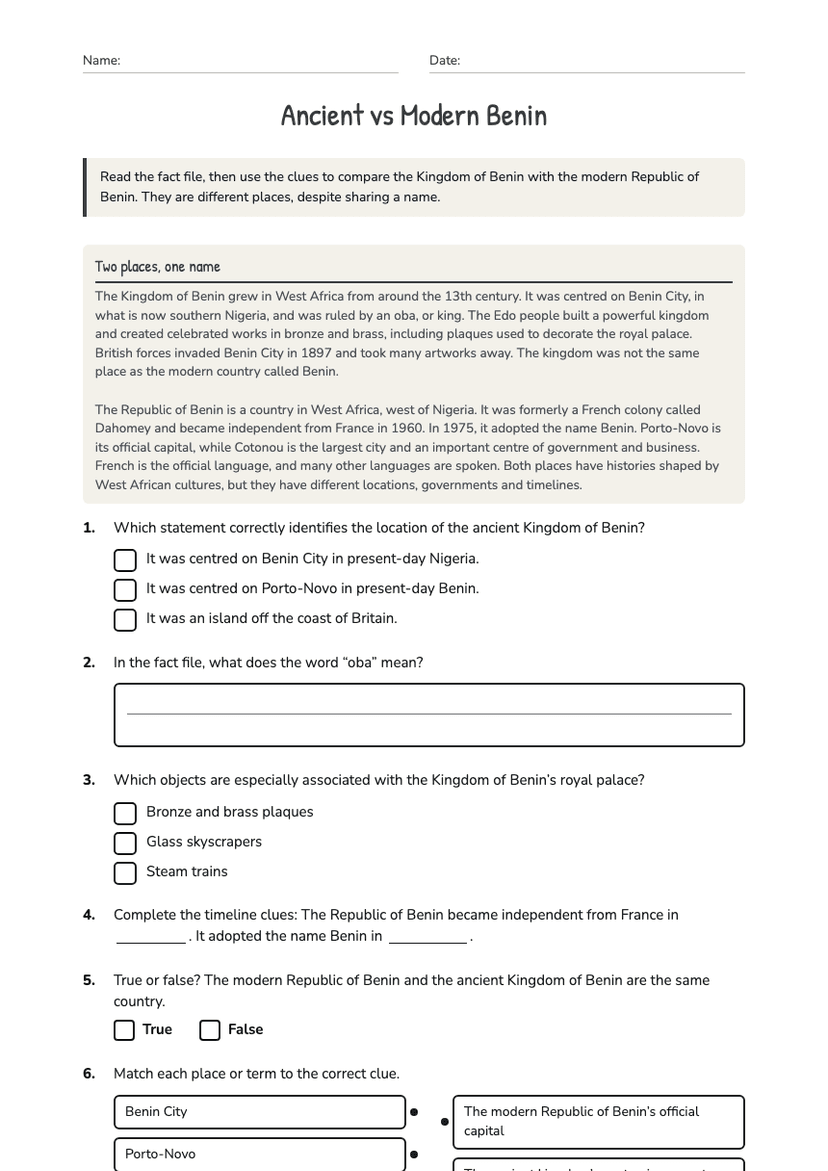
Ancient vs Modern Benin
Free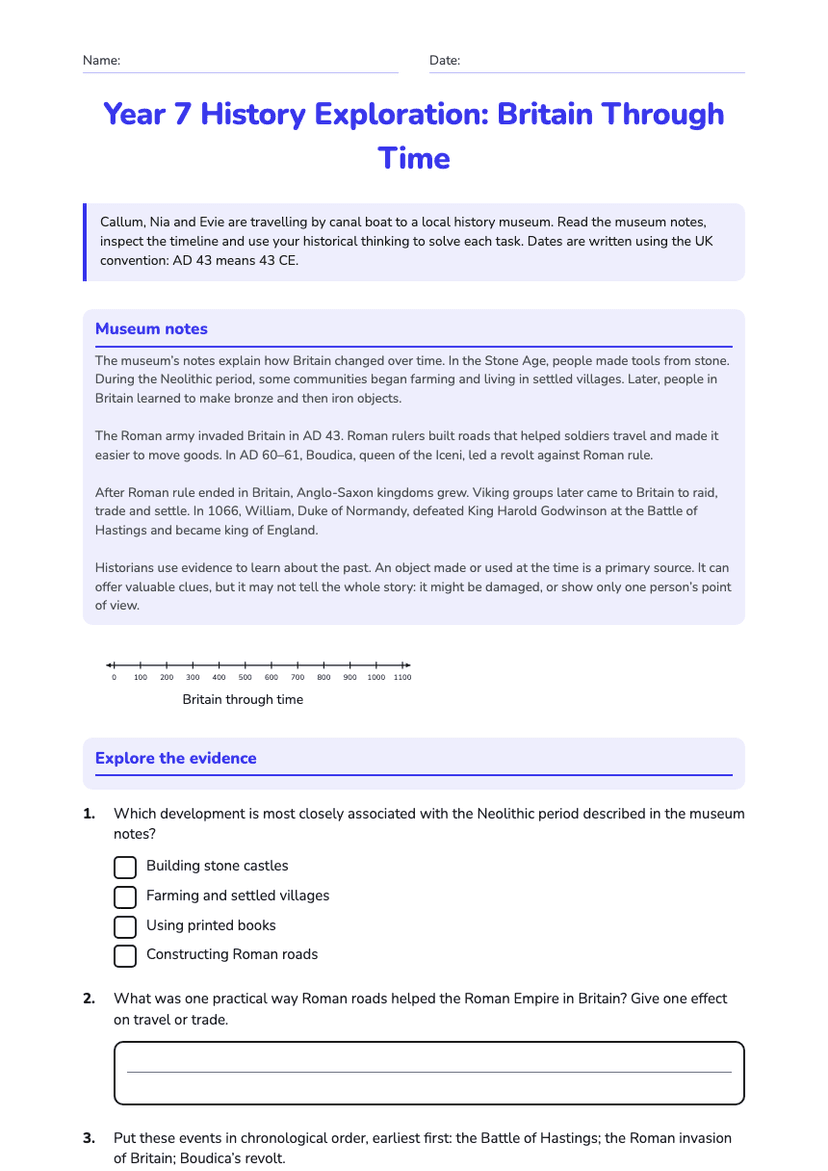
Year 7 History Exploration: Britain Through Time
Free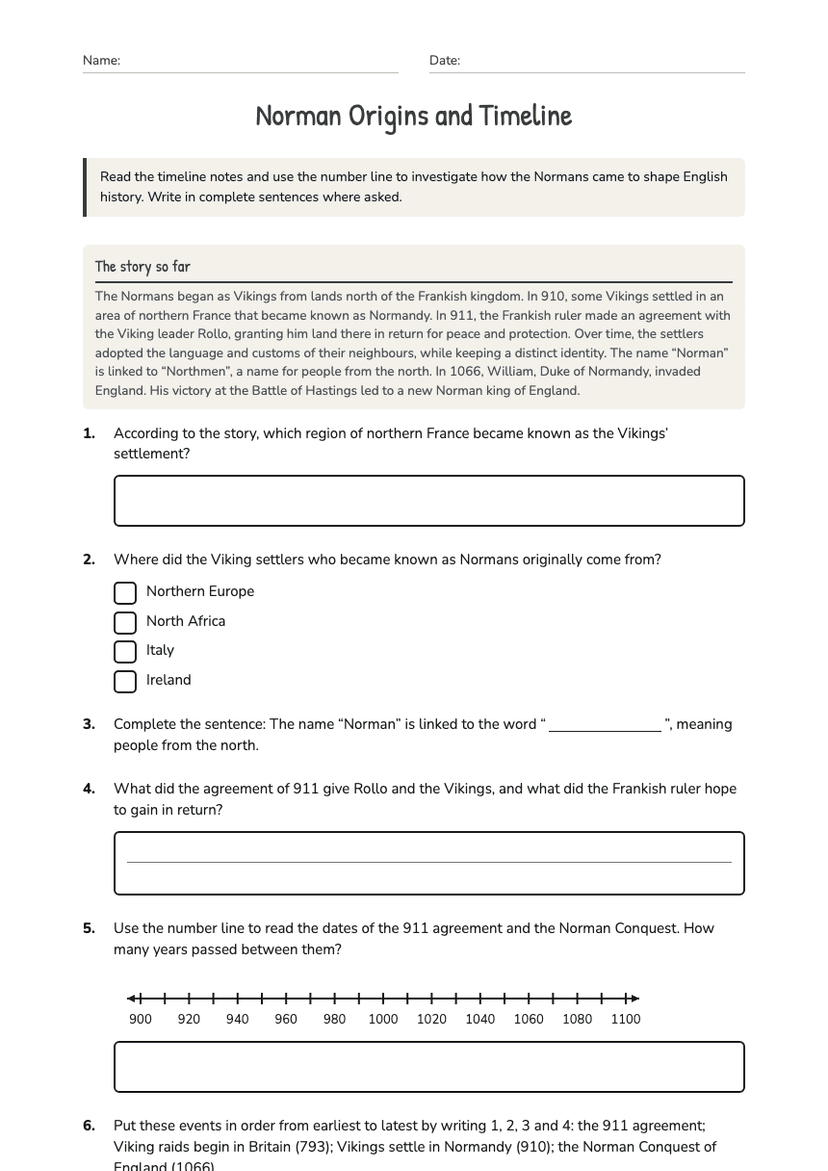
Norman Origins and Timeline
Free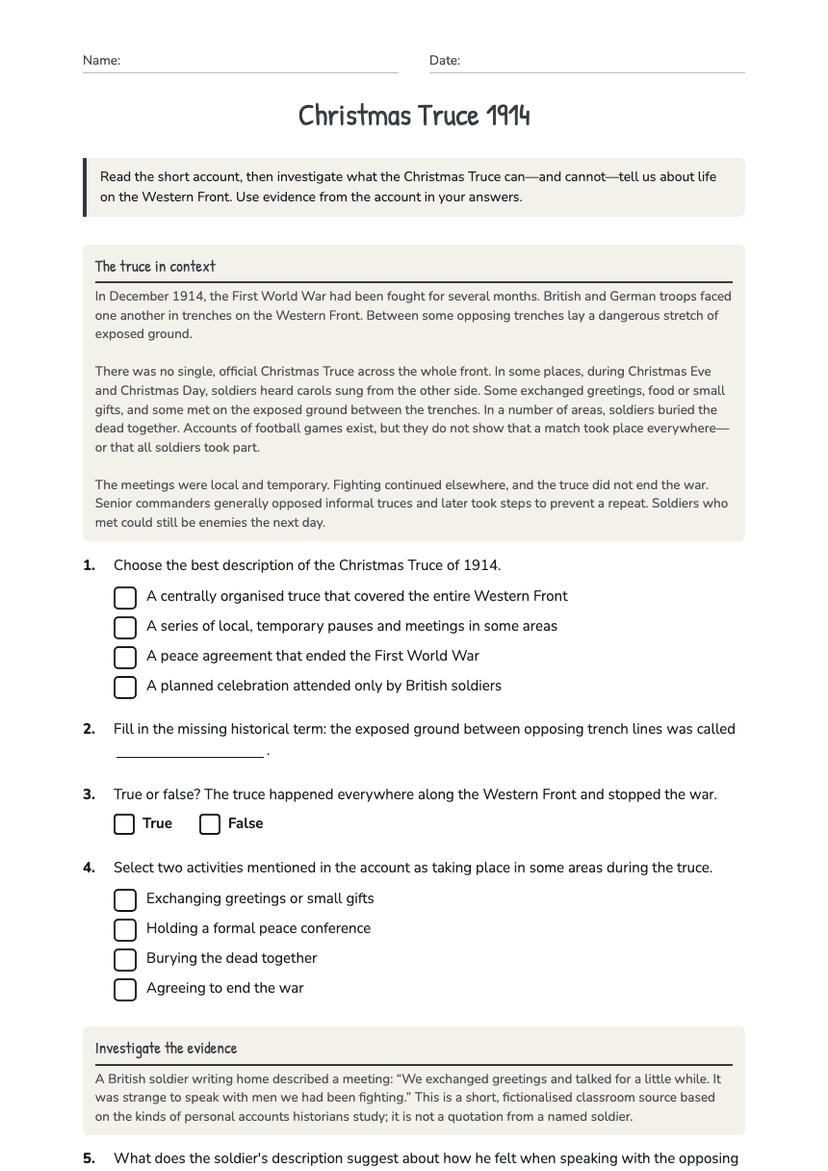
Christmas Truce 1914
Free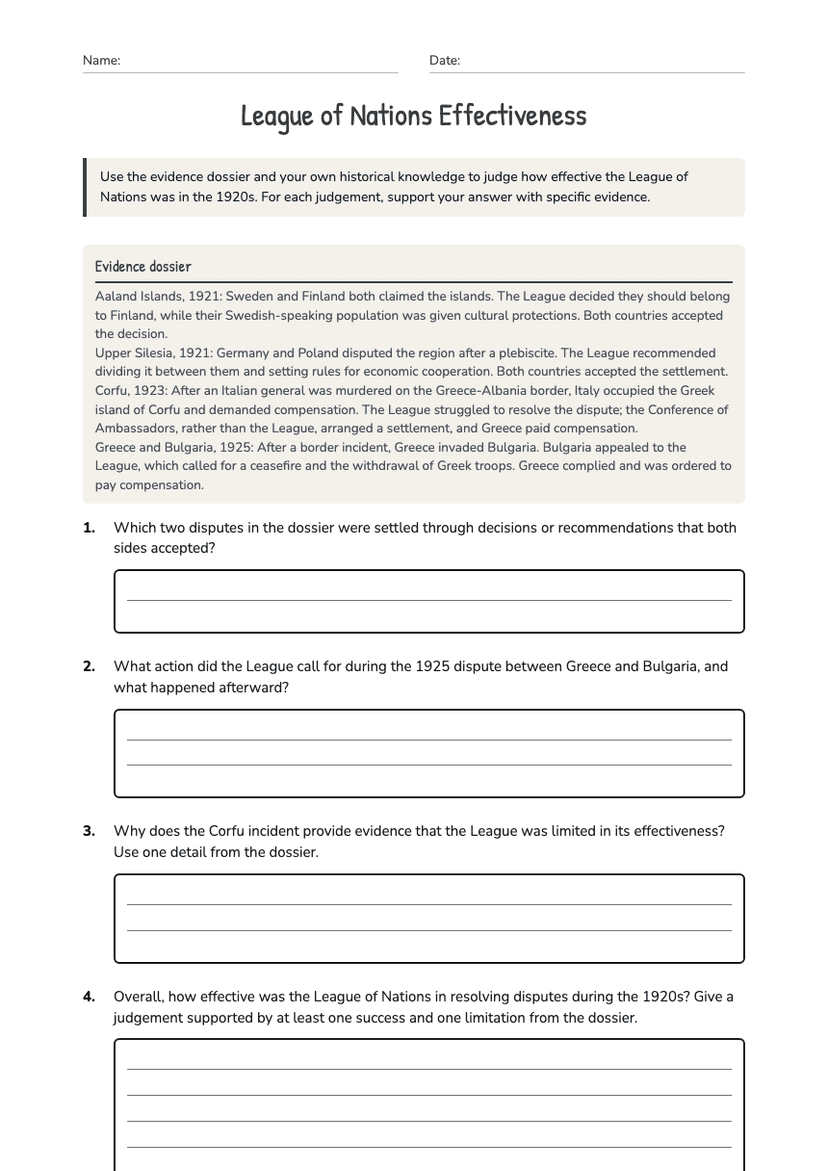
League of Nations Effectiveness
Free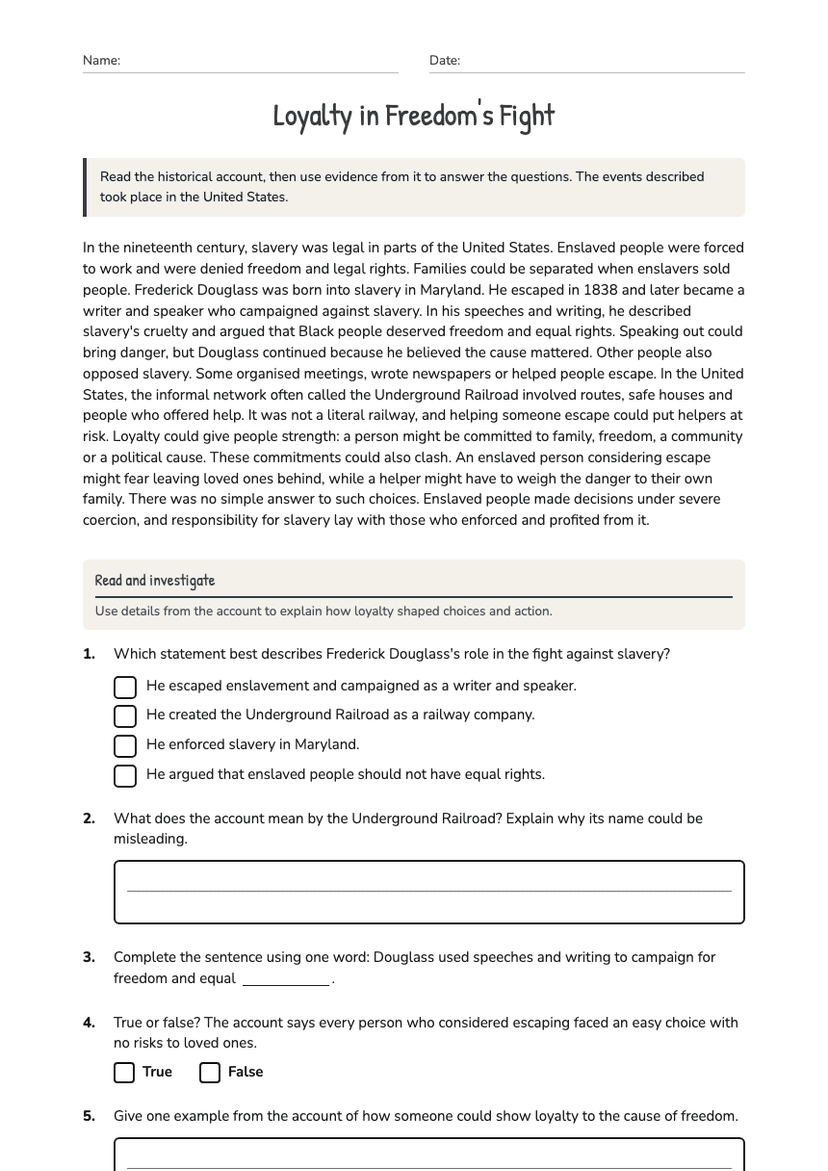
Loyalty in Freedom's Fight
Free