League of Nations Introduction
A free history worksheet ready for your classroom. Open in Kuraplan to grab the print-ready PDF, customize it for your students, or generate a fresh version in seconds.
League of Nations Introduction
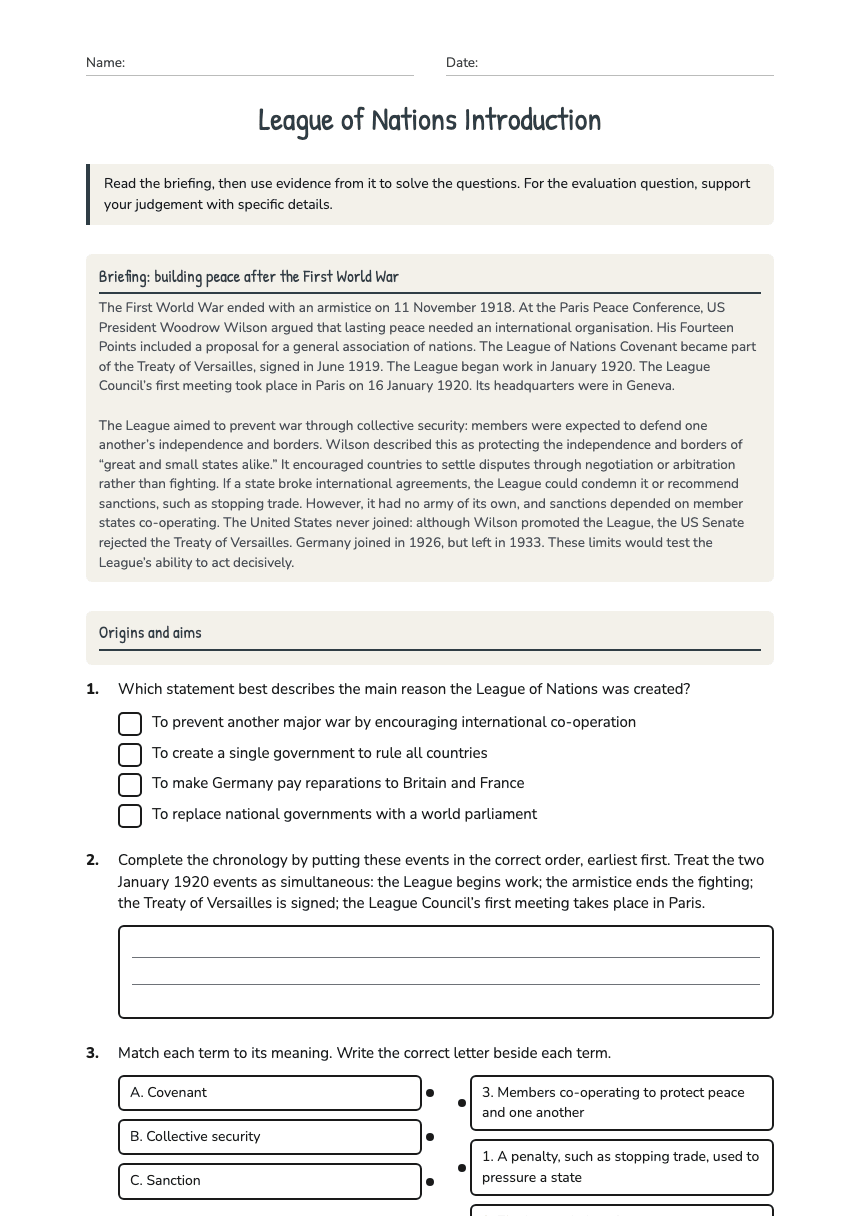
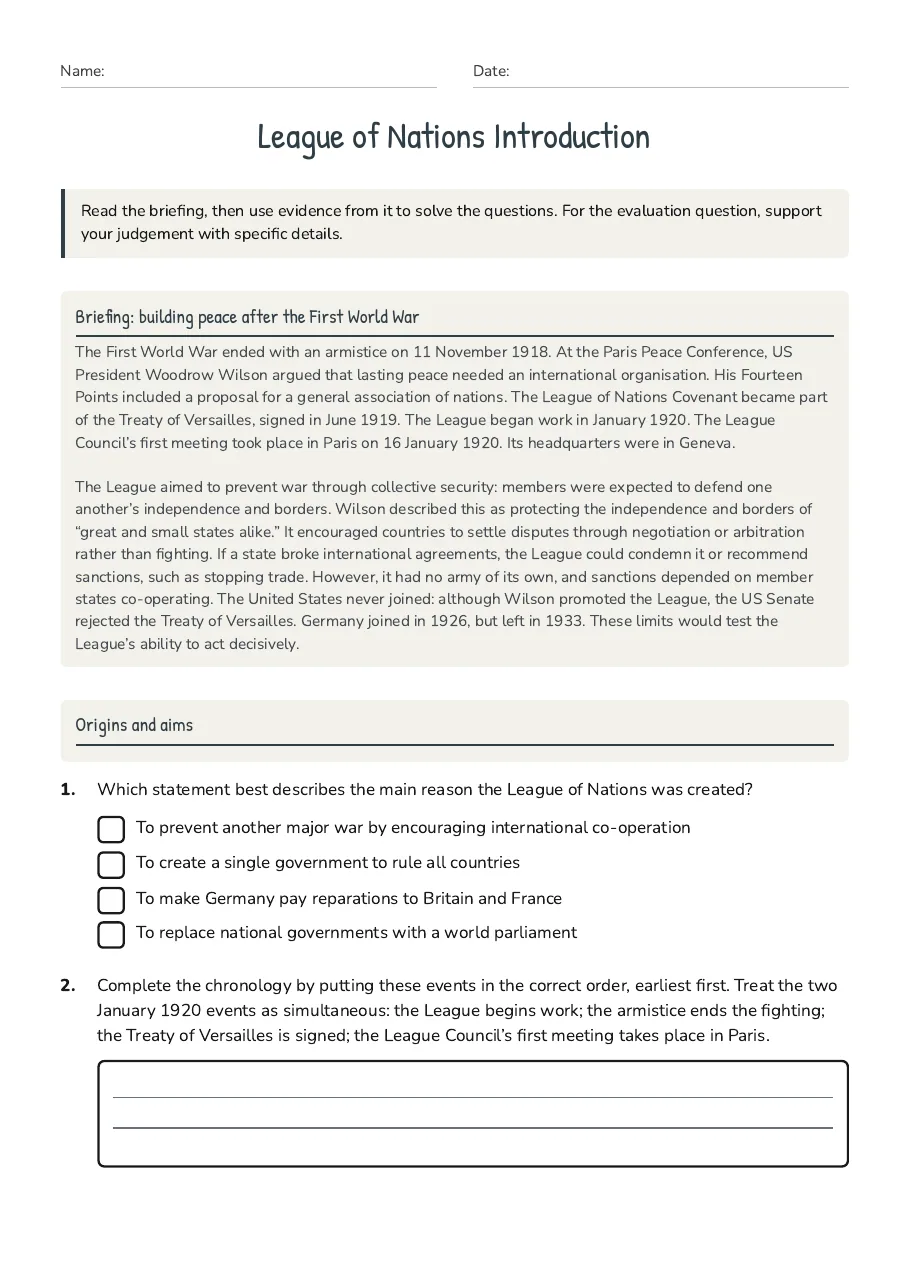
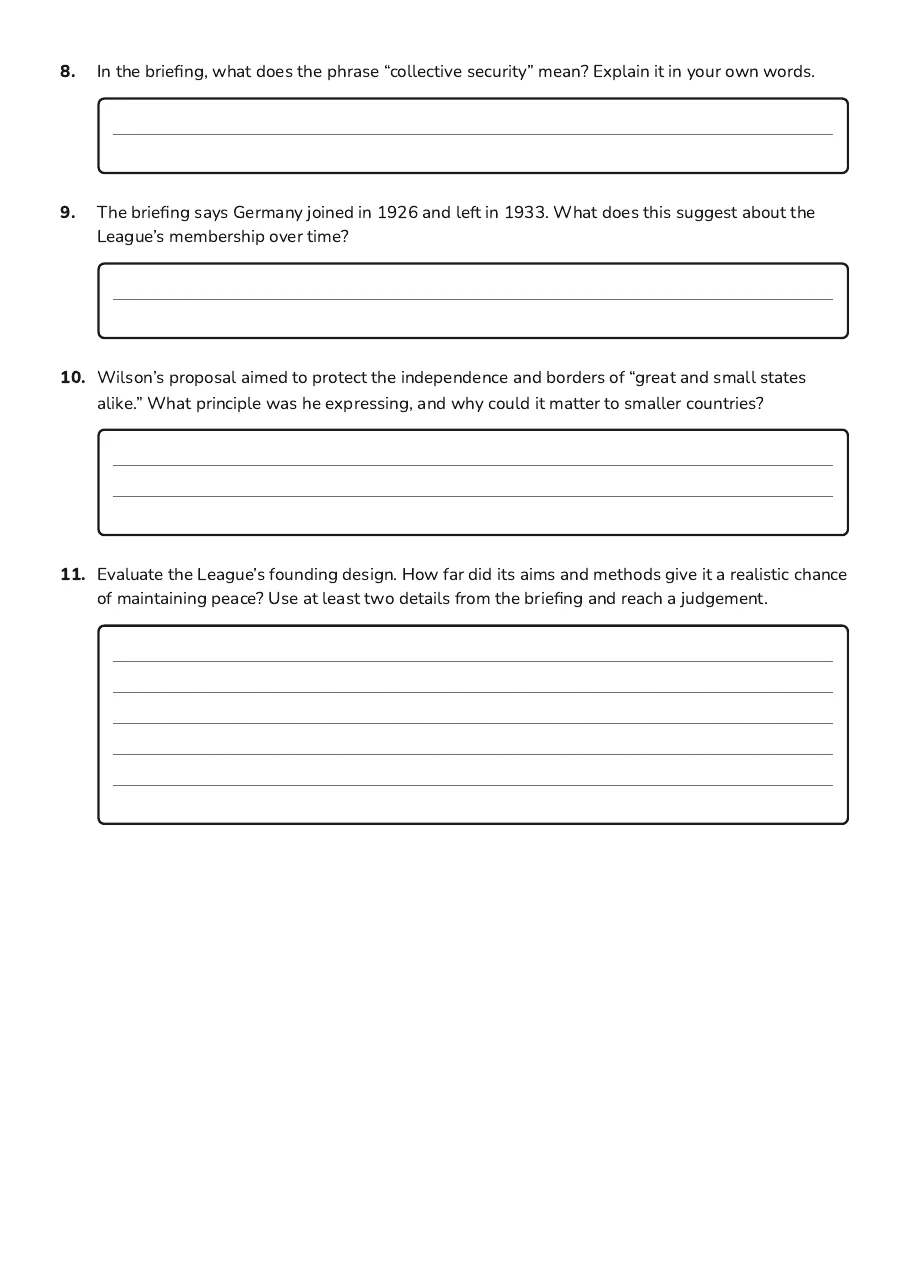
Briefing: building peace after the First World War
The First World War ended with an armistice on 11 November 1918. At the Paris Peace Conference, US President Woodrow Wilson argued that lasting peace needed an international organisation. His Fourteen Points included a proposal for a general association of nations. The League of Nations Covenant became part of the Treaty of Versailles, signed in June 1919. The League began work in January 1920. The League Council’s first meeting took place in Paris on 16 January 1920. Its headquarters were in Geneva. The League aimed to prevent war through collective security: members were expected to defend one another’s independence and borders. Wilson described this as protecting the independence and borders of “great and small states alike.” It encouraged countries to settle disputes through negotiation or arbitration rather than fighting. If a state broke international agreements, the League could condemn it or recommend sanctions, such as stopping trade. However, it had no army of its own, and sanctions depended on member states co-operating. The United States never joined: although Wilson promoted the League, the US Senate rejected the Treaty of Versailles. Germany joined in 1926, but left in 1933. These limits would test the League’s ability to act decisively.
Origins and aims
- To prevent another major war by encouraging international co-operation
- To create a single government to rule all countries
- To make Germany pay reparations to Britain and France
- To replace national governments with a world parliament
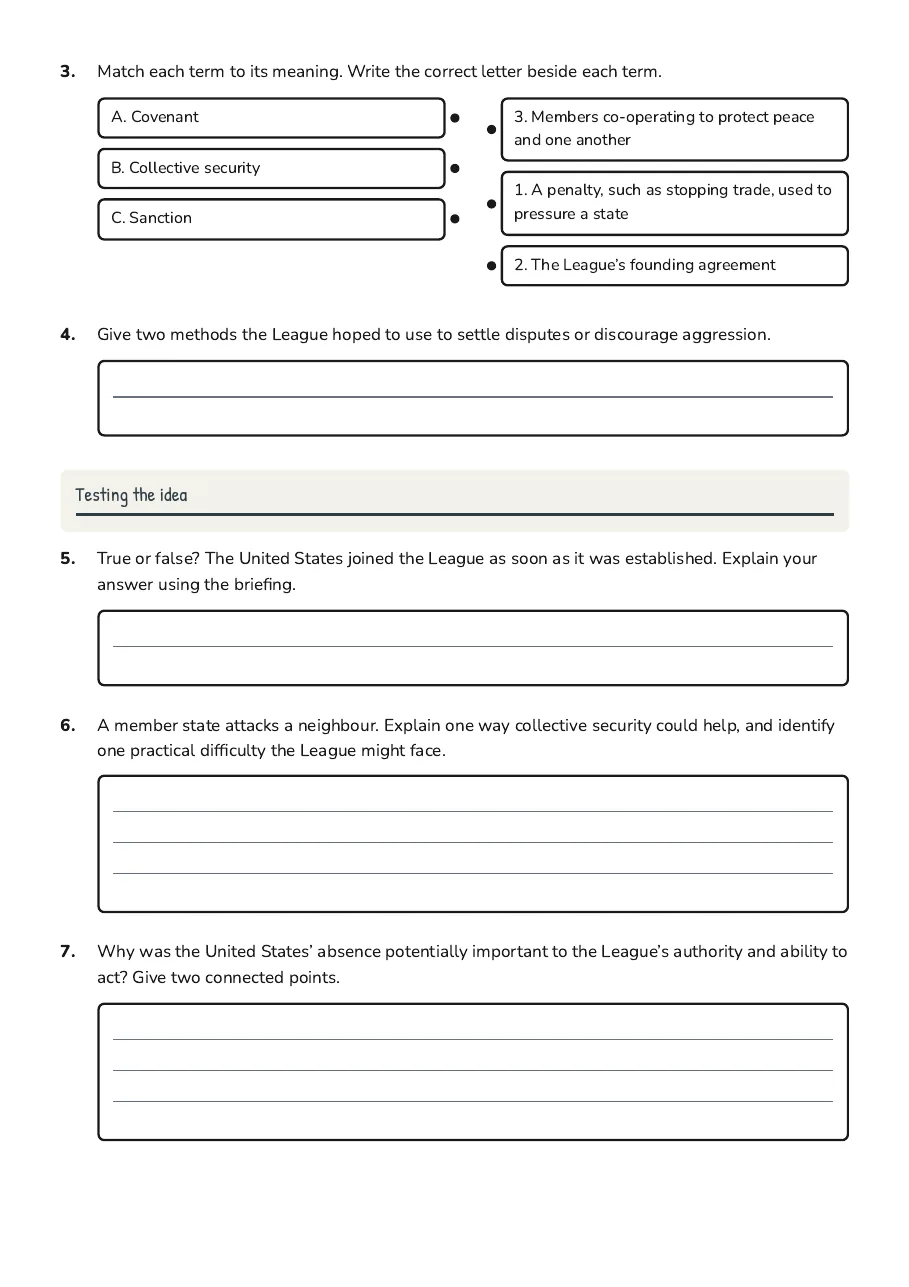
- A. Covenant
- B. Collective security
- C. Sanction
- 3. Members co-operating to protect peace and one another
- 1. A penalty, such as stopping trade, used to pressure a state
- 2. The League’s founding agreement
Testing the idea
3 printable pages
Page 1
Page 2
Page 3
About This Worksheet
Free in Kuraplan
Sign up free, grab the PDF, and customize it for your class.
Print-Ready
Formatted for standard paper. Clean layout, easy to read.
AI-Generated
Created with Kuraplan's AI, designed for real classroom use.
For Teachers & Parents
Use in classrooms, for homework, tutoring, or homeschool.
Need a custom version of this worksheet?
Kuraplan's AI generates custom worksheets in seconds — differentiated for every learner, aligned to your curriculum.
Generate Custom Worksheets — FreeMore History Worksheets
League of Nations Weaknesses
Free
Ancient vs Modern Benin
Free
Year 7 History Exploration: Britain Through Time
Free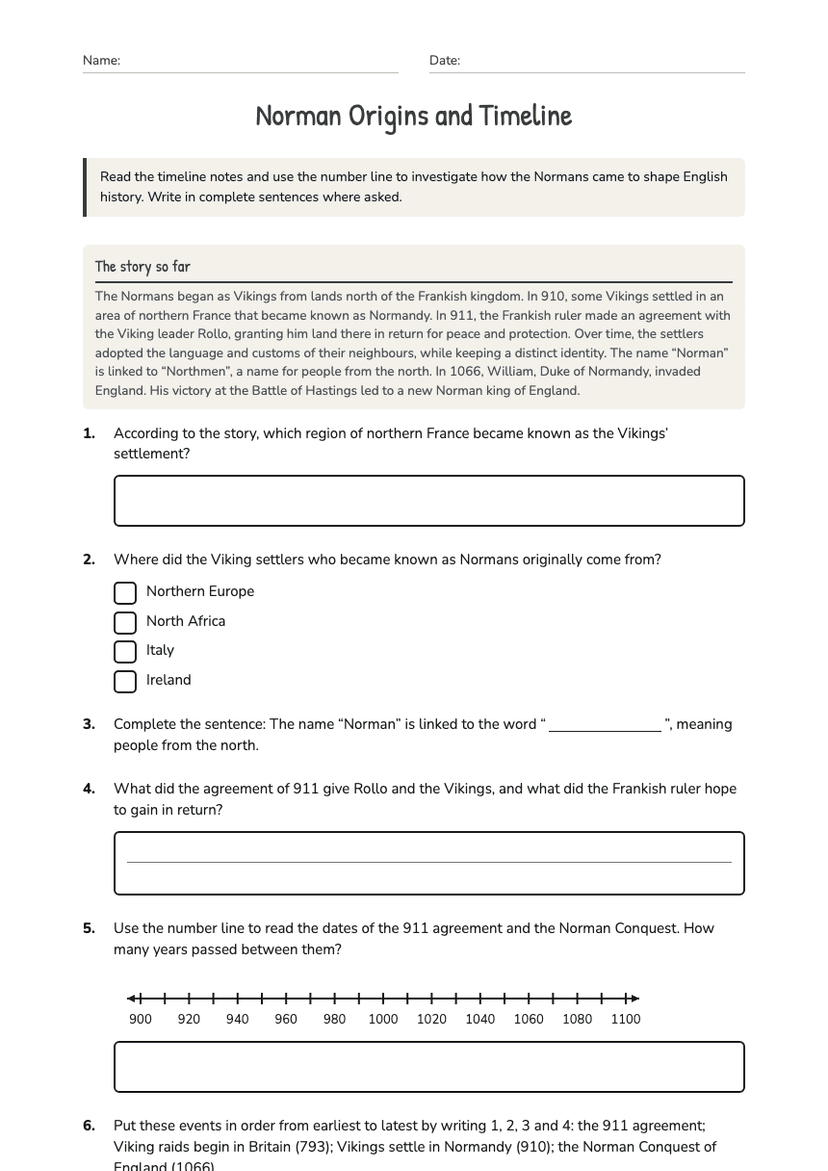
Norman Origins and Timeline
Free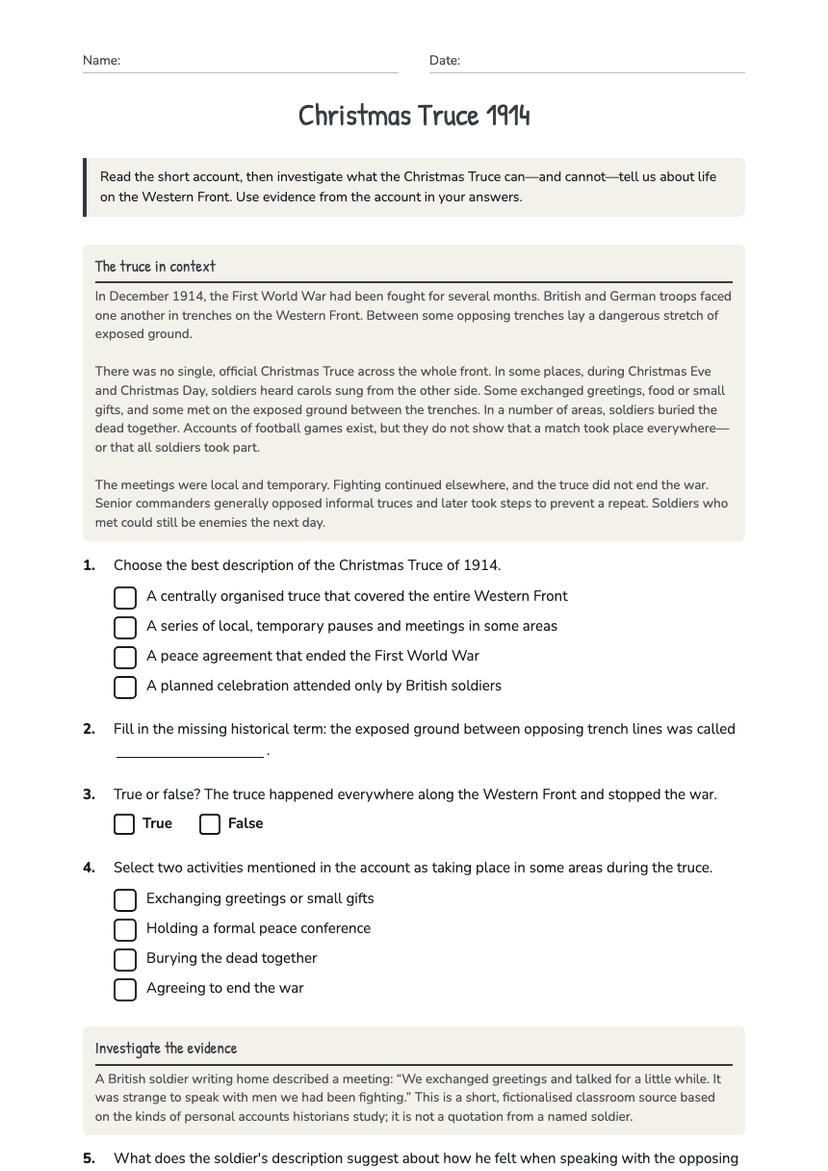
Christmas Truce 1914
Free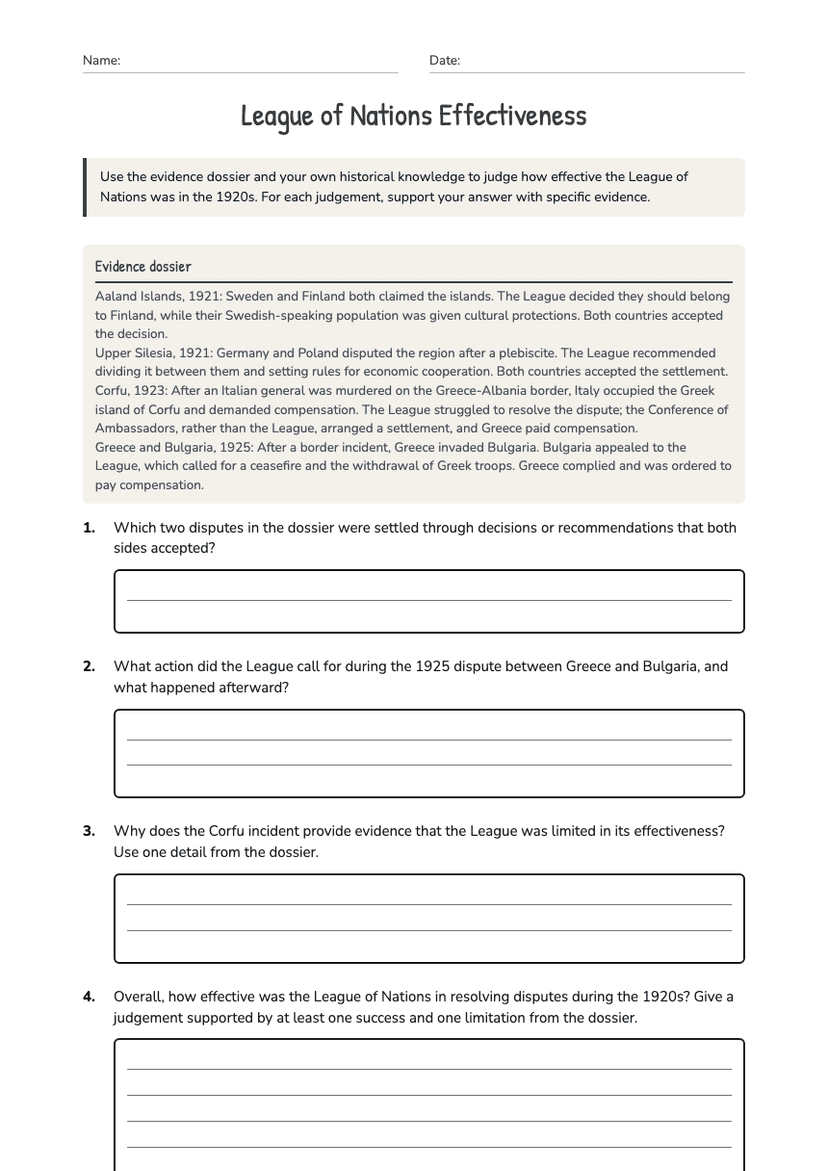
League of Nations Effectiveness
Free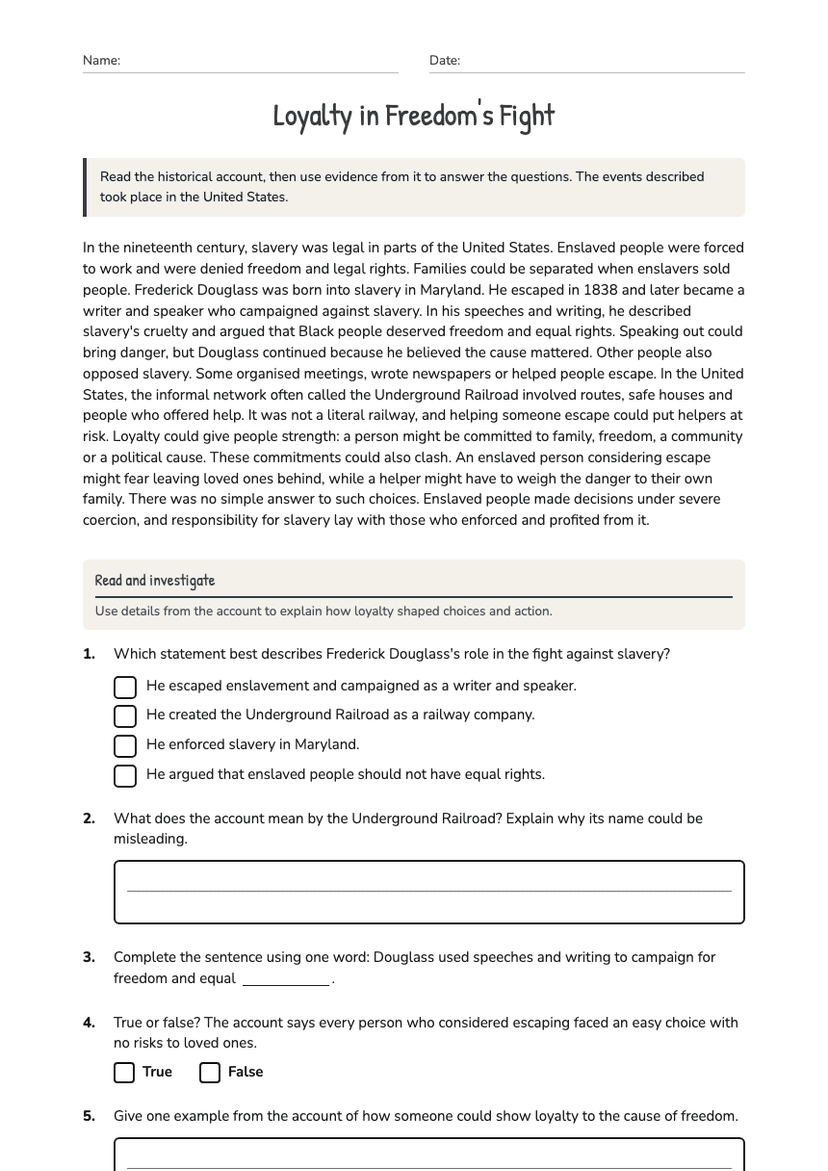
Loyalty in Freedom's Fight
Free