Mary Seacole Historical Analysis
A free history worksheet ready for your classroom. Open in Kuraplan to grab the print-ready PDF, customize it for your students, or generate a fresh version in seconds.
Mary Seacole Historical Analysis
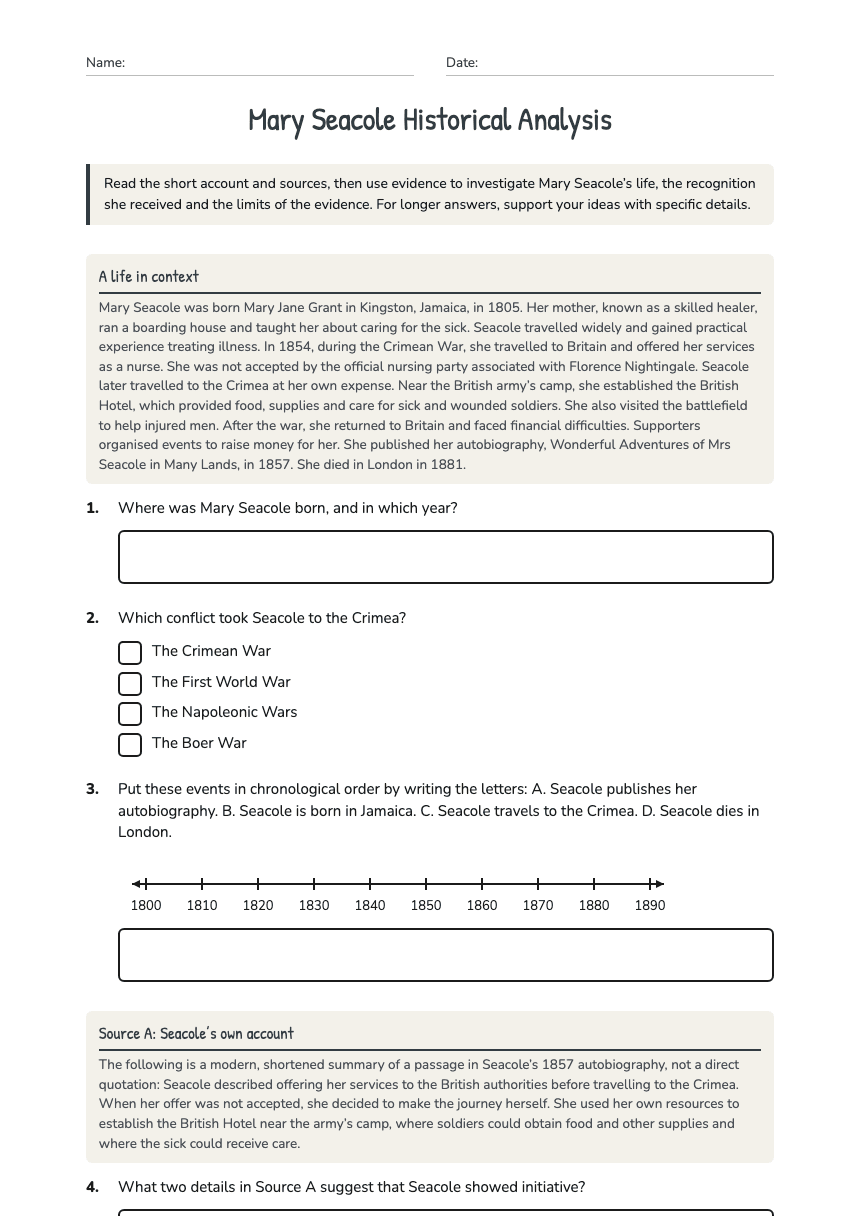
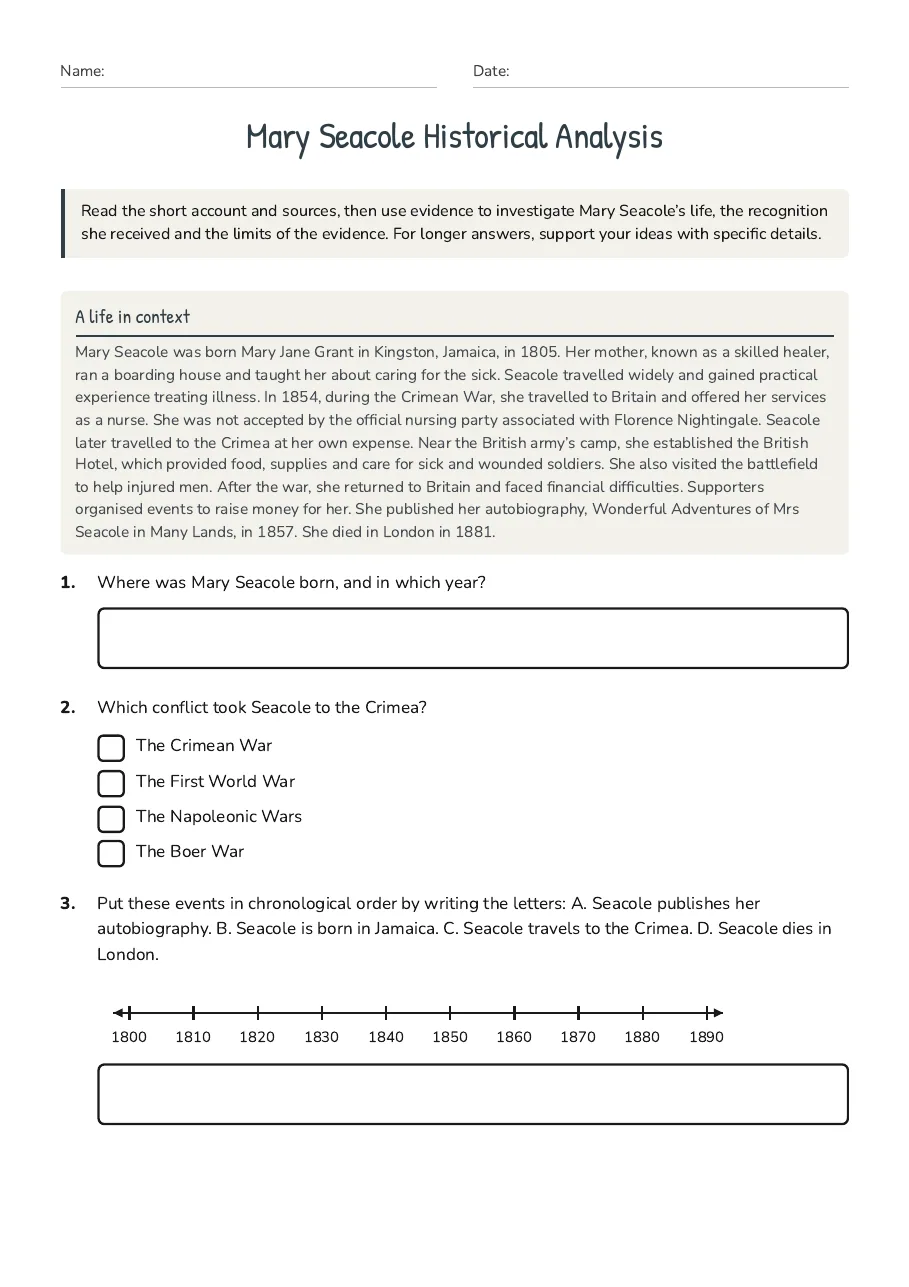
A life in context
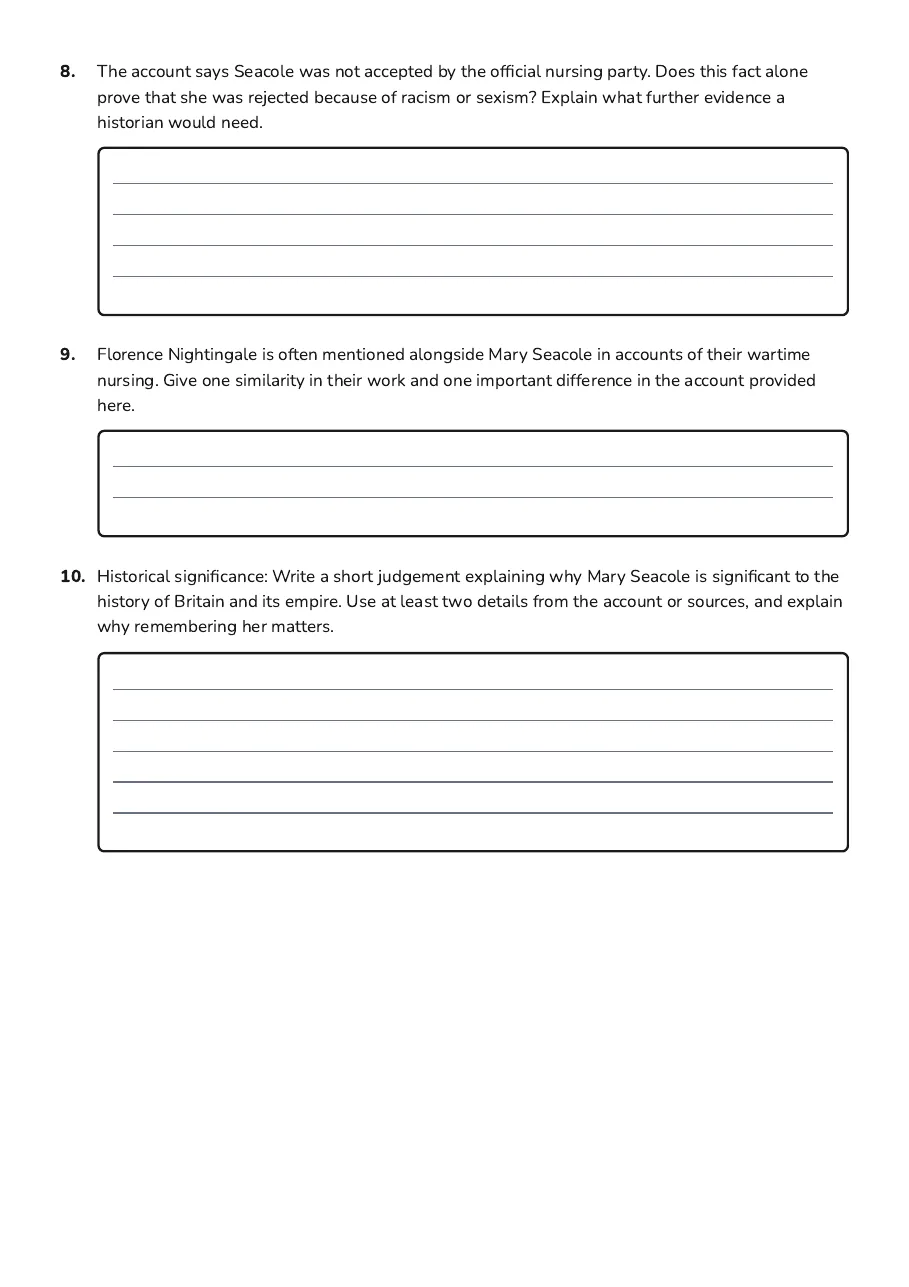
Mary Seacole was born Mary Jane Grant in Kingston, Jamaica, in 1805. Her mother, known as a skilled healer, ran a boarding house and taught her about caring for the sick. Seacole travelled widely and gained practical experience treating illness. In 1854, during the Crimean War, she travelled to Britain and offered her services as a nurse. She was not accepted by the official nursing party associated with Florence Nightingale. Seacole later travelled to the Crimea at her own expense. Near the British army’s camp, she established the British Hotel, which provided food, supplies and care for sick and wounded soldiers. She also visited the battlefield to help injured men. After the war, she returned to Britain and faced financial difficulties. Supporters organised events to raise money for her. She published her autobiography, Wonderful Adventures of Mrs Seacole in Many Lands, in 1857. She died in London in 1881.
- The Crimean War
- The First World War
- The Napoleonic Wars
- The Boer War
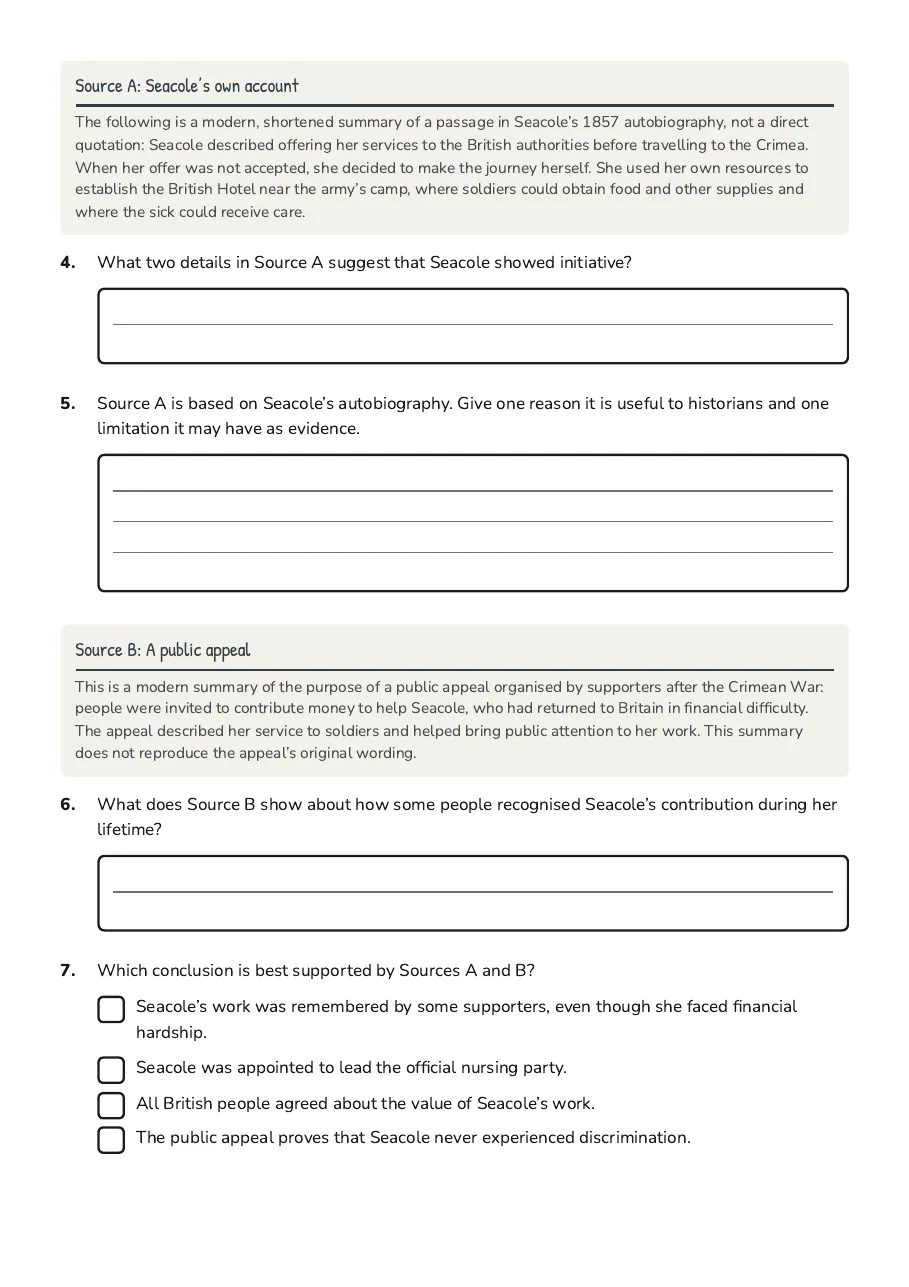
Source A: Seacole’s own account
The following is a modern, shortened summary of a passage in Seacole’s 1857 autobiography, not a direct quotation: Seacole described offering her services to the British authorities before travelling to the Crimea. When her offer was not accepted, she decided to make the journey herself. She used her own resources to establish the British Hotel near the army’s camp, where soldiers could obtain food and other supplies and where the sick could receive care.
Source B: A public appeal
This is a modern summary of the purpose of a public appeal organised by supporters after the Crimean War: people were invited to contribute money to help Seacole, who had returned to Britain in financial difficulty. The appeal described her service to soldiers and helped bring public attention to her work. This summary does not reproduce the appeal’s original wording.
- Seacole’s work was remembered by some supporters, even though she faced financial hardship.
- Seacole was appointed to lead the official nursing party.
- All British people agreed about the value of Seacole’s work.
- The public appeal proves that Seacole never experienced discrimination.
3 printable pages
Page 1
Page 2
Page 3
About This Worksheet
Free in Kuraplan
Sign up free, grab the PDF, and customize it for your class.
Print-Ready
Formatted for standard paper. Clean layout, easy to read.
AI-Generated
Created with Kuraplan's AI, designed for real classroom use.
For Teachers & Parents
Use in classrooms, for homework, tutoring, or homeschool.
Need a custom version of this worksheet?
Kuraplan's AI generates custom worksheets in seconds — differentiated for every learner, aligned to your curriculum.
Generate Custom Worksheets — FreeMore History Worksheets
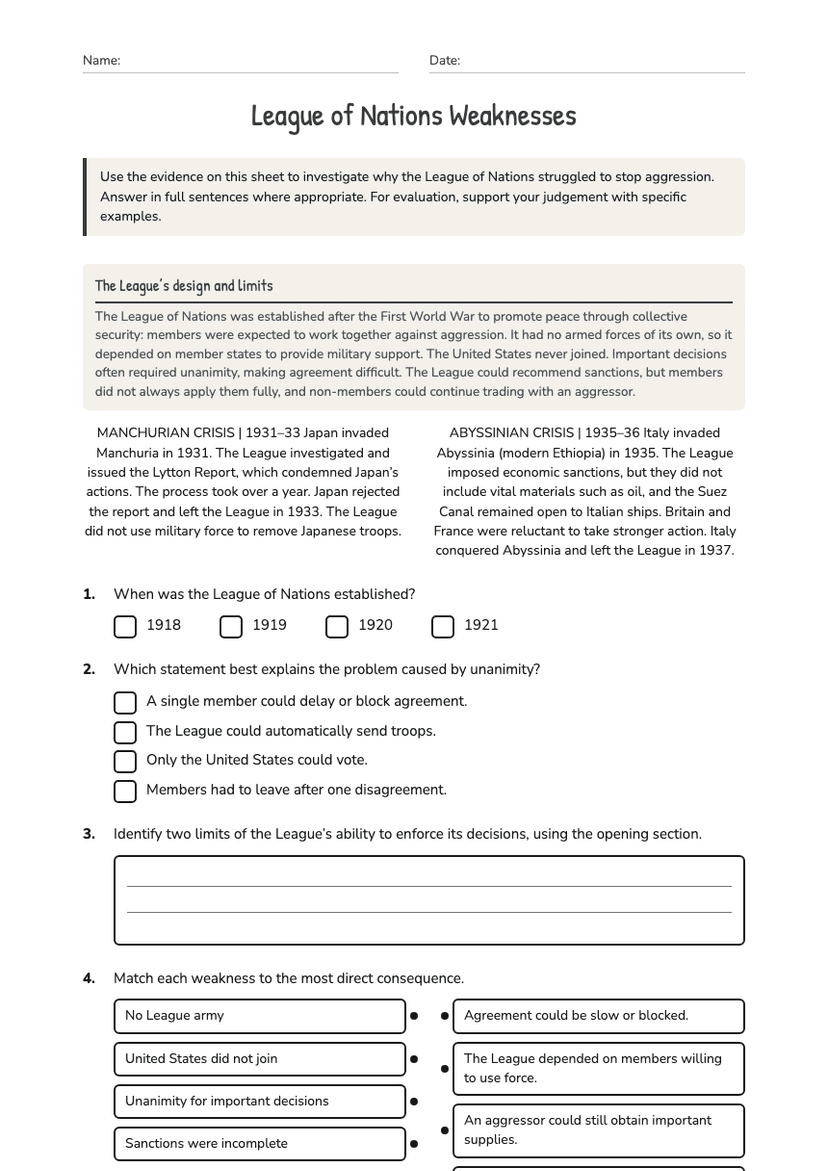
League of Nations Weaknesses
Free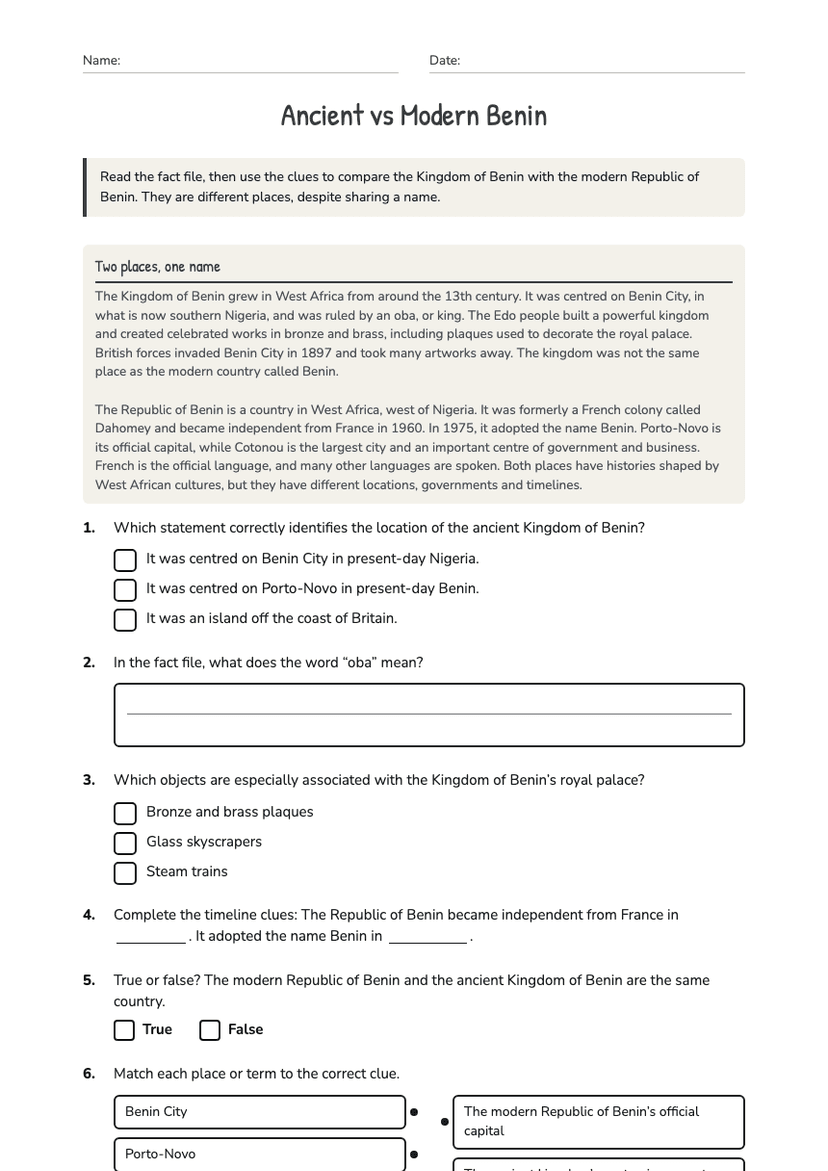
Ancient vs Modern Benin
Free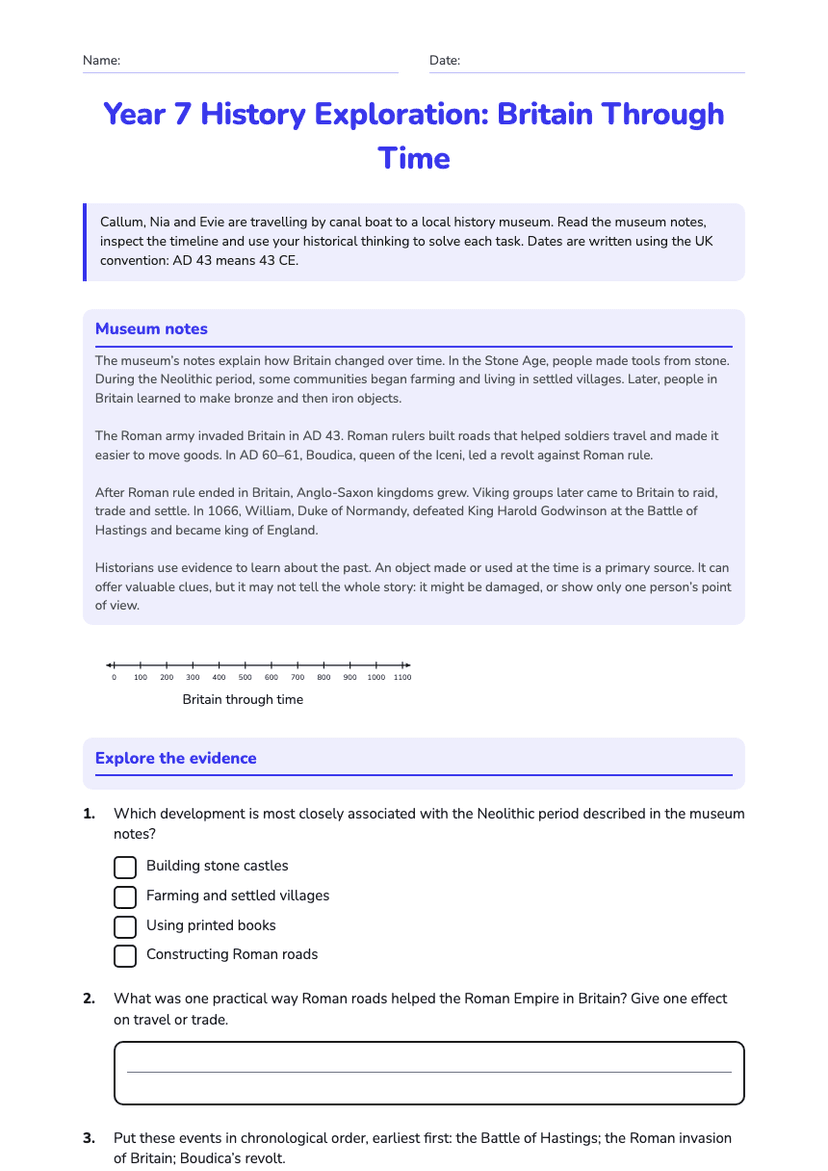
Year 7 History Exploration: Britain Through Time
Free
Norman Origins and Timeline
Free
Christmas Truce 1914
Free
League of Nations Effectiveness
Free
Loyalty in Freedom's Fight
Free