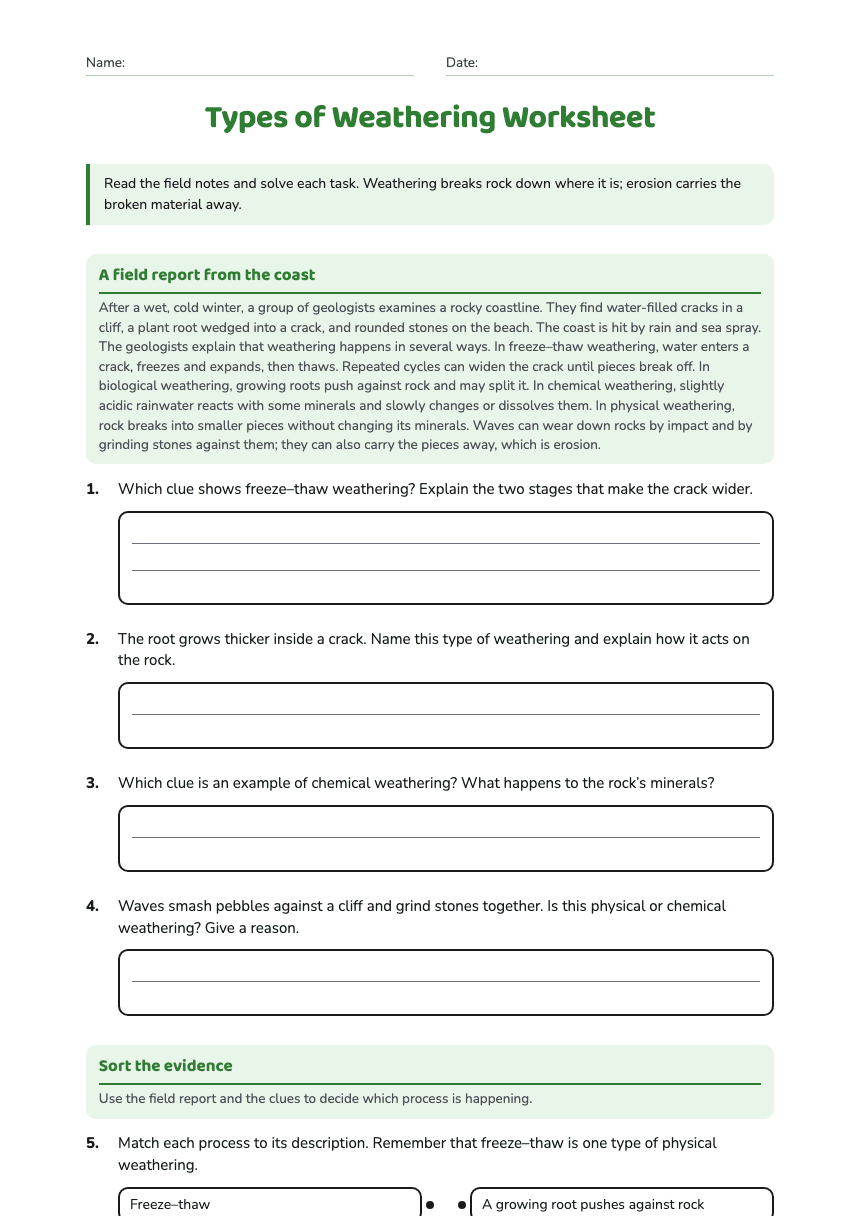
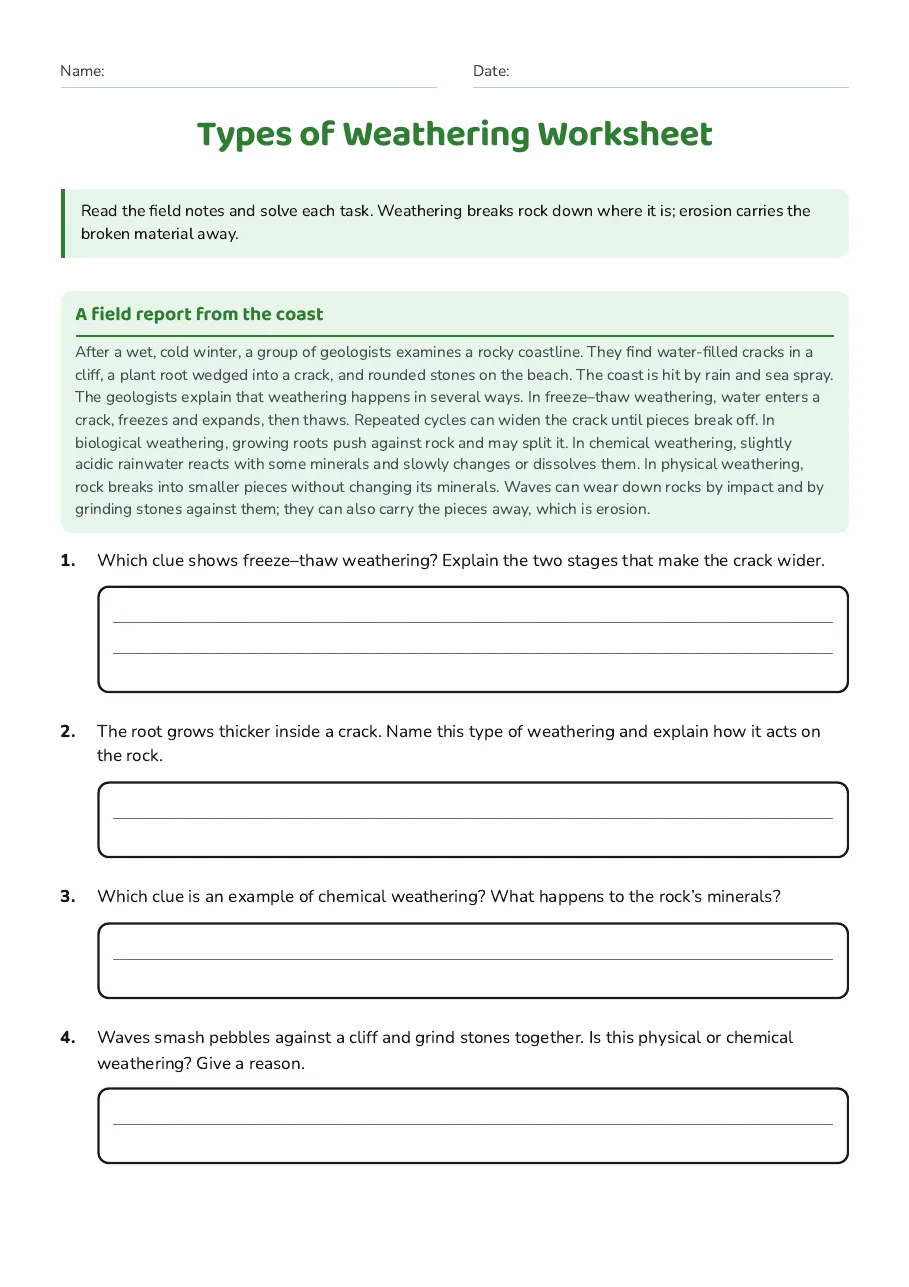
Types of Weathering Worksheet
A free science worksheet ready for your classroom. Open in Kuraplan to grab the print-ready PDF, customize it for your students, or generate a fresh version in seconds.
Types of Weathering Worksheet
A field report from the coast
After a wet, cold winter, a group of geologists examines a rocky coastline. They find water-filled cracks in a cliff, a plant root wedged into a crack, and rounded stones on the beach. The coast is hit by rain and sea spray. The geologists explain that weathering happens in several ways. In freeze–thaw weathering, water enters a crack, freezes and expands, then thaws. Repeated cycles can widen the crack until pieces break off. In biological weathering, growing roots push against rock and may split it. In chemical weathering, slightly acidic rainwater reacts with some minerals and slowly changes or dissolves them. In physical weathering, rock breaks into smaller pieces without changing its minerals. Waves can wear down rocks by impact and by grinding stones against them; they can also carry the pieces away, which is erosion.
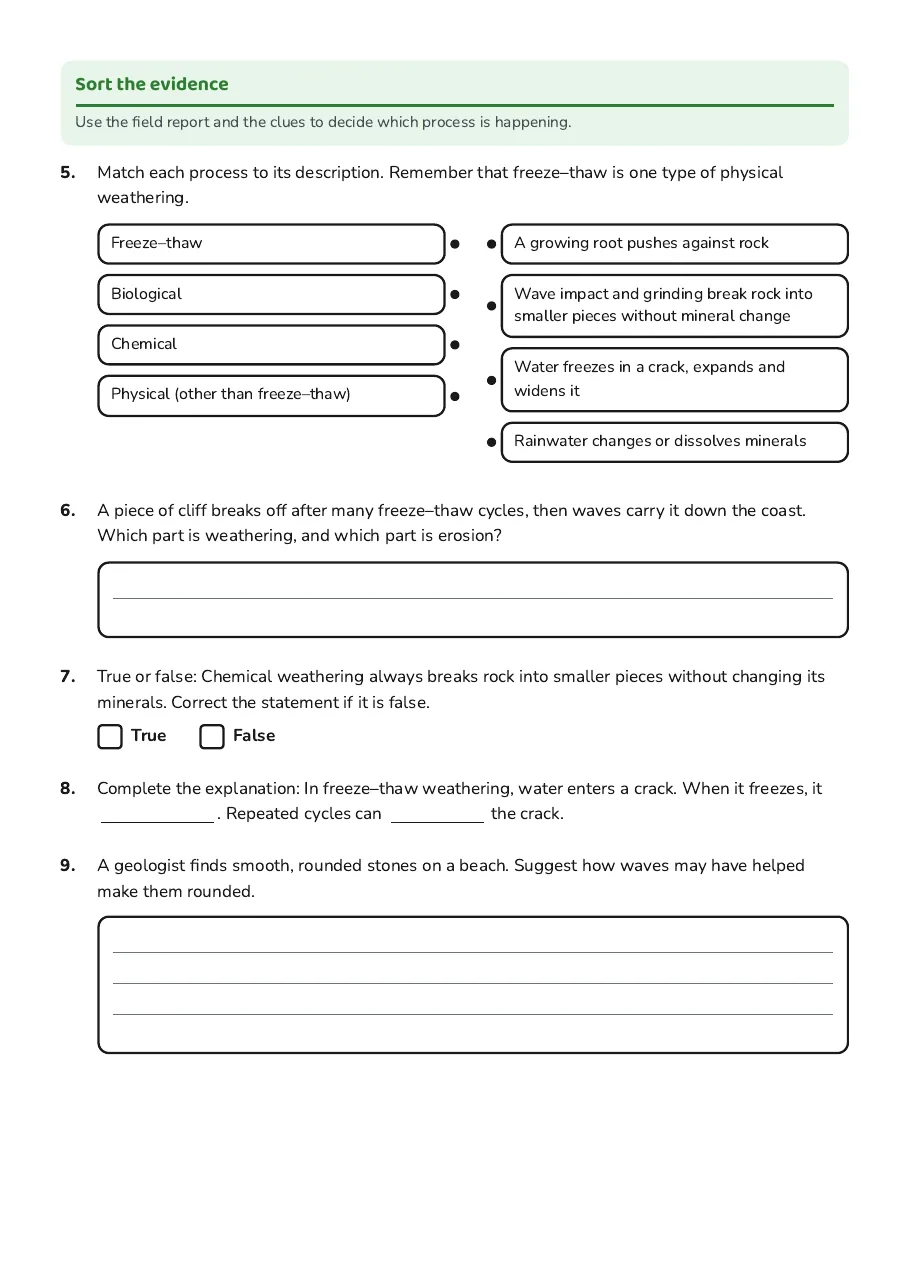
Sort the evidence
Use the field report and the clues to decide which process is happening.
- Freeze–thaw
- Biological
- Chemical
- Physical (other than freeze–thaw)
- A growing root pushes against rock
- Wave impact and grinding break rock into smaller pieces without mineral change
- Water freezes in a crack, expands and widens it
- Rainwater changes or dissolves minerals
3 printable pages
Page 1
Page 2

Page 3
About This Worksheet
Free in Kuraplan
Sign up free, grab the PDF, and customize it for your class.
Print-Ready
Formatted for standard paper. Clean layout, easy to read.
AI-Generated
Created with Kuraplan's AI, designed for real classroom use.
For Teachers & Parents
Use in classrooms, for homework, tutoring, or homeschool.
Need a custom version of this worksheet?
Kuraplan's AI generates custom worksheets in seconds — differentiated for every learner, aligned to your curriculum.
Generate Custom Worksheets — Free