Women in WWI
A free history worksheet ready for your classroom. Open in Kuraplan to grab the print-ready PDF, customize it for your students, or generate a fresh version in seconds.
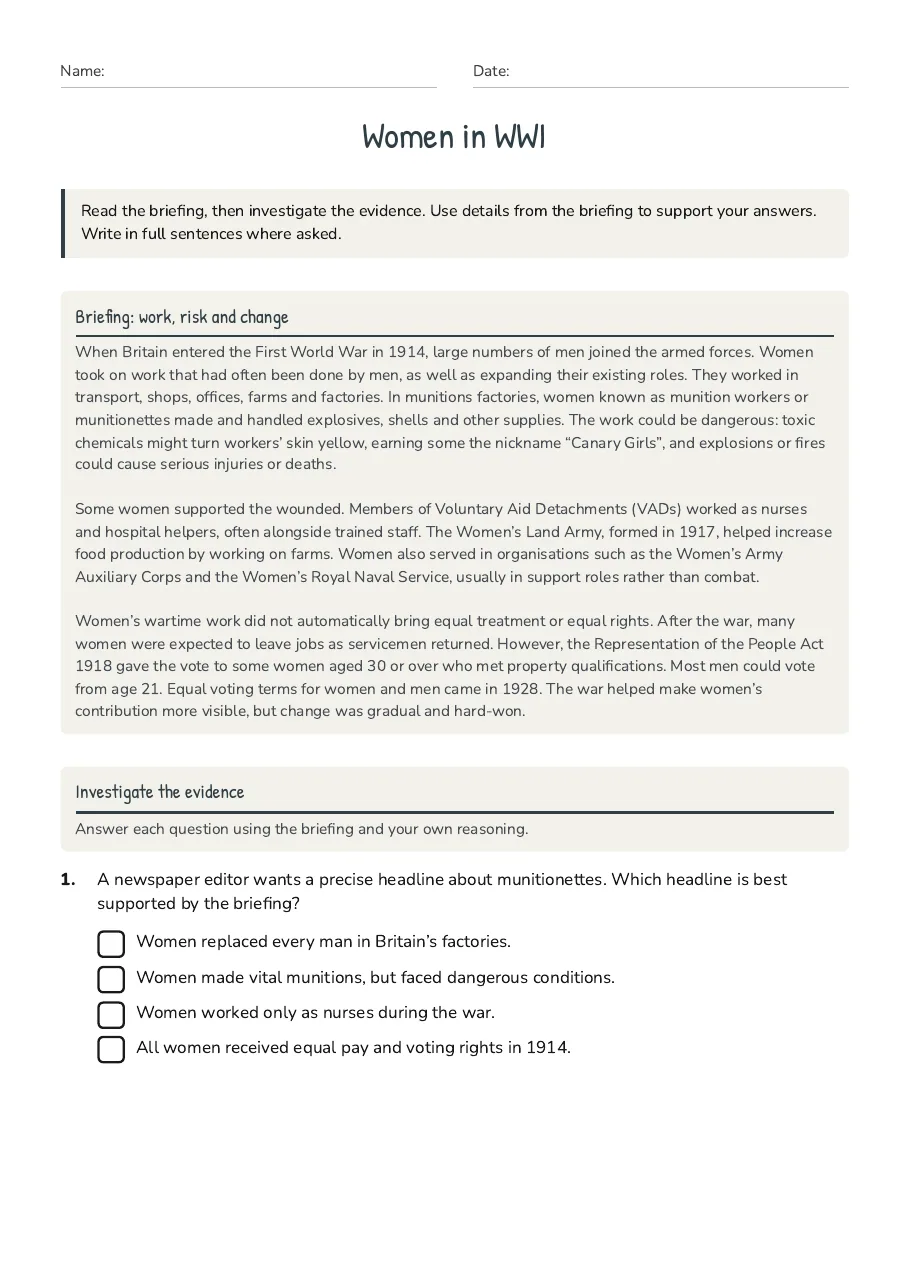
Women in WWI
Briefing: work, risk and change
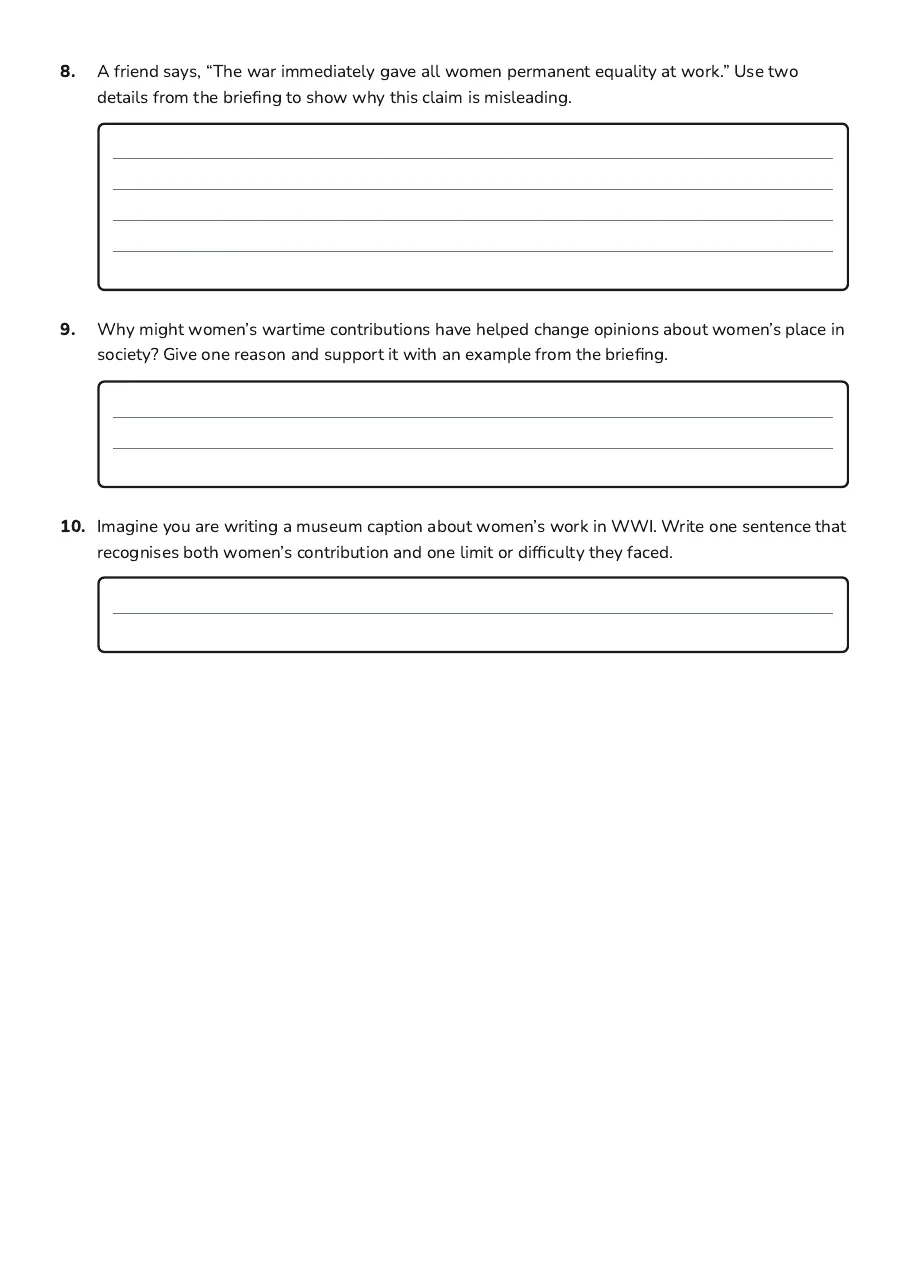
When Britain entered the First World War in 1914, large numbers of men joined the armed forces. Women took on work that had often been done by men, as well as expanding their existing roles. They worked in transport, shops, offices, farms and factories. In munitions factories, women known as munition workers or munitionettes made and handled explosives, shells and other supplies. The work could be dangerous: toxic chemicals might turn workers’ skin yellow, earning some the nickname “Canary Girls”, and explosions or fires could cause serious injuries or deaths. Some women supported the wounded. Members of Voluntary Aid Detachments (VADs) worked as nurses and hospital helpers, often alongside trained staff. The Women’s Land Army, formed in 1917, helped increase food production by working on farms. Women also served in organisations such as the Women’s Army Auxiliary Corps and the Women’s Royal Naval Service, usually in support roles rather than combat. Women’s wartime work did not automatically bring equal treatment or equal rights. After the war, many women were expected to leave jobs as servicemen returned. However, the Representation of the People Act 1918 gave the vote to some women aged 30 or over who met property qualifications. Most men could vote from age 21. Equal voting terms for women and men came in 1928. The war helped make women’s contribution more visible, but change was gradual and hard-won.
Investigate the evidence
Answer each question using the briefing and your own reasoning.
- Women replaced every man in Britain’s factories.
- Women made vital munitions, but faced dangerous conditions.
- Women worked only as nurses during the war.
- All women received equal pay and voting rights in 1914.
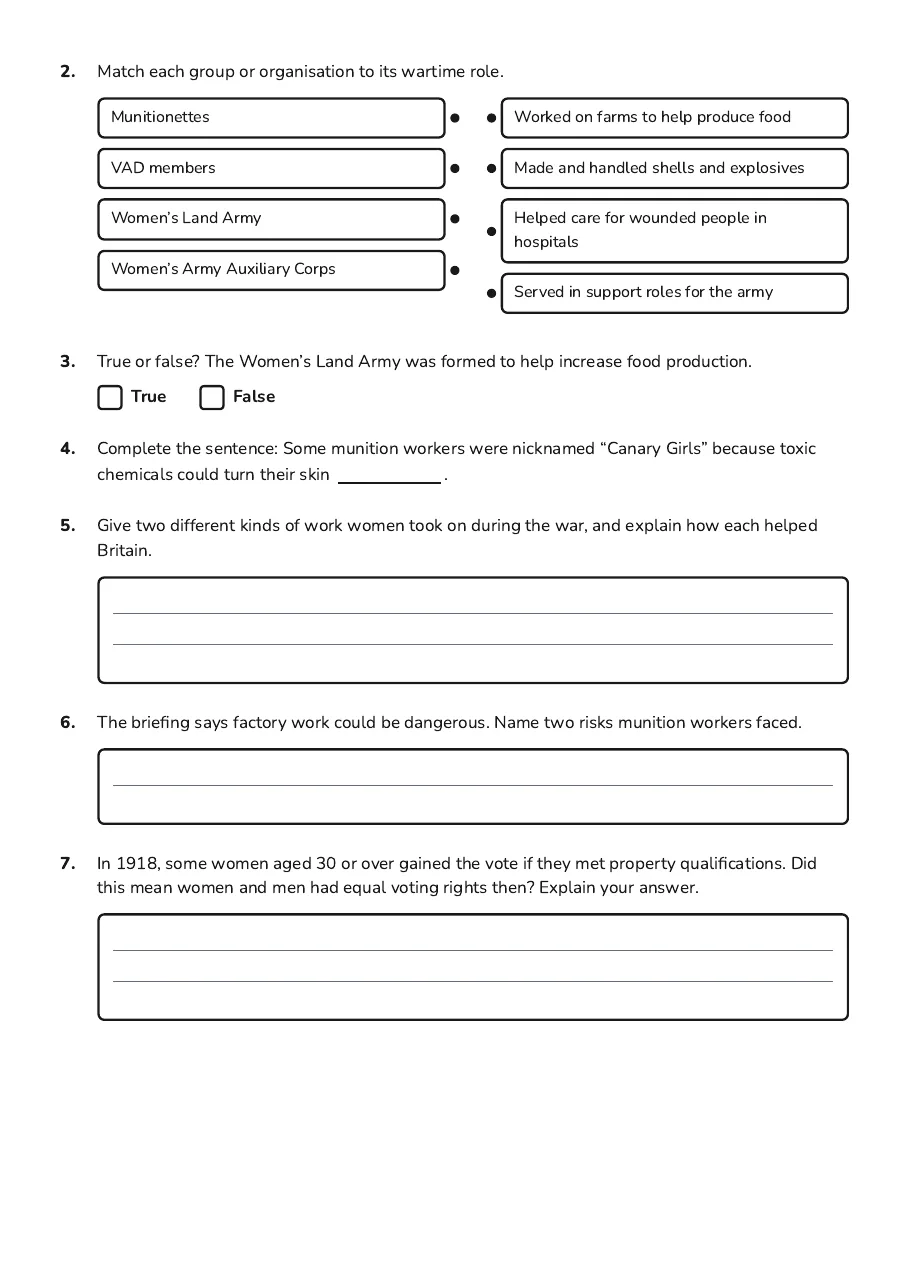
- Munitionettes
- VAD members
- Women’s Land Army
- Women’s Army Auxiliary Corps
- Worked on farms to help produce food
- Made and handled shells and explosives
- Helped care for wounded people in hospitals
- Served in support roles for the army
3 printable pages
Page 1
Page 2
Page 3
About This Worksheet
Free in Kuraplan
Sign up free, grab the PDF, and customize it for your class.
Print-Ready
Formatted for standard paper. Clean layout, easy to read.
AI-Generated
Created with Kuraplan's AI, designed for real classroom use.
For Teachers & Parents
Use in classrooms, for homework, tutoring, or homeschool.
Need a custom version of this worksheet?
Kuraplan's AI generates custom worksheets in seconds — differentiated for every learner, aligned to your curriculum.
Generate Custom Worksheets — FreeMore History Worksheets
League of Nations Weaknesses
Free
Ancient vs Modern Benin
Free
Year 7 History Exploration: Britain Through Time
Free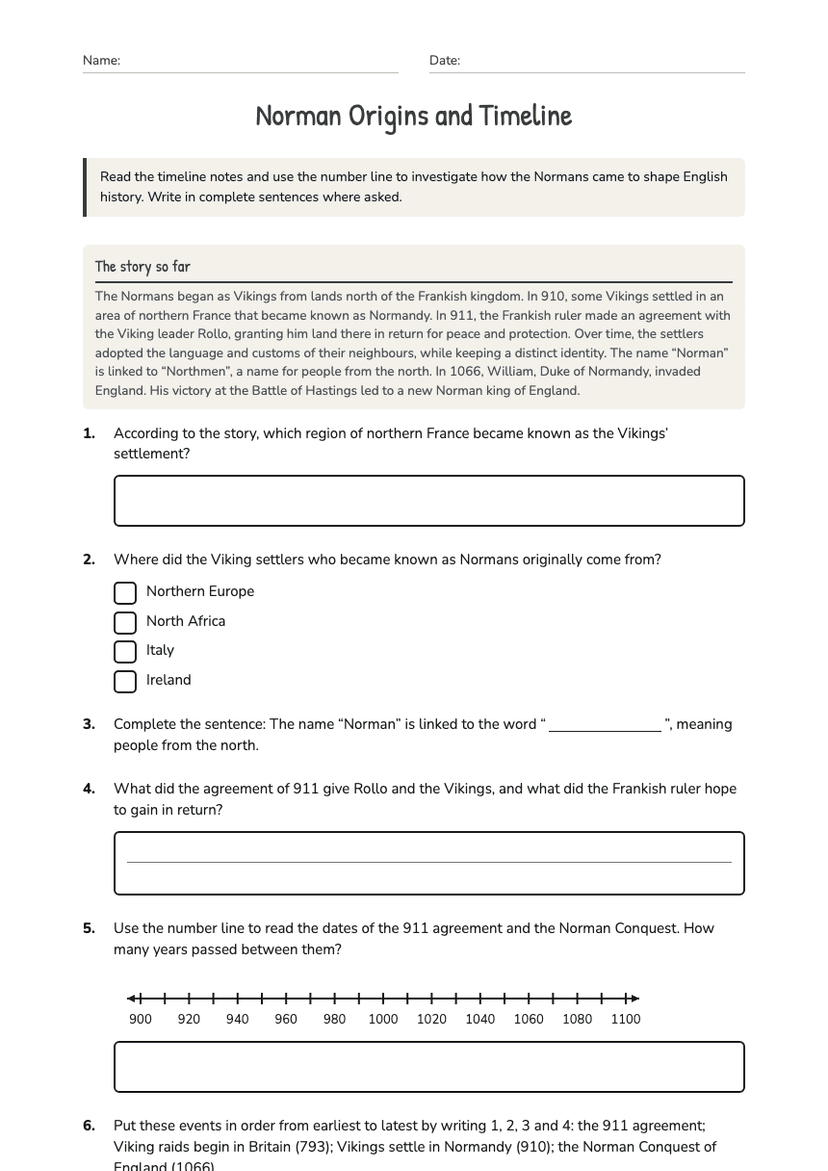
Norman Origins and Timeline
Free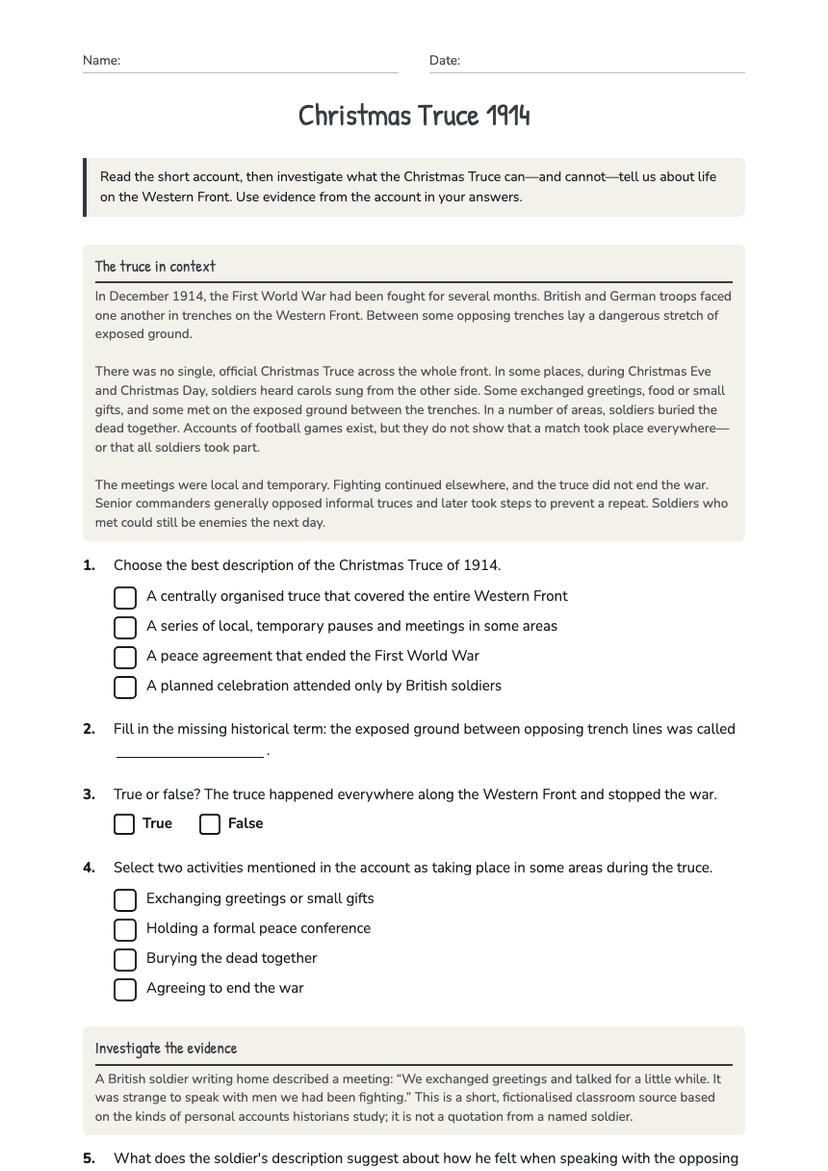
Christmas Truce 1914
Free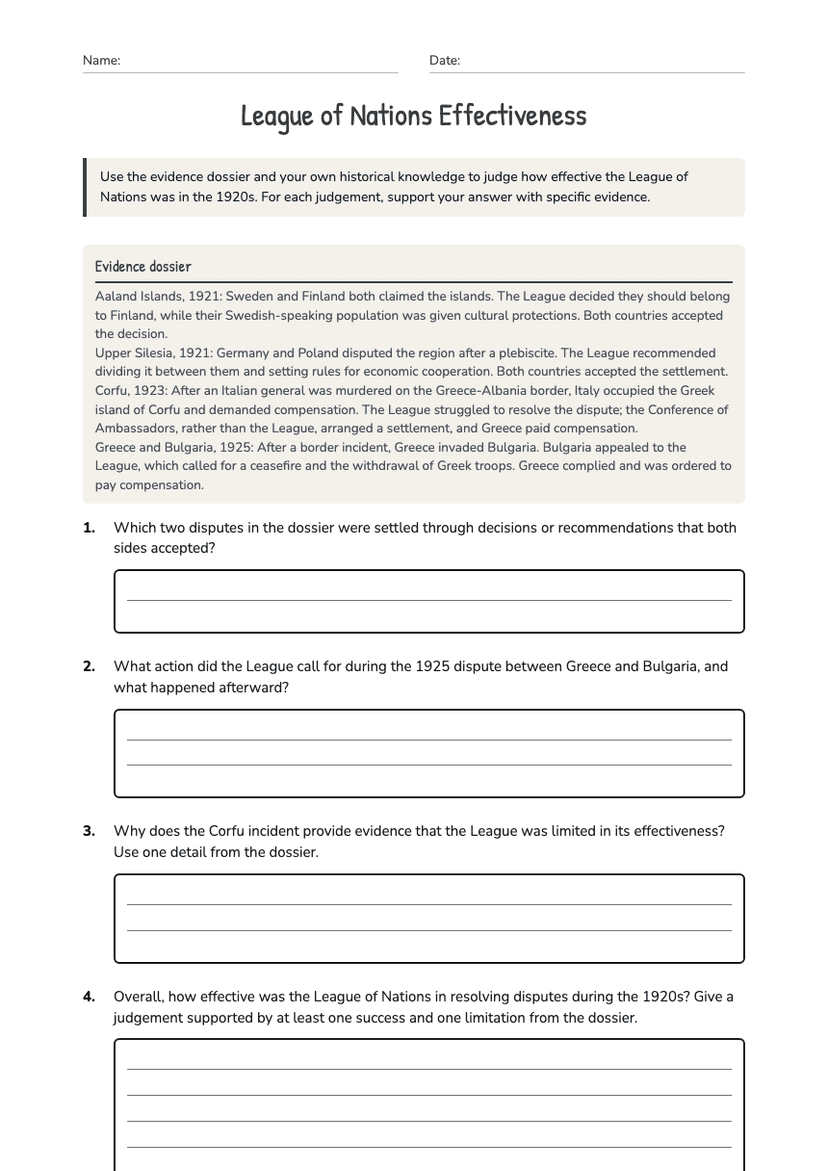
League of Nations Effectiveness
Free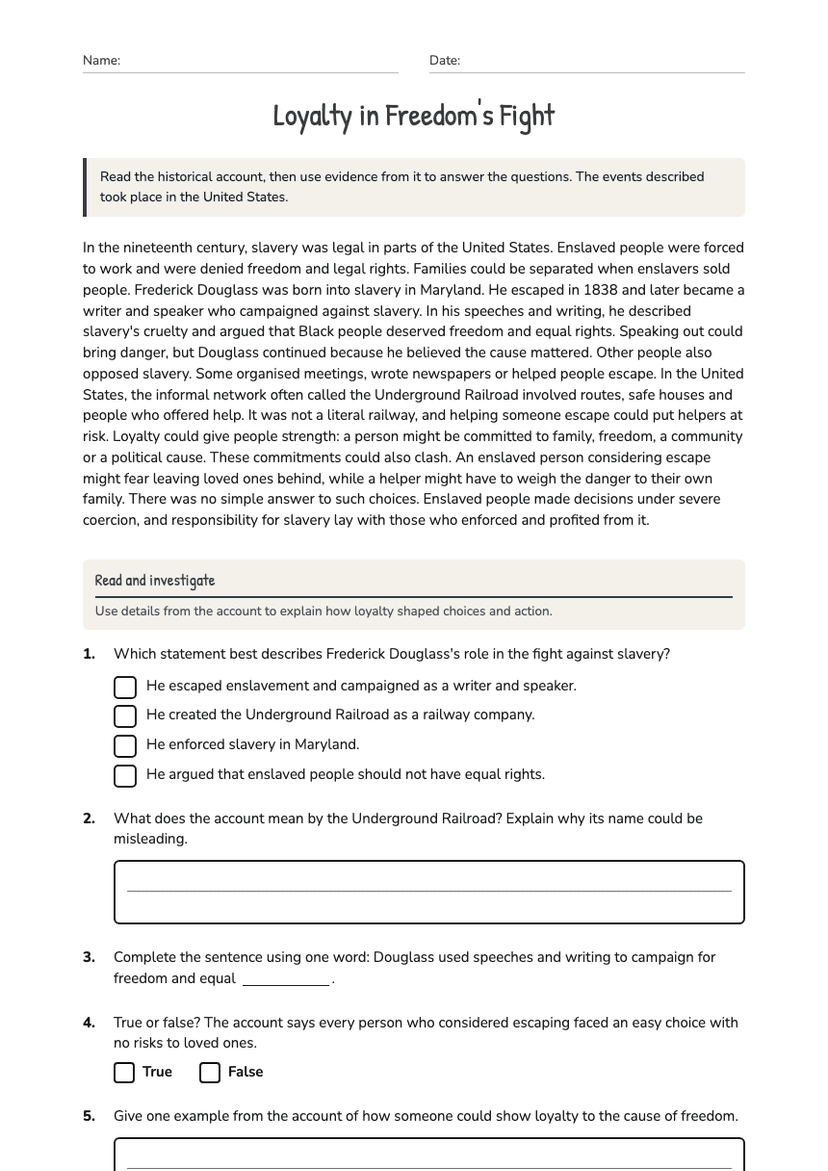
Loyalty in Freedom's Fight
Free