Women's Feelings and Responses
A free history worksheet ready for your classroom. Open in Kuraplan to grab the print-ready PDF, customize it for your students, or generate a fresh version in seconds.
Women's Feelings and Responses
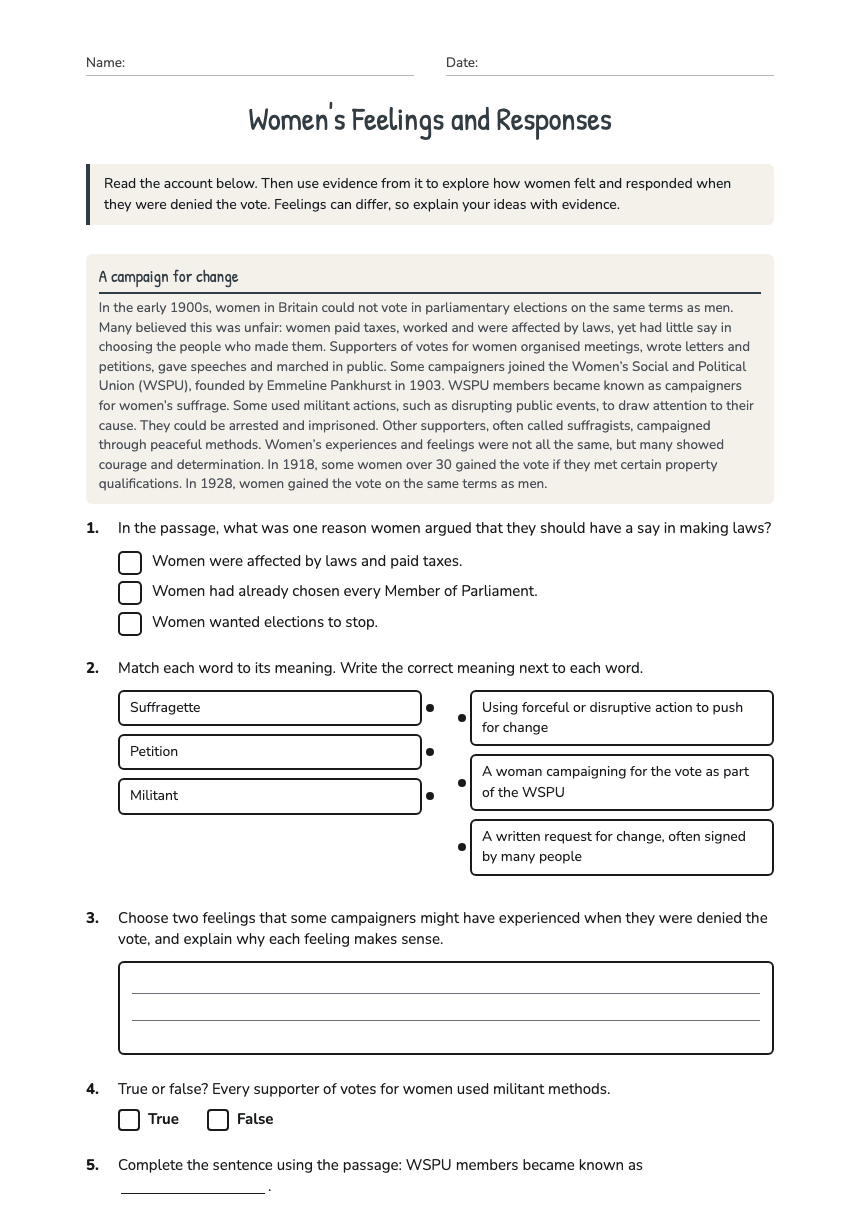
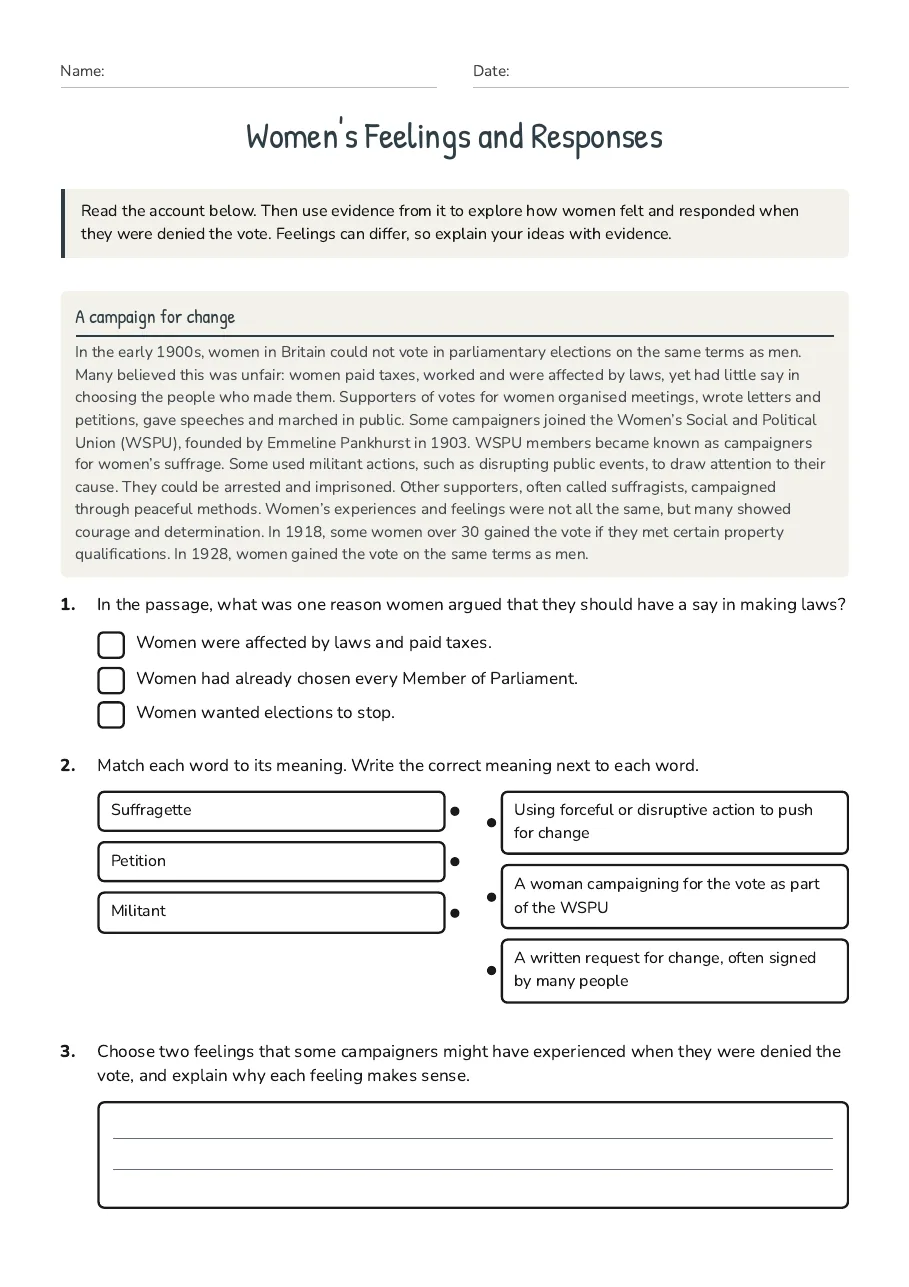
A campaign for change
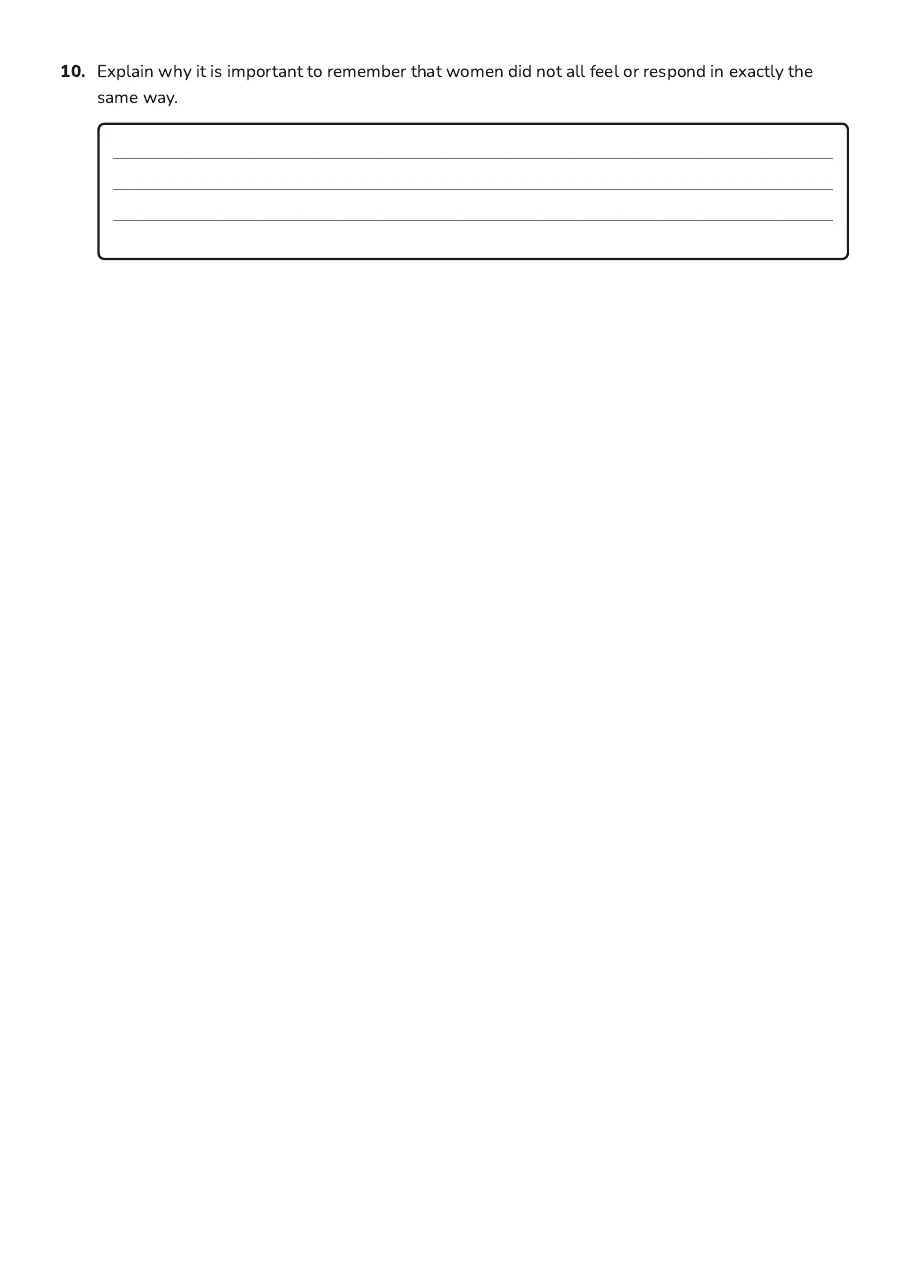
In the early 1900s, women in Britain could not vote in parliamentary elections on the same terms as men. Many believed this was unfair: women paid taxes, worked and were affected by laws, yet had little say in choosing the people who made them. Supporters of votes for women organised meetings, wrote letters and petitions, gave speeches and marched in public. Some campaigners joined the Women’s Social and Political Union (WSPU), founded by Emmeline Pankhurst in 1903. WSPU members became known as campaigners for women’s suffrage. Some used militant actions, such as disrupting public events, to draw attention to their cause. They could be arrested and imprisoned. Other supporters, often called suffragists, campaigned through peaceful methods. Women’s experiences and feelings were not all the same, but many showed courage and determination. In 1918, some women over 30 gained the vote if they met certain property qualifications. In 1928, women gained the vote on the same terms as men.
- Women were affected by laws and paid taxes.
- Women had already chosen every Member of Parliament.
- Women wanted elections to stop.
- Suffragette
- Petition
- Militant
- Using forceful or disruptive action to push for change
- A woman campaigning for the vote as part of the WSPU
- A written request for change, often signed by many people
3 printable pages
Page 1
Page 2
Page 3
About This Worksheet
Free in Kuraplan
Sign up free, grab the PDF, and customize it for your class.
Print-Ready
Formatted for standard paper. Clean layout, easy to read.
AI-Generated
Created with Kuraplan's AI, designed for real classroom use.
For Teachers & Parents
Use in classrooms, for homework, tutoring, or homeschool.
Need a custom version of this worksheet?
Kuraplan's AI generates custom worksheets in seconds — differentiated for every learner, aligned to your curriculum.
Generate Custom Worksheets — FreeMore History Worksheets
League of Nations Weaknesses
Free
Ancient vs Modern Benin
Free
Year 7 History Exploration: Britain Through Time
Free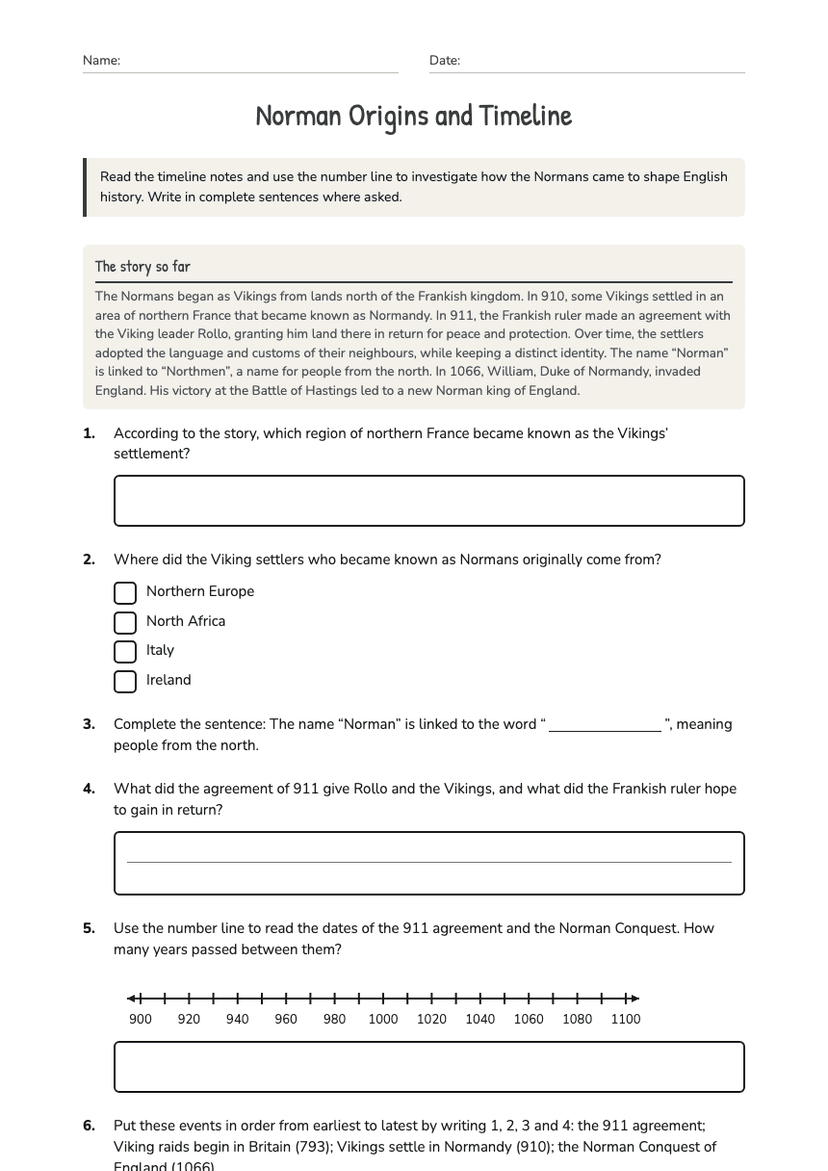
Norman Origins and Timeline
Free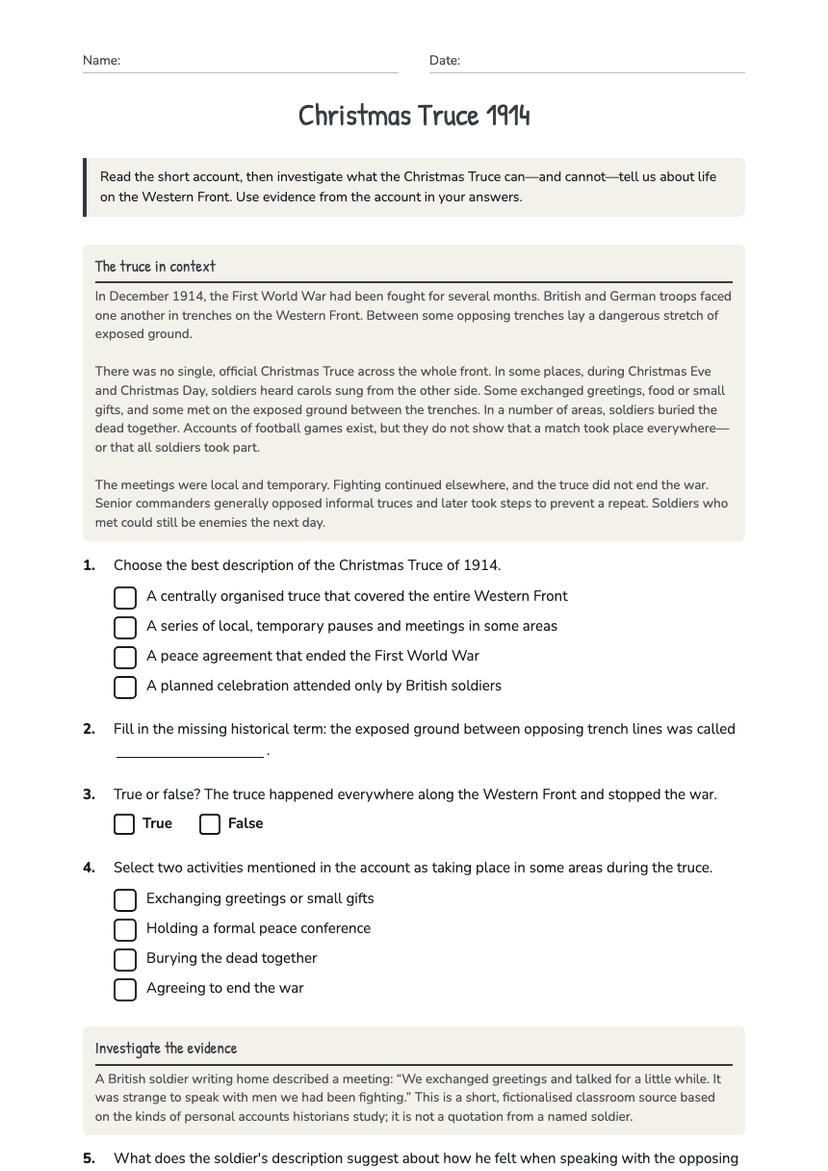
Christmas Truce 1914
Free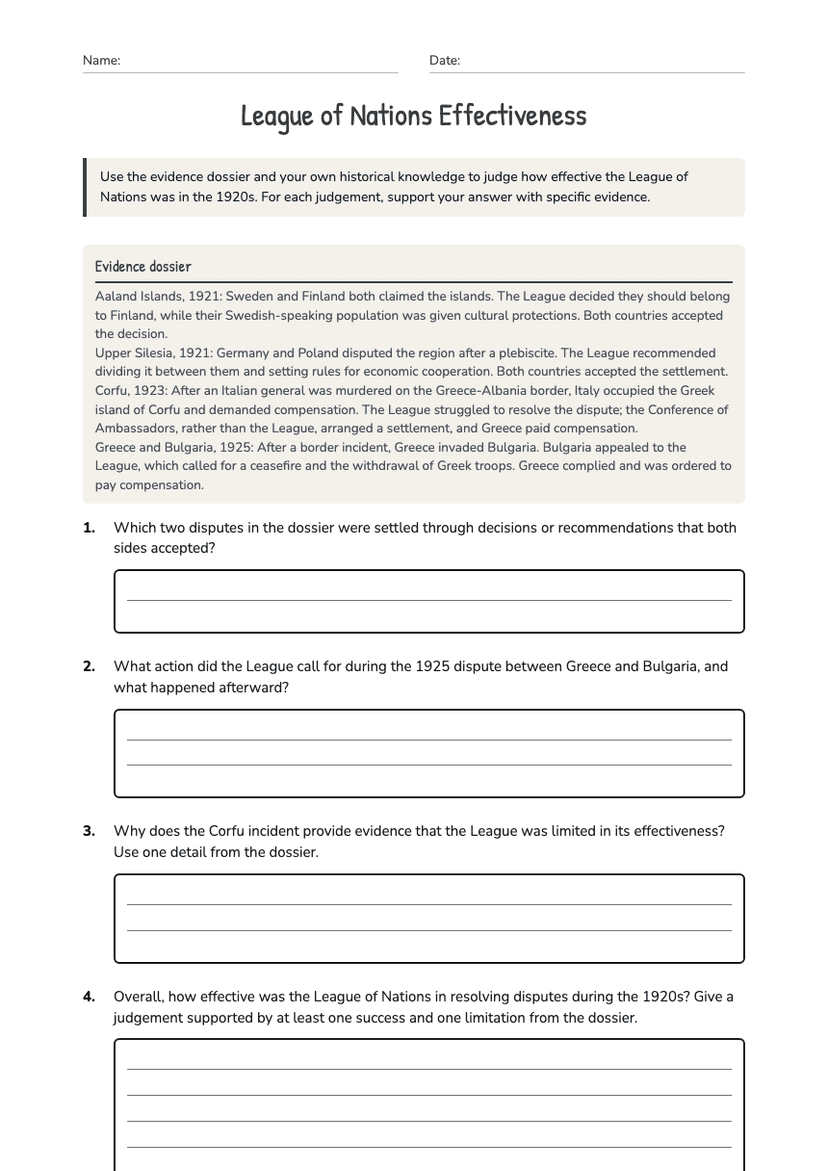
League of Nations Effectiveness
Free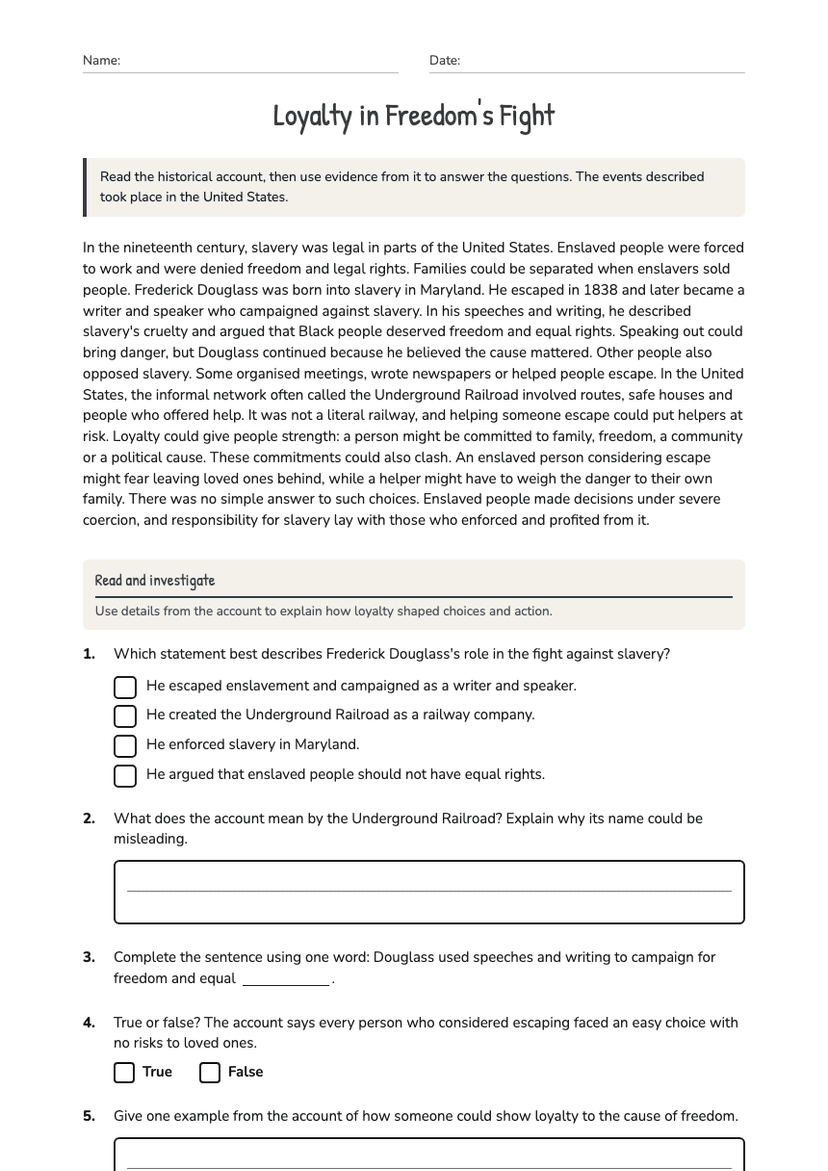
Loyalty in Freedom's Fight
Free