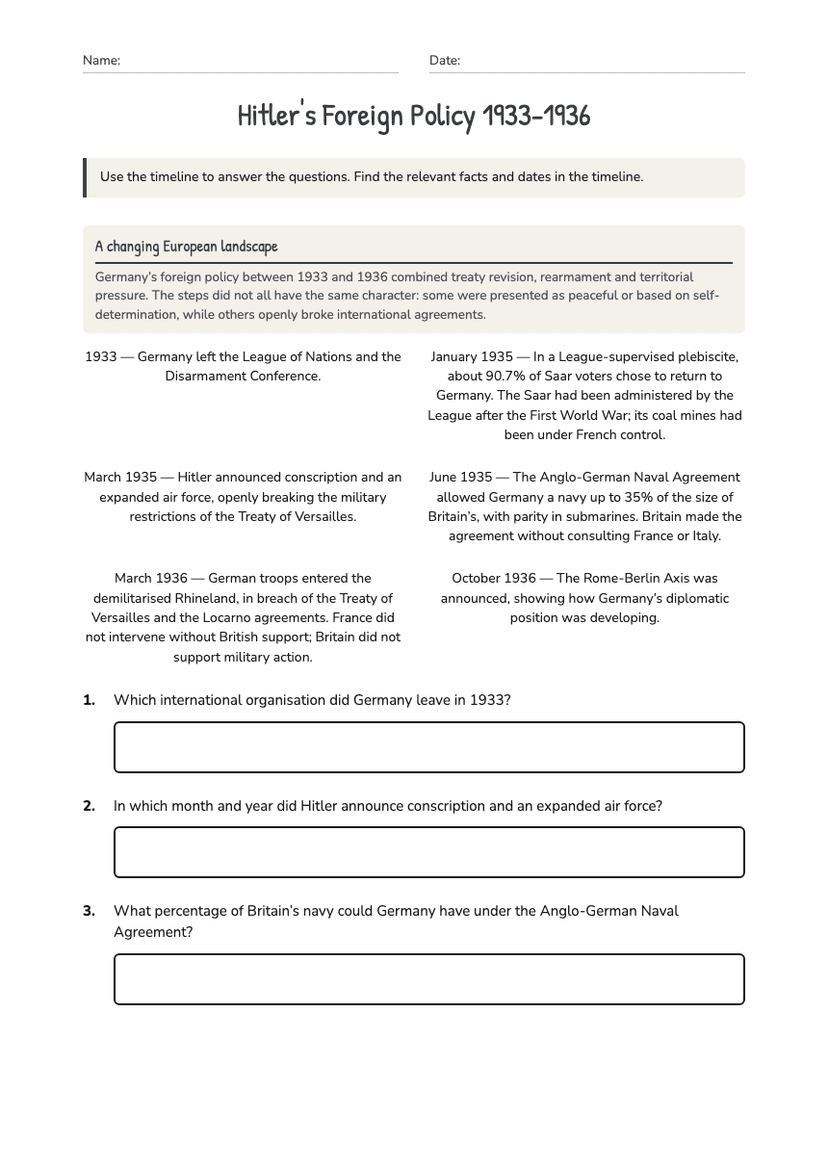
Ancient Egypt Exploration Worksheet
A free history worksheet ready for your classroom. Open in Kuraplan to grab the print-ready PDF, customize it for your students, or generate a fresh version in seconds.

Ancient Egypt Exploration Worksheet
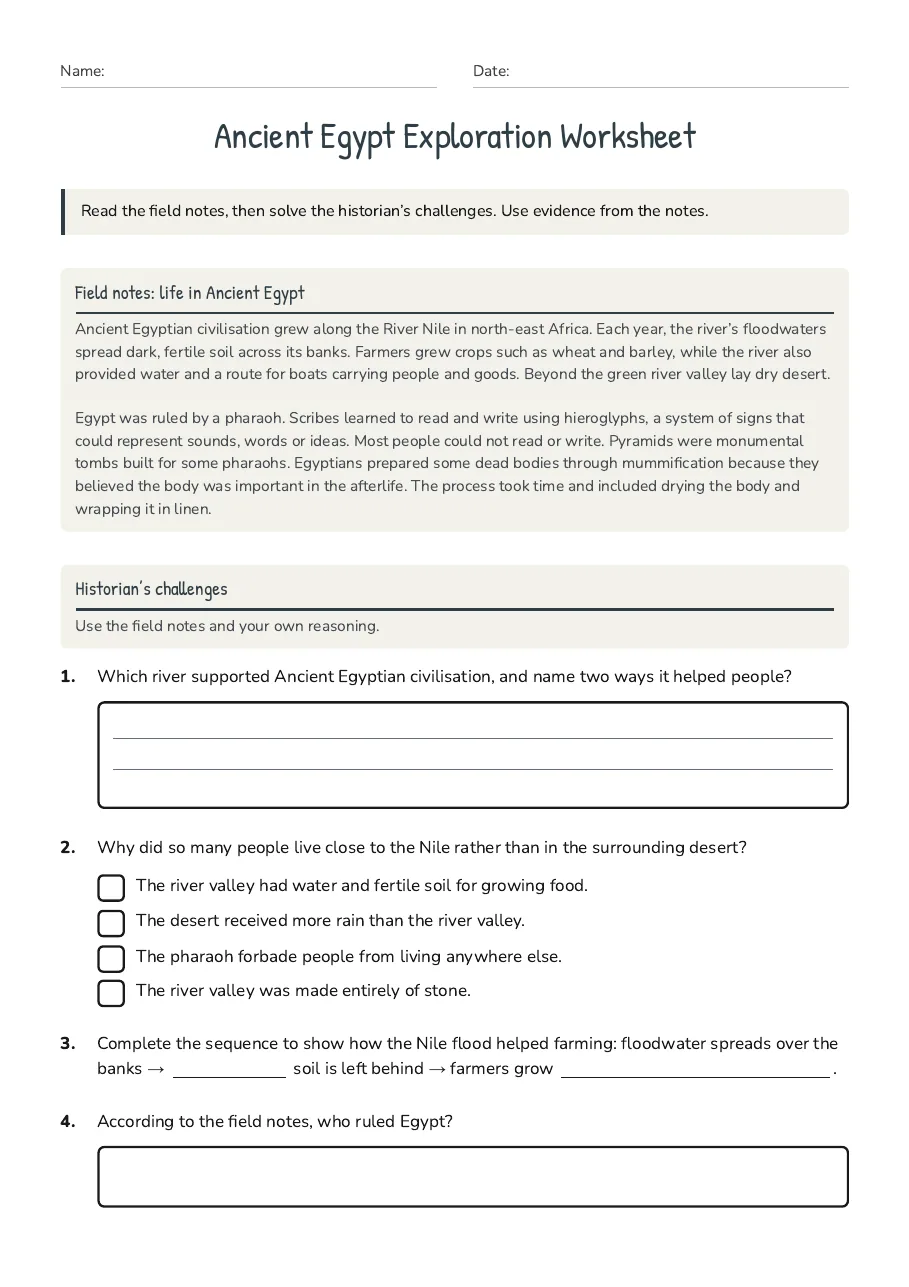
Field notes: life in Ancient Egypt
Ancient Egyptian civilisation grew along the River Nile in north-east Africa. Each year, the river’s floodwaters spread dark, fertile soil across its banks. Farmers grew crops such as wheat and barley, while the river also provided water and a route for boats carrying people and goods. Beyond the green river valley lay dry desert. Egypt was ruled by a pharaoh. Scribes learned to read and write using hieroglyphs, a system of signs that could represent sounds, words or ideas. Most people could not read or write. Pyramids were monumental tombs built for some pharaohs. Egyptians prepared some dead bodies through mummification because they believed the body was important in the afterlife. The process took time and included drying the body and wrapping it in linen.
Historian’s challenges
Use the field notes and your own reasoning.
- The river valley had water and fertile soil for growing food.
- The desert received more rain than the river valley.
- The pharaoh forbade people from living anywhere else.
- The river valley was made entirely of stone.
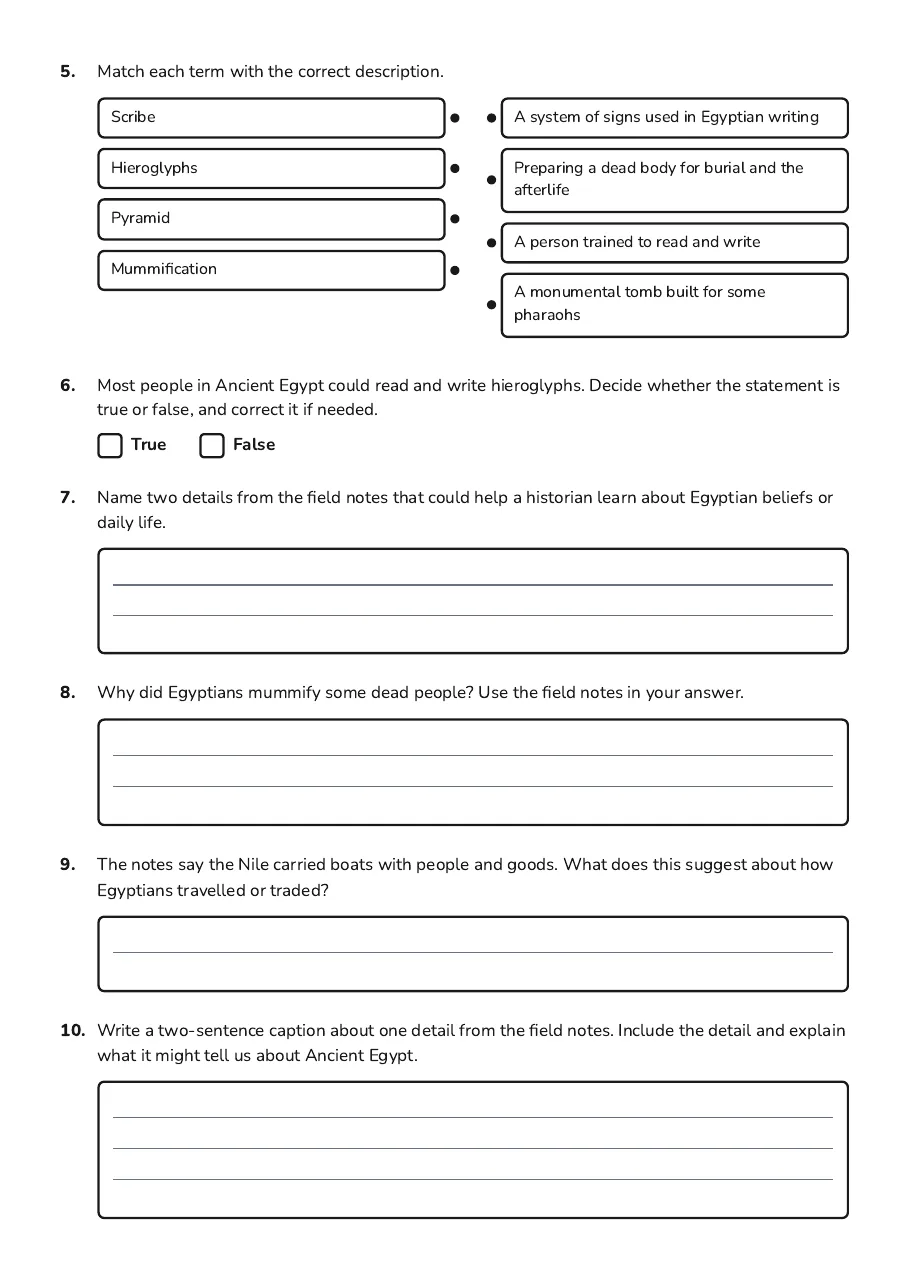
- Scribe
- Hieroglyphs
- Pyramid
- Mummification
- A system of signs used in Egyptian writing
- Preparing a dead body for burial and the afterlife
- A person trained to read and write
- A monumental tomb built for some pharaohs
3 printable pages
Page 1
Page 2

Page 3
About This Worksheet
Free in Kuraplan
Sign up free, grab the PDF, and customize it for your class.
Print-Ready
Formatted for standard paper. Clean layout, easy to read.
AI-Generated
Created with Kuraplan's AI, designed for real classroom use.
For Teachers & Parents
Use in classrooms, for homework, tutoring, or homeschool.
Need a custom version of this worksheet?
Kuraplan's AI generates custom worksheets in seconds — differentiated for every learner, aligned to your curriculum.
Generate Custom Worksheets — FreeMore History Worksheets
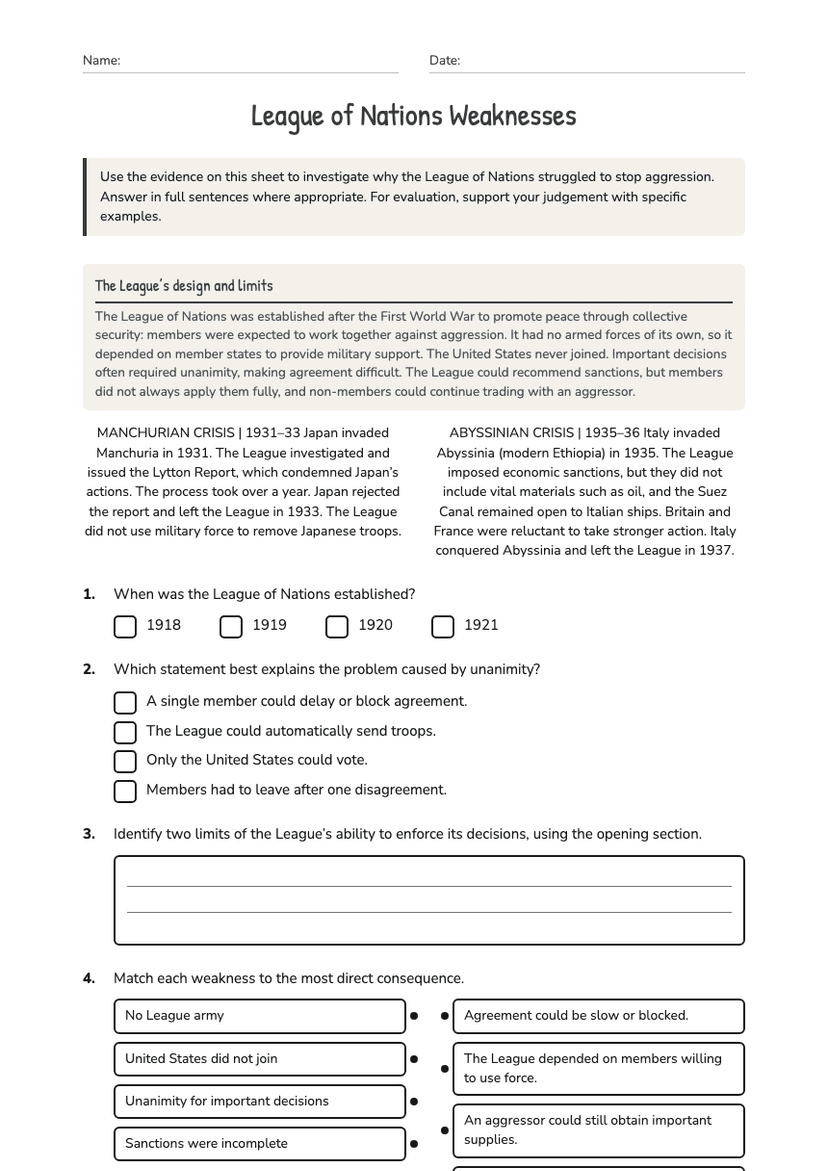
League of Nations Weaknesses
Free
Ancient vs Modern Benin
Free
Year 7 History Exploration: Britain Through Time
Free
Norman Origins and Timeline
Free
Christmas Truce 1914
Free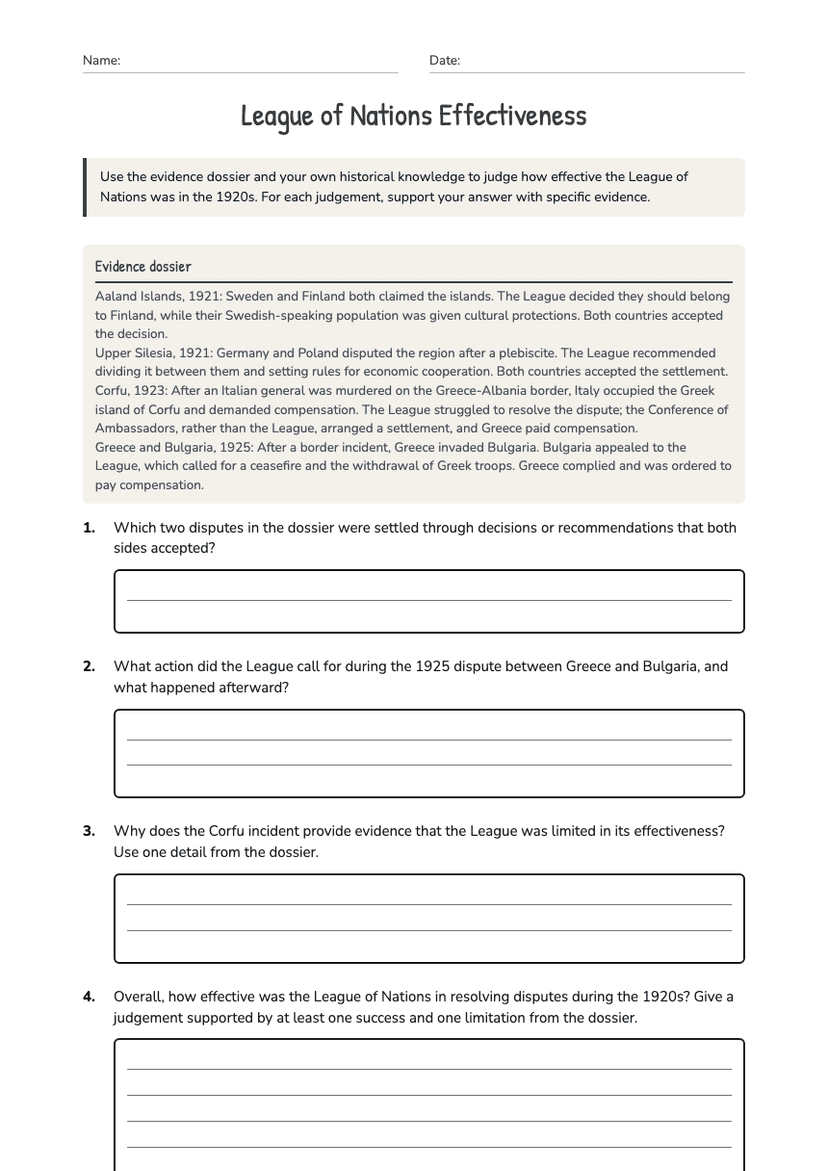
League of Nations Effectiveness
Free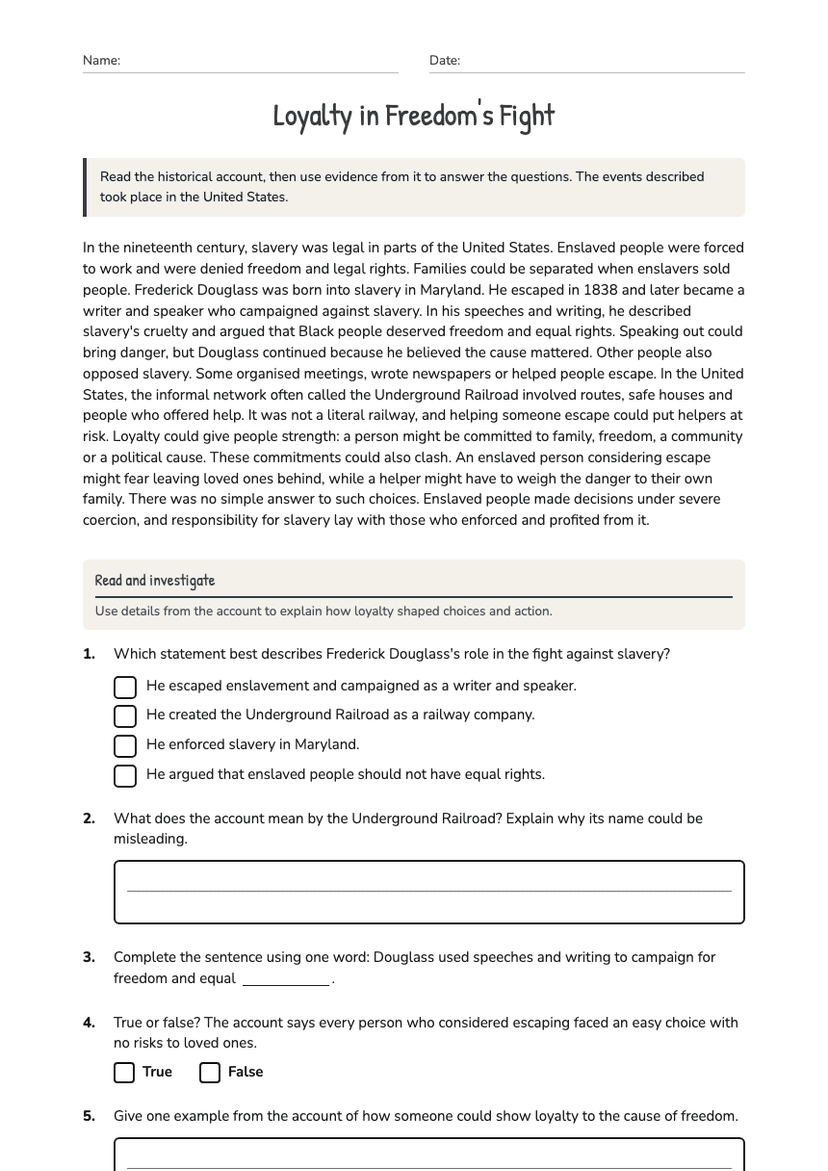
Loyalty in Freedom's Fight
Free