Ancient Greece Contributions Debate
A free history worksheet ready for your classroom. Open in Kuraplan to grab the print-ready PDF, customize it for your students, or generate a fresh version in seconds.
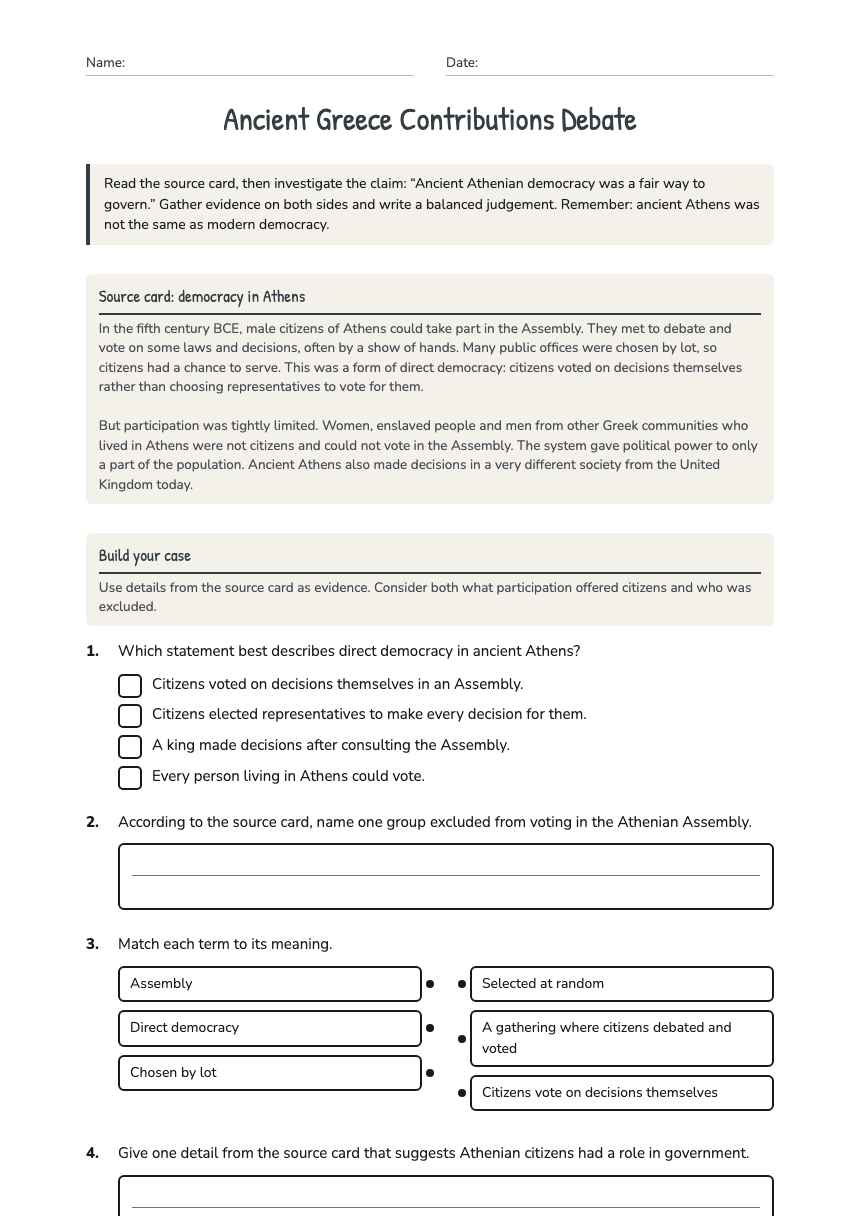
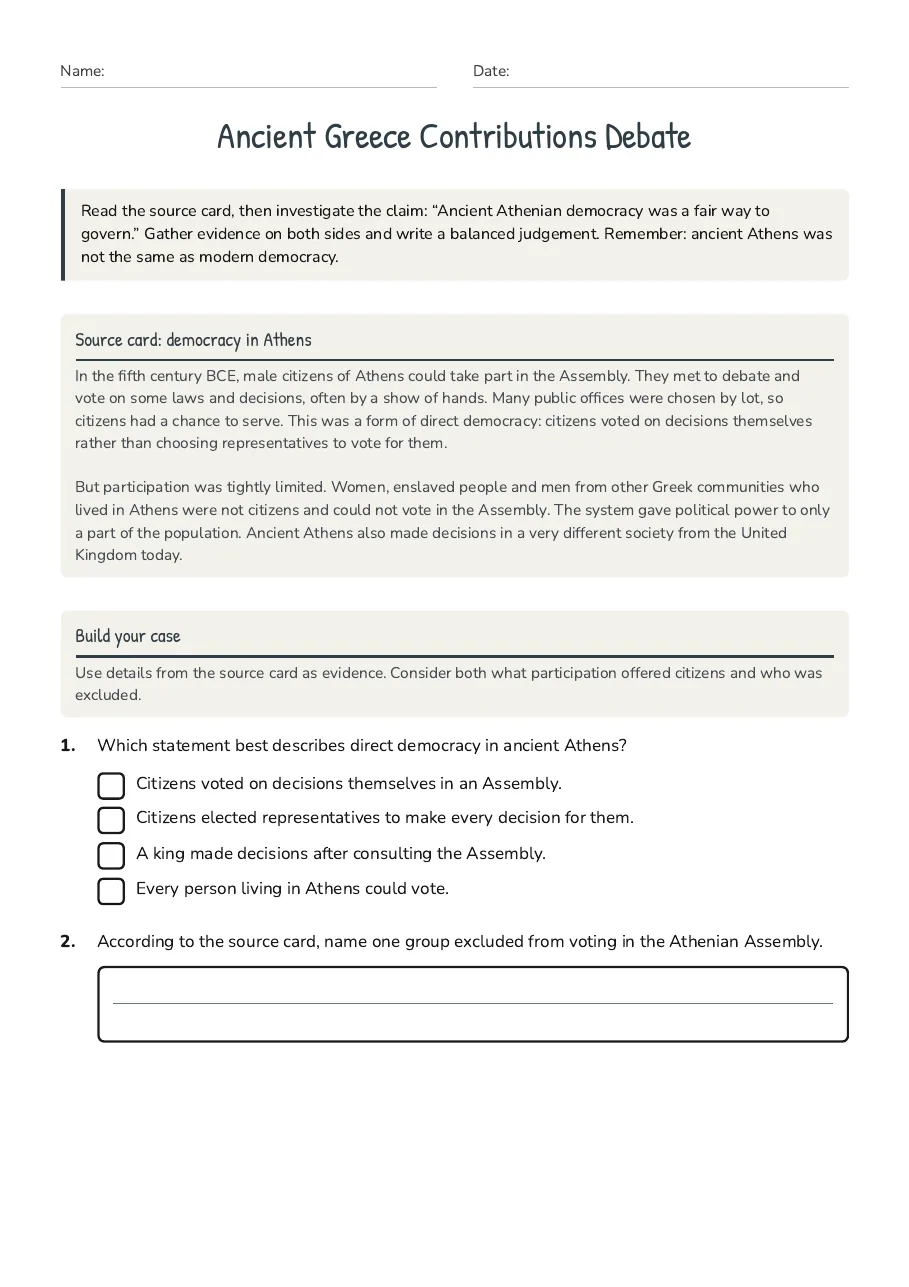
Ancient Greece Contributions Debate
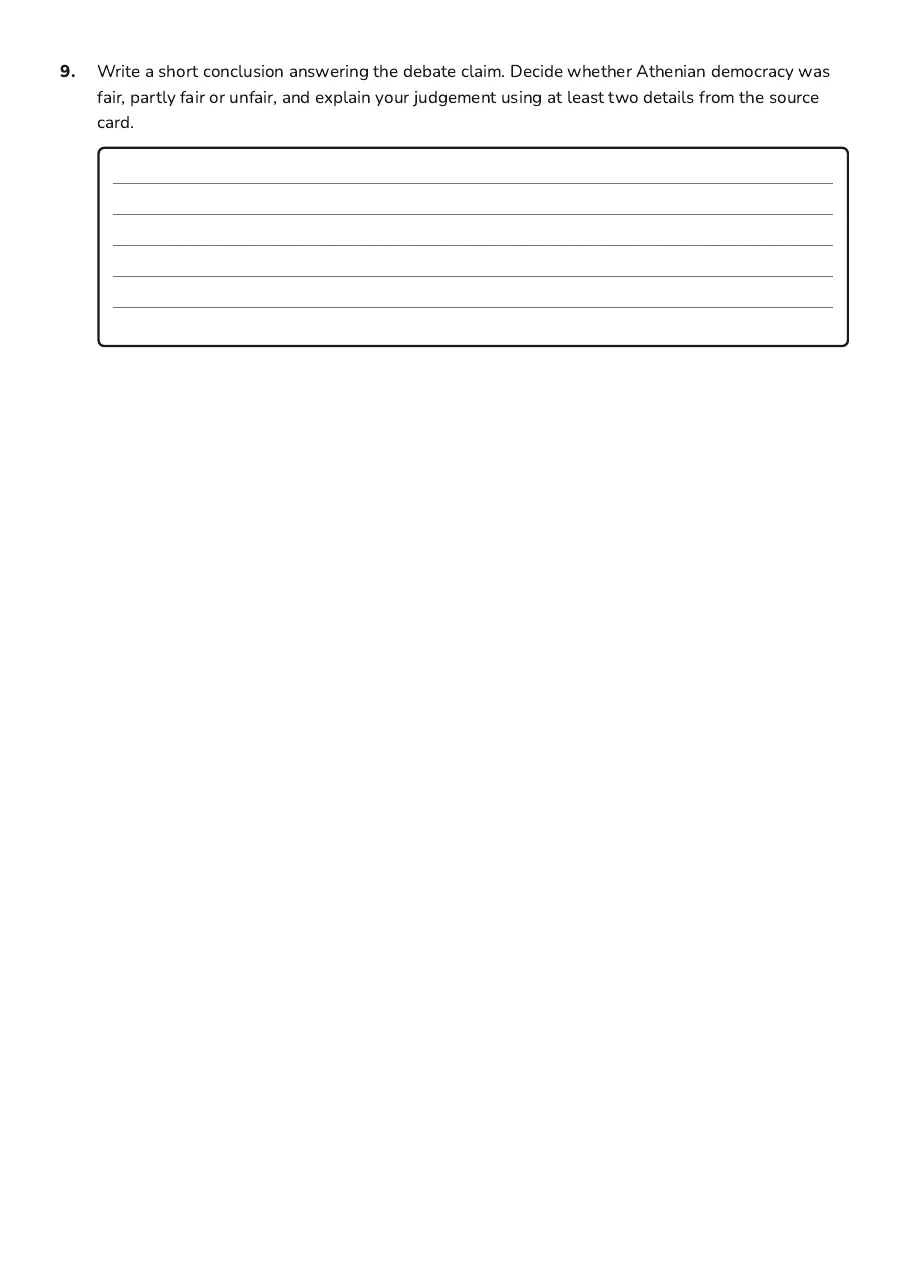
Source card: democracy in Athens
In the fifth century BCE, male citizens of Athens could take part in the Assembly. They met to debate and vote on some laws and decisions, often by a show of hands. Many public offices were chosen by lot, so citizens had a chance to serve. This was a form of direct democracy: citizens voted on decisions themselves rather than choosing representatives to vote for them. But participation was tightly limited. Women, enslaved people and men from other Greek communities who lived in Athens were not citizens and could not vote in the Assembly. The system gave political power to only a part of the population. Ancient Athens also made decisions in a very different society from the United Kingdom today.
Build your case
Use details from the source card as evidence. Consider both what participation offered citizens and who was excluded.
- Citizens voted on decisions themselves in an Assembly.
- Citizens elected representatives to make every decision for them.
- A king made decisions after consulting the Assembly.
- Every person living in Athens could vote.
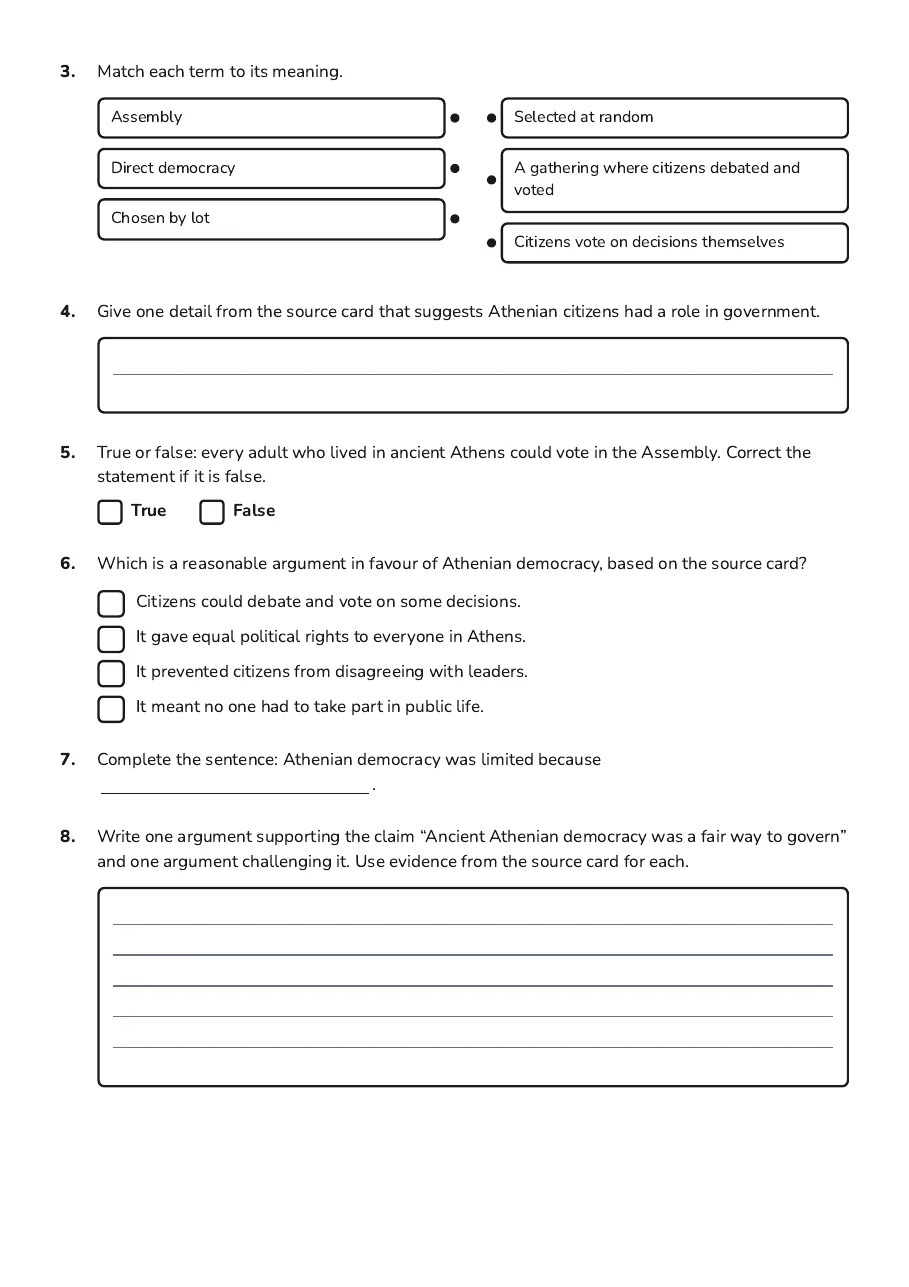
- Assembly
- Direct democracy
- Chosen by lot
- Selected at random
- A gathering where citizens debated and voted
- Citizens vote on decisions themselves
- Citizens could debate and vote on some decisions.
- It gave equal political rights to everyone in Athens.
- It prevented citizens from disagreeing with leaders.
- It meant no one had to take part in public life.
3 printable pages
Page 1
Page 2
Page 3
About This Worksheet
Free in Kuraplan
Sign up free, grab the PDF, and customize it for your class.
Print-Ready
Formatted for standard paper. Clean layout, easy to read.
AI-Generated
Created with Kuraplan's AI, designed for real classroom use.
For Teachers & Parents
Use in classrooms, for homework, tutoring, or homeschool.
Need a custom version of this worksheet?
Kuraplan's AI generates custom worksheets in seconds — differentiated for every learner, aligned to your curriculum.
Generate Custom Worksheets — FreeMore History Worksheets
League of Nations Weaknesses
Free
Ancient vs Modern Benin
Free
Year 7 History Exploration: Britain Through Time
Free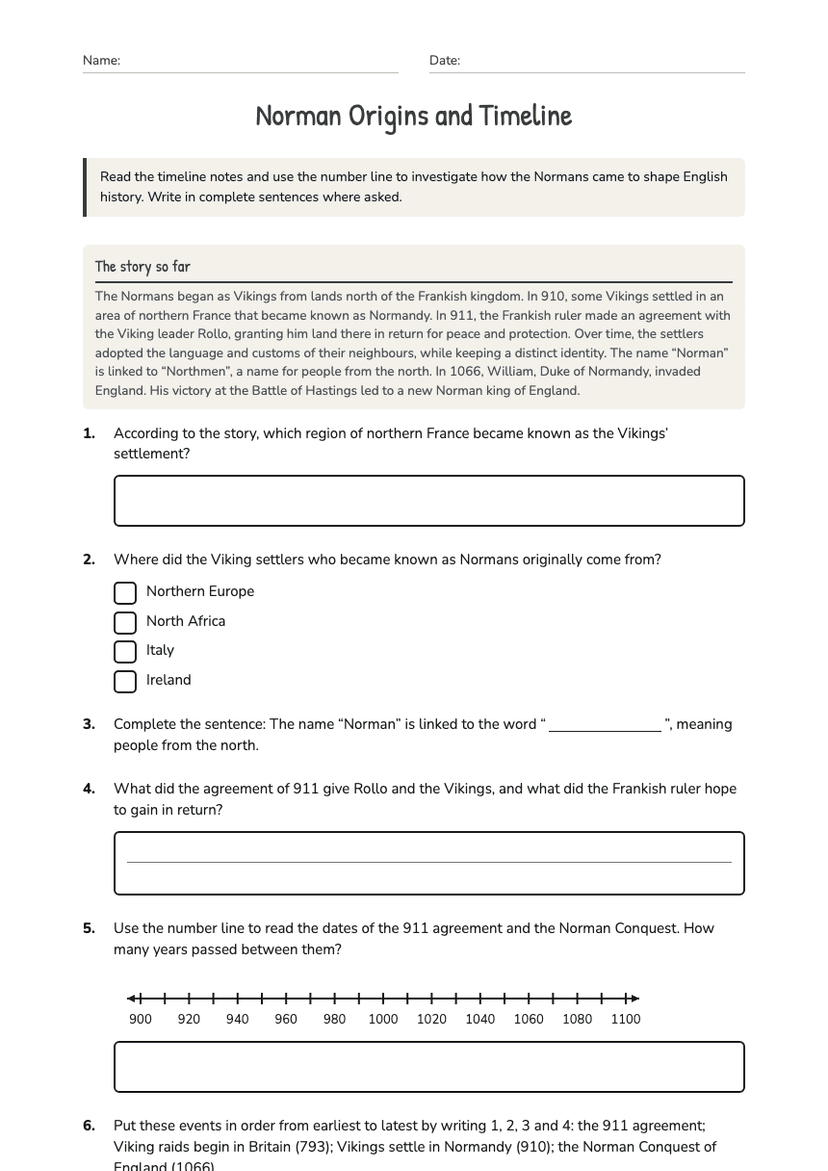
Norman Origins and Timeline
Free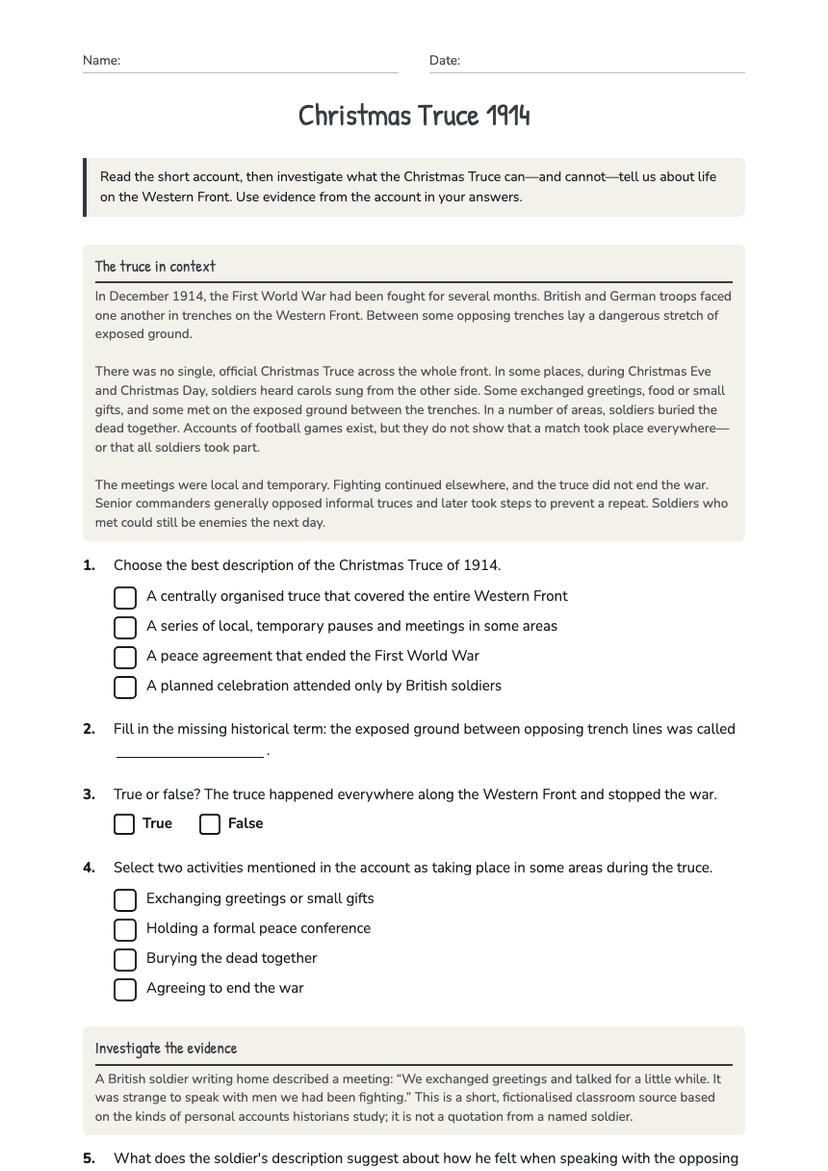
Christmas Truce 1914
Free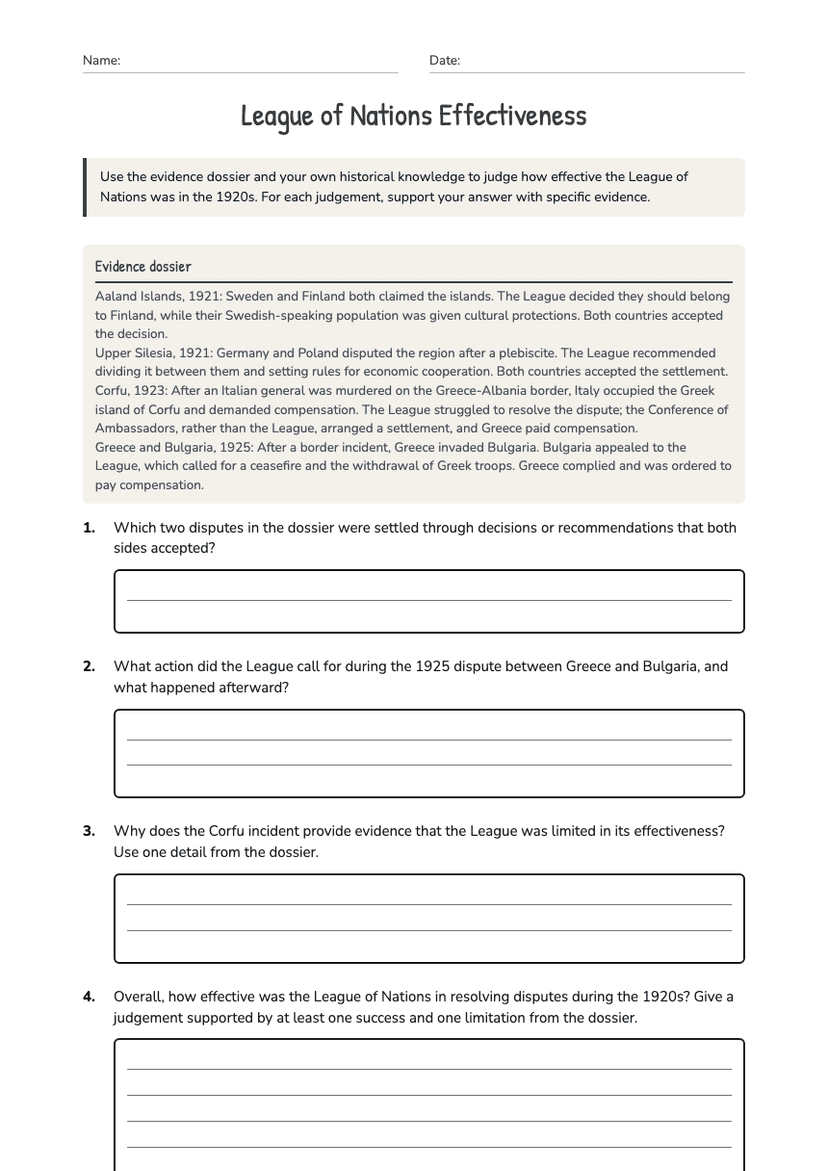
League of Nations Effectiveness
Free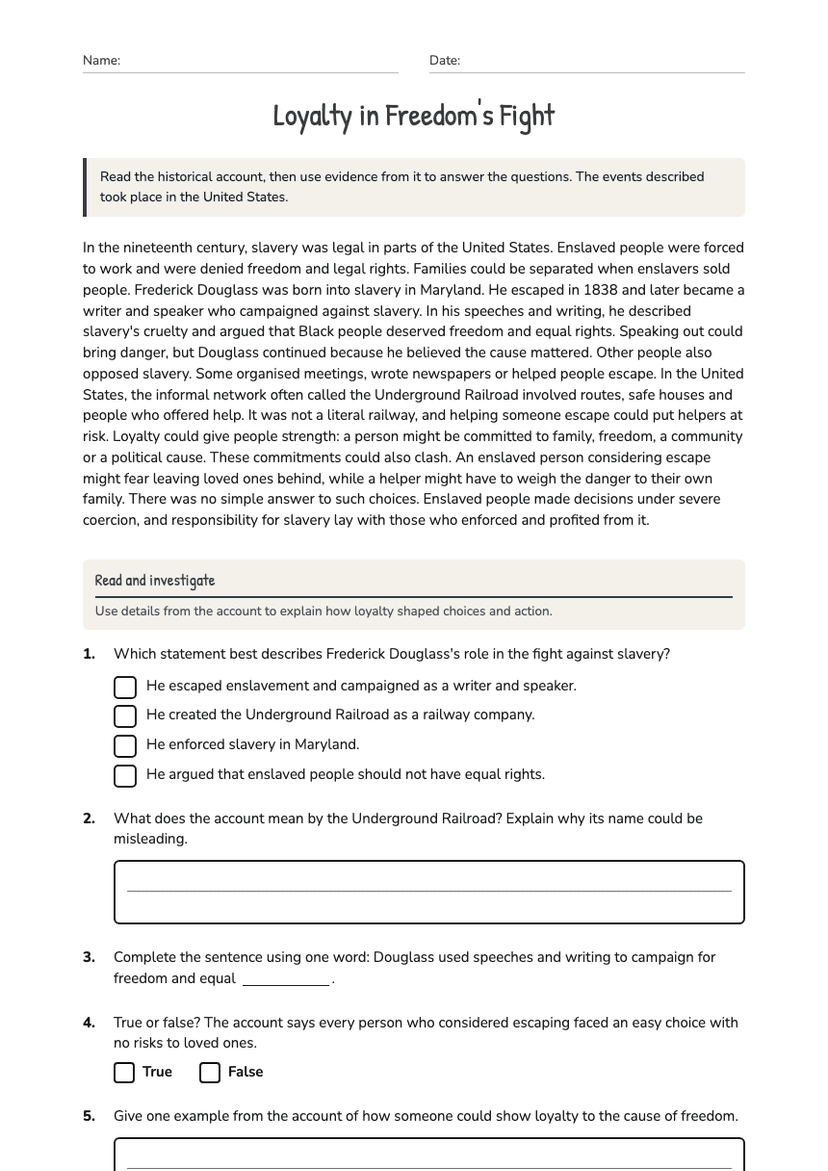
Loyalty in Freedom's Fight
Free