Australian Referendums Constitutional Process
A free social sciences worksheet ready for your classroom. Open in Kuraplan to grab the print-ready PDF, customize it for your students, or generate a fresh version in seconds.
Australian Referendums Constitutional Process
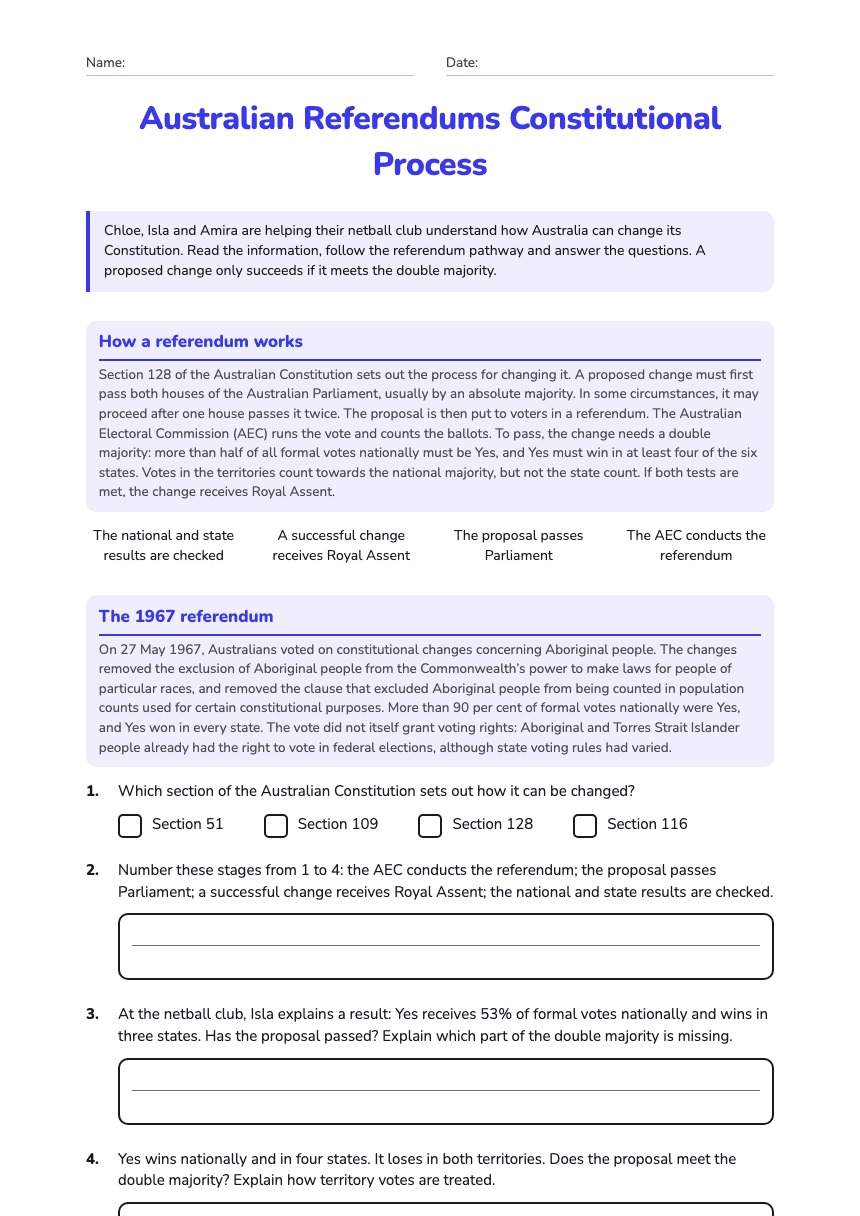
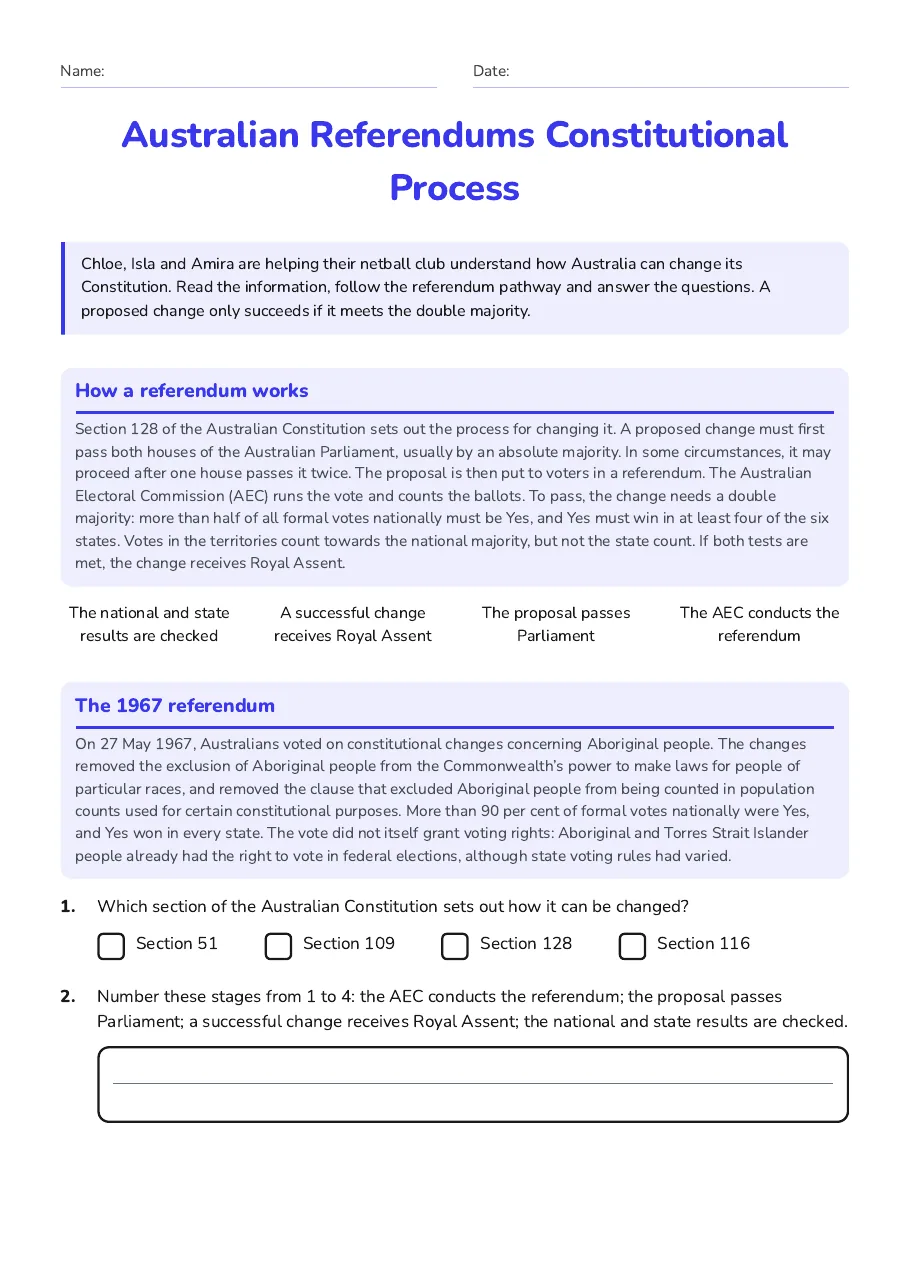
How a referendum works
Section 128 of the Australian Constitution sets out the process for changing it. A proposed change must first pass both houses of the Australian Parliament, usually by an absolute majority. In some circumstances, it may proceed after one house passes it twice. The proposal is then put to voters in a referendum. The Australian Electoral Commission (AEC) runs the vote and counts the ballots. To pass, the change needs a double majority: more than half of all formal votes nationally must be Yes, and Yes must win in at least four of the six states. Votes in the territories count towards the national majority, but not the state count. If both tests are met, the change receives Royal Assent.
The national and state results are checked
A successful change receives Royal Assent
The proposal passes Parliament
The AEC conducts the referendum
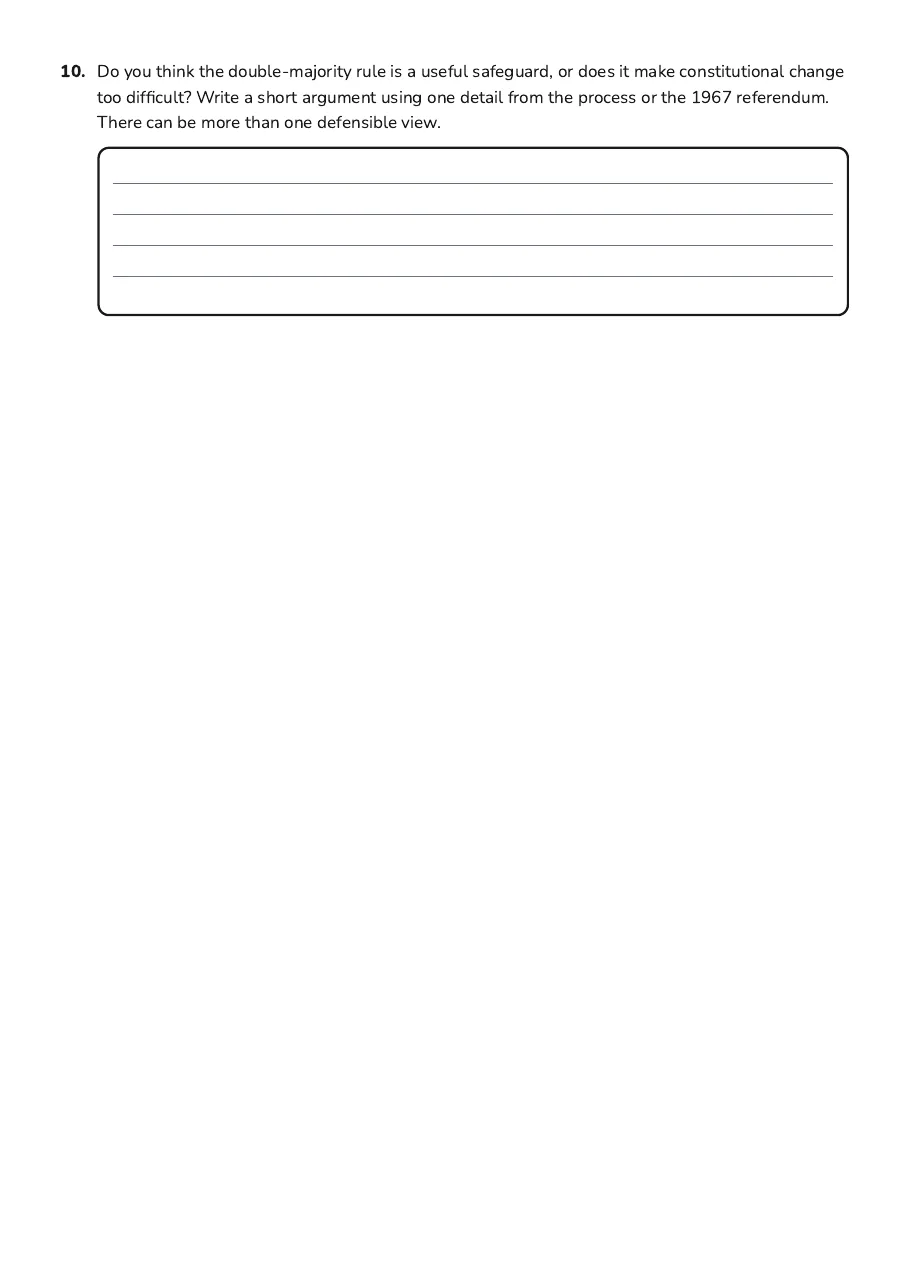
The 1967 referendum
On 27 May 1967, Australians voted on constitutional changes concerning Aboriginal people. The changes removed the exclusion of Aboriginal people from the Commonwealth’s power to make laws for people of particular races, and removed the clause that excluded Aboriginal people from being counted in population counts used for certain constitutional purposes. More than 90 per cent of formal votes nationally were Yes, and Yes won in every state. The vote did not itself grant voting rights: Aboriginal and Torres Strait Islander people already had the right to vote in federal elections, although state voting rules had varied.
- Section 51
- Section 109
- Section 128
- Section 116
3 printable pages
Page 1
Page 2
Page 3
About This Worksheet
Free in Kuraplan
Sign up free, grab the PDF, and customize it for your class.
Print-Ready
Formatted for standard paper. Clean layout, easy to read.
AI-Generated
Created with Kuraplan's AI, designed for real classroom use.
For Teachers & Parents
Use in classrooms, for homework, tutoring, or homeschool.
Need a custom version of this worksheet?
Kuraplan's AI generates custom worksheets in seconds — differentiated for every learner, aligned to your curriculum.
Generate Custom Worksheets — FreeMore Social Sciences Worksheets
Community Project Planning
Free
Australian Law Reform Fact Sheets
Free
Human Rights Debate Rubric
Free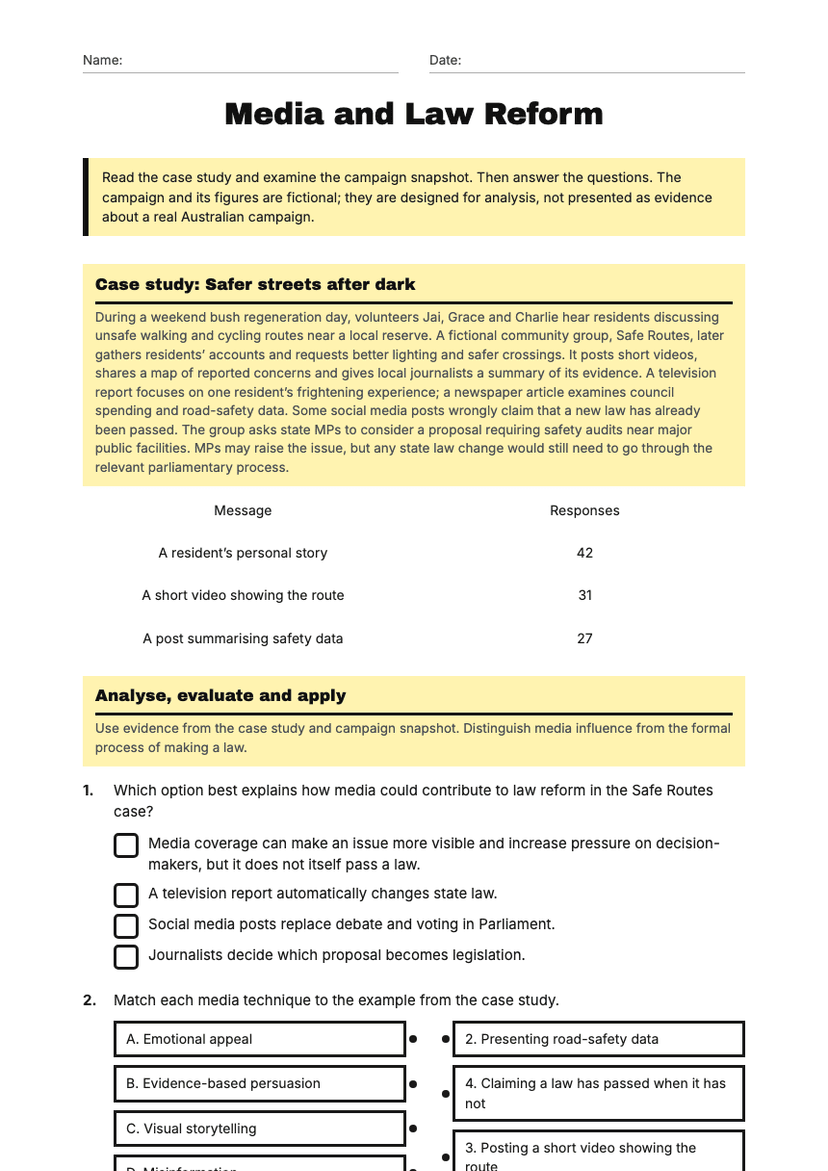
Media and Law Reform
Free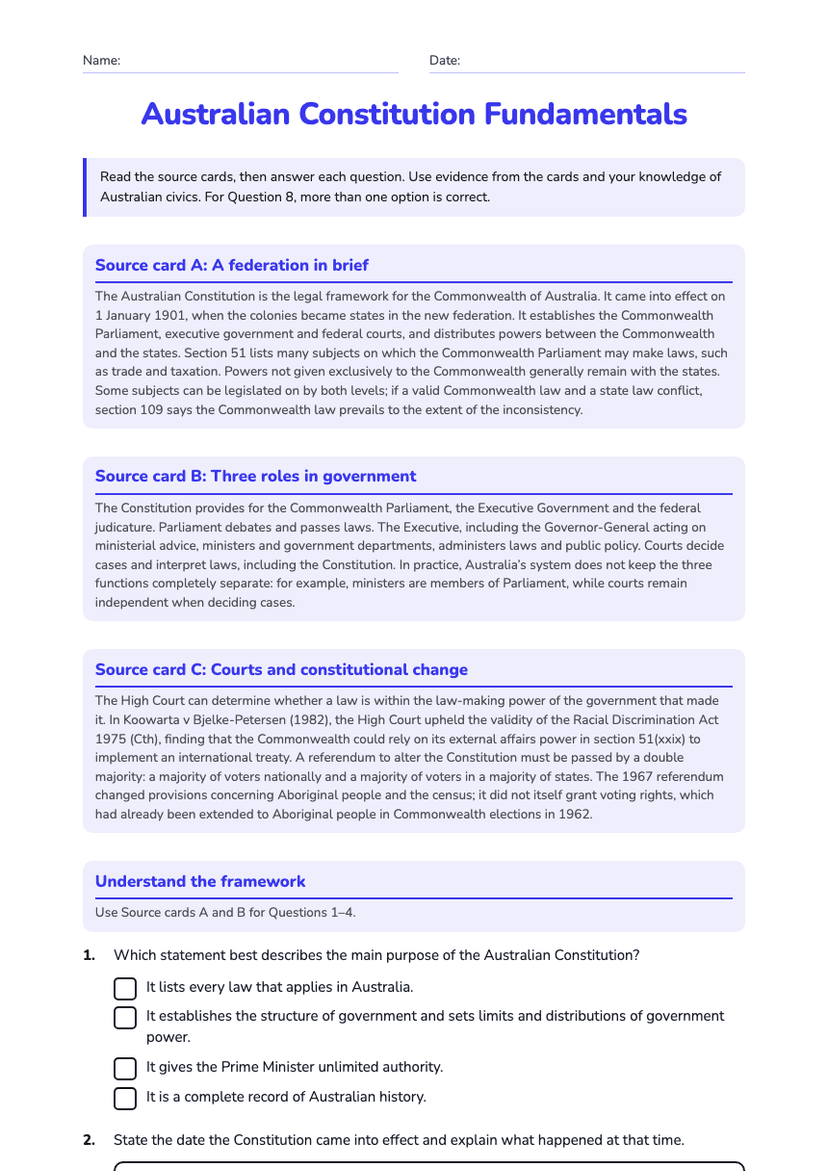
Australian Constitution Fundamentals
Free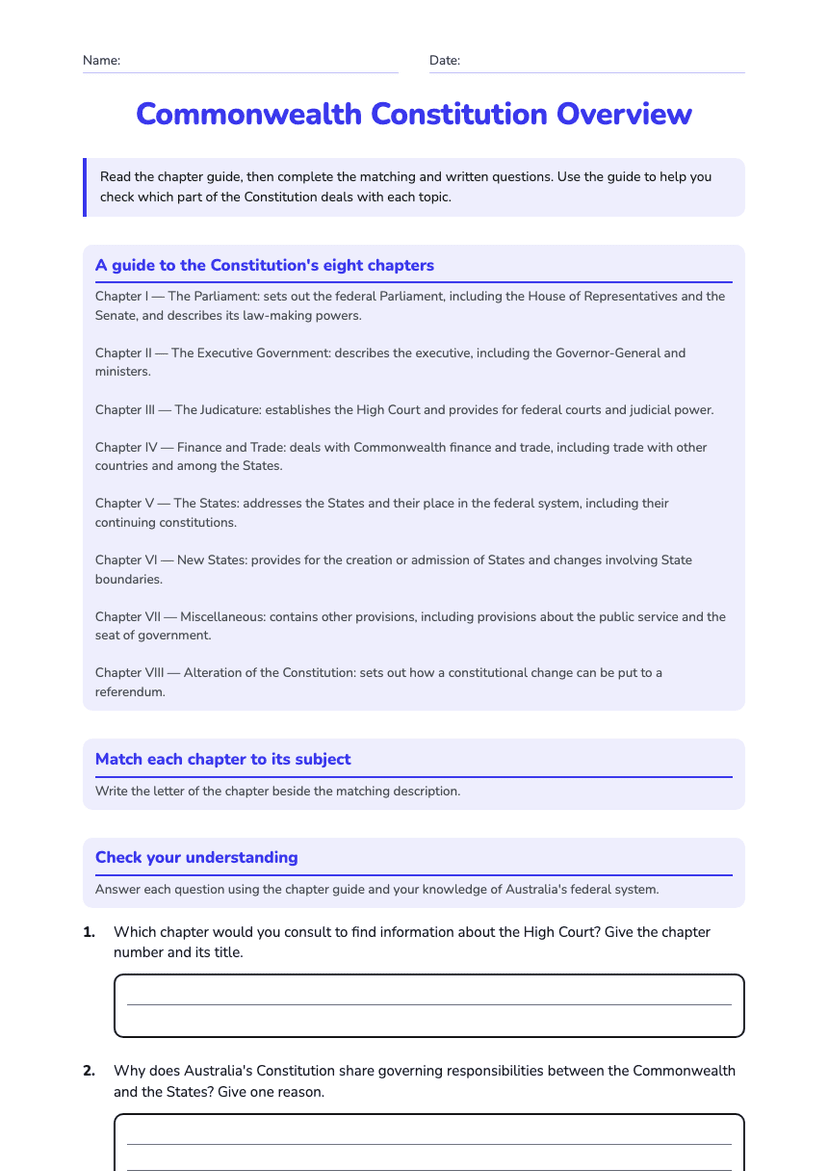
Commonwealth Constitution Overview
Free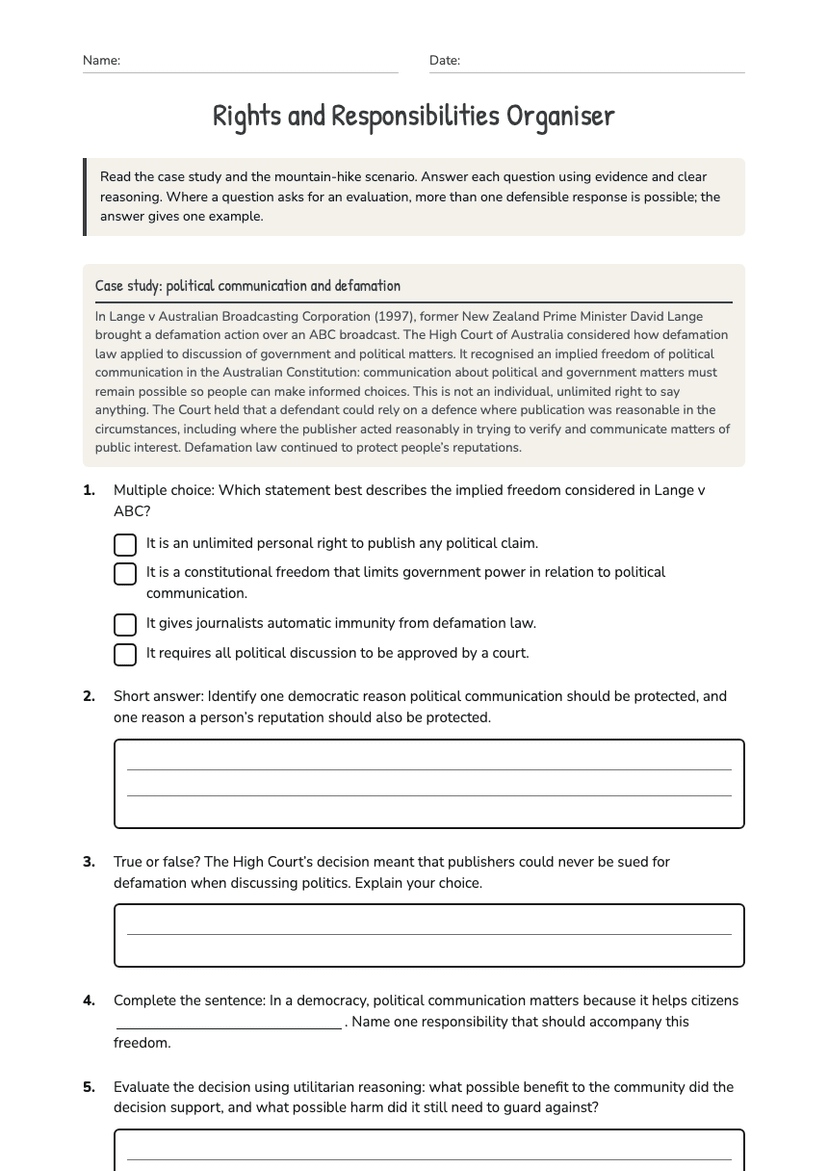
Rights and Responsibilities Organiser
Free