ScienceFreePrintable
Bonding and VSEPR Worksheet
A free science worksheet ready for your classroom. Open in Kuraplan to grab the print-ready PDF, customize it for your students, or generate a fresh version in seconds.

Name:Date:
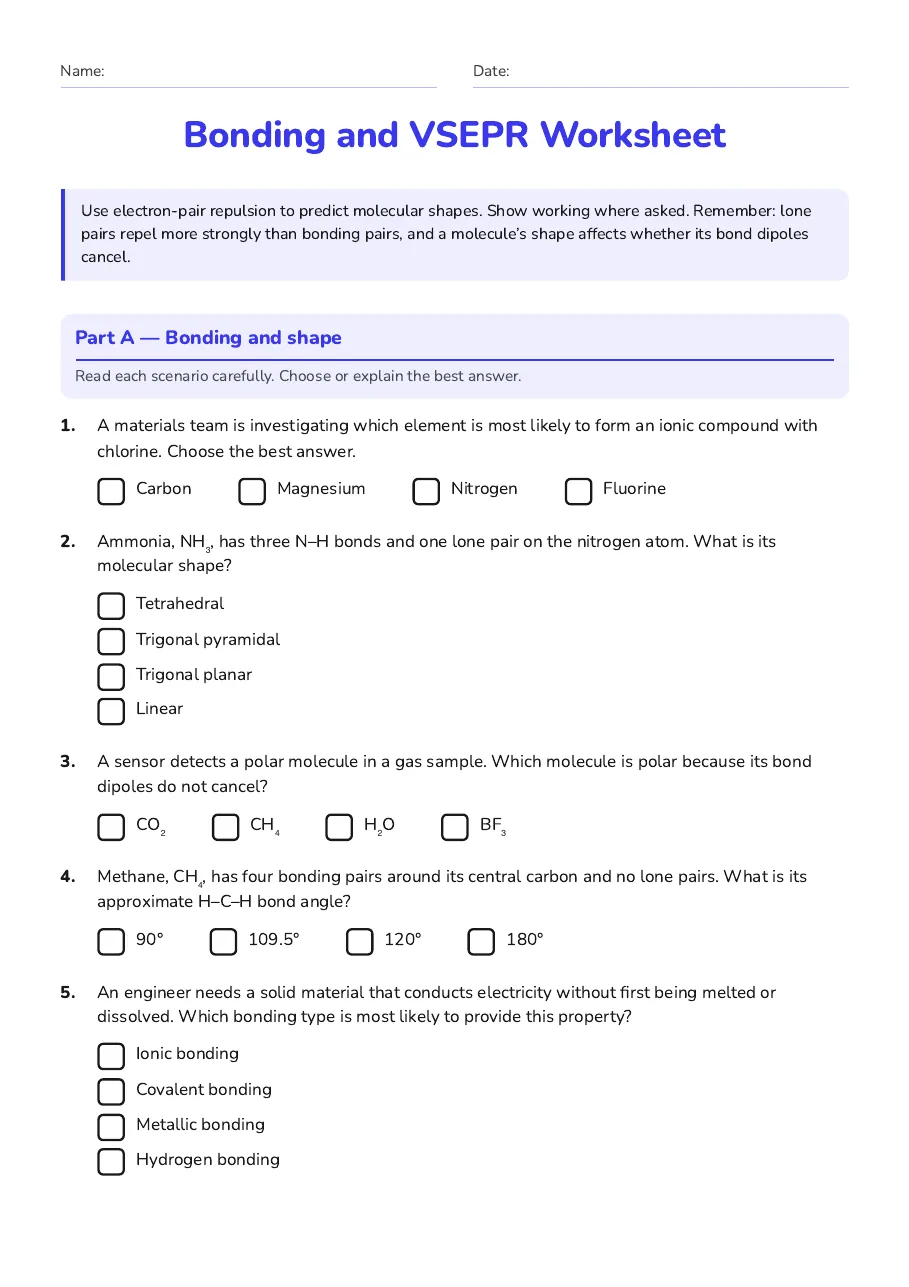
Bonding and VSEPR Worksheet
Use electron-pair repulsion to predict molecular shapes. Show working where asked. Remember: lone pairs repel more strongly than bonding pairs, and a molecule’s shape affects whether its bond dipoles cancel.
Part A — Bonding and shape
Read each scenario carefully. Choose or explain the best answer.
1.A materials team is investigating which element is most likely to form an ionic compound with chlorine. Choose the best answer.
- Carbon
- Magnesium
- Nitrogen
- Fluorine
2.Ammonia, NH₃, has three N–H bonds and one lone pair on the nitrogen atom. What is its molecular shape?
- Tetrahedral
- Trigonal pyramidal
- Trigonal planar
- Linear
3.A sensor detects a polar molecule in a gas sample. Which molecule is polar because its bond dipoles do not cancel?
- CO₂
- CH₄
- H₂O
- BF₃
4.Methane, CH₄, has four bonding pairs around its central carbon and no lone pairs. What is its approximate H–C–H bond angle?
- 90°
- 109.5°
- 120°
- 180°
5.An engineer needs a solid material that conducts electricity without first being melted or dissolved. Which bonding type is most likely to provide this property?
- Ionic bonding
- Covalent bonding
- Metallic bonding
- Hydrogen bonding
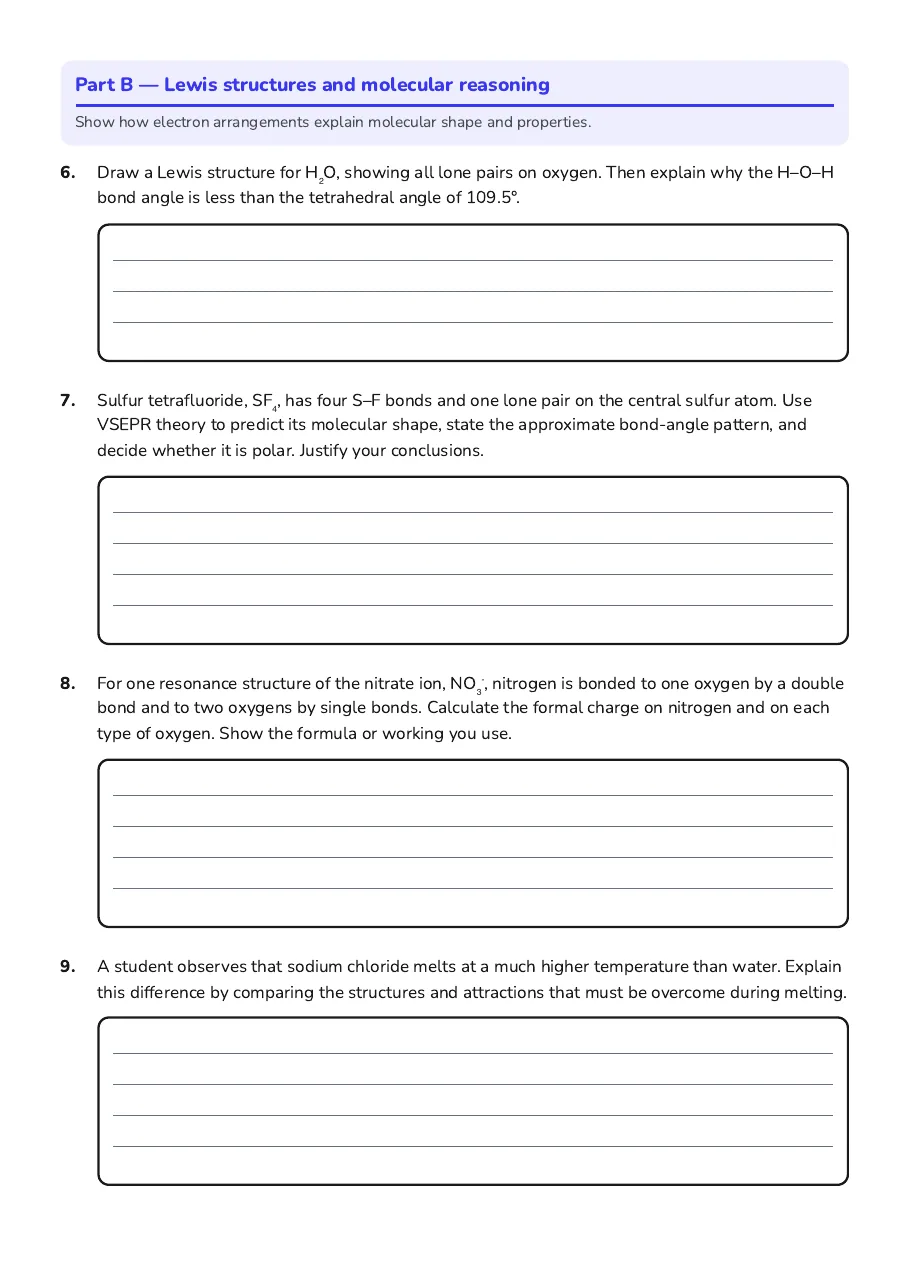
Part B — Lewis structures and molecular reasoning
Show how electron arrangements explain molecular shape and properties.
6.Draw a Lewis structure for H₂O, showing all lone pairs on oxygen. Then explain why the H–O–H bond angle is less than the tetrahedral angle of 109.5°.
7.Sulfur tetrafluoride, SF₄, has four S–F bonds and one lone pair on the central sulfur atom. Use VSEPR theory to predict its molecular shape, state the approximate bond-angle pattern, and decide whether it is polar. Justify your conclusions.
8.For one resonance structure of the nitrate ion, NO₃⁻, nitrogen is bonded to one oxygen by a double bond and to two oxygens by single bonds. Calculate the formal charge on nitrogen and on each type of oxygen. Show the formula or working you use.
9.A student observes that sodium chloride melts at a much higher temperature than water. Explain this difference by comparing the structures and attractions that must be overcome during melting.
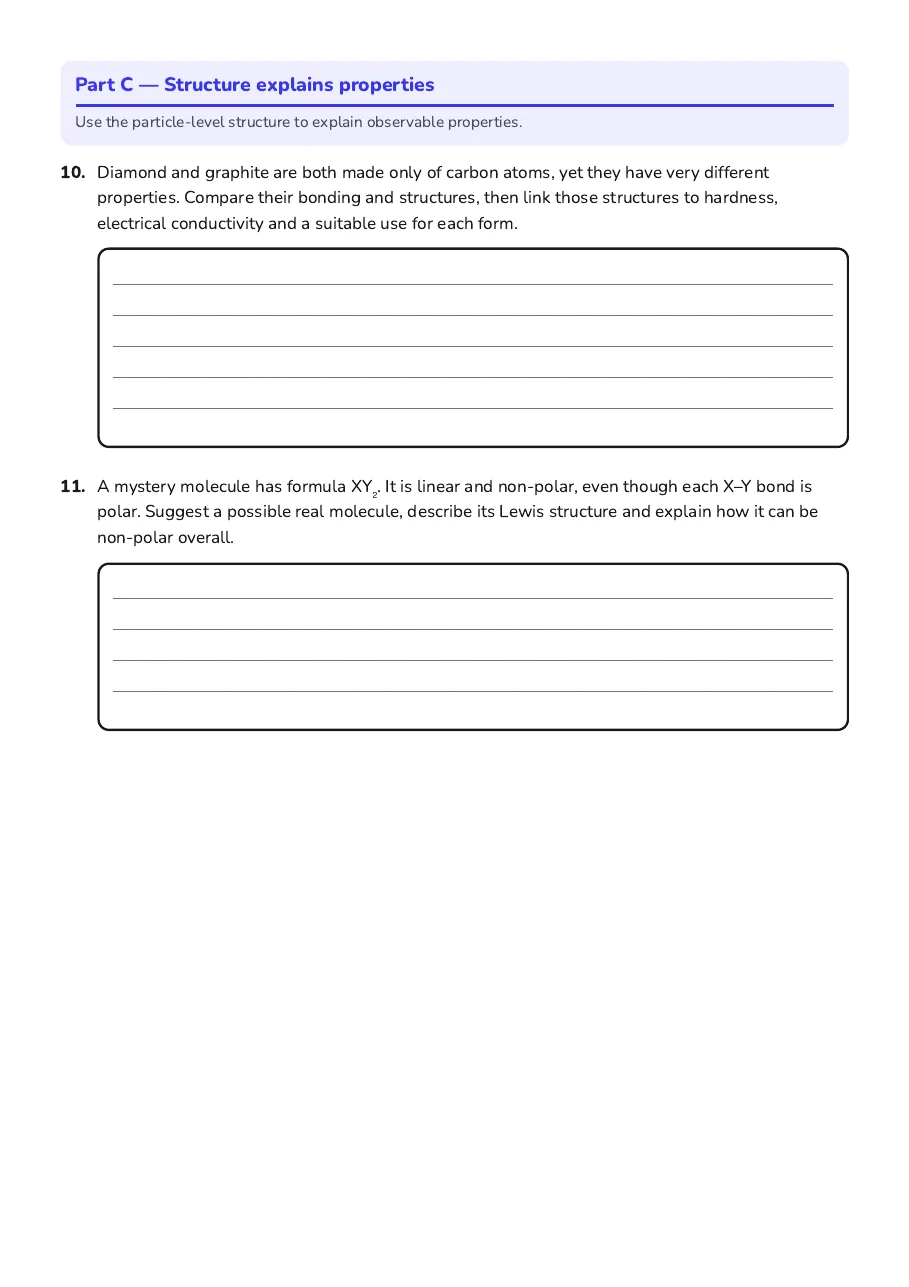
Part C — Structure explains properties
Use the particle-level structure to explain observable properties.
10.Diamond and graphite are both made only of carbon atoms, yet they have very different properties. Compare their bonding and structures, then link those structures to hardness, electrical conductivity and a suitable use for each form.
11.A mystery molecule has formula XY₂. It is linear and non-polar, even though each X–Y bond is polar. Suggest a possible real molecule, describe its Lewis structure and explain how it can be non-polar overall.
3 printable pages
Page 1
Page 2
Page 3
About This Worksheet
Free in Kuraplan
Sign up free, grab the PDF, and customize it for your class.
Print-Ready
Formatted for standard paper. Clean layout, easy to read.
AI-Generated
Created with Kuraplan's AI, designed for real classroom use.
For Teachers & Parents
Use in classrooms, for homework, tutoring, or homeschool.
Need a custom version of this worksheet?
Kuraplan's AI generates custom worksheets in seconds — differentiated for every learner, aligned to your curriculum.
Generate Custom Worksheets — Free No credit card Curriculum-aligned Under 60 seconds
More Science Worksheets
Year 8
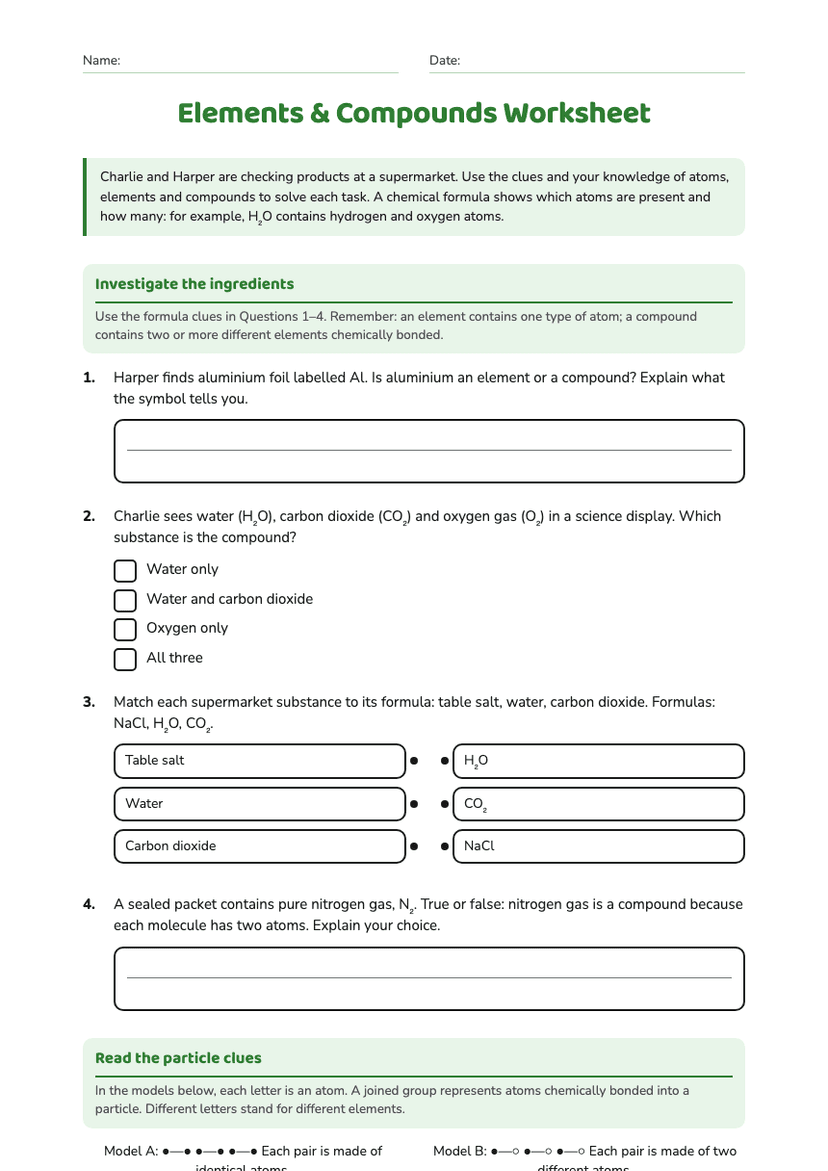
Elements & Compounds Worksheet
Free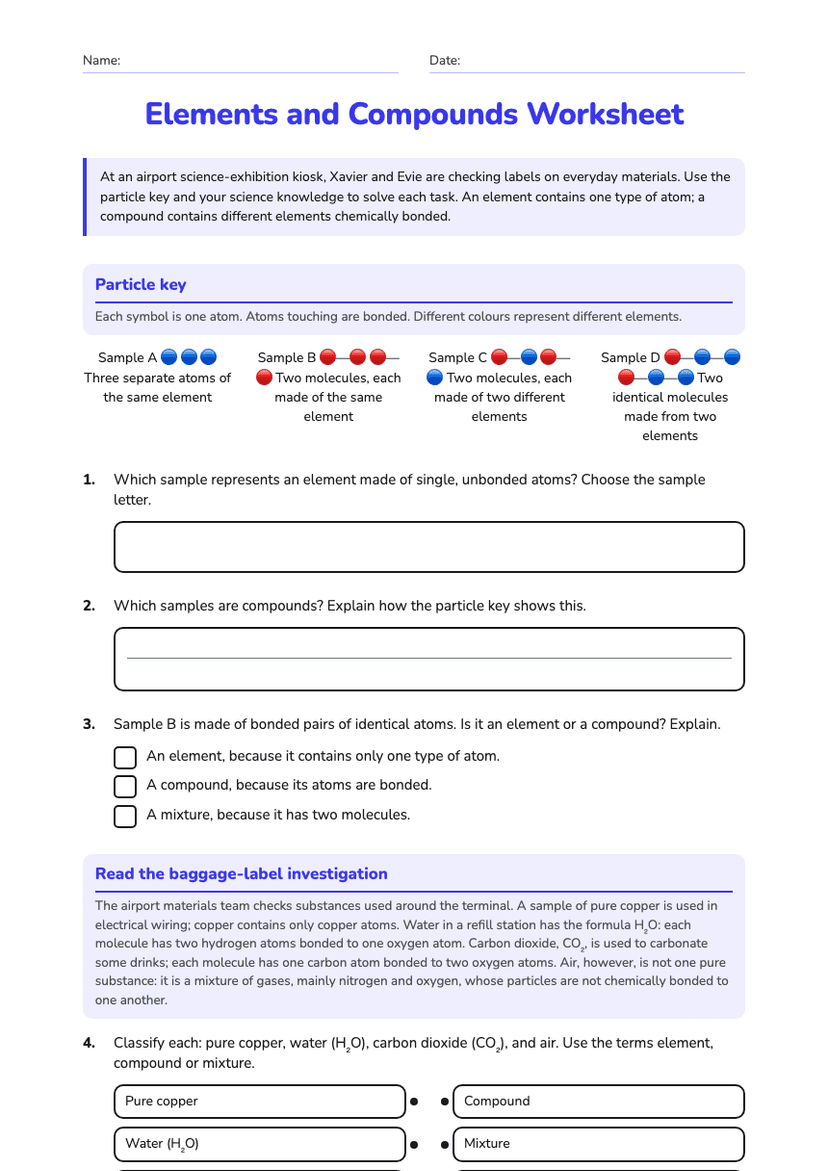
Year 8
Elements and Compounds Worksheet
Free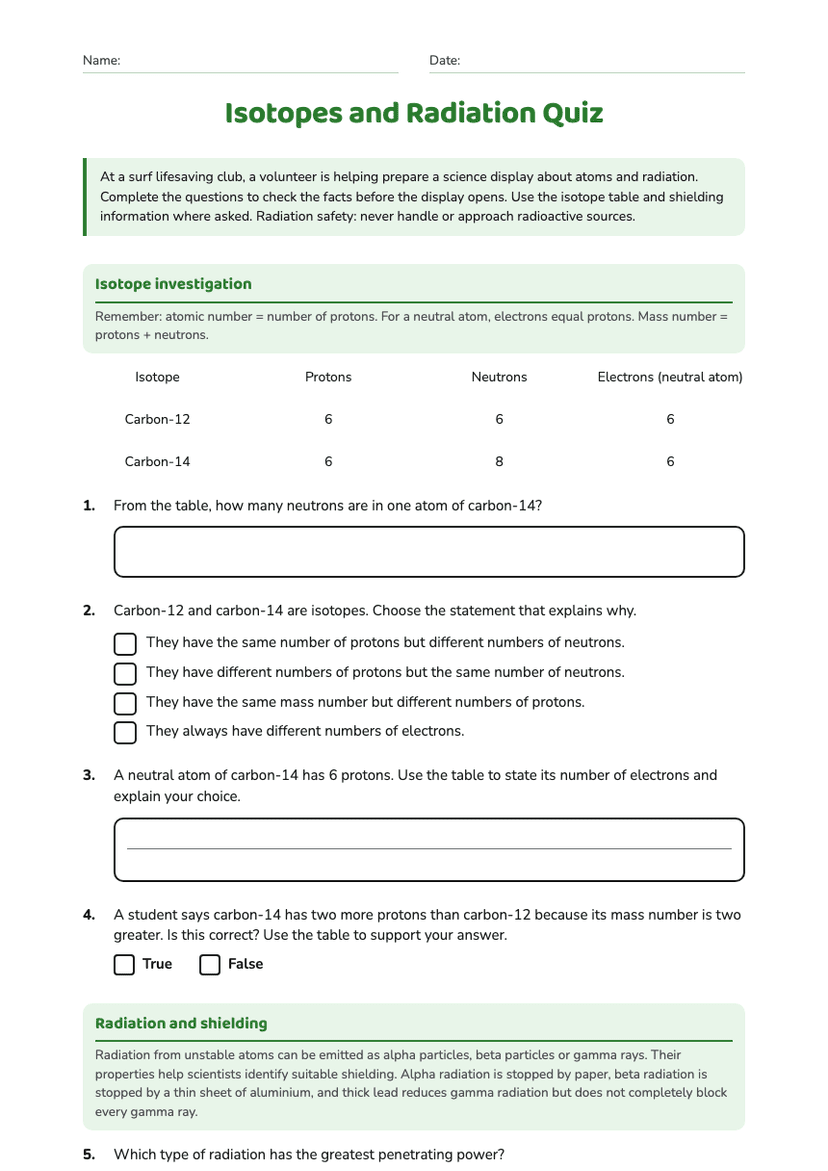
Isotopes and Radiation Quiz
Free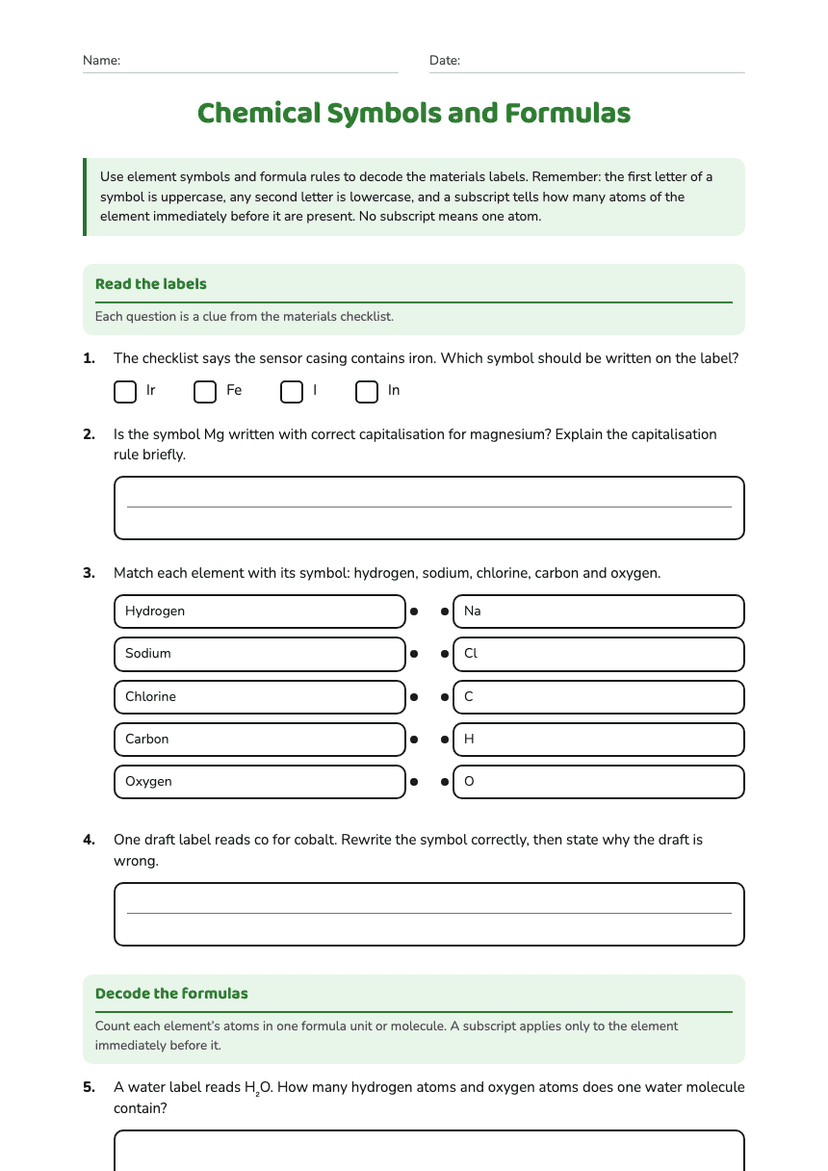
Year 8
Chemical Symbols and Formulas
Free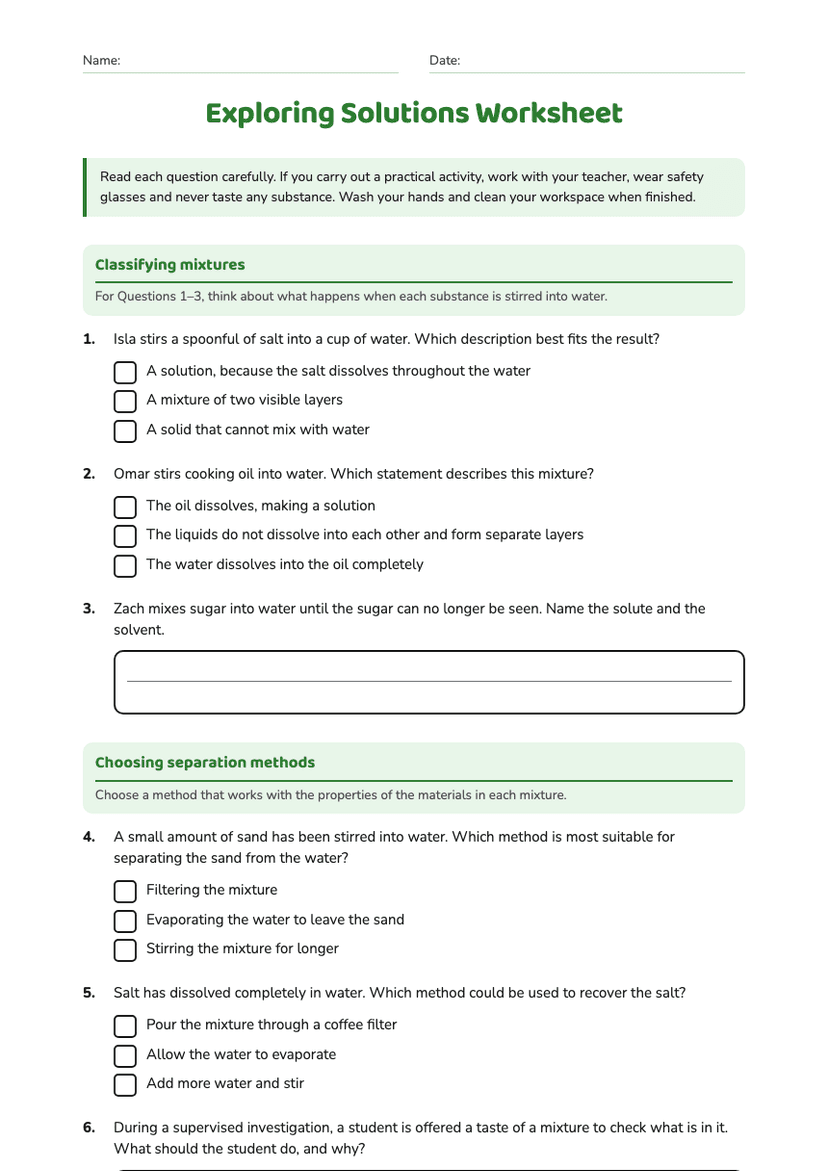
Year 7
Exploring Solutions Worksheet
Free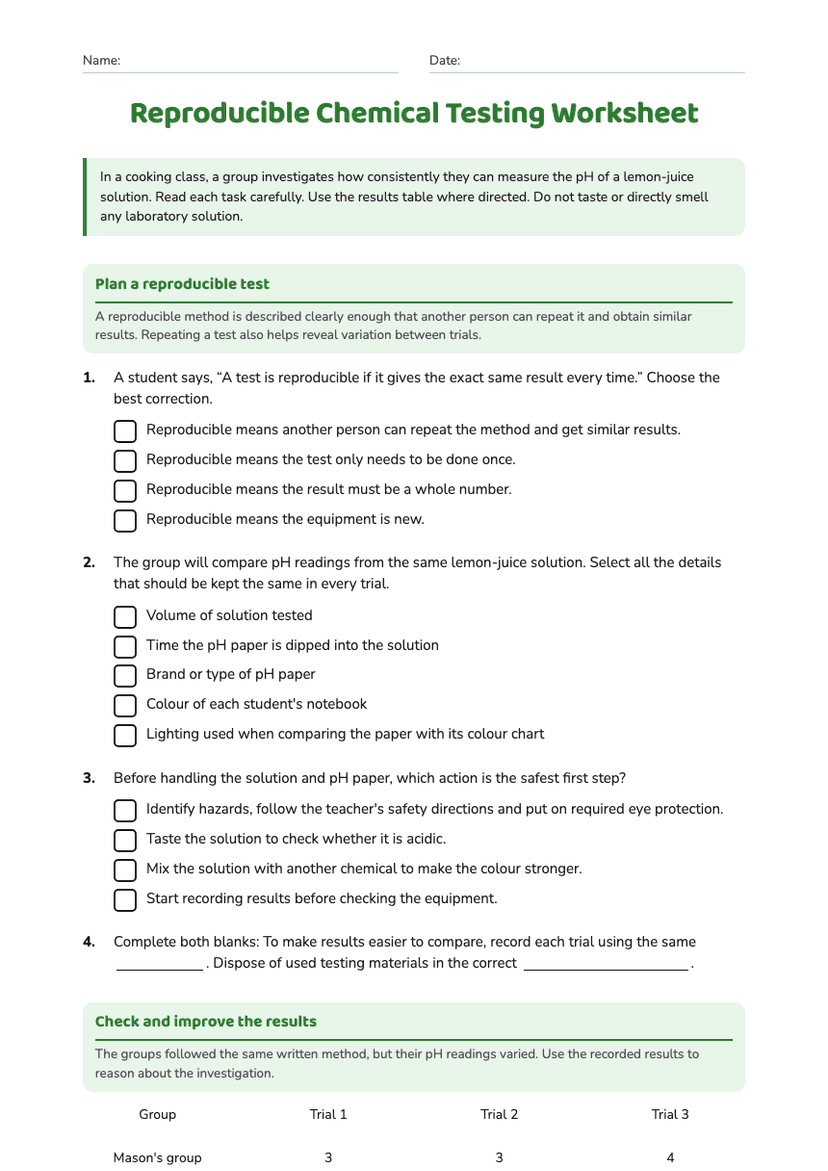
Year 9
Reproducible Chemical Testing Worksheet
Free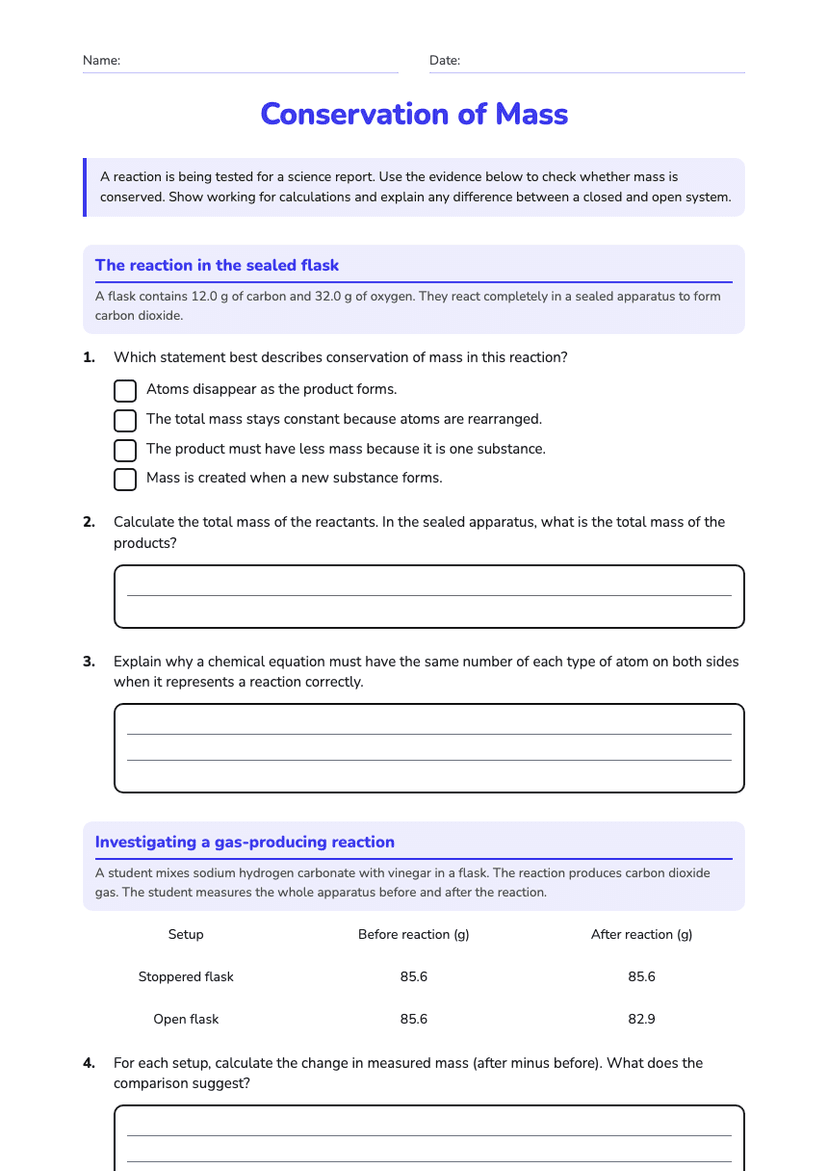
Year 10
Conservation of Mass
Free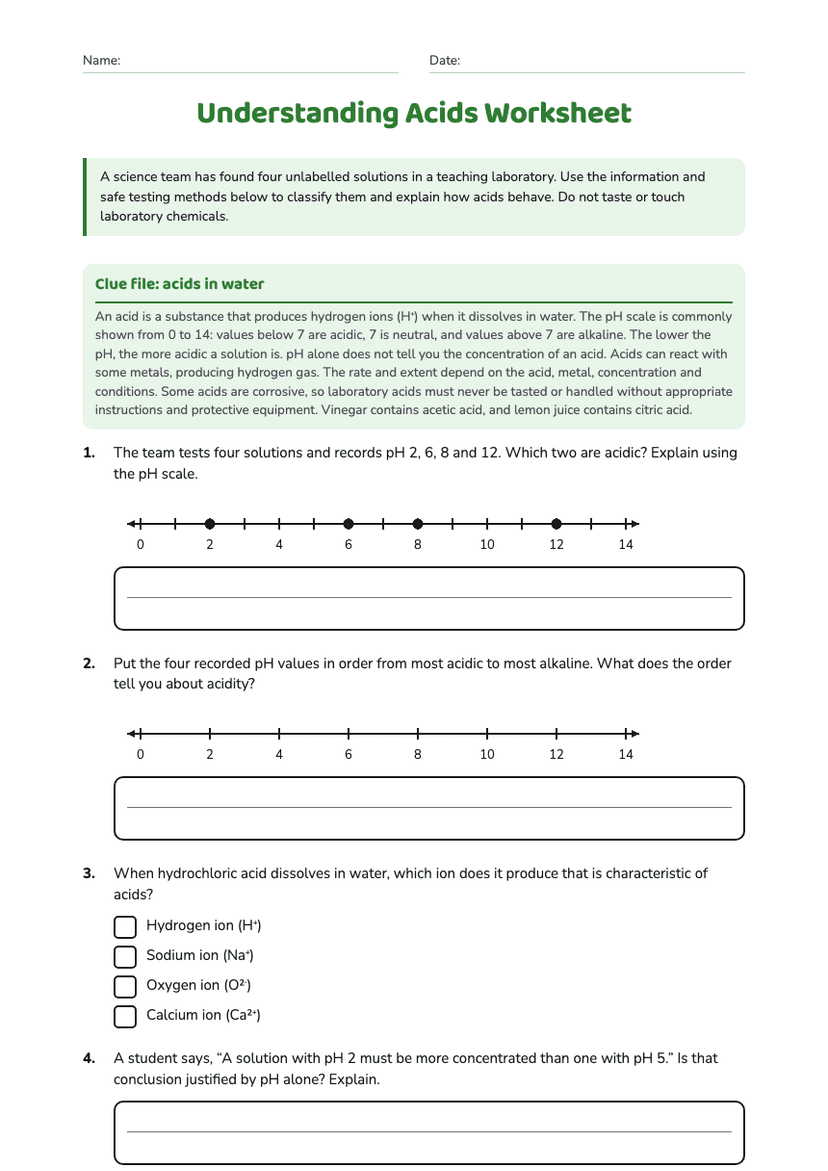
Year 9