Coastal Deposition Basics
A free geography worksheet ready for your classroom. Open in Kuraplan to grab the print-ready PDF, customize it for your students, or generate a fresh version in seconds.
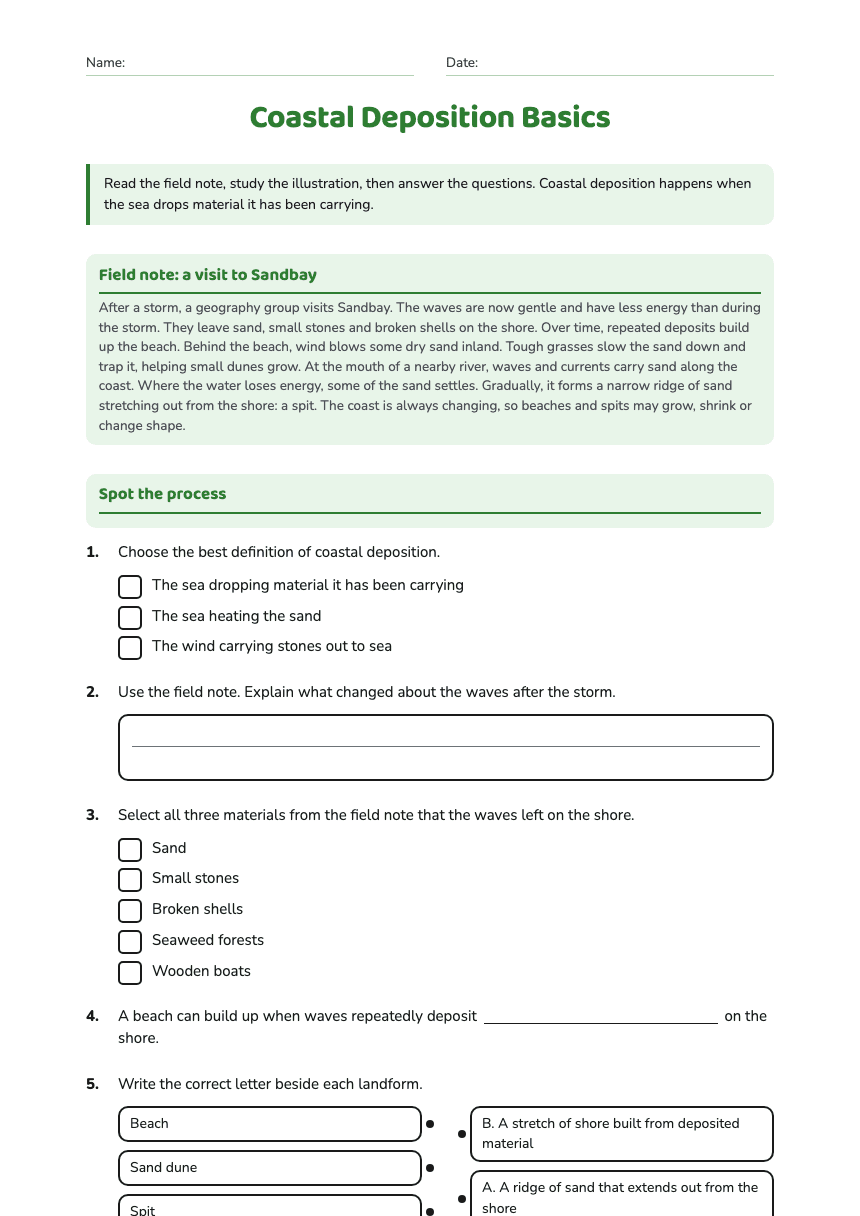
Coastal Deposition Basics
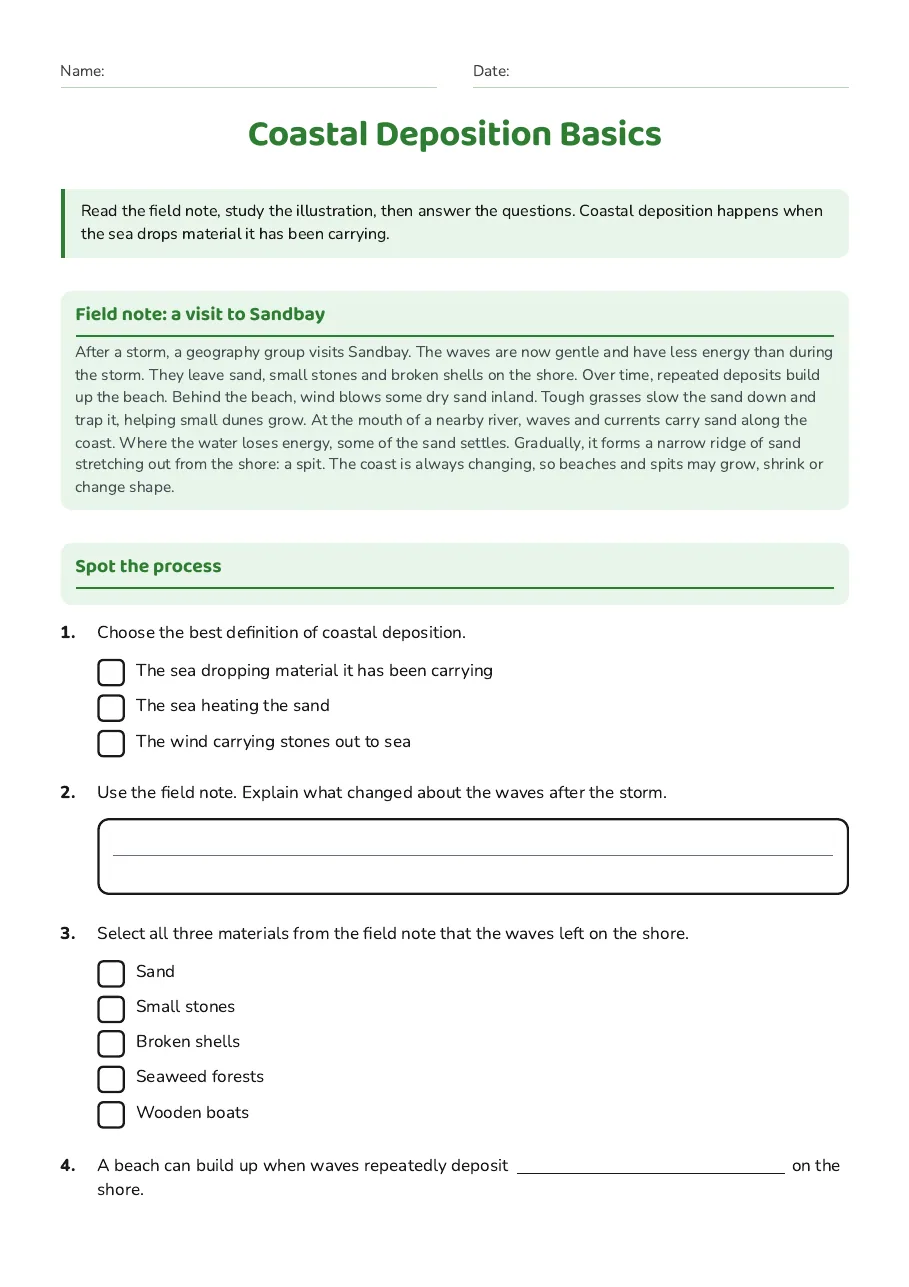
Field note: a visit to Sandbay
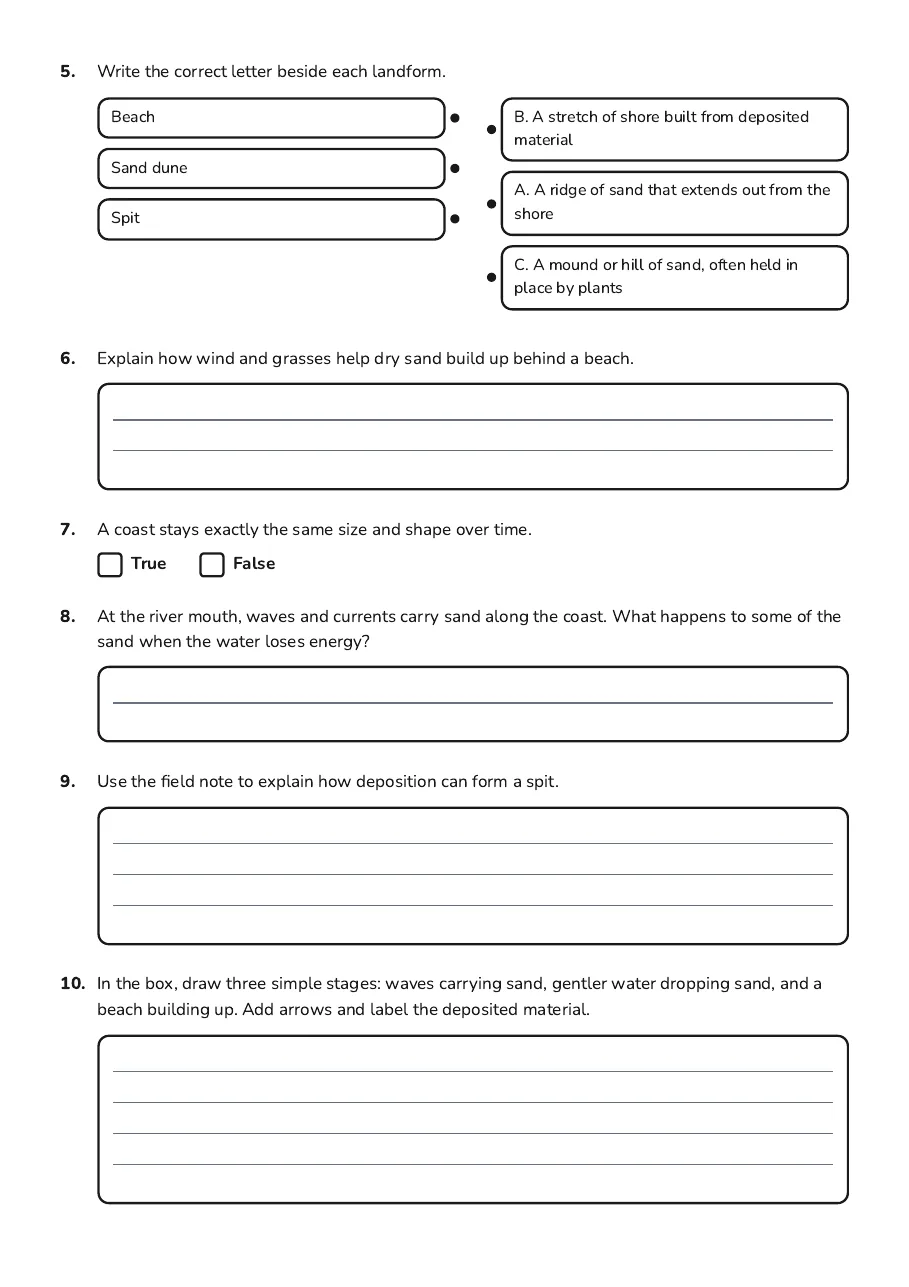
After a storm, a geography group visits Sandbay. The waves are now gentle and have less energy than during the storm. They leave sand, small stones and broken shells on the shore. Over time, repeated deposits build up the beach. Behind the beach, wind blows some dry sand inland. Tough grasses slow the sand down and trap it, helping small dunes grow. At the mouth of a nearby river, waves and currents carry sand along the coast. Where the water loses energy, some of the sand settles. Gradually, it forms a narrow ridge of sand stretching out from the shore: a spit. The coast is always changing, so beaches and spits may grow, shrink or change shape.
Spot the process
- The sea dropping material it has been carrying
- The sea heating the sand
- The wind carrying stones out to sea
- Sand
- Small stones
- Broken shells
- Seaweed forests
- Wooden boats
- Beach
- Sand dune
- Spit
- B. A stretch of shore built from deposited material
- A. A ridge of sand that extends out from the shore
- C. A mound or hill of sand, often held in place by plants
3 printable pages
Page 1
Page 2

Page 3
About This Worksheet
Free in Kuraplan
Sign up free, grab the PDF, and customize it for your class.
Print-Ready
Formatted for standard paper. Clean layout, easy to read.
AI-Generated
Created with Kuraplan's AI, designed for real classroom use.
For Teachers & Parents
Use in classrooms, for homework, tutoring, or homeschool.
Need a custom version of this worksheet?
Kuraplan's AI generates custom worksheets in seconds — differentiated for every learner, aligned to your curriculum.
Generate Custom Worksheets — Free