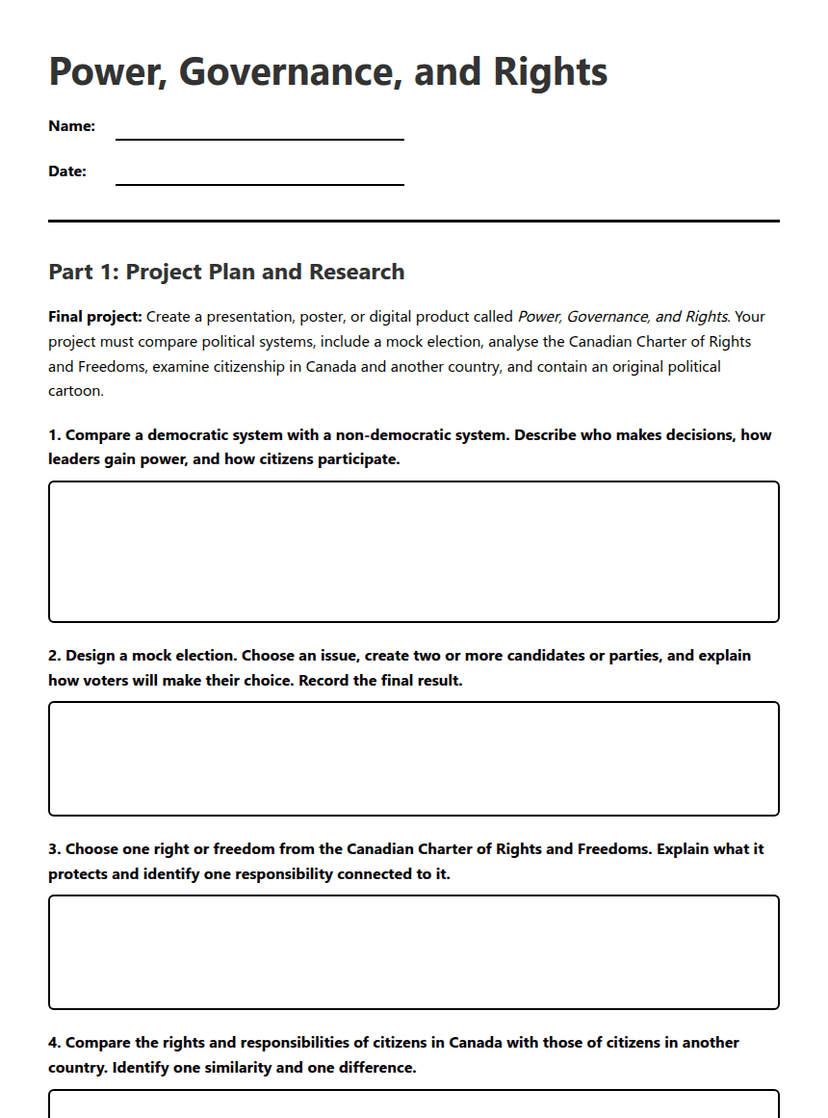
Comparing Political Systems
A free social studies worksheet ready for your classroom. Open in Kuraplan to grab the print-ready PDF, customize it for your students, or generate a fresh version in seconds.
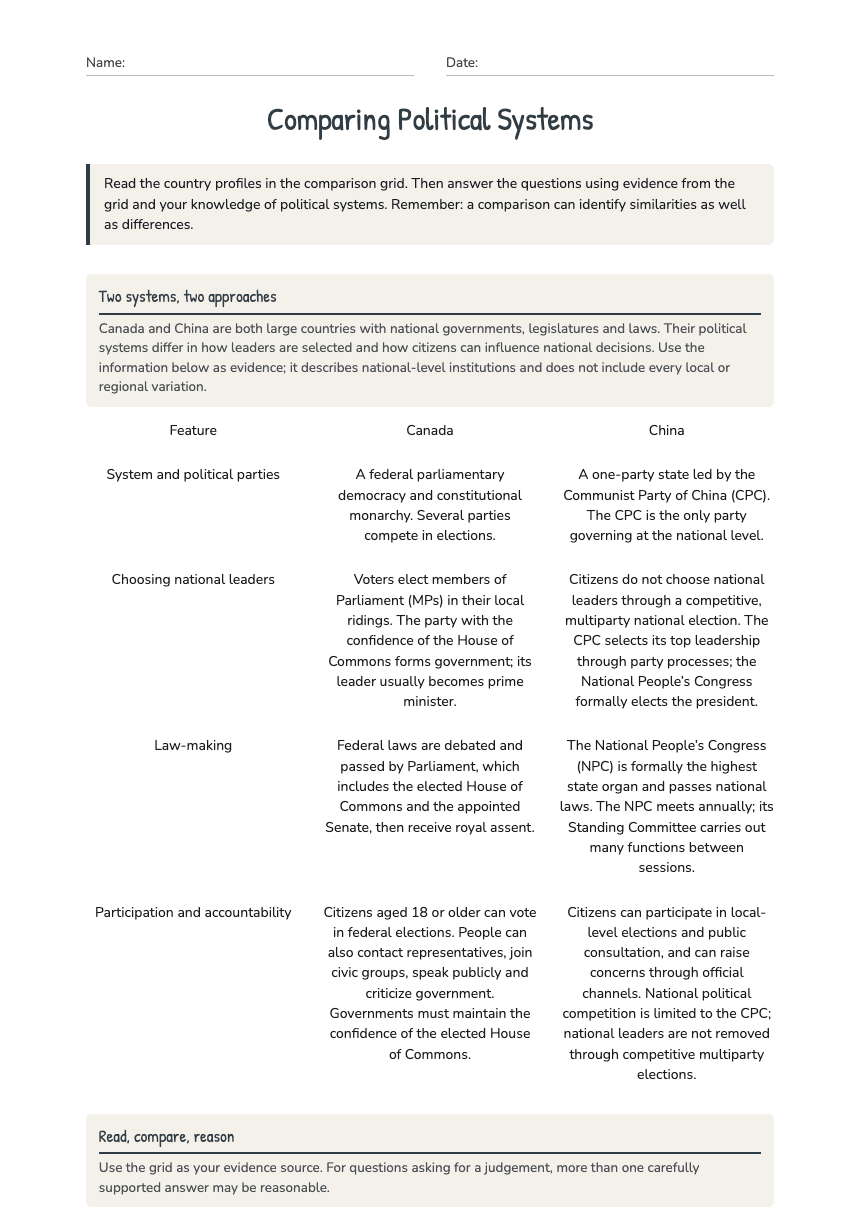
Comparing Political Systems
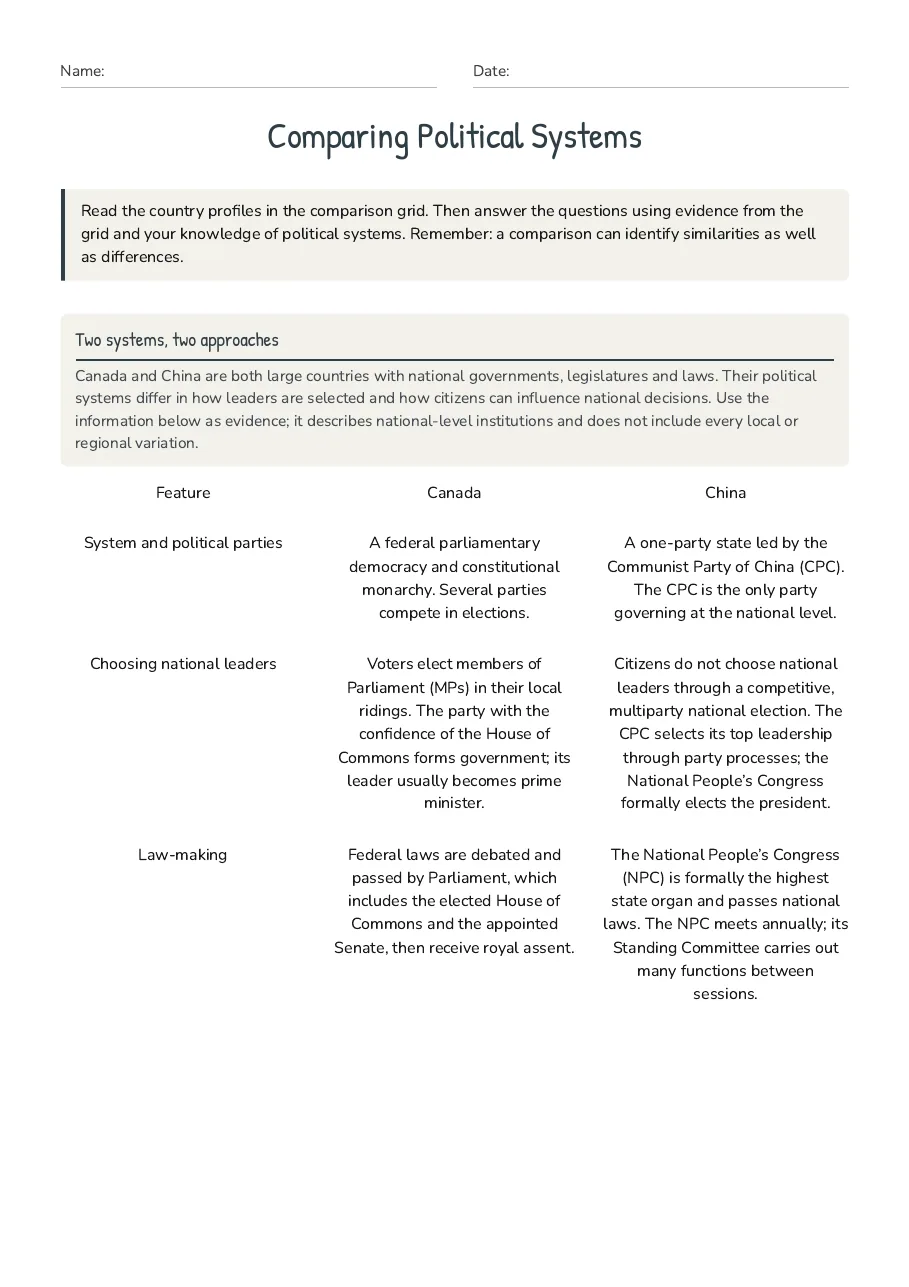
Two systems, two approaches
Canada and China are both large countries with national governments, legislatures and laws. Their political systems differ in how leaders are selected and how citizens can influence national decisions. Use the information below as evidence; it describes national-level institutions and does not include every local or regional variation.
Feature
Canada
China
System and political parties
A federal parliamentary democracy and constitutional monarchy. Several parties compete in elections.
A one-party state led by the Communist Party of China (CPC). The CPC is the only party governing at the national level.
Choosing national leaders
Voters elect members of Parliament (MPs) in their local ridings. The party with the confidence of the House of Commons forms government; its leader usually becomes prime minister.
Citizens do not choose national leaders through a competitive, multiparty national election. The CPC selects its top leadership through party processes; the National People’s Congress formally elects the president.
Law-making
Federal laws are debated and passed by Parliament, which includes the elected House of Commons and the appointed Senate, then receive royal assent.
The National People’s Congress (NPC) is formally the highest state organ and passes national laws. The NPC meets annually; its Standing Committee carries out many functions between sessions.
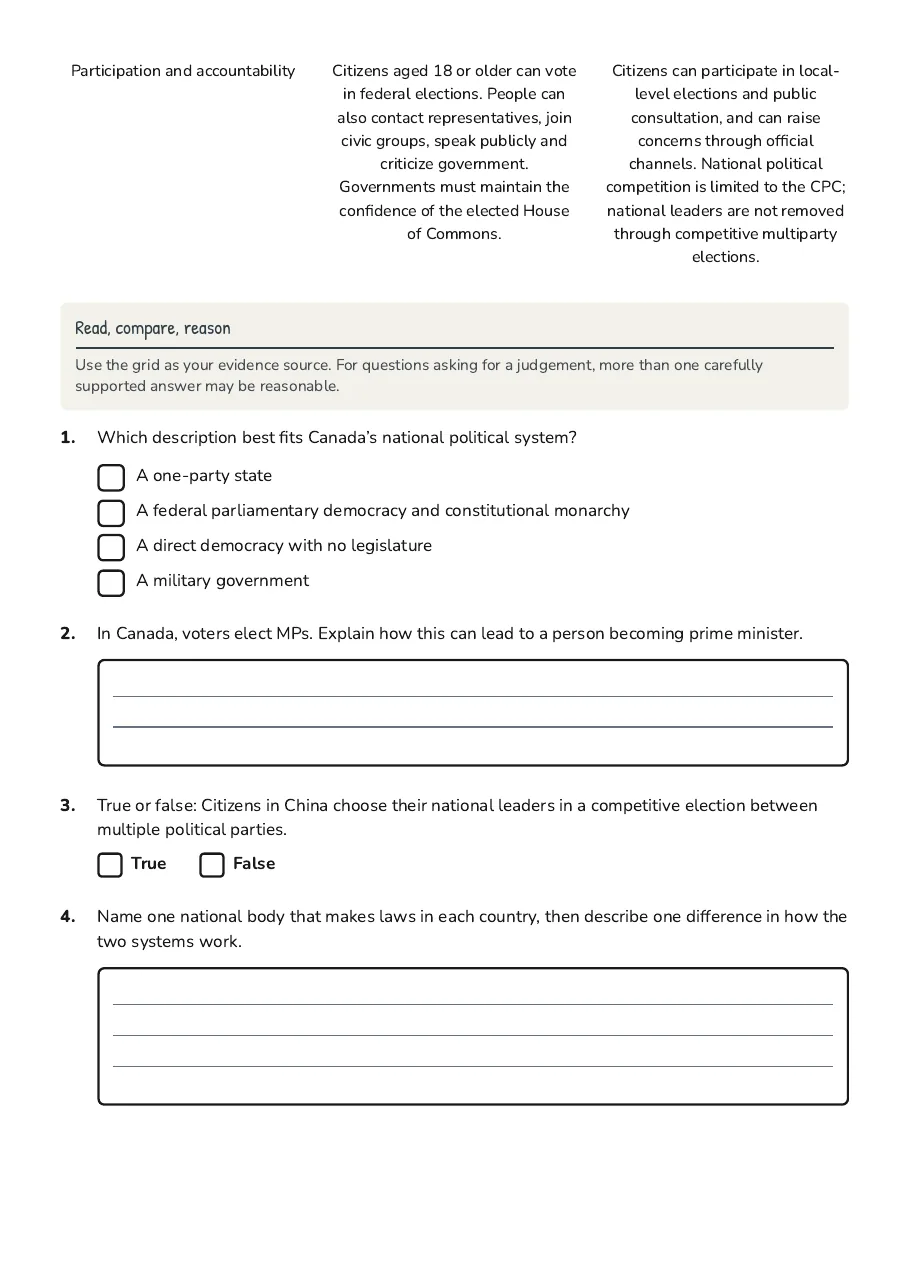
Participation and accountability
Citizens aged 18 or older can vote in federal elections. People can also contact representatives, join civic groups, speak publicly and criticize government. Governments must maintain the confidence of the elected House of Commons.
Citizens can participate in local-level elections and public consultation, and can raise concerns through official channels. National political competition is limited to the CPC; national leaders are not removed through competitive multiparty elections.
Read, compare, reason
Use the grid as your evidence source. For questions asking for a judgement, more than one carefully supported answer may be reasonable.
- A one-party state
- A federal parliamentary democracy and constitutional monarchy
- A direct democracy with no legislature
- A military government
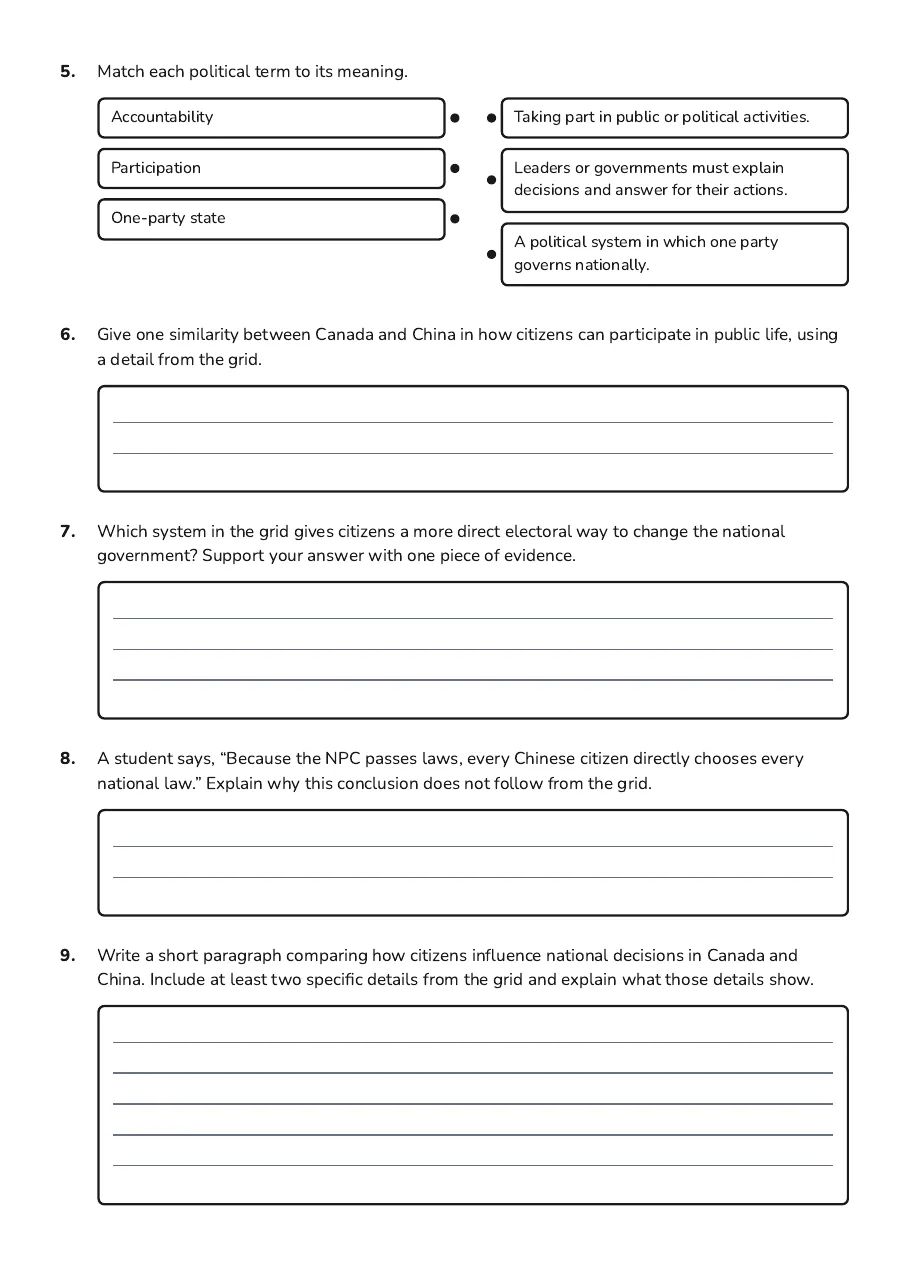
- Accountability
- Participation
- One-party state
- Taking part in public or political activities.
- Leaders or governments must explain decisions and answer for their actions.
- A political system in which one party governs nationally.
4 printable pages
Page 1
Page 2
Page 3

Page 4
About This Worksheet
Free in Kuraplan
Sign up free, grab the PDF, and customize it for your class.
Print-Ready
Formatted for standard paper. Clean layout, easy to read.
AI-Generated
Created with Kuraplan's AI, designed for real classroom use.
For Teachers & Parents
Use in classrooms, for homework, tutoring, or homeschool.
Need a custom version of this worksheet?
Kuraplan's AI generates custom worksheets in seconds — differentiated for every learner, aligned to your curriculum.
Generate Custom Worksheets — FreeMore Social Studies Worksheets
Alberta Government Leaders
Free
Alberta Government Leaders
Free
Land Acknowledgement Respect Lesson
Free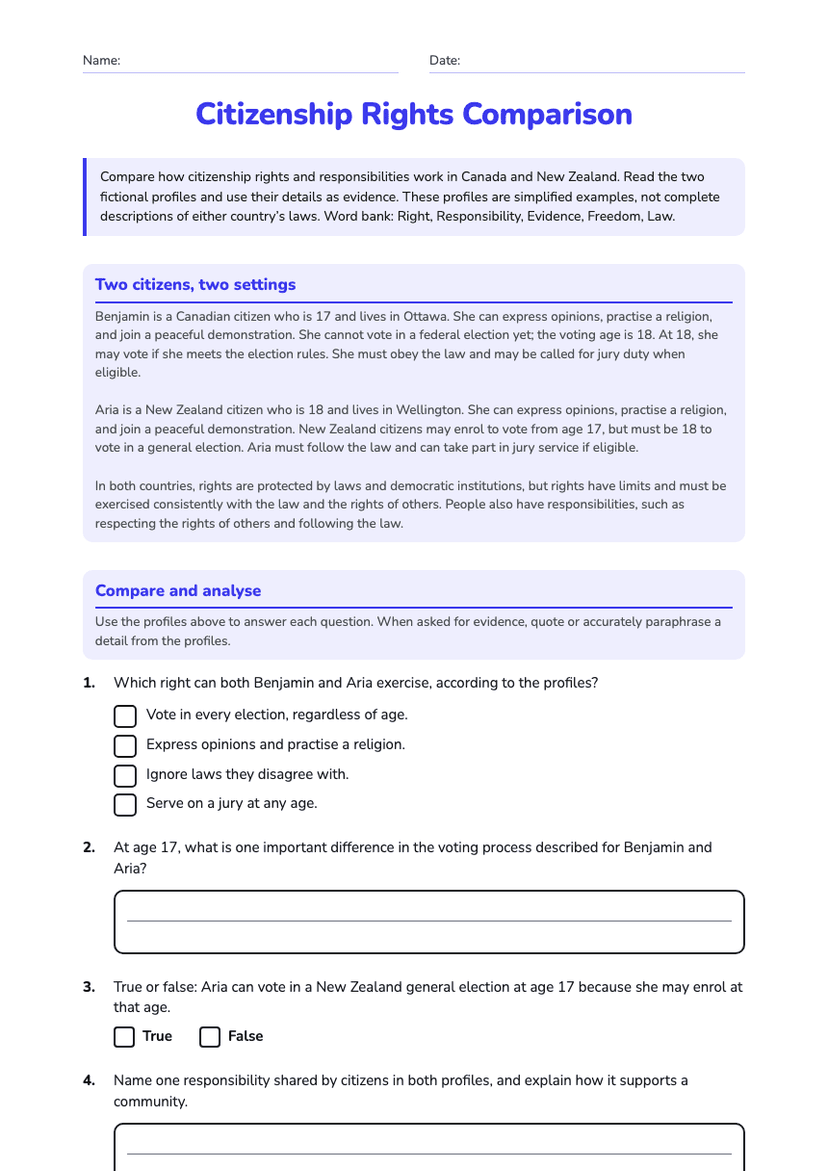
Citizenship Rights Comparison
Free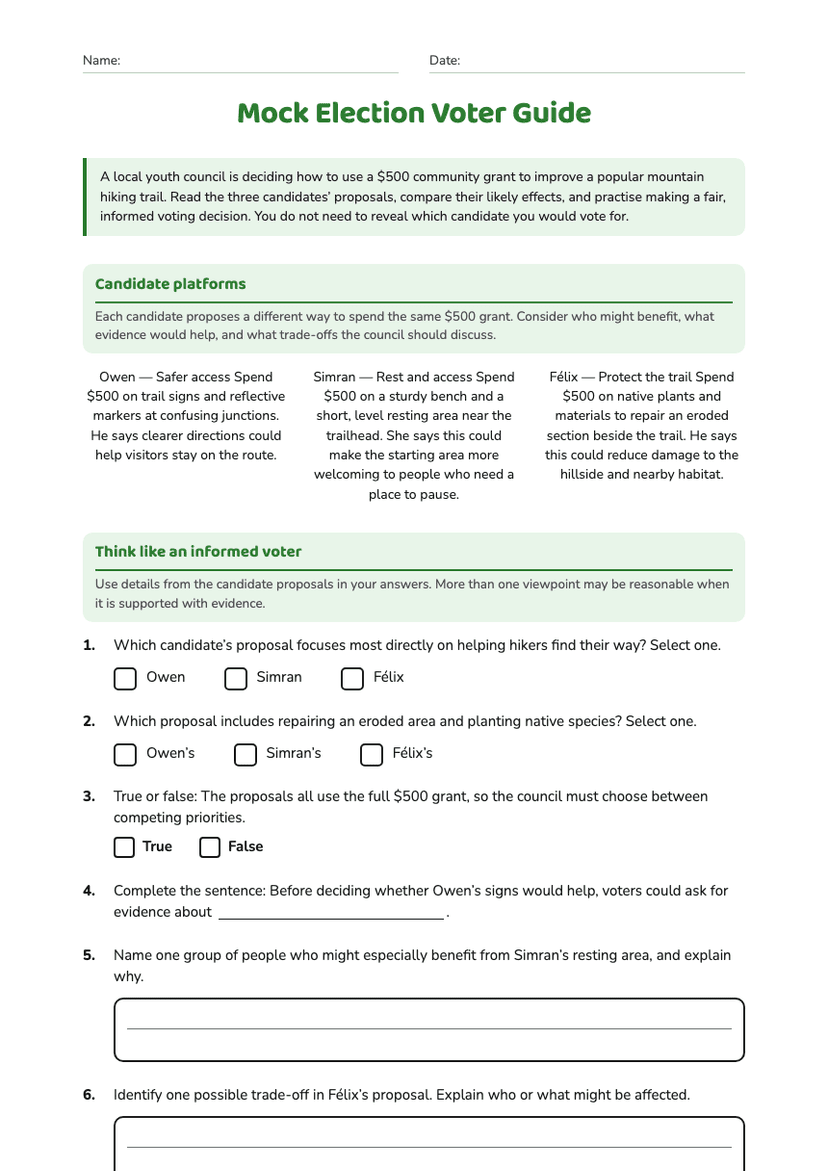
Mock Election Voter Guide
Free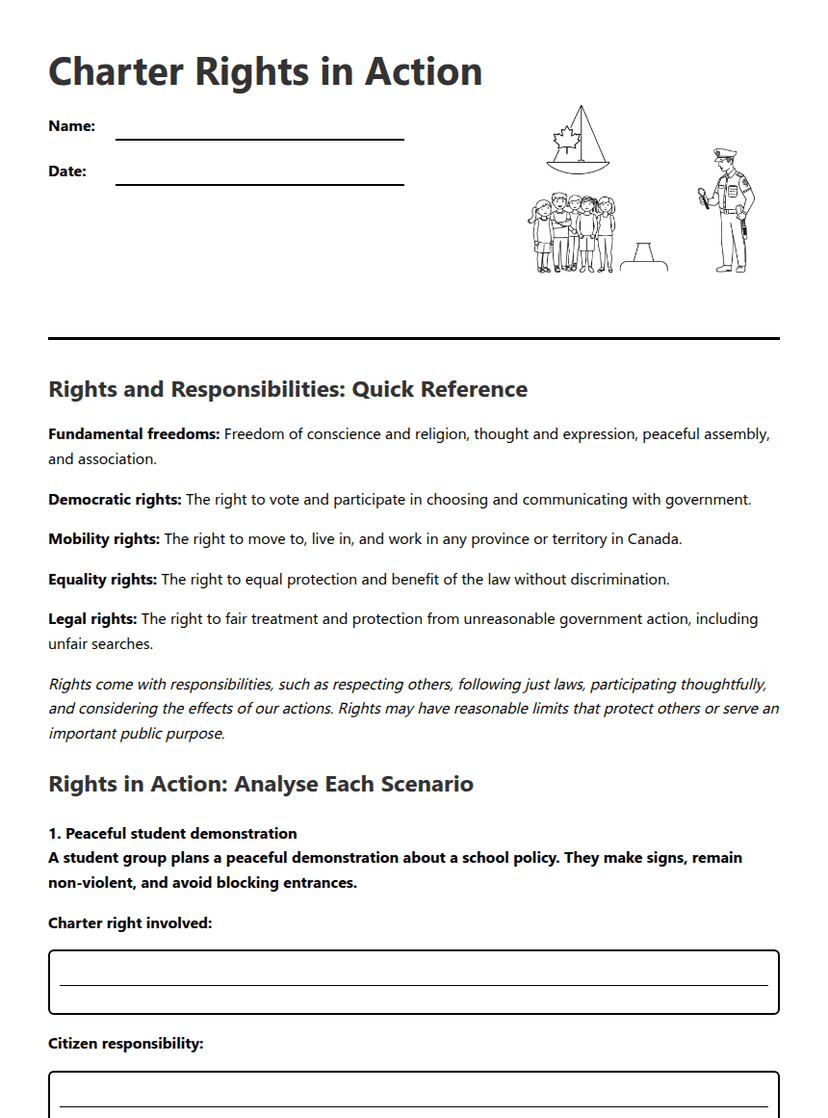
Charter Rights in Action
Free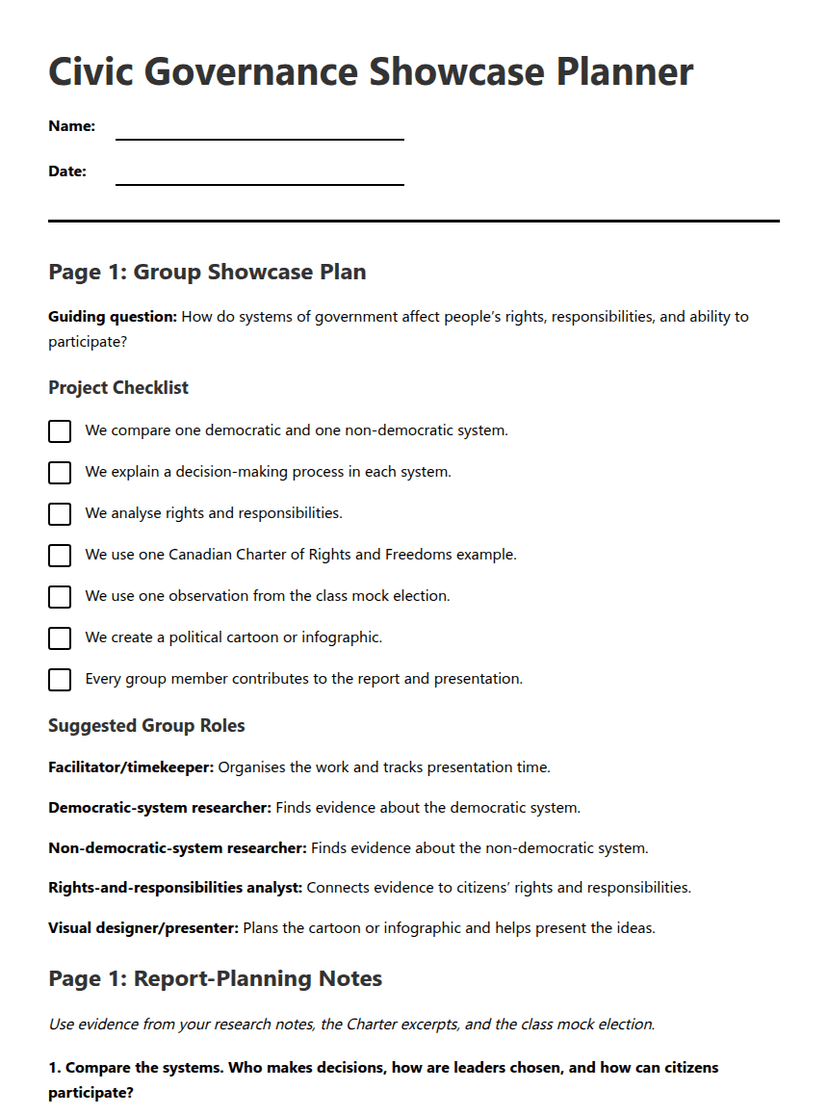
Civic Governance Showcase Planner
Free