FreePrintable

Digital Citizenship Responsibilities

A free, printable general worksheet ready for your classroom. Download instantly, print, and hand out to your students — no account needed.
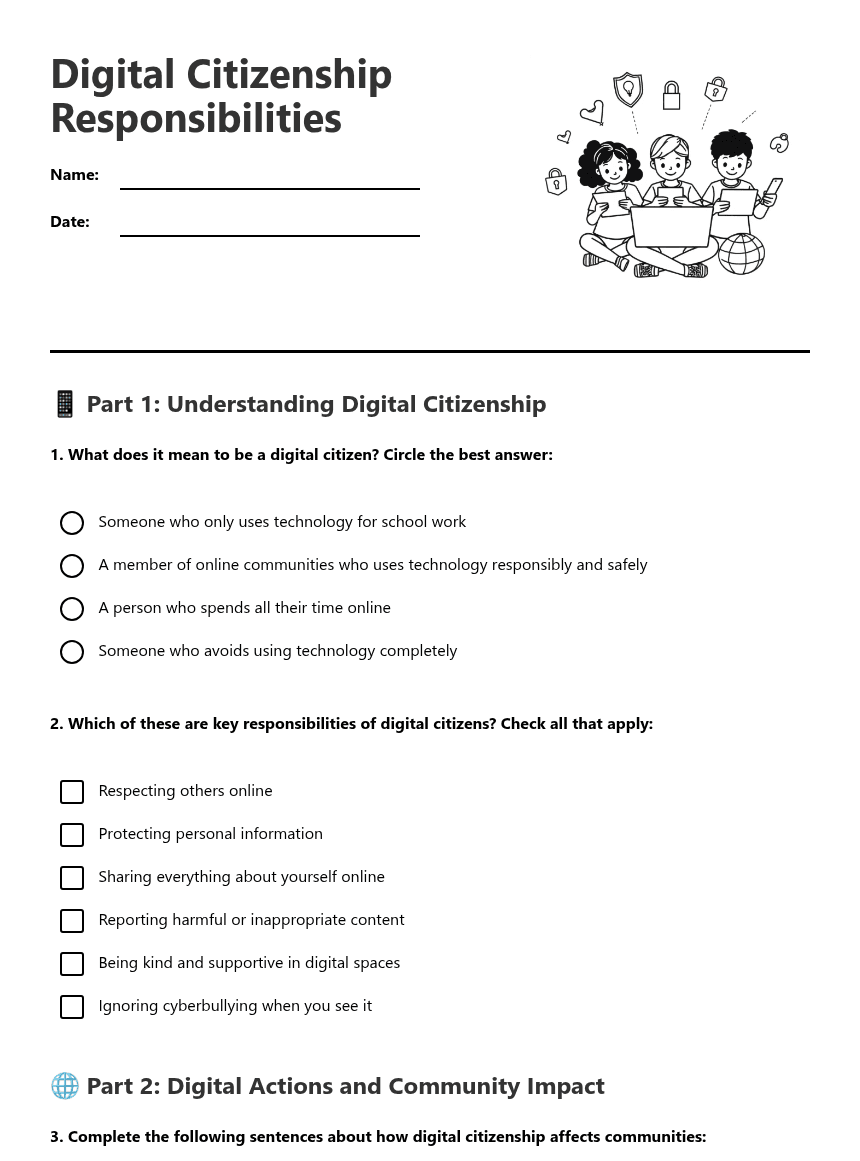
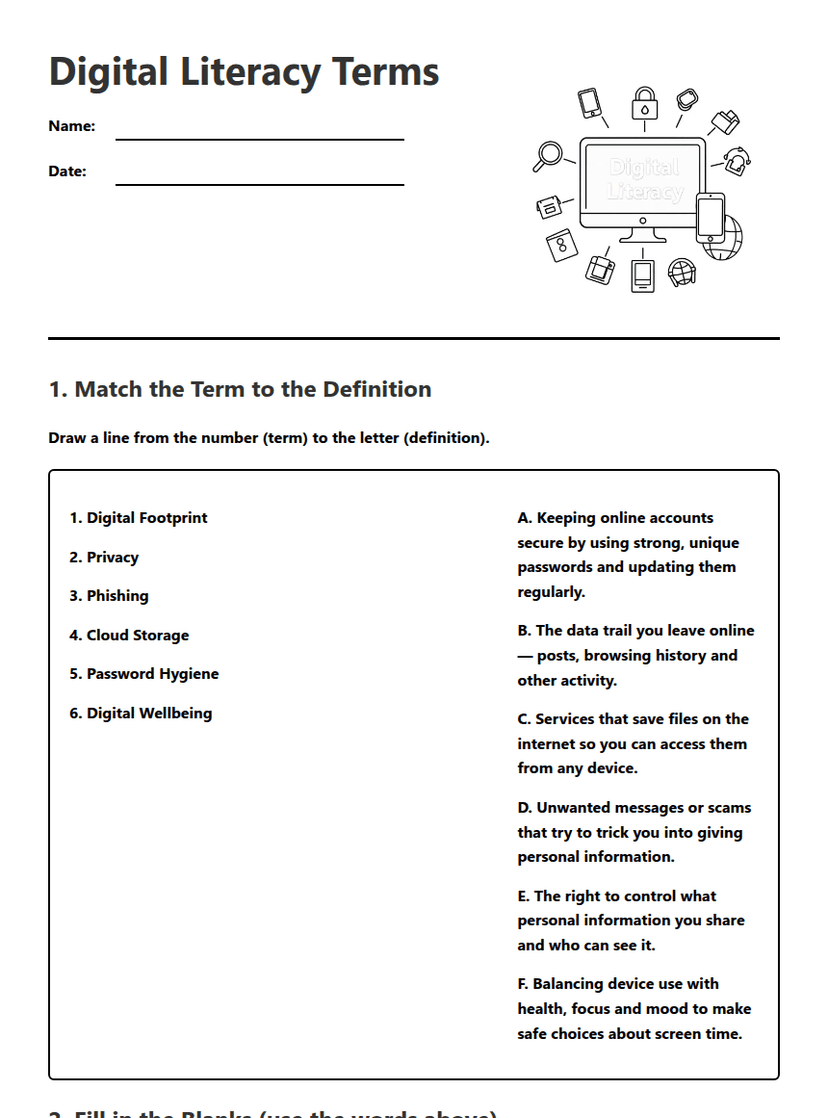
Digital Citizenship Responsibilities worksheet preview
Digital Citizenship Responsibilities

Digital Citizenship Responsibilities

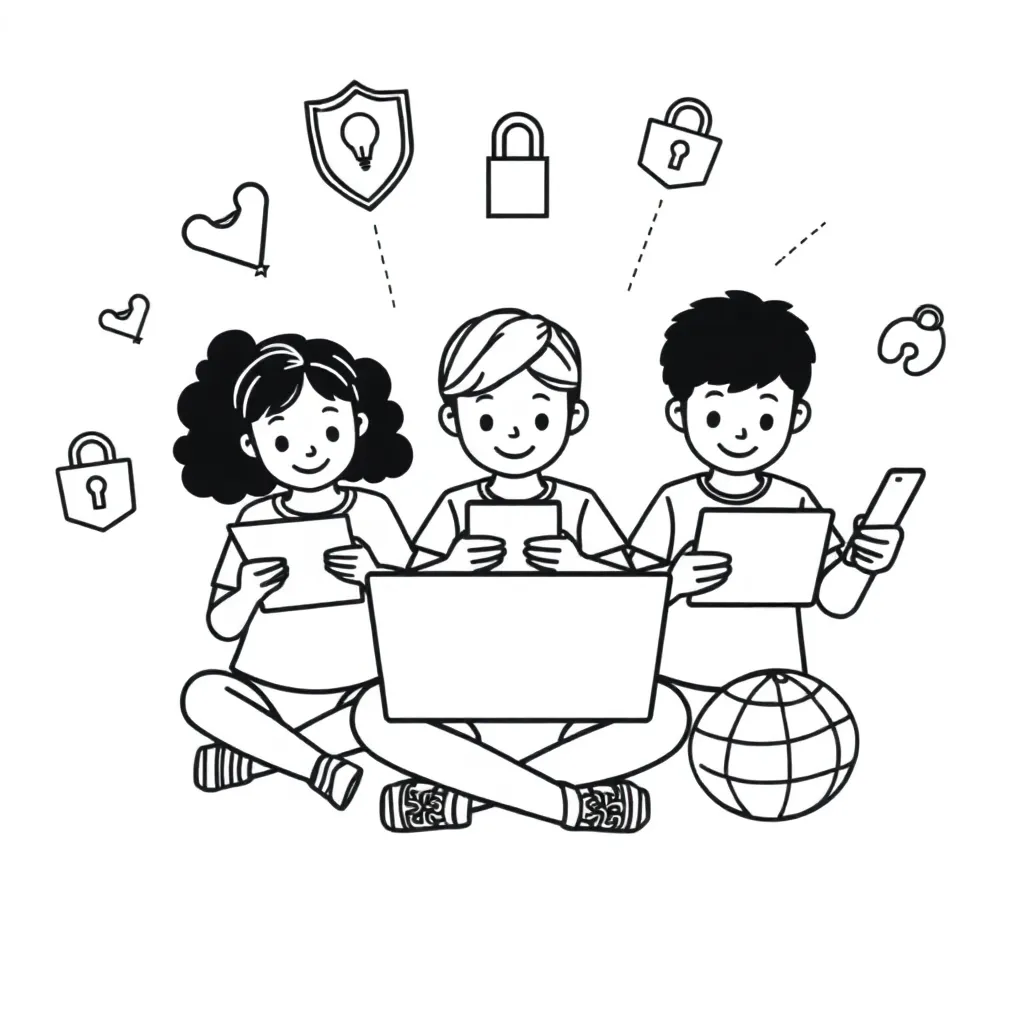
Digital citizenship illustration

📱 Part 1: Understanding Digital Citizenship

1. What does it mean to be a digital citizen? Circle the best answer:

Someone who only uses technology for school work

A member of online communities who uses technology responsibly and safely

A person who spends all their time online

Someone who avoids using technology completely

2. Which of these are key responsibilities of digital citizens? Check all that apply:

Respecting others online

Protecting personal information

Sharing everything about yourself online

Reporting harmful or inappropriate content

Being kind and supportive in digital spaces

Ignoring cyberbullying when you see it

🌐 Part 2: Digital Actions and Community Impact

3. Complete the following sentences about how digital citizenship affects communities:

When I post positive comments online, it can make my school community feel more _________________ and _________________.

If someone shares false information on social media, it might _________________ other people and cause _________________.

Protecting my personal information online helps keep my family and friends _________________ from potential _________________.

4. Match each digital citizenship responsibility with its community impact:
1. Respecting different opinions online
2. Reporting cyberbullying
3. Fact-checking before sharing news
4. Using appropriate language
A. Creates a safer environment for everyone
B. Prevents spread of misinformation
C. Promotes inclusive discussions
D. Makes digital spaces welcoming for all ages

🤔 Part 3: Scenario Analysis

5. Read this scenario and answer the questions below:

Sarah sees a post on Instagram that makes fun of a student from her school. The post has mean comments and is being shared by lots of people. Sarah knows the student being targeted and feels bad for them.

a) What are Sarah's responsibilities as a digital citizen in this situation?
b) How might Sarah's actions (or lack of action) affect her school community?
6. Circle the most responsible action Sarah should take:

Share the post with her friends to discuss it

Report the post and offer support to the targeted student

Ignore the situation completely

Add her own comment defending the targeted student

🇳🇿 Part 4: Kaitiakitanga in Digital Spaces

7. The Māori concept of kaitiakitanga means guardianship and caring for our environment and community. How can we apply this concept to digital spaces?
8. Give three specific examples of how you can be a kaitiaki (guardian) in online communities:

1. _________________________________________________________________

2. _________________________________________________________________

3. _________________________________________________________________

💭 Part 5: Personal Reflection

9. Which digital citizenship responsibility do you think is most important and why?
10. Describe one specific way you will apply responsible digital citizenship in your everyday online life:
11. Draw or design a symbol that represents responsible digital citizenship to you:

About This Worksheet

Free Download

No sign-up, no email, no paywall. Just download and print.

Print-Ready

Formatted for standard paper. Clean layout, easy to read.

AI-Generated

Created with Kuraplan's AI, designed for real classroom use.

For Teachers & Parents

Use in classrooms, for homework, tutoring, or homeschool.

Need a custom version of this worksheet?

Kuraplan's AI generates custom worksheets in seconds — differentiated for every learner, aligned to your curriculum.

Generate Custom Worksheets — Free
No credit card Curriculum-aligned Under 60 seconds