Exploring Ecosystems Together
A free science worksheet ready for your classroom. Open in Kuraplan to grab the print-ready PDF, customize it for your students, or generate a fresh version in seconds.
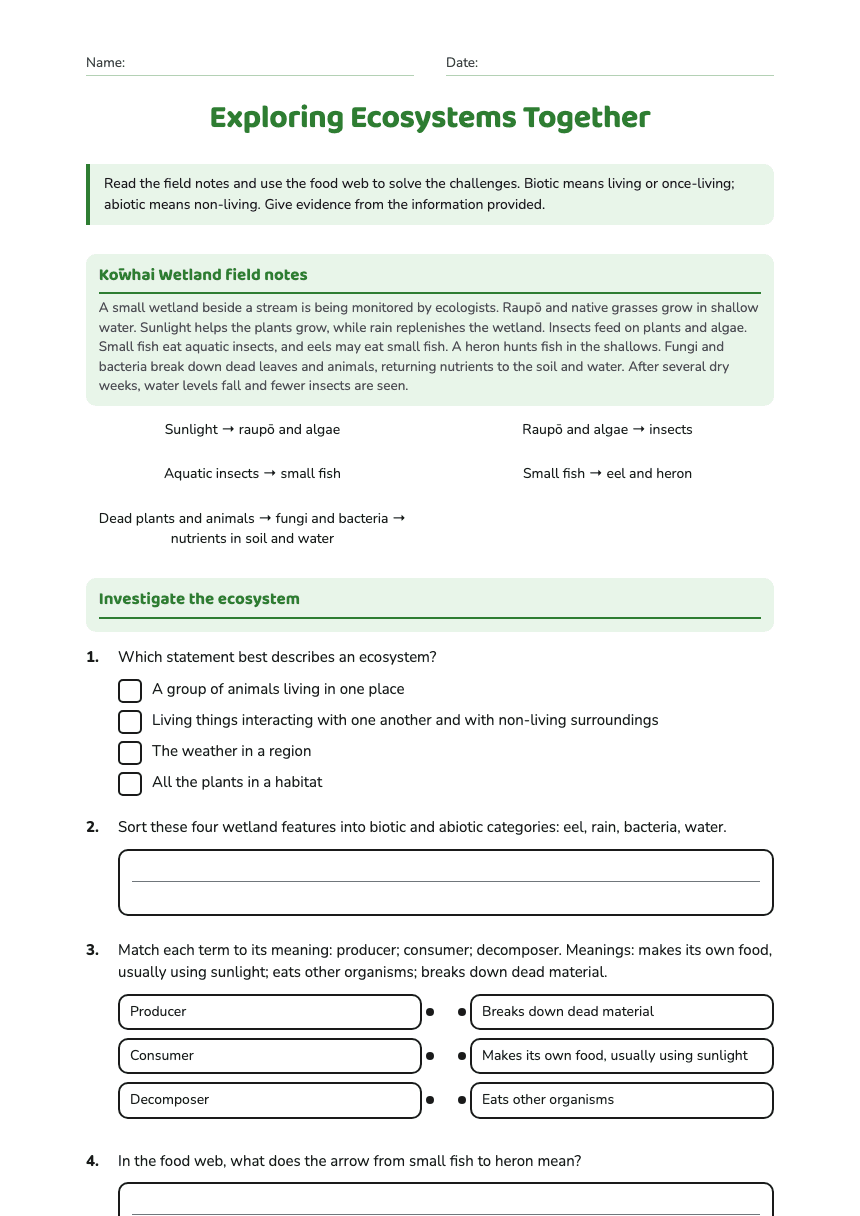
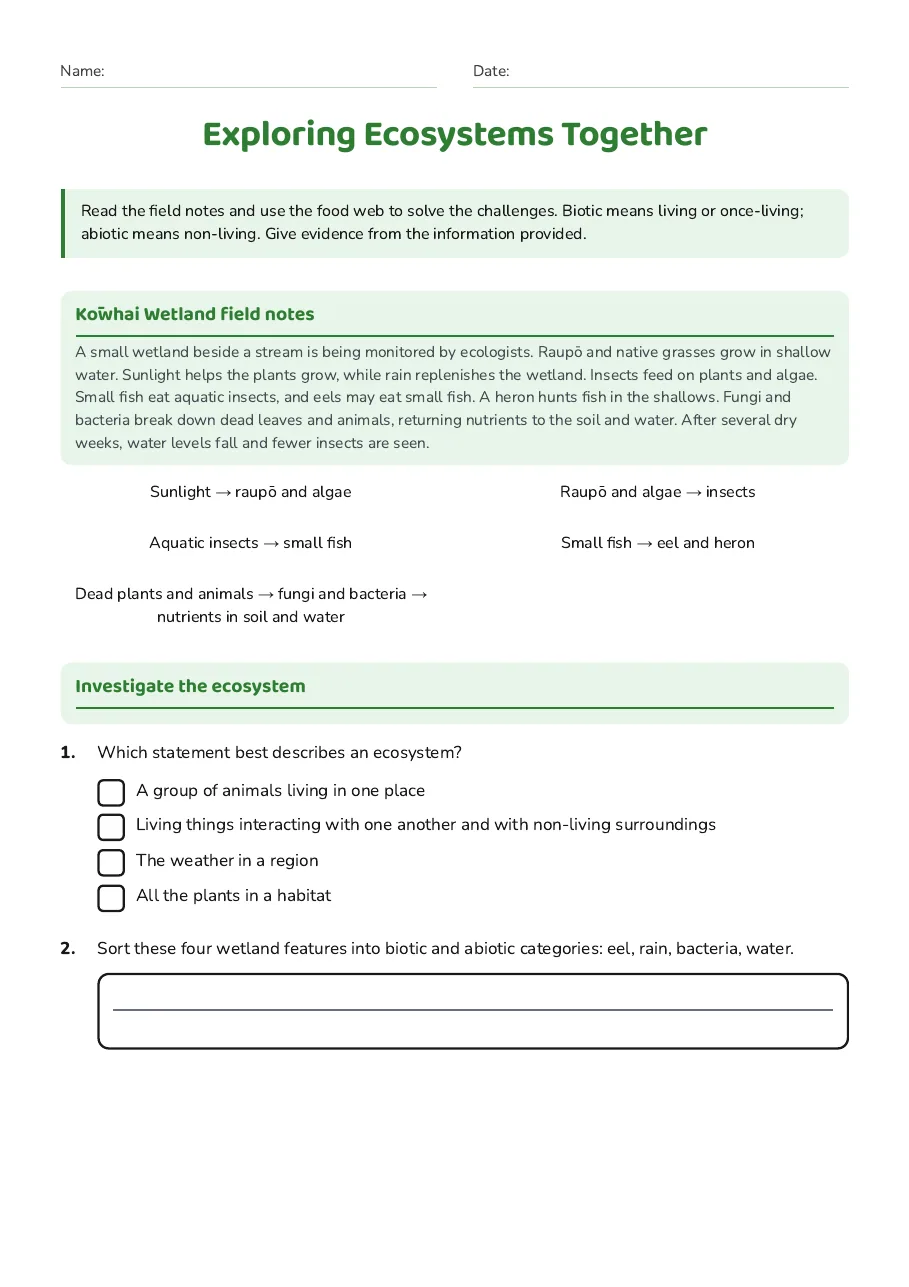
Exploring Ecosystems Together
Kōwhai Wetland field notes
A small wetland beside a stream is being monitored by ecologists. Raupō and native grasses grow in shallow water. Sunlight helps the plants grow, while rain replenishes the wetland. Insects feed on plants and algae. Small fish eat aquatic insects, and eels may eat small fish. A heron hunts fish in the shallows. Fungi and bacteria break down dead leaves and animals, returning nutrients to the soil and water. After several dry weeks, water levels fall and fewer insects are seen.
Sunlight → raupō and algae
Raupō and algae → insects
Aquatic insects → small fish
Small fish → eel and heron
Dead plants and animals → fungi and bacteria → nutrients in soil and water
Investigate the ecosystem
- A group of animals living in one place
- Living things interacting with one another and with non-living surroundings
- The weather in a region
- All the plants in a habitat
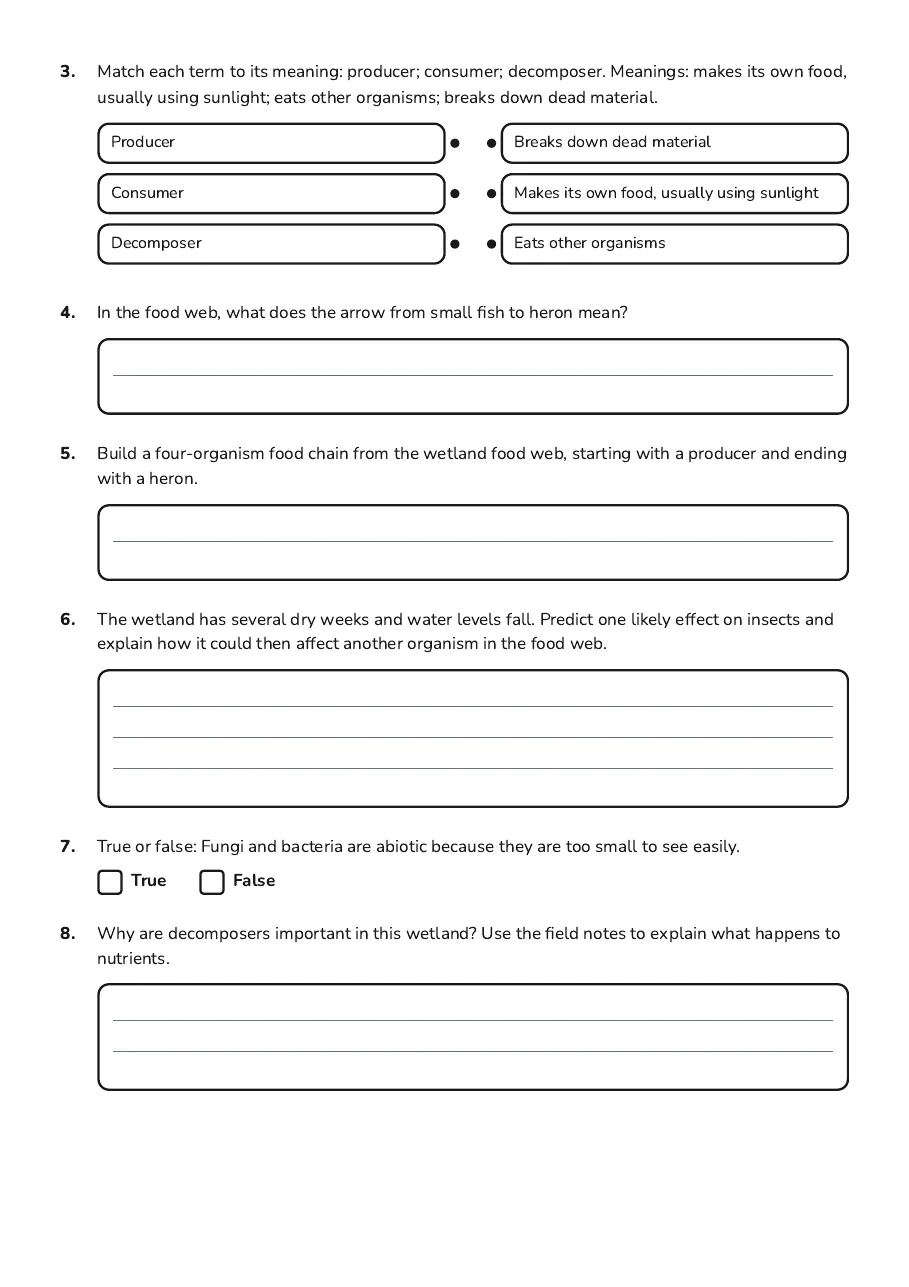
- Producer
- Consumer
- Decomposer
- Breaks down dead material
- Makes its own food, usually using sunlight
- Eats other organisms
3 printable pages
Page 1
Page 2
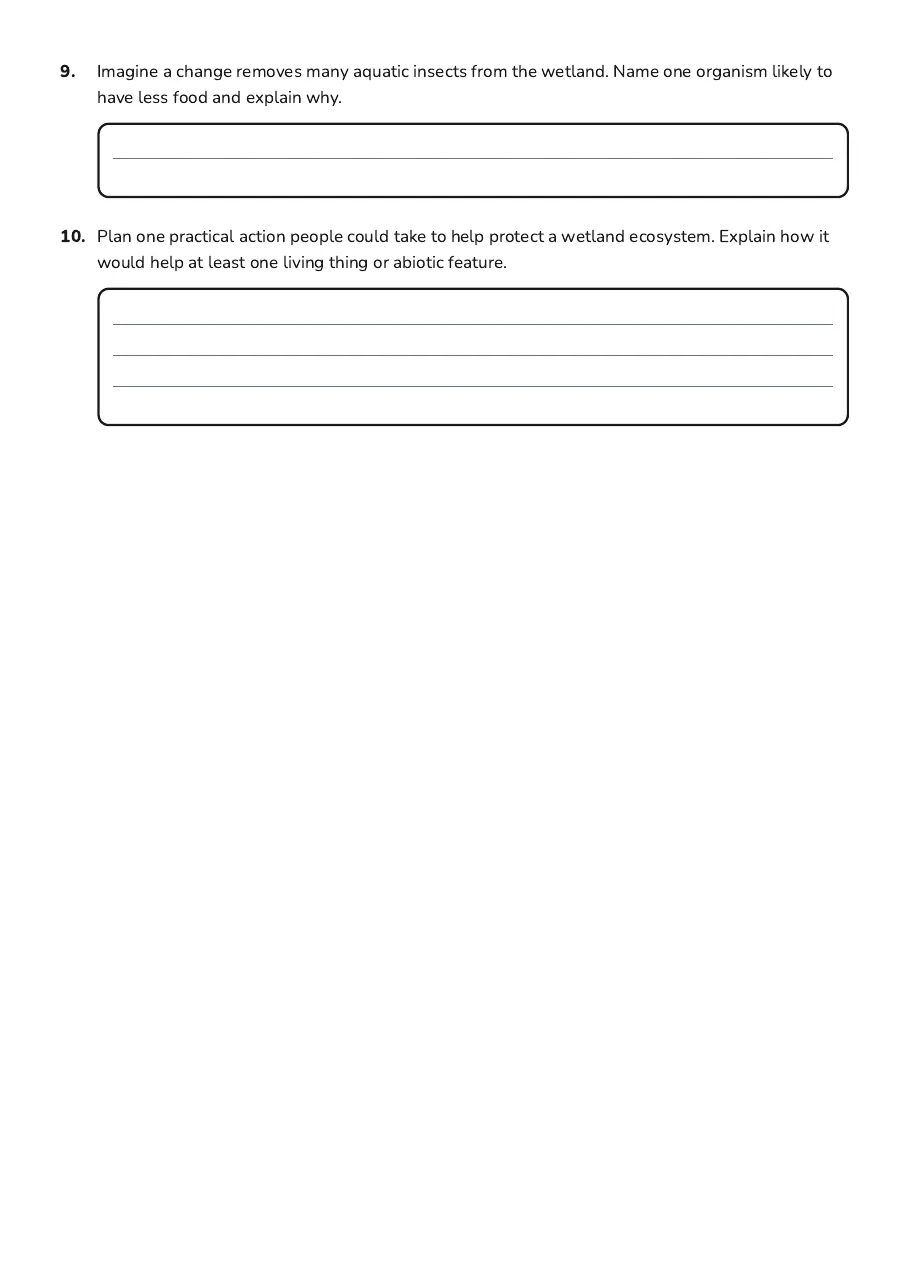
Page 3
About This Worksheet
Free in Kuraplan
Sign up free, grab the PDF, and customize it for your class.
Print-Ready
Formatted for standard paper. Clean layout, easy to read.
AI-Generated
Created with Kuraplan's AI, designed for real classroom use.
For Teachers & Parents
Use in classrooms, for homework, tutoring, or homeschool.
Need a custom version of this worksheet?
Kuraplan's AI generates custom worksheets in seconds — differentiated for every learner, aligned to your curriculum.
Generate Custom Worksheets — FreeMore Science Worksheets
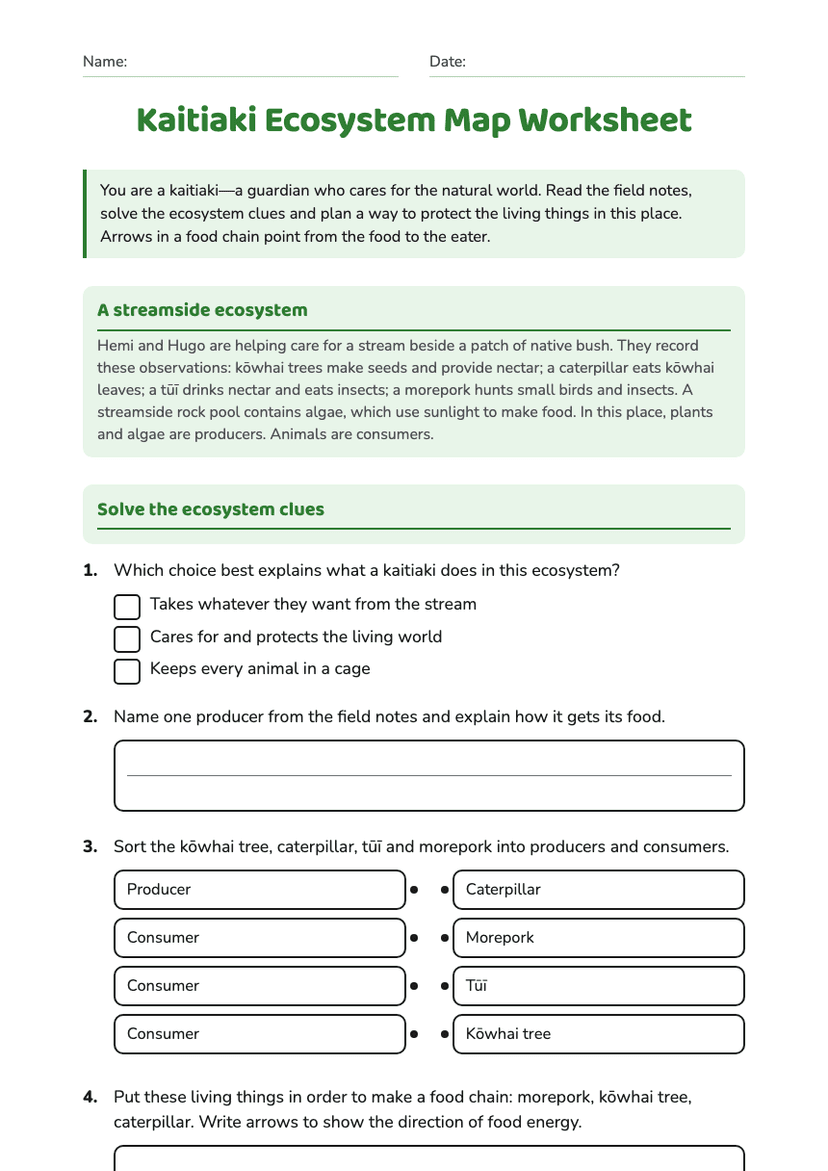
Kaitiaki Ecosystem Map Worksheet
Free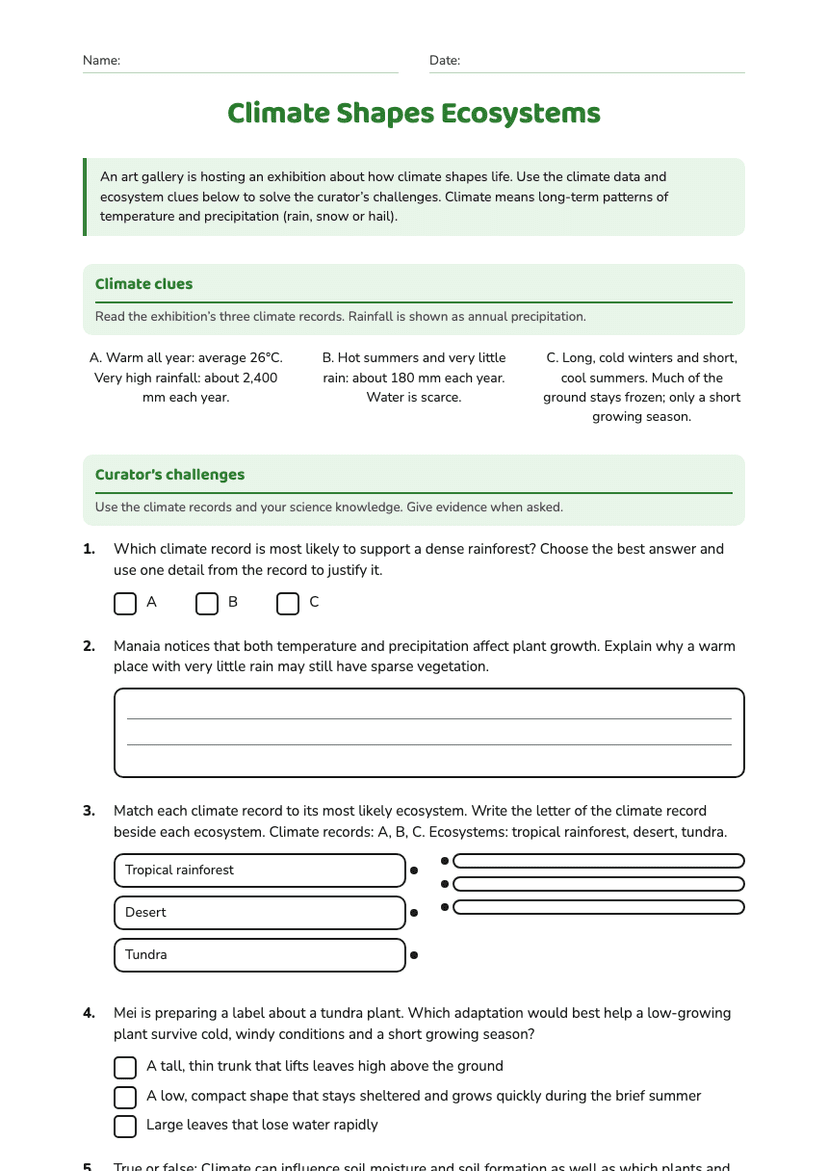
Climate Shapes Ecosystems
Free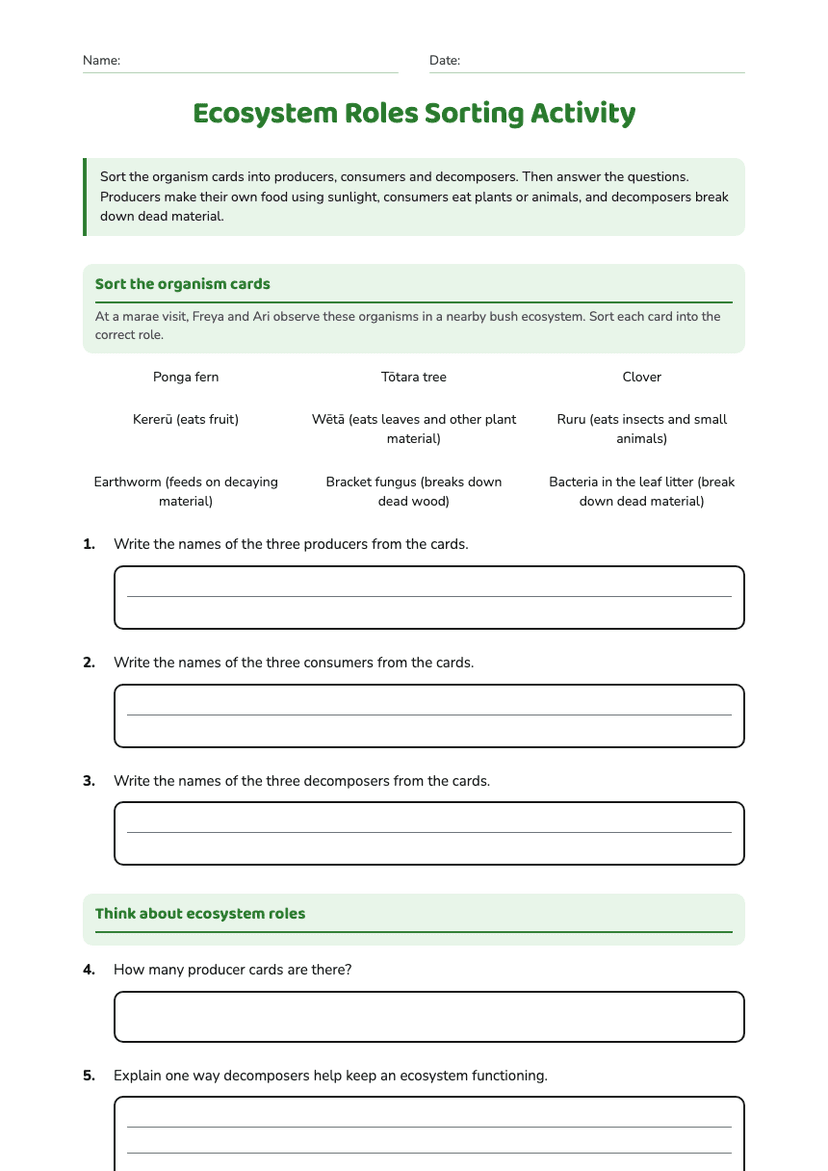
Ecosystem Roles Sorting Activity
Free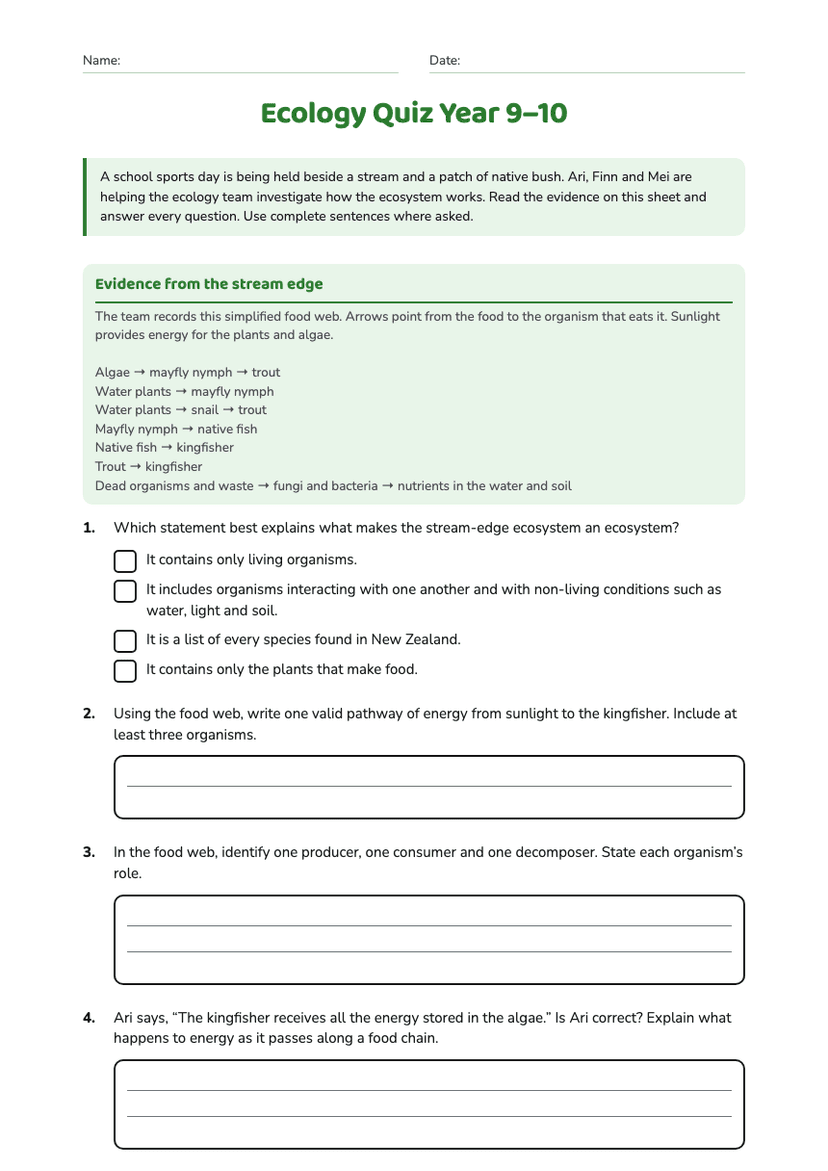
Ecology Quiz Year 9–10
Free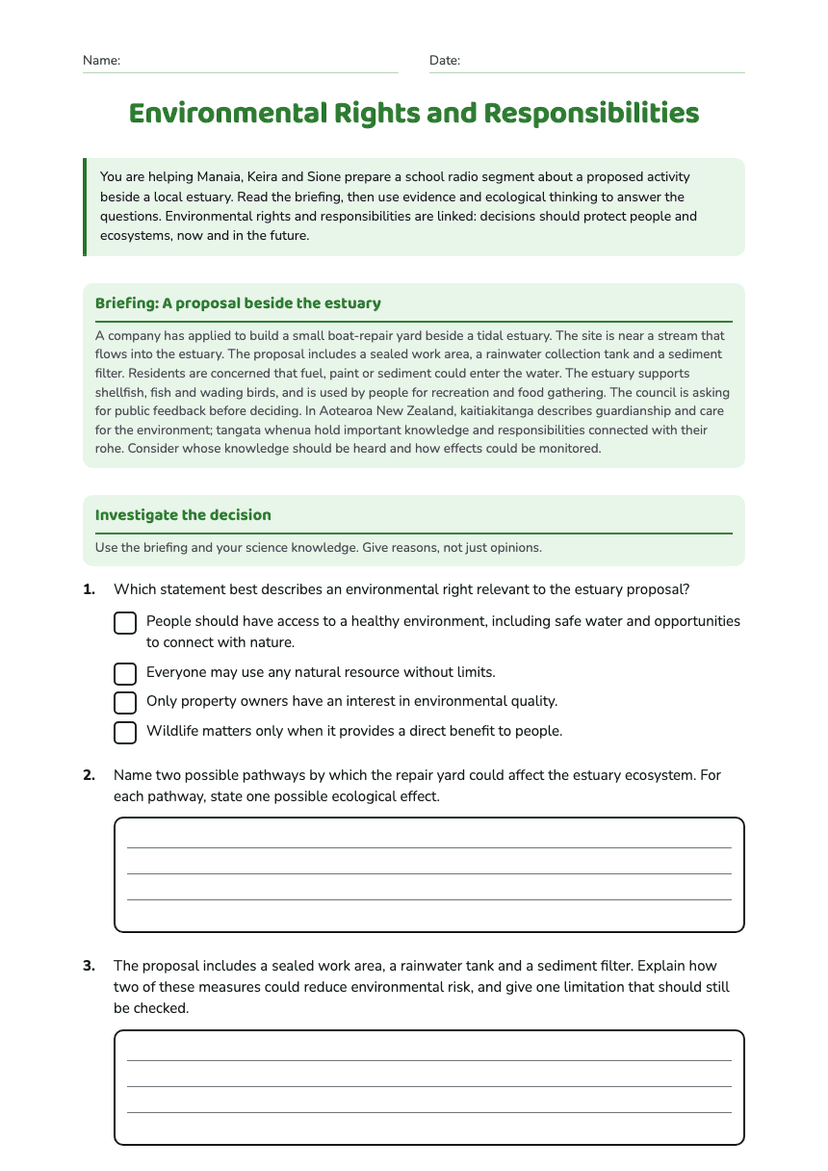
Environmental Rights and Responsibilities
Free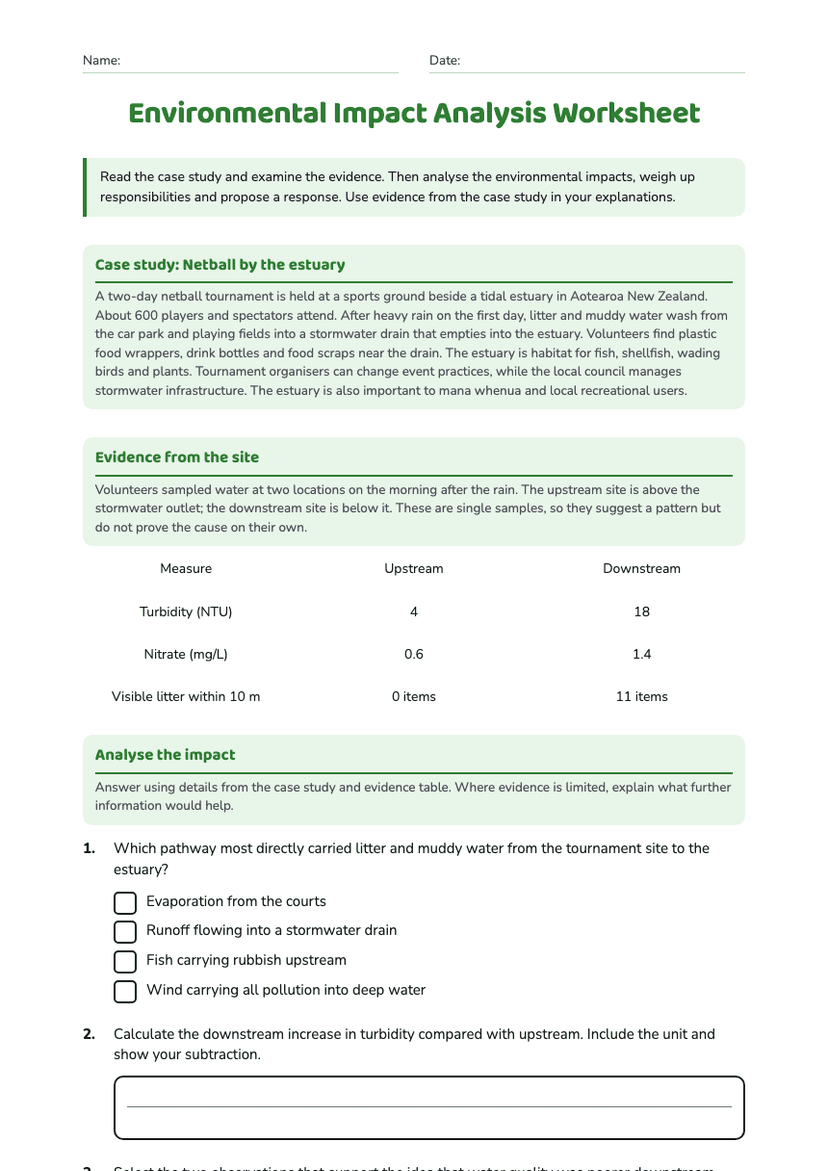
Environmental Impact Analysis Worksheet
Free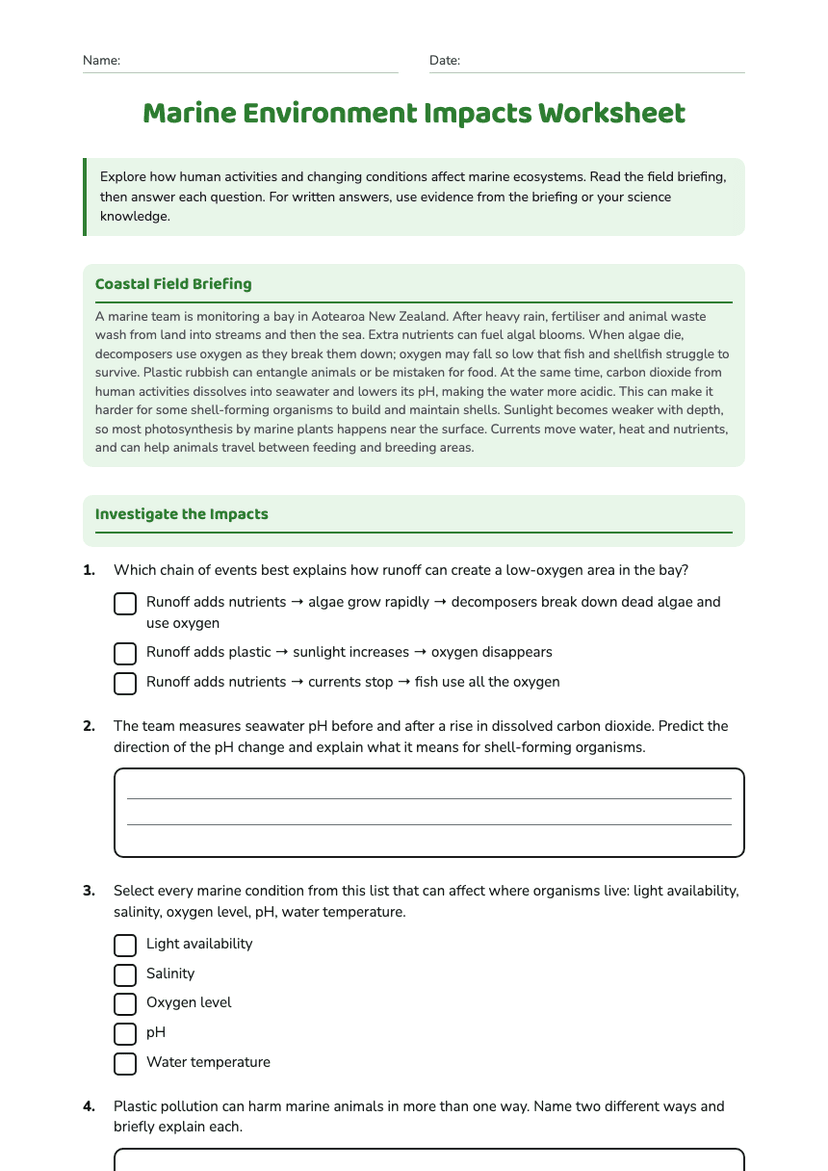
Marine Environment Impacts Worksheet
Free