Food Webs Energy Transfer
A free science worksheet ready for your classroom. Open in Kuraplan to grab the print-ready PDF, customize it for your students, or generate a fresh version in seconds.
Food Webs Energy Transfer
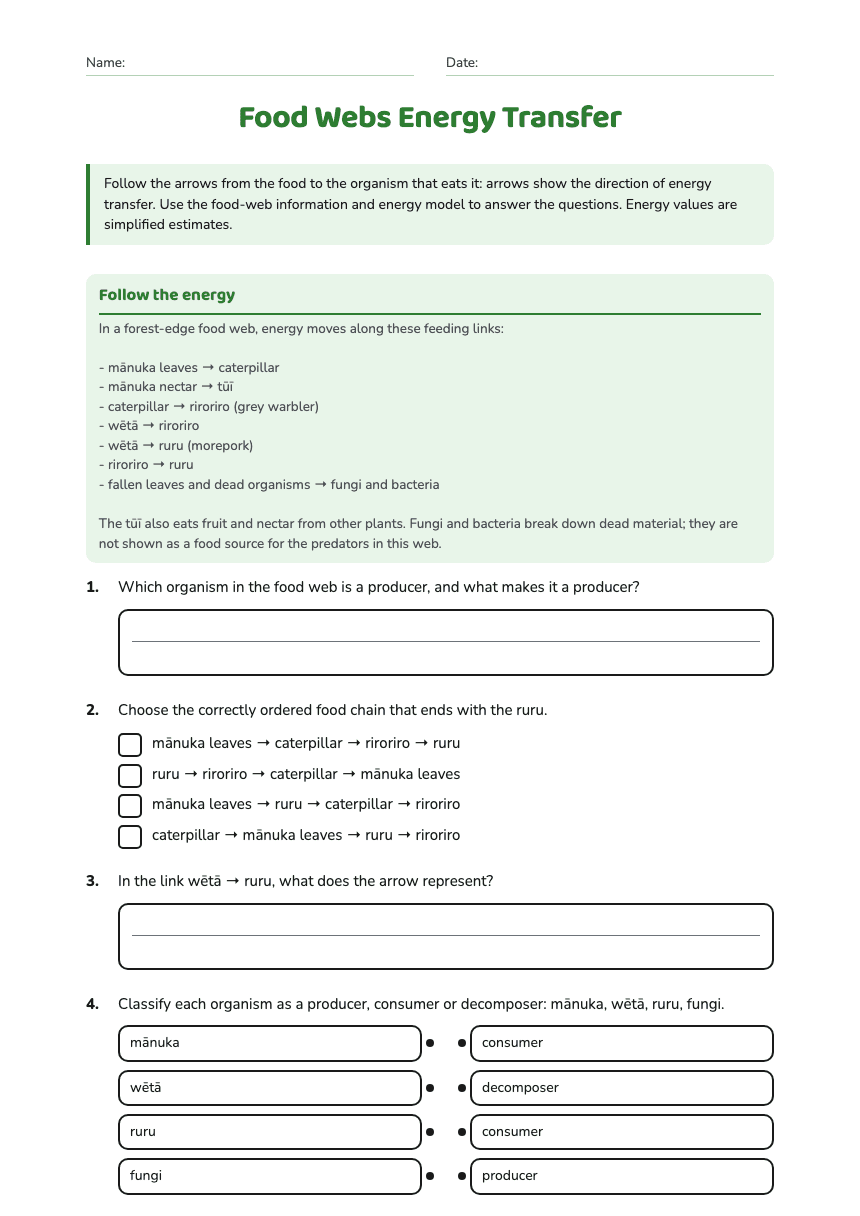
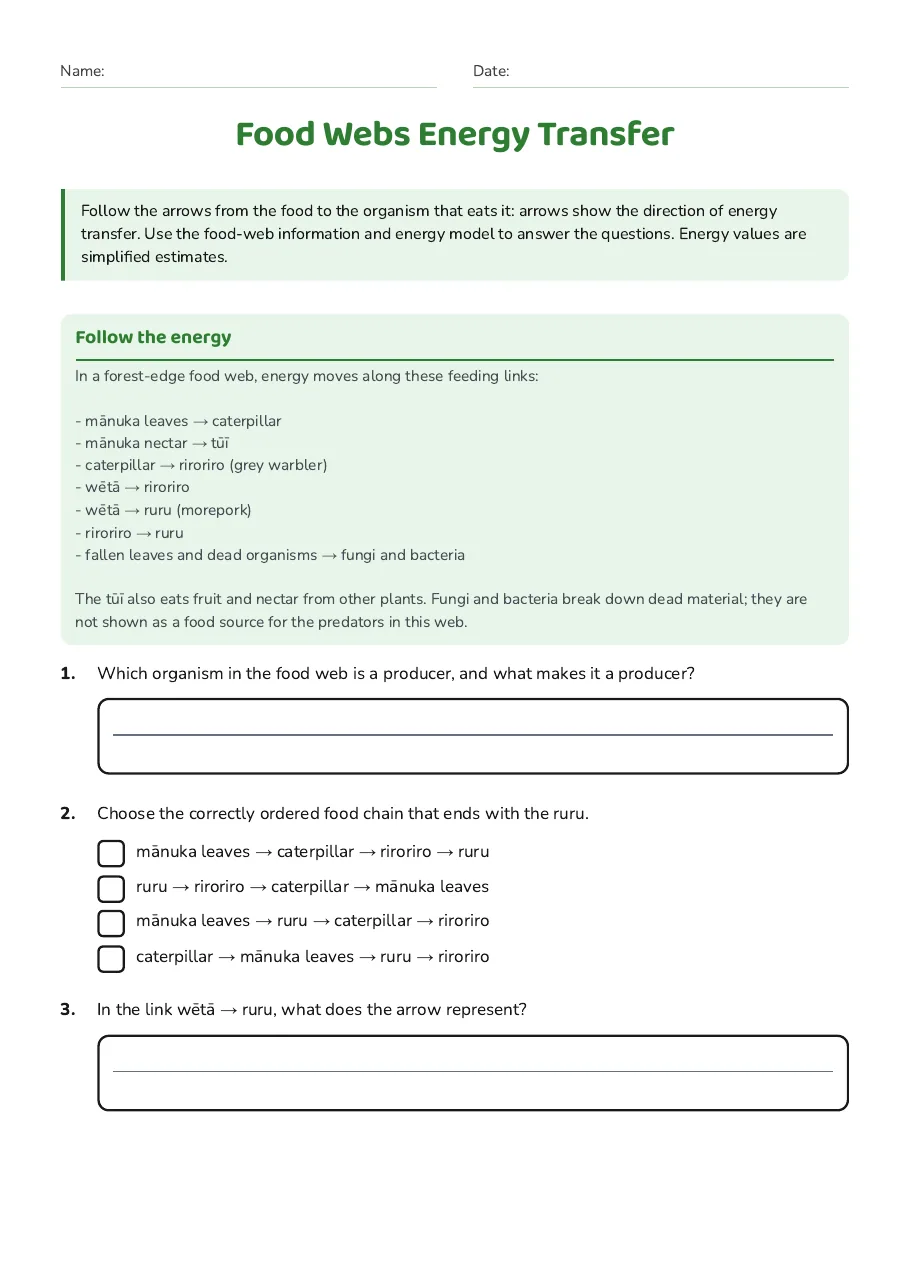
Follow the energy
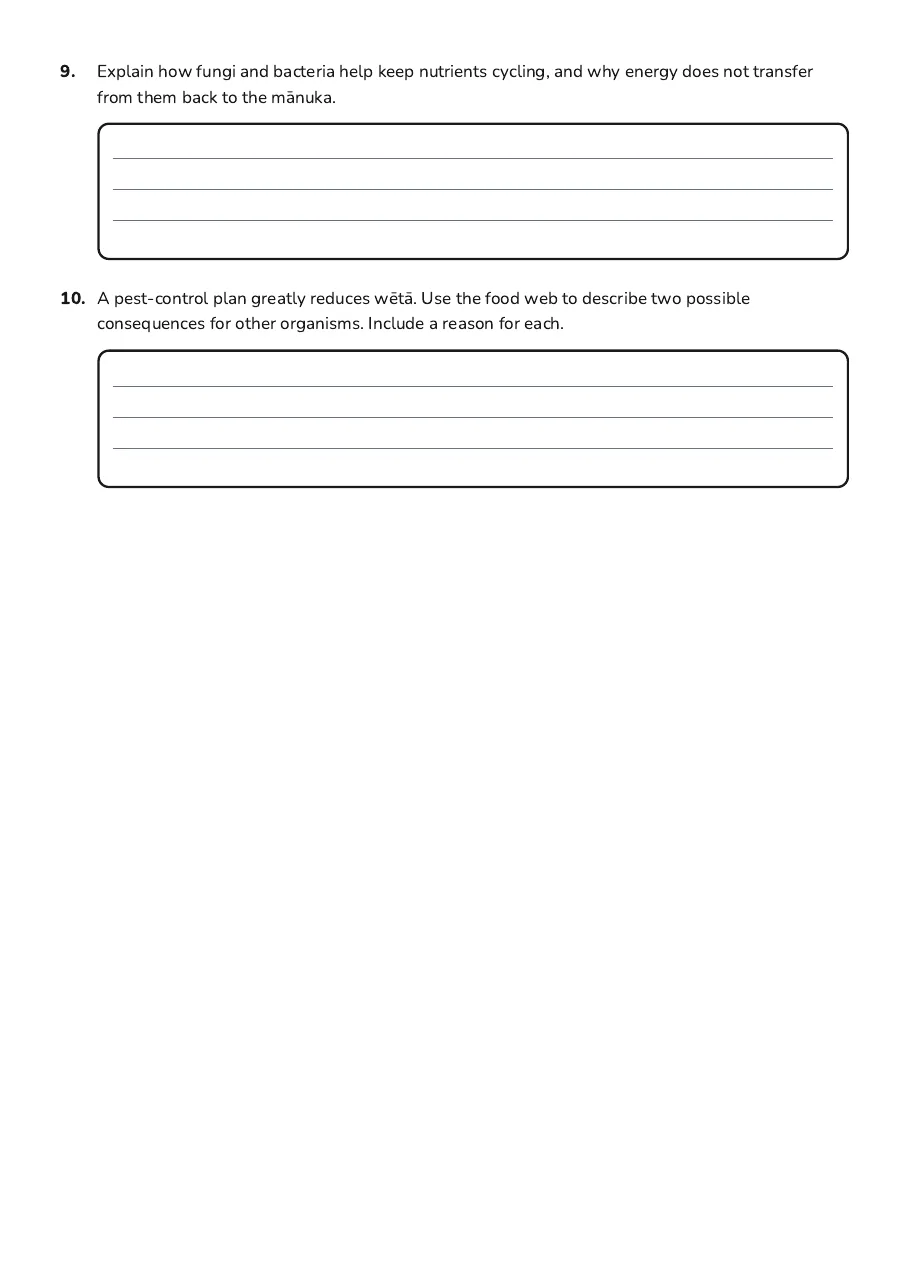
In a forest-edge food web, energy moves along these feeding links: - mānuka leaves → caterpillar - mānuka nectar → tūī - caterpillar → riroriro (grey warbler) - wētā → riroriro - wētā → ruru (morepork) - riroriro → ruru - fallen leaves and dead organisms → fungi and bacteria The tūī also eats fruit and nectar from other plants. Fungi and bacteria break down dead material; they are not shown as a food source for the predators in this web.
- mānuka leaves → caterpillar → riroriro → ruru
- ruru → riroriro → caterpillar → mānuka leaves
- mānuka leaves → ruru → caterpillar → riroriro
- caterpillar → mānuka leaves → ruru → riroriro
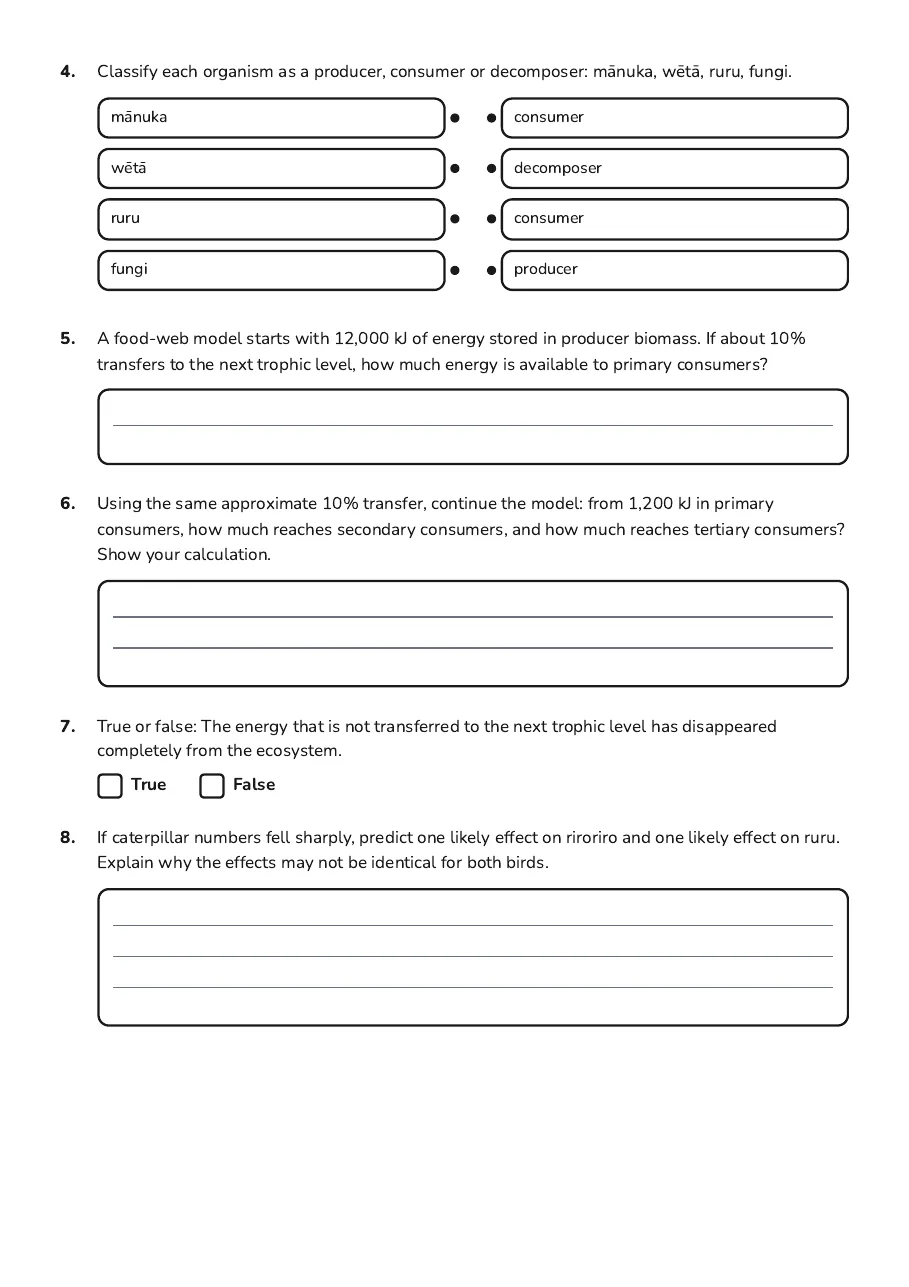
- mānuka
- wētā
- ruru
- fungi
- consumer
- decomposer
- consumer
- producer
3 printable pages
Page 1
Page 2
Page 3
About This Worksheet
Free in Kuraplan
Sign up free, grab the PDF, and customize it for your class.
Print-Ready
Formatted for standard paper. Clean layout, easy to read.
AI-Generated
Created with Kuraplan's AI, designed for real classroom use.
For Teachers & Parents
Use in classrooms, for homework, tutoring, or homeschool.
Need a custom version of this worksheet?
Kuraplan's AI generates custom worksheets in seconds — differentiated for every learner, aligned to your curriculum.
Generate Custom Worksheets — FreeMore Science Worksheets
Kaitiaki Ecosystem Map Worksheet
Free
Climate Shapes Ecosystems
Free
Ecosystem Roles Sorting Activity
Free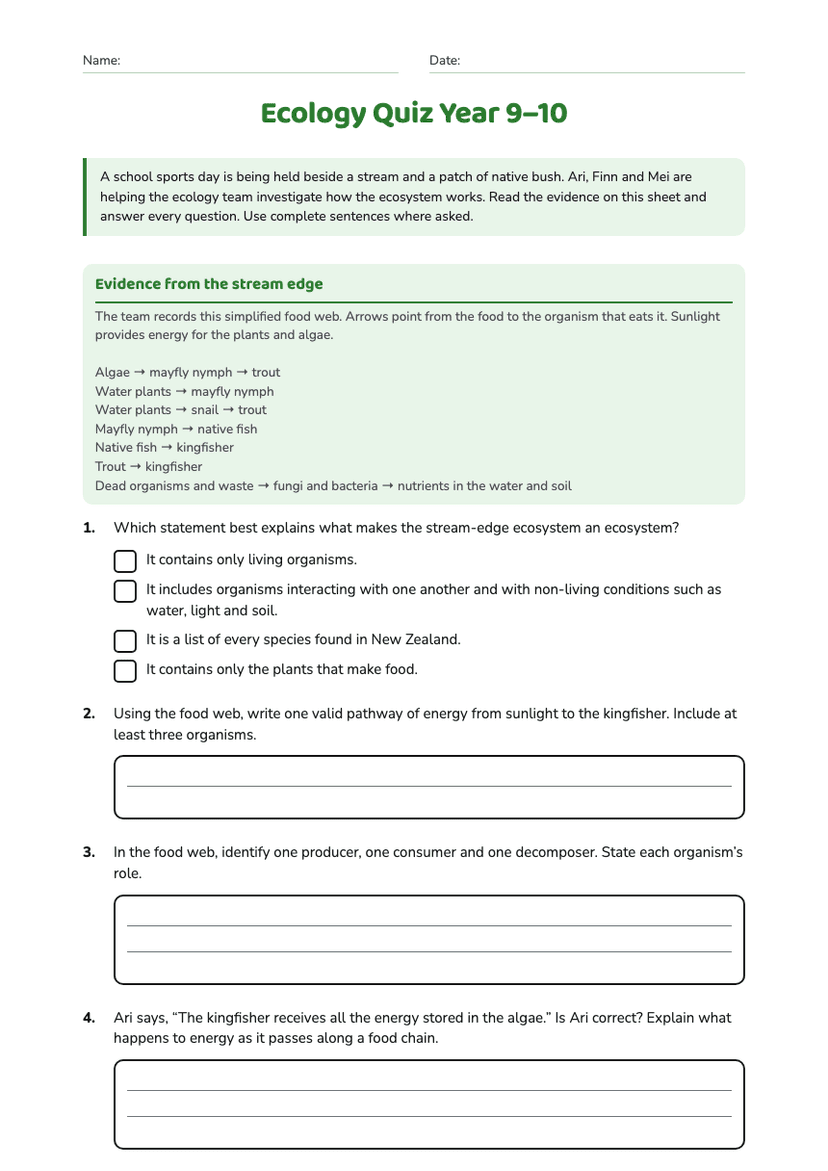
Ecology Quiz Year 9–10
Free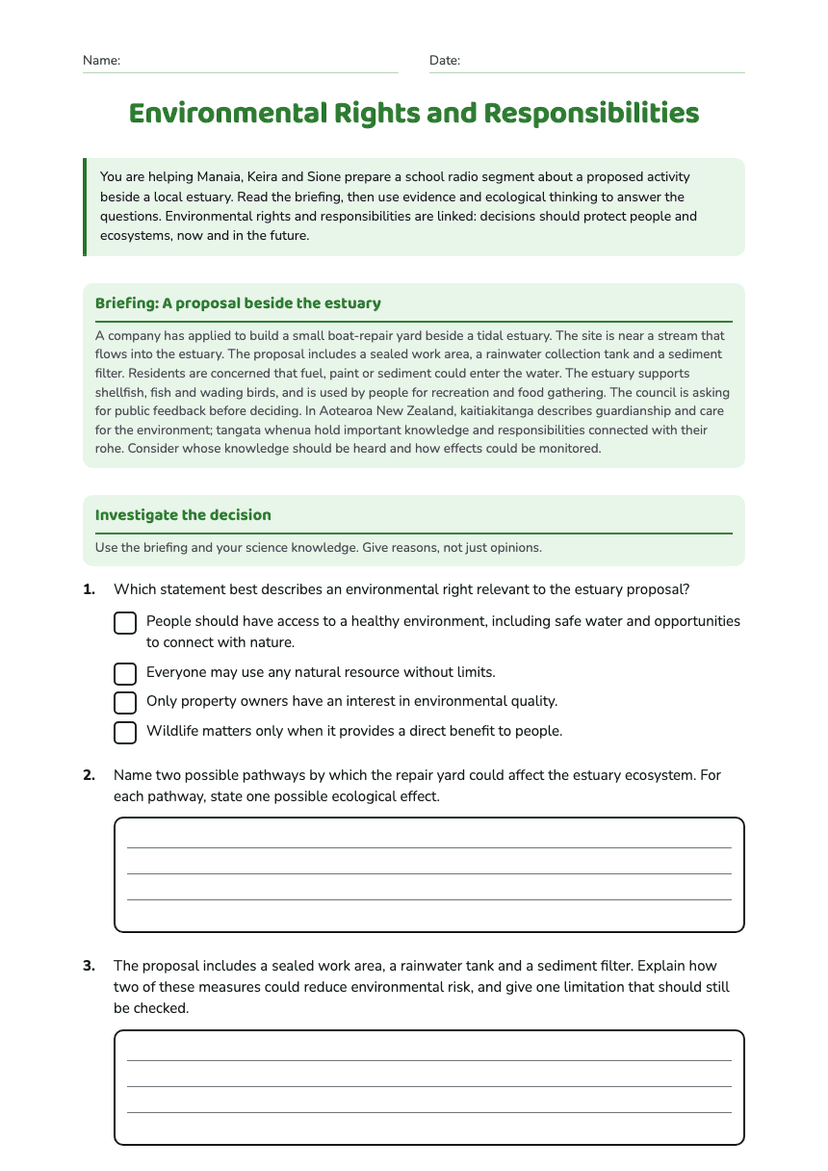
Environmental Rights and Responsibilities
Free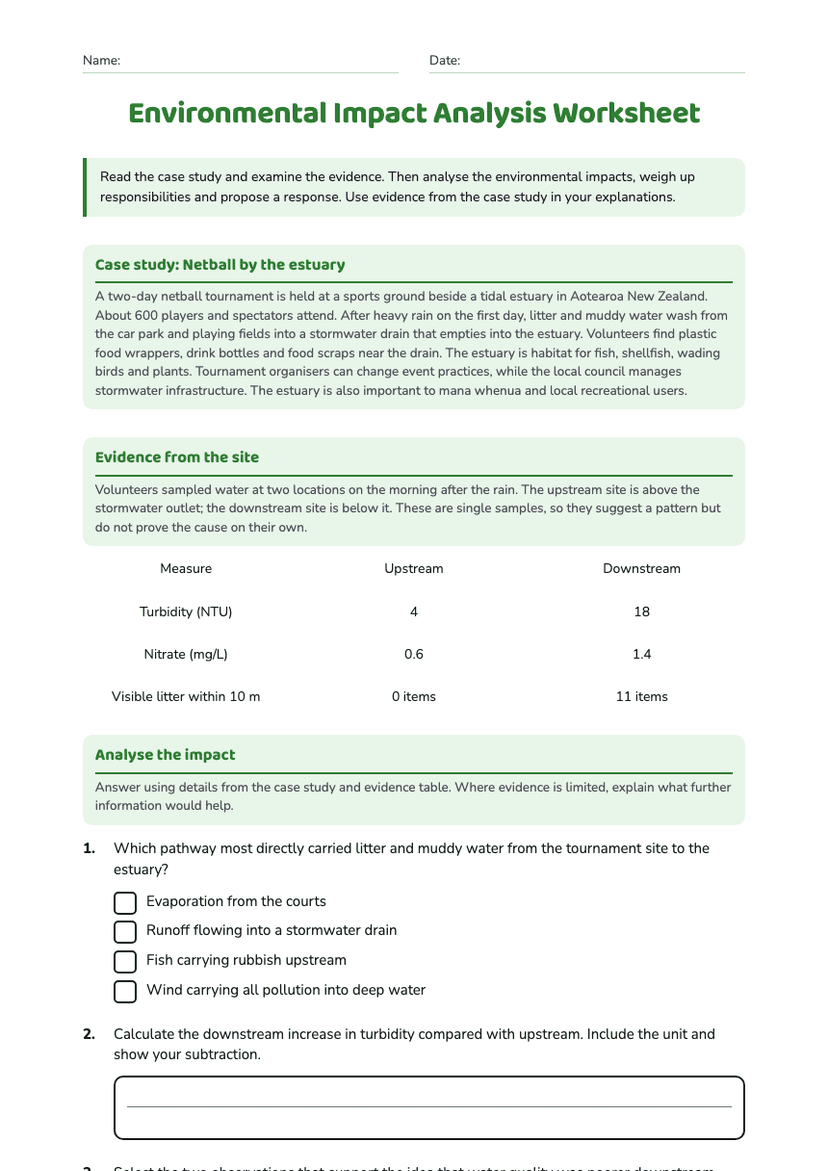
Environmental Impact Analysis Worksheet
Free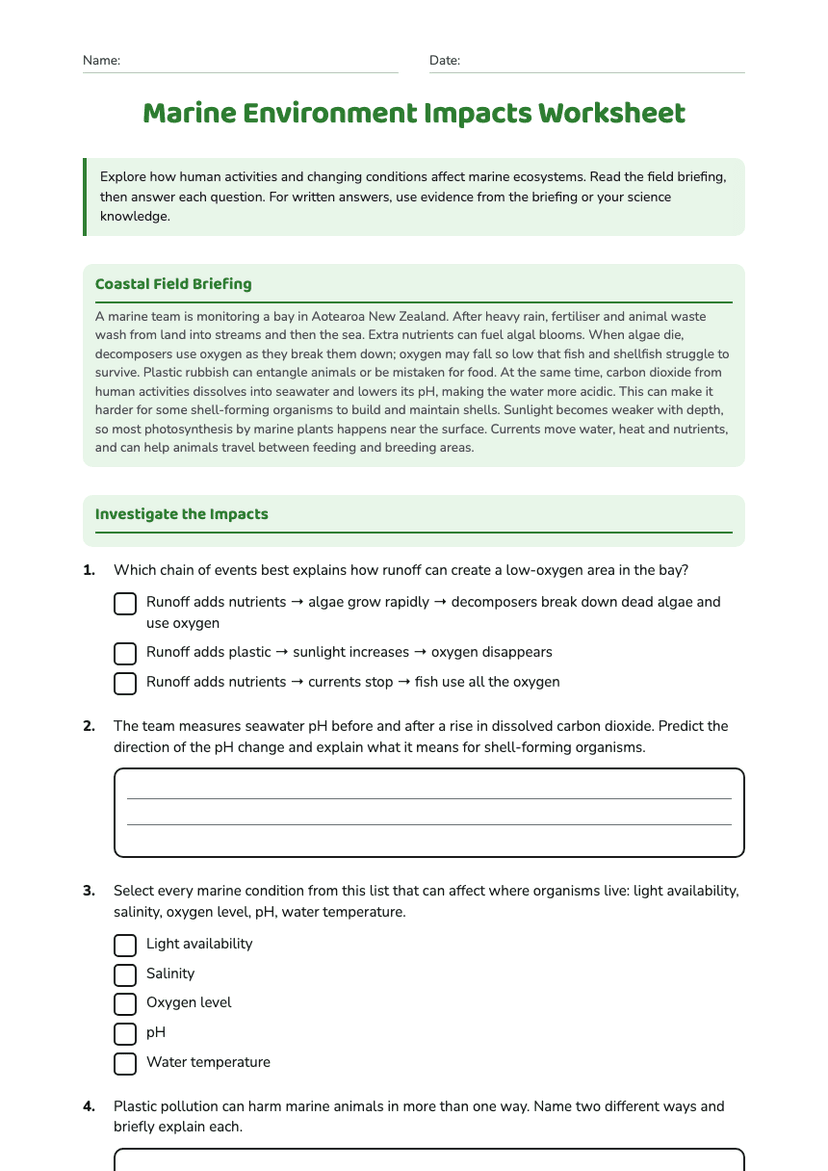
Marine Environment Impacts Worksheet
Free