Forest Ecosystems Capstone
A free science worksheet ready for your classroom. Open in Kuraplan to grab the print-ready PDF, customize it for your students, or generate a fresh version in seconds.
Forest Ecosystems Capstone
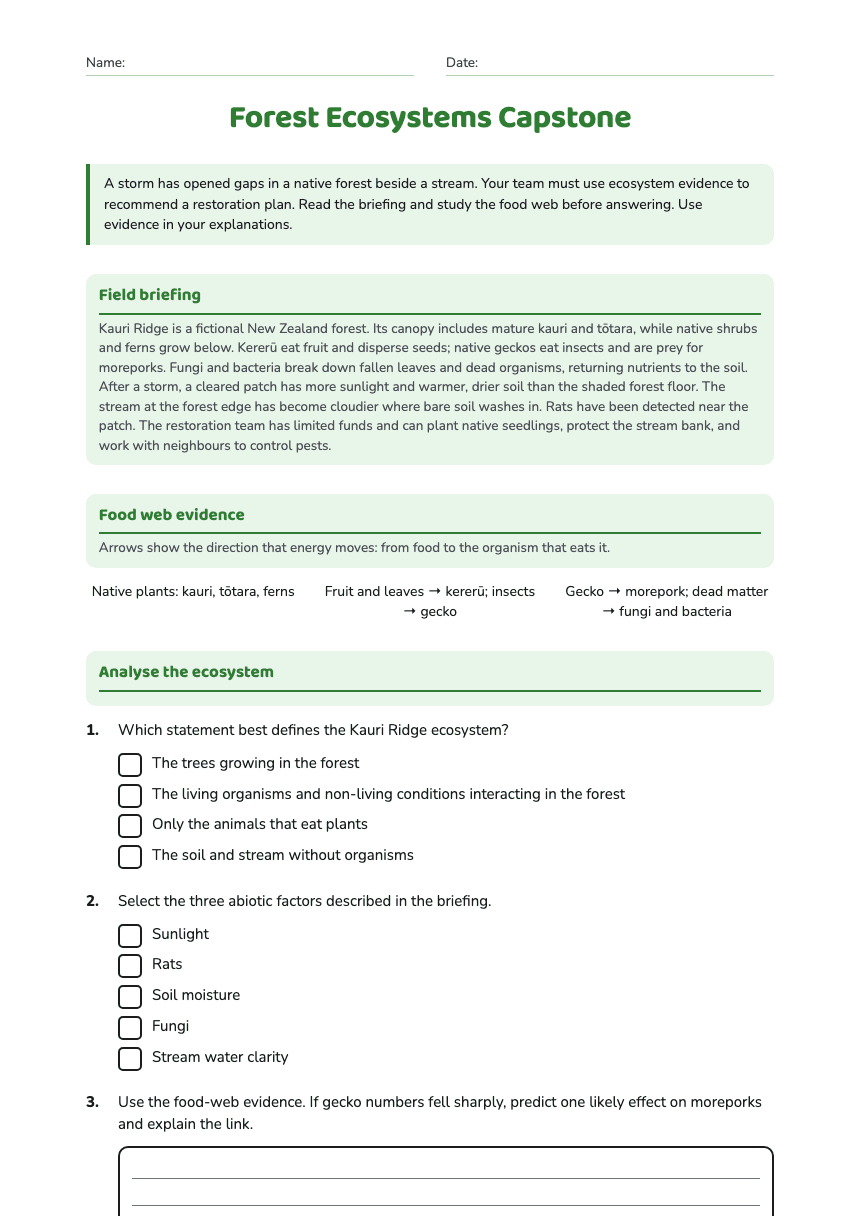
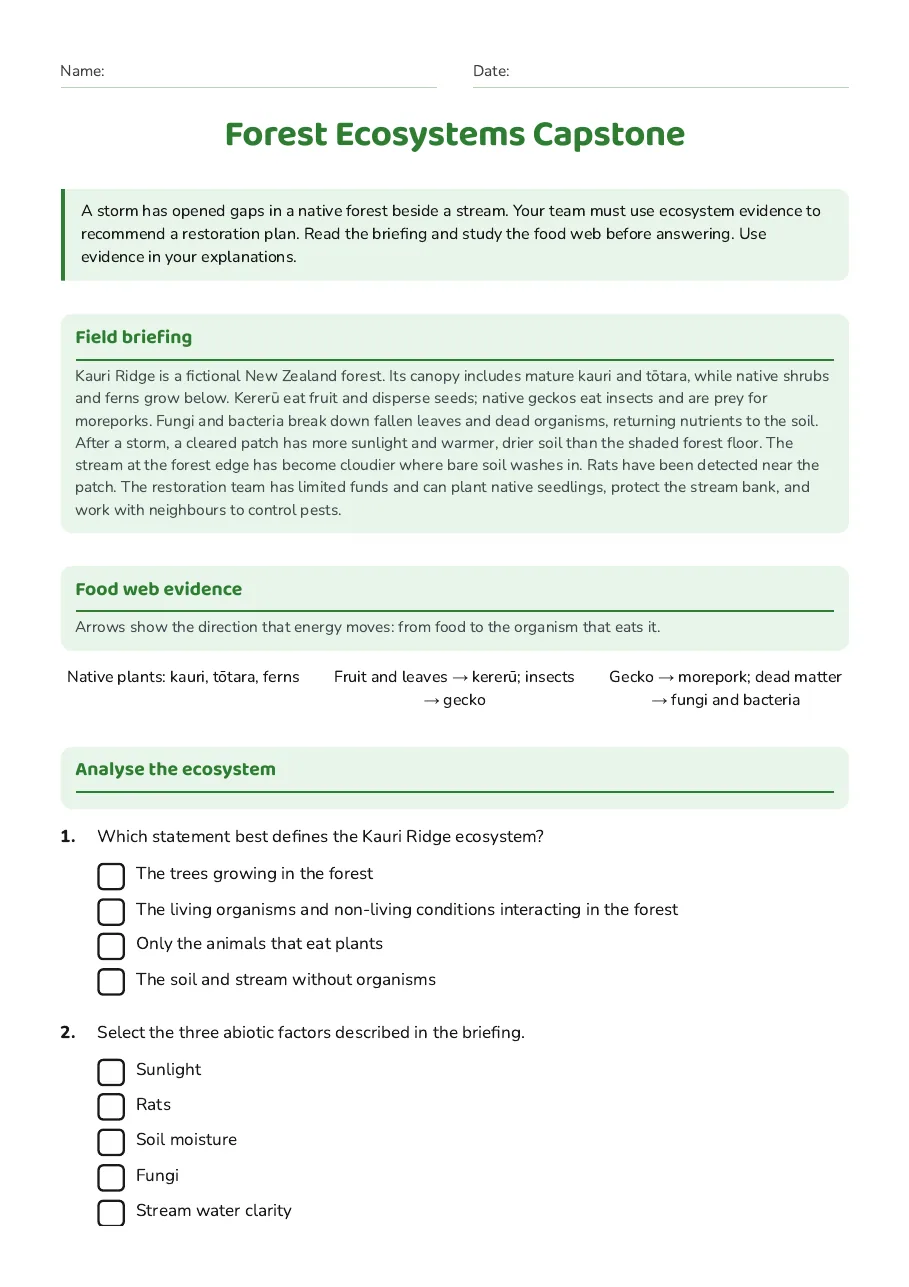
Field briefing
Kauri Ridge is a fictional New Zealand forest. Its canopy includes mature kauri and tōtara, while native shrubs and ferns grow below. Kererū eat fruit and disperse seeds; native geckos eat insects and are prey for moreporks. Fungi and bacteria break down fallen leaves and dead organisms, returning nutrients to the soil. After a storm, a cleared patch has more sunlight and warmer, drier soil than the shaded forest floor. The stream at the forest edge has become cloudier where bare soil washes in. Rats have been detected near the patch. The restoration team has limited funds and can plant native seedlings, protect the stream bank, and work with neighbours to control pests.
Food web evidence
Arrows show the direction that energy moves: from food to the organism that eats it.
Native plants: kauri, tōtara, ferns
Fruit and leaves → kererū; insects → gecko
Gecko → morepork; dead matter → fungi and bacteria
Analyse the ecosystem
- The trees growing in the forest
- The living organisms and non-living conditions interacting in the forest
- Only the animals that eat plants
- The soil and stream without organisms
- Sunlight
- Rats
- Soil moisture
- Fungi
- Stream water clarity
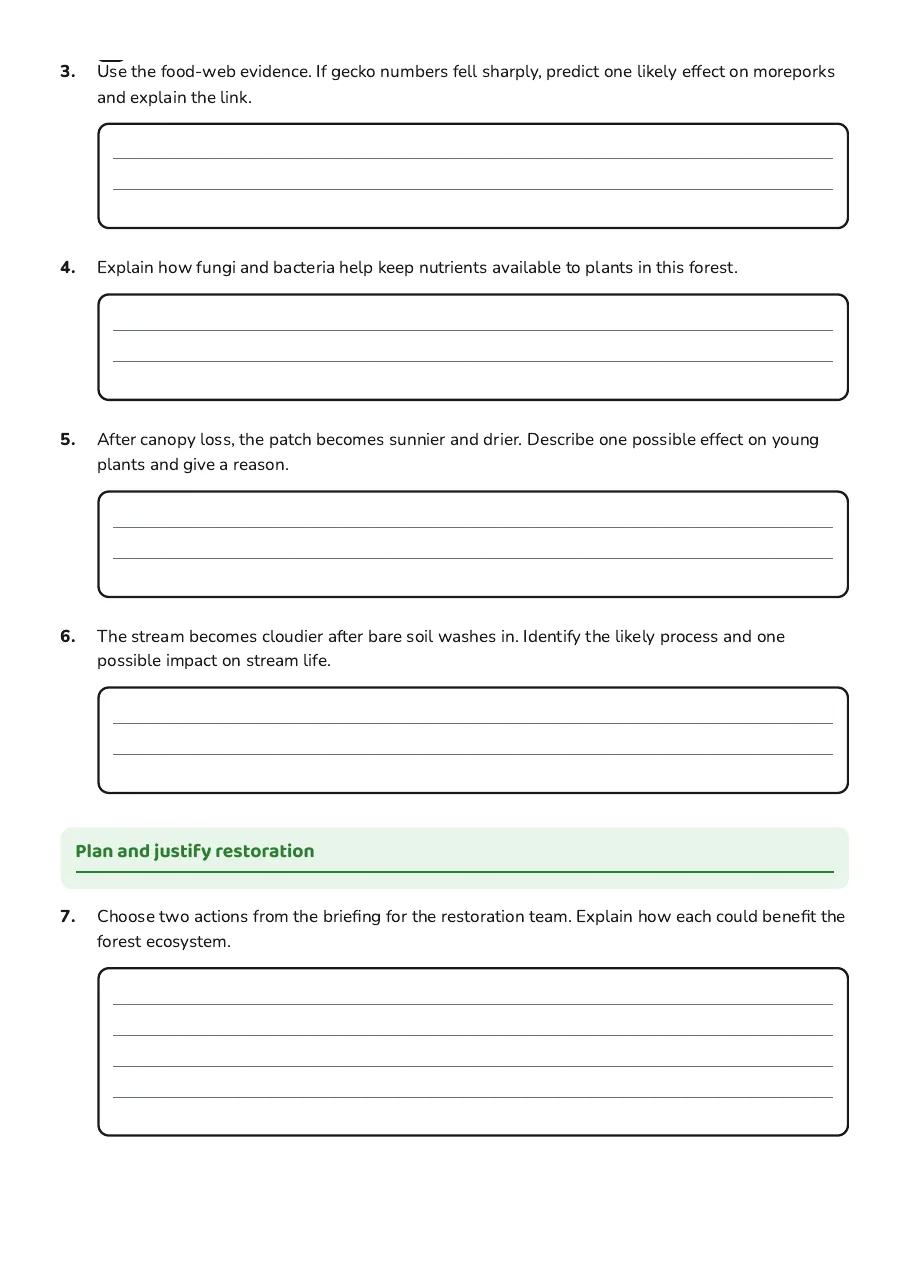
Plan and justify restoration
3 printable pages
Page 1
Page 2
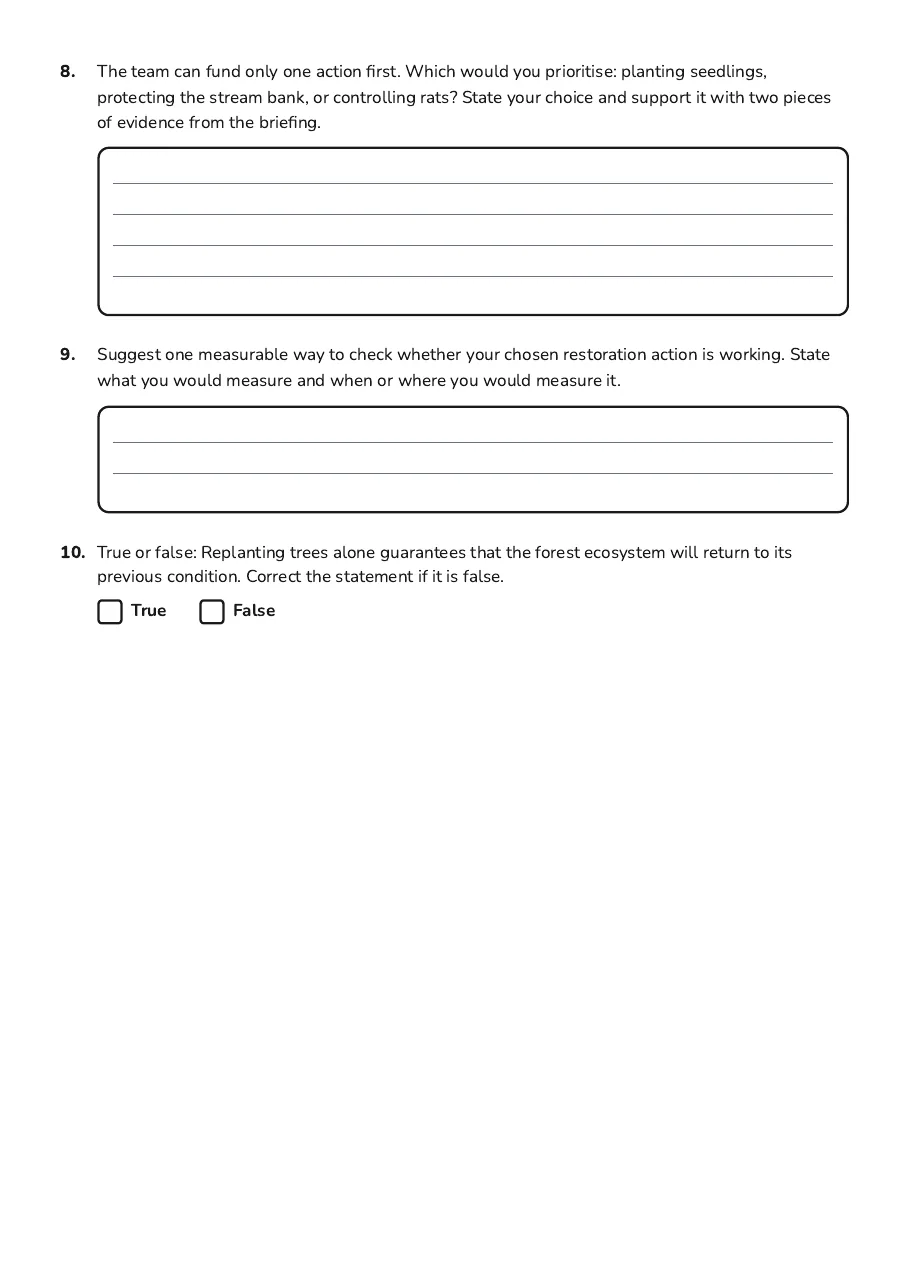
Page 3
About This Worksheet
Free in Kuraplan
Sign up free, grab the PDF, and customize it for your class.
Print-Ready
Formatted for standard paper. Clean layout, easy to read.
AI-Generated
Created with Kuraplan's AI, designed for real classroom use.
For Teachers & Parents
Use in classrooms, for homework, tutoring, or homeschool.
Need a custom version of this worksheet?
Kuraplan's AI generates custom worksheets in seconds — differentiated for every learner, aligned to your curriculum.
Generate Custom Worksheets — FreeMore Science Worksheets
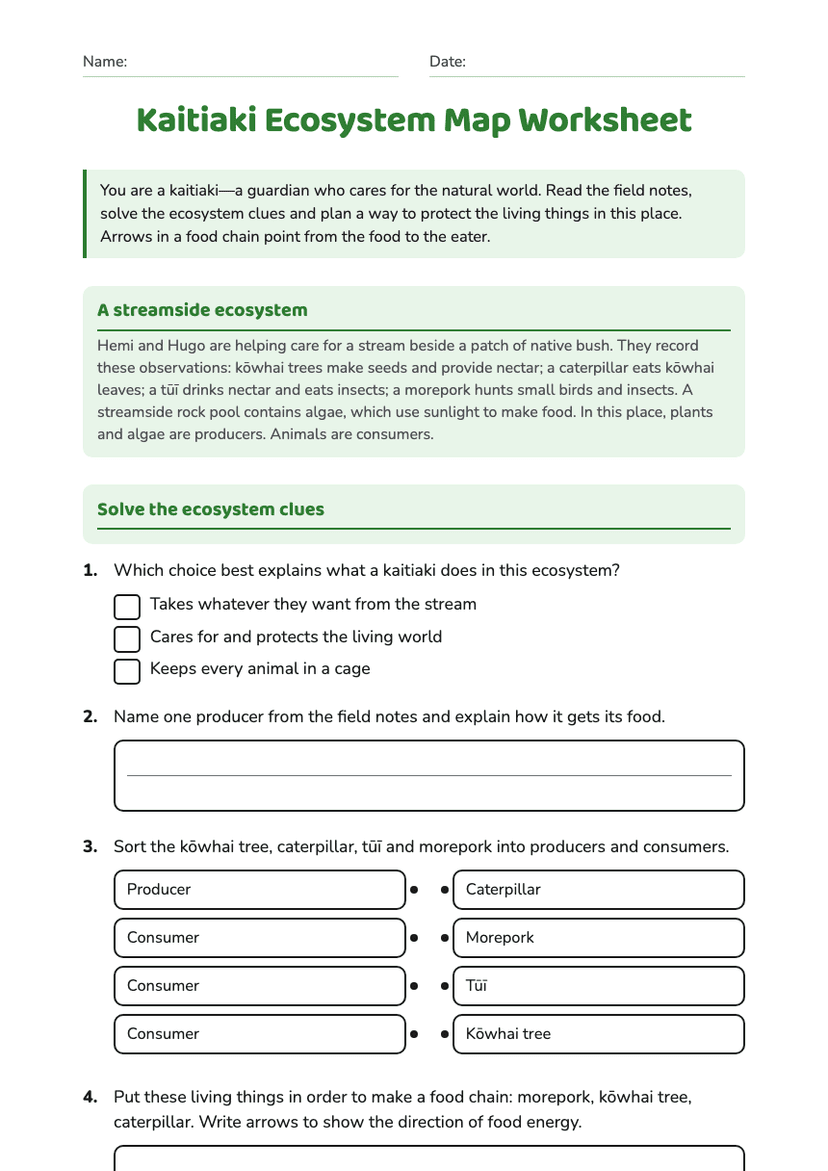
Kaitiaki Ecosystem Map Worksheet
Free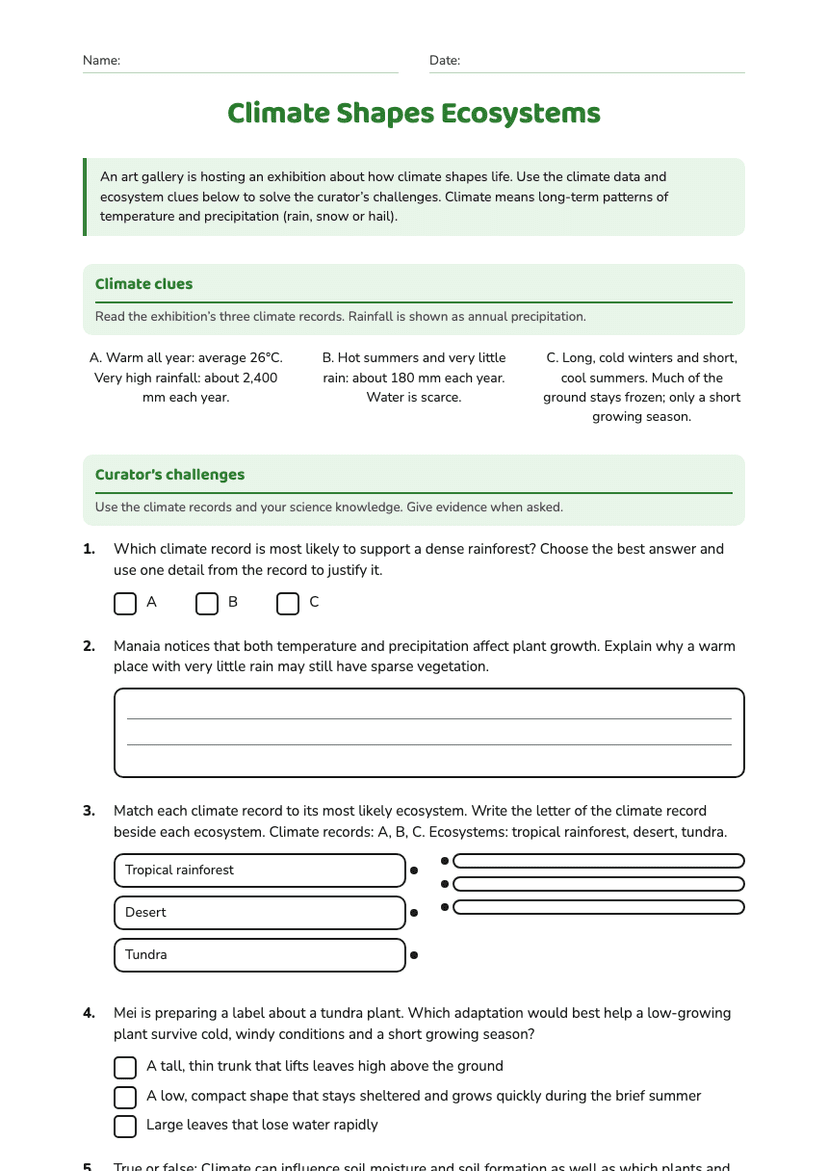
Climate Shapes Ecosystems
Free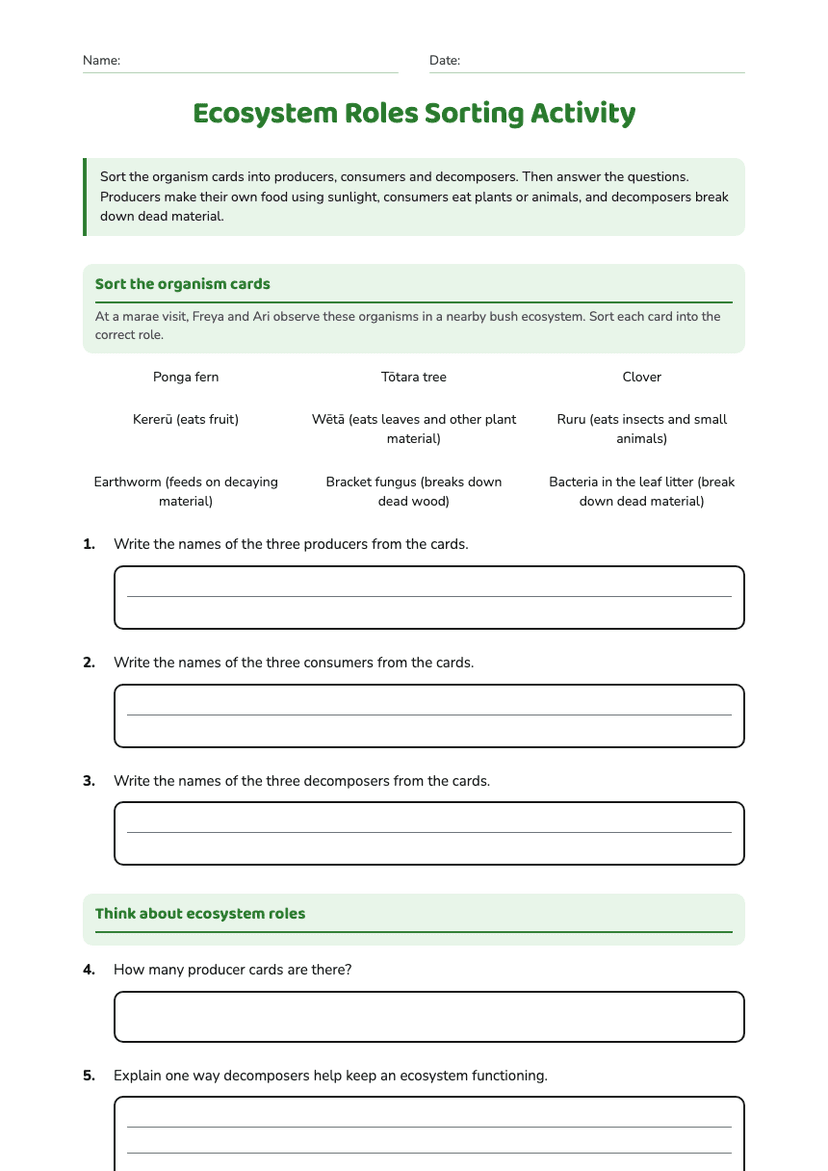
Ecosystem Roles Sorting Activity
Free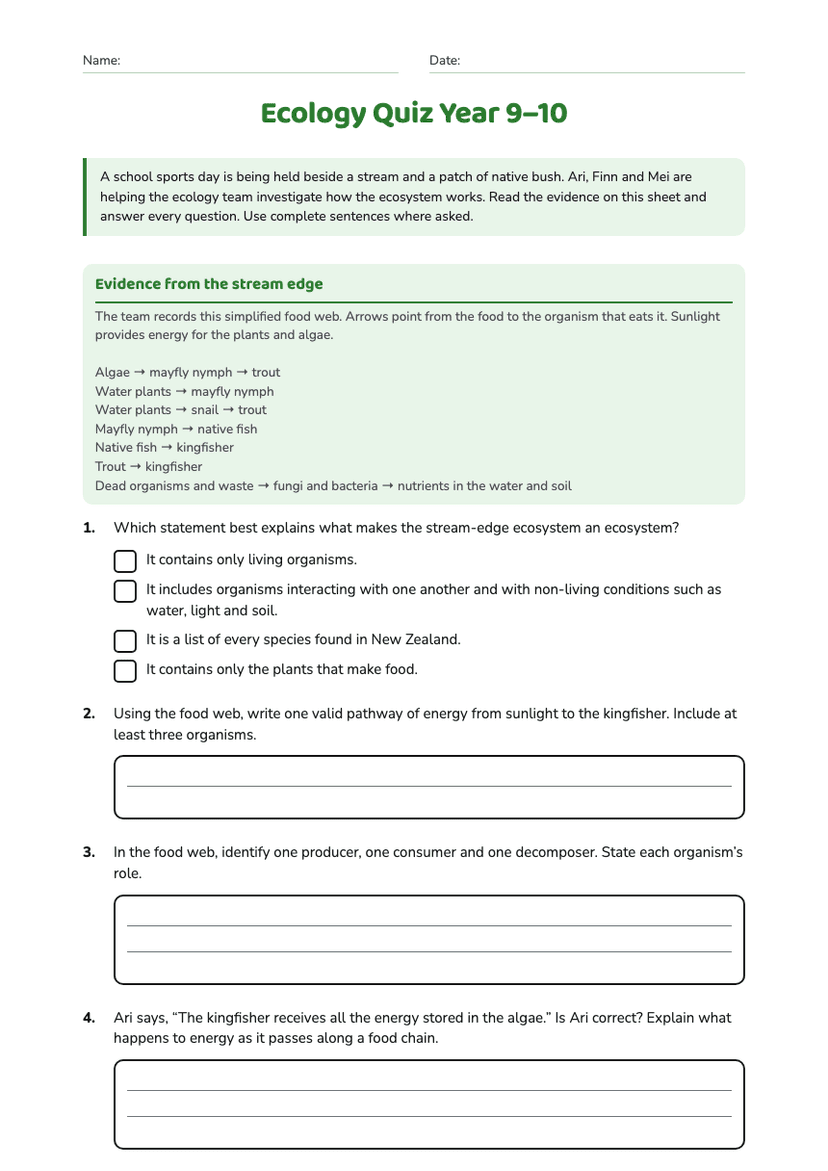
Ecology Quiz Year 9–10
Free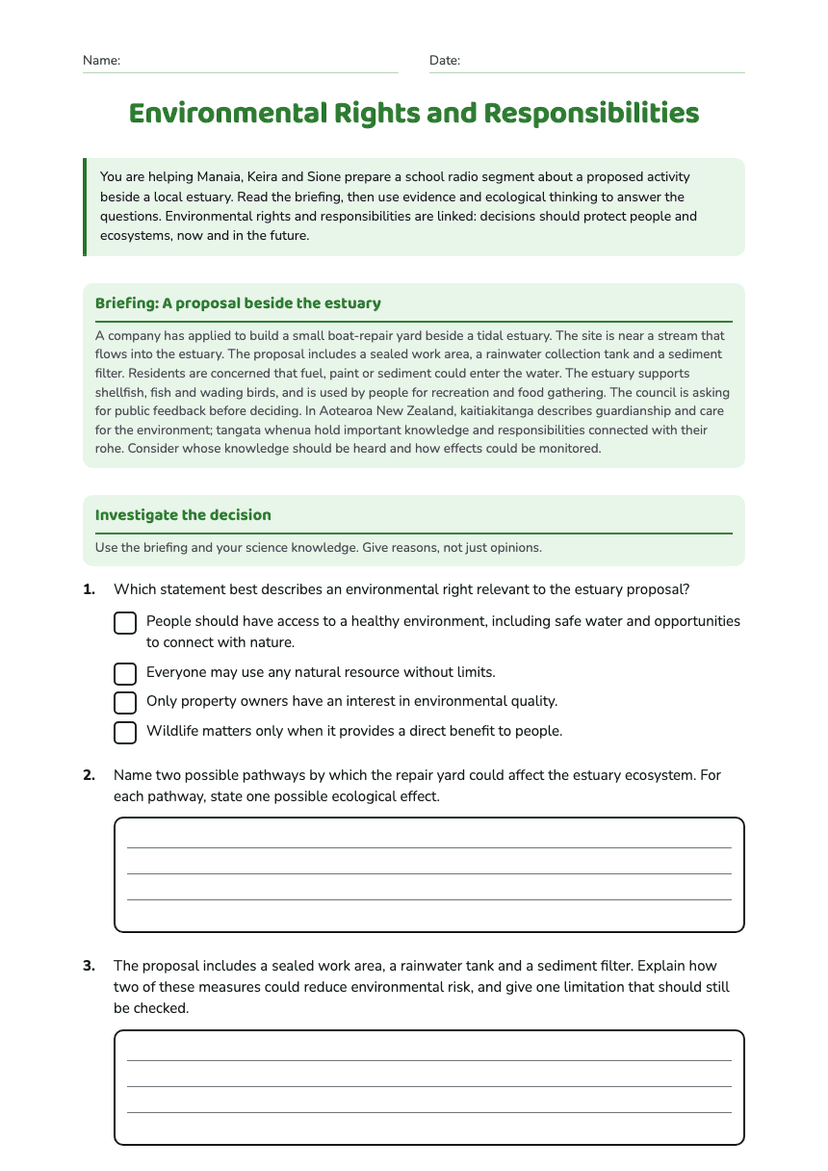
Environmental Rights and Responsibilities
Free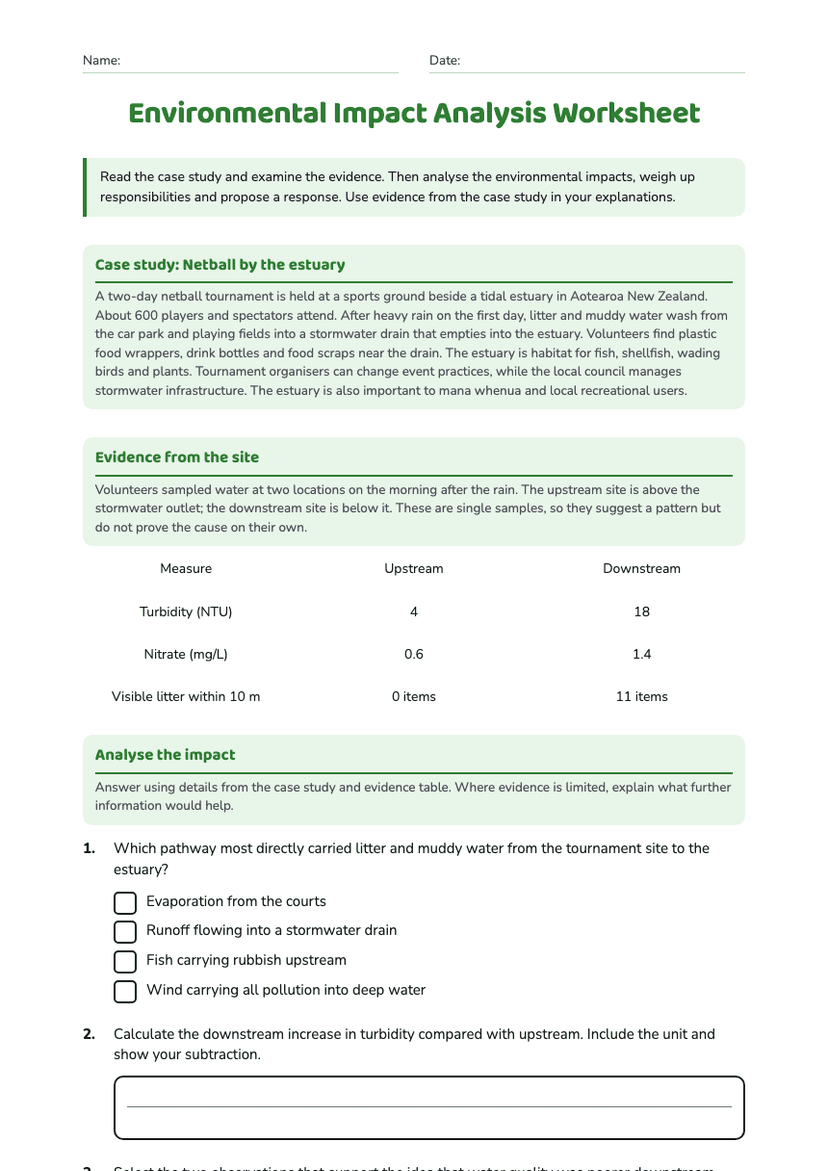
Environmental Impact Analysis Worksheet
Free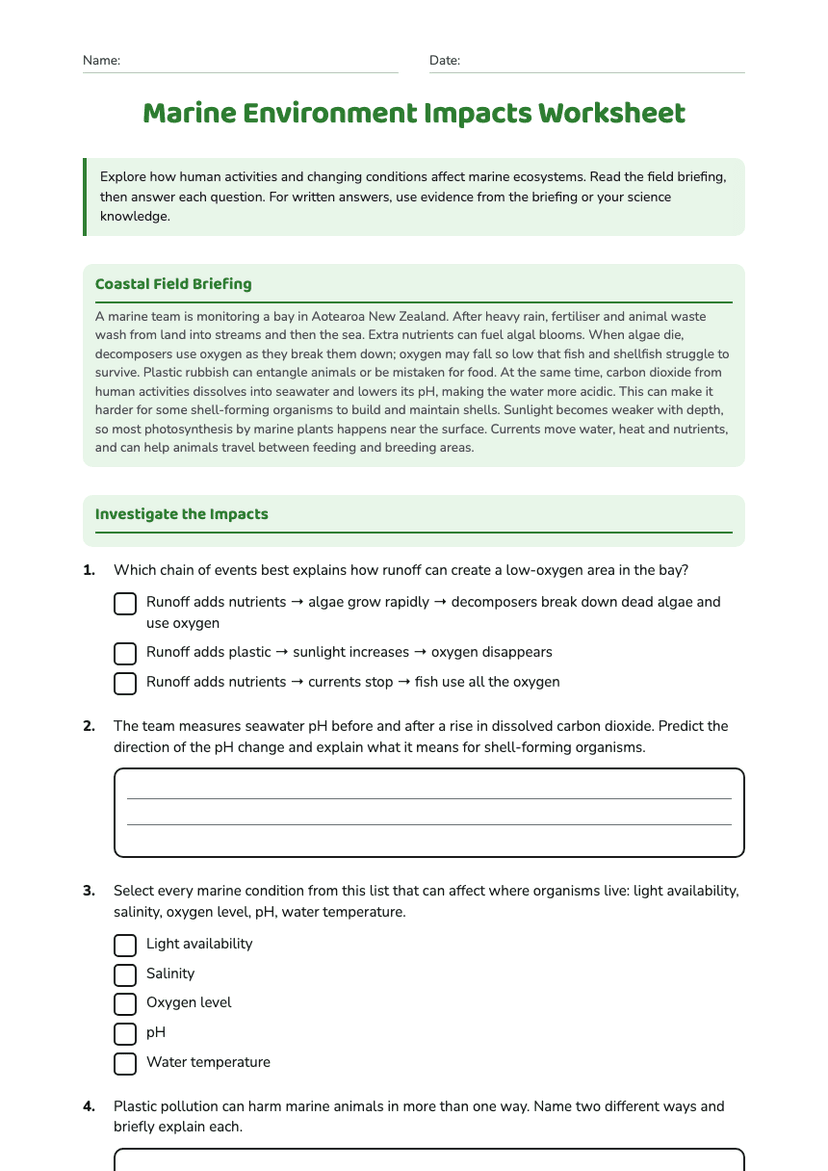
Marine Environment Impacts Worksheet
Free