Freedom and Justice Reflection
A free history worksheet ready for your classroom. Open in Kuraplan to grab the print-ready PDF, customize it for your students, or generate a fresh version in seconds.
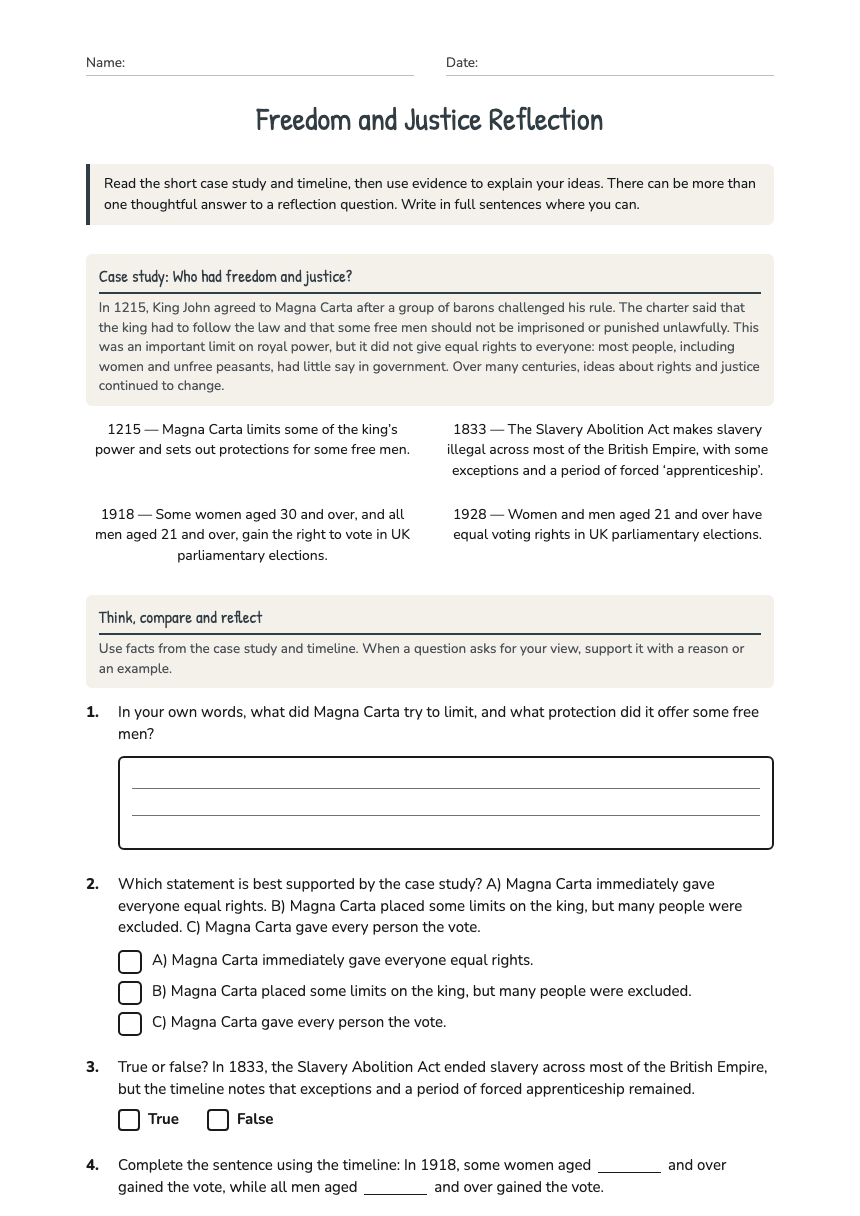
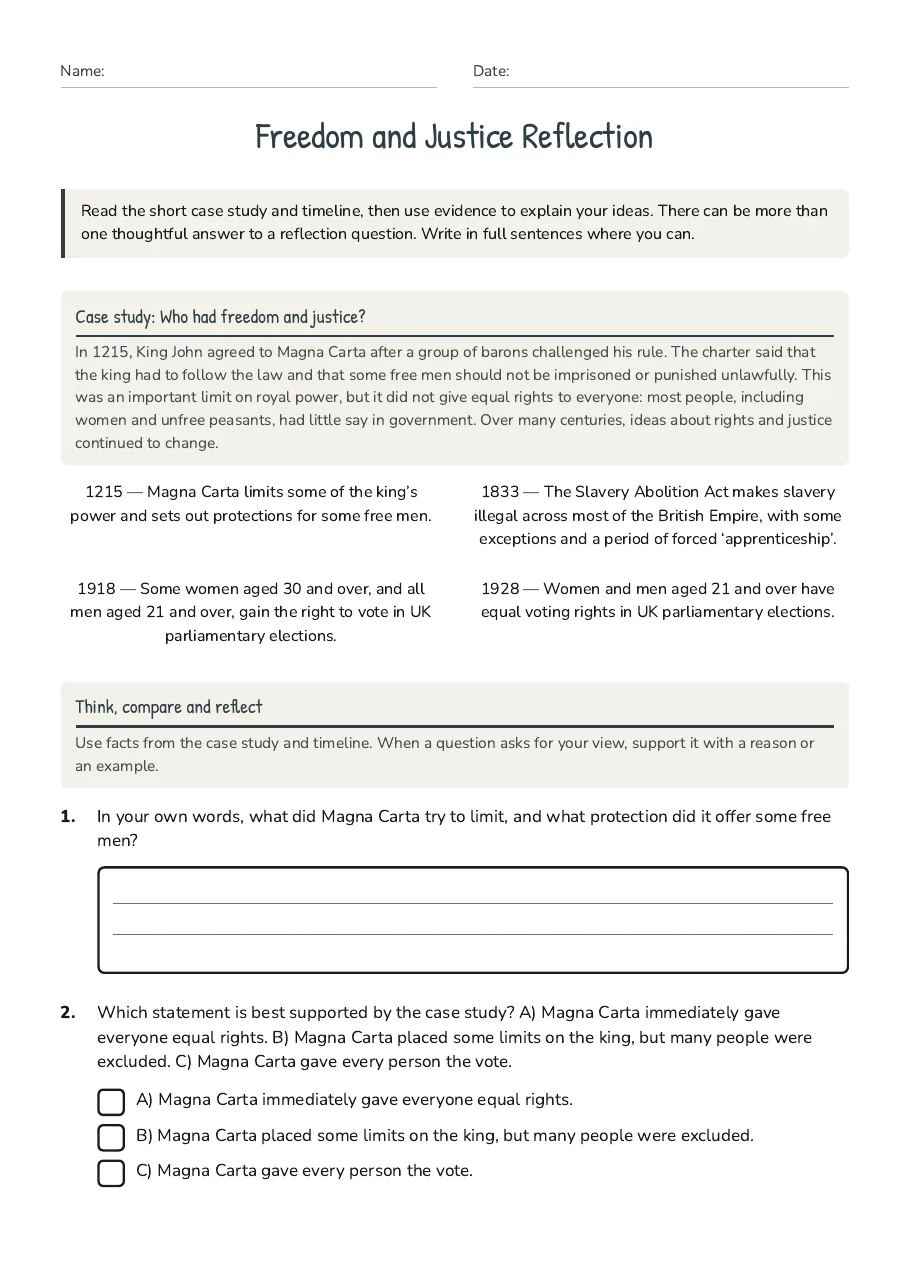
Freedom and Justice Reflection
Case study: Who had freedom and justice?
In 1215, King John agreed to Magna Carta after a group of barons challenged his rule. The charter said that the king had to follow the law and that some free men should not be imprisoned or punished unlawfully. This was an important limit on royal power, but it did not give equal rights to everyone: most people, including women and unfree peasants, had little say in government. Over many centuries, ideas about rights and justice continued to change.
1215 — Magna Carta limits some of the king’s power and sets out protections for some free men.
1833 — The Slavery Abolition Act makes slavery illegal across most of the British Empire, with some exceptions and a period of forced ‘apprenticeship’.
1918 — Some women aged 30 and over, and all men aged 21 and over, gain the right to vote in UK parliamentary elections.
1928 — Women and men aged 21 and over have equal voting rights in UK parliamentary elections.
Think, compare and reflect
Use facts from the case study and timeline. When a question asks for your view, support it with a reason or an example.
- A) Magna Carta immediately gave everyone equal rights.
- B) Magna Carta placed some limits on the king, but many people were excluded.
- C) Magna Carta gave every person the vote.
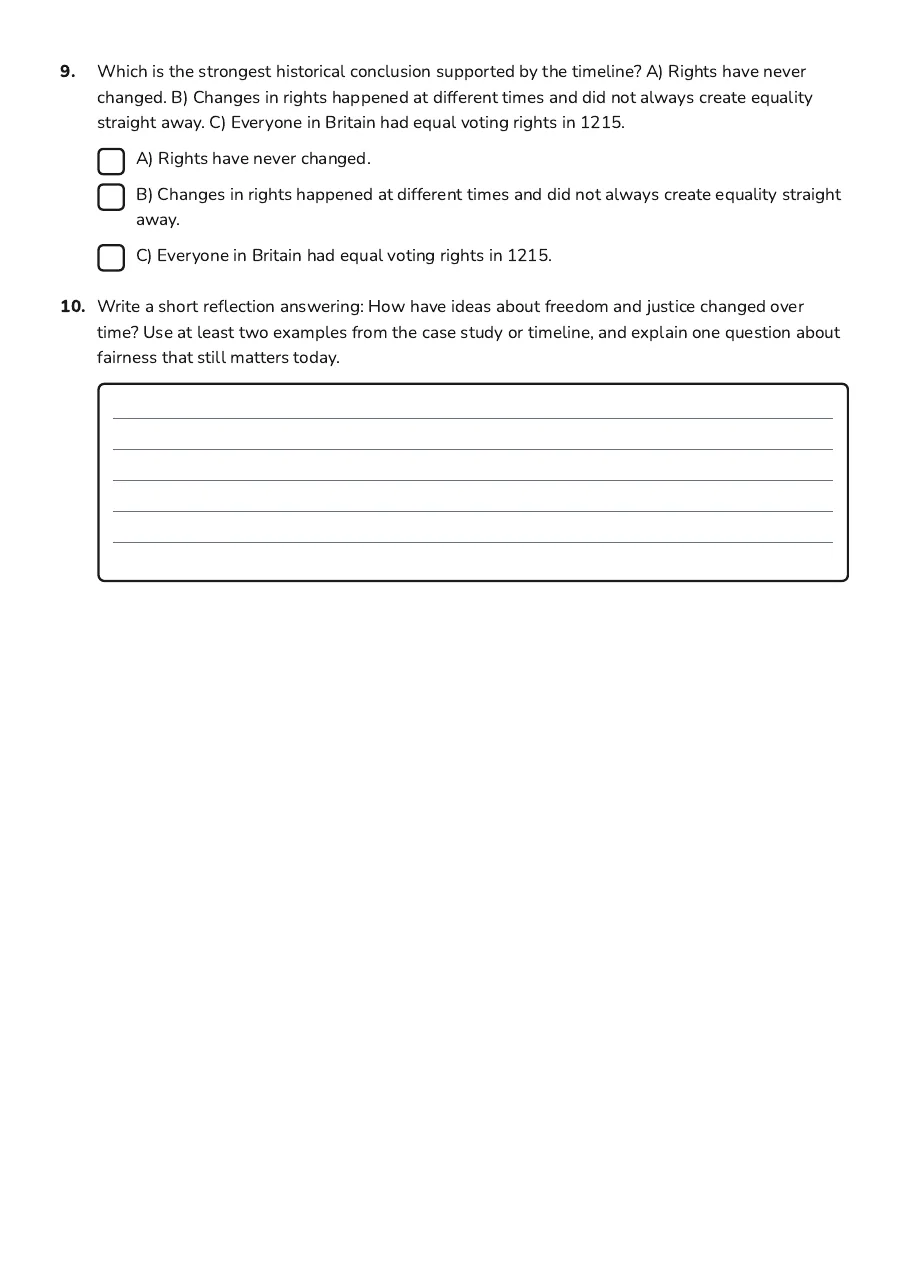
- A) Rights have never changed.
- B) Changes in rights happened at different times and did not always create equality straight away.
- C) Everyone in Britain had equal voting rights in 1215.
3 printable pages
Page 1
Page 2
Page 3
About This Worksheet
Free in Kuraplan
Sign up free, grab the PDF, and customize it for your class.
Print-Ready
Formatted for standard paper. Clean layout, easy to read.
AI-Generated
Created with Kuraplan's AI, designed for real classroom use.
For Teachers & Parents
Use in classrooms, for homework, tutoring, or homeschool.
Need a custom version of this worksheet?
Kuraplan's AI generates custom worksheets in seconds — differentiated for every learner, aligned to your curriculum.
Generate Custom Worksheets — FreeMore History Worksheets
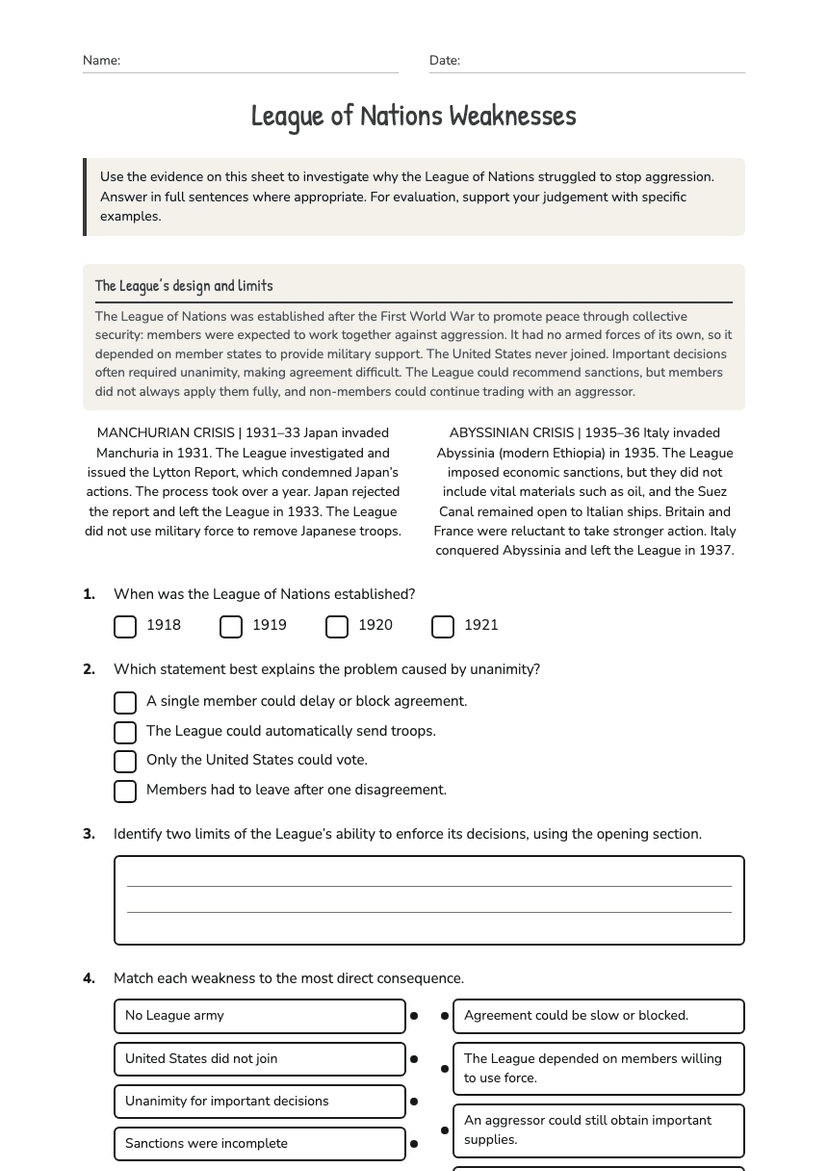
League of Nations Weaknesses
Free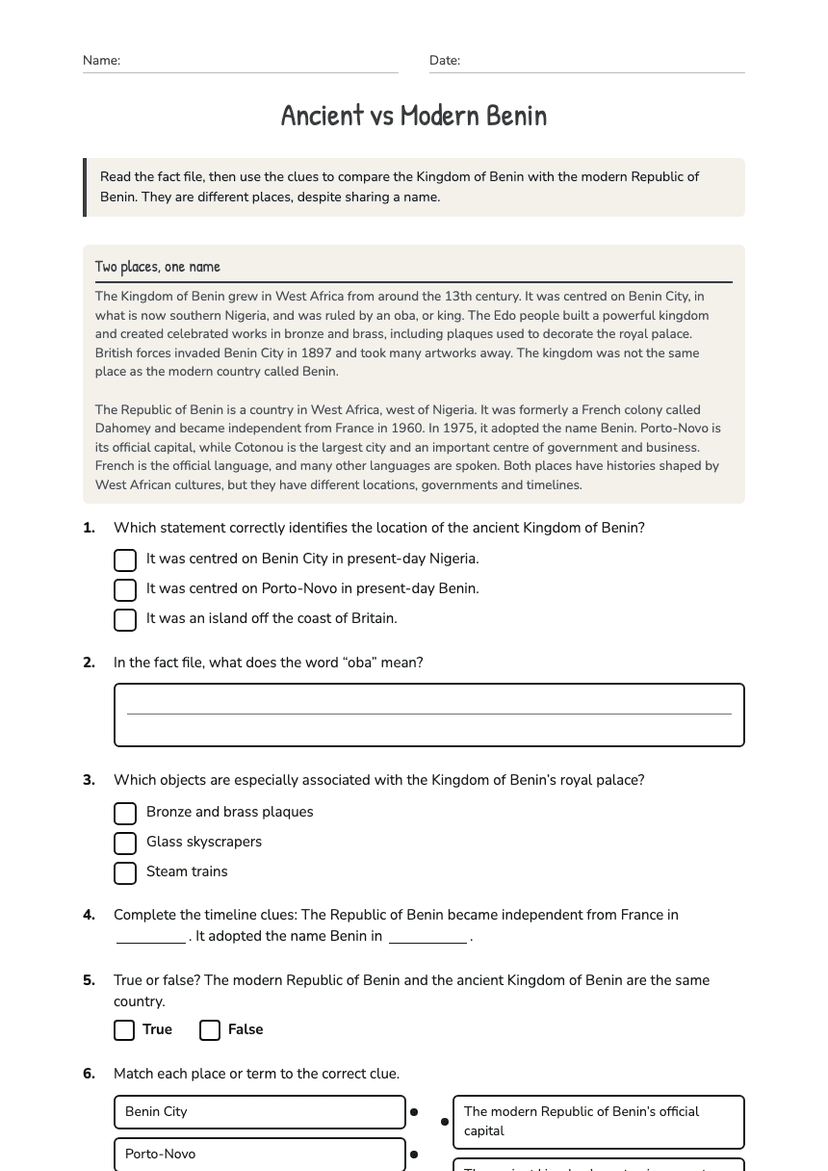
Ancient vs Modern Benin
Free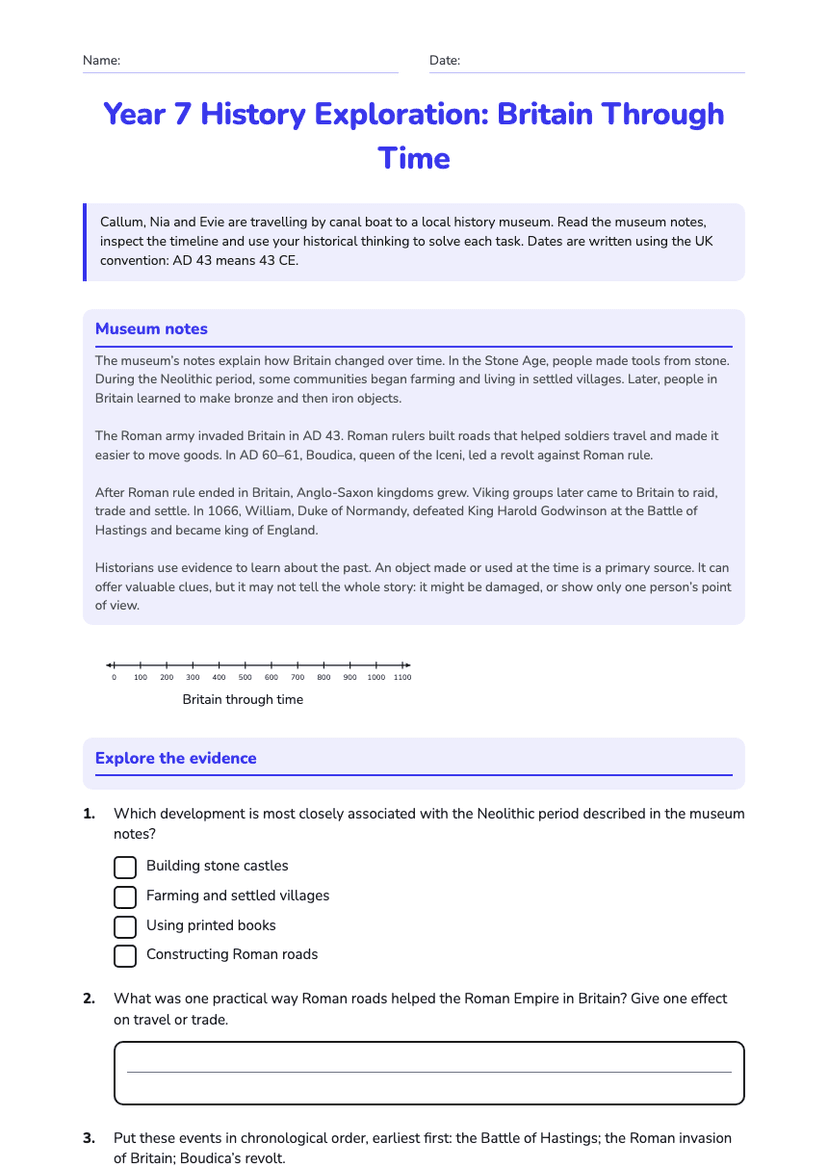
Year 7 History Exploration: Britain Through Time
Free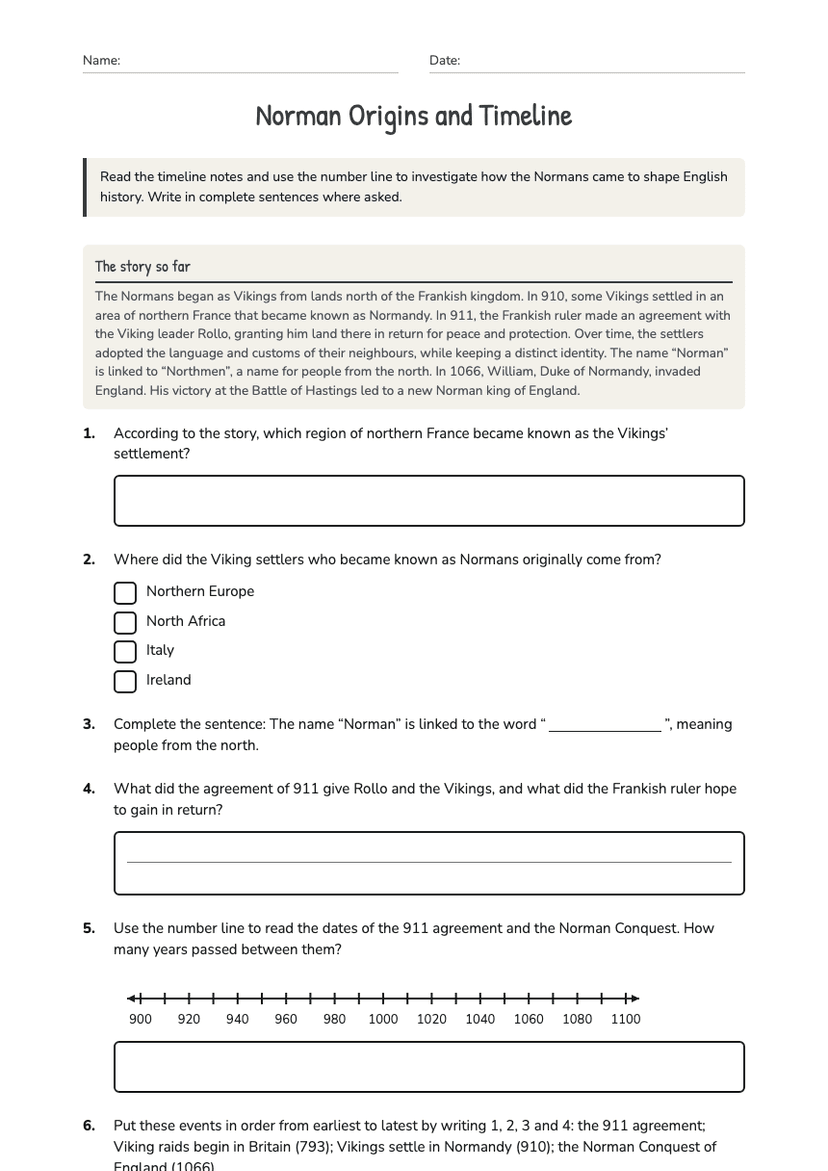
Norman Origins and Timeline
Free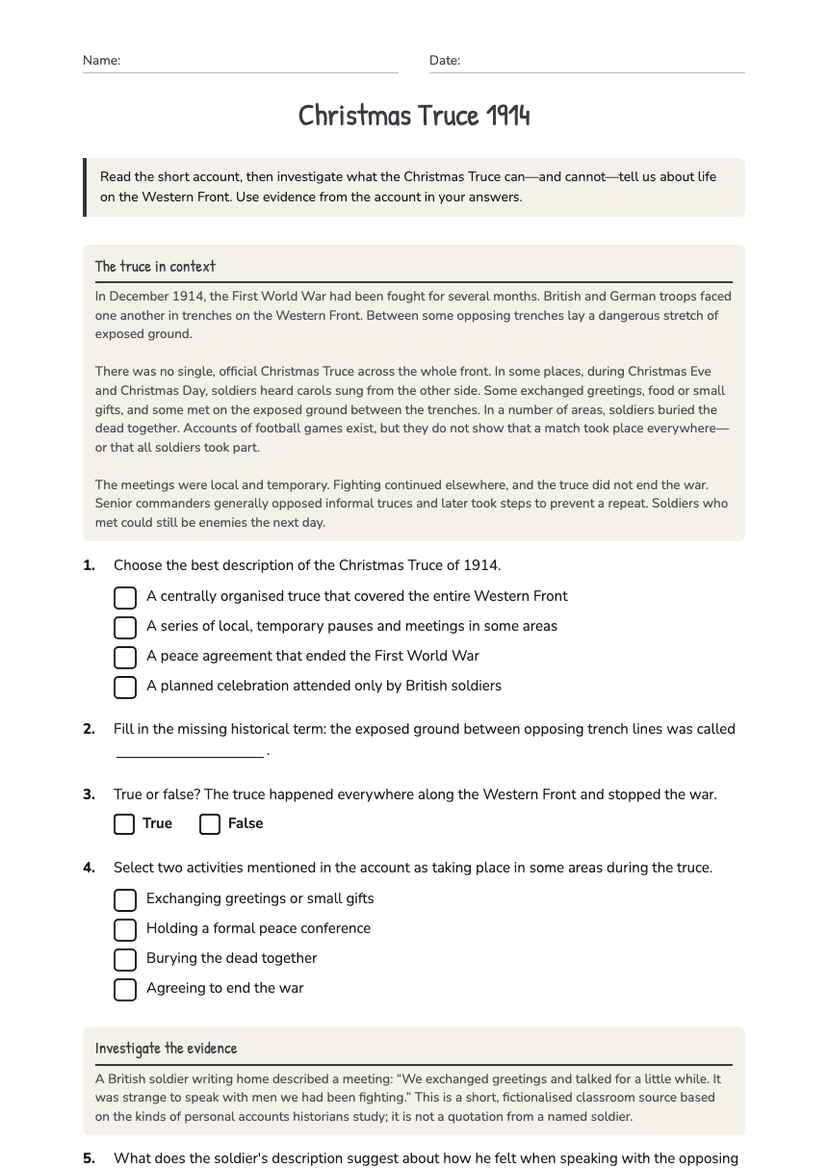
Christmas Truce 1914
Free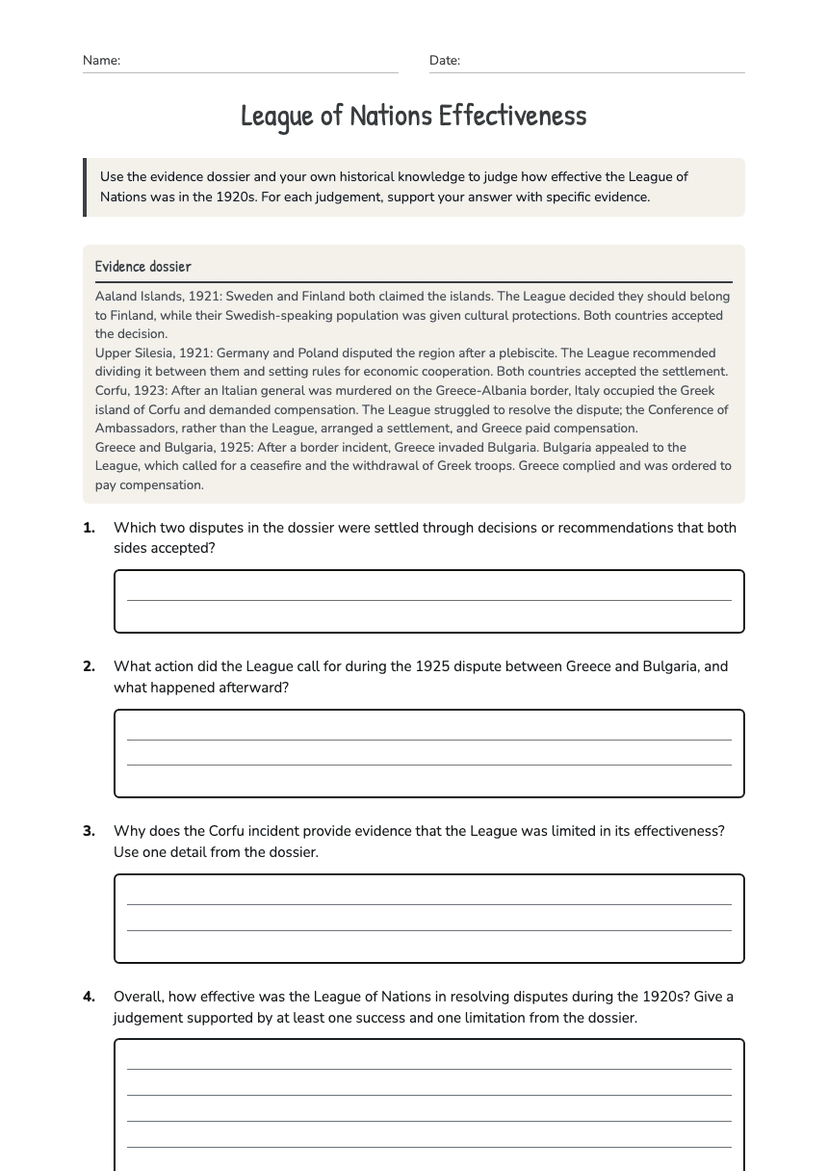
League of Nations Effectiveness
Free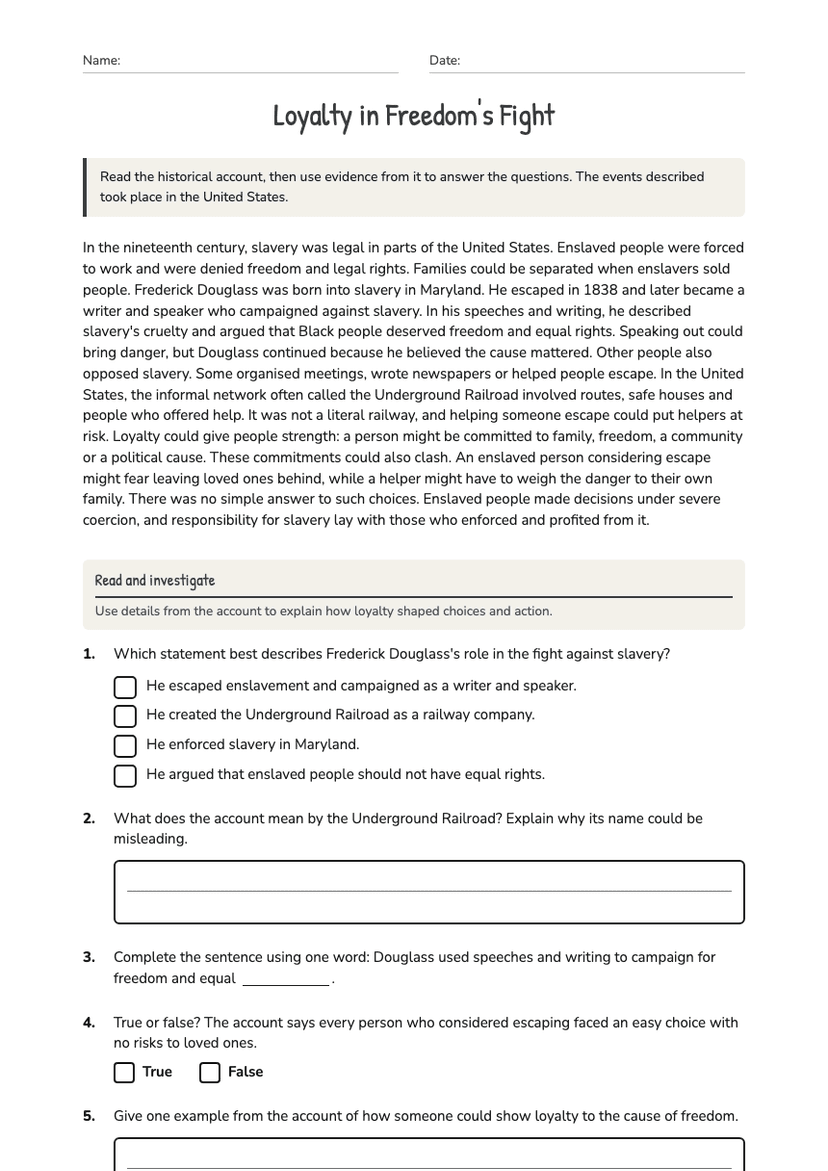
Loyalty in Freedom's Fight
Free