Greek Instruments Quiz
A free music worksheet ready for your classroom. Open in Kuraplan to grab the print-ready PDF, customize it for your students, or generate a fresh version in seconds.

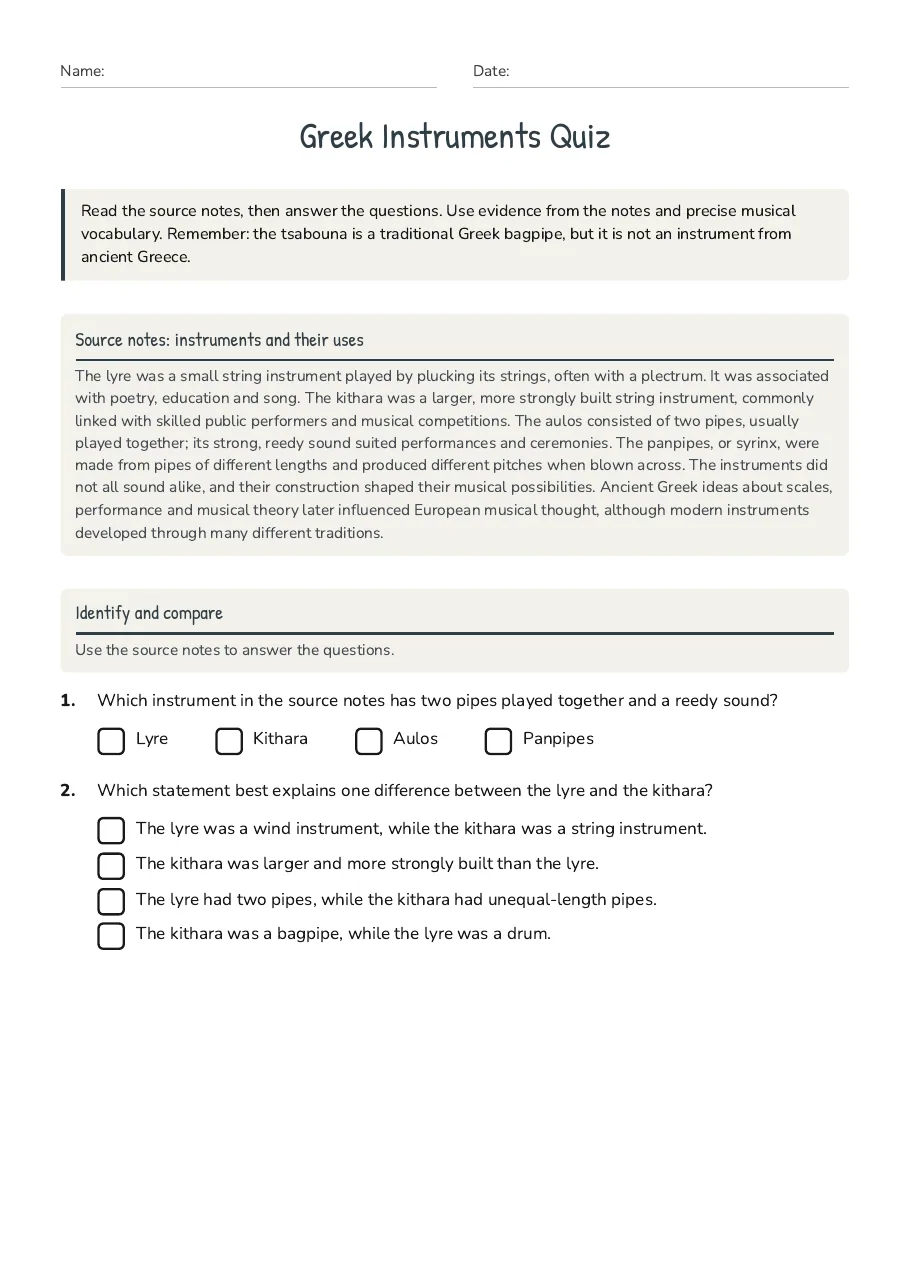
Greek Instruments Quiz
Source notes: instruments and their uses
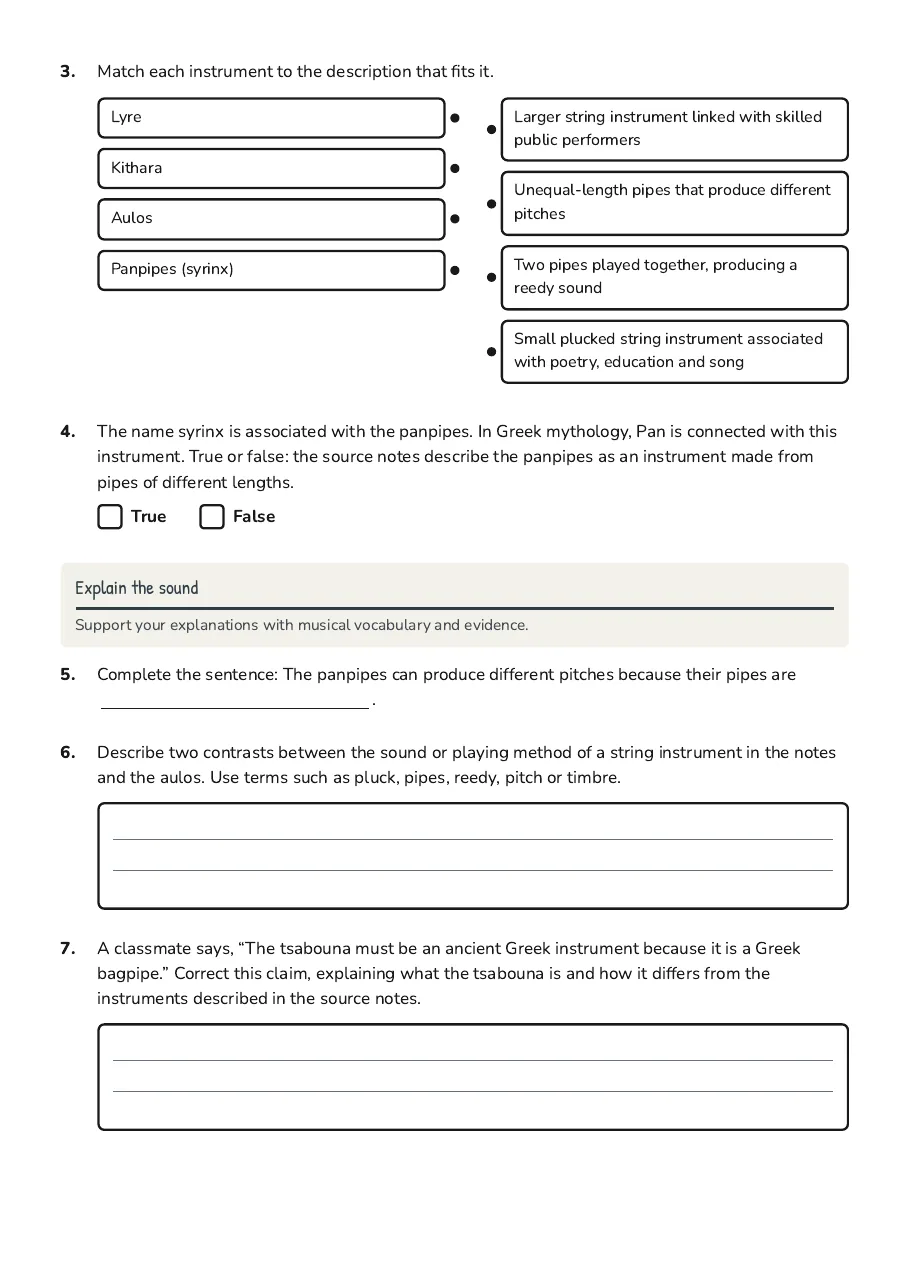
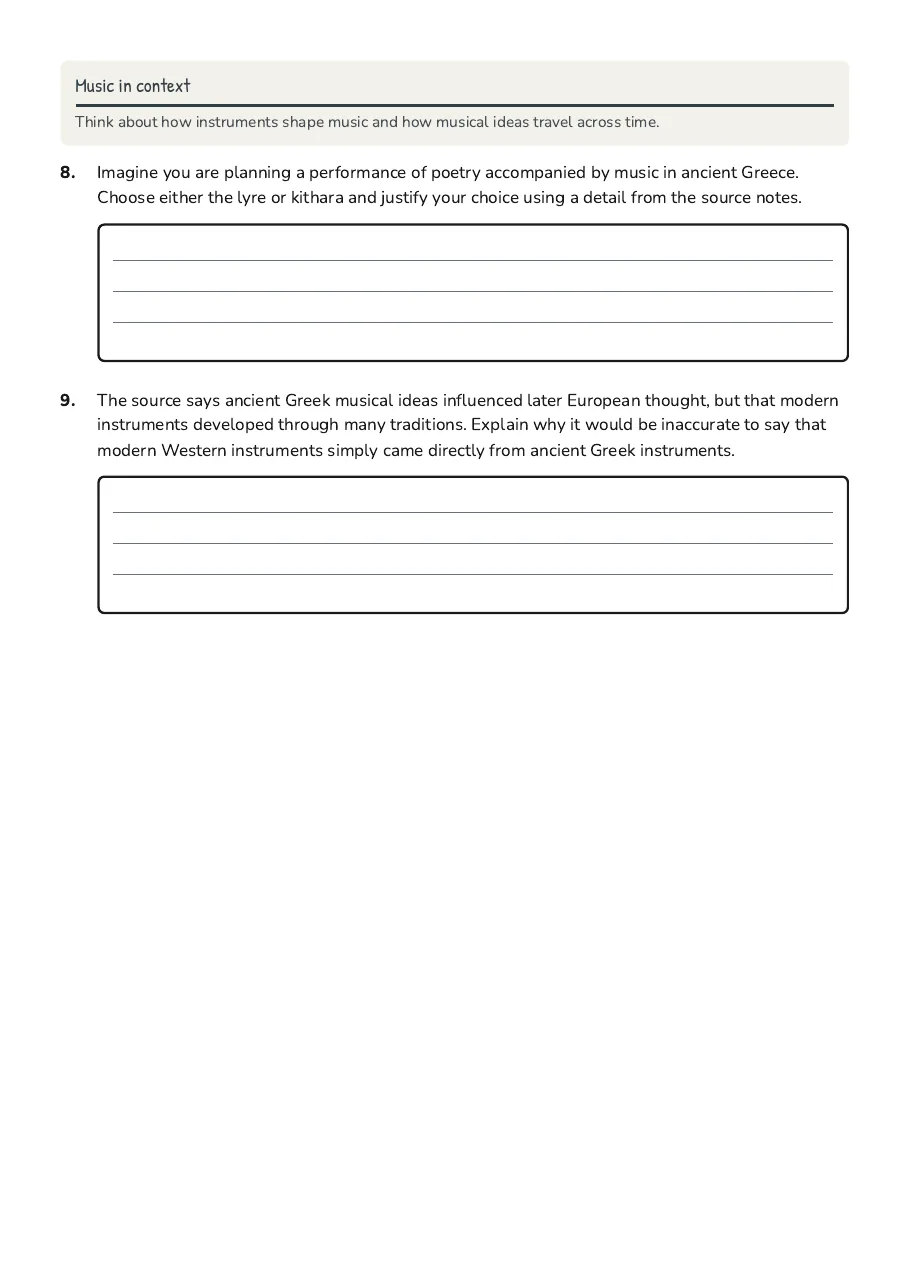
The lyre was a small string instrument played by plucking its strings, often with a plectrum. It was associated with poetry, education and song. The kithara was a larger, more strongly built string instrument, commonly linked with skilled public performers and musical competitions. The aulos consisted of two pipes, usually played together; its strong, reedy sound suited performances and ceremonies. The panpipes, or syrinx, were made from pipes of different lengths and produced different pitches when blown across. The instruments did not all sound alike, and their construction shaped their musical possibilities. Ancient Greek ideas about scales, performance and musical theory later influenced European musical thought, although modern instruments developed through many different traditions.
Identify and compare
Use the source notes to answer the questions.
- Lyre
- Kithara
- Aulos
- Panpipes
- The lyre was a wind instrument, while the kithara was a string instrument.
- The kithara was larger and more strongly built than the lyre.
- The lyre had two pipes, while the kithara had unequal-length pipes.
- The kithara was a bagpipe, while the lyre was a drum.
- Lyre
- Kithara
- Aulos
- Panpipes (syrinx)
- Larger string instrument linked with skilled public performers
- Unequal-length pipes that produce different pitches
- Two pipes played together, producing a reedy sound
- Small plucked string instrument associated with poetry, education and song
Explain the sound
Support your explanations with musical vocabulary and evidence.
Music in context
Think about how instruments shape music and how musical ideas travel across time.
3 printable pages
Page 1
Page 2
Page 3
About This Worksheet
Free in Kuraplan
Sign up free, grab the PDF, and customize it for your class.
Print-Ready
Formatted for standard paper. Clean layout, easy to read.
AI-Generated
Created with Kuraplan's AI, designed for real classroom use.
For Teachers & Parents
Use in classrooms, for homework, tutoring, or homeschool.
Need a custom version of this worksheet?
Kuraplan's AI generates custom worksheets in seconds — differentiated for every learner, aligned to your curriculum.
Generate Custom Worksheets — Free