Holocaust and Jewish Experience
A free history worksheet ready for your classroom. Open in Kuraplan to grab the print-ready PDF, customize it for your students, or generate a fresh version in seconds.
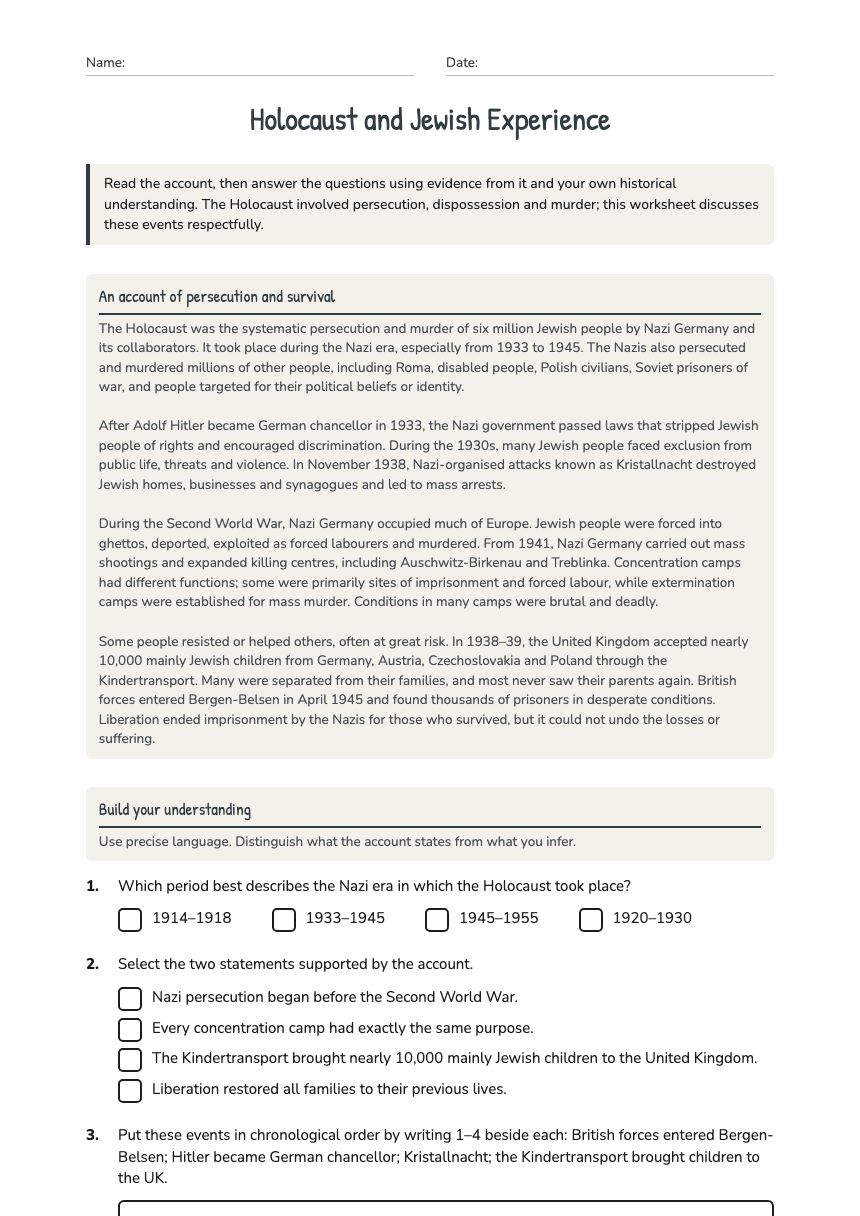
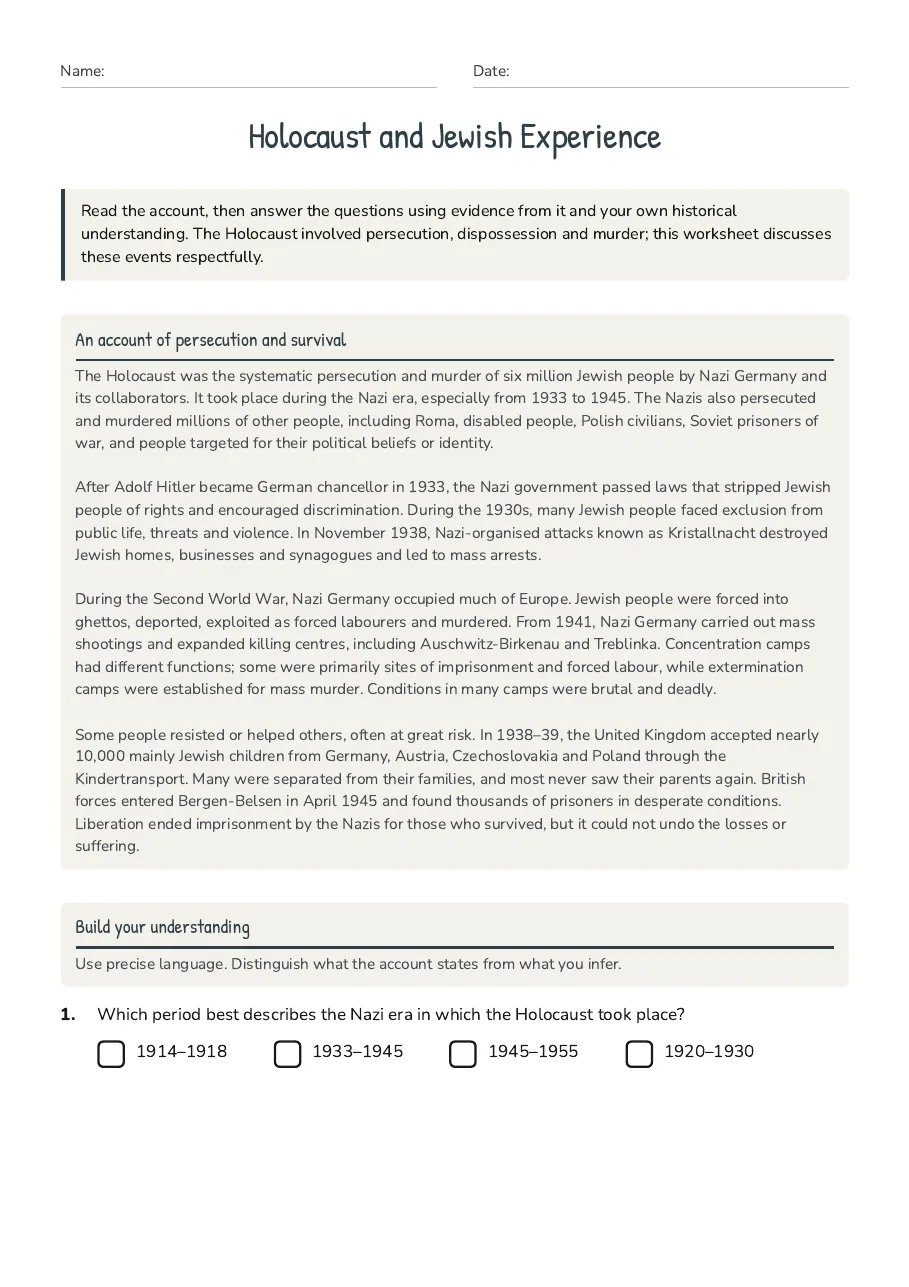
Holocaust and Jewish Experience
An account of persecution and survival
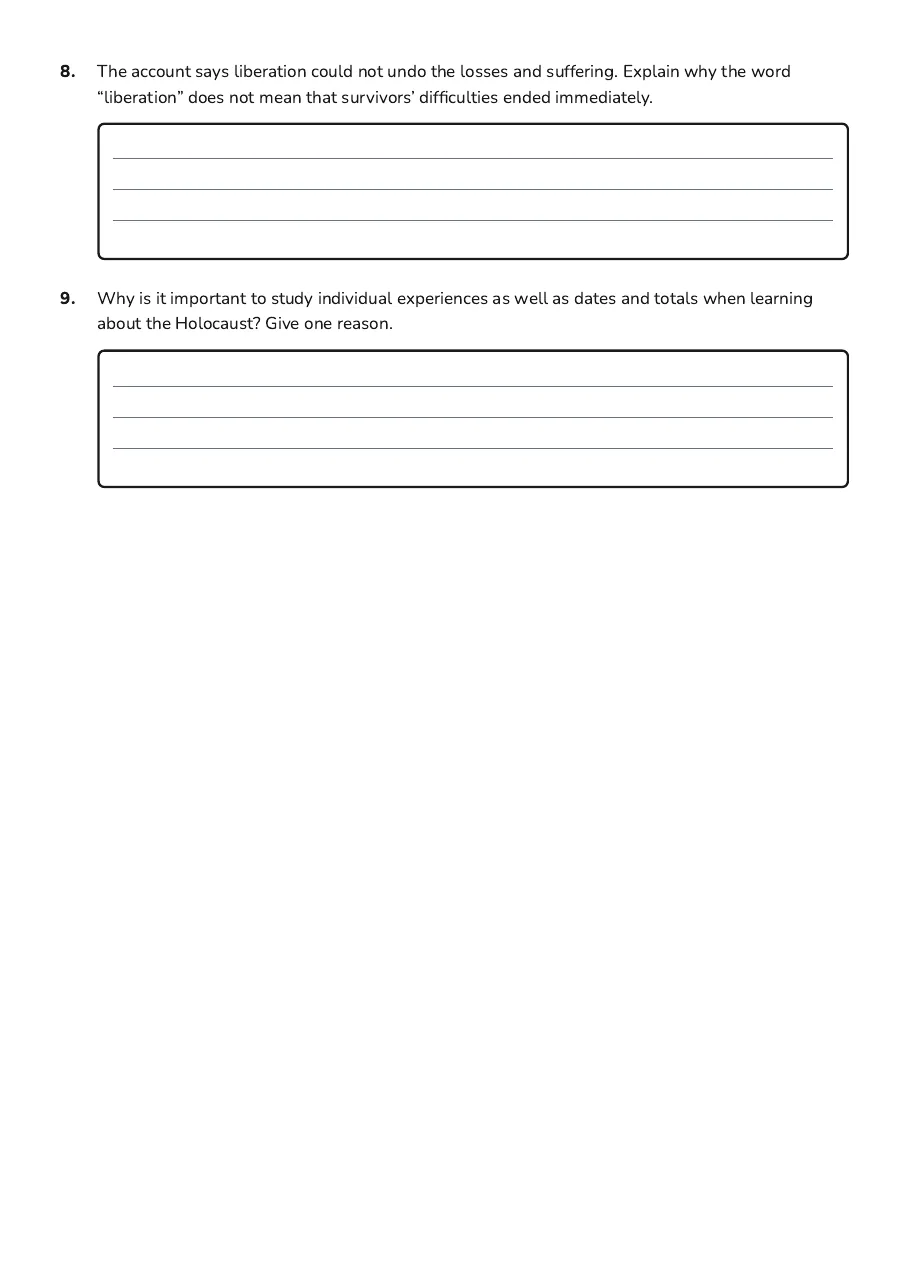
The Holocaust was the systematic persecution and murder of six million Jewish people by Nazi Germany and its collaborators. It took place during the Nazi era, especially from 1933 to 1945. The Nazis also persecuted and murdered millions of other people, including Roma, disabled people, Polish civilians, Soviet prisoners of war, and people targeted for their political beliefs or identity. After Adolf Hitler became German chancellor in 1933, the Nazi government passed laws that stripped Jewish people of rights and encouraged discrimination. During the 1930s, many Jewish people faced exclusion from public life, threats and violence. In November 1938, Nazi-organised attacks known as Kristallnacht destroyed Jewish homes, businesses and synagogues and led to mass arrests. During the Second World War, Nazi Germany occupied much of Europe. Jewish people were forced into ghettos, deported, exploited as forced labourers and murdered. From 1941, Nazi Germany carried out mass shootings and expanded killing centres, including Auschwitz-Birkenau and Treblinka. Concentration camps had different functions; some were primarily sites of imprisonment and forced labour, while extermination camps were established for mass murder. Conditions in many camps were brutal and deadly. Some people resisted or helped others, often at great risk. In 1938–39, the United Kingdom accepted nearly 10,000 mainly Jewish children from Germany, Austria, Czechoslovakia and Poland through the Kindertransport. Many were separated from their families, and most never saw their parents again. British forces entered Bergen-Belsen in April 1945 and found thousands of prisoners in desperate conditions. Liberation ended imprisonment by the Nazis for those who survived, but it could not undo the losses or suffering.
Build your understanding
Use precise language. Distinguish what the account states from what you infer.
- 1914–1918
- 1933–1945
- 1945–1955
- 1920–1930
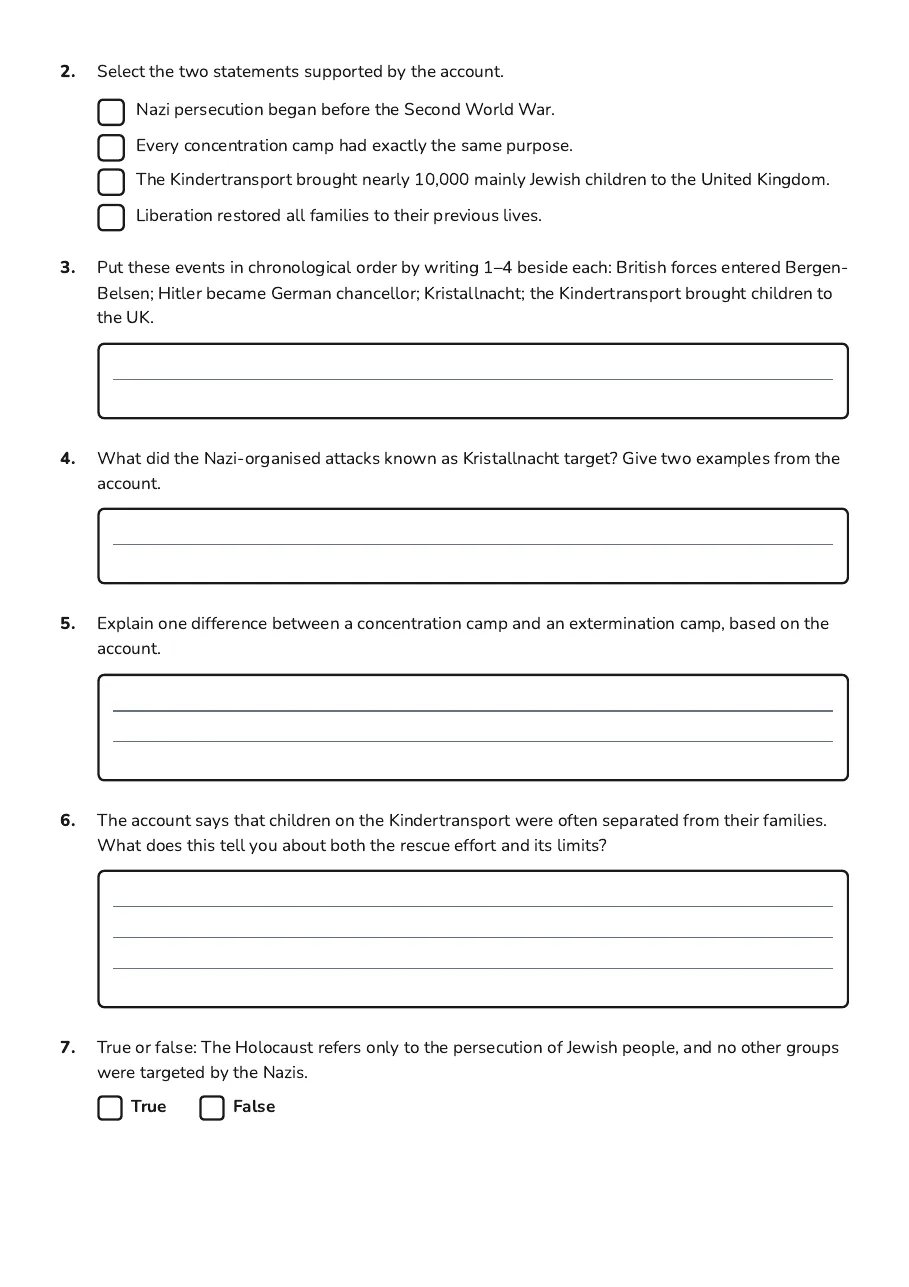
- Nazi persecution began before the Second World War.
- Every concentration camp had exactly the same purpose.
- The Kindertransport brought nearly 10,000 mainly Jewish children to the United Kingdom.
- Liberation restored all families to their previous lives.
3 printable pages
Page 1
Page 2
Page 3
About This Worksheet
Free in Kuraplan
Sign up free, grab the PDF, and customize it for your class.
Print-Ready
Formatted for standard paper. Clean layout, easy to read.
AI-Generated
Created with Kuraplan's AI, designed for real classroom use.
For Teachers & Parents
Use in classrooms, for homework, tutoring, or homeschool.
Need a custom version of this worksheet?
Kuraplan's AI generates custom worksheets in seconds — differentiated for every learner, aligned to your curriculum.
Generate Custom Worksheets — FreeMore History Worksheets
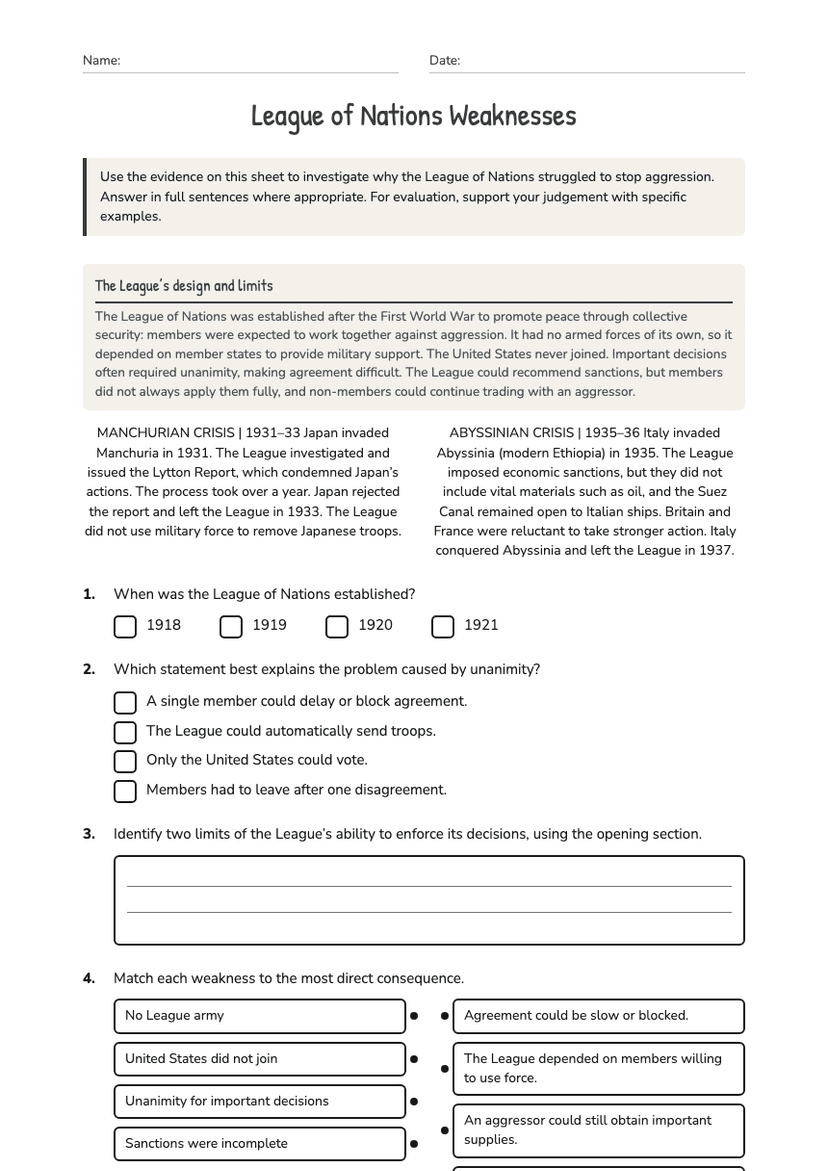
League of Nations Weaknesses
Free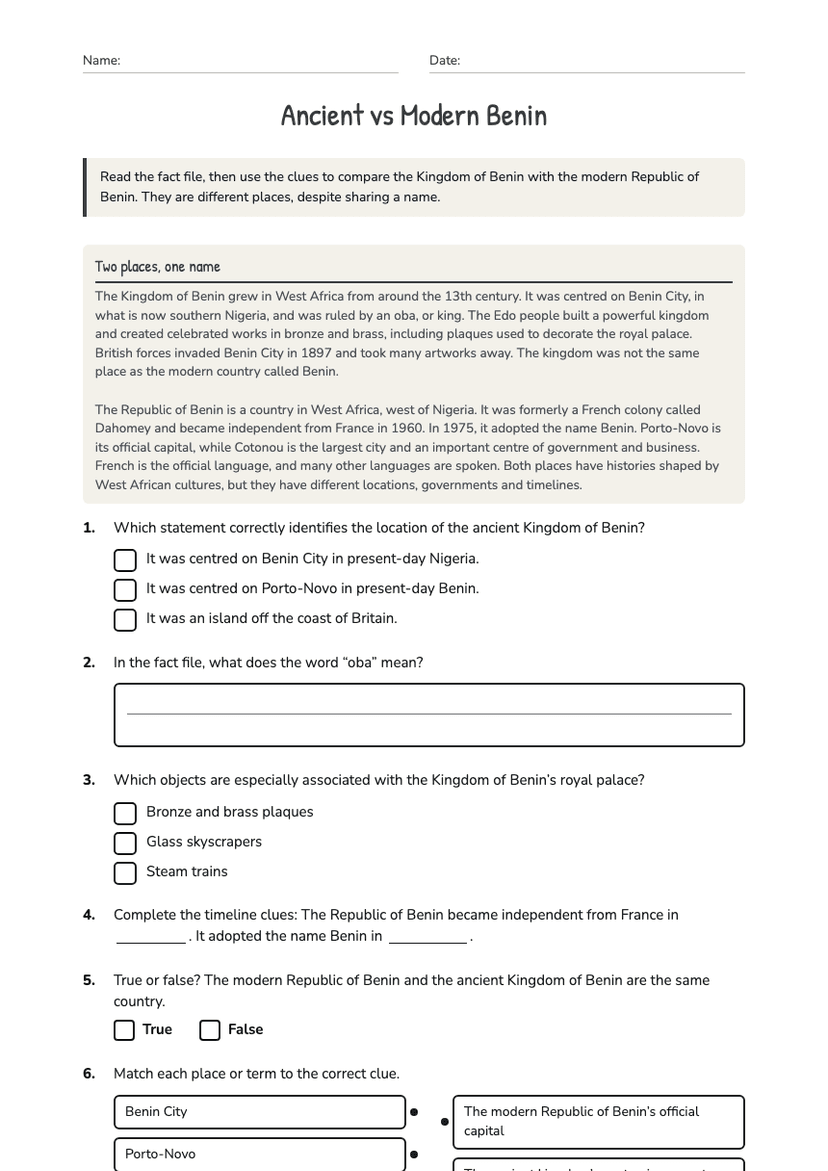
Ancient vs Modern Benin
Free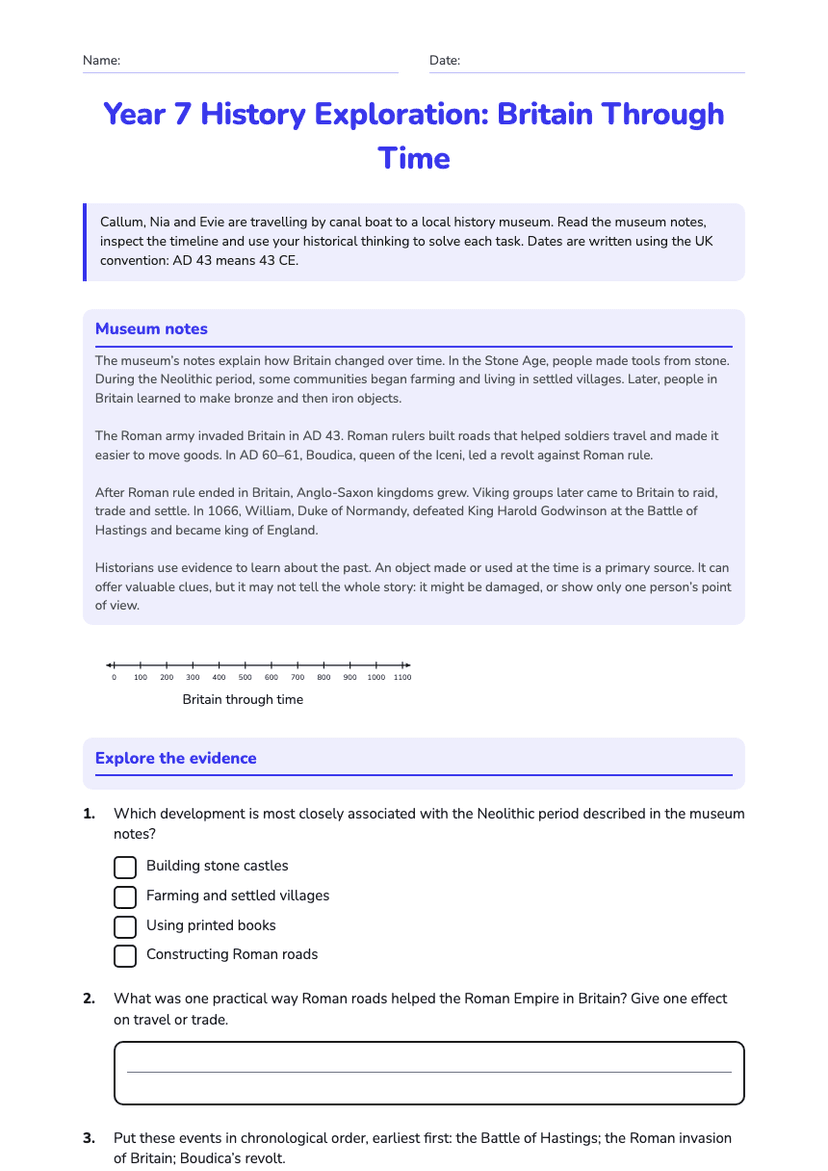
Year 7 History Exploration: Britain Through Time
Free
Norman Origins and Timeline
Free
Christmas Truce 1914
Free
League of Nations Effectiveness
Free
Loyalty in Freedom's Fight
Free