Industrial Revolution Beginnings
A free history worksheet ready for your classroom. Open in Kuraplan to grab the print-ready PDF, customize it for your students, or generate a fresh version in seconds.

Industrial Revolution Beginnings
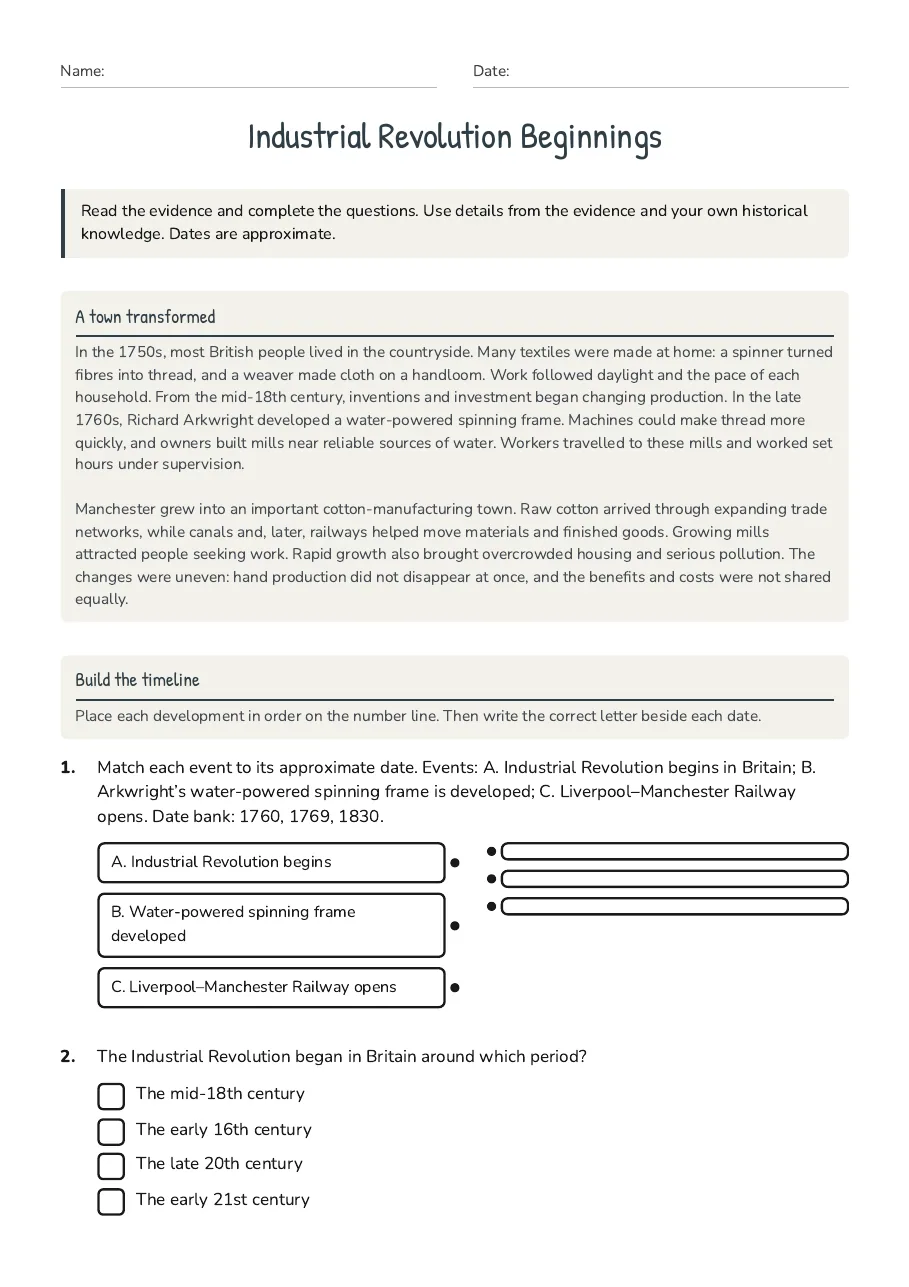
A town transformed
In the 1750s, most British people lived in the countryside. Many textiles were made at home: a spinner turned fibres into thread, and a weaver made cloth on a handloom. Work followed daylight and the pace of each household. From the mid-18th century, inventions and investment began changing production. In the late 1760s, Richard Arkwright developed a water-powered spinning frame. Machines could make thread more quickly, and owners built mills near reliable sources of water. Workers travelled to these mills and worked set hours under supervision. Manchester grew into an important cotton-manufacturing town. Raw cotton arrived through expanding trade networks, while canals and, later, railways helped move materials and finished goods. Growing mills attracted people seeking work. Rapid growth also brought overcrowded housing and serious pollution. The changes were uneven: hand production did not disappear at once, and the benefits and costs were not shared equally.
Build the timeline
Place each development in order on the number line. Then write the correct letter beside each date.
- A. Industrial Revolution begins
- B. Water-powered spinning frame developed
- C. Liverpool–Manchester Railway opens
- The mid-18th century
- The early 16th century
- The late 20th century
- The early 21st century
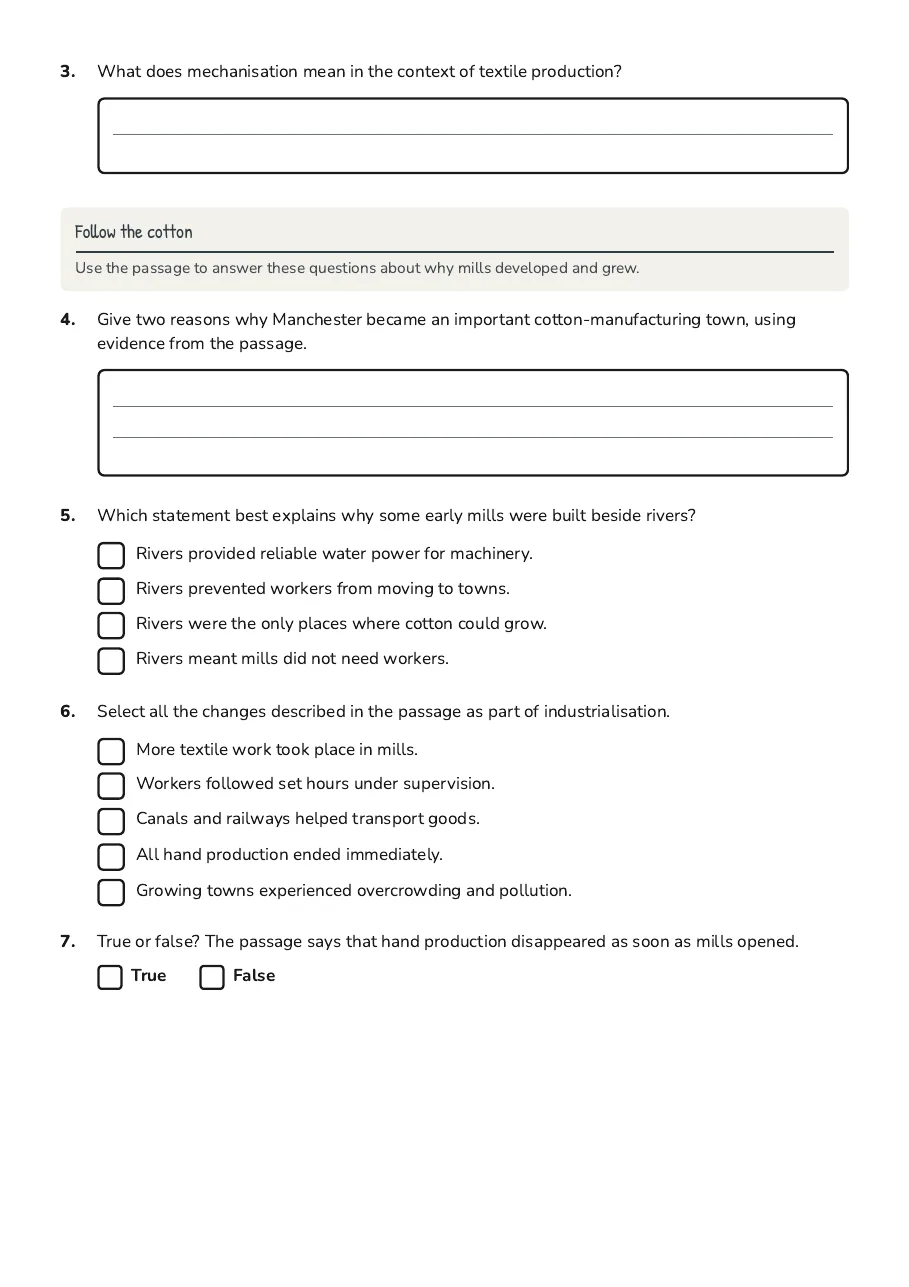
Follow the cotton
Use the passage to answer these questions about why mills developed and grew.
- Rivers provided reliable water power for machinery.
- Rivers prevented workers from moving to towns.
- Rivers were the only places where cotton could grow.
- Rivers meant mills did not need workers.
- More textile work took place in mills.
- Workers followed set hours under supervision.
- Canals and railways helped transport goods.
- All hand production ended immediately.
- Growing towns experienced overcrowding and pollution.
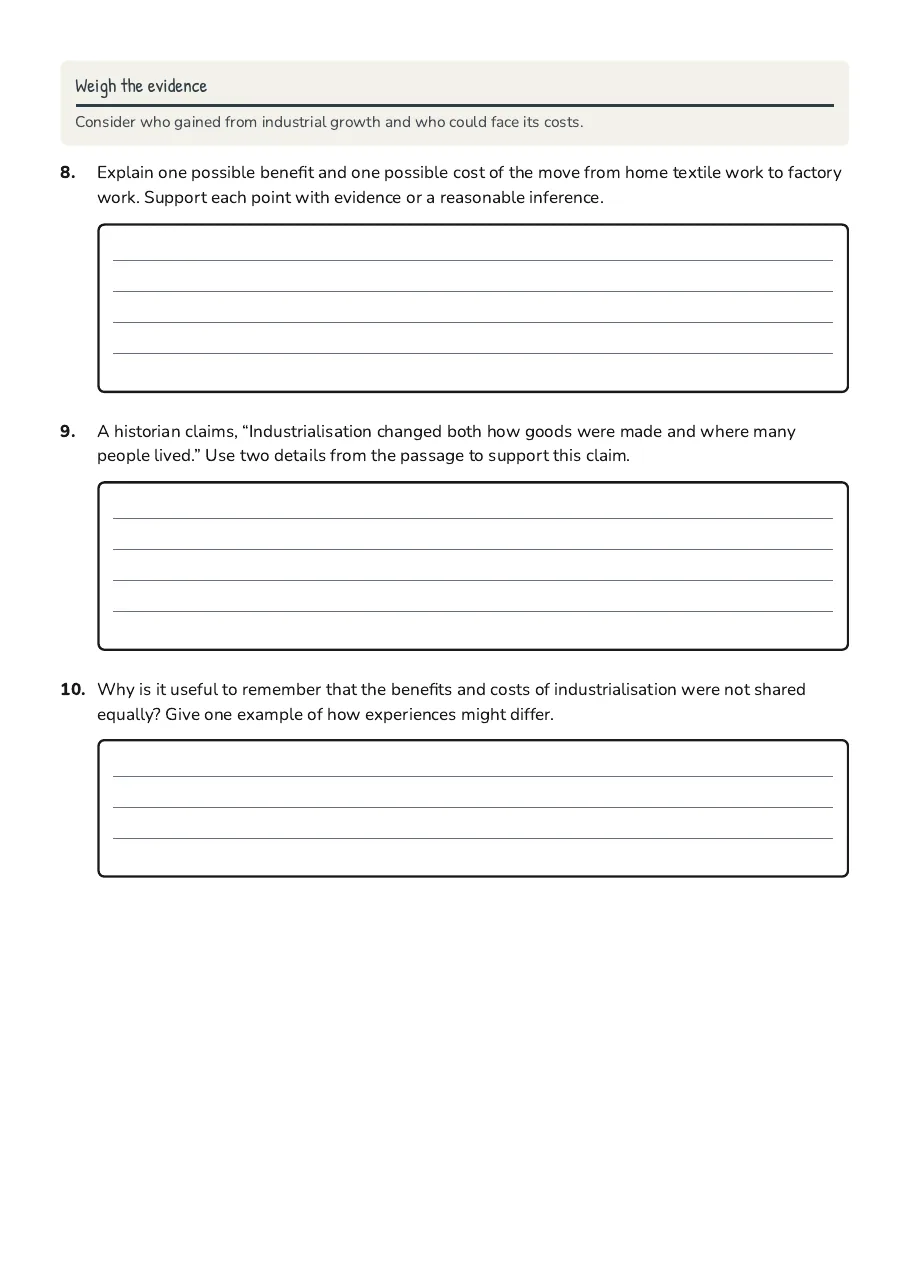
Weigh the evidence
Consider who gained from industrial growth and who could face its costs.
3 printable pages
Page 1
Page 2
Page 3
About This Worksheet
Free in Kuraplan
Sign up free, grab the PDF, and customize it for your class.
Print-Ready
Formatted for standard paper. Clean layout, easy to read.
AI-Generated
Created with Kuraplan's AI, designed for real classroom use.
For Teachers & Parents
Use in classrooms, for homework, tutoring, or homeschool.
Need a custom version of this worksheet?
Kuraplan's AI generates custom worksheets in seconds — differentiated for every learner, aligned to your curriculum.
Generate Custom Worksheets — FreeMore History Worksheets
League of Nations Weaknesses
Free
Ancient vs Modern Benin
Free
Year 7 History Exploration: Britain Through Time
Free
Norman Origins and Timeline
Free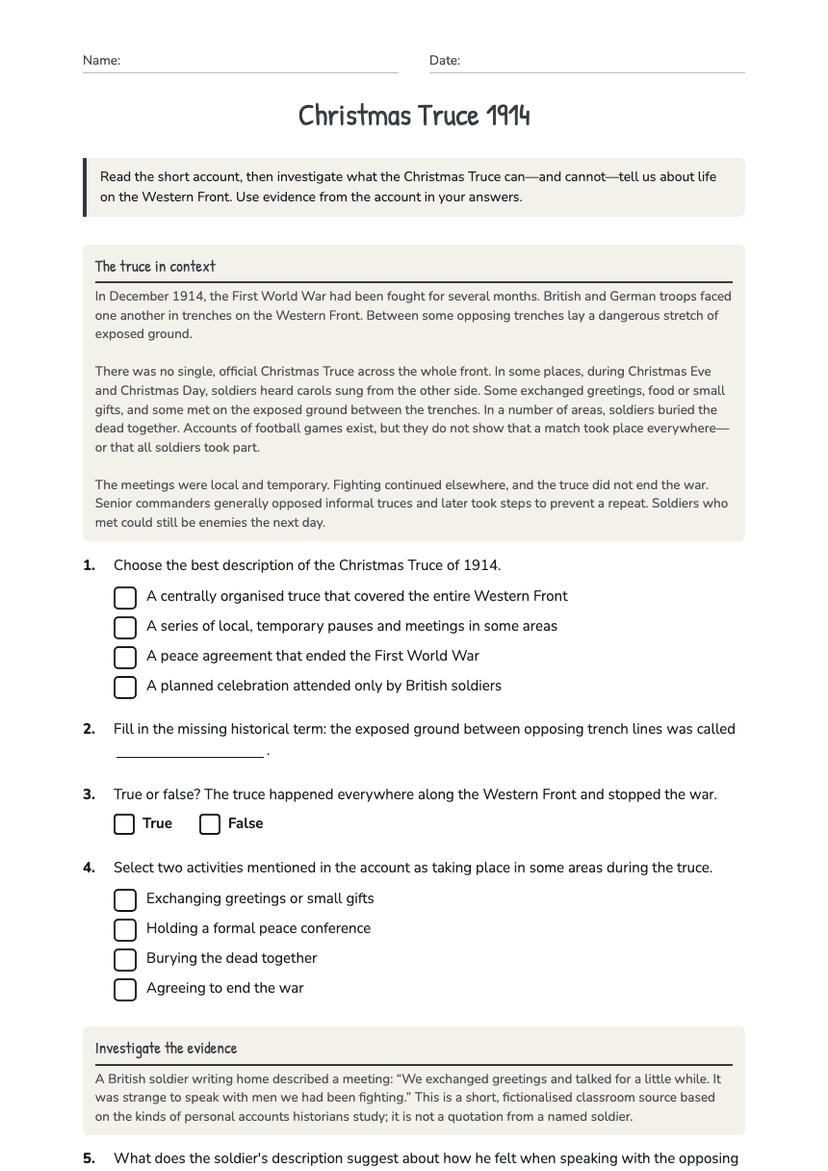
Christmas Truce 1914
Free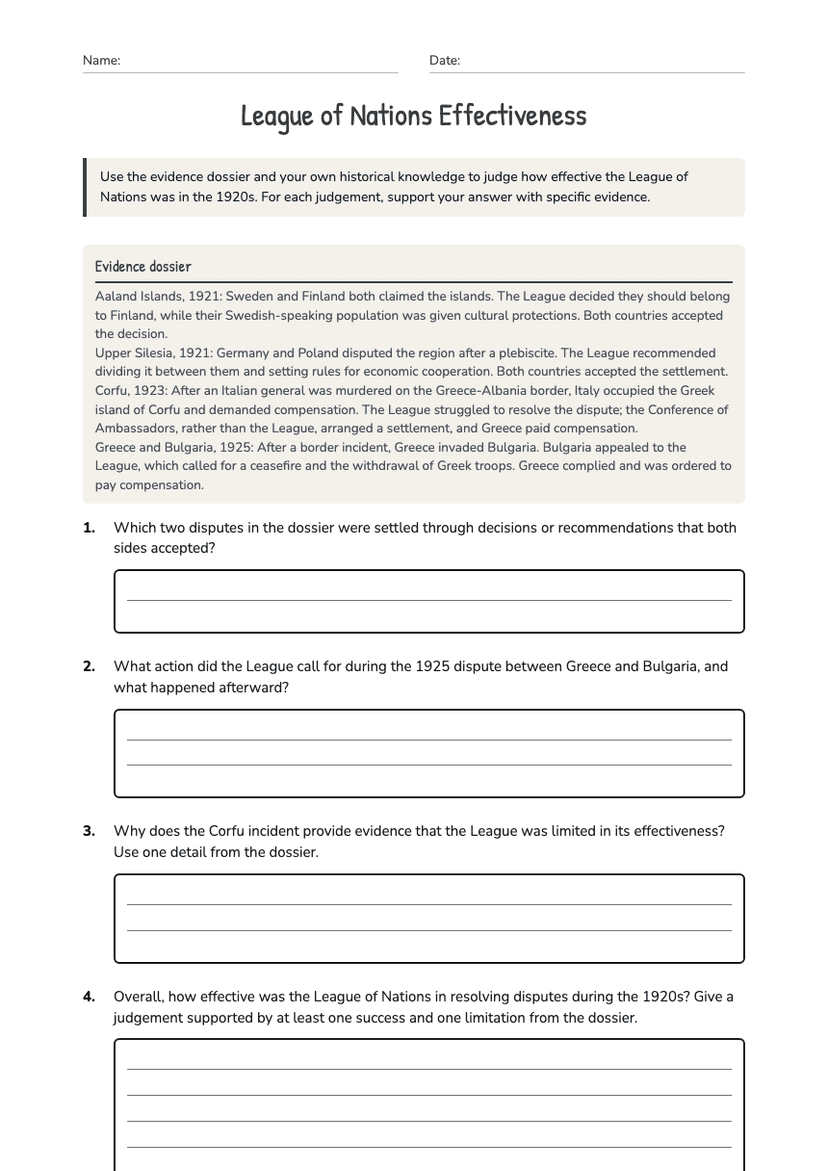
League of Nations Effectiveness
Free
Loyalty in Freedom's Fight
Free