Marine Environment Impacts Worksheet
A free science worksheet ready for your classroom. Open in Kuraplan to grab the print-ready PDF, customize it for your students, or generate a fresh version in seconds.
Marine Environment Impacts Worksheet
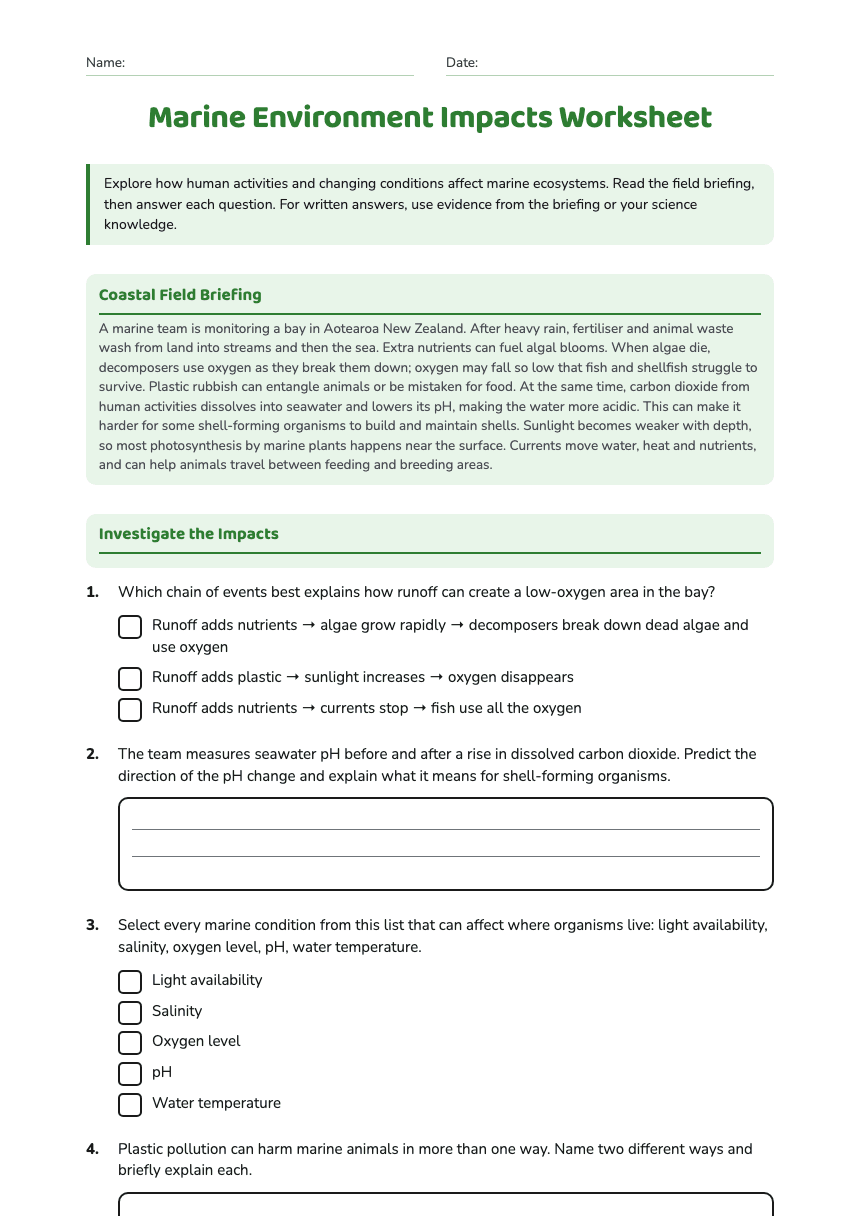
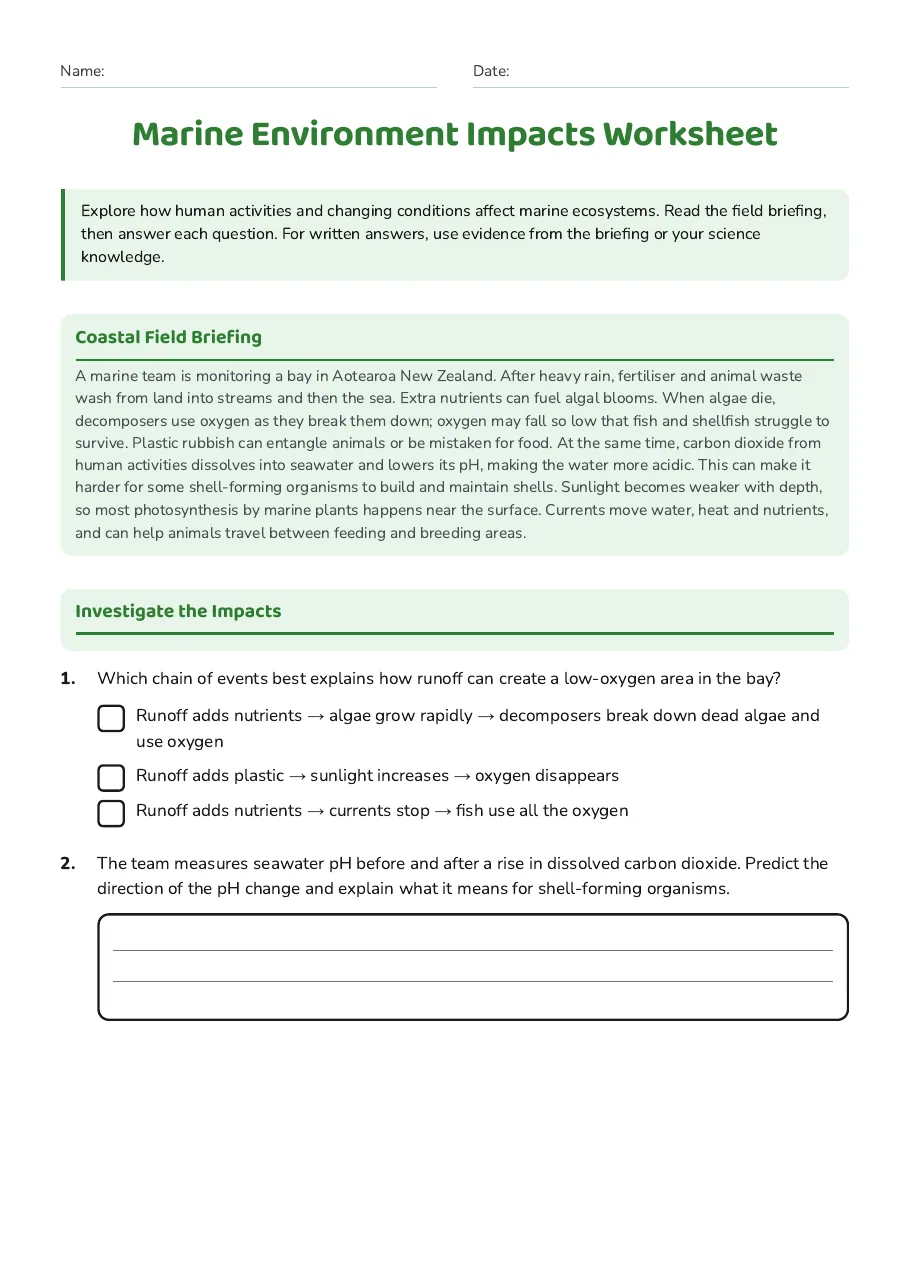
Coastal Field Briefing
A marine team is monitoring a bay in Aotearoa New Zealand. After heavy rain, fertiliser and animal waste wash from land into streams and then the sea. Extra nutrients can fuel algal blooms. When algae die, decomposers use oxygen as they break them down; oxygen may fall so low that fish and shellfish struggle to survive. Plastic rubbish can entangle animals or be mistaken for food. At the same time, carbon dioxide from human activities dissolves into seawater and lowers its pH, making the water more acidic. This can make it harder for some shell-forming organisms to build and maintain shells. Sunlight becomes weaker with depth, so most photosynthesis by marine plants happens near the surface. Currents move water, heat and nutrients, and can help animals travel between feeding and breeding areas.
Investigate the Impacts
- Runoff adds nutrients → algae grow rapidly → decomposers break down dead algae and use oxygen
- Runoff adds plastic → sunlight increases → oxygen disappears
- Runoff adds nutrients → currents stop → fish use all the oxygen
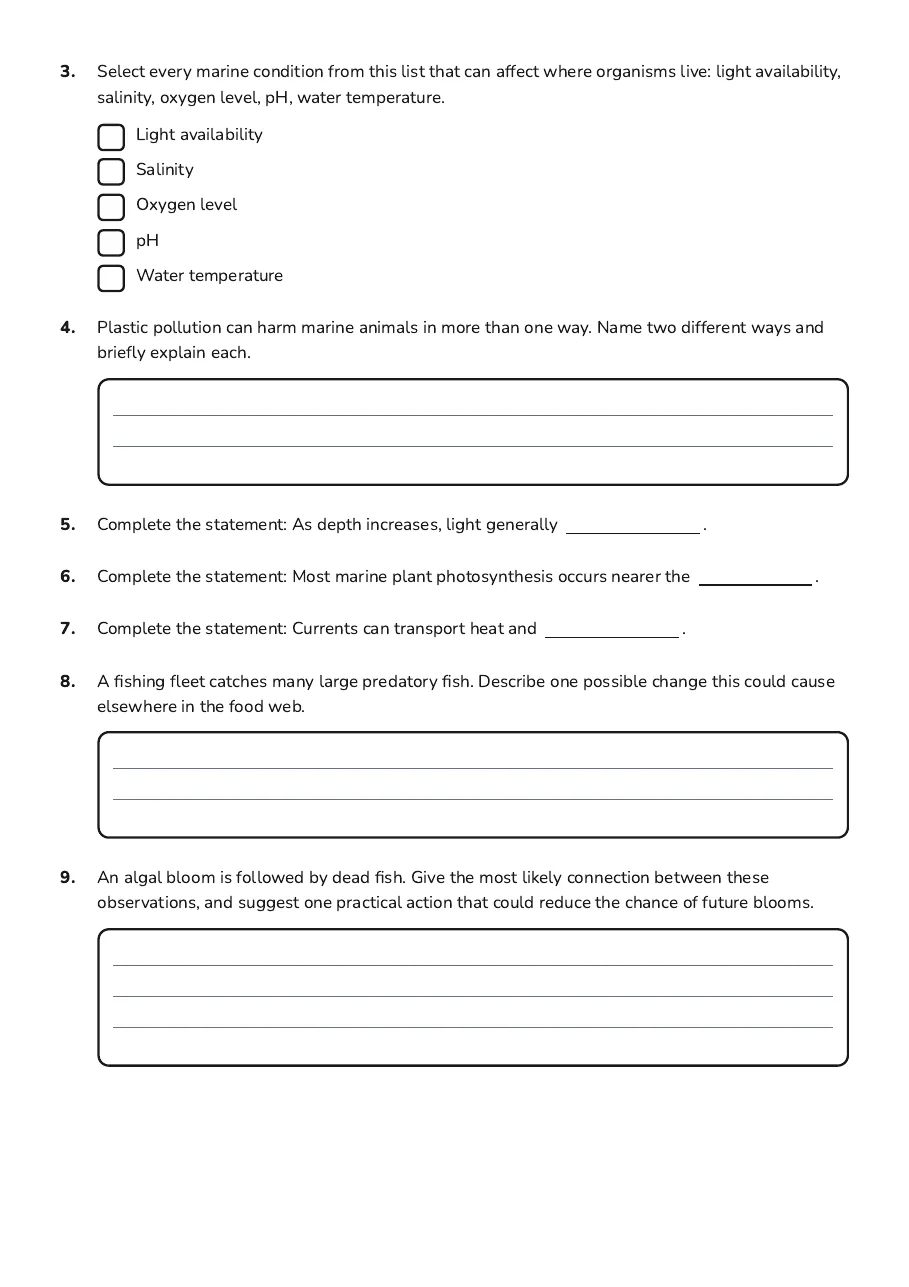
- Light availability
- Salinity
- Oxygen level
- pH
- Water temperature
3 printable pages
Page 1
Page 2
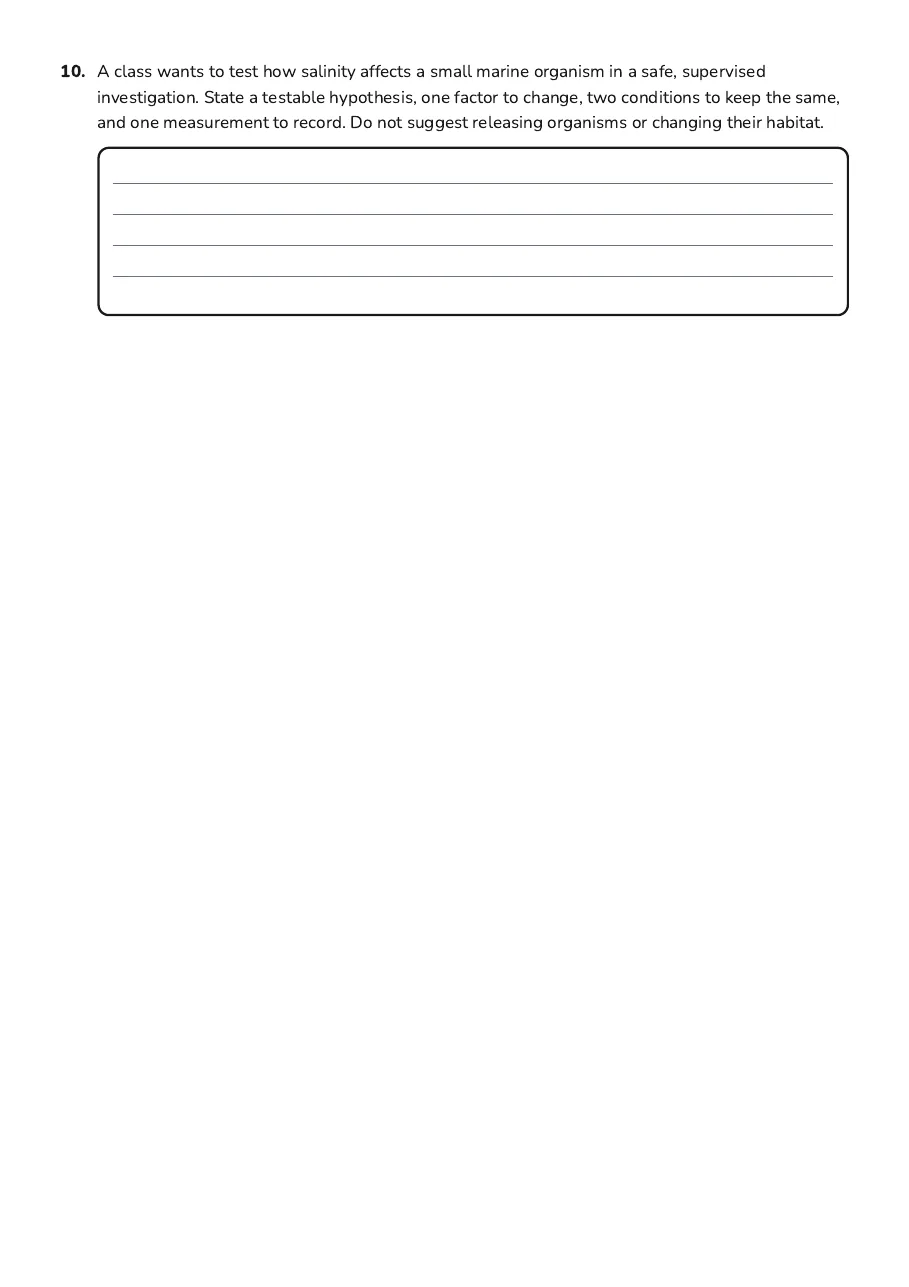
Page 3
About This Worksheet
Free in Kuraplan
Sign up free, grab the PDF, and customize it for your class.
Print-Ready
Formatted for standard paper. Clean layout, easy to read.
AI-Generated
Created with Kuraplan's AI, designed for real classroom use.
For Teachers & Parents
Use in classrooms, for homework, tutoring, or homeschool.
Need a custom version of this worksheet?
Kuraplan's AI generates custom worksheets in seconds — differentiated for every learner, aligned to your curriculum.
Generate Custom Worksheets — FreeMore Science Worksheets
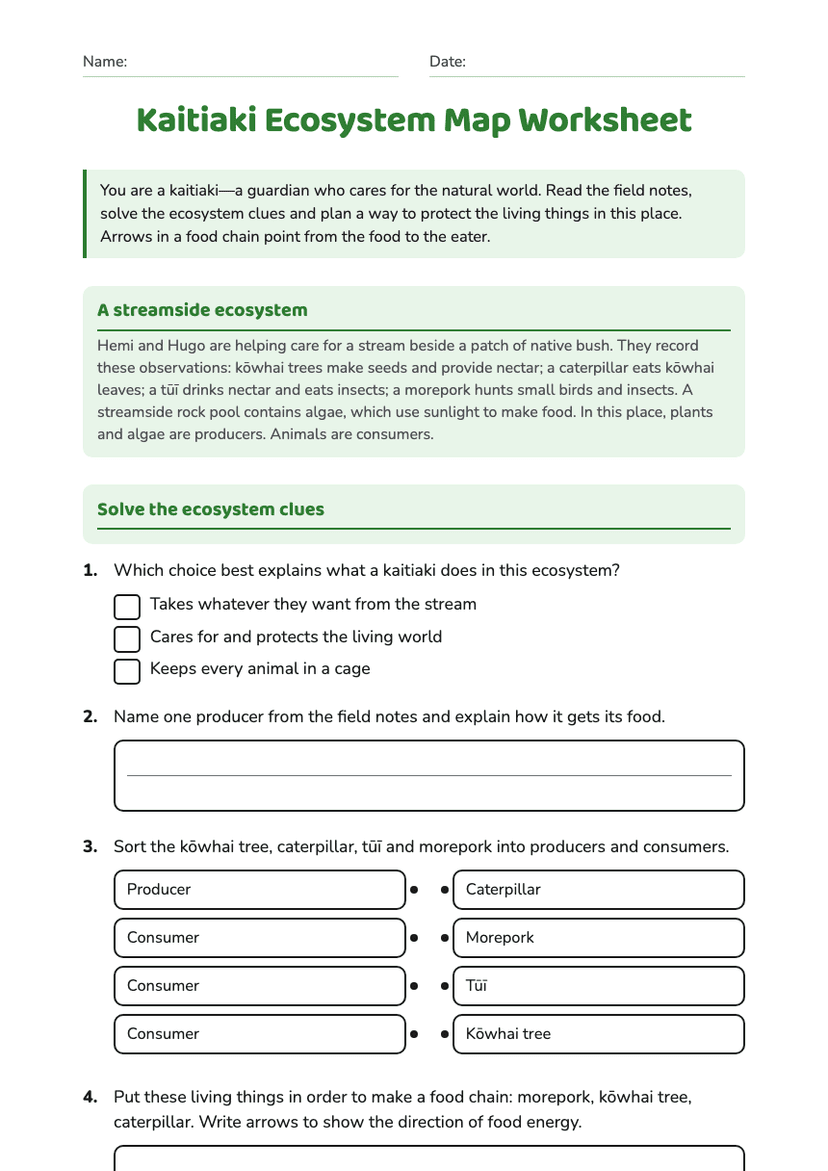
Kaitiaki Ecosystem Map Worksheet
Free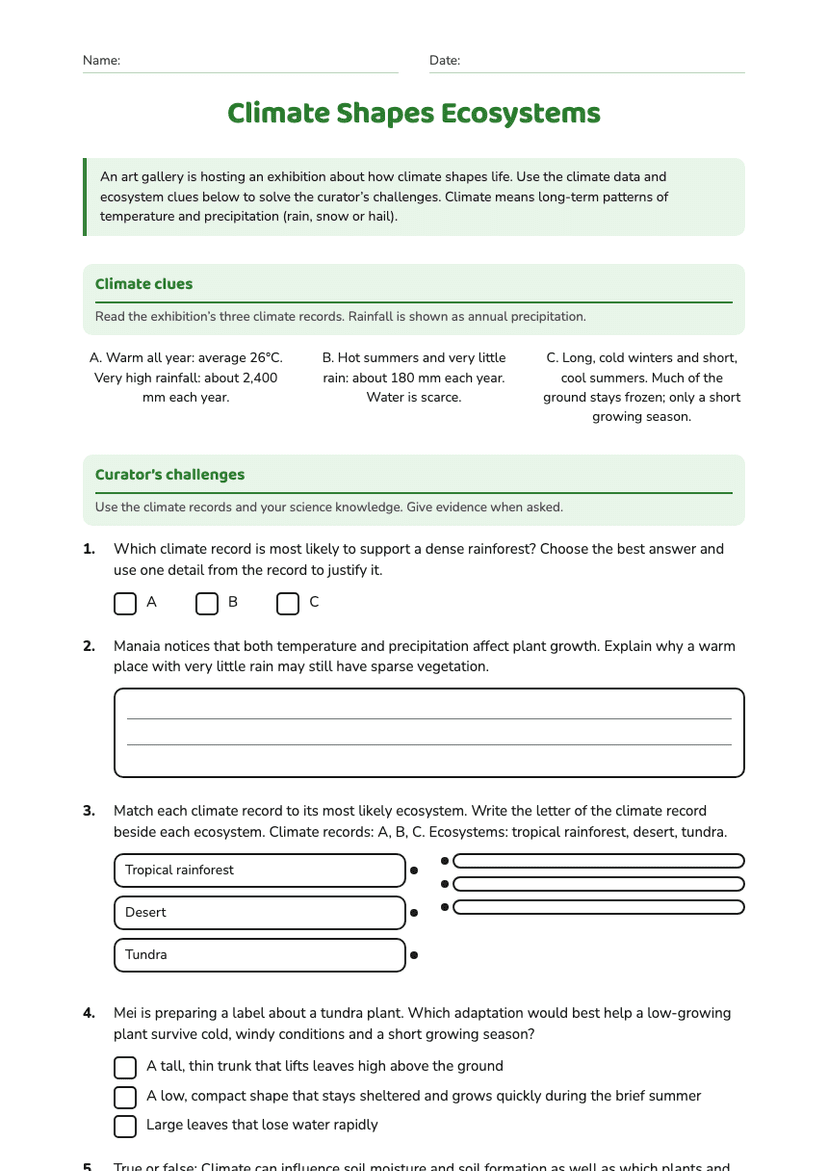
Climate Shapes Ecosystems
Free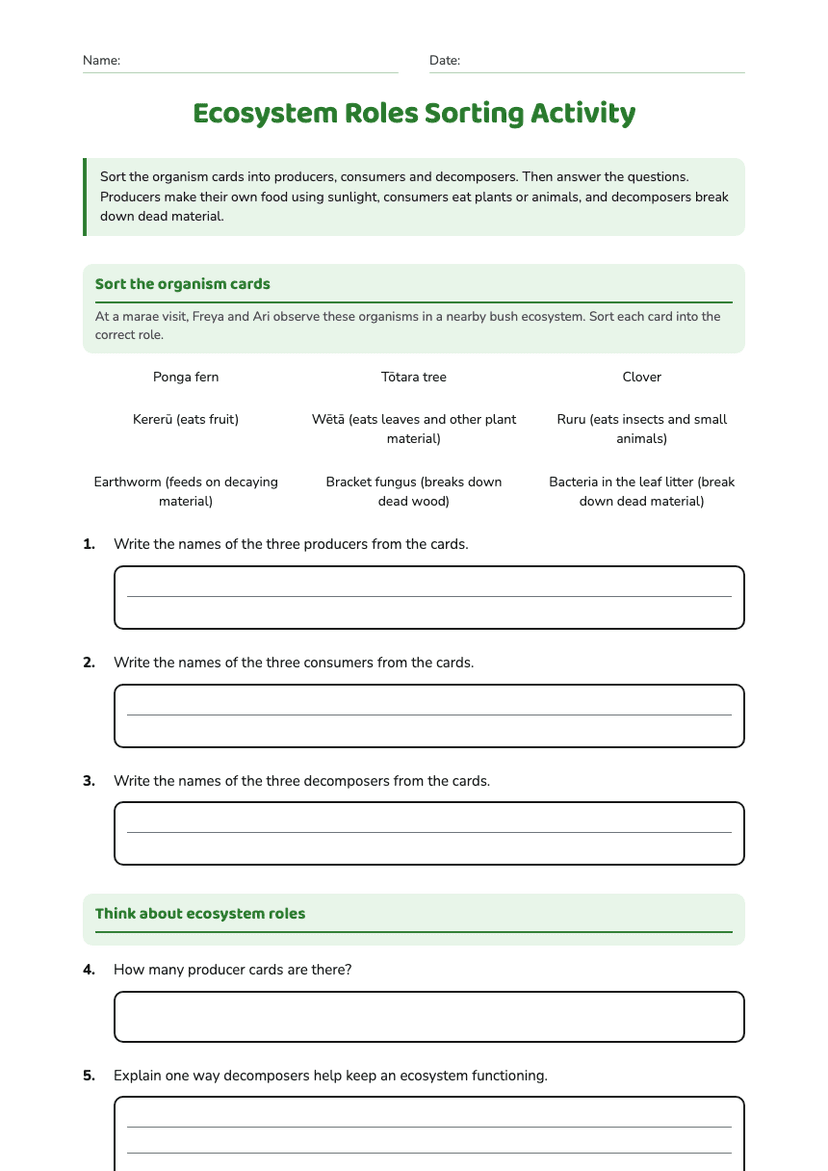
Ecosystem Roles Sorting Activity
Free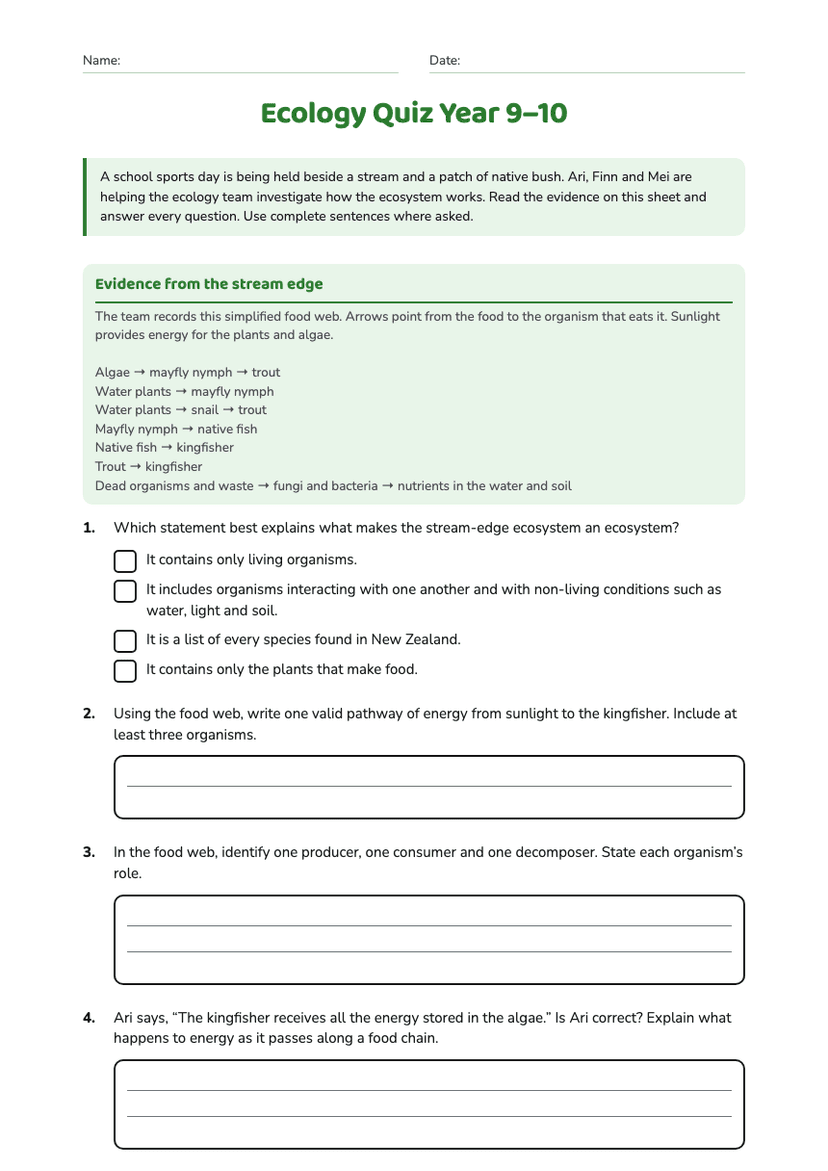
Ecology Quiz Year 9–10
Free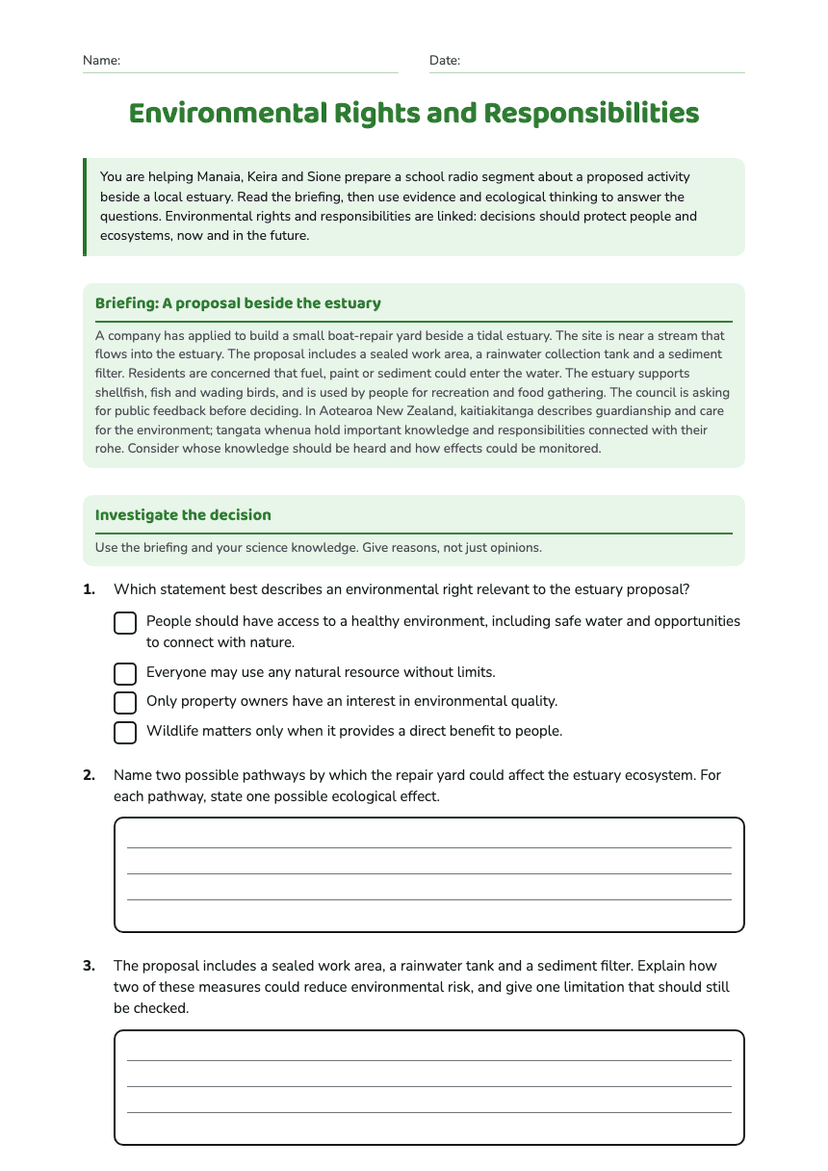
Environmental Rights and Responsibilities
Free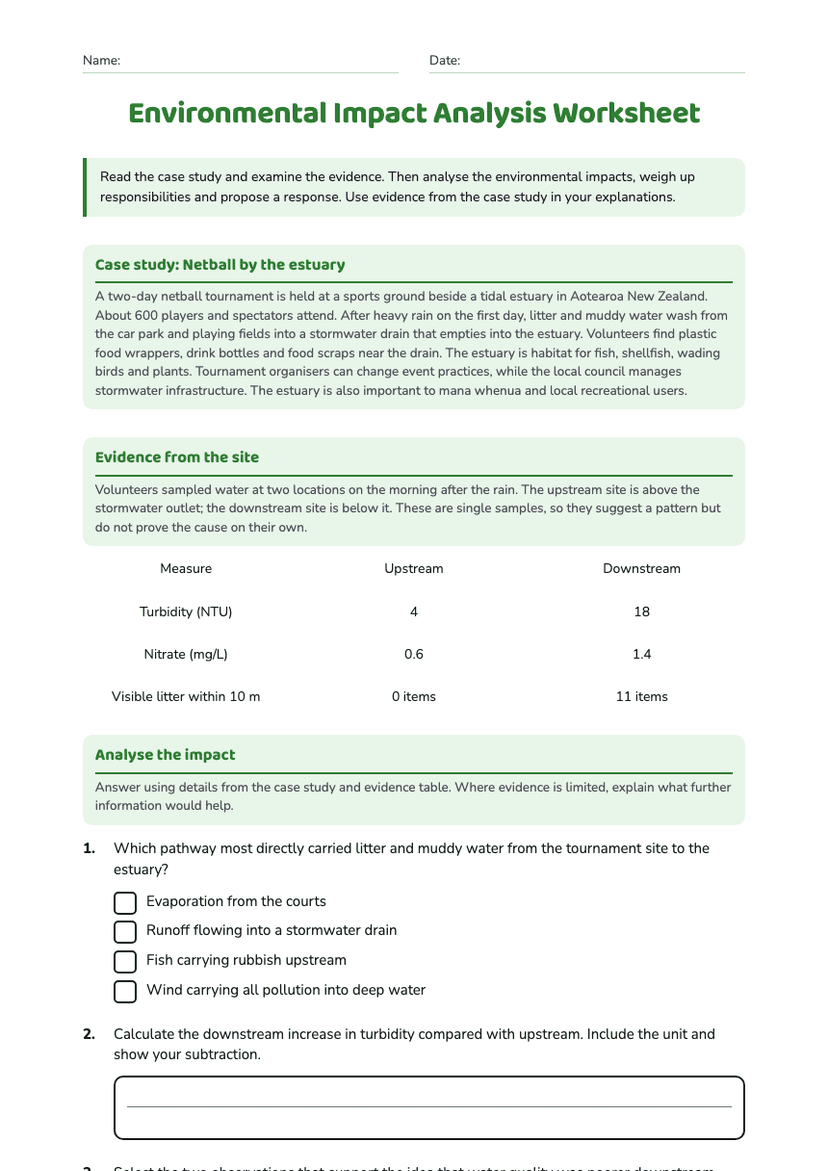
Environmental Impact Analysis Worksheet
Free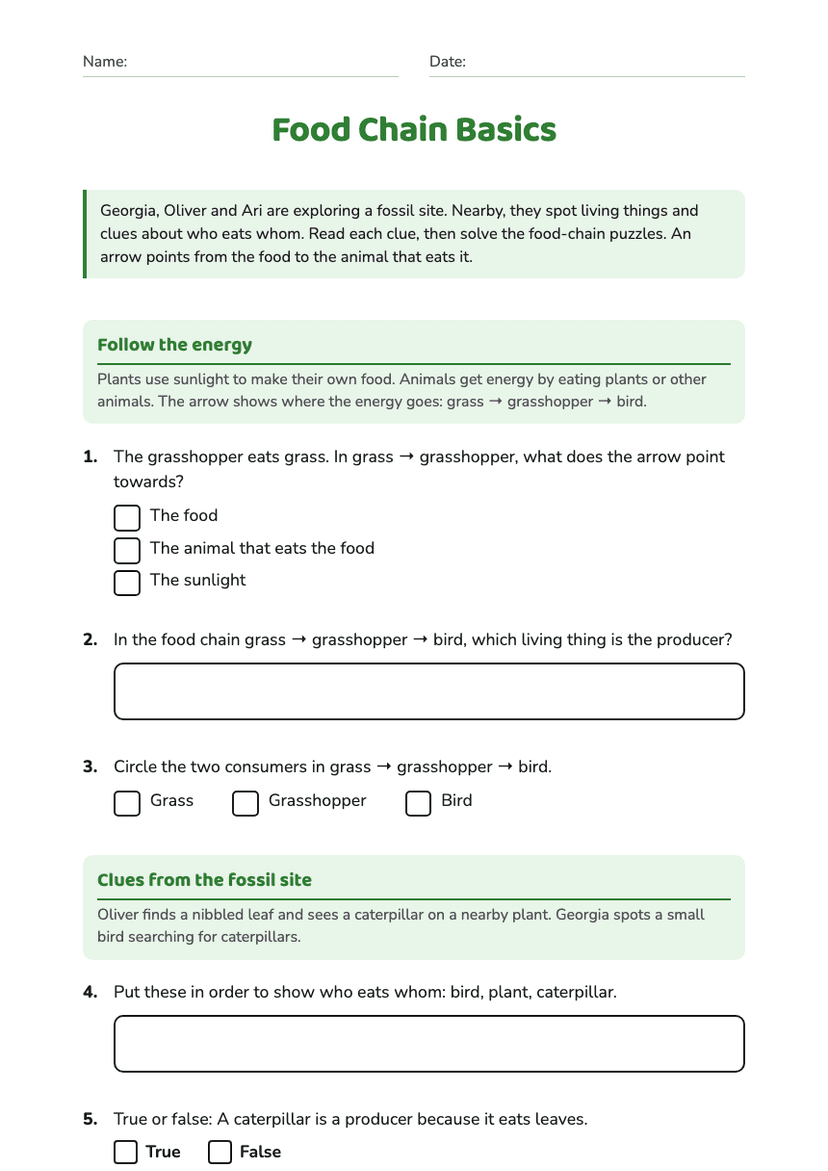
Food Chain Basics
Free