MathsFreePrintable

Measuring Mass with Scales

A free maths worksheet ready for your classroom. Open in Kuraplan to grab the print-ready PDF, customize it for your students, or generate a fresh version in seconds.
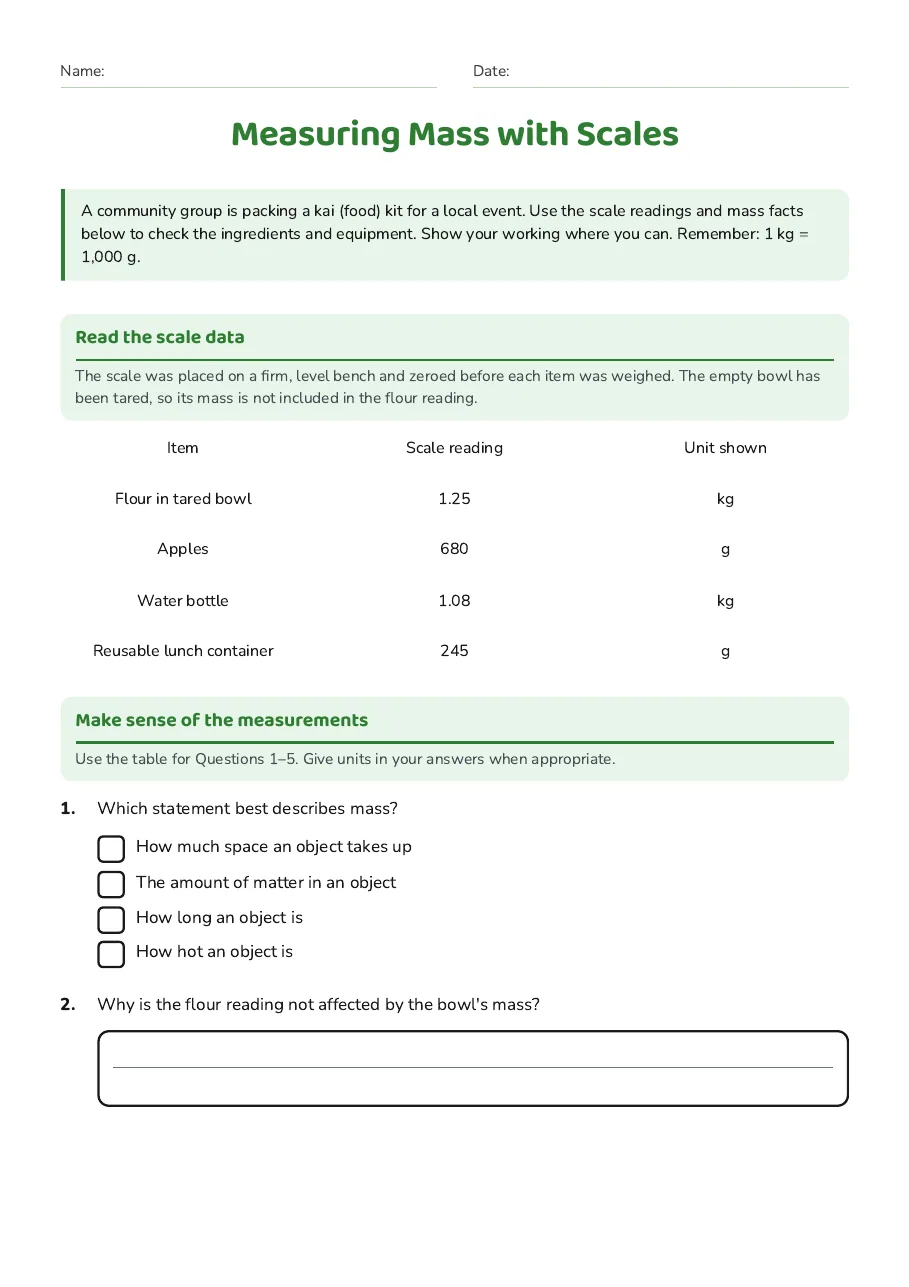
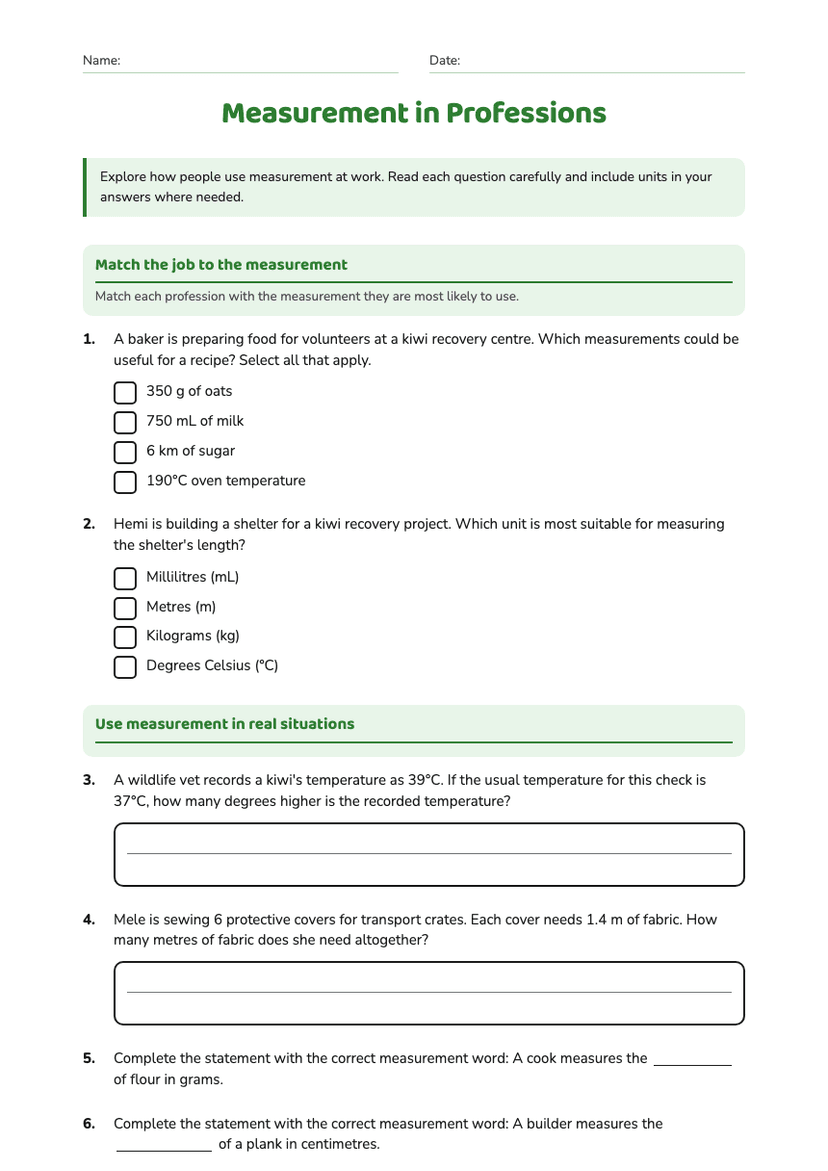
Measuring Mass with Scales worksheet preview
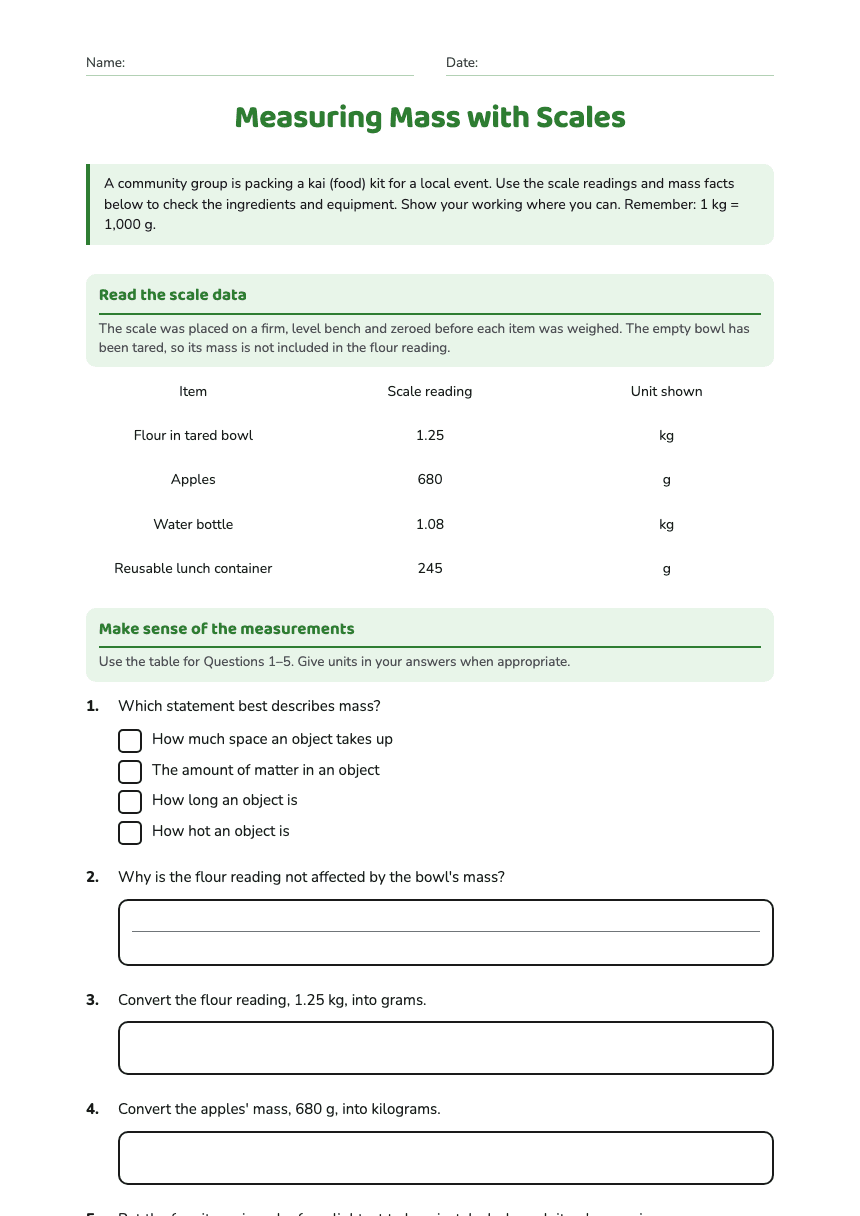
Name:Date:

Measuring Mass with Scales

A community group is packing a kai (food) kit for a local event. Use the scale readings and mass facts below to check the ingredients and equipment. Show your working where you can. Remember: 1 kg = 1,000 g.

Read the scale data

The scale was placed on a firm, level bench and zeroed before each item was weighed. The empty bowl has been tared, so its mass is not included in the flour reading.

Item

Scale reading

Unit shown

Flour in tared bowl

1.25

kg

Apples

680

g

Water bottle

1.08

kg

Reusable lunch container

245

g

Make sense of the measurements

Use the table for Questions 1–5. Give units in your answers when appropriate.

1.Which statement best describes mass?
  • How much space an object takes up
  • The amount of matter in an object
  • How long an object is
  • How hot an object is
2.Why is the flour reading not affected by the bowl's mass?
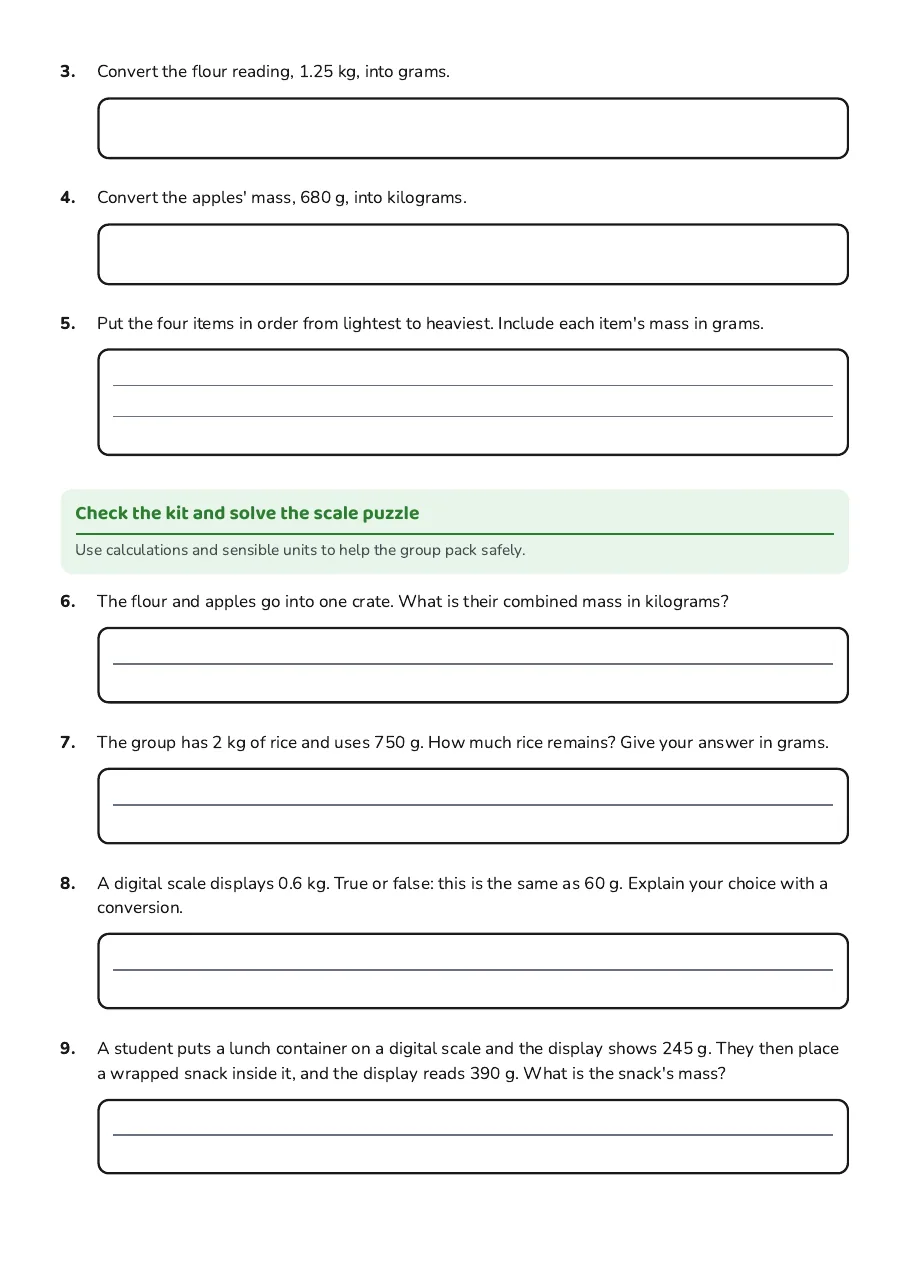
3.Convert the flour reading, 1.25 kg, into grams.
4.Convert the apples' mass, 680 g, into kilograms.
5.Put the four items in order from lightest to heaviest. Include each item's mass in grams.

Check the kit and solve the scale puzzle

Use calculations and sensible units to help the group pack safely.

6.The flour and apples go into one crate. What is their combined mass in kilograms?
7.The group has 2 kg of rice and uses 750 g. How much rice remains? Give your answer in grams.
8.A digital scale displays 0.6 kg. True or false: this is the same as 60 g. Explain your choice with a conversion.
9.A student puts a lunch container on a digital scale and the display shows 245 g. They then place a wrapped snack inside it, and the display reads 390 g. What is the snack's mass?
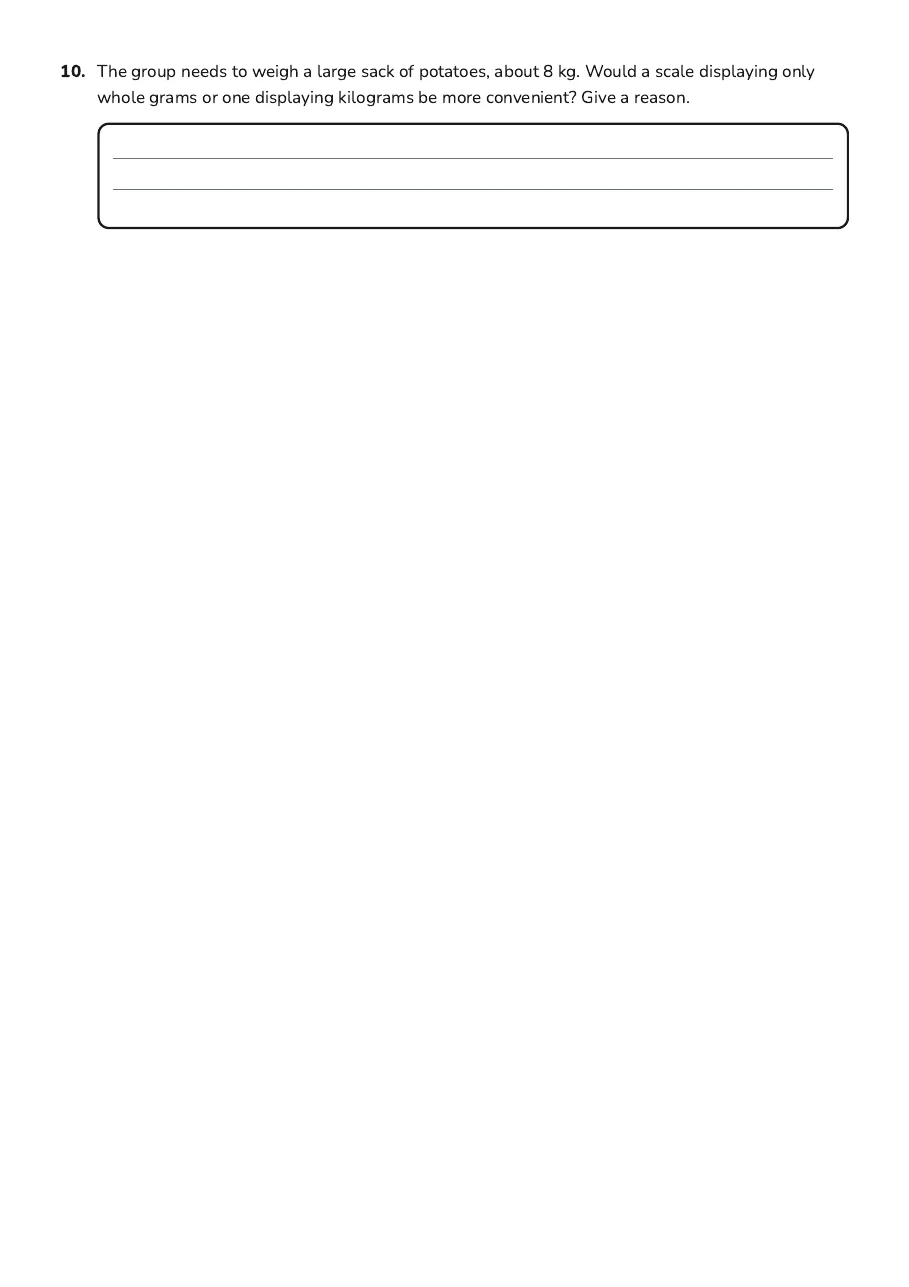
10.The group needs to weigh a large sack of potatoes, about 8 kg. Would a scale displaying only whole grams or one displaying kilograms be more convenient? Give a reason.

3 printable pages

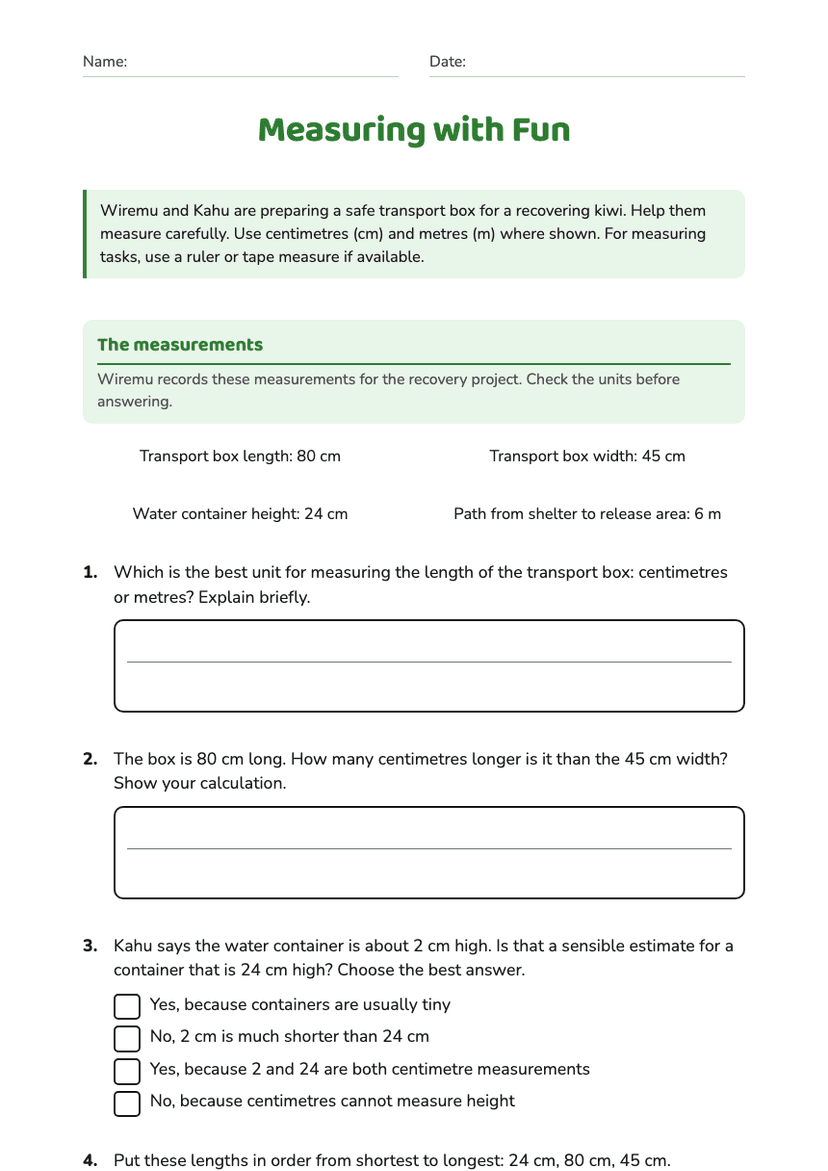
  • Measuring Mass with Scales, page 1 of 3: Read the scale data, Make sense of the measurements

    Page 1

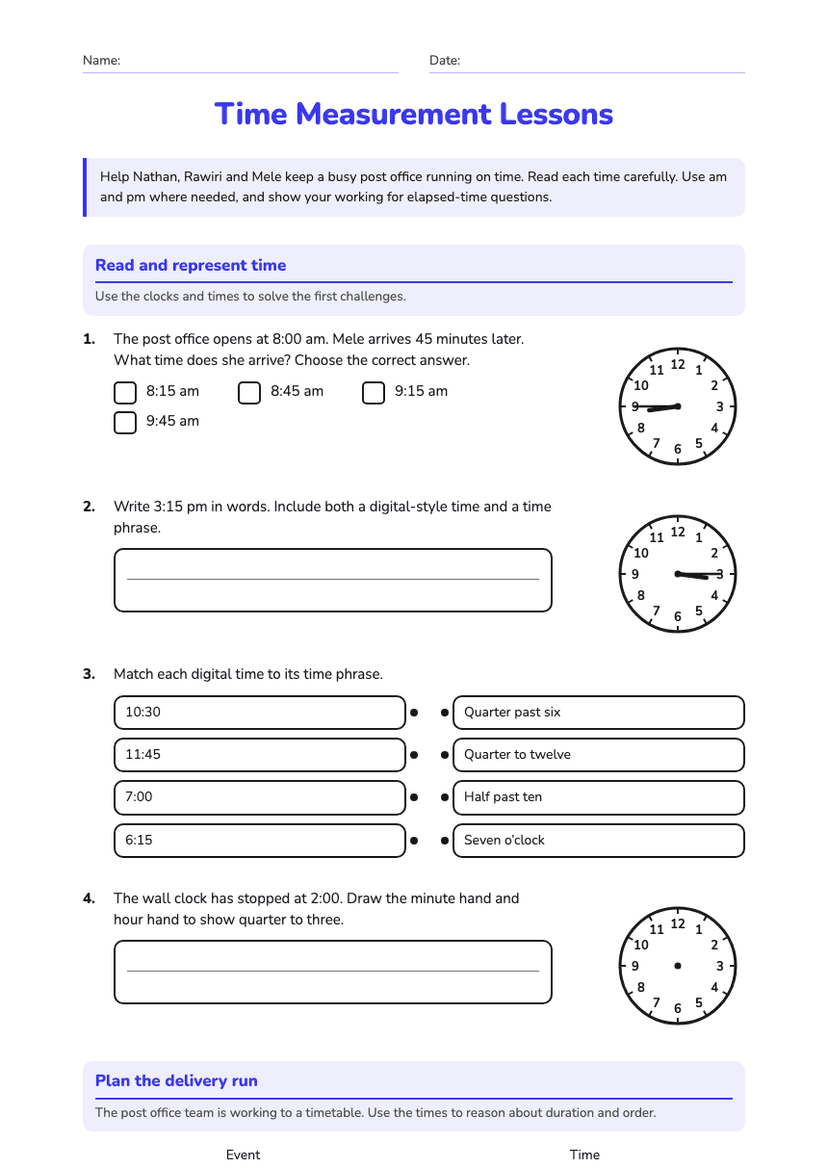
  • Measuring Mass with Scales, page 2 of 3: Check the kit and solve the scale puzzle

    Page 2

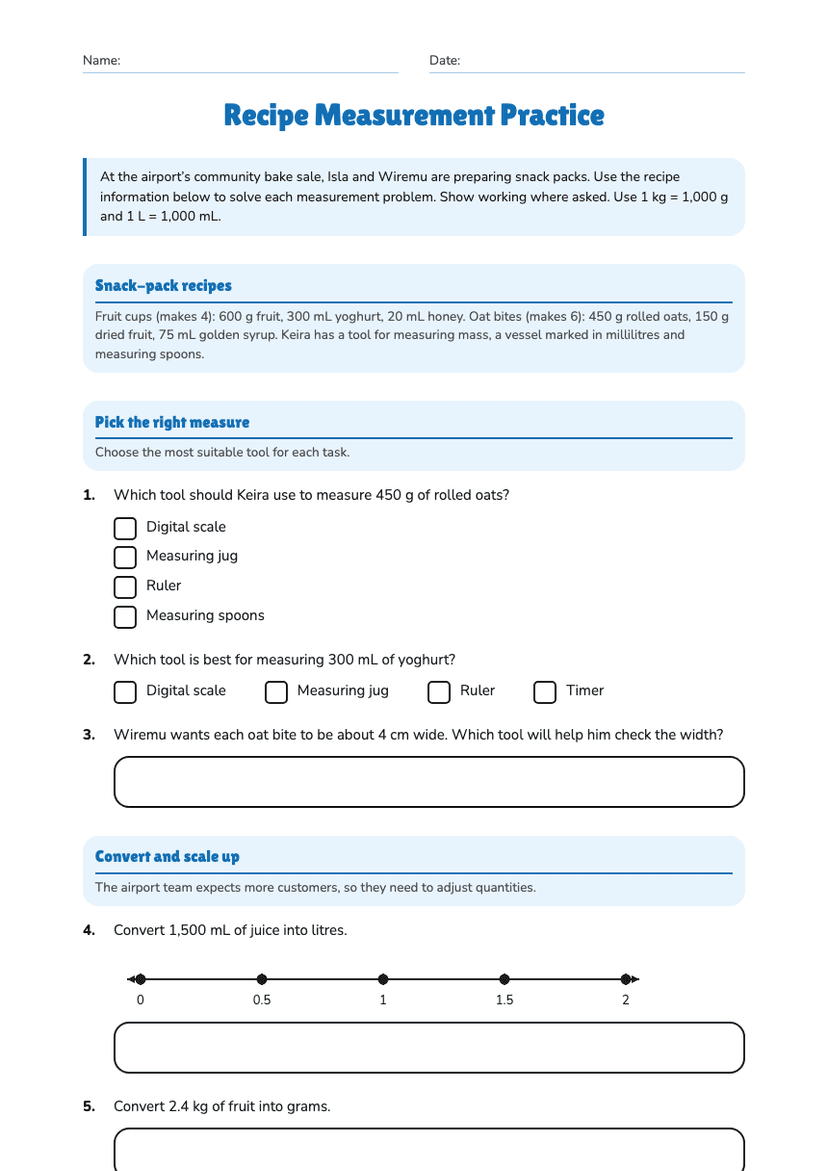
  • Measuring Mass with Scales, page 3 of 3: 10. The group needs to weigh a large sack of potatoes, about 8 kg. Would a scale…

    Page 3

About This Worksheet

Free in Kuraplan

Sign up free, grab the PDF, and customize it for your class.

Print-Ready

Formatted for standard paper. Clean layout, easy to read.

AI-Generated

Created with Kuraplan's AI, designed for real classroom use.

For Teachers & Parents

Use in classrooms, for homework, tutoring, or homeschool.

Need a custom version of this worksheet?

Kuraplan's AI generates custom worksheets in seconds — differentiated for every learner, aligned to your curriculum.

Generate Custom Worksheets — Free
No credit card Curriculum-aligned Under 60 seconds